
Choosing the right furniture for a nursing home can be a real headache. You’re facing constant pressure to manage budgets, but you know that the well-being of your residents and the efficiency of your staff are on the line. Making the wrong choice can lead to frequent replacements, daily frustrations, and even serious safety risks. This is where understanding the core principles of quality nursing home furniture becomes an invaluable asset for any procurement manager.
The best nursing home furniture is purpose-built for healthcare environments. It’s defined by commercial-grade durability for 24/7 use, features that actively support resident mobility and caregiver workflows, and specific, verifiable safety standards that go far beyond simple sturdiness. It is an operational asset designed for a low total cost of ownership, not just a low initial price.

Now that you have the short answer, let's dive into the details. Understanding the 'why' behind these principles will empower you to write better tenders, ask suppliers the right questions, and make purchasing decisions that you'll still be happy with years from now.
Why is Residential Furniture a Costly Mistake for a Nursing Home?
It’s always tempting to look at the prices of residential furniture and think about the potential savings. But I've talked to enough facility managers to know this is one of the most common and costly mistakes. This initial "saving" almost always leads to bigger expenses and operational headaches down the road.
Residential furniture is simply not designed for the demands of a senior care facility. It will fail, and often much faster than you’d expect. Using it exposes your facility to risks related to resident safety, infection control, and spiraling replacement costs.
The 24/7 Usage Test
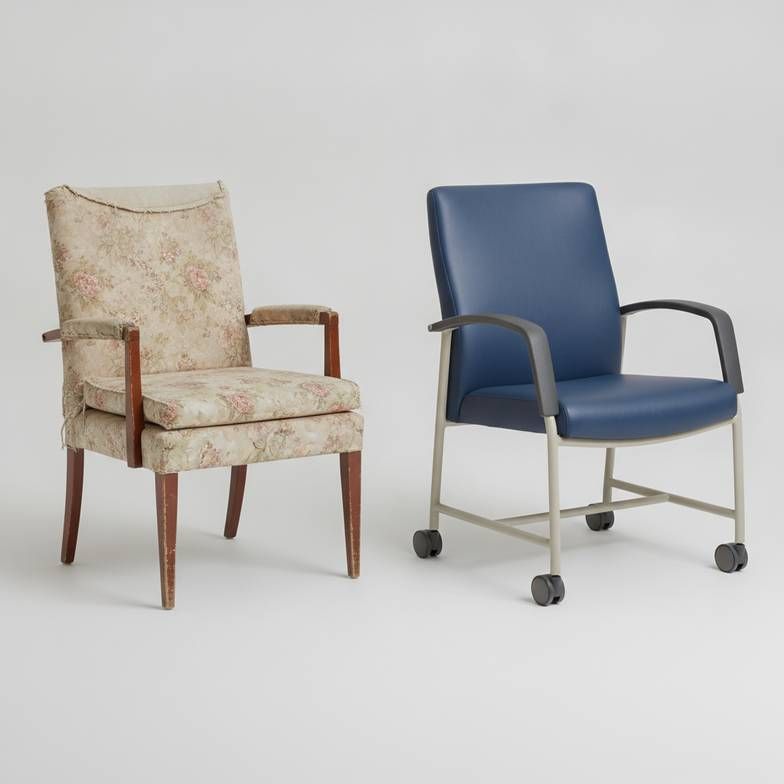
Think about the armchair in your living room. It probably gets used for a few hours each day. In a nursing home, a resident’s chair or a common area sofa is in use almost constantly. It’s used for sitting, napping, eating, and as a support for standing up and sitting down, over and over again.
- Residential furniture frames are often made with lower-grade wood, particleboard, or thin metal, held together with staples and screws. They are not built to withstand this level of continuous stress.
- Healthcare-grade furniture frames are typically constructed from fully welded steel (we recommend looking for at least 1.5mm thickness) or solid hardwood with reinforced joints. They are engineered and tested for constant, heavy use.
A procurement manager for a multi-facility group once shared with me that their biggest regret from an early project was opting for "heavy-duty" residential-style chairs for their dining hall. Within 18 months, joints were loose and frames were creaking on more than half of them, creating a significant safety hazard.
The Reality of Healthcare Cleaning
Infection control is non-negotiable. Your cleaning staff uses powerful, commercial-grade disinfectants to keep residents safe. These chemicals are brutal on materials.
Residential furniture finishes, fabrics, and laminates are designed to be cleaned with mild soap and water. They will quickly peel, fade, crack, or bubble when exposed to the chemicals required in a healthcare setting. This not only looks bad but also creates crevices where bacteria can grow, compromising your infection control protocols.
When you're comparing quotes, ask suppliers for these specific details:
- Surface Finish: Is it a high-pressure laminate (HPL) or thermally fused laminate (TFL) that is rated for chemical resistance?
- Upholstery: Is it a healthcare-grade vinyl or fabric with a moisture barrier underneath to protect the foam?
- Frame Coating: Is it a durable powder coat finish, which is much more resistant to chipping and harsh chemicals than standard paint?
Mismatched for Mobility and Safety
Perhaps the most critical difference is in the design. Residential furniture is designed for the average, able-bodied adult. Nursing home furniture must be designed to support the specific needs of the elderly.
Consider a simple chair:
- Seat Height: Residential chairs are often too low, making it difficult for a resident with weak legs or bad knees to stand up without significant assistance. A proper healthcare chair has a higher seat, typically around 19-21 inches.
- Armrests: The arms on a healthcare chair should be firm, stable, and at the right height to provide leverage for a resident to push themselves up. Soft, padded, or poorly placed arms on a residential chair offer little to no support.
- Stability: Healthcare furniture is designed with a wider, more stable base to prevent tipping, even when a resident puts their full weight on the armrest to stand.
Choosing residential furniture isn't a cost-saving measure; it's a debt that you'll pay later in replacements, staff time, and resident safety risks.
How Do You Measure True Durability in Nursing Home Furniture?
Every supplier brochure will use the word "durable." But as a buyer, that word is meaningless without specifics. You're not buying a marketing slogan; you're investing in an asset. True durability comes from verifiable details in the materials and construction methods.
To properly evaluate nursing home furniture, you need to look past the photos and dig into the specification sheet. This is how you calculate the Total Cost of Ownership (TCO) instead of just comparing initial price tags.
The Frame Is the Foundation
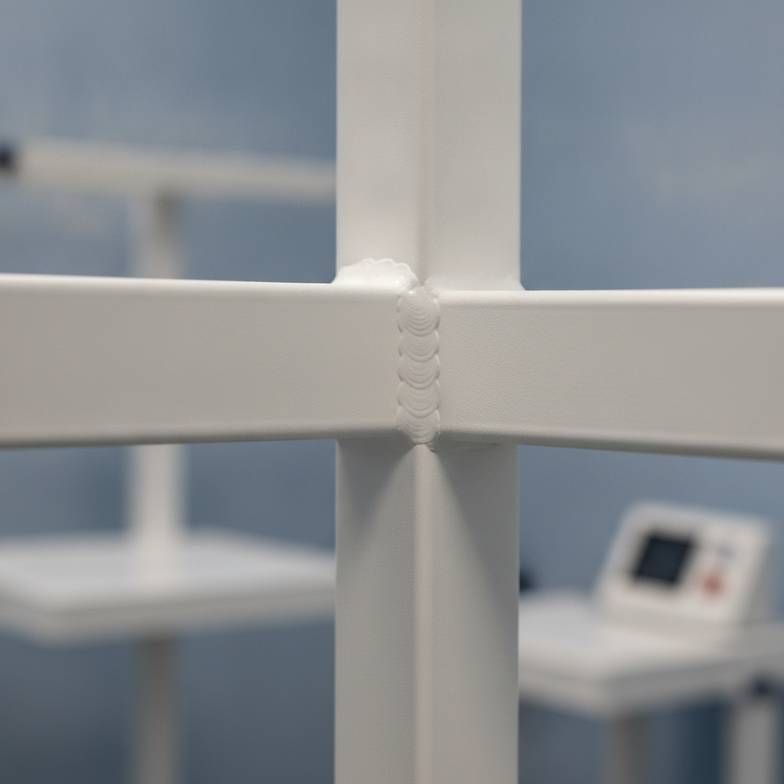
The core of any piece of furniture is its frame. This is where most of the stress is concentrated and where failure often begins.
- Steel Frames: Look for fully welded joints, not just spot-welded or bolted. Welded joints are immensely stronger and don't loosen over time. Ask for the steel gauge or thickness; anything less than 1.5mm on a primary frame component should be questioned. The finish should be a baked-on powder coat, not liquid paint, for maximum chip and scratch resistance.
- Wood Frames: If you opt for wood, ensure it's solid hardwood (like European Beech) and not a soft wood or particleboard. Joints should be mortise and tenon or at least double-dowelled and glued for strength.
Surfaces Built for a Healthcare Environment
The surfaces of your furniture are the parts that interact most with residents, staff, and cleaning protocols.
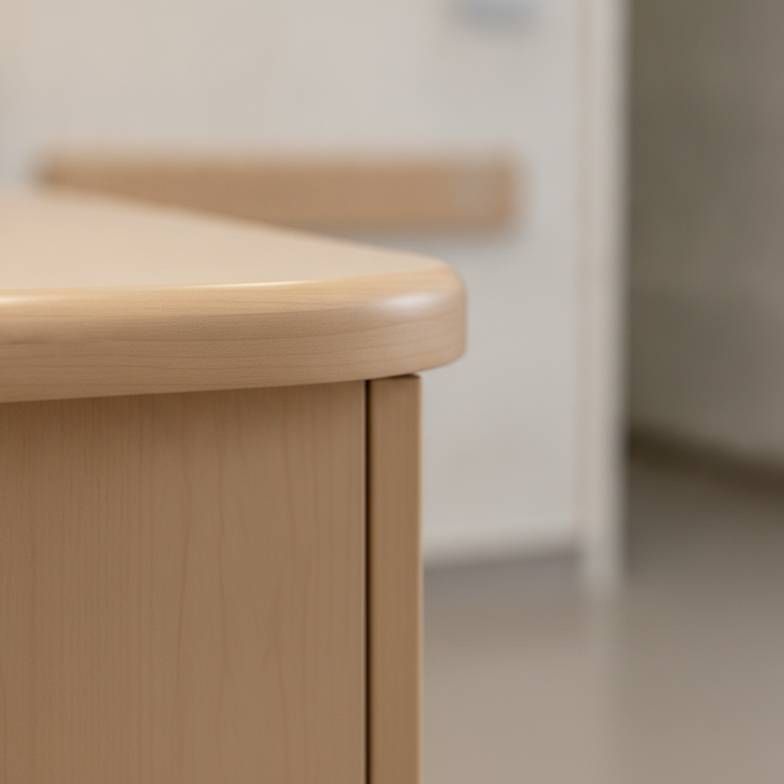
- Tabletops and Casegoods: High-pressure laminate (HPL) is the gold standard. It's highly resistant to scratches, impact, and the chemicals used for disinfection. Cheaper thermally fused laminate (TFL) or vinyl wraps will delaminate and peel much faster. Look for sealed, impact-resistant edges, often made of PVC or polyurethane.
- Upholstery: Fabric may look inviting, but it needs to be purpose-built. Ask for healthcare-grade vinyl or performance fabrics with a high double-rub rating (100,000+ is a good benchmark). Critically, ensure there is a moisture barrier between the fabric and the foam cushion to prevent fluids from soaking in.
Don't Underestimate the Components
A common oversight we see from new procurement managers is focusing only on the main frame and surfaces. However, it's often the smaller components that fail first, rendering an entire piece of furniture useless.
| Component | Low-Quality Specification | High-Quality (Healthcare-Grade) Specification |
|---|---|---|
| Casters (Wheels) | Hard plastic, sleeve bearing, flimsy brake | Medical-grade polyurethane, sealed ball bearings, total-lock brake (locks wheel and swivel) |
| Drawer Slides | Simple roller slides, low weight capacity | Full-extension ball-bearing slides, rated for 75+ lbs |
| Handles/Pulls | Decorative, sharp edges, hard to grab | Ergonomic design, easy to grip, smooth edges, securely bolted |
| Glides (Feet) | Small plastic taps that pop out or scratch floors | Large, adjustable, non-marring nylon or felt glides |
When a cheap caster on a medical trolley breaks, that entire trolley is out of service. When a drawer slide fails on a bedside cabinet, it becomes a daily frustration for staff and residents. Asking for specs on these "minor" parts is a hallmark of a savvy buyer.
What Specific Safety Features Should Your Nursing Home Furniture Have?
You know resident safety is the top priority, but "sturdy" isn't a specific enough requirement for your tender documents. To ensure you’re truly protecting your residents, you need to think of safety as a system of specific, measurable features. This turns a vague goal into a concrete checklist.
A proactive approach to safety in nursing home furniture selection involves looking at physical design, material composition, and official certifications. These are the details that prevent falls, reduce injuries, and ensure a healthy indoor environment.
Physical Design for Injury Prevention
The physical shape and structure of furniture play a massive role in preventing everyday accidents.
- Rounded Corners and Edges: This is a simple but critical feature. Sharp corners on tables, cabinets, and bed frames can cause serious cuts and bruises, especially for residents with fragile skin or unsteady balance.
- Appropriate Weight Capacity: Always verify the static load capacity. For seating, a standard of 300 lbs (approx. 136 kg) is common, but you must also plan for bariatric residents. We always recommend having bariatric-rated furniture available, which is typically tested to 500 lbs (227 kg) or more.
- Anti-Entrapment Design: This is crucial for chairs and beds. Spaces and gaps in the furniture's design must be small enough or large enough to prevent a resident's head, neck, or limbs from becoming trapped. This is a key regulatory concern in many regions.
- Stability and Tipping Prevention: Furniture should be designed to be stable even when weight is applied unevenly, such as when a resident pushes on one side of a table to stand up.
Material and Chemical Safety
What the furniture is made of is just as important as its shape. Residents are in constant contact with these materials, so they must be safe.
- Fire Retardancy: Upholstery foam and fabrics must meet local fire safety codes. In the US, this is often CAL 117. Ask your supplier for certificates of compliance for both the foam and the fabric. This is a non-negotiable documentation point.
- Non-Toxic Finishes: Furniture should be finished with low-VOC (Volatile Organic Compound) paints, stains, and lacquers. VOCs can off-gas into the air and contribute to poor indoor air quality, which can be harmful to residents with respiratory issues.
- Lead-Free and Heavy-Metal-Free: All coatings and materials should be certified as free from lead and other harmful heavy metals.
Here’s a quick checklist you can use when evaluating a supplier’s proposal:
Your Pre-Purchase Safety Checklist:
- [ ] Are all corners and prominent edges rounded?
- [ ] Is the weight capacity clearly stated and sufficient for my residents?
- [ ] Does the design prevent potential entrapment points?
- [ ] Can the supplier provide fire retardancy certificates for foam and fabrics?
- [ ] Are the finishes low-VOC and certified free of lead?
- [ ] Is the furniture stable and designed to resist tipping?
Asking these questions transforms you from a price-shopper into a safety-conscious procurement professional.
Frequently Asked Questions
How often should nursing home furniture be replaced?
This depends heavily on the initial quality. Cheap, residential-grade furniture might not even last two years in a care environment. In contrast, high-quality, healthcare-grade nursing home furniture is an investment designed to last anywhere from 7 to 15 years with proper care, offering a much lower total cost of ownership.
What's the difference between an overbed table and an overchair table?
The main differences are the height adjustment range and the base design. Overbed tables have a "C" or "H" shaped base designed to slide under a hospital bed and a wider range of height adjustment. Overchair tables often have a lower height range and a base designed to slide under a lounge chair, which may sit lower to the ground.
Are there specific furniture requirements for residents with dementia?
Yes. For residents with dementia, it's best to choose furniture with simple, intuitive designs. High-contrast colors between the furniture and the floor can help with perception. Avoid busy patterns on upholstery, which can be confusing or distressing. Durability and safety features like rounded corners are even more critical in these environments.
Can we use the same furniture in resident rooms and common areas?
Not always. While there can be some overlap, common area furniture typically needs to withstand even higher traffic and a wider variety of users. It may require more robust construction and different ergonomic considerations than a chair intended for a single resident's room. It's best to select furniture based on the specific function of each space.
Conclusion
Choosing the right nursing home furniture goes far beyond aesthetics or the number on a price tag. It's a strategic decision that directly impacts resident safety, staff efficiency, infection control, and your facility's long-term budget. By shifting your focus from initial cost to Total Cost of Ownership, you can see that durability isn't a vague promise—it's a result of specific materials and construction methods. By demanding features that support mobility and adhere to strict safety standards, you are investing in operational assets, not just disposable goods.
If you are planning a new project, upgrading a ward, or need to source practical nursing home furniture for your facility, our team at CareFurnex is here to help. We can assist you in reviewing specifications, comparing options, and building a procurement plan that prioritizes long-term value and resident well-being. Contact us to discuss your requirements.
Written by
CareFurnex Team
CareFurnex Team shares practical knowledge about hospital beds, patient room furniture, medical trolleys, clinic furniture, and healthcare facility procurement for international B2B buyers.
Related Products
Nursing Beds
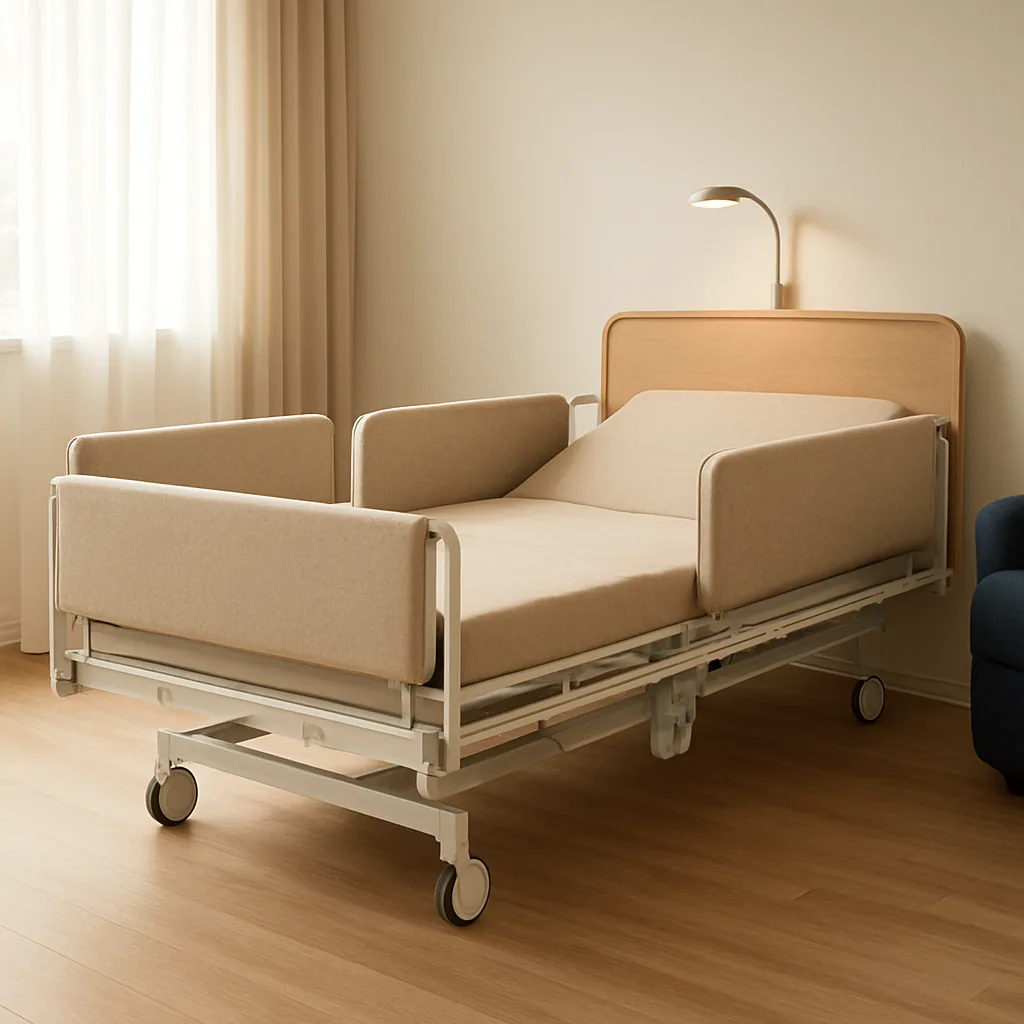
Long-term care beds designed for elderly residents and daily nursing operation.
View product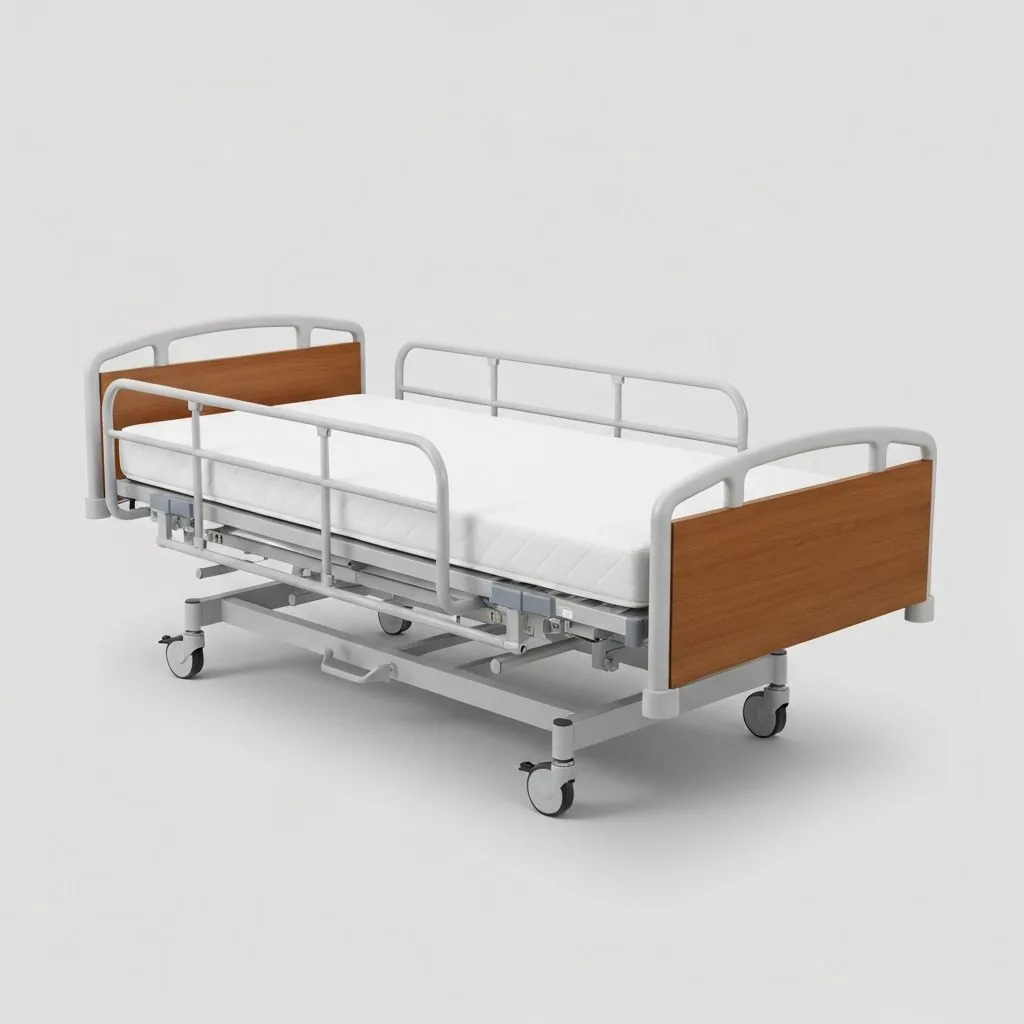
Hospital Beds
General-purpose patient beds for inpatient wards and standard hospital rooms.
View product
Ward Furniture
Complete ward furniture options for patient rooms and hospital care areas.
View product