
Choosing the right medical recliners for nursing homes is a surprisingly high-stakes decision. You're trying to find a chair that keeps residents comfortable and safe, but you also have to think about your staff's workflow and your facility's budget. Get it wrong, and you’re stuck with recliners that are hard to clean, break down constantly, or simply don't meet your residents' needs, making your investment a source of frustration. The solution is to approach this not as a furniture purchase, but as a critical risk management decision for your long-term care facility.
As a buyer for a long-term care facility, you should look for medical recliners that directly match your specific operational realities. This means evaluating the chair’s mechanical systems (like the motor and frame), its upholstery material (for cleanability and durability), and its safety features (like a stable base and caregiver-friendly controls) against the unique mobility levels of your residents, the daily tasks of your staff, and your facility’s maintenance capabilities.
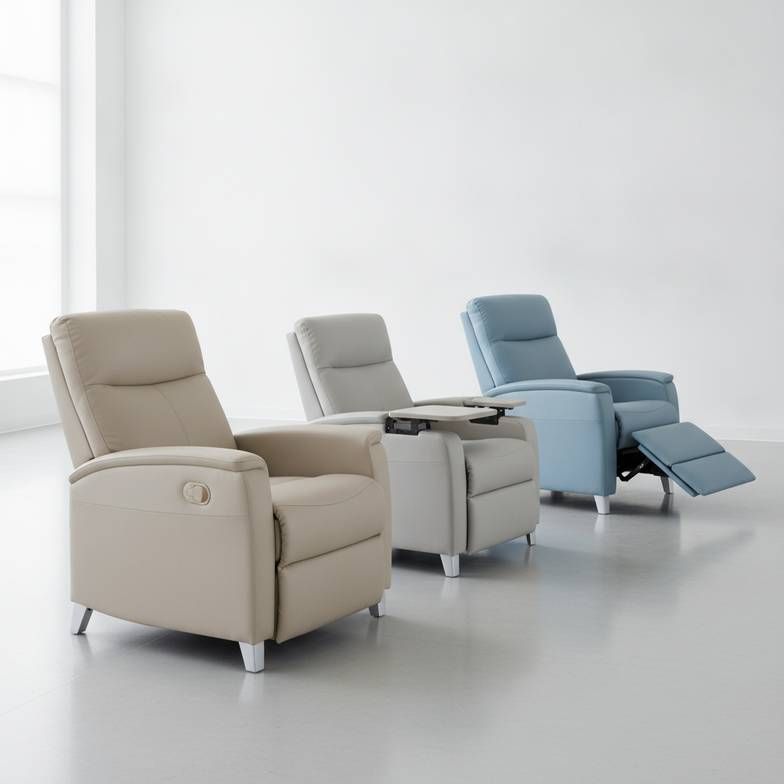
Thinking this way shifts your focus from a simple feature checklist to a more practical evaluation. It’s not about finding the chair with the most buttons. It's about finding the chair that solves real problems for your residents and staff, day in and day out. Let's dig into the key questions you should be asking.
Should You Choose a Recliner Based on Resident Mobility?
You have residents with a wide range of mobility, from those who get around just fine to others who need significant help. Buying one type of recliner for everyone seems simpler, but it often leads to either overspending on features people don't use or, worse, failing to provide the support your higher-needs residents require. The smartest approach is to match the chair to the person.
Yes, absolutely. Segmenting your purchase based on resident mobility is the single most effective way to ensure safety, improve quality of life, and control your budget. A chair designed for an independent user is fundamentally different from one built for a resident with high dependency.
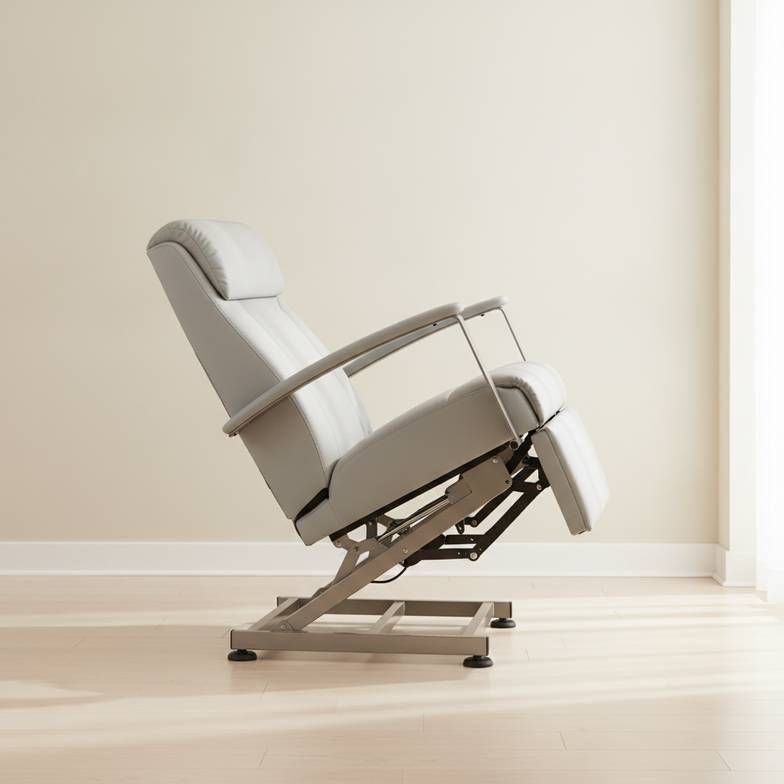
Dive Deeper: Matching Features to Needs
When we work with nursing home managers, one of the first things we do is help them break down their resident population. It's a simple exercise but it clarifies procurement priorities instantly. Let’s be honest, giving a fully independent resident a complex, multi-motor recliner is often a waste of money and can be confusing for them to use. Conversely, a basic recliner without lift assistance can be a safety hazard for someone with poor leg strength.
Here’s a practical way to think about it:
For Mostly Independent Residents
These residents can stand and sit with little to no help. For them, the priorities are comfort and ease of use.
- Key Features: Simple, intuitive hand controls (two or three buttons is often plenty), a comfortable backrest, and durable upholstery.
- What to Avoid: Overly complex multi-position functions, Trendelenburg position, or drop-away arms. These add cost and complexity without adding real value for this group.
For Residents Needing Transfer Assistance
This group includes individuals who can bear some weight but struggle with the sit-to-stand motion. Here, the focus shifts to safety and caregiver assistance.
- Key Features: A reliable lift-assist mechanism is non-negotiable. Look for a smooth, stable lift that doesn't tilt the user forward too quickly. Swing-away or drop-down armrests can also be a huge help for side transfers from a wheelchair.
- What to Prioritize: The quality of the motor and the stability of the chair's base during the lift cycle are critical.
For High-Dependency or Non-Ambulatory Residents
For these residents, the recliner is more than a chair; it's a clinical tool for positioning, pressure care, and transfers.
- Key Features: A full-recline or lay-flat position is essential for comfort and repositioning. A Trendelenburg position (where the feet are elevated above the head) may be required for certain clinical needs. Removable armrests and seat cushions can facilitate cleaning and sling placement for mechanical lifts.
- What to Prioritize: Pressure-reducing foam or gel inserts in the seat, robust casters for moving the chair with the resident in it, and easy access for caregivers from all sides.
Here’s a quick comparison table:
| Feature | Independent Resident | Assisted Transfer Resident | High-Dependency Resident |
|---|---|---|---|
| Primary Need | Comfort & Simplicity | Safe Sit-to-Stand | Positioning & Caregiver Access |
| Lift Assist | Optional / Not needed | Essential | Essential |
| Recline Function | Standard Recline | Standard Recline | Lay-Flat & Trendelenburg |
| Armrests | Fixed / Padded | Swing-Away / Drop-Down | Removable / Swing-Away |
| Casters | Optional / Not needed | Rear Locking Casters | 4 Locking, Heavy-Duty Casters |
| Upholstery | Durable & Comfortable | Easy to Clean & Durable | Infection Control Rated |
What Makes Upholstery Truly Suitable for a Nursing Home?
Spills, incontinence, and daily disinfection are just part of life in a long-term care facility. You see a recliner advertised with "medical-grade fabric," but what does that even mean? If the material can't stand up to your facility's cleaning protocols, it will stain, crack, and become an infection control risk in no time.
Truly suitable upholstery for medical recliners for nursing homes is non-porous, has documented resistance to the specific chemical cleaners you use, and features sealed or minimal seams to prevent fluids from seeping into the foam core. You have to think beyond the color and texture and ask for the technical data.
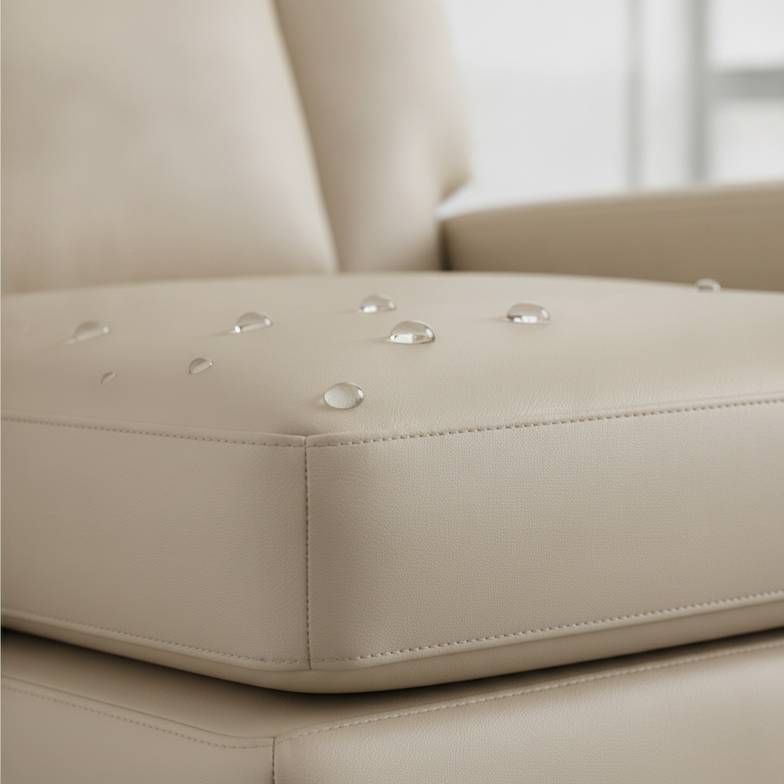
Dive Deeper: The Hidden Risks in Your Recliner's Fabric
I once worked with a facility that chose a beautiful, soft "performance fabric" for their new recliners. It looked great in the catalog. Six months later, the fabric was discolored and brittle in high-contact areas. Why? Their standard-issue disinfectant was slowly breaking down the material's protective coating. This is a classic procurement mistake—failing to match the material to its real-world environment.
Vinyl vs. Performance Fabrics
- Medical-Grade Vinyl: This is often the most practical choice. It's non-porous, meaning liquids sit on the surface instead of soaking in. It's generally easy to wipe down and holds up well against common hospital-grade disinfectants. The downside is it can sometimes feel less "homey" or become sticky in warm weather.
- Performance Fabrics: These are textiles engineered with special coatings (like polyurethane) to resist stains and moisture. They can offer a softer, more residential feel. However, you must verify their durability. Ask the supplier for a spec sheet that lists its abrasion resistance (measured in "double rubs"—50,000+ is good for this environment) and its chemical resistance.
Seam Construction: The Hidden Weakness
This is a detail many buyers overlook. Even the best vinyl is useless if a spill can seep through the needle holes along the seams and into the cushion foam. Once that happens, it's impossible to properly sanitize. Look for recliners with:
- Inverted or sealed seams: This minimizes pathways for fluid ingress.
- Minimal top stitching: Especially on the seat cushion.
- A moisture barrier: This is a waterproof layer between the upholstery and the foam, providing a crucial second line of defense.
Asking for Chemical Resistance Ratings
Don't just ask, "Is it easy to clean?" Ask, "Can you provide documentation showing this material's resistance to a quaternary ammonium-based disinfectant?" or whatever specific chemical you use. A good supplier should be able to provide this data. If they can't, it's a red flag. They are selling you a product without understanding your use case.
How Can You Verify a Recliner's Durability and Safety?
Every supplier brochure will tell you their recliner is "heavy-duty" and "built to last." But these are just marketing words. A frame failure or a motor burning out isn't just an inconvenience; it's a potential safety incident and a major operational headache. You need to move past the claims and start asking for proof.
You verify a recliner's durability by examining its core components: the frame material (request all-steel), the brand and serviceability of the motor, and the tested Safe Working Load (SWL). Safety is confirmed by checking the stability of the base during operation and the reliability of features like locking casters.
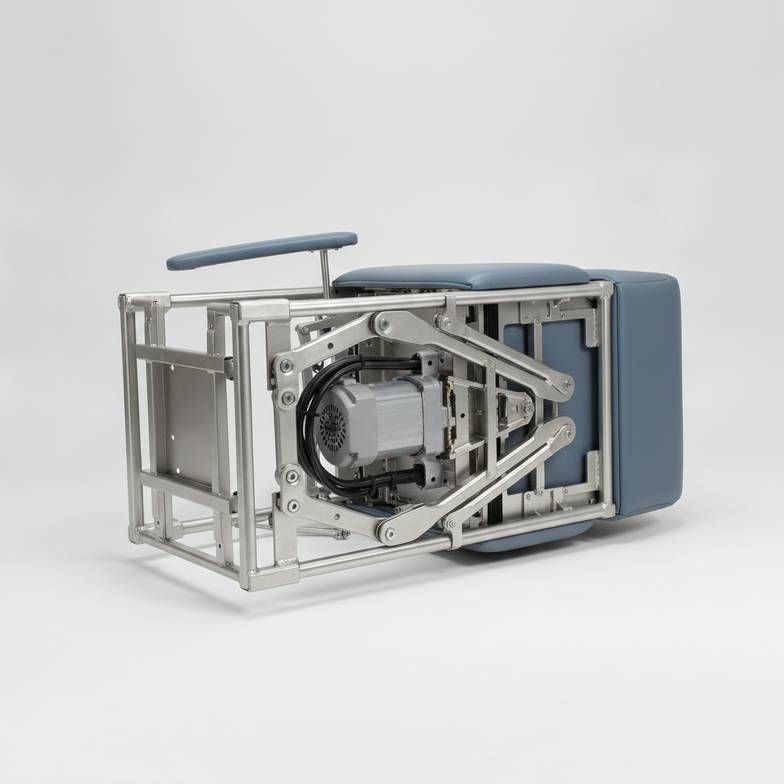
Dive Deeper: Looking Under the Hood
Your job as a buyer is to be skeptical. The real value and safety of a medical recliner are hidden beneath the cushions. When we help clients evaluate samples, we often tip the chair over to see what's really going on underneath.
The Frame and Mechanism: It Should Be All-Steel
The lift and recline mechanism endures thousands of cycles under significant stress.
- What to Look For: An all-steel mechanism. Ask the supplier to confirm this. Some cheaper chairs use wood components in the frame to cut costs, which can warp or crack over time.
- What to Ask: "Can you confirm the frame and lift mechanism are 100% steel? Can you provide photos of the internal frame?" This simple question can quickly separate serious suppliers from the rest.
The Motor: Not All "Lift Assists" Are Equal
The motor is the heart of an electric recliner. A cheap, unbranded motor is a common point of failure.
- What to Look For: Motors from reputable brands known in the medical furniture industry (like Dewert, Linak, or OKIN). These companies build motors designed for high-cycle, reliable performance.
- What to Ask: "What brand of motor do you use? Is it a single or dual motor system? What is the process for replacing a motor if it fails after the warranty period?" A dual motor system (one for the back, one for the footrest) often provides smoother, more customizable positioning. Knowing you can get replacement parts is critical for long-term maintenance.
Safe Working Load (SWL): Ask How It's Tested
Every medical recliner has a listed weight capacity or SWL. But a number on a spec sheet doesn't tell you the whole story.
- What to Ask: "What is the Safe Working Load, and what testing standard was used to verify it?" The SWL should account for dynamic loads—the stress put on the chair during movement, not just when someone is sitting still. A supplier should be able to explain their testing protocol. A typical static load test involves applying 3-4 times the SWL without failure.
Casters and Brakes: Mobility with Control
If you plan to move recliners between rooms, casters are essential. But they can also be a safety hazard if not managed properly.
- What to Look For: Large, durable casters (at least 3-4 inches) that roll smoothly. At least two, and preferably all four, should have easy-to-engage locking brakes.
- What to Check: When you test a sample, check how easy it is for a caregiver to lock and unlock the brakes with their foot. Brakes that are hard to access won't get used, defeating their purpose.
Frequently Asked Questions
What's the difference between a medical recliner and a regular lift chair from a furniture store?
A medical recliner is designed for a 24/7 clinical environment. It uses more durable materials, infection-control upholstery, heavy-duty mechanisms, and often includes features like Trendelenburg positions, swing-away arms, and locking casters that you won't find on a residential chair. The testing and safety standards are also far more rigorous.
How important is a battery backup for an electric medical recliner?
It's very important, especially in a facility prone to power outages. A battery backup ensures that a resident isn't stuck in a reclined or lifted position if the power goes out. It allows caregivers to return the chair to a safe, neutral position, which is a critical safety feature.
Are drop-down or swing-away arms a necessary feature?
They are necessary if you need to perform lateral transfers from a wheelchair. For residents who can stand and pivot, fixed arms are fine. But for residents who are transferred using a slide board or with caregiver assistance, drop-down arms create a clear, unobstructed path, reducing the risk of injury to both the resident and staff.
How do I balance resident comfort with infection control needs?
This is a key challenge. Start with a foundation of infection control (vinyl, sealed seams) and then add comfort. Look for vinyl that is specially treated to be softer or use high-quality, multi-density foam in the cushions. You can also use removable, washable comfort covers or overlays for a cozier feel without compromising the cleanability of the chair itself.
Conclusion
Choosing the right medical recliners for nursing homes is a strategic decision that impacts resident well-being, staff efficiency, and your bottom line for years to come. By moving beyond marketing claims and focusing on the underlying mechanics and materials, you can make a much smarter investment. Remember to segment your needs based on resident mobility, demand proof of durability and chemical resistance for your upholstery, and always verify the quality of the core components like the frame and motor. This approach helps you manage risk and ensures you get a product that truly serves your facility.
If you are sourcing medical furniture for your long-term care facility and need a partner to help you compare specifications, verify supplier claims, and build a procurement plan that fits your needs and budget, please reach out. We at CareFurnex specialize in helping buyers like you navigate the complexities of sourcing and secure reliable, well-matched products.
Written by
CareFurnex Team
CareFurnex Team shares practical knowledge about hospital beds, patient room furniture, medical trolleys, clinic furniture, and healthcare facility procurement for international B2B buyers.
Related Products
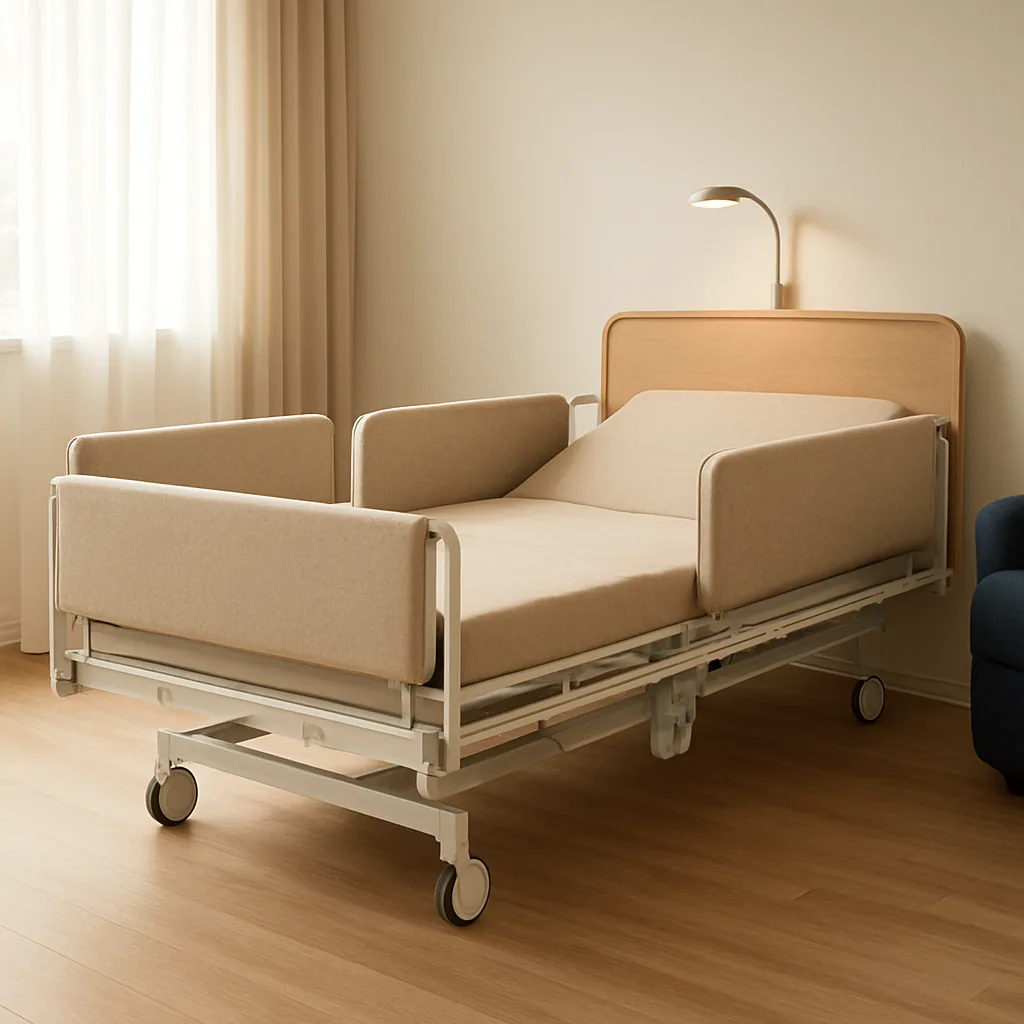
Nursing Beds
Long-term care beds designed for elderly residents and daily nursing operation.
View product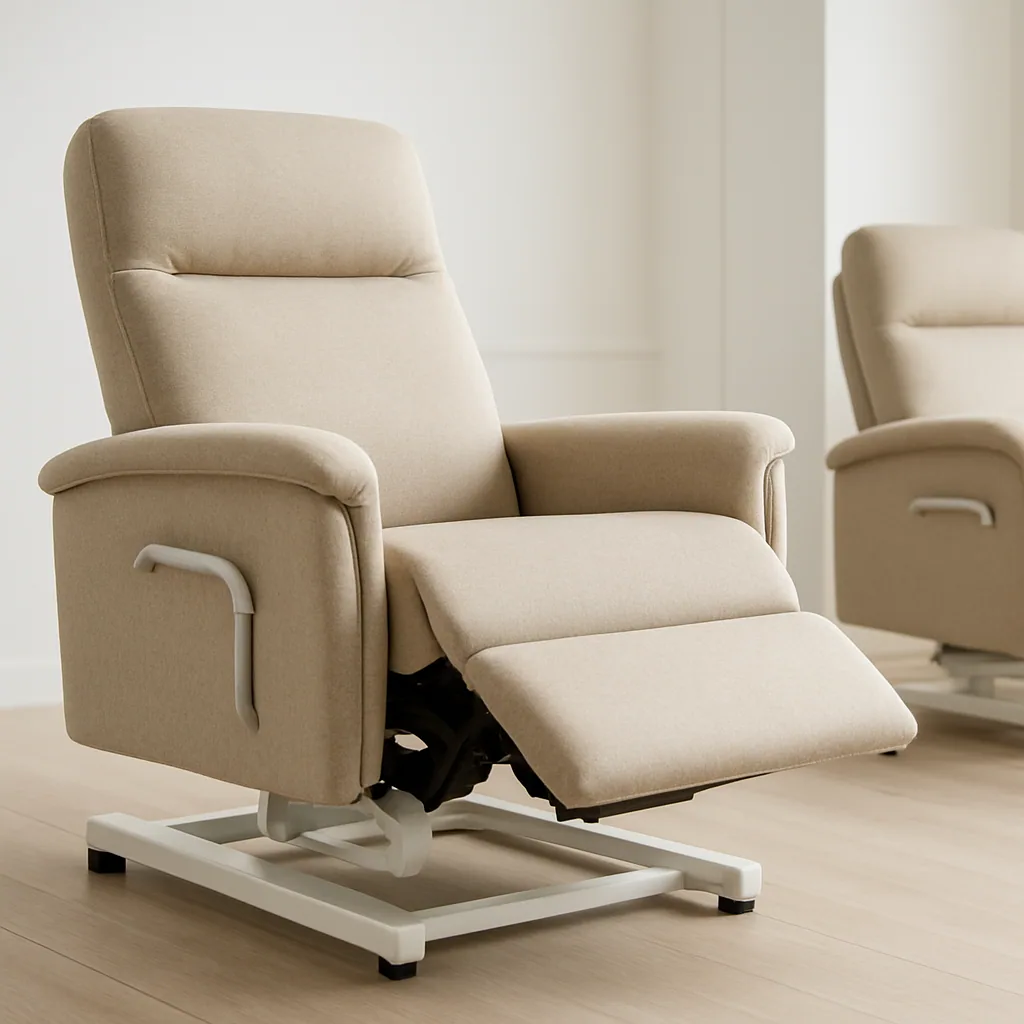
Medical Recliners
Reclining patient chairs for care spaces, treatment areas, and nursing homes.
View product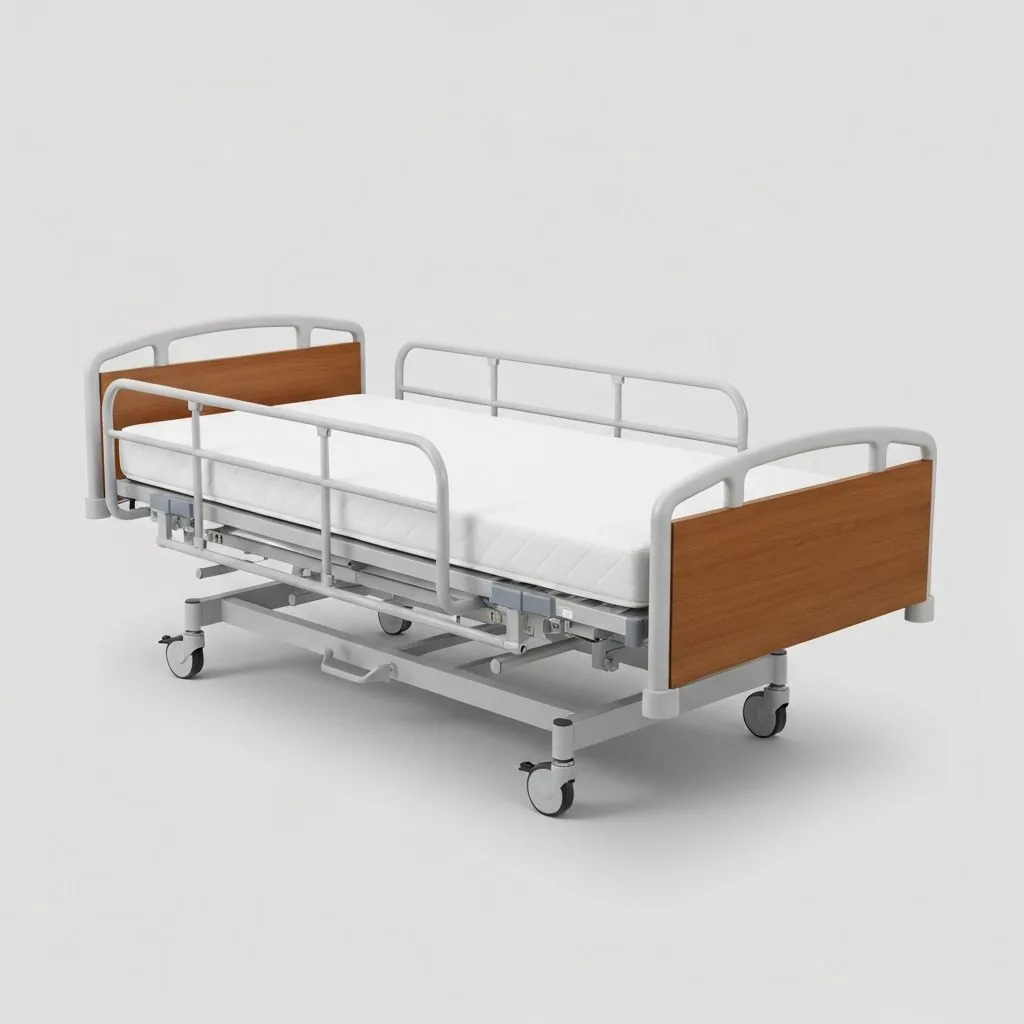
Hospital Beds
General-purpose patient beds for inpatient wards and standard hospital rooms.
View product