
Struggling to choose the right medical trolley? It seems like a simple purchase, but getting it wrong leads to daily frustrations for your clinical staff. Carts that are too heavy, hard to clean, or poorly organized can slow down workflows and even compromise patient care. This guide will help you understand the different types of medical trolleys and how to select the perfect model for each hospital department.
The main types of medical trolleys are defined by their function and department-specific design. These include treatment/nursing trolleys for general wards, emergency (crash) carts for critical situations, anesthesia carts for operating rooms, and instrument or CSSD trolleys made from stainless steel. The best choice always depends on your department's specific workflow, hygiene protocols, and storage needs.
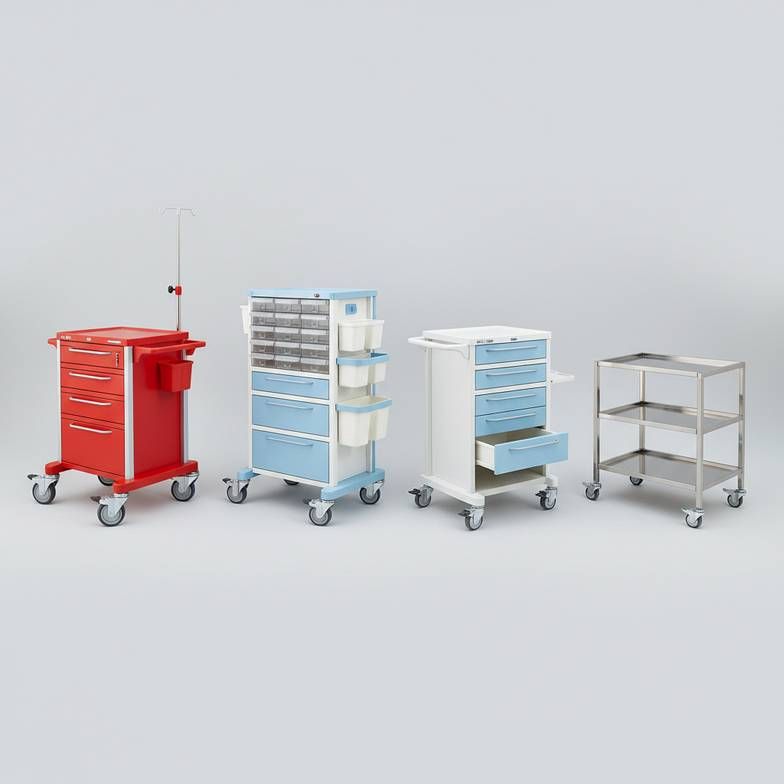
Now that you know the basic categories, let's get into the details that really matter. Choosing the right cart is about much more than just the name in a catalog. It's about understanding the specific features that will make your staff's job easier and safer.
What Makes a Good General Ward or Treatment Trolley?
Do you need a reliable workhorse for daily patient rounds? Choosing the wrong treatment cart can be a real pain. It's either too bulky to navigate tight spaces in patient rooms or it lacks the organization your nurses need, slowing down their essential tasks.
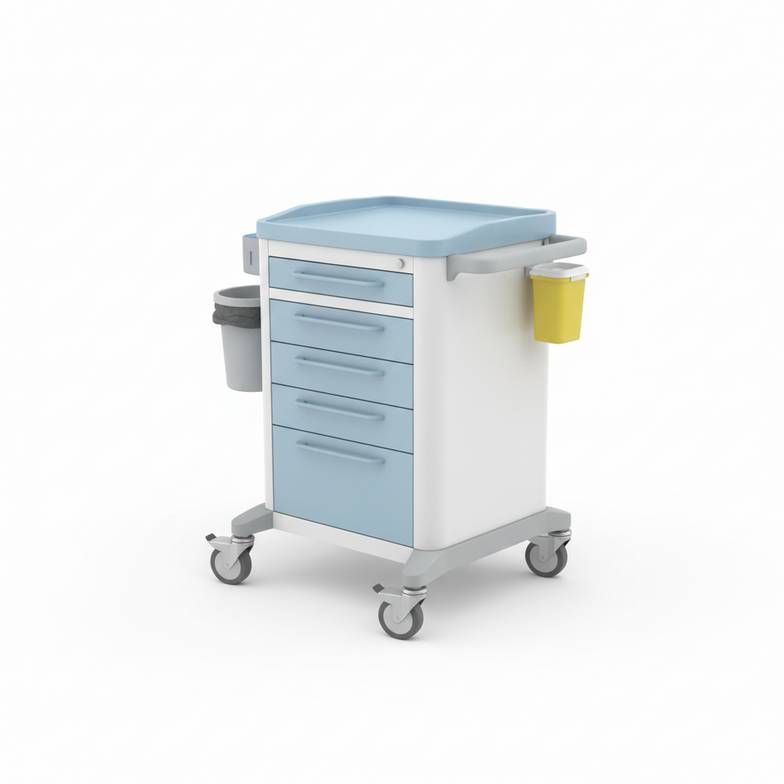
A good general ward or treatment trolley balances lightweight maneuverability with organized storage and a durable, easy-to-clean work surface. Models made from ABS plastic with configurable drawers and quality casters are often the most practical choice for this environment.
Dive Deeper: Specifying a Trolley for Daily Rounds
For general wards, the trolley is a mobile workstation. It needs to be practical, not over-engineered. When I talk to procurement managers about these trolleys, we always focus on the day-to-day workflow of the nursing staff.
Key Features for Workflow Efficiency
The primary goal here is to make daily tasks like administering medication, changing dressings, and taking vitals as smooth as possible. You’re not preparing for a rare, high-stakes event; you're optimizing for a job that's done dozens of times a day.
- Work Surface: The top should be spacious enough for prepping medications or dressings and have raised edges to prevent items from rolling off.
- Drawer Configuration: This is where customization comes in. You need a mix of shallow drawers for small items like syringes and alcohol swabs, and deeper drawers for bulkier supplies like bandages and fluid bags.
- Material Choice: ABS (Acrylonitrile Butadiene Styrene) plastic is usually the best fit here. It's lightweight, which makes the trolley easy to push all day. It's also impact-resistant and holds up well against common hospital cleaning agents. Plus, it can be molded into seamless drawer units that are easy to wipe down.
- Accessories: Think practically. Side-mounted waste bins and sharps containers are essential. An IV pole can be useful, but not always necessary. The goal is to add only the accessories that will genuinely be used to avoid clutter and excess weight.
The "Invisible" Details to Check
Buyers often focus on the number of drawers, but the small components are what make a trolley a pleasure or a pain to use.
| Feature | What to Look For | Why It Matters |
|---|---|---|
| Casters | 4-inch or 5-inch "silent" medical-grade casters. At least two should have brakes. | Reduces noise in patient areas, rolls smoothly over thresholds, and parks securely. Cheap casters are noisy, get stuck, and are the first thing to break. |
| Locking System | A central key lock is standard and effective. One turn of the key locks all drawers simultaneously. | Provides basic security for supplies and prevents drawers from sliding open while moving. |
| Handles | Ergonomically designed, integrated push handles. | Comfortable for staff to use throughout a long shift. Avoids bolted-on handles that can loosen over time. |
In my experience, spending a little extra on high-quality casters is one of the smartest investments you can make in a treatment trolley. It directly impacts staff satisfaction and reduces long-term maintenance costs.
How Do You Specify an Emergency Medical Trolley (Crash Cart)?
In a code blue situation, every single second is critical. Is your crash cart a well-organized, instantly accessible life-saving tool, or is it a source of chaos and delay for the response team?
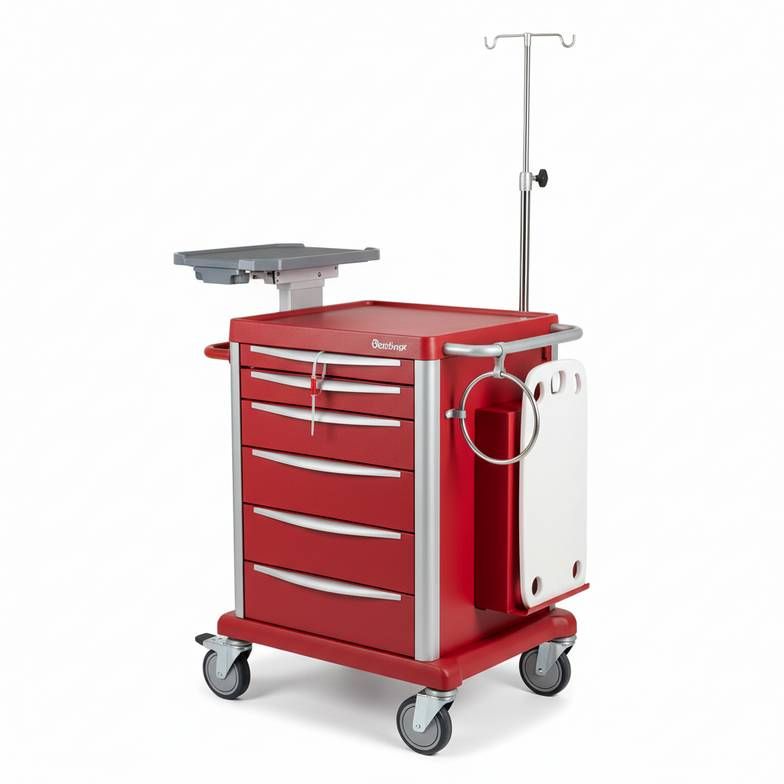
A proper emergency trolley is designed for speed and reliability under pressure. It must feature a tamper-evident locking system, logically organized drawers for ACLS protocols, and dedicated mounts for essential equipment like a defibrillator and an oxygen tank.
Dive Deeper: Seconds Count, So Features Must Be Flawless
When sourcing an emergency cart, there is no room for compromise. This isn't a general-purpose trolley; it's a piece of life-saving equipment. Its design philosophy is completely different from that of a standard treatment cart.
The Non-Negotiable Locking System
The most critical feature is the tamper-evident lock. This is usually a single-use plastic lock or a numbered tag that breaks when the cart is opened.
Why is this so important? It provides an immediate visual cue. If the lock is intact, staff know the cart is fully stocked and ready. If the lock is broken, it signals that the cart has been used and needs to be immediately inventoried and restocked. This simple system prevents the catastrophic discovery of missing supplies during a real emergency. From a procurement standpoint, you must ensure the trolley is compatible with these single-use locks.
Standardized Organization for Intuitive Use
During a crisis, staff from different departments may respond. They don't have time to search for things. The layout of an emergency cart must be standardized and intuitive. While layouts can vary slightly between facilities, they often follow ACLS (Advanced Cardiovascular Life Support) guidelines.
Here is a common layout we see requested:
| Drawer # | Typical Contents | Key Procurement Consideration |
|---|---|---|
| Drawer 1 | Airway Equipment: Laryngoscopes, endotracheal tubes, masks | Must be easy to open instantly. Often the shallowest drawer. |
| Drawer 2 | IV & Circulation Supplies: Catheters, syringes, tourniquets, saline | Needs configurable dividers to keep small items organized. |
| Drawer 3 | Medications: Epinephrine, atropine, lidocaine, etc. | Should be secure. Many facilities use lockable boxes within the drawer. |
| Drawer 4 | Pediatric Supplies (optional): Broselow Tape, smaller tubes/needles | If it's a combined cart, this section must be clearly labeled. |
| Drawer 5 | Miscellaneous & Procedure Kits: Sutures, gloves, IV start kits | Usually a deeper drawer for bulkier items. |
Core Accessories That Aren't Optional
For an emergency cart, certain "accessories" are actually core components. When requesting a quote, make sure these are included:
- Defibrillator Shelf: Should be sturdy and able to swivel for easy viewing.
- IV Pole: Telescoping and securely mounted.
- Oxygen Tank Holder: Firmly attached to the side or back of the cart.
- Cardiac Board: Stored on the back of the cart for providing a firm surface during CPR.
When you buy an emergency medical trolley, you're buying a system designed for performance under extreme pressure. Verify every one of these features before making a purchase.
What Distinguishes Anesthesia Medical Trolleys from Others?
Anesthesiologists manage a complex and high-risk array of medications and equipment. Giving them a generic trolley is like asking a pilot to fly with the wrong instruments—it's inefficient, confusing, and introduces unnecessary risk.
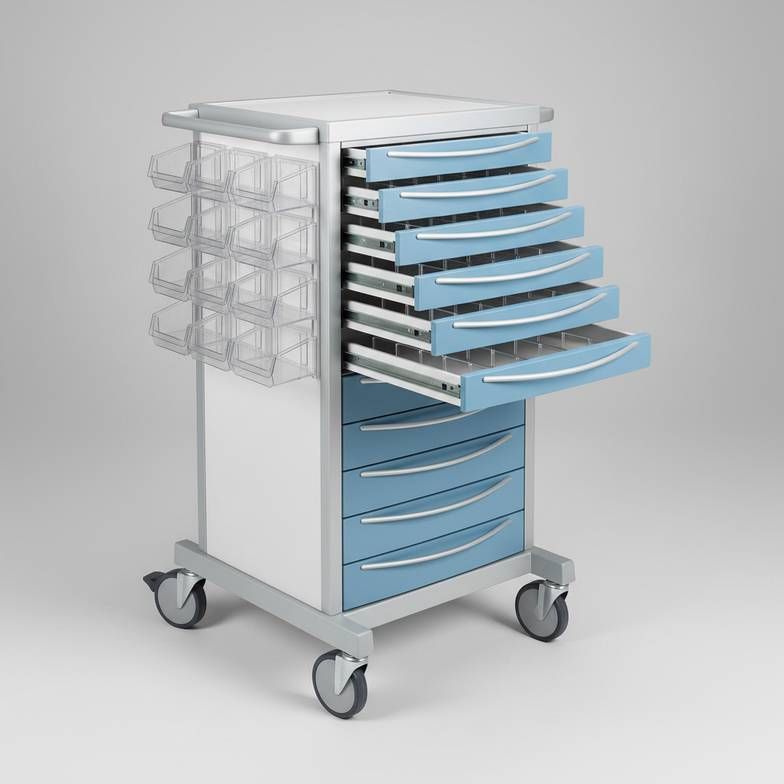
Anesthesia trolleys are highly specialized for medication management in the operating room. They are defined by having a large number of small, clearly labeled drawers with dividers, a secure locking system, and often feature tilting bins for rapid access to vials and ampules.
Dive Deeper: Precision and Organization for the OR
The anesthesia trolley is the anesthesiologist’s mobile command center. Its entire design is focused on organizing dozens of different drugs and supplies to ensure the right medication can be found and administered quickly and without error.
It's All About the Drawers
Unlike a treatment cart that needs space for bulky dressings, an anesthesia cart prioritizes the separation of many small items.
- High Drawer Count: It's common to see anesthesia medical trolleys with 6, 8, or even 10 drawers. Most of these are shallow.
- Configurable Dividers: This is critical. Each drawer should come with plastic dividers that can be arranged to create small, custom-sized compartments for different ampules, vials, and syringes. This prevents look-alike drugs from being stored next to each other.
- Labeling Space: Every drawer face should have a slot for a label. Clear, consistent labeling is a cornerstone of medication safety in anesthesia.
Smart Features for Quick Access
Beyond the drawers, several features are unique to anesthesia workflows:
- Tilting Side Bins: Many models include clear plastic bins mounted on the side that tilt forward. This is a classic feature for a reason—it allows the anesthesiologist to see and grab frequently used supplies without opening a single drawer.
- Accessory Rails: A rail system (often a standard DIN rail) allows for mounting monitors, syringe pumps, or other small electronic devices directly onto the cart.
- Secure Locking: Because these carts contain a large volume of controlled substances, a robust central locking system is mandatory. We are increasingly getting requests for keyless electronic locks (keypad or card-based) which provide a better audit trail of who accessed the cart and when.
When I work with a client on an anesthesia cart, the conversation always starts with, "How many different medications do you need to organize?" The answer to that question dictates the entire configuration of the trolley.
When Should You Choose Stainless Steel Medical Trolleys?
Your facility's cleaning protocols use harsh chemicals to ensure total sterility. But are your trolleys built to withstand that daily assault? Or will they start to rust, pit, and degrade, compromising hygiene and costing you money in premature replacements?
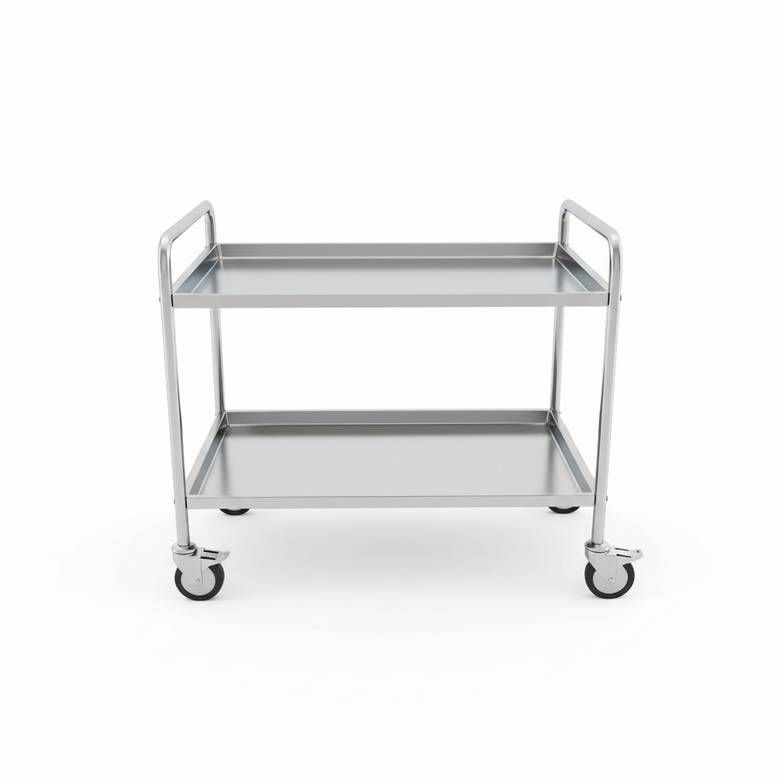
You should choose stainless steel medical trolleys for any environment with aggressive cleaning protocols or high sterility requirements. This includes the CSSD (Central Sterile Services Department), operating rooms, surgical suites, and laboratories.
Dive Deeper: Not All Steel is Created Equal
When the specification calls for "stainless steel," a savvy procurement manager should immediately ask, "Which grade?" This single detail has a massive impact on the product's longevity and suitability. A frequent point of confusion I see with buyers is the difference between Grade 304 and Grade 201 steel.
The Critical Difference: 304 vs. 201 Stainless Steel
- Grade 304 Stainless Steel: This is the industry standard for medical and food-grade applications. It contains a high percentage of chromium and nickel, which gives it excellent resistance to corrosion and rust, even when exposed to a wide range of sterilizing agents, chlorides, and acids. It costs more, but for a CSSD or OR environment, its durability makes it the most cost-effective choice in the long run.
- Grade 201 Stainless Steel: This is a lower-cost alternative that substitutes manganese for much of the nickel. While it looks shiny and new out of the box, it has significantly lower corrosion resistance. In a sterile environment with frequent chemical wipe-downs, 201 steel is prone to pitting and rusting over time. It may be acceptable for dry storage or administrative areas, but it's a major risk for sterile applications.
Design for Ultimate Cleanability
Stainless steel trolleys, especially simple instrument trolleys, have a minimalist design for a reason. The entire structure is optimized for easy and thorough cleaning.
- Fully Welded Construction: Look for trolleys with smooth, continuous welds. This eliminates seams, gaps, and crevices where bacteria and contaminants can hide.
- Seamless Shelves: The shelves should have raised edges (often called "marine edges") to contain spills, and the corners should be rounded and smooth.
- High-Quality Casters: The casters themselves should be designed to resist chemical damage and should be easy to clean.
- Minimalism is a Feature: A simple two-shelf instrument trolley isn't "lacking features." Its simplicity is the feature. It provides a flat, stable, and completely sterilizable surface for laying out surgical instruments.
When buying a stainless steel trolley, always confirm the steel grade (insist on 304 for sterile areas) and verify that the construction is fully welded.
Frequently Asked Questions
What's the difference between an emergency cart and a treatment cart?
An emergency cart is a specialized tool for life-threatening events, featuring a tamper-evident lock and a standardized layout for resuscitation supplies. A treatment cart is a general-purpose workhorse for routine daily tasks like wound care and medication rounds, where maneuverability and versatile storage are the top priorities.
How important are the casters on a medical trolley?
Casters are extremely important and often overlooked. High-quality, silent medical casters reduce noise, are easier for staff to push, and last much longer. Specifying durable casters with reliable brakes is a smart investment that prevents future maintenance headaches and directly improves your staff's daily experience.
Can I customize the drawers on a medical trolley?
Yes, for most ABS plastic trolleys, customization is a key feature. As a supplier, we frequently work with clients to configure the number and height of drawers to match their specific storage needs. Don't hesitate to ask your supplier about the available configuration options before placing an order.
Should I choose an ABS plastic or stainless steel trolley?
It depends entirely on the department. ABS plastic is lightweight, cost-effective, and allows for excellent molded organization, making it ideal for general wards. Grade 304 stainless steel is essential for sterile environments like operating rooms or CSSD, where maximum durability and resistance to harsh cleaning chemicals are non-negotiable.
Conclusion
Choosing the right medical trolleys comes down to a simple principle: match the product to the workflow. It's not about finding a single "best" model, but about carefully specifying the features—materials, drawers, casters, and accessories—that fit the unique demands of each hospital department. From a lightweight treatment cart for ward rounds to a corrosion-resistant stainless steel trolley for the CSSD, a thoughtful procurement process based on function is your best tool for avoiding risk, satisfying staff, and making a smart long-term investment.
At CareFurnex, we help medical facility planners, project buyers, and distributors navigate these choices every day. If you need help reviewing specifications for your project or want to explore the different types of medical trolleys to suit your needs, contact our team. We're here to provide practical, no-nonsense guidance for your procurement process.
Written by
CareFurnex Team
CareFurnex Team shares practical knowledge about hospital beds, patient room furniture, medical trolleys, clinic furniture, and healthcare facility procurement for international B2B buyers.
Related Products
Medical Trolleys
Mobile carts for nursing rounds, treatment supplies, medicines, and clinical tools.
View productInstrument Trolleys
Mobile instrument trolleys for clinics, treatment rooms, wards, and healthcare departments.
View product
Hospital Beds
General-purpose patient beds for inpatient wards and standard hospital rooms.
View product