
Are you sourcing medical furniture and feeling overwhelmed by the paperwork? You know you need certificates, but it's tough to tell which ones are critical and which are just noise. This uncertainty is stressful. You might waste time chasing useless documents, or worse, you could miss a crucial one and face customs delays, safety issues, or receive products that don't match your order. The solution is to stop using a generic checklist and start requesting specific medical furniture certificates and technical documents that tackle the real-world risks of your project.
The most important technical documents and certificates for medical furniture are those that address three key areas of risk: regulatory compliance (like CE or FDA for market access), operational quality (like material specifications and load-test reports), and logistical security (like detailed packing lists and export packaging photos). Instead of a simple checklist, buyers should request specific documents that prove a product’s safety, durability, and compliance for their intended use and market.

Having a document is one thing, but knowing what to look for in that document is the real skill. The goal isn't just to collect papers; it's to build a clear picture of the product, the supplier, and the shipping process to ensure a successful delivery. Let's break down the key documents you should ask for and why they matter.
What Regulatory Documents Are Essential for Medical Furniture Certificates?
The first question I always get from buyers is, "Do you have CE?" or "Is it FDA registered?" It's a natural starting point. The problem is, a simple "yes" from a supplier can be dangerously misleading. It might leave you with a certificate that doesn't even apply to the specific hospital bed or medical trolley you're buying. You need to ask more precise questions to confirm that the compliance documents are truly relevant to your order.
Essential regulatory documents depend entirely on your market—for example, CE for Europe or FDA for the United States. The most critical step is to verify that the certificate or registration number applies to the exact product model you are purchasing, not just a similar one from the same factory.
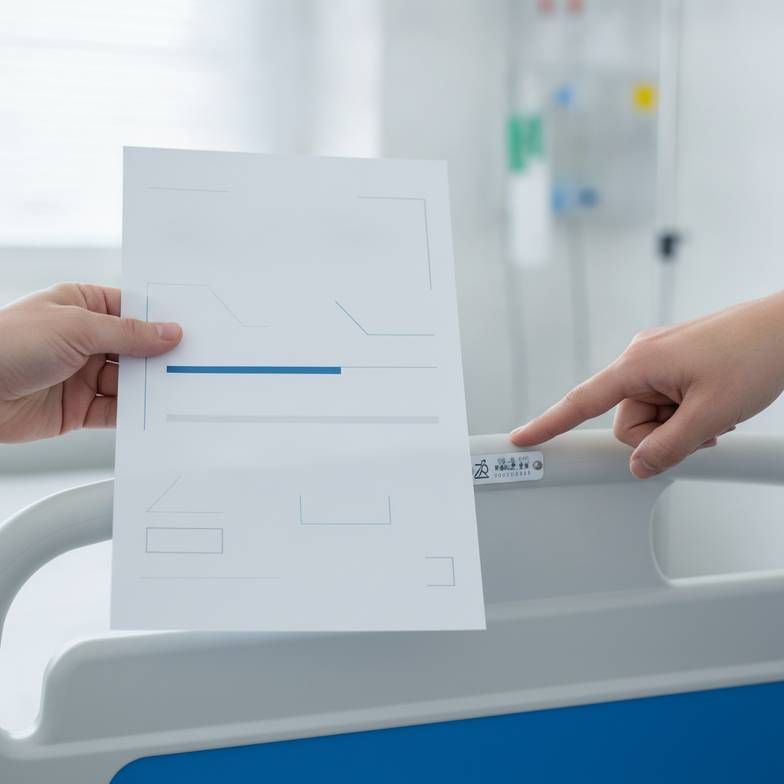
The "CE Certificate" Trap
Many buyers see a CE certificate and think their due diligence is done. But it's not that simple. Here's what to look for:
- Type of Document: Is it a Declaration of Conformity (DoC) or a certificate from a Notified Body? A DoC is a self-declaration by the manufacturer. For higher-risk products like some electric hospital beds, a certificate from an independent third-party (a Notified Body) carries more weight.
- Model Number Match: This is the most common trap. I've seen suppliers provide a CE certificate for a basic, two-function manual bed to "prove" compliance for a complex, five-function electric ICU bed. These are completely different products from a regulatory standpoint. Always check that the model number on the certificate matches the model number on your quotation.
- Product Scope: CE requirements for a non-powered bedside cabinet are very different from a powered medical device. Make sure the document's scope is appropriate for the product you're buying.
FDA and Other Market-Specific Rules
For the U.S. market, the FDA is the governing body. Many hospital furniture items, like patient examination tables and some beds, are considered Class I medical devices. These typically require the manufacturer to be registered with the FDA and the device to be listed. This is a different process from the CE system and must be verified separately.
Because regulations are complex and change often, I always advise buyers to consult a local expert for their specific country. As your sourcing partner, our job is to provide the documents our factory partners have. Your responsibility is to confirm they meet your local legal requirements.
What to Ask Your Supplier
Don't just ask, "Do you have CE?" Get specific. Here are the questions you should be asking:
- "Could you please send me the full CE certificate (or Declaration of Conformity) for the exact model [insert model number]?"
- "Does this certificate cover the specific configuration I am ordering, including the specified motors and casters?"
- "Can you confirm the name of the Notified Body that issued this certificate so I can verify it?"
- "For shipment to the USA, can you provide the FDA establishment registration and device listing numbers for this product?"
What Operational Documents Prove Product Quality Beyond Medical Furniture Certificates?
A CE mark might tell you a product can be sold in Europe, but it tells you nothing about whether it's well-made. It won't tell you if the steel frame is sturdy, if the casters will break after a month, or if the bed can actually support the advertised weight. These are huge operational risks that standard medical furniture certificates don't cover. To protect yourself, you need to request technical documents that prove the product's construction, materials, and performance.
To prove quality beyond standard certificates, request material specification sheets (e.g., steel thickness, foam density), component brand details (for motors, casters, gas springs), and third-party load-bearing or durability test reports. These documents provide tangible proof of a product's real-world capabilities.
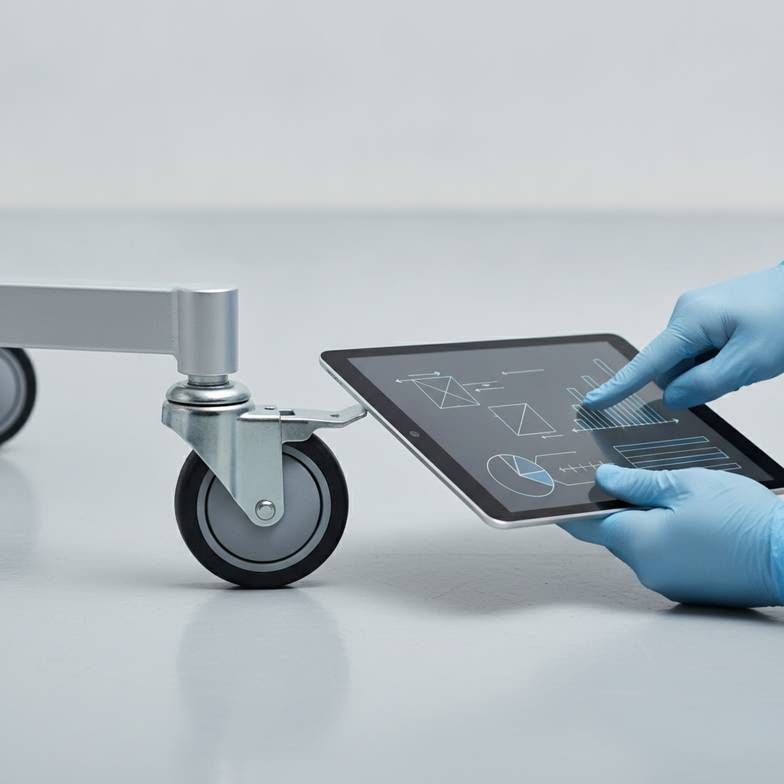
Material and Component Specifications
This is where you get into the real details of what you're buying. Two beds that look identical in a photo can have dramatically different quality levels. For example:
- Hospital Beds: Ask for the thickness of the steel frame. Is it 1.2mm, 1.5mm, or even 2.0mm cold-rolled steel? What is the grade of the ABS or PP plastic used for the head and foot boards? For the mattress, what is the foam density in kg/m³? Higher density means better support and longer life.
- Medical Trolleys: For stainless steel products, the grade is everything. Is it Grade 304 (corrosion-resistant, suitable for clinical environments) or the cheaper Grade 201 (which can rust)? What brand are the casters, and what is their diameter? Good casters make a trolley a pleasure to use; cheap ones are a constant frustration.
Here’s a quick way to think about it:
| Document Request | What It Proves | Risk It Reduces |
|---|---|---|
| Material Spec Sheet | Steel thickness, plastic grade, foam density | Product failure, premature wear and tear, looking cheap. |
| Component Brand List | Motor (e.g., Linak, Timotion), Casters (e.g., Tente) | Failure of critical moving parts, future maintenance headaches. |
| Load Test Report | The true Safe Working Load (SWL) | Catastrophic failure, patient and caregiver safety risks. |
The Power of the QC Checklist
A good supplier doesn't just check for quality at the end; they have a process. Ask them for a blank copy of their pre-shipment inspection checklist for your product category. This is an incredibly revealing document. It shows you what they consider important enough to check.
As a sourcing partner, we at CareFurnex have developed our own detailed checklists based on years of experience and seeing what can go wrong. Our list for a medical cart, for example, includes checks for welding quality, surface finish, drawer smoothness, lock function, caster rotation, and accessory installation. Seeing this process gives you confidence that quality is being actively managed, not just hoped for.
What Documents Should You Request to Evaluate the Supplier Itself?
You've checked the product documents, but what about the company you're sending thousands of dollars to? It's often hard to tell if you're dealing with a massive factory, a small workshop, or a trading company that just forwards emails. You need to request documents that shine a light on the supplier's quality management system and their actual role in the supply chain.
To evaluate a supplier, request their business license to confirm their legal status and scope. For manufacturers, ask for their ISO 9001 (quality management) and ISO 13485 (medical devices) certificates. For a sourcing partner like us, it's more important to see our factory vetting process and sample QC reports from past orders.
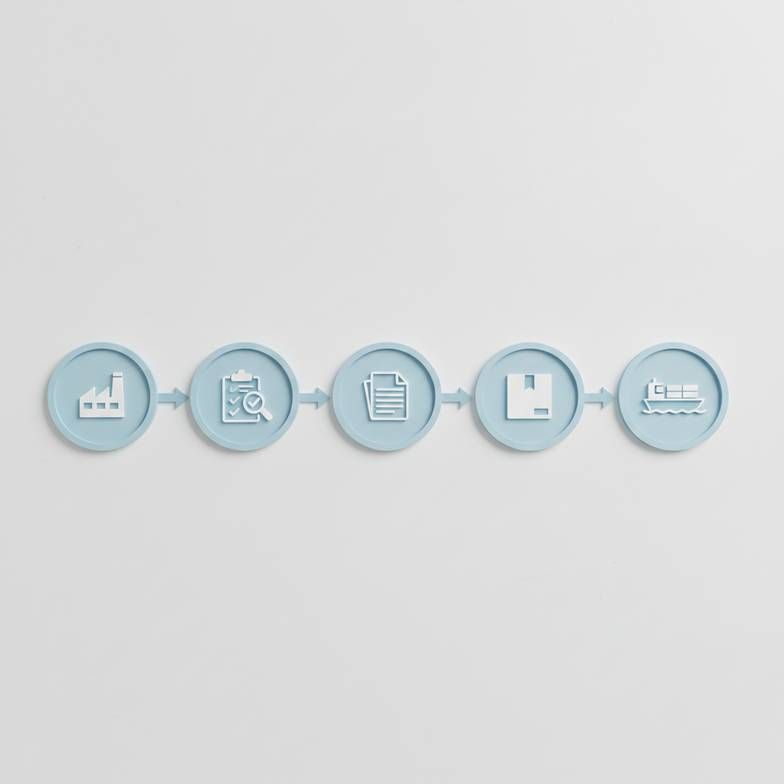
For a Direct Factory
If you're buying directly from a company that claims to be the manufacturer, these certificates are key:
- ISO 9001: This is a general Quality Management System (QMS) standard. It shows the company has basic processes for things like document control and continuous improvement. It's a good baseline but isn't specific to medical products.
- ISO 13485: This one is much more important for medical furniture. It's the international standard for a QMS specifically for medical devices. If a factory making electric ICU beds has a valid ISO 13485 certificate, it’s a very strong positive signal that they take quality and safety seriously.
Important: Always ask for the actual certificate and check that it's valid, applies to the factory location you're dealing with, and was issued by a reputable certification body.
For a Sourcing Partner (Like Us)
The value of a sourcing partner isn't that we hold a factory's ISO certificate ourselves. Our value is in our process. The questions and document requests should be different.
At CareFurnex, we don't pretend to manufacture every bed, trolley, and cabinet ourselves. That would be impossible to do well. Instead, we have a network of specialized partner factories, and our expertise is in matching your project to the right factory and then managing the process from quotation to shipment.
The documents that prove our value are different. You should ask a sourcing partner:
- "Can you describe your process for selecting and auditing your partner factories?"
- "Can you show me a sample (anonymized) pre-shipment inspection report you completed for a similar product?"
- "What is your standard procedure if you find a quality issue during your inspection?"
The proof is in our process documentation and the detailed reports we create for our customers. This transparency is how we build trust.
Are There Critical Documents for Shipping Beyond Medical Furniture Certificates?
You've done everything right. Your medical furniture is perfectly specified, fully certified, and produced by a great factory. But all that hard work is for nothing if the products arrive damaged, with missing parts, or get stuck at your port because of sloppy paperwork. You must treat logistical documents with the same seriousness as you treat product certificates.
Yes, absolutely. Beyond the standard medical furniture certificates, critical shipping documents include a detailed packing list (with dimensions and weights), photos confirming export-grade packaging (like reinforced cartons or pallets), and a final container loading plan with photos. These documents are essential for avoiding damage, customs issues, and frustration at the receiving end.
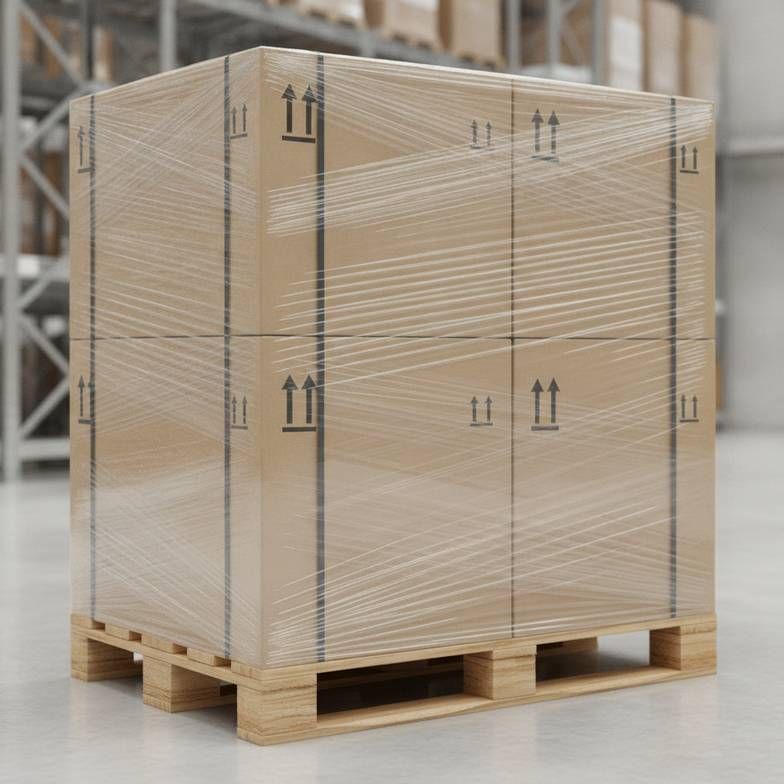
The Packing List Is Your Receiving Bible
A simple invoice isn't enough. A detailed packing list should show the contents of every single carton, along with its dimensions (CBM), net weight, and gross weight. This is vital for several reasons:
- Receiving: Your warehouse team can use it to check in the shipment accurately and quickly identify if anything is missing.
- Freight Costs: It allows you to verify the total volume and weight, ensuring the freight charges are correct.
- Customs: A clear and accurate packing list smooths the customs clearance process.
We always prepare a detailed packing list and have the buyer confirm it before the container is sealed.
Demand Photographic Evidence
A line on a quote that says "export packing" is meaningless. You need proof. A professional supplier should have no problem providing photos of the entire packing and loading process. Ask for pictures of:
- The product being wrapped and placed into its carton.
- The finished, sealed carton with your shipping marks clearly visible.
- The cartons being stacked and secured on a pallet (if applicable).
- The container loading process, showing how everything is arranged and braced.
This is a standard part of our service at CareFurnex. It gives you incredible peace of mind and creates a vital record in the unlikely event you need to make a shipping insurance claim.
Official Shipping Documents
Finally, make sure the official documents like the Bill of Lading (B/L), Commercial Invoice, and any country-specific requirements like a Certificate of Origin are perfect. All details—company names, product descriptions, quantities, and values—must be 100% consistent across all documents to avoid costly delays at your port.
Frequently Asked Questions
Is an ISO 9001 certificate enough for medical furniture?
It's a good start, showing a general quality system, but it's not specific to medical products. For items like electric beds or examination tables, an ISO 13485 certificate held by the manufacturer is a much stronger indicator of relevant quality control and risk management.
If a supplier has a CE certificate, is the product quality guaranteed?
No. A CE certificate indicates the product meets EU safety, health, and environmental requirements, allowing it to be sold there. It is not a guarantee of durability, material quality, or long-term performance. You must request separate technical documents like test reports and material specifications to verify actual product quality.
What's the most overlooked document when buying medical furniture?
Often, it's not a formal certificate but practical evidence. Photos of the actual production in progress, the pre-shipment inspection report with clear images of any findings, and pictures of the container loading process are incredibly valuable. They provide real-time proof that what you ordered is what's being shipped.
How do I know if a certificate is real?
You should try to verify it. Check the certificate number with the issuing body—the certifier's name and website should be on the document. Be cautious of certificates that look overly generic or lack specific model numbers. If in doubt, ask the supplier for the contact information of the certifier so you can perform your own check.
Conclusion
Sourcing medical furniture successfully requires moving beyond a simple checkbox mentality. You need to adopt a risk-based approach to documentation. This means requesting a thoughtful mix of regulatory, operational, and logistical documents to get a complete picture. Always verify that medical furniture certificates apply to your specific model. Understand your supplier's role—whether they are a factory or a sourcing partner—and ask for the right kind of evidence to prove their capability. Ultimately, collecting the right technical files isn't about creating paperwork; it's about protecting your investment, ensuring patient and caregiver safety, and executing a successful project from start to finish.
If you are planning a healthcare project and need a partner who understands the importance of proper documentation, contact CareFurnex. We help you navigate the complexities of sourcing and ensure your medical furniture procurement is secure from specification to delivery.
Written by
CareFurnex Team
CareFurnex Team shares practical knowledge about hospital beds, patient room furniture, medical trolleys, clinic furniture, and healthcare facility procurement for international B2B buyers.
Related Products
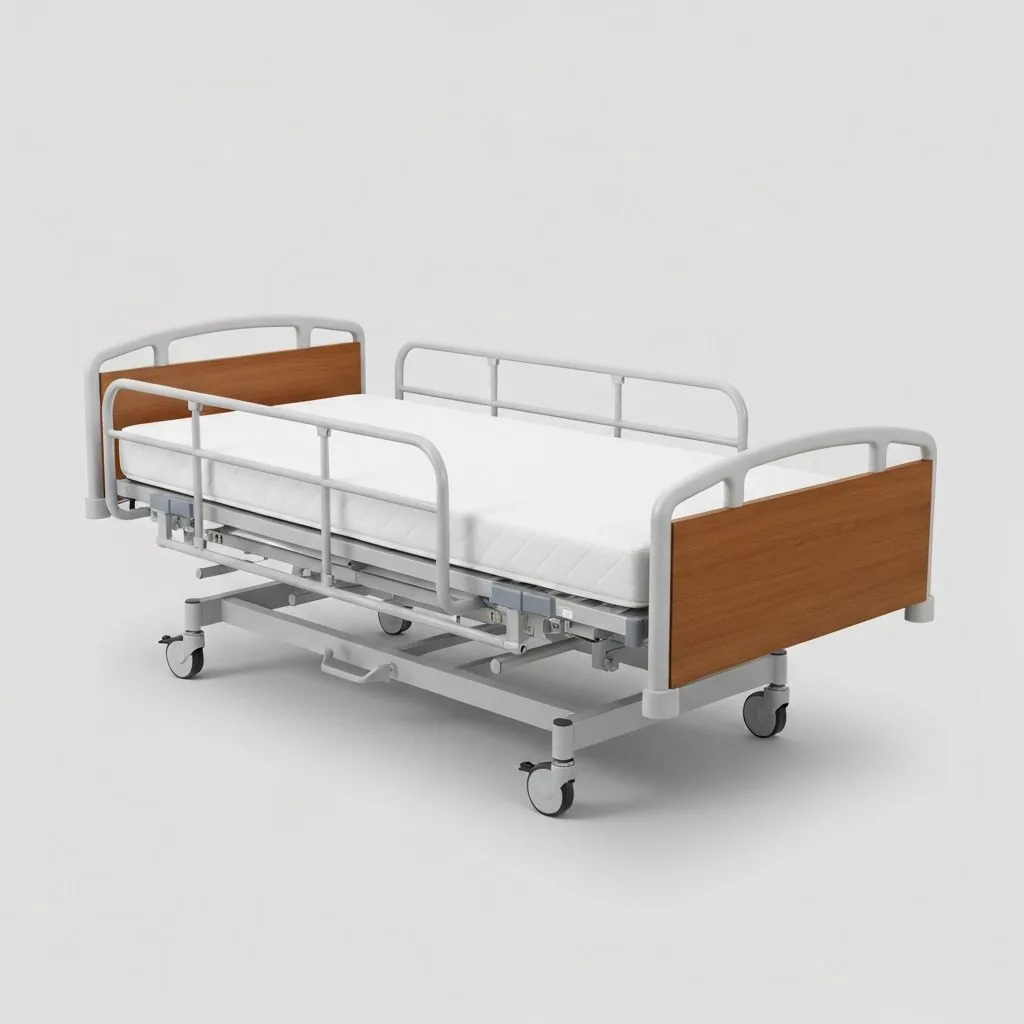
Hospital Beds
General-purpose patient beds for inpatient wards and standard hospital rooms.
View product
Ward Furniture
Complete ward furniture options for patient rooms and hospital care areas.
View product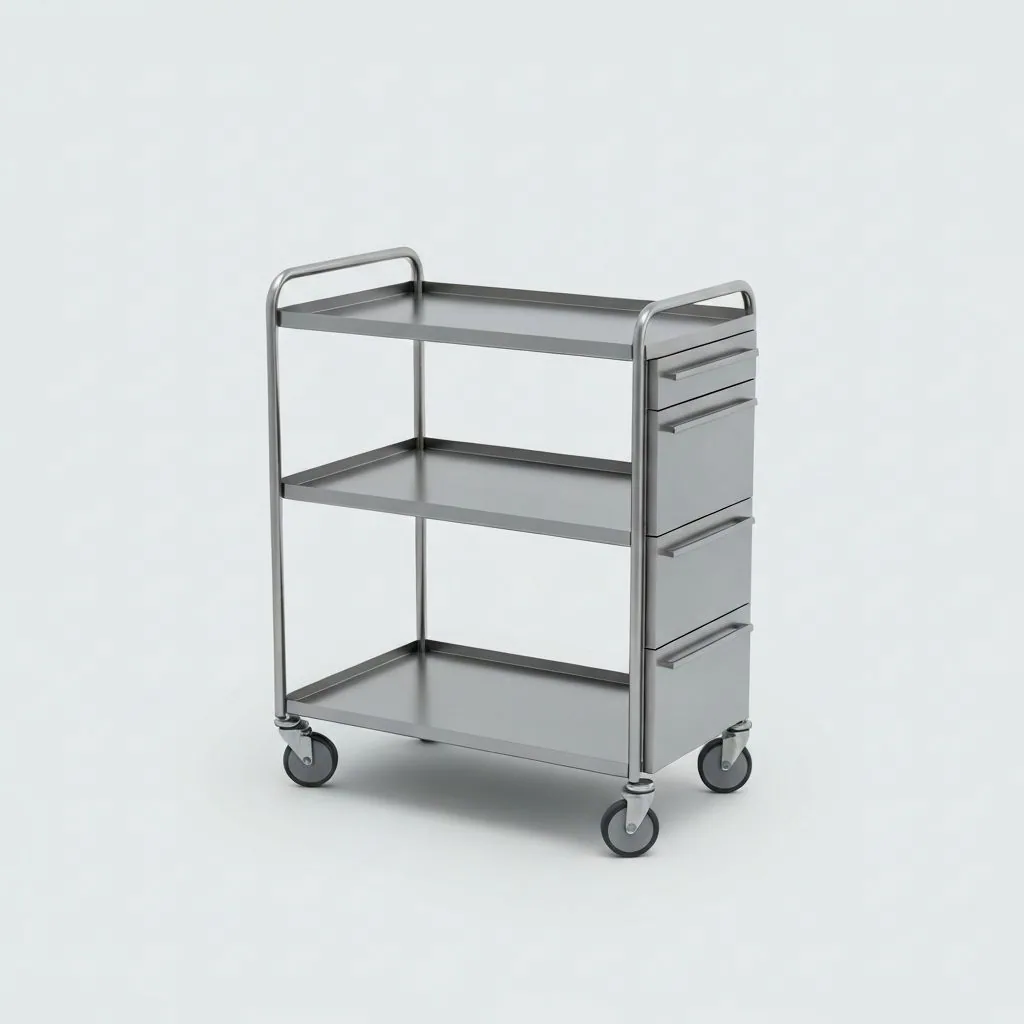
Medical Trolleys
Mobile carts for nursing rounds, treatment supplies, medicines, and clinical tools.
View product