
Struggling to figure out how long your new hospital waiting chairs will actually last? You're getting different answers from every supplier, and you're worried about making a costly mistake on furniture that quickly looks worn, becomes wobbly, or fails entirely. The solution isn't to find a magic lifespan number, but to understand the specific product variables that create real-world durability.
The lifespan and load capacity of hospital waiting chairs are not fixed guarantees but are direct outcomes of material selection, structural design, the intensity of the usage environment, and—most importantly—a consistent maintenance plan. A chair’s durability is determined by tangible factors like steel frame thickness, weld quality, and upholstery grade, not just by a number in a brochure.
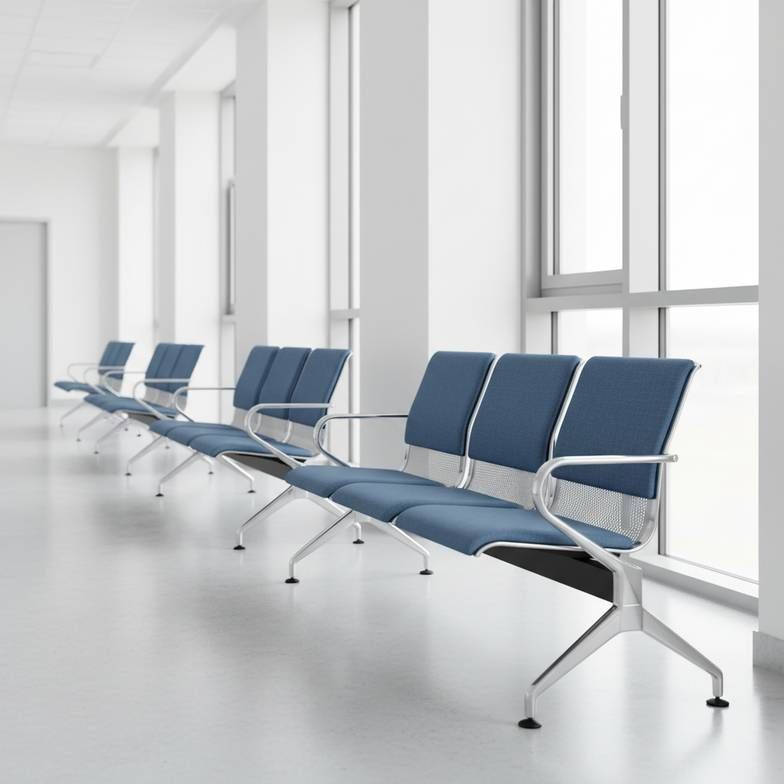
Now that we've established the core principles, let's break them down. Understanding these details is the key to moving beyond vague promises and making a procurement decision that ensures safety, longevity, and a better return on your investment.
How Does Material Choice Affect the Durability of Hospital Waiting Chairs?
You see "steel frame" on a spec sheet, but what does that really mean for the chair you're buying? Choosing the wrong material can lead to chairs that scratch easily, rust in humid climates, or simply can't handle the daily wear and tear of a busy clinic.
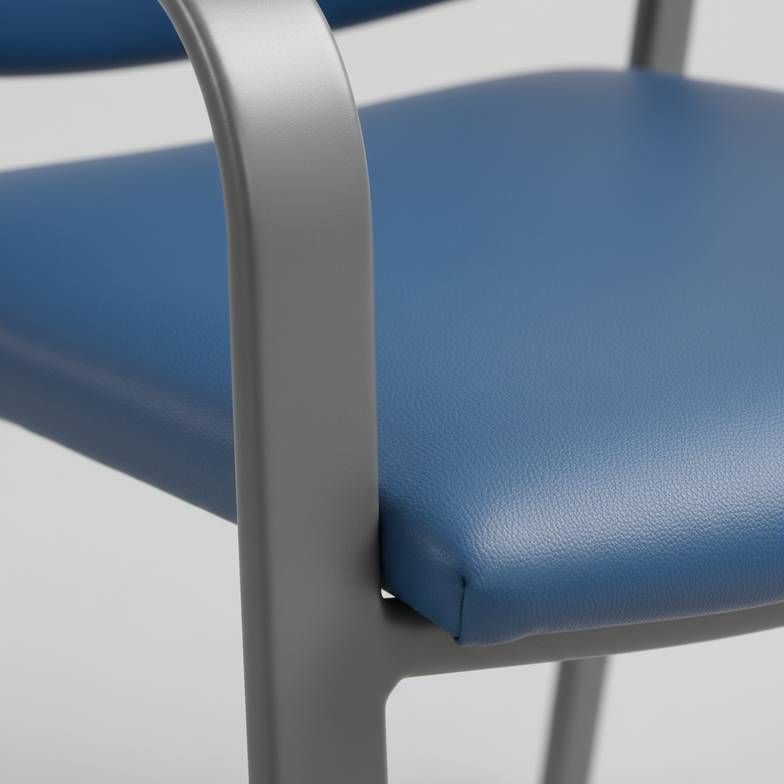
The material of the frame and upholstery directly impacts the chair's resistance to physical stress, cleaning chemicals, and daily abrasion. Higher-grade materials like powder-coated steel and medical-grade vinyl will significantly outperform lower-cost alternatives over time.
Dive Deeper
In my experience helping clients source furniture, the conversation about materials is one of the most important. It's where you separate a chair that looks good from a chair that is good.
Frame Materials: Steel vs. Aluminum
The frame is the backbone of any waiting chair. The two most common options are steel and aluminum, and they are not interchangeable.
- Steel: This is the workhorse for most high-traffic healthcare environments. It's strong, offers a high load capacity, and is cost-effective. However, not all steel is equal. You should ask your supplier about the steel gauge (thickness)—a thicker gauge means more strength. More importantly, look for a powder-coated finish. This is much more durable than simple paint; it resists scratches, chipping, and harsh cleaning agents far better. For areas with high humidity or near coastal regions, you might even consider stainless steel to prevent rust, though it comes at a higher price.
- Aluminum: Aluminum is lighter than steel and naturally resistant to rust, which is a plus. However, it's generally not as strong as steel and can be more susceptible to dents and deep scratches. It’s often used in designs where weight is a concern or a specific aesthetic is desired, but for a 24/7 emergency room waiting area, a robust steel frame is usually the more reliable choice.
Upholstery: More Than Just Color
The seat and backrest material is what your patients interact with directly. It needs to be comfortable, easy to clean, and incredibly tough.
- Medical-Grade Vinyl (PVC): This is the industry standard for a reason. It’s non-porous, making it resistant to spills and easy to disinfect—a critical feature for infection control. It's also highly durable and resistant to tearing and cracking.
- Polyurethane (PU): PU is a softer, more leather-like alternative. While it can feel more premium, some lower-quality PU fabrics can be prone to peeling or cracking over time, especially with frequent use of harsh disinfectants. If you opt for PU, you must verify that it's rated for commercial or healthcare use.
Here’s a simple table I use to help clients compare their options:
| Feature | Powder-Coated Steel Frame | Standard Painted Steel Frame | Medical-Grade Vinyl Upholstery | Standard PU Upholstery |
|---|---|---|---|---|
| Durability | Excellent | Fair to Good | Excellent | Good |
| Scratch Resistance | High | Low | High | Moderate |
| Ease of Cleaning | Excellent | Good | Excellent | Good (but check disinfectant compatibility) |
| Long-Term Risk | Low | Chipping, Rust | Low | Peeling, Cracking |
| Best For | High-traffic ERs, Clinics | Low-traffic private offices | All healthcare settings | Lower-traffic specialist clinics |
When you get a quote, don't just accept "steel and PU." Ask for the specifics: "What is the steel thickness?" and "Is the upholstery rated for healthcare environments and resistant to common hospital disinfectants?"
What's More Important for Load Capacity: Welded or Bolted Frames?
You're comparing two seemingly identical chairs, but one has a fully welded frame and the other is bolted together. Does it really make a difference? Yes, it absolutely does. A loose joint can quickly turn a sturdy chair into a wobbly liability, creating a safety risk and a maintenance nightmare.
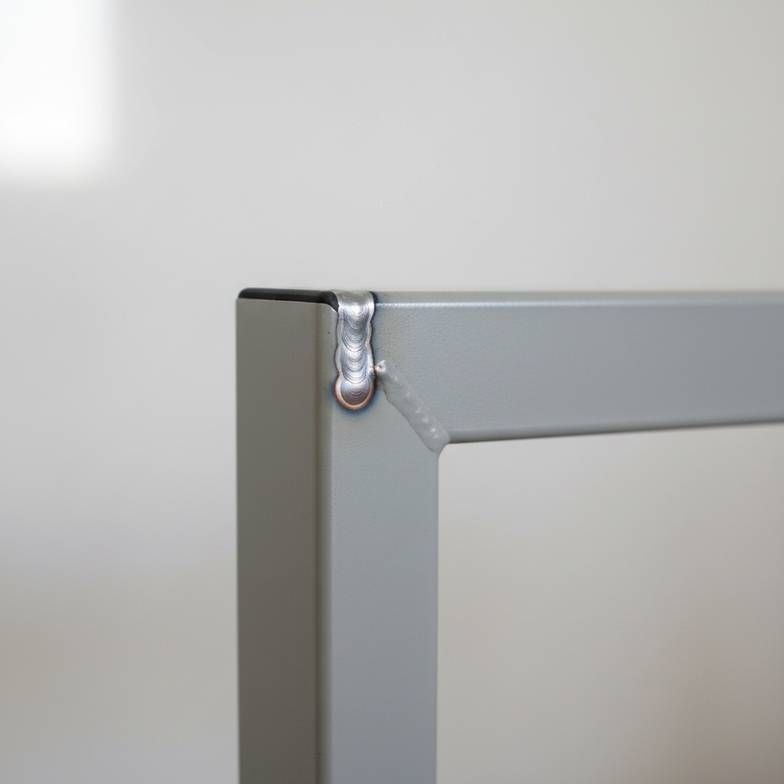
For maximum long-term stability and load capacity in high-use hospital waiting chairs, a fully welded frame is almost always superior to a bolted one. Welded joints create a single, rigid structure that eliminates the risk of fasteners loosening over time.
Dive Deeper
This is a point I often discuss with procurement managers. The way a chair is held together is just as important as the material it's made from. Think of it this way: a chain is only as strong as its weakest link. In waiting chairs, the joints are often that link.
The Case for Welded Frames
A fully welded frame means the major structural components are permanently fused together.
- Strength and Rigidity: There are no moving parts to loosen. The entire frame acts as one solid piece, distributing weight and stress more evenly. This is crucial for achieving a high, reliable load capacity. When a supplier claims a 150 kg (330 lbs) capacity per seat, a welded frame provides confidence that it can handle that load repeatedly, day after day.
- Zero Maintenance Joints: You will never have to send a maintenance technician to tighten bolts on a welded frame. This saves significant labor costs and downtime over the chair's lifespan. In a hospital with hundreds of chairs, this is not a small benefit.
- Safety: A wobbly chair is a safety hazard. Welded frames prevent the gradual loosening that can lead to structural failure.
When are Bolted Frames Acceptable?
Bolted (or knock-down) construction isn't inherently bad, but its application needs to be right.
- Shipping and Logistics: Bolted chairs can be shipped flat-packed, which can significantly reduce freight volume and cost. I've worked on projects where this was the deciding factor due to budget constraints on shipping.
- Modularity: This design allows for easier replacement of individual parts. If an armrest is damaged, you can theoretically unbolt it and replace just that piece.
- The Catch: The bolts will loosen over time with constant use. This is not a possibility; it's a certainty. Therefore, if you choose bolted chairs, you must commit to a regular maintenance schedule of checking and tightening all fasteners. If you don't have the staff or discipline for this, a bolted chair will not last.
Smart buyers don't just ask about load capacity; they ask for proof. Request documentation showing the chair has passed industry-standard tests like BIFMA (Business and Institutional Furniture Manufacturer's Association). A BIFMA test report isn't just a piece of paper; it's documented evidence that the chair's design, including its joints, can withstand specific static and dynamic loads.
Why is Maintenance Planning Crucial for Hospital Waiting Chairs?
You've invested in high-quality chairs with welded frames and durable upholstery. Is your job done? Not even close. Without a plan to care for them, even the best hospital waiting chairs will fail prematurely, wasting your investment and compromising patient safety.
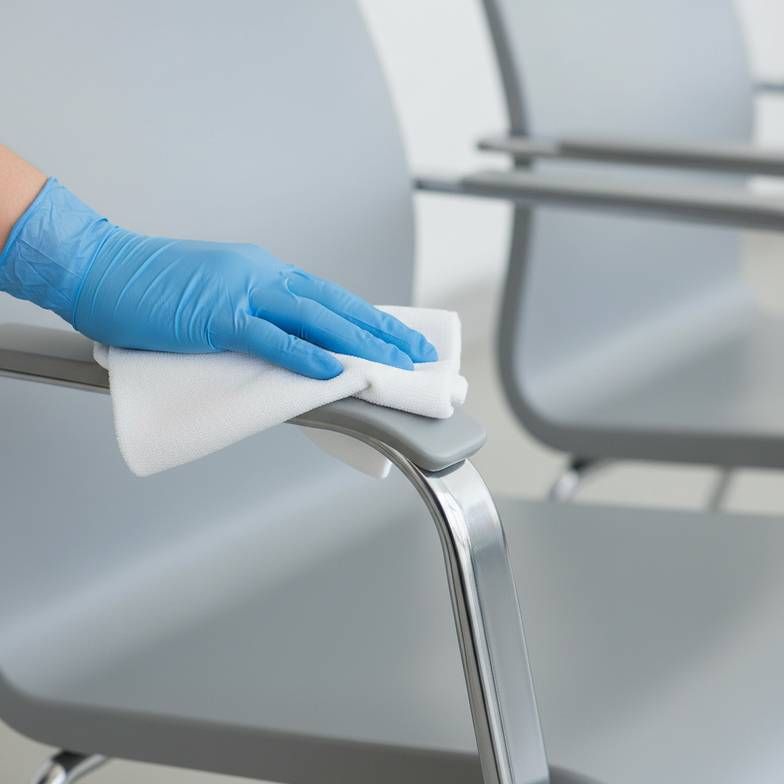
A proactive maintenance plan is the single most critical factor in extending the functional lifespan of your chairs. Regular inspection and cleaning prevent small issues like loose armrests or small tears in the vinyl from becoming major, unfixable problems.
Dive Deeper
Let's be practical. Lifespan isn't a passive feature you buy; it's an outcome you actively manage. I've seen expensive chairs ruined in two years from neglect and cheap chairs last for seven years because of excellent care. Your maintenance plan doesn't have to be complicated, but it does need to be consistent.
Here is a simple, three-tiered maintenance checklist you can adapt for your facility.
Daily & Weekly Tasks
These are the basics that should be part of your regular janitorial workflow.
- [ ] Daily Cleaning: Wipe down all surfaces (seats, backs, armrests, frames) with a hospital-grade disinfectant approved for the upholstery material. This is non-negotiable for infection control.
- [ ] Weekly Visual Scan: Have staff walk the waiting areas and quickly look for obvious issues:
- Are there any large rips or tears in the upholstery?
- Is there any visible damage to the frame, like deep scratches or dents?
- Is any chair noticeably wobbly or unstable? (If so, remove it from service immediately).
Monthly & Quarterly Inspections
This is a more hands-on check that requires a dedicated staff member.
- [ ] Check All Fasteners (for bolted chairs): If your chairs are bolted, this is your most important task. Every month, check and tighten any loose bolts on the legs, armrests, and seat connections.
- [ ] Inspect Upholstery Seams: Look closely at the stitching. Are any seams starting to pull apart? Catching this early can allow for a simple repair. Once a seam fully splits, the seat cushion is often ruined.
- [ ] Examine Frame Joints: For welded frames, look for any signs of stress fractures or cracks, especially where the legs meet the main beam or seat. This is rare on quality chairs but is a critical safety check.
- [ ] Check Glides/Feet: Ensure the small plastic or rubber feet at the bottom of the legs are intact. A missing glide can cause the chair to be unstable and scratch the floor.
Annual Audit
Once a year, take a comprehensive look at your inventory.
- [ ] Full Condition Report: Assess every single chair and categorize it: "Good Condition," "Requires Minor Repair," or "Needs Replacement."
- [ ] Budget Planning: Use this audit to forecast your budget. If you see that 10% of your chairs are nearing the end of their life, you can plan for their replacement proactively instead of being caught by surprise.
- [ ] Review Your Plan: Is the maintenance plan working? Are chairs lasting longer? Use this data to justify your furniture choices and maintenance budget to management.
This structured approach transforms chair lifespan from a guessing game into a manageable process.
Frequently Asked Questions
What is a typical safe working load for a hospital waiting chair?
A standard, good-quality single-seat hospital waiting chair is often rated for a safe working load between 120 kg and 150 kg (approx. 265–330 lbs). However, this is just a benchmark. You must always ask the supplier for the specific test report (like BIFMA) for the exact model you are purchasing to verify their claims.
Are beam seating systems better than individual chairs?
Beam seating, where multiple seats are mounted on a single steel beam, is often better for high-traffic corridors and large waiting rooms. The integrated structure is typically stronger, more stable, and easier to clean under than a row of individual chairs. Individual chairs offer more flexibility for reconfiguring a space but can have more maintenance points.
How do I verify a supplier's load capacity claims?
The best way is to ask for third-party documentation. Request a copy of the BIFMA (or an equivalent international standard) test certificate or test report for the specific chair model. A reliable supplier should be able to provide this. If they can't, it's a major red flag about the validity of their claims.
Can the upholstery on hospital waiting chairs be easily replaced?
This depends entirely on the chair's design. Some chairs are designed with removable seat and back pads that can be easily unbolted and replaced. Others have upholstery that is permanently fixed to the frame. If serviceability is important to you, clarify this with your supplier before placing an order.
Conclusion
Ultimately, the real lifespan of your hospital waiting chairs comes down to informed procurement and active management. Instead of asking for a simple "lifespan number," your focus should be on verifying the core components that create durability: a strong, properly finished frame (preferably welded), tough and cleanable upholstery, and a design validated by load capacity testing. In my role as a sourcing partner, I've seen that clients who focus on these tangible specifications consistently achieve better long-term value.
Remember, purchasing the chairs is only the first step. Implementing a simple but consistent maintenance plan is what will truly maximize your return on investment, ensuring your waiting areas remain safe, clean, and welcoming for years to come.
If you need assistance reviewing specifications or sourcing the right hospital waiting chairs for your healthcare project, contact us at CareFurnex. We can help you coordinate a solution that balances durability, budget, and your facility's specific needs.
Written by
CareFurnex Team
CareFurnex Team shares practical knowledge about hospital beds, patient room furniture, medical trolleys, clinic furniture, and healthcare facility procurement for international B2B buyers.
Related Products
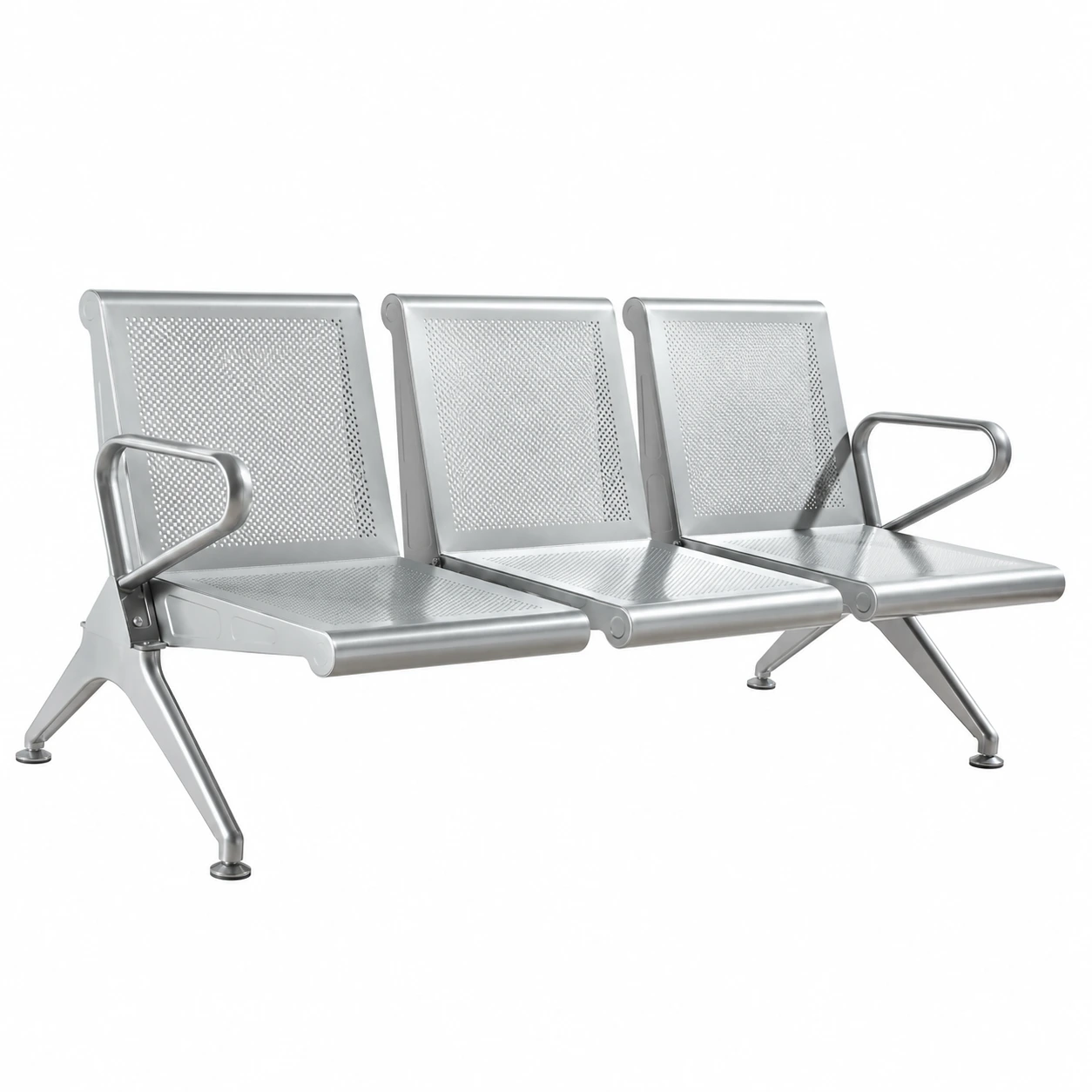
Waiting Chairs
Clinic waiting chairs and bench seating for public reception and patient waiting areas.
View product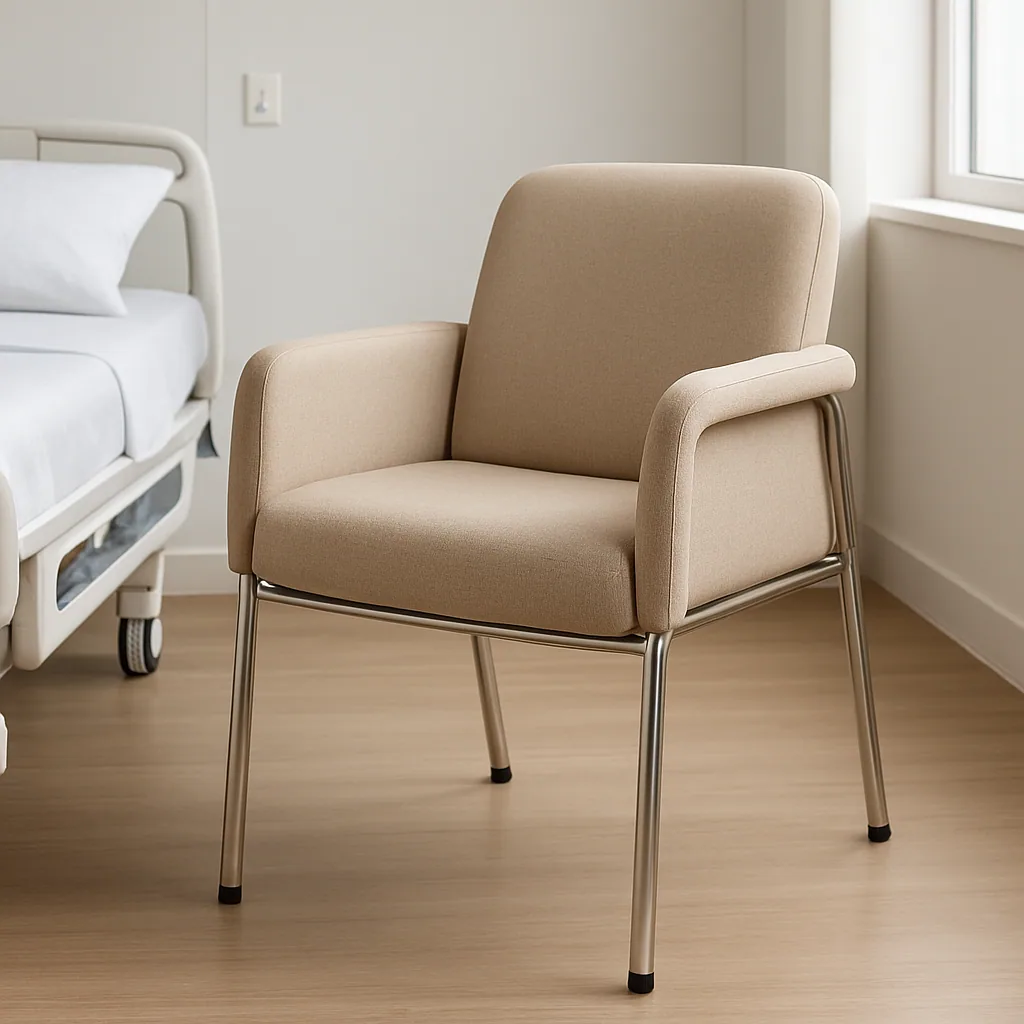
Patient Chairs
Patient seating for ward rooms, recovery areas, waiting areas, and healthcare facilities.
View product
Hospital Beds
General-purpose patient beds for inpatient wards and standard hospital rooms.
View product