
Sourcing bariatric hospital beds can feel like a high-stakes decision. You’re looking at spec sheets with impressive load capacity numbers, but making a choice based on that single figure can be a huge mistake. Picking the wrong bed can lead to a piece of equipment that won't fit through your doorways, puts your staff at risk of injury, or simply fails when you need it most. The key is to look beyond the marketing and understand the critical trade-offs.
The most effective bariatric hospital beds are not simply the ones with the highest weight capacity. Instead, they are a balanced system where the certified Safe Working Load (SWL) matches the patient profile, the platform width is compatible with the facility's doorways and caregiver ergonomics, and the mobility features are robust enough to ensure safe patient and staff handling.
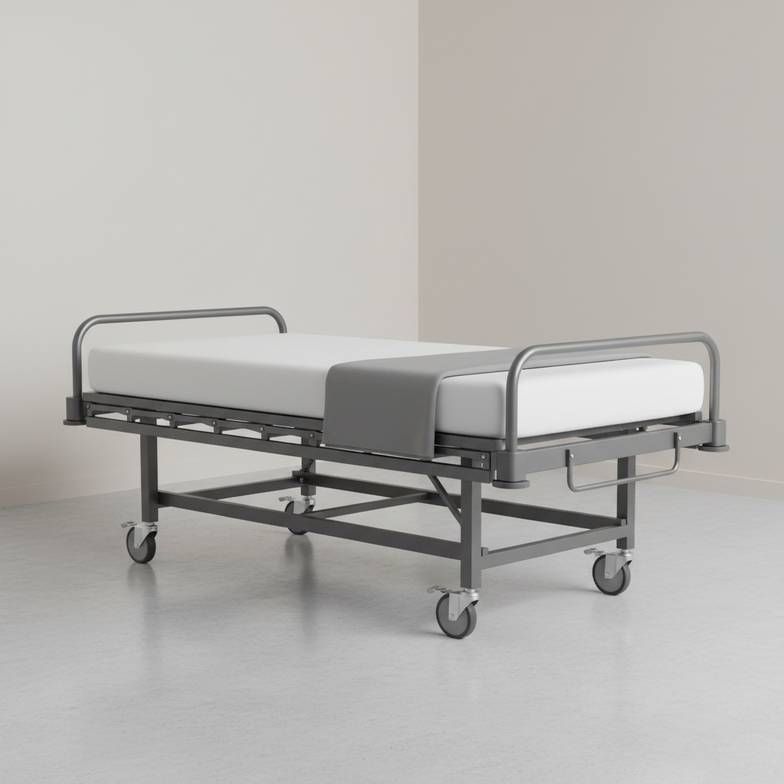
It’s easy to get lost comparing numbers on a quotation. But how do you actually evaluate these three critical areas to avoid a costly procurement error? Let’s break down the details that I find procurement managers often overlook when selecting bariatric hospital beds.
Is Higher Load Capacity Always Better for Bariatric Hospital Beds?
It’s tempting to think so. You see a bed advertised with a 450 kg (1000 lb) capacity and assume it must be the safest, most durable option. But that big number can be very misleading if it only refers to the static load, a condition that rarely exists in a real hospital ward. The true measure of safety is how the bed performs under the dynamic stress of daily use.
No, a higher number isn't automatically better. The most important figure to verify is the Safe Working Load (SWL), which accounts for the combined weight of the patient, mattress, and accessories while the bed is in motion. A bed with a properly tested and certified SWL is far safer than one with an unverified, high static capacity claim.
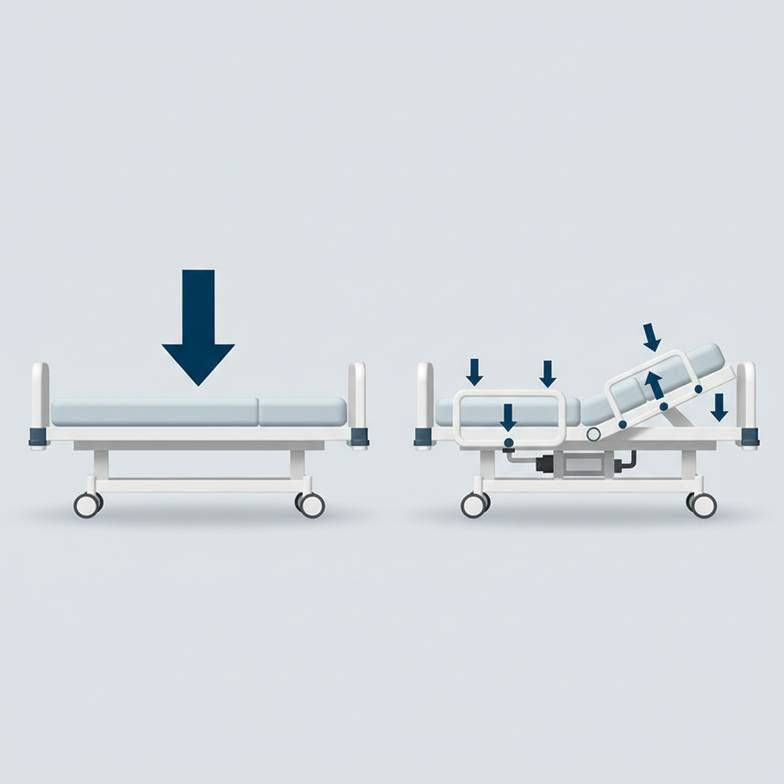
Dive Deeper: Static Load vs. Safe Working Load (SWL)
When a supplier gives you a "weight capacity," you have to ask what they actually mean. In my experience, this is the single most important question to ask.
- Static Load: This is the maximum weight the bed frame can support when it is completely flat and stationary. It’s a relatively easy number for a factory to test and claim. But patients aren't static. They are repositioned, the bed is adjusted, and accessories are added.
- Safe Working Load (SWL): This is the metric that truly matters for safety and compliance. The SWL is the maximum load—including the patient, mattress, bedding, and any accessories like IV poles or monitors—that the bed can safely handle while it is being operated. This includes raising the head or foot section, changing the bed's height, or moving the bed. The SWL is determined by the weakest point in the system, which is often the motors (actuators), not the steel frame.
A common question I get from procurement teams is about motor systems. A heavy-duty frame is useless if the motors can't lift the specified load. I once worked with a nursing home that purchased beds based on a high static load claim. The first time they tried to use the backrest function for a heavier resident, the motor strained and failed within weeks. The bed frame was strong, but the bed itself was not functional or safe.
How to Verify a Supplier's Load Capacity Claims
Don't just take the brochure's word for it. You need to verify the claims.
- Ask for the SWL, not just "capacity." Make it clear you need the number for dynamic, real-world use.
- Request the test standard. The globally recognized standard for medical beds is IEC 60601-2-52. If a supplier claims their bed meets this standard, ask for the test report or certificate from a third-party lab. A claim without documentation is just a claim.
- Inquire about the actuator system brand. The motors are the heart of an electric bariatric bed. Reputable brands like Linak, Dewert, or TiMOTION conduct their own rigorous testing. Knowing the motor brand gives you another layer of confidence in the bed's performance and reliability.
By asking these specific questions, you shift the conversation from a simple price comparison to a serious discussion about safety and long-term performance.
How Does Platform Width Affect Bariatric Hospital Beds in a Real Facility?
A wider mattress platform seems like an obvious benefit for patient comfort, dignity, and pressure care. But what looks good on paper can create a logistical nightmare and safety hazard in practice. A bed that is too wide can become your facility's biggest problem, getting stuck in corridors or elevators and even causing back injuries to your nursing staff.
Platform width is a critical trade-off between patient comfort and operational reality. While a wider surface is crucial for the patient, the bed's overall width must be narrow enough to navigate all doorways, hallways, and elevators in your facility. Furthermore, an excessively wide bed increases the ergonomic strain on caregivers, who have to reach further to provide care.

Dive Deeper: The Constant Battle Between Comfort and Logistics
Before you even request a quote, the first thing you should do is get out a measuring tape. Standard hospital beds are typically around 90 cm (36 inches) wide. Bariatric hospital beds often start at 100 cm (40 inches) and can go to 110 cm, 120 cm (48 inches), or even wider.
I'll never forget a call from a panicked project manager at a new clinic. They had ordered beautiful, 120 cm wide bariatric beds to offer premium comfort. The beds arrived, and they couldn't get a single one through a patient room doorway. Every door frame was 115 cm wide. It was a costly and embarrassing mistake that delayed their opening by weeks.
Measure everything:
- The narrowest patient room doorway.
- Elevator door opening.
- Hallway widths, especially at corners.
- Doors to imaging rooms or operating theaters where the patient might need to be transported.
The Hidden Risk: Protecting Your Caregivers
A wider bed also presents a significant ergonomic risk. The further a nurse or aide has to lean over to turn a patient, administer medication, or adjust linens, the higher their risk of a musculoskeletal injury. Hospital staff back injuries are a huge issue, leading to lost workdays and workers' compensation claims.
While features like split side rails can help improve access, the fundamental physics don't change. A very wide bed forces a caregiver into an awkward and potentially unsafe posture.
Here’s a simple table to illustrate the trade-offs:
| Platform Width | Pros for Patient | Risks & Considerations for Facility |
|---|---|---|
| ~100 cm (40") | Good step-up in comfort from a standard bed. | Fits most modern hospital doorways. Caregiver reach is manageable. |
| ~110 cm (44") | Excellent comfort and space for repositioning. | High risk. Must verify doorway/elevator clearance. Noticeably increases caregiver strain. |
| ~120 cm+ (48"+) | Maximum patient space and dignity. | Very high risk. Unlikely to fit in older facilities. Significant ergonomic risk for staff. May require mechanical lifts for patient handling. |
Some modern bariatric hospital beds are "expandable," meaning the width can be adjusted. They can be narrowed for transport and then widened once in the room. This is a fantastic feature that solves the logistics problem, but it adds mechanical complexity and cost.
Why is Mobility So Critical for Heavy-Duty Bariatric Hospital Beds?
When you’re focused on the frame strength and mattress platform, the wheels and brakes can seem like a minor detail. But a bariatric bed frame alone can weigh over 200 kg (440 lbs). Add a heavy-duty mattress and a patient, and you could be trying to move 500 kg (1100 lbs) or more. Attempting to push and steer that mass with undersized casters is a direct path to staff injury and loss of control.
Mobility features are not a luxury on bariatric hospital beds; they are an essential safety system. Safely moving such a heavy load requires large, robust casters, a reliable central braking system for stability, and a steering lock for control. For the heaviest patients, a motorized drive system may be the only way to prevent staff injuries.
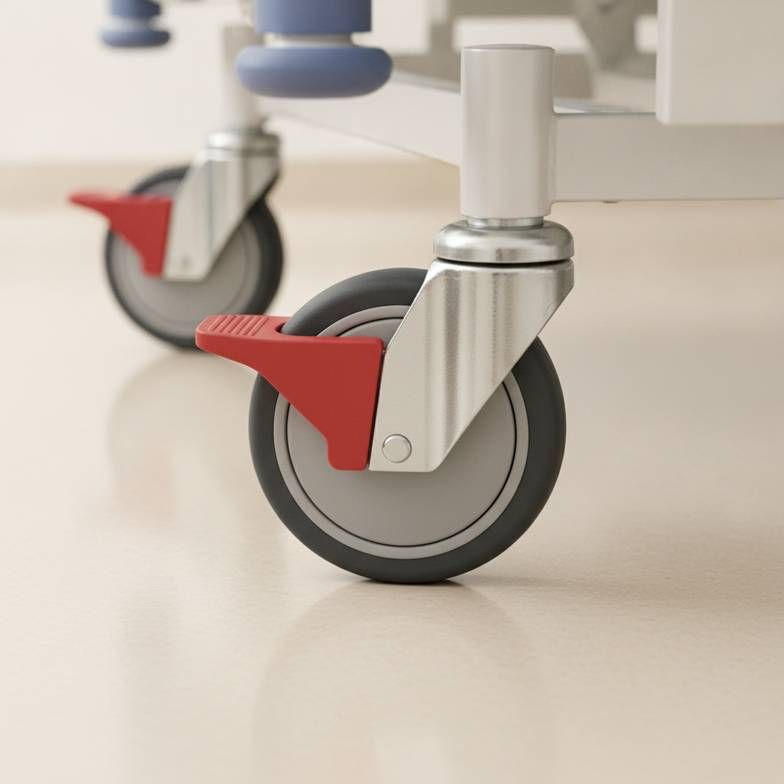
Dive Deeper: The Components of a Safe Mobility System
When we review specifications for a project, we look for a complete mobility system, not just wheels.
- Caster Diameter and Quality: Small casters will get stuck on door thresholds and uneven floor surfaces. For a heavy-duty bariatric bed, you should look for large, robust casters of at least 125 mm (5 inches), with 150 mm (6 inches) being even better. They should be made by a reputable brand known for durability.
- Central Braking System: This is non-negotiable. It's a foot pedal, usually at the head or foot of the bed, that locks and unlocks all four wheels at once. This ensures the bed is completely immobile during patient transfers, preventing dangerous shifting or rolling.
- Steering Function (Directional Lock): This feature allows you to lock one or two of the casters so they only roll straight. It transforms the task of moving the bed down a long hallway from a chaotic "fishtailing" struggle into a controlled, straight-line push. It makes a world of difference in maneuverability.
When to Consider a Motorized Drive System
For the heaviest class of bariatric patients, or in facilities with long transport distances or ramps, even the best manual system may not be enough. A motorized drive system (often called a power drive) is an integrated fifth wheel with its own motor that assists staff in pushing and pulling the bed.
This feature adds significantly to the bed's cost, but it needs to be weighed against the cost of a potential work-related injury. If a single nurse is expected to move the bed, a power drive system can be the difference between a safe transfer and a career-ending injury. It's an investment in the safety and well-being of your staff.
Frequently Asked Questions
What is the difference between a bariatric bed and a standard hospital bed?
The main differences are in the construction and capacity. Bariatric hospital beds have a significantly higher Safe Working Load (SWL), a wider mattress platform, a reinforced steel frame, and more powerful motors (actuators). They also include essential heavy-duty mobility features like larger casters and central braking systems to handle the increased weight safely.
Can I use a standard mattress on a bariatric hospital bed?
It's strongly discouraged. Bariatric mattresses are engineered with higher-density foam and specialized support layers to prevent "bottoming out" under a heavier patient, which is critical for pressure injury prevention. A standard mattress will not provide adequate support or durability and will not fit the wider platform properly.
What is an expandable bariatric bed?
An expandable bariatric bed has a mattress platform that can be mechanically widened or narrowed. This offers great flexibility, allowing the bed to be set to a narrow width for transport through doorways and then expanded in the patient's room for enhanced comfort. It's an excellent solution but typically comes at a higher price point.
How do I check the certification of bariatric hospital beds?
Don't just trust a logo on a website. Ask the supplier for a copy of the actual test report or certificate, such as for the IEC 60601-2-52 standard. Check that the document is from a legitimate testing laboratory, is not expired, and clearly states that it applies to the exact model number you are planning to purchase.
Conclusion
Choosing the right bariatric hospital beds is about much more than finding the biggest numbers on a spec sheet. It's a risk-based decision that requires a thoughtful approach. By moving beyond simple capacity claims, you can make a choice that truly serves your patients, protects your staff, and functions within the physical reality of your facility. Remember to verify the Safe Working Load (SWL), measure your doorways to determine a practical platform width, and insist on robust mobility features like central braking. By focusing on these three pillars, you ensure that the bariatric hospital beds you procure are a safe, durable, and valuable asset for your healthcare environment.
If you are evaluating bariatric beds for a new project or need assistance comparing specifications from different suppliers, our team at CareFurnex can help. We can walk you through the technical details and help you ask the right questions to find the best solution for your needs.
Written by
CareFurnex Team
CareFurnex Team shares practical knowledge about hospital beds, patient room furniture, medical trolleys, clinic furniture, and healthcare facility procurement for international B2B buyers.
Related Products
Hospital Beds
General-purpose patient beds for inpatient wards and standard hospital rooms.
View productElectric Hospital Beds
Motorized multi-function beds with electric height, backrest, and leg adjustment options.
View product
Ward Furniture
Complete ward furniture options for patient rooms and hospital care areas.
View product