
Sourcing multiple types of hospital furniture from China for a project is a smart move, but the thought of getting it all into one container can be a real headache. You start worrying about damaged goods arriving after weeks at sea, critical accessories going missing, and paying for container space you can't even use. The solution is to treat hospital furniture mixed container loading not as a simple logistics puzzle, but as a crucial step in your procurement planning and supplier vetting process.
Successful hospital furniture mixed container loading depends on detailed pre-shipment planning, not just logistics. It requires a supplier who can provide an itemized packing list, a strategic loading plan that accounts for protective packaging and non-stackable items, and ensures consistency across all product categories before a single box is loaded.
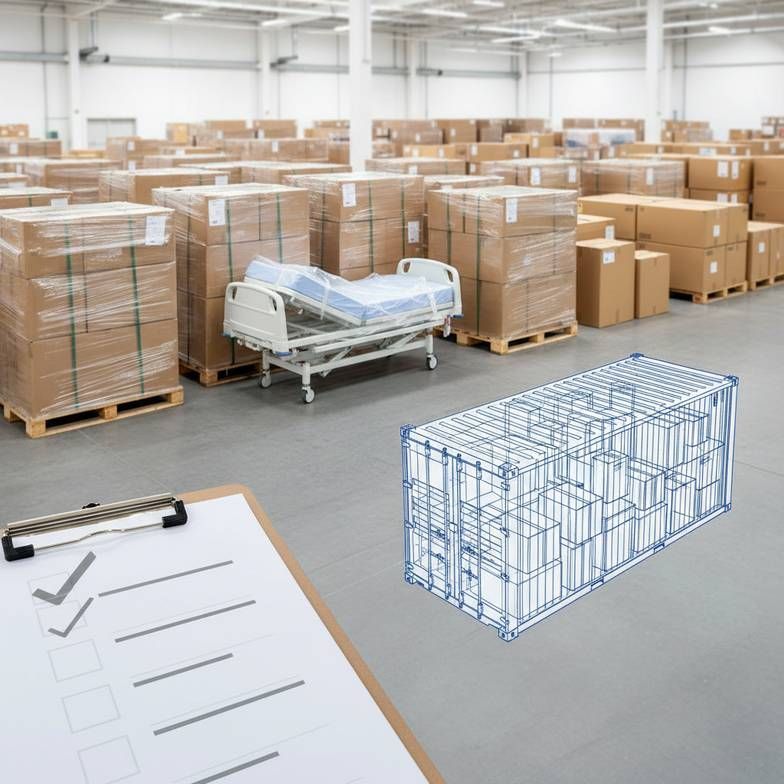
So, how do you go from anxiously guessing if everything will fit to confidently managing your shipment? It starts with asking the right questions long before the container truck arrives. Let's break down the practical planning that separates a smooth delivery from a project-delaying nightmare.
Why Is CBM Calculation Just the Starting Point for Mixed Container Loading?
You've got your order list and diligently calculated the total CBM (Cubic Meter) volume, so it should fit, right? But then a nagging feeling creeps in—what if it doesn't? You're afraid of paying for a full 40-foot container only to find out that odd shapes and bulky packaging mean 20% of the space is just empty air. The key is to shift your focus from total CBM to usable CBM, a conversation a good supply partner should be leading.
The CBM calculation only gives you the theoretical volume of the products themselves. It completely ignores the real-world factors of unusable space created by non-stackable items like hospital beds, the extra bulk from necessary export-grade packaging, and the fixed internal dimensions of the shipping container.
Dive Deeper
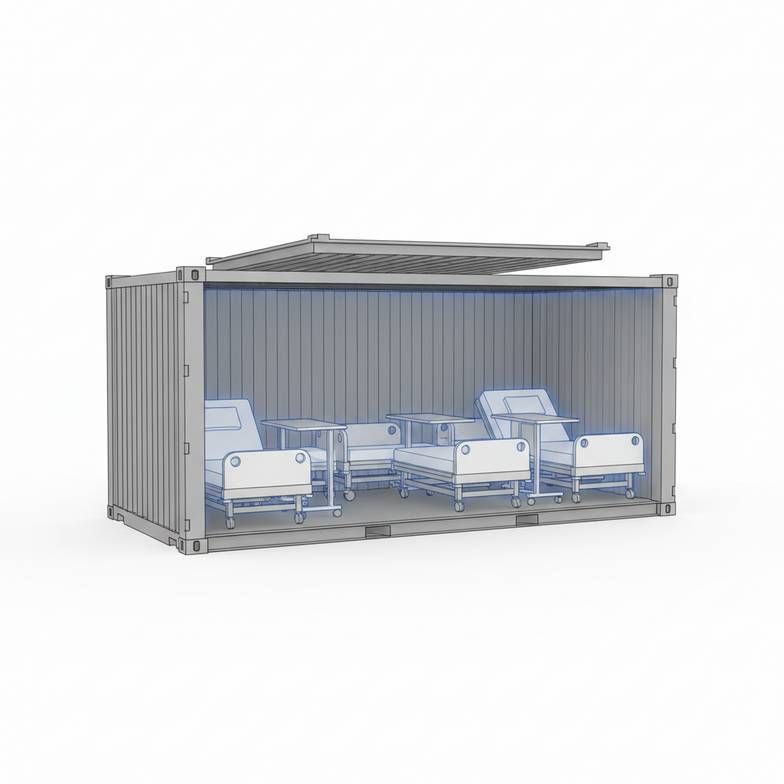
From my experience coordinating healthcare projects, one of the most common points of confusion for buyers is loading density. A 20ft container has about 28 CBM of space, but it's very rare that you can fit a 28 CBM order of mixed hospital furniture inside. A 40ft High Cube (40HQ) offers around 76 CBM, but the same principle applies.
The Reality of "Loading Density"
The problem is that hospital furniture is bulky and often awkwardly shaped.
- Hospital Beds: These are the biggest challenge. They are long and heavy, forming the base of the load. You can't stack them high, and their irregular shape creates significant empty space around them.
- Overbed Tables & Bedside Cabinets: Many of these items are L-shaped or have protruding parts. While some can be shipped disassembled (knocked-down or KD), assembled units are faster to deploy but terrible for space efficiency.
- Protective Packaging: This is non-negotiable but adds significant volume. A reliable supplier will use reinforced 5- or 7-layer cartons, internal foam padding, corner protectors, and sometimes even wooden crating for delicate surfaces. A simple product CBM calculation doesn't include this crucial 10-15% increase in volume.
What to Ask Your Supplier (Beyond Just CBM)
This is where you can test a supplier's expertise. Instead of just asking, "What's the total CBM?", you should ask more targeted questions:
- "Can you provide the packaged dimensions and gross weight for each line item?"
- "What is your standard export packaging for these items? Can you share photos?"
- "Are items like cabinets and trolleys shipped assembled or KD? What's the volume difference?"
- "Do you use pallets? How will that affect the total usable height and floor space?"
A proactive sourcing partner won't just send you a number. They will discuss these factors with you, explain the trade-offs between packaging protection and volume, and help you build a realistic order that truly maximizes the space you're paying for.
How Does a Loading Plan Prevent Product Inconsistency and Missing Parts?
You’re sourcing your electric beds from a factory that specializes in them, and your medical trolleys from a different partner known for their stainless-steel work. This is a great strategy for quality. But it creates a new worry: will the paint colors of the bed frames and the trolleys match? Will the casters be the same brand? Will small but vital parts, like IV poles or mattress brackets, get lost in the shuffle between factories?
A consolidated loading plan, built from a single master order list, is your best defense. It forces your supplier to bring all products to one central point for a final, unified quality and consistency check before anything is sealed away in the container.

Dive Deeper
This is where the value of a sourcing partner really shines. We aren't just placing orders; we're managing the integration of products from different production lines into one cohesive project.
The "Single Point of Truth": Your Master Packing List
When we manage a project, we create a master document—the single point of truth—that details every single specification. This isn't just "10 beds." It's:
- 10 Electric Hospital Beds, Model XYZ
- Color: Frame in RAL 5013, head/foot boards in RAL 9010
- Casters: 4x TENTE brand, 125mm diameter, central locking
- Accessories: 1x Stainless steel IV pole, 1x patient chart holder per bed
This master list is shared with all production partners. The hospital furniture mixed container loading process is often the very first time all these physical items from different sources are in the same room. It's our final, critical opportunity to catch errors. I remember one project where we were consolidating beds and bedside cabinets. The master list specified a specific Pantone blue. At the pre-loading check, we noticed the cabinets were a slightly different shade. Because everything was in one place, we were able to catch it and get it corrected before it became a major problem for the client thousands of miles away.
From Order to Container: A Step-by-Step Check
A professional loading process is an extension of quality control. Here’s how it should work:
- Master Order Confirmation: We lock in all specifications with you.
- Production Follow-up: We monitor the progress of each product category at its respective factory.
- Pre-Loading Consolidation: All finished goods are transported to a single, designated loading point. This could be one of the factories or a third-party warehouse.
- Final Cross-Check: Our team (or a third-party inspector you hire) physically verifies every item against the master packing list. We check quantities, colors, accessories, and look for any shipping damage from the domestic transit.
- Approval for Loading: Only after this comprehensive check is complete do we give the green light for the loading to begin.
What Documentation Should You Demand for Hospital Furniture Mixed Container Loading?
You’ve confirmed the order and made the down payment. Now what? Just wait and hope for the best? Absolutely not. Without the right documentation, you're essentially shipping blind. You have no way to verify what’s actually being loaded, no legal ground to stand on if items are missing, and no tool to hold your supplier accountable.
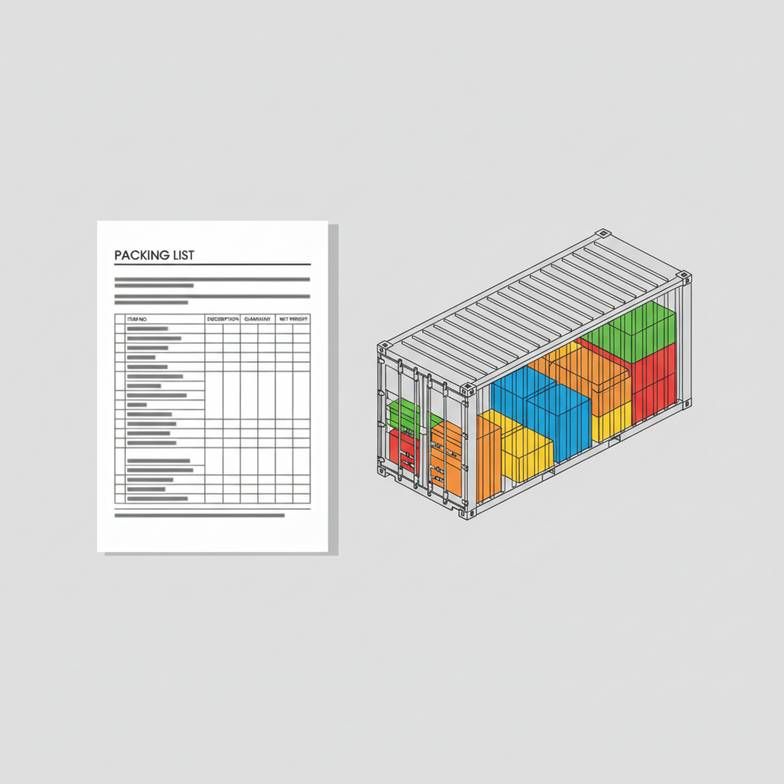
You can change this from a guessing game to a transparent, documented process by demanding two essential documents before shipment: a detailed, itemized Packing List and a proposed Loading Plan diagram. These aren't just pieces of paper; they are your contractual tools for verification.
Dive Deeper
Let's be clear: a supplier who hesitates to provide these documents should be a major red flag. For any professional exporter, these are standard operating procedure.
The Anatomy of a Useful Packing List
A packing list that just says "Hospital Furniture" is useless. A truly useful, professional packing list is incredibly detailed. For each and every carton, it should specify:
- Carton Number (e.g., 1 of 150)
- Item Description and Model Number
- Quantity of units inside that carton
- Carton Dimensions (Length x Width x Height)
- Gross Weight (the carton + contents)
- Net Weight (the contents only)
Why is this level of detail so important? First, this is the data your supplier uses to create the loading plan and calculate the final weight and volume. Second, and more critically, this is the primary document your and their customs agents will use for clearance. Any discrepancy between the packing list, the commercial invoice, and what's physically in the container can lead to inspections, fines, and significant delays.
The Loading Plan as Your Insurance Policy
The loading plan is a simple diagram showing the intended layout of cartons inside the container. It’s your proof that the supplier has actually thought the process through. A good plan will show:
- Heavy, sturdy items like hospital bed frames loaded first, on the floor of the container.
- Lighter or more fragile items like plastic bedside cabinets or items with sensitive electronics placed on top or in protected zones.
- Small, loose cartons (containing accessories like IV poles, handsets, or spare parts) used to fill in the gaps securely so nothing shifts during transit.
This plan becomes your tool for verification. You can (and should) ask the supplier to take photos during and after loading. You can then compare these photos to the loading plan they sent you. It keeps everyone honest and accountable. This documented approach to hospital furniture mixed container loading protects your investment.
How Can a Smart Loading Strategy Simplify Unloading?
The big day is here—your container has arrived! But after the initial relief, a new kind of stress begins. The doors swing open to reveal a chaotic jumble of brown boxes. Your team has to manually pull everything out, struggling to identify what’s what, and spending days trying to sort it all. The whole time, you’re worried about what might be missing or damaged in the mess.
This entire scenario can be avoided. A logical loading strategy, supported by clear carton marks and a packing list that mirrors the container's layout, transforms unloading from a chaotic hunt into an organized, efficient, and accurate inventory-checking process.

Dive Deeper
A supplier's job doesn't end when the container doors are sealed. A true partner thinks about the entire process, all the way to your warehouse. From a sourcing perspective, we insist on planning for easy unloading from the very beginning.
The Power of Clear Carton Marks
It seems so simple, but clear, consistent carton marks are a complete game-changer at the destination. We ensure every carton is marked with, at a minimum:
- Your Company Name / PO Number
- Item Description & Model Number
- Carton Number (e.g., "Carton 55 of 150")
- Country of Origin ("Made in China")
For larger hospital or clinic projects, we take it a step further and add the destination room or department (e.g., "ICU - ROOM 201," "PEDIATRIC WARD"). Imagine the time saved when your team can move cartons directly to their final location without even opening them. This small bit of ink saves countless hours of labor.
Loading by Zone or Category
Instead of just stuffing boxes in wherever they fit, a strategic approach is to load the container in "zones."
- Zone 1 (Far Back): All hospital beds and mattresses.
- Zone 2 (Middle): All bedside cabinets and overbed tables.
- Zone 3 (Near Door): All medical trolleys and IV stands.
The packing list can even be organized to reflect this layout, making the receiving process incredibly straightforward. Your team unloads Zone 3, checks those items against the first page of the packing list, and moves on. This systematic approach immediately flags any missing cartons and makes the entire hospital furniture mixed container loading and unloading cycle transparent and manageable. It prevents that end-of-day panic when you're left with a pile of accessories and no idea if you have everything you paid for.
Frequently Asked Questions
What's the difference between a 20GP, 40GP, and 40HQ container?
A 20GP (General Purpose) holds about 28 CBM. A 40GP holds about 58 CBM. A 40HQ (High Cube) is the same length as a 40GP but is taller, holding about 76 CBM. For bulky but relatively light items like hospital furniture, the 40HQ is almost always the most cost-effective choice as it gives you more volume for your money.
Should I pay for third-party loading supervision?
For your first order with a new supplier, a large project, or a high-value shipment, yes. A third-party inspector provides an independent, unbiased report with photos, verifying that the right products in the right quantity are loaded correctly. It’s a small investment for significant peace of mind.
Can I mix products from different suppliers into one container?
It is possible, but it is logistically very complex. You need a single party in China to act as a consolidator to coordinate inland transport, documentation, quality control, and loading from all suppliers. Attempting this yourself without a trusted partner on the ground is extremely risky and can lead to major errors.
What happens if items are damaged upon arrival?
First, take photos of the damage before you fully unload the container, especially if you can see issues right when you open the doors. Document everything with clear pictures and notes. A professional packing list and pre-shipment loading photos are your evidence. Contact your supplier immediately with the proof to start the warranty or claims process.
Conclusion
In the end, successful hospital furniture mixed container loading is much more than a game of Tetris. It's a direct reflection of your supplier's project management skills, attention to detail, and commitment to your success. Viewing the loading plan as a critical procurement tool—one that verifies quality, ensures completeness, and simplifies receiving—allows you to mitigate risk and choose a partner who can truly manage complexity. It transforms the shipment from a source of anxiety into a well-orchestrated, predictable final step in your sourcing journey.
If you are planning a multi-category healthcare furniture project and need a partner who proactively manages these details, contact the CareFurnex team. We help you build a reliable procurement plan, from product selection and specification matching all the way to a well-documented final delivery.
Written by
CareFurnex Team
CareFurnex Team shares practical knowledge about hospital beds, patient room furniture, medical trolleys, clinic furniture, and healthcare facility procurement for international B2B buyers.
Related Products
Hospital Beds
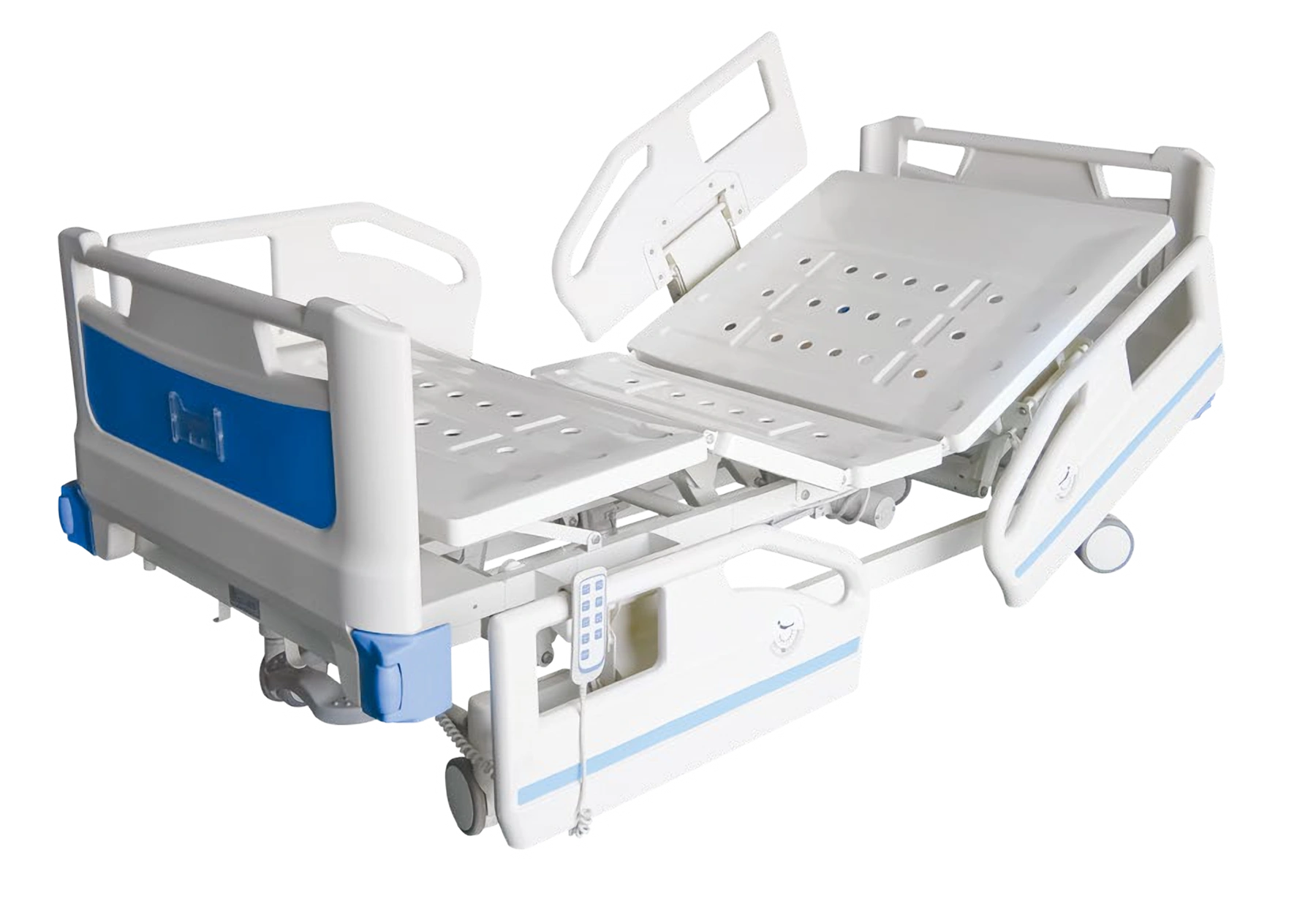
General-purpose patient beds for inpatient wards and standard hospital rooms.
View product
Ward Furniture
Complete ward furniture options for patient rooms and hospital care areas.
View product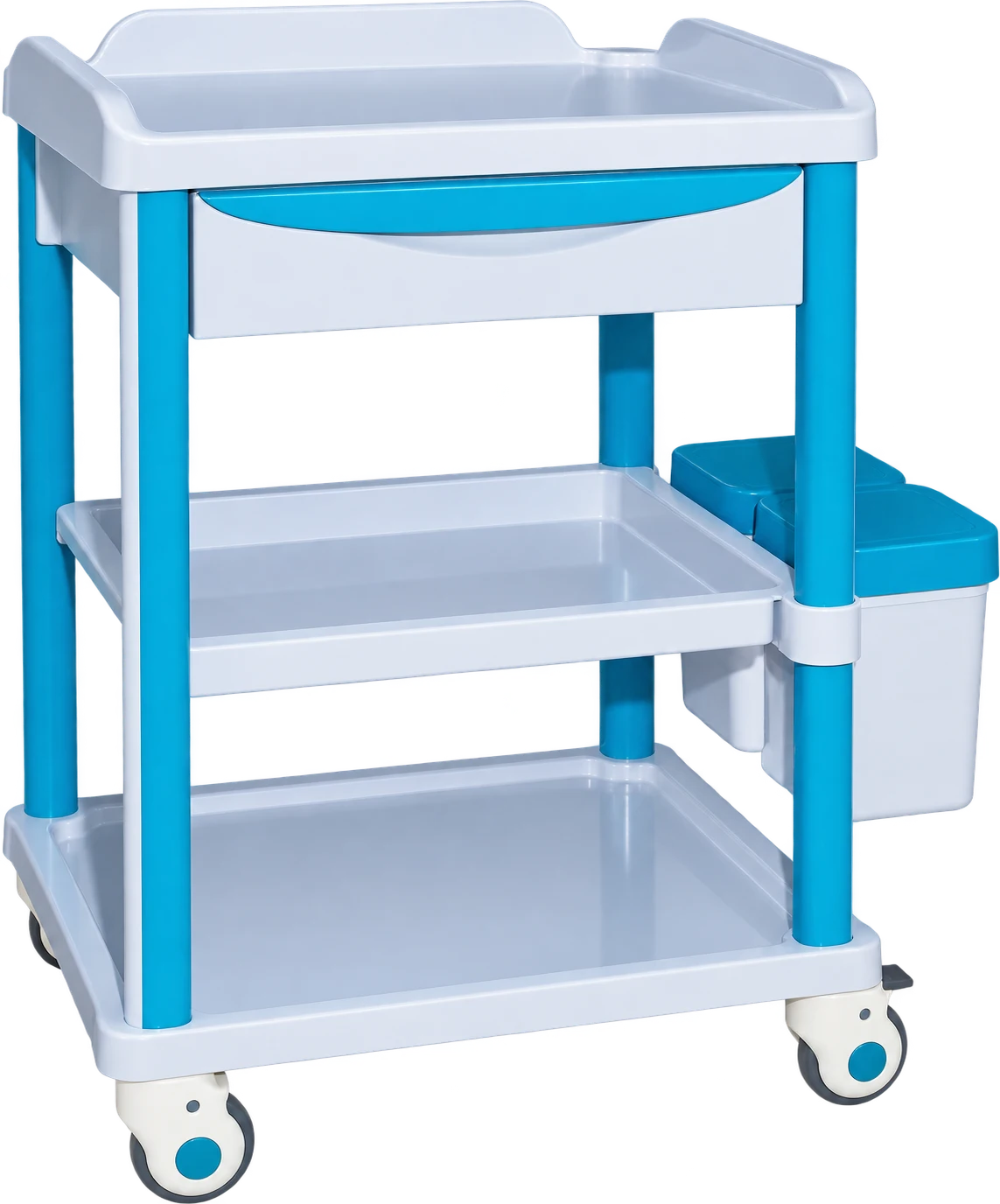
Medical Trolleys
Mobile carts for nursing rounds, treatment supplies, medicines, and clinical tools.
View product