
A procurement request for "50 hospital beds" and "50 bedside cabinets" seems straightforward. But for a supplier, it is an incomplete question. Without knowing the destination-ICU, general ward, or nursing home-any quotation is just a guess. The requirements for each environment are so different that getting this wrong can lead to budget errors and operational challenges.
A key specification for a nursing home bed might not be the number of motors, but its minimum height. A few centimeters can be the difference between a bed that is part of a fall prevention strategy and one that is not. This is the kind of environment-specific detail that gets missed when buyers compare furniture based only on name and price.
The main differences between furniture for General Wards, ICUs, and Nursing Homes are driven by patient acuity, staff workflow, and length of stay. Key decision factors include the bed's required medical functions, such as CPR release for ICUs; the furniture's ability to withstand specific cleaning protocols; and safety features designed for the user, like an ultra-low bed height to help reduce fall risks in nursing homes.
From a supplier's perspective, our first question is often, "Where will the furniture be used?" We ask this not to complicate the process, but to help you avoid buying the wrong product. A bed that is a cost-effective workhorse for a general ward would be functionally inadequate for an ICU and potentially less suitable in a nursing home. The goal is to match the product to the room's function.
Why Can't I Use the Same Hospital Bed for All Departments?
Assuming a "hospital bed" is a commodity you can buy in bulk for all areas is a common mistake. In reality, a hospital bed is a medical tool platform. Its configuration should match the clinical tasks and patient risks of the department where it will be used.
- An ICU is a high-acuity environment for critical care and life support. The bed is an active part of treatment.
- A General Ward is a high-turnover environment focused on recovery. The bed needs to be durable, easy to clean, and simple for staff to operate.
- A Nursing Home is a long-term residential setting. The bed's primary role shifts to resident safety, comfort, and supporting independence.
Treating these as distinct categories from the start is the first step toward a successful procurement project.
What Bed Functions Should I Check for an ICU vs. a General Ward?
When comparing beds, looking beyond "manual vs. electric" is important. The specific functions are what determine a bed's suitability.
For an Intensive Care Unit (ICU), the bed must support complex medical procedures. I would check for features often considered essential, such as:
- CPR Release: A lever or button that quickly flattens the bed for emergency resuscitation.
- Trendelenburg/Reverse Trendelenburg: Tilting functions that are used for certain medical conditions and procedures.
- Central Braking System: A single pedal that locks all four casters simultaneously, providing high stability when staff are working on a patient.
- X-Ray Compatible Backrest: Allows for chest X-rays without moving the patient, reducing risk and discomfort. An integrated scale is another common requirement.
For a General Ward, the focus is on a balance of functionality, durability, and cost-effectiveness. Key checks include:
- 2 or 3 Motor Functions: Typically for adjusting backrest, leg rest, and overall height.
- Durable Side Rails: They should withstand constant use by patients and staff.
- Easy-to-Steer Casters: Individual brakes are common, but the casters should be large enough for smooth movement during room cleaning and patient transfers.
A bed without CPR release is generally considered unsuitable for an ICU, as this function is used for emergency response. Clarifying these functions before comparing quotes is an important step.
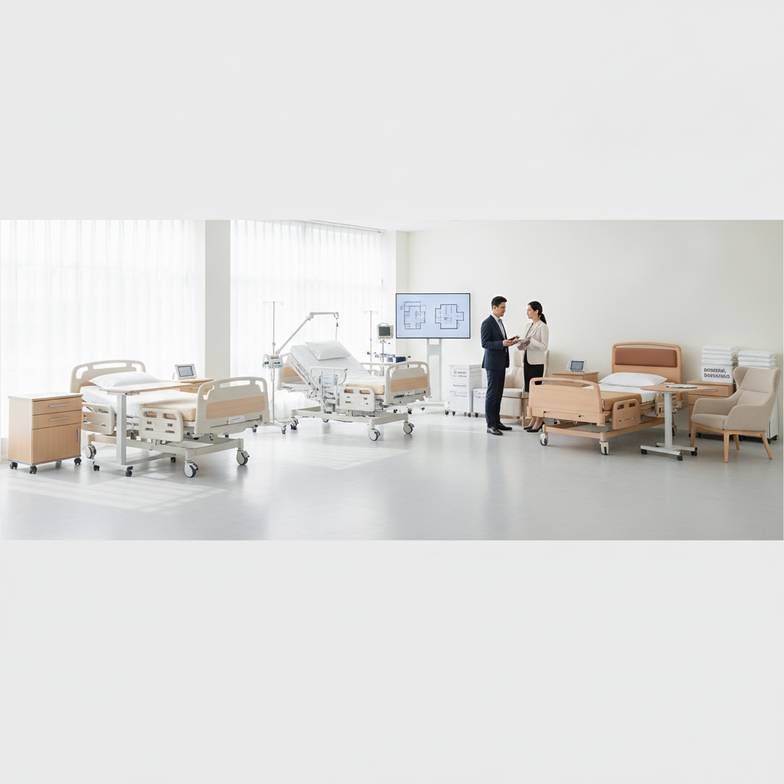
How Do Furniture Needs Change for Safety and Comfort in a Nursing Home?
Applying a clinical hospital standard to a long-term residential environment can compromise resident safety and comfort. For nursing homes, the priority shifts from acute medical functions to features that support daily living and reduce common risks.
A key specification is often the ultra-low height setting. A bed that can be lowered to a height of 20-25 cm from the floor is a common part of fall prevention strategies, as it helps reduce the distance of a potential fall.
Other features to confirm for a nursing home setting include:
- Easy-to-Use Remotes: Simple, clear icons that residents can operate themselves to promote independence.
- Stable Assist Rails: Side rails designed not just for containment, but as stable supports that residents can use to help themselves sit up or stand.
- "Homelike" Aesthetics: Wood-grain headboards and footboards can make the environment feel less clinical, which is important for long-term well-being.
- Supportive Chairs: Look for chairs with high, stable armrests that provide leverage for residents to stand up more easily.
Before confirming an order for a nursing home, I would ask for the bed's minimum height specification. This single number is a key part of any fall prevention strategy.
Beyond Beds, What Should I Check for Cabinets and Tables in Each Area?
Secondary furniture is not interchangeable. The operational environment dictates the right material and design choices. A cabinet that works perfectly in a ward could fail quickly in an ICU.
Use this table as a guide to check specifications for cabinets, overbed tables, and chairs for each department.
| Healthcare Environment | Key Operational Challenge | Required Bed Features to Check | Required Cabinet/Table/Chair Features to Check |
|---|---|---|---|
| ICU (Intensive Care Unit) | Acute patient care, infection control, staff efficiency | CPR release, Trendelenburg functions, central braking system, X-ray compatible backrest, integrated scale option. | Chemical-resistant surfaces, stability for equipment, smooth/sealed edges, compatibility with other medical equipment. |
| General Ward | High patient turnover, durability, cost-effectiveness | 2-3 motor functions, robust side rails, easy-to-steer casters, simple controls for staff and patient. | Durable top surface, simple construction for easy cleaning, sufficient storage for patient belongings. |
| Nursing Home | Resident safety (fall risk), long-term comfort, independence | Ultra-low height range, easy-to-use remote, stable side rails for support, less clinical design. | Rounded corners, easy-to-grasp handles, stable chair armrests for standing support, appropriate height for wheelchair access. |
For example, a common point of failure for cabinets in an ICU is not physical damage, but the surface material's reaction to harsh disinfectants. You should confirm that the material is compatible with your facility's specific cleaning protocol.
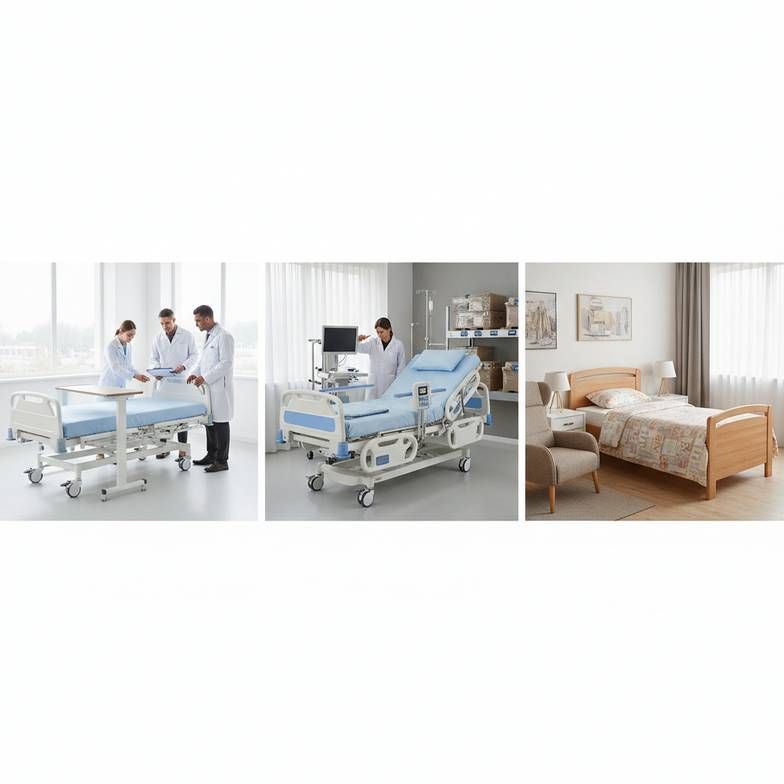
How to Prepare a Furniture List That Suppliers Can Quote Accurately
Sending a single, consolidated list of items and quantities for an entire project can lead to confusing quotations and incorrect product delivery. A practical approach for healthcare procurement is to create a department-specific list.
To get accurate, comparable quotes, we recommend creating at least three separate lists for your project: 1. ICU Furniture List: Itemize beds, cabinets, and tables, specifying functions like CPR release and material needs like chemical resistance. 2. General Ward Furniture List: List your required quantities of durable, functional beds and furniture suitable for high turnover. 3. Nursing Home Furniture List: Detail the beds, chairs, and tables needed, with a focus on safety specifications like ultra-low bed height and resident-friendly design.
This approach helps you confirm every supplier is quoting for the same requirements. It moves the conversation from a vague price comparison to a detailed, like-for-like analysis, helping you feel more confident that you are buying the right product for each part of your facility.
To receive a useful and accurate quotation for your healthcare project, prepare a list of furniture organized by department. For each item on your list, please include:
- The product name (e.g., "Electric Hospital Bed," "Bedside Cabinet").
- The required quantity.
- The intended department (ICU, Ward, etc.).
- Any key specifications you have identified, such as required bed functions, material needs, or safety features.
Sending us your department-based list allows our team to help you review the configurations and prepare a detailed proposal that matches your facility's operational and safety needs.
Written by
CareFurnex Team
CareFurnex Team shares practical knowledge about hospital beds, patient room furniture, medical trolleys, clinic furniture, and healthcare facility procurement for international B2B buyers.
Related Products
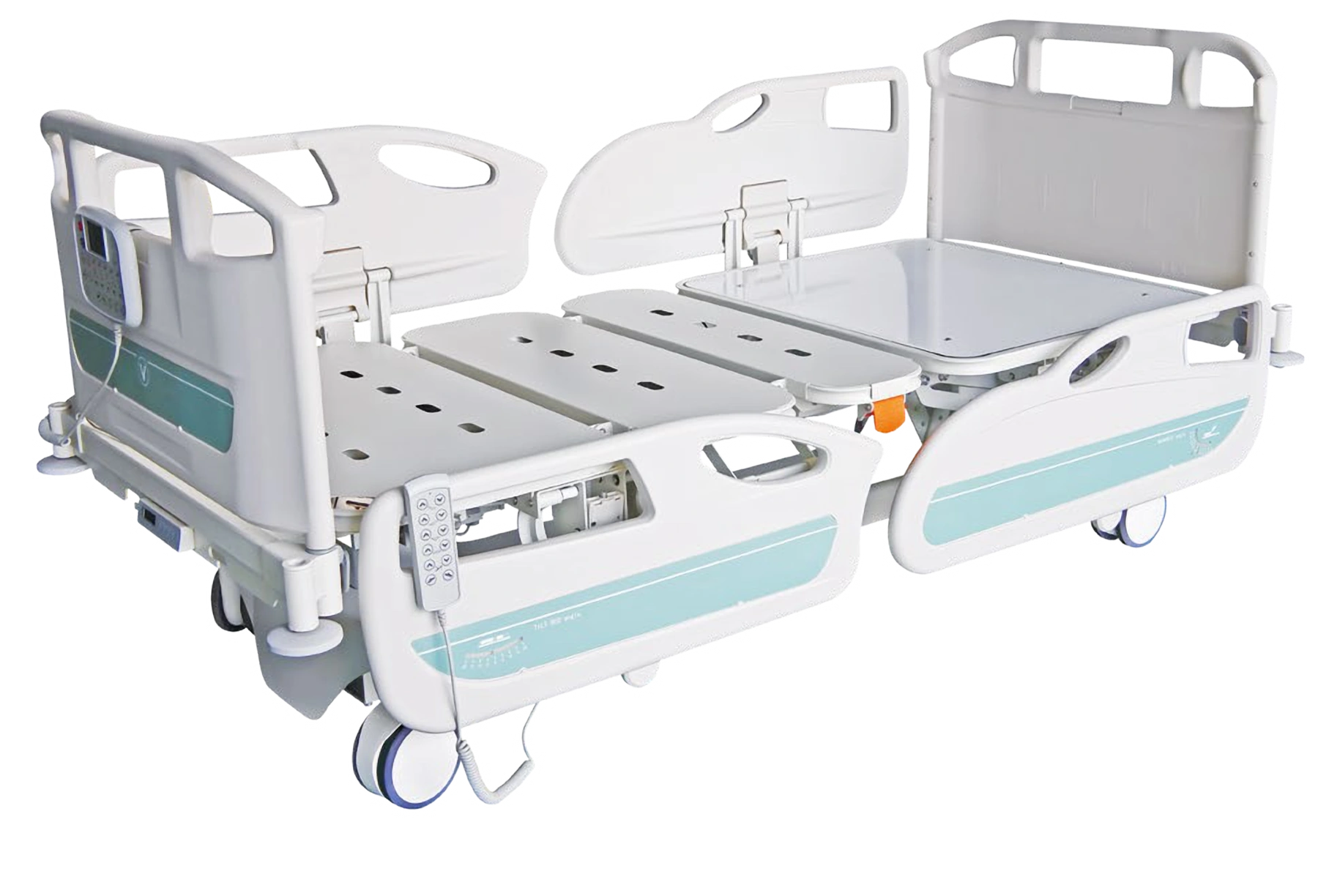
ICU Beds
Advanced care beds with adjustment options for ICU rooms and high-dependency areas.
View product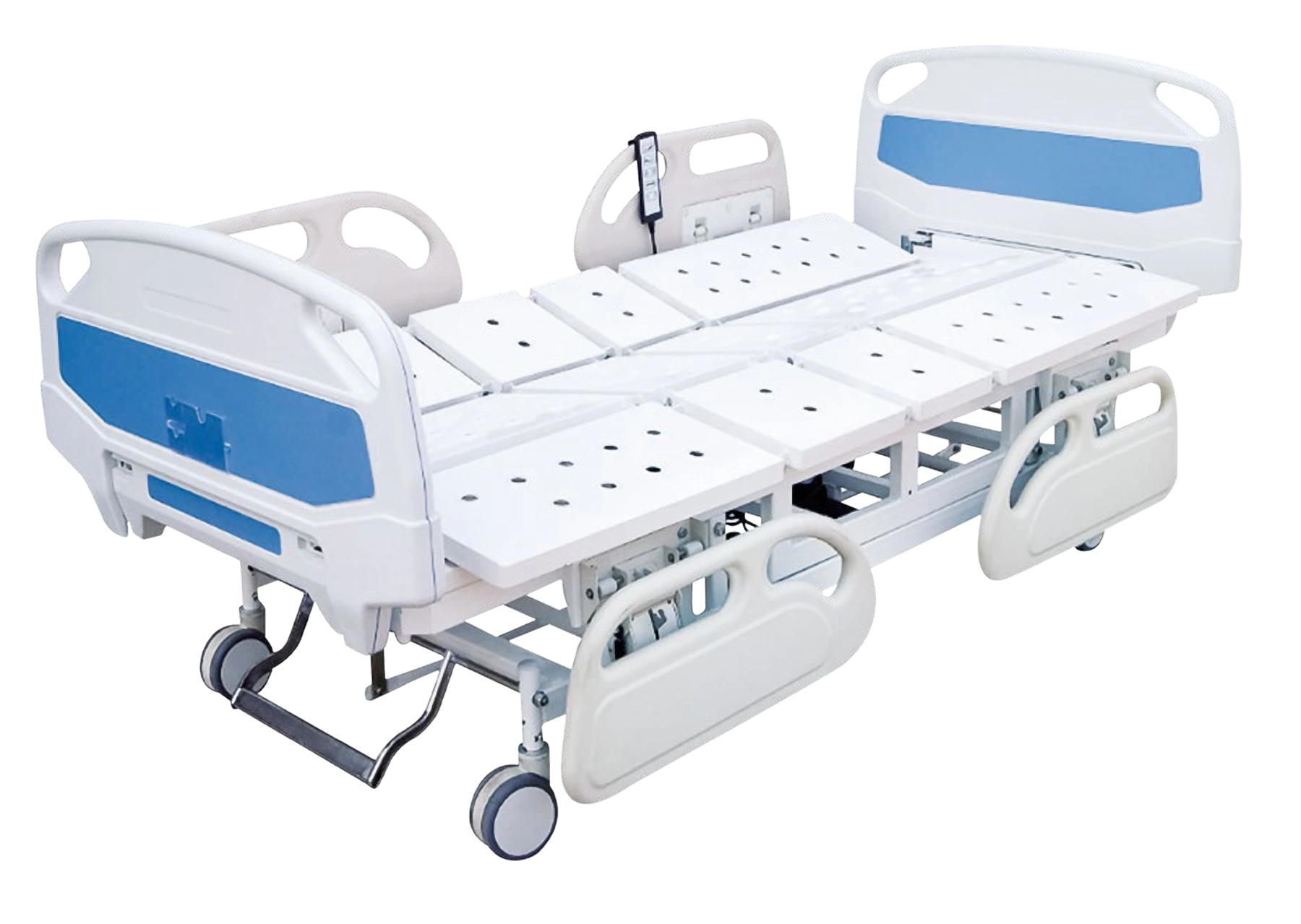
Nursing Beds
Long-term care beds designed for elderly residents and daily nursing operation.
View product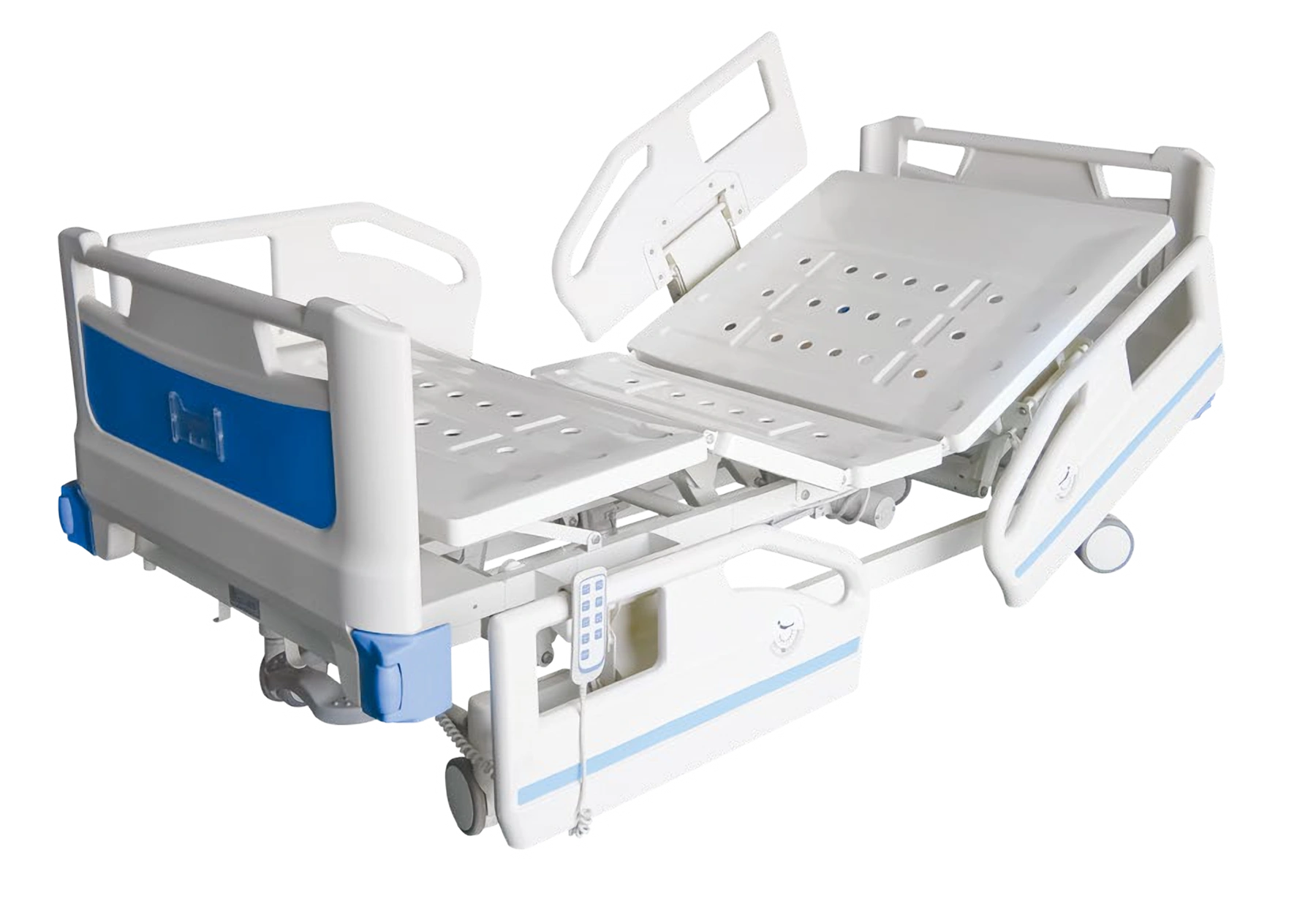
Hospital Beds
General-purpose patient beds for inpatient wards and standard hospital rooms.
View product