
Struggling to compare hospital bed quotes that all claim to have a "CPR function"? It's a common problem for procurement managers. This single line item on a spec sheet can hide significant differences in mechanism, speed, and reliability, potentially leading to a purchase that fails in a critical moment. Understanding the specific details of the hospital bed CPR function is the key to mitigating risk and ensuring you source a product that is both safe and suitable for your clinical environment.
The hospital bed CPR function is a safety mechanism that allows the bed's backrest to be flattened rapidly and smoothly, providing a firm, flat surface needed for effective cardiopulmonary resuscitation (CPR). Buyers should confirm the type of mechanism (manual lever or electric button), its activation speed (ideally under 5 seconds for manual release), and its durability by requesting video proof and close-up photos from the supplier.
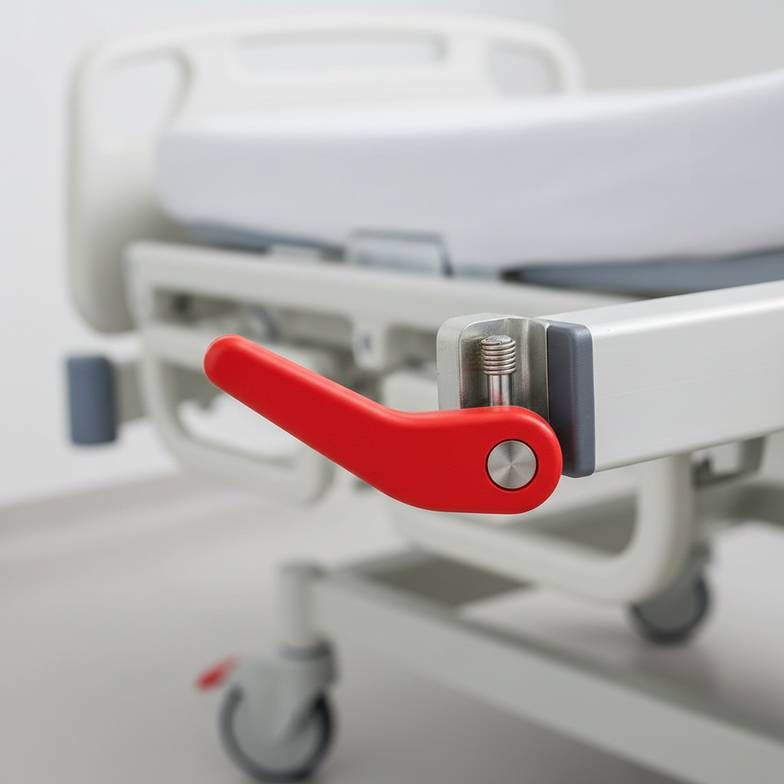
Now that you know the core purpose, the real work begins. Moving beyond the brochure claim of "has CPR function" to asking how it works is what separates a standard buyer from a savvy procurement professional. Let's dive into the critical questions you need to ask your potential suppliers.
What Are the Different Types of Hospital Bed CPR Function Mechanisms?
You see "CPR function" listed on every technical data sheet, but you notice the prices between suppliers vary wildly. This is often because the term isn't standardized, and the underlying mechanism can be completely different. This ambiguity makes a true "apples-to-apples" comparison impossible without more information.
The main types of hospital bed CPR function mechanisms are a manual quick-release lever (often on one or both sides) and a one-key electric button. Each has distinct implications for cost, speed, and reliability in an emergency.
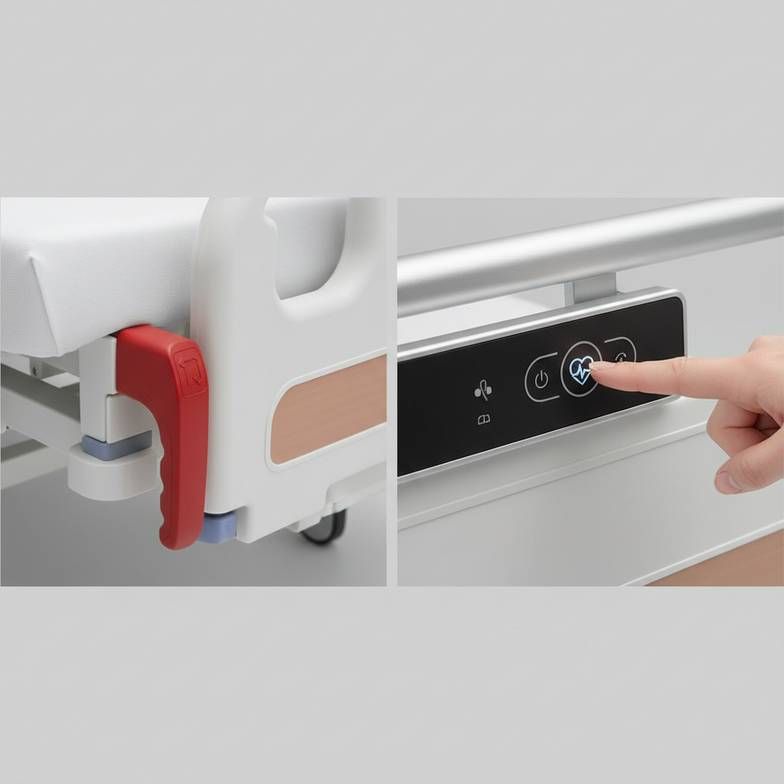
From our experience handling project tenders, we often see buyers comparing quotes without realizing one supplier is offering a simple, single-sided lever while another is quoting a premium, dual-sided system. Understanding these differences is the first step to a fair evaluation.
Manual Quick Release (Single Lever)
The most common and often most reliable type is the manual quick-release lever. This is a mechanical system, usually a red handle or lever located at the head end of the bed, under the backrest section. When a nurse pulls this lever, it physically disengages the backrest actuator, allowing it to fall flat via gravity.
- Pros:
- Fast: A well-designed manual release is the fastest method, typically lowering the backrest in 2–5 seconds.
- Reliable: It does not depend on electricity. It will work during a power outage or if the bed's electronics fail.
- Cost-Effective: It is a simpler mechanism, which helps manage the overall bed cost.
- Cons:
- Accessibility: If it's a single lever, it can only be accessed from one side of the bed. In a crowded room during a "code blue" emergency, staff might have to reach across the patient or move equipment to activate it.
This type is a standard, practical solution often found on general ward beds and in many nursing homes where a balance of safety and budget is paramount.
Dual-Sided Manual Release
This is a direct upgrade to the single-lever system. It features two interconnected levers, one on each side of the bed. Pulling either lever will achieve the same result: disengaging the backrest for a rapid drop.
- Pros:
- Superior Access: This is the key benefit. Medical staff can activate the function from whichever side is more accessible, saving precious seconds in an emergency.
- Maintains Speed & Reliability: It retains the speed and power-independent reliability of the manual system.
- Cons:
- Higher Cost: The additional linkage and hardware make it more expensive than a single-lever system.
We see dual-sided manual release as a near-mandatory feature for Intensive Care Unit (ICU) beds, High Dependency Unit (HDU) beds, and Emergency Room (ER) applications. In these environments, the bed is often surrounded by equipment, and staff need immediate, foolproof access.
Electric One-Key CPR
Many modern electric hospital beds feature a "CPR" or "flat" button on the nurse control panel or handset. Pressing this button commands the bed's motors to automatically lower the backrest and sometimes the entire bed to its lowest height.
- Pros:
- Convenience: It is easy to activate with a single press of a button.
- Integrated Control: It can be part of a centralized control panel, which might be preferable for some nursing workflows.
- Cons:
- Slow: It is significantly slower than a manual release. The motor must drive the backrest down, a process that can take 10-20 seconds or even longer. In a cardiac arrest, this is a critical delay.
- Power Dependent: It will not work if the bed is unplugged or during a power failure, unless the bed has a reliable backup battery.
- Higher Cost & Maintenance: It involves more complex electronics and motors, increasing both the initial price and the potential for future maintenance issues.
An electric CPR button is more of a convenience feature for patient repositioning than a true emergency function. For high-acuity settings, it should be a secondary feature, not a replacement for a rapid manual release.
| Feature | Single Manual Lever | Dual Manual Levers | Electric One-Key CPR |
|---|---|---|---|
| Activation Speed | Very Fast (2–5 sec) | Very Fast (2–5 sec) | Slow (10–20+ sec) |
| Reliability | Very High (Mechanical) | Very High (Mechanical) | Moderate (Power Dependent) |
| Accessibility | One Side Only | Both Sides | Remote Panel / Handset |
| Cost | Low | Medium | High |
| Best For | General Wards | ICU, ER, High Acuity | As a secondary/convenience feature |
How Do You Verify the Speed and Reliability of a Hospital Bed CPR Function?
A supplier's brochure that promises a "rapid CPR release" is just marketing text. Relying on such claims without verification is a significant procurement risk. During a cardiac emergency, the difference between a 3-second release and a 15-second release is not a "minor detail"—it's a critical performance failure. So how can you be sure the bed will perform as needed?
To truly verify performance, you must move beyond the spec sheet. We advise all our clients to request an unedited video showing the backrest moving from its maximum incline to a completely flat position and to time it themselves. Additionally, ask for detailed photos of the release mechanism to assess its build quality and durability.

Asking for this evidence not only gives you real performance data but also shows the supplier that you are a serious, detail-oriented buyer. A confident supplier will have no problem providing this information.
The "Video Proof" Method
This is the most effective way to assess speed remotely. A question we encourage customers to ask is: "Can you please provide an unedited video of the hospital bed CPR function being activated on the specific model I am interested in?"
When you receive the video, watch for these key points:
- Start Position: Ensure the video starts with the backrest at its maximum incline (usually 65-75 degrees).
- Activation: Watch how the nurse or operator activates the release. Is it a smooth, single action? Does it require excessive force?
- Time It: Use a stopwatch to time from the moment the lever is pulled (or button is pressed) until the backrest is completely horizontal. A good manual system should be under 5 seconds. An electric system taking more than 15 seconds should be a major concern for an emergency function.
- Smoothness: The backrest should descend smoothly, not slam down or get stuck. A controlled, dampened drop is ideal. A jarring drop could be uncomfortable for the patient and indicates lower-quality construction.
Assessing Mechanical Durability
Reliability is about more than just speed; it's about whether the component will work every time and withstand the rigors of a hospital environment for years. A flimsy plastic lever might work perfectly in a demo video but could snap off after a year of use or an accidental collision with a medical cart.
Ask the supplier for:
- Close-up Photos/Videos: Get high-resolution images of the CPR lever, its mounting points, and any connecting rods.
- Material Specifications: Ask what the lever and its internal components are made of. Is it reinforced nylon, painted steel, or solid stainless steel? A metal handle is almost always preferable to a plastic one for durability.
- Ergonomics: Look at the handle's design. Is it a small, hard-to-find tab or a large, easy-to-grip T-handle? In a stressful situation, staff need to be able to find and use it instantly without fumbling.
From a project delivery perspective, the long-term reliability of this mechanism is more important than almost any other feature. A failure here is not an inconvenience; it's a critical safety incident.
Which Hospital Bed CPR Function is Right for Your Department?
Choosing the most expensive, feature-packed option for every bed in your facility might seem like the safest bet, but it can unnecessarily inflate your project budget. Conversely, standardizing on the cheapest option could put patients and staff at risk in high-acuity areas. How do you match the right specification to the real-world clinical need?
The ideal hospital bed CPR function is not a one-size-fits-all solution; it depends entirely on the care setting. An ICU bed requires a rapid, foolproof, dual-sided release. A general medical-surgical ward can often use a simpler, cost-effective single-sided version, while some long-term care settings may have different priorities altogether.

Matching the feature to the specific nursing workflow and patient acuity level of each department is the most practical and responsible procurement strategy.
For Intensive Care Units (ICU) and Emergency Rooms (ER)
In these critical care environments, every second counts, and patient rooms are often crowded with ventilators, monitors, and IV poles.
- Core Requirement: Maximum speed and accessibility.
- Our Recommendation: A dual-sided manual quick-release mechanism is the gold standard. Its sub-5-second activation speed and accessibility from either side of the bed are non-negotiable in a code blue situation. The fact that it's power-independent provides a crucial layer of reliability. While an electric CPR button can be included for convenience, it should never be the primary emergency release mechanism in an ICU bed.
For General Medical/Surgical Wards
In general wards, the pace is different, and the patient-to-nurse ratio is higher. While emergencies can and do happen, the room layout is typically less congested than in an ICU.
- Core Requirement: Absolute reliability and cost-effectiveness.
- Our Recommendation: A single-sided manual CPR release lever is typically the most appropriate and practical choice. It provides the essential, fast-acting safety function at a price point that is sustainable for large-scale procurement. It meets the core need for emergency readiness without the added cost of a dual-sided system that may be underutilized in this context.
For Long-Term Care and Nursing Homes
The primary focus in these facilities is often on resident comfort, fall prevention, and ergonomic support for daily living activities. Acute cardiac events are less frequent than in a hospital setting.
- Core Requirement: Patient repositioning, comfort, and staff convenience.
- Our Recommendation: For many beds in this environment, the need for an instantaneous CPR release is lower. The standard "flat" button on an electric bed's handset is often sufficient for routine repositioning and handling most situations. A dedicated manual CPR release may be an unnecessary expense, unless the facility cares for high-acuity residents or has specific protocols that require it. The procurement focus here should be on motor quality, bed height range, and ease of daily use.
Frequently Asked Questions
Is a manual or electric hospital bed CPR function better?
It's a trade-off. A manual CPR function is faster and more reliable as it doesn't need power. An electric function is slower but offers push-button convenience. For critical care like ICU, a fast manual release is considered essential, even if an electric option is also present.
What is a CPR release handle?
A CPR release handle is the physical lever or T-shaped handle, typically colored red, that a healthcare provider pulls to activate the manual CPR function. It mechanically disengages the backrest actuator, allowing the bed to flatten quickly for emergency procedures.
Does every hospital bed need a CPR function?
Most acute care hospital beds intended for medical-surgical wards, ICUs, and emergency departments require a CPR function as a critical safety feature. However, some specialized beds, like psychiatric beds or certain long-term care beds, may not have or need this specific feature.
How much does a hospital bed CPR function add to the cost?
The cost impact varies. A standard single-sided manual lever adds a relatively small amount to the bed's cost. Upgrading to a dual-sided manual system adds a moderate cost due to extra hardware. An electric CPR function adds the most significant cost due to the complex electronics and programming required.
Conclusion
The term "CPR function" on a hospital bed specification sheet is just the beginning of the conversation, not the end. To make a truly informed and safe procurement decision, you must look deeper. By clarifying the mechanism type, verifying the activation speed with video evidence, assessing the durability of the components, and matching the specification to the department's specific needs, you transform from a price-checker into a strategic buyer. When sourcing beds, digging into the details of the hospital bed CPR function is a non-negotiable step for mitigating risk and ensuring clinical readiness. This diligence protects not only your budget but also the patients and staff who will depend on that equipment in the most critical moments.
If you are preparing a tender, comparing supplier quotes, or need to define the exact bed specifications for your project, contact CareFurnex. We can help you navigate these details, provide clear documentation, and ensure you procure healthcare furniture that is safe, reliable, and perfectly suited to your needs.
Written by
CareFurnex Team
CareFurnex Team shares practical knowledge about hospital beds, patient room furniture, medical trolleys, clinic furniture, and healthcare facility procurement for international B2B buyers.
Related Products
Hospital Beds
General-purpose patient beds for inpatient wards and standard hospital rooms.
View product
Electric Hospital Beds
Motorized multi-function beds with electric height, backrest, and leg adjustment options.
View product
Ward Furniture
Complete ward furniture options for patient rooms and hospital care areas.
View product