
Waiting on a pre-shipment inspection report can be nerve-wracking. You’ve placed a large order for hospital furniture, and now you’re worried about what the inspector will find. The real problem isn't just finding defects; it's knowing which ones are genuine deal-breakers and which are just noise. Focusing on the right medical furniture defects is the key to protecting your project's timeline, budget, and your professional reputation.
The most common medical furniture defects found during pre-shipment inspection fall into four main categories. First are critical structural failures, like weak or cracked welds on bed frames. Second are functional component failures, such as faulty casters that don’t lock or electric motors that fail under load. Third are finishing defects that pose hygiene risks, like porous surfaces that can trap bacteria. Finally, and often overlooked, are packaging and marking errors, which can cause massive logistical and project delays.

Understanding these categories is the first step. Now, let’s go beyond a simple checklist and build a framework for how to think about these issues. This will help you make confident decisions, communicate clearly with your supplier, and ensure the products you receive are ready for the demanding healthcare environment.
The "Scratch vs. Structure" Fallacy: Which Medical Furniture Defects Really Matter?
You just got the inspection report, and the first photo shows a tiny paint scratch on the leg of a bedside cabinet. Your heart sinks a little. Is this a sign of widespread poor quality? Should you halt the shipment? The temptation is to focus on these visible, easy-to-spot cosmetic flaws. But this is often a trap that distracts from much bigger, hidden risks.
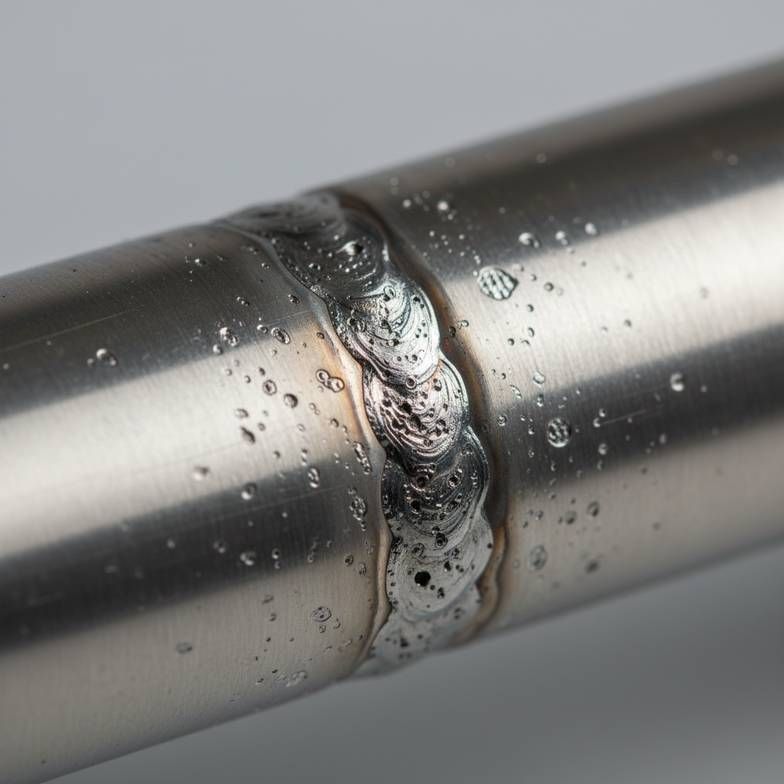
The most critical medical furniture defects are structural, such as weak welds, hairline cracks in the frame, or using thinner-than-specified materials. These compromise patient safety and product longevity. Minor cosmetic issues like a small scuff from transport rarely affect performance or durability in a meaningful way.
Dive Deeper: Developing Your Risk Assessment Framework
Over the years managing projects, I've seen countless inspection reports. The ones that cause the most confusion are those that list every single deviation without context. A 2mm paint chip is listed with the same severity as a brake that doesn't work. This is not helpful.
When an inspector flags a minor scratch, here’s the question I encourage our clients to ask: "Does this defect impact the safety, function, or cleanability of the product?"
If the answer is no, it's a minor, cosmetic issue. It should be noted, and if there are many, it might suggest a careless finishing process. But a single instance is not a reason to reject a shipment. The real concern isn't the tiny paint chip itself, but whether the powder coating underneath is thick and durable enough to withstand years of cleaning with hospital-grade disinfectants. That’s a quality check that matters.
To make better decisions, I suggest categorizing defects into three levels of risk:
- Critical Defects: These are unacceptable. They pose a direct risk to patient or staff safety, or they make the product non-functional. A critical defect is grounds for rejecting the entire batch until it's 100% reworked and re-inspected. Your tolerance for these should be zero.
- Major Defects: These are defects that are likely to affect the product's usability, durability, or performance. They might not be a safety risk today, but they could lead to premature failure. Examples include a caster that drags, a drawer that doesn't align, or poor finishing that poses a hygiene risk. A high number of major defects is a serious red flag.
- Minor Defects: These are typically small cosmetic issues that don't affect function, safety, or durability. Think small paint blemishes in non-visible areas or slight variations in texture. While you don't want to see a lot of them, they are not typically a reason to reject a shipment.
Here's a practical comparison:
| Defect Type | Example | Business Impact | Decision |
|---|---|---|---|
| Critical | A crack in the main support weld of a hospital bed. | Catastrophic failure risk, patient injury, legal liability. | Reject. Do not ship. |
| Major | A central braking system that doesn't fully lock the casters. | Bed can move during patient transfer, staff frustration, potential for accidents. | Rework required. Re-inspect before shipment. |
| Minor | A small scratch on the underside of an overbed table. | No impact on function, safety, or hygiene. | Accept. Note for future process improvement. |
By adopting this "Scratch vs. Structure" mindset, you can focus your attention where it matters most, ensuring the medical furniture defects you challenge are the ones that truly impact your business and the end-user.
Why Are Functional Component Failures a Top Concern for Medical Furniture Defects?
Imagine a brand-new emergency cart is rushed to a patient's room, but one wheel is stuck, causing it to veer sideways and slow down the response. Or a nurse tries to adjust an electric bed for a patient's comfort, but the motor groans and then stops working. These aren't just inconveniences; they are operational failures that directly impact care. This is why testing moving parts is so important.
Functional component failures are a top concern for medical furniture defects because they directly threaten daily usability, staff efficiency, and patient safety. A product can look perfect, but if its core mechanical or electrical parts don't work reliably under real-world stress, the product has failed its primary purpose.
Dive Deeper: A Practical Guide to Testing Functional Components
When we support a client's pre-shipment inspection, we push for rigorous functional testing, not just a quick visual check. For a project contractor or distributor, your reputation depends on these products working from day one. Here’s what we look for in common components:
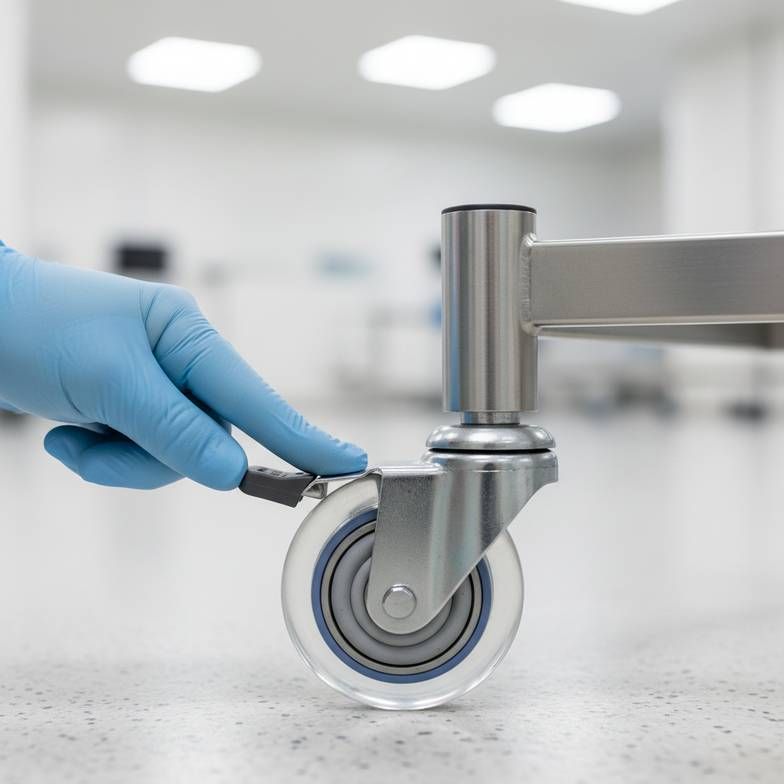
Casters and Braking Systems
This is one of the most common points of failure, often a result of cost-cutting.
- Smoothness: Does the trolley or bed roll smoothly without excessive force? Does it pull to one side?
- Locking: Do all casters that are supposed to lock do so securely? For central braking, does one push of the pedal lock all wheels firmly? Push the locked trolley; it shouldn't drift or slide.
- Swivel: Do the casters swivel freely 360 degrees without sticking? A stuck swivel can make maneuvering in tight spaces a nightmare.
Motors, Actuators, and Handsets (for Electric Beds)
An electric bed is essentially a piece of medical machinery.
- Full Range of Motion: Run the bed through all its functions—head up/down, foot up/down, high/low. Do this several times. Does it move smoothly and consistently?
- Noise: Listen to the motors. A quiet, consistent hum is normal. Grinding, clicking, or whining sounds can indicate a problem with the motor or mechanism.
- Load Testing: If possible, the inspection should test functions with a simulated load on the bed. A motor that works fine when empty might struggle with a patient's weight.
Gas Springs and Manual Cranks
For manual beds, overbed tables, and patient chairs.
- Gas Springs: On an overbed table, does the tabletop rise smoothly when the lever is activated? Does it hold its position firmly without sinking when you apply pressure?
- Manual Cranks: Are the handles easy to turn? Does the mechanism operate without binding or skipping? The cranking should be smooth and require reasonable effort, not a full-body workout.
For every importer and project contractor, these functional tests are your best insurance against future problems. A bed that fails in the field creates an enormous headache. You have to deal with an angry client, arrange for spare parts, and coordinate repairs. It's far cheaper and more effective to catch these medical furniture defects at the factory before they are packed into a container.
How Do Welding and Finishing Flaws Become Critical Medical Furniture Defects?
At first glance, an uneven weld or a slightly rough patch on a stainless steel cabinet might seem like another minor cosmetic issue. But in a healthcare setting, looks can be deceiving. You're not just buying a piece of steel; you're buying a surface that must stand up to aggressive cleaning and prevent the spread of infection. That's why finishing flaws are more than skin deep.
Poor welding and finishing are critical medical furniture defects because they create two major hidden risks: they can be structural weak points that lead to cracking, and they can create tiny crevices that trap bacteria, making proper disinfection impossible and compromising a hospital's infection control protocols.

Dive Deeper: The Hidden Dangers in Welds and Coatings
Let's break down why these finishes are so crucial for any piece of furniture destined for a clinic or hospital.
The Truth About Welding
Welding isn't just about sticking two pieces of metal together. It's about creating a new, solid piece of metal that is as strong as, or even stronger than, the original parts.
- Structural Weakness: A "bad" weld—one that is porous, incomplete, or has sharp, unpolished edges—is a point of weakness. It creates stress concentrations. Over time, with the daily push and pull of hospital use, a crack can start at that point and lead to a complete structural failure. I've seen bed frames fail because of a poorly executed weld on a key joint.
- Hygiene Risk: This is the part that many buyers miss. A weld that isn't ground smooth and polished creates microscopic pits and crevices. For hospital staff, these are known as "harborage points for pathogens." No matter how much you spray and wipe, you can't properly clean inside these tiny gaps, allowing bacteria to thrive. This turns a piece of furniture into a potential source of hospital-acquired infections (HAIs). A good weld should feel smooth to the touch, with no sharp edges or visible pores.
More Than Just Paint: The Role of Powder Coating
On carbon steel furniture like bed frames and trolleys, the powder coating is the primary line of defense.
- Adhesion and Thickness: The main goal isn't just the color. The powder coating needs to be thick enough and properly bonded to the metal. A simple test an inspector can do is a "cross-hatch adhesion test," where they score the surface and use special tape to see if the coating flakes off. If it flakes easily, it means the surface preparation was poor, and the coating will chip and peel in no time.
- Chemical Resistance: The coating must be able to withstand repeated cleaning with harsh hospital disinfectants. A cheap, thin coating will quickly break down, exposing the steel underneath to moisture and causing it to rust. This not only looks terrible but also creates more rough surfaces that are impossible to keep sterile.
When evaluating finishing, you're evaluating the product's ability to survive in its intended environment. A beautiful, glossy finish that can't be cleaned properly is one of the most dangerous medical furniture defects of all.
Are Packaging and Marking Errors Considered Medical Furniture Defects?
The inspection report comes back, and the photos of the products look great. The welds are smooth, the casters lock, and the finish is perfect. But then you get to the last page, and you see pictures of crushed cartons, handwritten shipping marks, and pallets that seem ready to collapse. You might be tempted to breathe a sigh of relief that the products themselves are okay, but this is a mistake.
Yes, for any project contractor, importer, or distributor, packaging and marking errors are absolutely critical medical furniture defects. These logistical failures can cause more immediate and costly business damage than a minor flaw on the product itself. They can lead to project delays, customs fines, damaged goods, and complete chaos during installation.

Dive Deeper: Why Logistics Failures Can Kill a Project
For my clients, a successful project means getting the right products to the right place at the right time, in perfect condition. Packaging and marking are the silent heroes that make this happen. When they fail, the entire project is at risk.
I recall a project for a new clinic where the supplier mixed up the shipping marks. One container of bedside cabinets meant for the second floor was marked for the ground-floor pharmacy, and vice versa. The installation team wasted an entire day opening boxes and moving furniture between floors, blowing their schedule and budget. The products were fine, but the project was a mess.
Here are the most common packaging and marking failures I see and why they matter so much:
- Weak or Inappropriate Cartons: The carton is the product's first line of defense. Using thin, single-wall cardboard for a heavy medical trolley is asking for trouble. The box will inevitably be punctured or crushed during transit, leading to scratches, dents, or broken parts on the product inside. Packaging must be suitable for the product's weight and the rigors of international shipping.
- Incorrect or Unclear Shipping Marks: Shipping marks are the address label for your project. If they are wrong, missing, or illegible, a whole chain of bad things can happen. Your container could be held by customs. Your warehouse team won't know how to sort the incoming goods. Installation crews won't know which box goes to which room. This information needs to be printed clearly, not handwritten, and must match your packing list exactly.
- Missing or Inaccurate Packing Lists: The packing list tells you and the customs authorities exactly what is in each box and each container. An inaccurate list can lead to customs holds and inspections, causing weeks of delay. For your own team, it makes receiving and inventory management impossible.
- Forgetting the "Unboxing Experience": Think about the team that has to unbox and assemble 200 hospital beds. If accessories like IV poles and patient handsets are just thrown into the main box without being separately wrapped and labeled, parts will get lost, and assembly will slow to a crawl. A good supplier thinks about this and packs accessories in a clearly marked "accessory box" or bag that is securely attached inside the main carton.
A supplier who pays attention to packaging and marking demonstrates that they understand your business. They aren't just selling you a product; they are delivering a complete solution. Don't underestimate these logistical details—they are often the difference between a smooth, profitable project and a costly, chaotic one.
Frequently Asked Questions
What is an AQL (Acceptable Quality Limit) for medical furniture?
An AQL isn't a single number; it's a standard you define with your supplier before production. For medical furniture, I always advise setting the AQL for Critical Defects to 0. This means zero tolerance for any defect that could affect safety or core function. For Major and Minor defects, you can set a higher but still strict percentage, like 1.5% and 4.0% respectively.
How do I communicate my quality standards to a supplier?
The best way is through a detailed Quality Specification document. This should include clear technical drawings, material specifications (e.g., "1.2mm thick cold-rolled steel"), brand and model numbers for key components like casters or motors, reference photos of acceptable/unacceptable welds, and a comprehensive pre-shipment inspection checklist. The more you define upfront, the less room there is for misunderstanding.
Can I trust a supplier's internal QC report?
A supplier's internal QC report is a good indicator of their own processes, but it should never replace an independent inspection. A third-party inspector provides an unbiased verification that your standards are being met. For new suppliers, large orders, or highly customized products, an independent pre-shipment inspection is essential for risk management.
What should I do if a pre-shipment inspection finds critical defects?
Do not approve the shipment. Immediately contact your supplier with the inspection report and photographic evidence. Clearly state that the shipment is on hold until the critical defects are corrected. You should then agree on a clear rework plan and a date for a re-inspection of the corrected items. Never feel pressured to accept products with known safety or functional flaws.
Conclusion
The pre-shipment inspection is your final chance to catch problems before they become your problems. By shifting your focus from minor cosmetic issues to the risks that truly matter, you can make better, more confident decisions. The key is to prioritize. A successful inspection isn't about finding zero flaws; it's about confirming there are zero critical risks to safety, function, hygiene, and project logistics. Understanding these common medical furniture defects and how to categorize them is the most powerful tool a project contractor or importer can have. It ensures the products you deliver will enhance your reputation, not damage it.
At CareFurnex, we build our project support around this very principle. We help our partners create clear specifications, anticipate these risks, and navigate the inspection process effectively. If you're planning a project and want a partner who understands how to manage these details, contact us. We're here to help you source with greater confidence and lower risk.
Written by
CareFurnex Team
CareFurnex Team shares practical knowledge about hospital beds, patient room furniture, medical trolleys, clinic furniture, and healthcare facility procurement for international B2B buyers.
Related Products
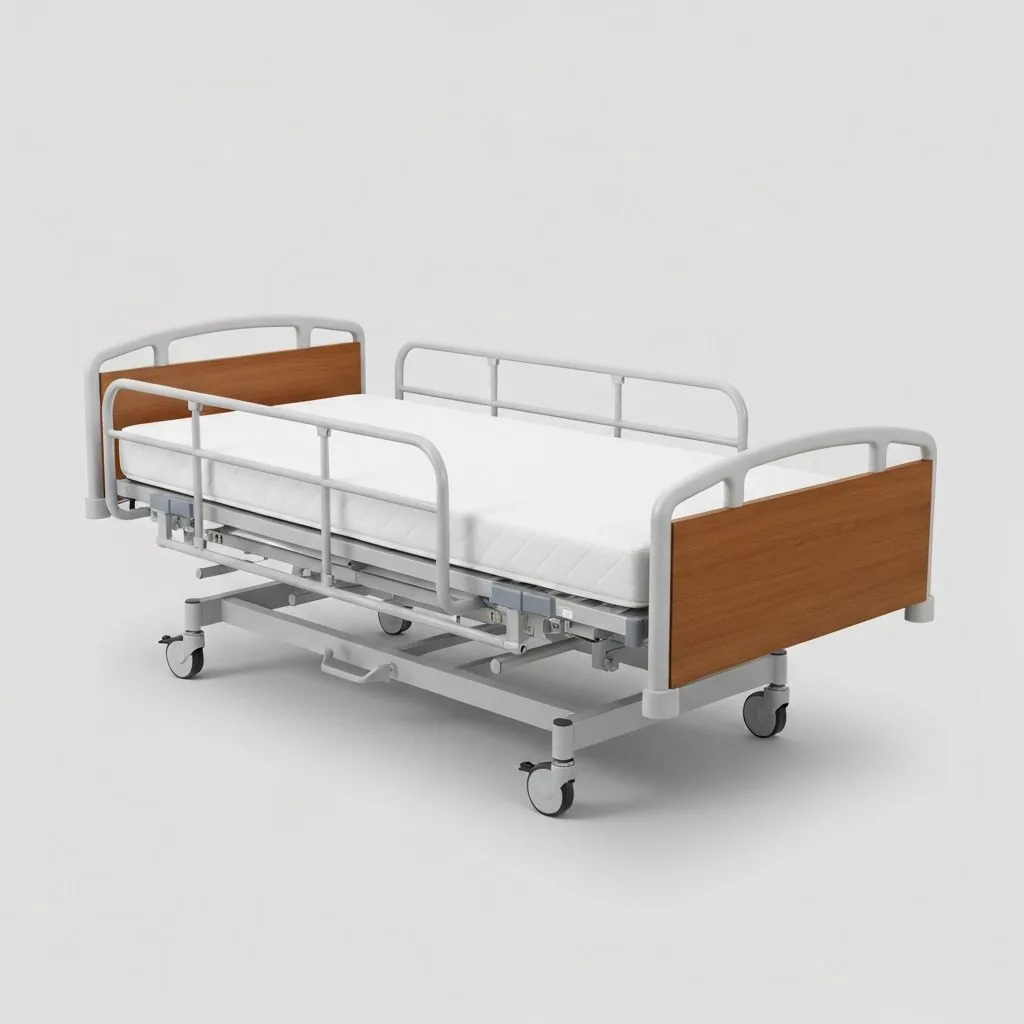
Hospital Beds
General-purpose patient beds for inpatient wards and standard hospital rooms.
View productElectric Hospital Beds
Motorized multi-function beds with electric height, backrest, and leg adjustment options.
View product
Ward Furniture
Complete ward furniture options for patient rooms and hospital care areas.
View product