
Sourcing hospital beds and seeing "Trendelenburg function" on the spec sheet? The problem is, you're also seeing wildly different prices for what seems to be the same feature. This can leave you wondering if you're about to overpay for a simple ward bed or, worse, under-specify a bed for a critical care unit, creating a major headache and clinical risk down the line. The solution isn't just knowing when the function is needed, but understanding how to properly specify Trendelenburg hospital beds to ensure they are reliable and fit for purpose.
Specifying Trendelenburg hospital beds requires moving beyond a simple "yes/no" checkbox. Buyers must define the required tilt angle (e.g., ≥12°), actuation method (electric motor or manual), control interface, and whether both Trendelenburg and Reverse Trendelenburg are needed. These details determine if the bed is suitable for its intended clinical environment, such as an ICU versus a general ward, and prevent procurement risks.
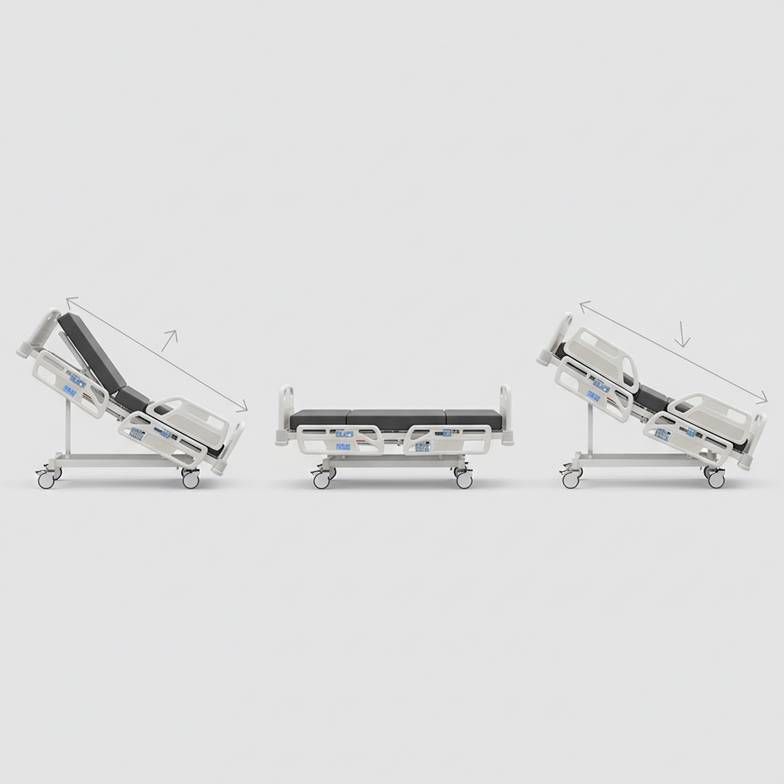
So, you know the basics. But the real difference between a successful purchase and a costly mistake lies in the details. The "Trendelenburg" label alone doesn't tell you anything about performance or reliability. Let's break down exactly what questions you need to ask your supplier to get the right bed at the right price, avoiding common procurement traps.
How Does the Clinical Environment Change Trendelenburg Requirements?
A common issue I see in procurement is that suppliers will list "Trendelenburg function" on everything from a basic manual bed to a high-end ICU model. But a feature that is perfectly fine for a general ward could be dangerously inadequate in an intensive care unit during an emergency. The solution is to stop thinking of it as one feature and start matching the specific mechanism to the clinical environment.
For critical environments like an ICU, operating room, or procedural suite, a fast, powered, wide-angle Trendelenburg function is non-negotiable for emergency interventions. In contrast, a general ward may only need a basic or even manual tilting function for non-urgent postural adjustments, making it a much more cost-effective choice.
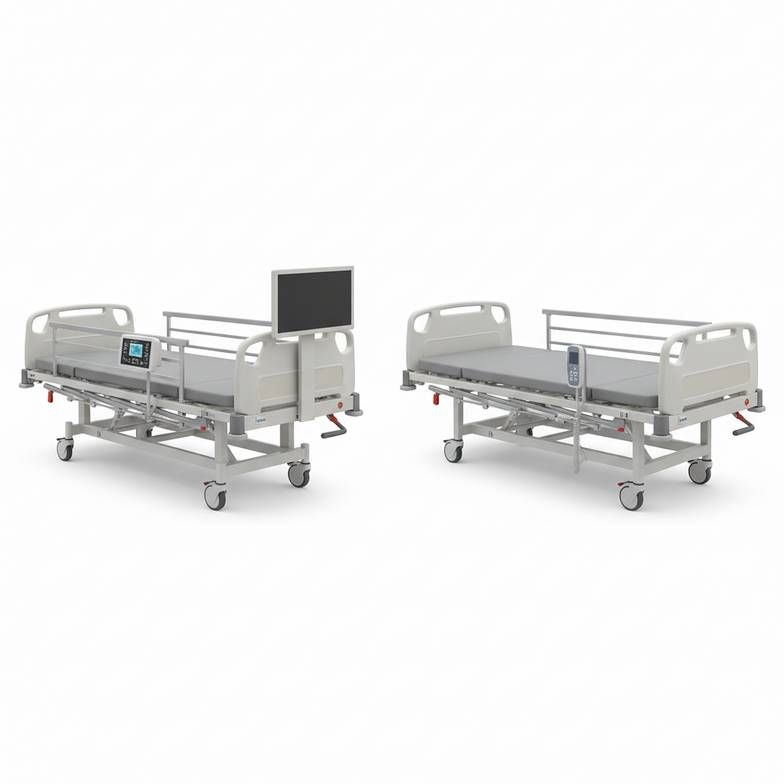
ICU and Critical Care Requirements
Let's be blunt: in a critical care setting, the Trendelenburg function is not for comfort—it's a clinical tool. When a patient is in shock or requires a specific position for a procedure, caregivers need the bed to respond instantly and precisely.
Here’s what that means for your specification:
- Powered Actuation is Mandatory: The tilting mechanism must be driven by a reliable electric motor. A manual crank or gas spring is simply too slow and imprecise for an emergency.
- Actuation Speed Matters: The motor must be powerful enough to move the bed platform smoothly and quickly, even with a patient on it.
- Steeper Angles are Key: For critical care, you should look for a bed that can achieve a tilt of at least 12 degrees for both Trendelenburg (head down) and Reverse Trendelenburg (head up). Many basic beds don't offer Reverse Trendelenburg or have a much smaller angle.
- Integrated Controls: The function must be accessible from a nurse control panel or supervisor panel, often built into the side rails or a footboard panel. This allows a caregiver to activate the position quickly without fumbling with a patient handset. Critically, it should include a lockout function to prevent accidental activation by the patient. It's often linked with other emergency functions like a one-touch CPR button that flattens the bed.
General Ward and Long-Term Care
In a general ward, the need for Trendelenburg is often less urgent. It might be used for postural drainage or to improve patient comfort. Because of this, you have more flexibility in your specification, which can lead to significant cost savings.
- Manual Options are Viable: A bed using a manual crank or a gas spring to achieve the Trendelenburg position can be a perfectly acceptable and budget-friendly choice for this environment. It gets the job done without the cost of an extra motor and complex electronics.
- Basic Electric Options: If you do opt for a powered version on a ward bed, it will likely have a more basic motor. It might be slower, have a lower tilt angle (e.g., 8-10 degrees), and may not include Reverse Trendelenburg.
- Simpler Controls: The controls are typically found only on the patient handset. This is fine for non-emergency use but highlights why this type of bed would be unsuitable for an ICU.
Here’s a simple table to guide your thinking:
| Feature | ICU / Critical Care Bed | General Ward Bed |
|---|---|---|
| Actuation | Electric Motor (Required) | Manual (Gas Spring/Crank) or Basic Electric |
| Speed | Fast, for emergencies | Slower, for comfort/positioning |
| Angle | ≥12° (Trendelenburg & Reverse) | Often <12°, sometimes only Trendelenburg |
| Controls | Nurse Control Panel with Lockout, CPR Release | Patient Handset |
| Cost | Higher | Lower |
| Common Use | Shock management, surgical procedures | Postural drainage, patient comfort |
Beyond the Checkbox: What Technical Details Should You Verify for Trendelenburg Hospital Beds?
Your supplier's quote says "Trendelenburg function included." Great. But this vague statement hides all the details that actually determine performance, reliability, and price. You could be buying a feature that simply won't work when you need it most. To protect your investment, you need to deconstruct the specification and ask for specific, verifiable details.
To get the right product, you must verify the actuation type (electric motor, gas spring, or crank), the maximum tilt angle in degrees for both Trendelenburg and Reverse Trendelenburg, the motor brand and its load capacity, and the control interface (patient handset vs. nurse control panel). These are the details that matter.
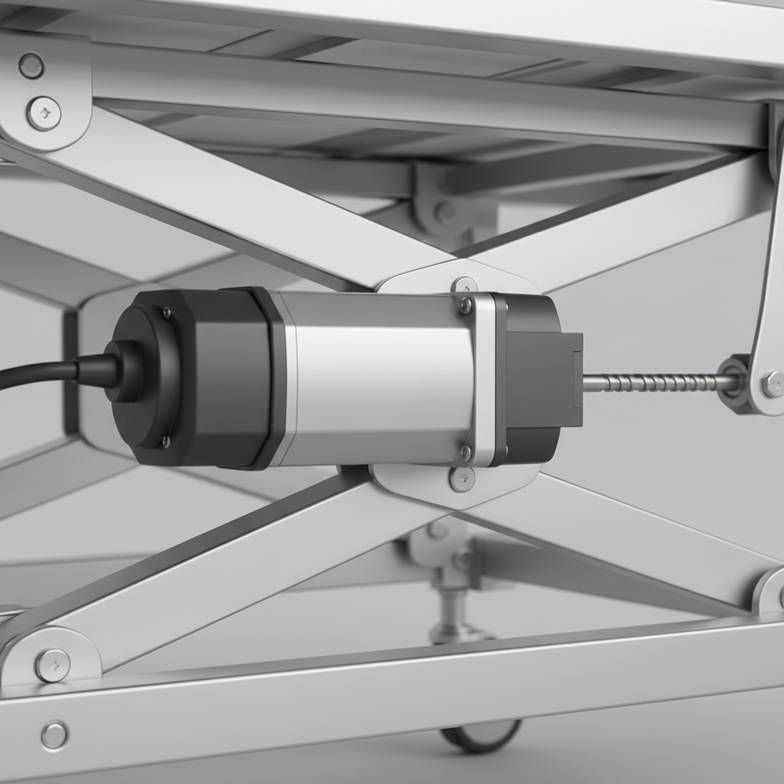
Actuation Method: Motor vs. Manual
The mechanism that creates the tilt is the single most important factor. As a sourcing partner, this is the first thing I check.
- Electric Motor: This is the gold standard for performance, especially in 5-function and ICU beds. But don't stop there. Ask for the motor brand. Reputable international brands like Linak, Timotion, or Dewert are indicators of higher reliability and are often easier to source spare parts for. A generic or unbranded motor might work, but its long-term performance is a bigger question mark. Also, ask for the actuator's force rating, usually in Newtons (N), to ensure it's powerful enough for your patient weight requirements.
- Gas Spring: This is common in manual or semi-electric beds. It's essentially an assisted lift—the caregiver releases a lever, and the spring helps tilt the platform. It's cost-effective but less precise and offers less control than a motor.
- Manual Crank: This is the most basic and cheapest option, found on low-cost manual beds. It requires a caregiver to physically turn a crank to tilt the bed frame. It is slow, labor-intensive, and not suitable for most modern hospital workflows.
The Importance of Angles (and Proof)
A good technical data sheet should be precise. It shouldn't just say "Trendelenburg." It should state the angle in degrees, for example:
- Trendelenburg: 0-12°
- Reverse Trendelenburg: 0-12°
But here's a pro tip: don't just trust the spec sheet. I often ask suppliers to provide a short video demonstrating the bed tilting to its maximum angle. Sometimes, I even ask them to place a digital angle gauge on the platform during the video. This simple request is incredibly effective at filtering out suppliers who overstate their product's capabilities. If they can't prove it, you shouldn't buy it.
Your Procurement Checklist
When you're comparing quotes for Trendelenburg hospital beds, don't get lost in the marketing language. Use this checklist to compare the facts:
- Actuator Type: Is it an electric motor, gas spring, or manual crank?
- Motor Brand: If electric, what is the brand and model of the actuator (e.g., Linak, Timotion)?
- Trendelenburg Angle: What is the maximum angle in degrees (e.g., ≥12°)?
- Reverse Trendelenburg: Is this function included, and what is its maximum angle?
- Control Interface: Where are the controls located? Handset, side rail controls, foot pedal, nurse panel?
- Safety Lockout: Is there a nurse control lockout function to prevent patient misuse?
- Proof: Can the supplier provide a video demonstrating the full range of motion?
How Do You Avoid Overpaying or Under-Specifying for Trendelenburg Hospital Beds?
You have three quotes for Trendelenburg hospital beds sitting on your desk, all with different prices. How do you choose? Choosing the cheapest could mean getting a bed that fails in a critical situation, while the most expensive might be massive overkill for your needs and budget. A smart procurement strategy focuses on matching verified specifications to the intended application, ensuring you get the right value for your money.
To avoid these common risks, you must insist on a detailed technical data sheet for every quote—not just a marketing brochure. Compare the line-item specifications, not the product photo. Ask for video proof of functionality and always consider the total cost of ownership, which includes reliability and maintenance, not just the upfront unit price.
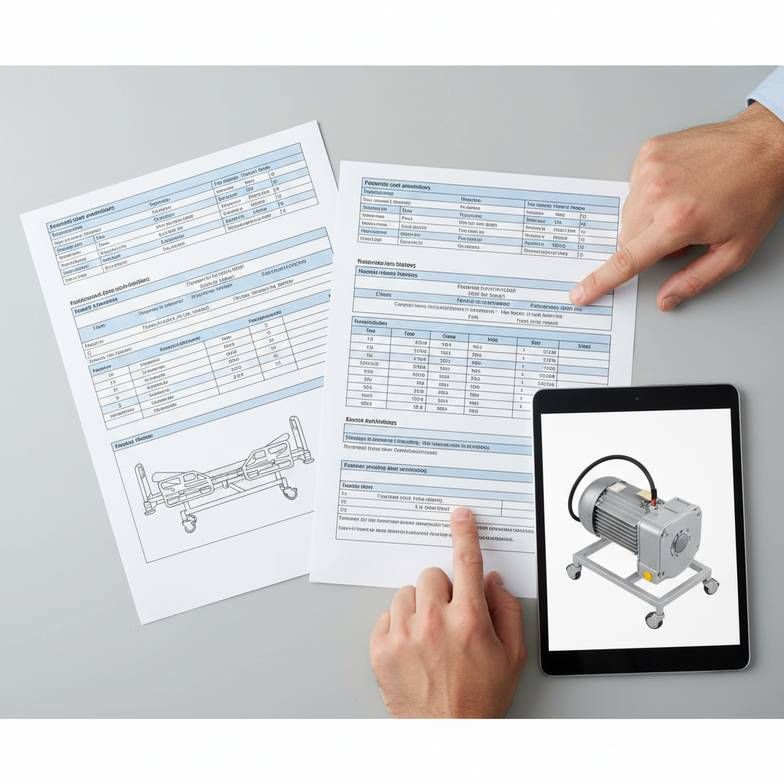
The "Looks The Same" Trap
A frequent and costly mistake I see buyers make is comparing quotes based on product photos and a single-line description. Two beds can look absolutely identical in a low-resolution photo but have completely different internal components. One might have a robust steel frame, a branded motor, and high-quality casters, while the other has a thinner frame, a generic motor, and basic wheels. A supplier might even use a photo of their high-end ICU bed on the product page for their most basic model.
The only way to avoid this trap is to ignore the photo at first and go straight to the technical data sheet. The real product is in the documentation, not the picture.
Demanding Proof: Your Best Sourcing Tool
When a supplier knows you're a serious buyer who checks details, they give you better information. Asking for proof is your best tool.
- Video Demonstration: As mentioned before, asking for a video is simple and powerful. When a supplier is hesitant to provide a video of the bed tilting to the specified angle, it's a major red flag for us. It suggests they either don't have the product or it doesn't perform as advertised.
- Certificate Verification: Ask for certificates, but be specific. A generic factory ISO certificate is good, but it doesn't guarantee the performance of a specific product. Ask, "Does your CE certificate or test report specifically cover model XYZ with the full 12° Trendelenburg function?" This forces clarity.
Linking Price to Specification: A Real-World Example
A client recently asked me why one bed was $300 more than another, even though both product pages said "5-Function Electric Bed with Trendelenburg." It's a question I get all the time. We put the two technical data sheets side-by-side, and the reason became obvious:
- Bed A (Cheaper): Used a basic domestic-brand motor, offered only an 8° Trendelenburg tilt, had no Reverse Trendelenburg, and was controlled only by a patient handset.
- Bed B ($300 More): Used a branded Timotion motor, offered a full 12° tilt for both Trendelenburg AND Reverse Trendelenburg, and included an integrated nurse control panel with a safety lockout.
The conclusion was clear. For their clinic's new procedural room, Bed B was the only viable option. The extra $300 wasn't for the "Trendelenburg" name; it was for the superior motor, wider range of motion, and critical safety controls. Bed A would have been a waste of money because it couldn't meet their clinical needs. This is the kind of analysis that turns a risky purchase into a smart investment.
Frequently Asked Questions
What is the standard Trendelenburg angle for a hospital bed?
There isn't one single standard that fits all. For ICU and surgical use, a tilt of at least 12 degrees is commonly required. For general ward beds, the angle might be lower, such as 8 or 10 degrees. You should always verify the required angle based on your facility's clinical needs before placing an order.
Do all electric hospital beds have a Trendelenburg function?
No, not all of them. While it's a common feature on 3-function, 5-function, and ICU beds, it is often absent on more basic 1- or 2-function electric beds or home-care models. Never assume it's included; always confirm its presence on the technical specification sheet.
What's the difference between Trendelenburg and Reverse Trendelenburg?
Trendelenburg position tilts the entire bed frame so the patient's head is down and their feet are elevated. Reverse Trendelenburg does the opposite, tilting the frame so the patient's head is up and their feet are down. They are two distinct functions, and you should always verify if a bed includes one or both.
Can the Trendelenburg function be added to a bed later?
Generally, no. The Trendelenburg mechanism is an integral part of the bed's frame, lifting structure, and electronics. It involves specific actuators, pivot points, and control programming that cannot be retrofitted. This makes it critical to specify the function correctly from the start.
Conclusion
The true value of Trendelenburg hospital beds is unlocked not by simply finding a model that has the function, but by meticulously specifying it to match your clinical environment and budget. By moving from a simple "yes/no" checkbox to a detailed procurement checklist, you protect your investment, ensure caregiver efficiency, and promote patient safety. A thorough review of the actuation method, motor brand, precise tilt angles, and control systems is the most effective way to compare suppliers, justify costs, and avoid the common and expensive mistakes that happen during procurement.
If you are sourcing medical furniture for a project and need to ensure the specifications meet your clinical and budget requirements, our team at CareFurnex is here to help. We can review your product list, compare supplier quotes line by line, and help you build a procurement plan that gets it right the first time. Contact us today to discuss your project.
Written by
CareFurnex Team
CareFurnex Team shares practical knowledge about hospital beds, patient room furniture, medical trolleys, clinic furniture, and healthcare facility procurement for international B2B buyers.
Related Products
Hospital Beds
General-purpose patient beds for inpatient wards and standard hospital rooms.
View productElectric Hospital Beds
Motorized multi-function beds with electric height, backrest, and leg adjustment options.
View product
Ward Furniture
Complete ward furniture options for patient rooms and hospital care areas.
View product