
Choosing the right hospital beds for a project can be a real headache, especially when you're trying to balance budget, long-term reliability, and the needs of clinical staff. You see the lower price tag on a manual hospital bed and wonder if it's a smart saving or a future problem. You worry it could mean lower quality, more work for nurses, and ultimately, a poor investment for your hospital or your clients. But understanding what this bed truly is—a tough, reliable asset for specific situations—can help you make a much smarter, more confident decision.
A manual hospital bed is a medical bed that uses hand cranks, instead of electric motors, to adjust the bed's functions like the backrest, leg rest, and sometimes height. It is specifically designed for maximum reliability and simple operation in environments where electricity might be unstable, maintenance resources are scarce, or controlling the total cost of ownership is the number one priority. This makes it a strategic choice, not just a budget one.
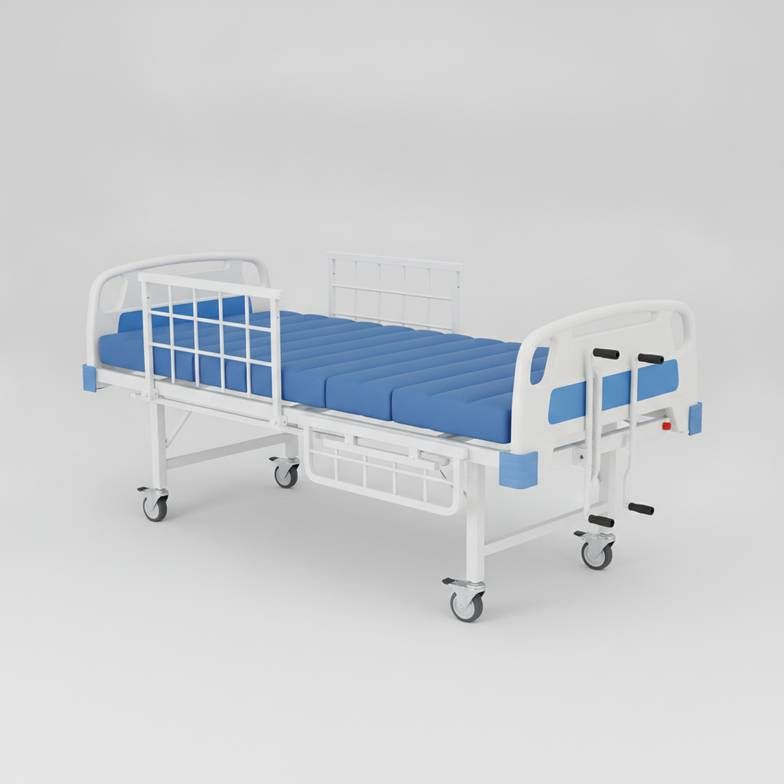
Now, beyond that simple definition, the real question for a buyer is: when should you actually choose a manual hospital bed over an electric one? It’s not always about saving money upfront. Let's dig into the practical scenarios where this workhorse of the hospital ward is not just a good choice, but the best choice.
When is a manual hospital bed the right choice?
You're looking at a bill of quantities for a new 200-bed hospital wing, and every line item counts. The pressure is on to deliver a functional facility without blowing the budget. Do you go for the impressive, feature-packed electric beds for every room, or is there a wiser, more dependable option that won't create maintenance nightmares down the road?
A manual hospital bed is the right choice when your project's top priorities are rock-solid operational reliability, tight budget control, and low long-term maintenance overhead. It's the perfect solution for general wards, rural clinics, long-term care facilities, or any healthcare setting where the power grid is unreliable or you don't have a team of technicians on standby.
Dive Deeper: The Case for Manual Reliability and TCO
When I work with project contractors preparing a tender, the conversation often starts with the price difference between electric and manual beds. I always steer them toward a bigger-picture metric: Total Cost of Ownership (TCO). This is where the manual bed really shines.
The Total Cost of Ownership (TCO) Advantage
Let's be honest, the initial purchase price is just the beginning of the story. A bed's true cost is measured over its entire lifespan. Here’s how a manual hospital bed keeps costs low:
- Lower Purchase Price: This is the most obvious benefit. For large-scale projects, the savings from choosing manual beds for general wards can be redirected to more critical equipment in the ICU or operating rooms.
- Zero Electricity Consumption: This might seem small, but for a hospital with hundreds of beds, the cumulative energy savings over a decade are significant. It's a cost that simply doesn't exist with a manual bed.
- Near-Zero Maintenance Costs: This is the big one. Electric beds have motors, circuit boards, and remote controls—all of which can and do fail. Replacing these parts is expensive and requires skilled technicians. A manual bed's crank system is purely mechanical. It’s incredibly robust, and in the rare case something goes wrong, it's usually a simple, mechanical fix.
- Simpler Staff Training: The operation is intuitive. There are no complex remotes or error codes to troubleshoot. This reduces training time and user error.
For distributors, offering a durable manual bed with a low TCO is a huge competitive advantage. Procurement committees in hospitals are getting smarter; they are looking beyond the initial quote and asking about long-term value.
Unmatched Reliability in Tough Environments
I once consulted on a project for a new clinic in a region known for frequent power outages. The client was initially set on fully electric beds. We advised a hybrid approach: a few electric beds for their critical care room and high-quality manual beds for all other rooms. Why? Because a patient's comfort and a nurse's ability to position them shouldn't depend on the power grid. A manual hospital bed guarantees 100% uptime, regardless of external factors. There are no electronics to fail from power surges or brownouts. This is what we call operational resilience.
How do you judge the quality of a manual hospital bed?
You get two quotes for a 2-crank manual bed. One is significantly cheaper than the other. It seems like a great deal, but this is where buyers get into trouble. How do you tell if you're buying a durable medical asset or a cheap imitation that will start to sag, rust, and break down within a year?
To judge the quality of a manual hospital bed, you have to ignore the price for a moment and become a detective. Look closely at the technical specification sheet. The real markers of quality are found in the details: the thickness of the steel frame, the design of the crank system, the load capacity of the casters, and the finish of the welding and coating.
Dive Deeper: From Price Tag to Specification Sheet
When my team helps a client compare quotes from different suppliers, we create a comparison chart. The cheap offers are quickly exposed when you put their specs side-by-side with a quality product. Here’s what you should be looking for.
The Frame is the Foundation
The backbone of any good hospital bed is its frame. Don't accept vague terms like "strong steel frame." Ask for the specifics.
- Steel Thickness: A quality manual hospital bed uses cold-rolled steel with a thickness of at least 1.2mm, and ideally 1.5mm. Many cheap beds use 1.0mm or even 0.8mm steel. It might look fine out of the box, but it will bend and deform under the repeated stress of daily hospital use.
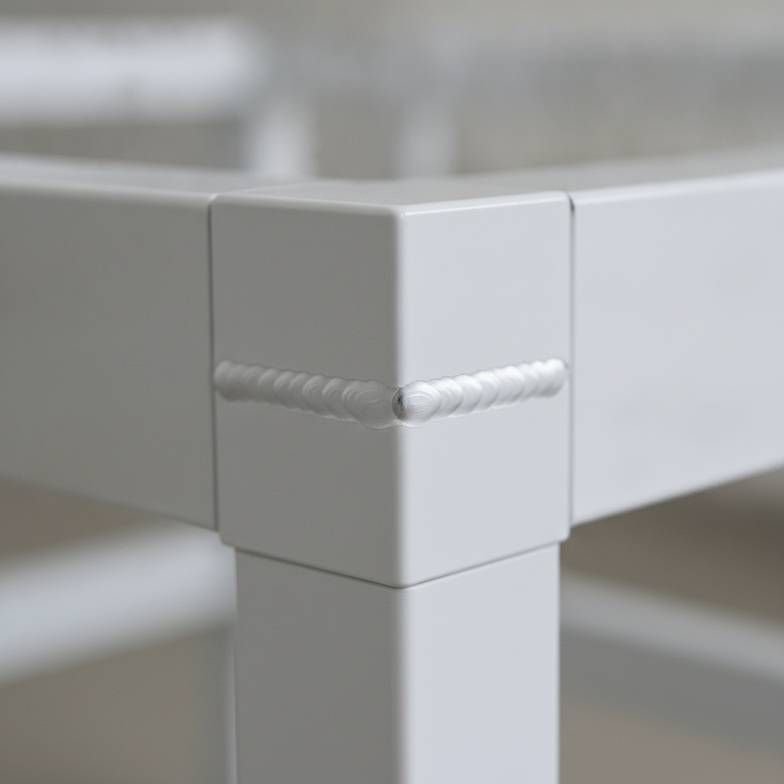
- Welding: Look at the joints. Are they smooth, continuous welds (often done by robots for consistency) or are they small, messy "spot welds"? Poor welding is a major point of failure and a clear sign of cost-cutting.
The Crank System: It's All in the Mechanics
The crank system is the heart of a manual bed. A poorly designed system is a nightmare for nursing staff.
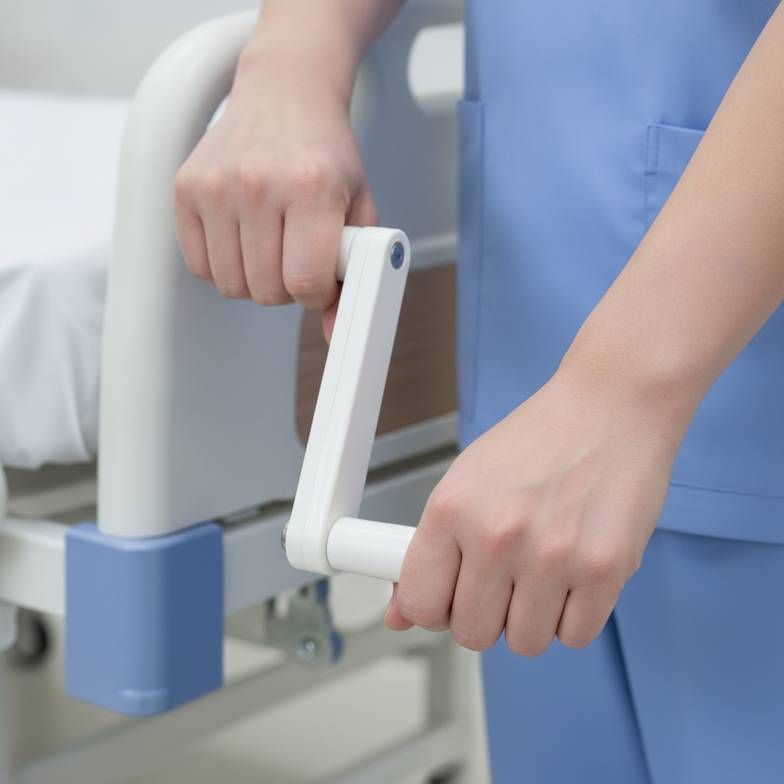
- Mechanical Advantage: A good crank system has a well-engineered gear ratio. This means a nurse can raise a patient's backrest with smooth, easy turns of the handle, not by using brute force.
- Safety Features: Look for a crank system with a built-in clutch or a stopper. This prevents staff from accidentally "over-torquing" the crank, which is a common cause of damage in cheaper models. The handles should also fold away neatly so they don't become a tripping hazard.
- Handle Material: The handles themselves should be made of durable ABS plastic or a similar tough material, not brittle plastic that will crack after a few months.
Don't Overlook the Details
The difference between a good bed and a great bed is often in the finishing touches.
- Casters (Wheels): This is a critical safety component. The casters should be at least 5 inches in diameter, have a high load capacity (e.g., over 125kg each), and feature a reliable braking system. A central braking system, which locks all four wheels with a single pedal, is a premium feature that greatly improves ease of use.
- Side Rails: Check the material (aluminum alloy is common and good) and the locking mechanism. It should be easy for a nurse to operate with one hand but completely secure when locked in place.
- Powder Coating: The bed frame should have an electrostatic powder coating, not just a layer of paint. This provides a thick, durable finish that resists chipping, scratching, and the harsh chemicals used for cleaning in a hospital environment.
Here's a simple table I use with clients to make it clear:
| Feature | Low-Quality Spec | High-Quality Spec (What to look for) |
|---|---|---|
| Frame Steel Thickness | 1.0mm or less | >1.2mm, ideally 1.5mm cold-rolled steel |
| Crank System | High effort to turn, no protection | Low effort, includes clutch/stopper mechanism |
| Casters | Small, plastic, no reliable brakes | 5" diameter, central braking, >125kg load |
| Welding | Spot-welded, rough, incomplete | Smooth, continuous robotic welding |
| Powder Coating | Thin paint layer, easily chips | Multi-layer electrostatic powder coating |
When you start asking suppliers for these specific details, you'll quickly see which ones are confident in their quality and which ones were just giving you a low price.
Frequently Asked Questions
How many cranks does a manual hospital bed have?
This can vary based on the model's function. A 1-crank bed typically only adjusts the backrest. A 2-crank manual hospital bed, the most common type, adjusts both the backrest and the leg rest. A 3-crank model adds full bed height adjustment. The right choice depends entirely on the level of care and nursing workflow required for the ward.
Is a manual hospital bed difficult for nurses to operate?
Not if it's a quality one. A well-engineered manual hospital bed has a crank system designed for mechanical advantage, making adjustments smooth and requiring minimal physical effort from the nurse. For quick backrest adjustments, it can actually be faster than waiting for a slow electric motor to move.
Can you use an overbed table with a manual bed?
Yes, absolutely. Manual hospital beds are designed to work with all standard ward furniture, including overbed tables, IV stands, and bedside cabinets. The crank handles are almost always designed to fold up or retract under the bed frame, ensuring they don't get in the way.
What is the weight capacity of a typical manual hospital bed?
A professional-grade manual hospital bed should have a safe working load (SWL) of at least 200-250 kg (around 440-550 lbs). This is a critical safety specification. Always demand the official technical data sheet from the supplier and never purchase a bed for hospital use without confirming its certified weight capacity.
Conclusion
So, what is a manual hospital bed? It’s much more than just a low-cost alternative. When you look past the price and focus on the total cost of ownership, operational reliability, and durability, you'll see it’s a highly strategic choice for many healthcare environments. For general wards, long-term care facilities, and projects in areas with infrastructure challenges, it's often the smartest, most resilient option. By learning to read the specification sheet and asking the right questions about steel thickness, crank mechanics, and caster quality, you can confidently source a high-quality manual hospital bed that will be a reliable asset for your facility, your project, and your clients for many years to come.
If you are sourcing for a hospital project, preparing a tender, or looking to add reliable, specification-driven healthcare furniture to your distribution catalog, contact us at CareFurnex. We can help you build the right configuration and provide the detailed documentation you need to make a truly informed decision.
Written by
CareFurnex Team
CareFurnex Team shares practical knowledge about hospital beds, patient room furniture, medical trolleys, clinic furniture, and healthcare facility procurement for international B2B buyers.
Related Products
Hospital Beds
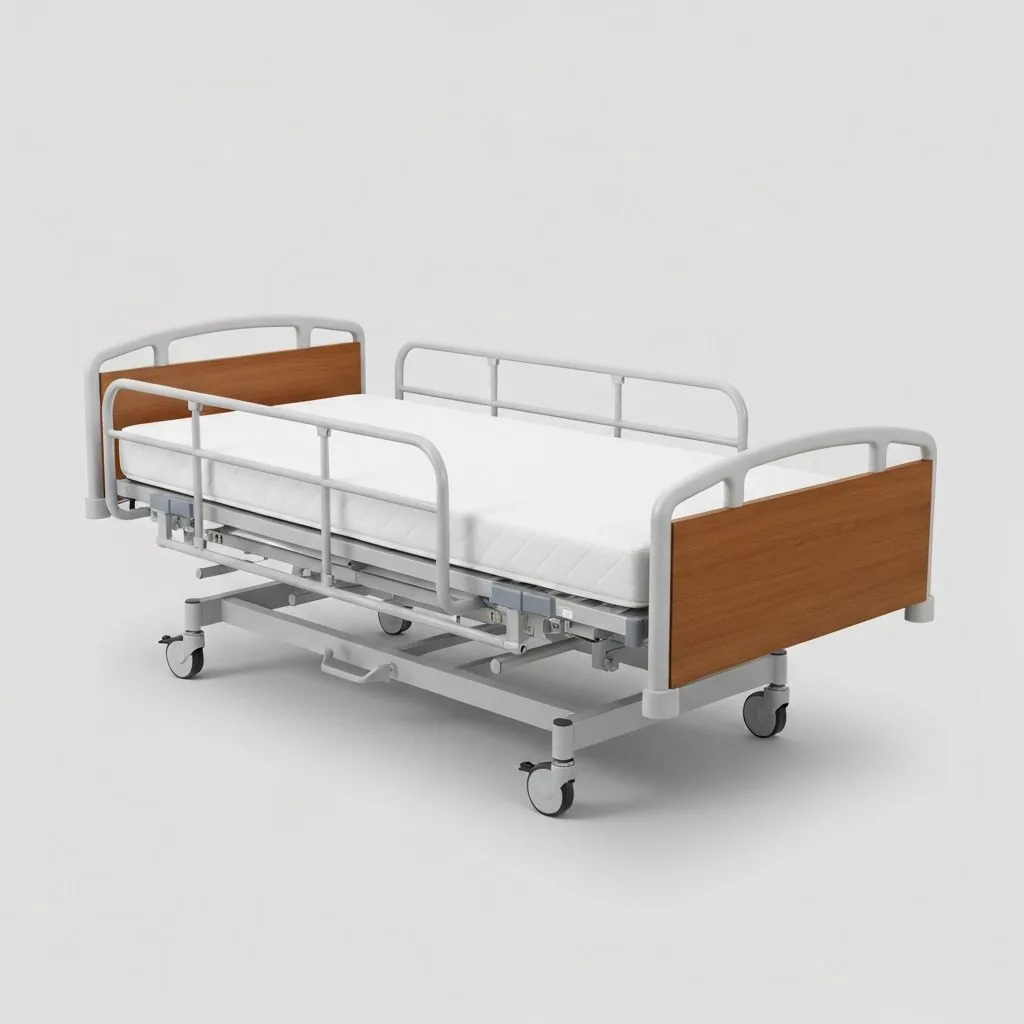
General-purpose patient beds for inpatient wards and standard hospital rooms.
View productElectric Hospital Beds
Motorized multi-function beds with electric height, backrest, and leg adjustment options.
View product
Ward Furniture
Complete ward furniture options for patient rooms and hospital care areas.
View product