
A new ward cabinet looks clean and professional on installation day. Six months later, the laminate edges are peeling and the surface near the floor is swollen and discolored. This is a common and frustrating sight in many healthcare facilities.
This failure is not usually a sign of a "bad" product. It is often the result of a purchasing decision that overlooked one key detail: the difference between a standard furniture specification and one built for a hospital cleaning environment.
You might be comparing two quotes for a "laminate ward cabinet," with one being significantly cheaper. Before assuming it's a bargain, you need to understand what specification differences are behind that price gap. The right choice is not about the initial price, but about the product's ability to withstand its environment.
Choosing the right ward storage cabinets involves matching the surface material to your hospital's cleaning protocols, planning the size to accommodate staff workflow and equipment clearance, and selecting an internal layout that meets patient or supply storage needs. Your decision should balance the material's long-term durability against your project budget, and these details should be confirmed before comparing quotations.
As a supplier, we often see buyers focus on the look and initial cost. However, the key conversations are about cleaning routines, room layouts, and what your staff or patients need to store inside. Getting these details right at the specification stage helps reduce premature replacement and operational headaches down the line.
What makes a ward cabinet specification different from a regular one?
The core difference is the environment. A hospital ward subjects furniture to stresses that office or residential cabinets rarely face. These include daily cleaning with chemical disinfectants, constant moisture from floor mopping, and frequent impacts from beds, trolleys, and high foot traffic.
An office cabinet might last for years with simple dusting. In a hospital, that same cabinet can fail in months. The particleboard core can absorb moisture from cleaning, causing it to swell. The thin, paper-like edge banding can peel away when exposed to cleaning agents, exposing the raw board underneath. Standard hardware may corrode or break under constant use.
This is why a specific, healthcare-focused specification is a practical approach. It is not about over-engineering; it is about matching the construction to the reality of the use conditions.
How do I choose a material that withstands hospital cleaning?
When you ask for a "laminate cabinet," it helps to be more specific. The term can describe materials with very different performance levels.
The most common choice is between High-Pressure Laminate (HPL) and Melamine Faced Chipboard (MFC).
- High-Pressure Laminate (HPL): This is a durable surface made from multiple layers of paper fused under high pressure and heat. It is generally more resistant to scratches, impact, and many common cleaning chemicals used in healthcare. It costs more initially, but it tends to perform better over the long term in demanding areas.
- Melamine Faced Chipboard (MFC): This is a particleboard core with a decorative paper layer fused directly to it. It is a cost-effective option for dry areas with less intensive use, but it is more susceptible to damage from harsh chemicals and moisture.
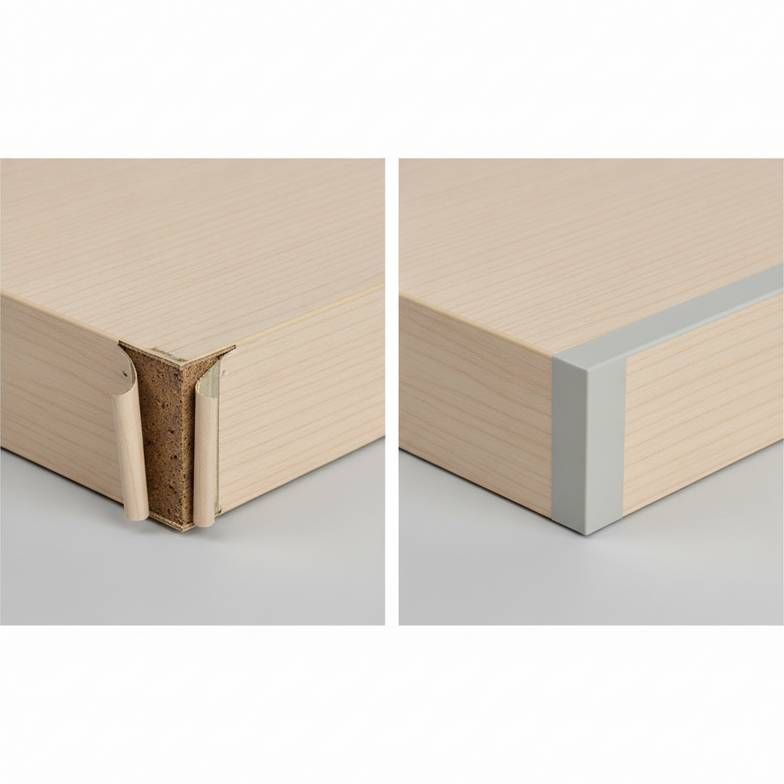
However, the surface material is only half the story. A common point of failure is the edge. You should confirm the edge banding specification. For a hospital ward, you could ask for 1mm to 2mm thick PVC or ABS edging applied with a waterproof Polyurethane (PUR) adhesive. This creates a robust, sealed edge that helps keep moisture from seeping into the core board during floor mopping or surface wiping.
What's the right way to plan cabinet size in a busy ward?
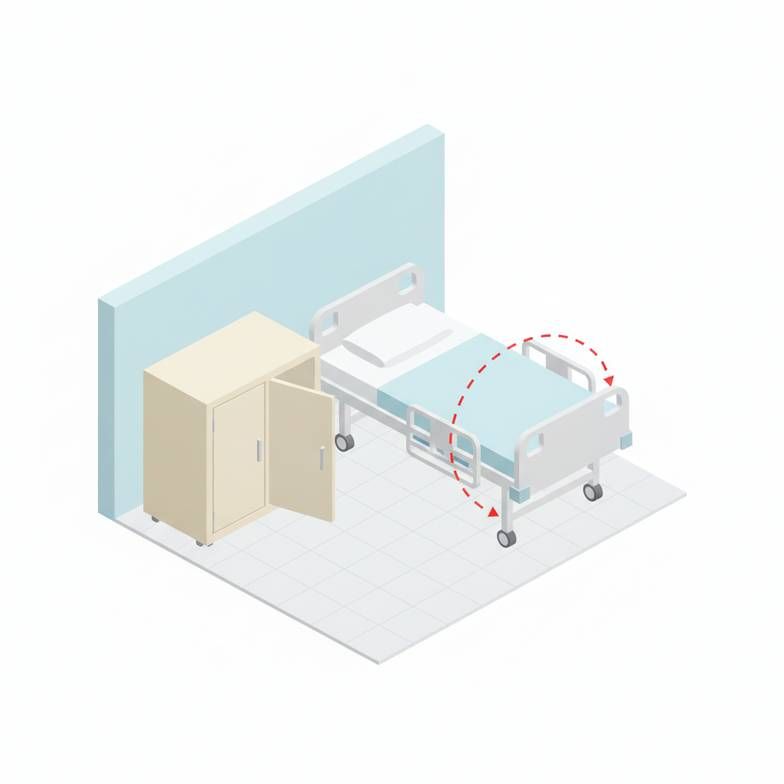
A common mistake is measuring only the floor space where the cabinet will sit. In a crowded ward, you should plan for the "use space," which includes the area needed to open doors and drawers without obstruction.
Before finalizing dimensions, consider the room's workflow:
- Door Swing Clearance: Will the cabinet door, when fully open, hit the side of a patient bed, a visitor's chair, or other medical equipment? A cabinet that "fits" the space is less useful if you cannot open it properly.
- Workflow Paths: Check that the cabinet does not narrow key pathways for staff, wheelchairs, or mobile equipment like patient lifts and medicine trolleys.
- Height and Reach: Is the top shelf accessible? Does the overall height create a difficult-to-clean surface on top or interfere with wall-mounted equipment?
A simple way to check this is to make a quick sketch of the room, marking the position of the bed, main doorway, and any other fixed furniture. This helps visualize potential interferences before you commit to an order.
Which layouts and features actually work for patients and staff?
The internal layout and hardware also play a major role in a cabinet's usefulness, which depends on whether its configuration matches the user's needs.
For patient wardrobes, consider a balance of:
- Hanging Space: Is the rail high enough for long coats?
- Shelving: Are the shelves fixed or adjustable to accommodate different items?
- Lockable Section: Is a small, lockable drawer or compartment needed for valuables?
For staff or supply storage, the needs might be different, focusing on shelf density and easy access.
The hardware details also matter. Handles should be easy to grip and have a simple, crevice-free design that is easy to wipe down. Hinges and drawer runners should be durable and corrosion-resistant to stand up to the high-use environment.
Ward Cabinet Specification Checklist
Use this checklist to define your requirements. A clear specification helps you compare quotations on a like-for-like basis.
| Specification Area | What to Define in Your Inquiry | Why It Matters for Your Order |
|---|---|---|
| Surface Material | e.g., High-Pressure Laminate (HPL) on E1 particleboard (a low-formaldehyde standard) | Aids resistance to hospital cleaning chemicals and scratches. |
| Edge Banding | e.g., 1.5mm PVC edging with waterproof PUR adhesive | Helps reduce moisture from mopping/cleaning from causing swelling. |
| Dimensions (HxWxD) | e.g., 1800 x 900 x 500 mm, with note on door swing | Helps you confirm it fits the space and does not obstruct workflow. |
| Base Design | e.g., Sealed plinth base OR adjustable leveling feet | Reduces dirt buildup or helps with stability on uneven floors. |
| Internal Layout | e.g., 1 fixed shelf, 1 hanging rail, 1 lockable drawer | Helps match the cabinet to the user's actual storage needs. |
| Hardware | e.g., Corrosion-resistant hinges, simple bar handles | Affects durability and ease of cleaning in a clinical setting. |
| Delivery Form | e.g., Request price for both Assembled and Flat-pack | Allows you to accurately compare total landed costs (unit + freight). |
How can I get a quotation I can actually compare?
To get a useful quotation, you need to provide suppliers with a clear and detailed specification. Sending an inquiry that just says "please quote 50 wardrobes" will result in vague quotes that are difficult to compare meaningfully.
The best approach is to use the checklist above. Specify the material, edge banding, dimensions, internal layout, and hardware you require.
Also, do not forget to ask about the delivery form. A fully assembled cabinet is ready to use but takes up a large volume (CBM) during shipping, increasing freight costs. A flat-pack cabinet is much cheaper to ship but requires time and labor for on-site assembly. A good supplier can provide quotes for both options, including the CBM and weight for each, so you can calculate the total landed cost and make an informed decision.
Preparing Your Inquiry
To receive a useful and comparable quotation for your ward storage cabinets, we recommend preparing the following details before contacting a supplier:
- The required surface material (e.g., HPL) and edge banding (e.g., PVC with PUR glue).
- The external dimensions (Height x Width x Depth) and any notes on room constraints.
- A description or simple drawing of the required internal layout.
- Your preference for delivery (fully assembled or flat-pack for on-site assembly).
- The quantity needed for each cabinet configuration.
Sending a detailed specification list helps suppliers provide an accurate quote for a product that is well-suited for your facility's long-term needs, rather than just a low initial price.
Written by
CareFurnex Team
CareFurnex Team shares practical knowledge about hospital beds, patient room furniture, medical trolleys, clinic furniture, and healthcare facility procurement for international B2B buyers.
Related Products
Hospital Bedside Cabinets
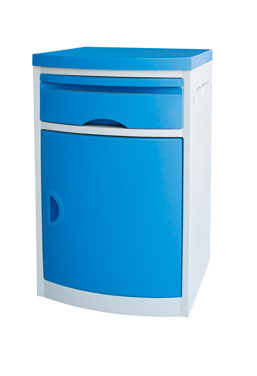
This ABS hospital bedside cabinet has a blue top, an upper drawer and a lower door within a light-colored body. Its stated size is 480 × 480 × 760 mm, giving buyers a defined overall footprint for ward furniture planning.
View product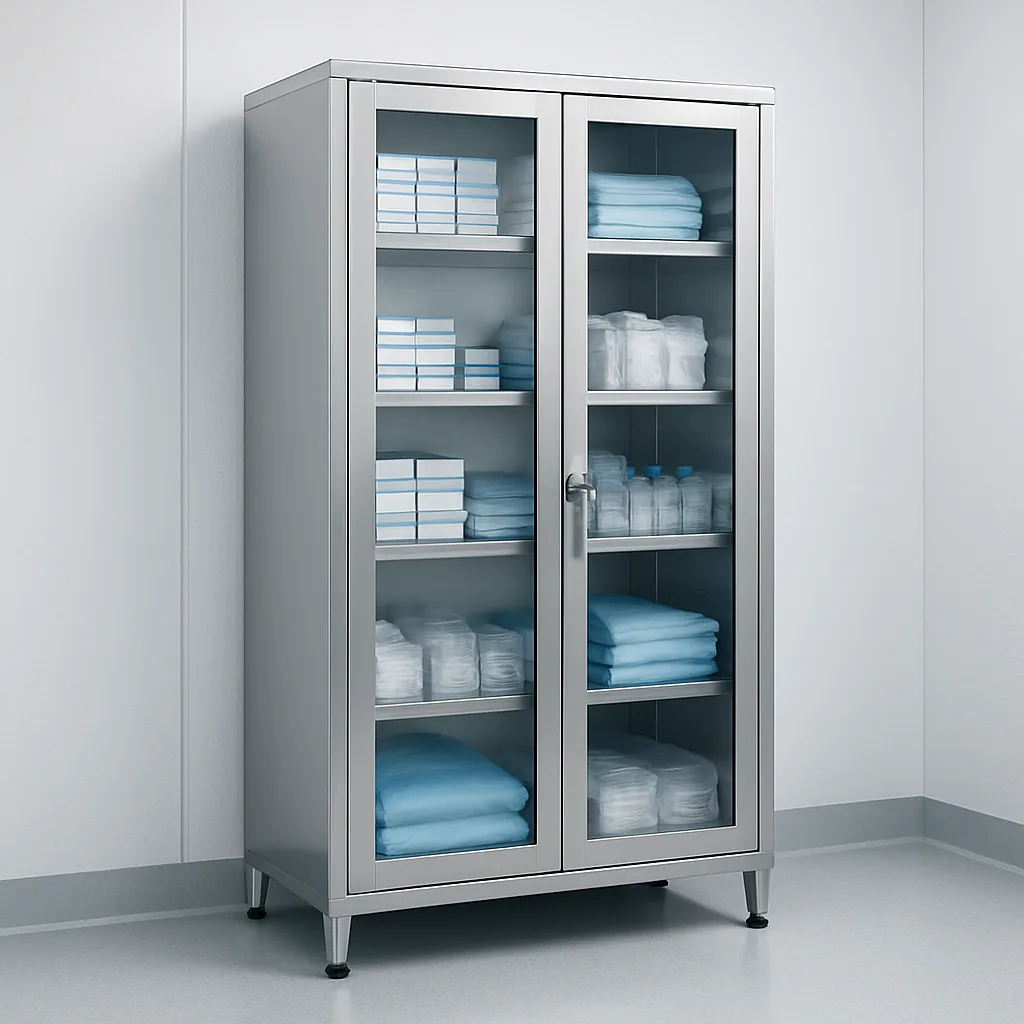
Medical Cabinets
Storage cabinets and medical furniture units for organized patient rooms and ward areas.
View product
Ward Furniture
Complete ward furniture options for patient rooms and hospital care areas.
View product