
In my experience, many buyers treat hospital ward screens as simple furniture until the facility starts using them every day. A common mistake I see is buyers comparing suppliers only by product photo and unit price—a shortcut that often leads to problems after delivery. A ward screen is not just a privacy product; it's a moving, folding, and frequently cleaned piece of operational equipment.
When a buyer sends an inquiry like, "Please quote 100 hospital ward screens," the resulting quotations can be impossible to compare fairly. One supplier might quote a small, lightweight model, while another quotes a larger, more durable one. The real cost and suitability are hidden behind the vague request.
The right hospital ward screen should be selected by room function, privacy coverage, screen size, panel structure, mobility, material, packing, and quotation basis—not by product photo or unit price alone.
This guide explains what B2B buyers should confirm before placing a bulk order for hospital ward screens to avoid privacy complaints, staff inconvenience, shipping damage, and hidden costs.
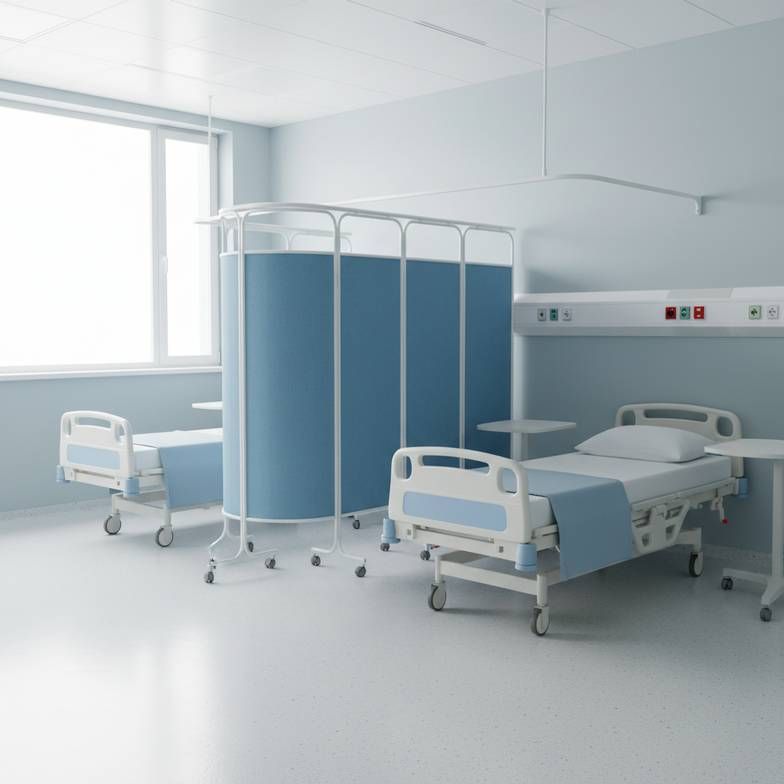
Which hospital areas need ward screens, and what privacy problem should each screen solve?
Start by defining the use case for each screen, as privacy needs differ significantly across hospital departments. A screen that works in a general ward might be unsuitable for an examination room or a busy clinic.
From the supplier side, the first question isn't just "How many screens do you need?" but "Where will these screens be used?" This detail determines the right size, panel count, and structure. For example, a screen used between two beds has a different function than one used to create a temporary private corner in a treatment area.
I often remind buyers that privacy problems usually come from wrong sizing or a mismatch with the room's layout, not from the complete absence of a screen.
Buyer Action: Before requesting quotations, prepare a simple list outlining the requirements for each area:
- Department/Room: e.g., General Ward, Examination Room, Clinic, Nursing Home.
- Privacy Purpose: e.g., between beds, around a patient, temporary separation.
- Estimated Quantity: The number of screens needed per area.
Risk/Decision Point: Using one standard model for an entire facility can be a mistake. A narrow, 3-panel screen might be fine for light use in a small clinic but may not provide adequate coverage in a spacious multi-bed hospital ward, leading to patient complaints and the need to re-order.
What size, panel count, and folding structure should buyers confirm before comparing prices?
You must confirm the screen's open width, height, and number of panels, as these details directly affect privacy coverage and stability. Similar-looking product photos can hide significant differences in dimensions and build quality.
A vague request often leads to a vague quotation. I've seen many buyers approve a product photo without asking for the open width and folded size, which makes it impossible to compare supplier offers fairly. The number of panels (e.g., 3-fold, 4-fold, 5-fold) affects both coverage and folding flexibility, but the screen must also remain stable when fully extended.
When we prepare a quotation, we need to know these dimensions to recommend a product that is both functional and stable.
Buyer Action: Request a clear specification sheet from every potential supplier. Do not rely on catalog photos. Confirm the exact height, full open width, and number of panels.
Risk/Decision Point: A screen that is too short, too narrow, or wobbly when opened is functionally useless. The trade-off between more panels (better coverage) and stability is critical. A very long screen with a weak base structure can become a hazard, defeating its purpose.
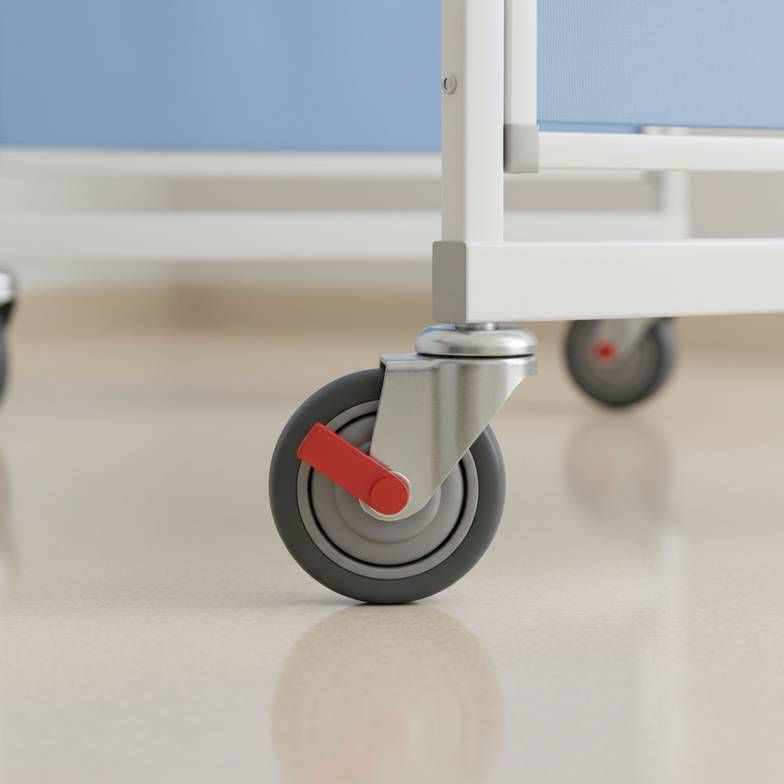
How should buyers evaluate mobility, casters, and stability for daily hospital use?
Evaluate mobility by checking the quality of the casters, the stability of the base, and the availability of brakes, not just by confirming the screen has wheels. In a busy hospital, staff may move screens dozens of times a day, so small mobility issues quickly become major operational headaches.
I often remind buyers that casters, base structure, and stability are interconnected. A screen with cheap casters will be difficult to push and may wobble, creating noise and inconvenience. Buyers should also confirm if brakes are needed for their use case and whether they are included as standard or are an optional extra.
Buyer Action: Ask your supplier about the caster type, whether brakes are included, and how the base is designed for stability. If possible, test a sample to see how it moves and if it remains steady when parked.
Risk/Decision Point: Choosing a screen with poor mobility to save a small amount on the unit price can cost more in the long run. Staff may avoid using inconvenient screens, or the constant strain on weak casters can lead to premature failure and replacement costs.
Which material options should buyers check for cleaning, durability, and budget?
Confirm both the frame material and the screen/panel material, focusing on cleaning suitability and durability for a healthcare environment. Buyers sometimes choose a material based on its appearance in a photo, but hospital staff will judge it by how easy it is to clean and how well it holds up to daily use.
Material choice affects more than just price; it impacts the screen's weight, stability, maintenance requirements, and the packing protection needed for shipment. A lightweight PVC panel might be cheaper, but a more rigid, cleanable panel might be better for a high-traffic ward.
When we work with distributors, I suggest they choose material options they can confidently explain and recommend to their own healthcare customers.
Buyer Action: Ask suppliers to clearly state the frame material (e.g., steel, aluminum) and the screen material (e.g., PVC, fabric, solid panel). Do not accept vague descriptions like "high-quality material." Explain your cleaning protocols and use frequency to get a practical recommendation.
Risk/Decision Point: Selecting a material that is difficult to clean or disinfect can create hygiene risks. Surfaces in healthcare environments must be easily cleanable to aid in infection control, a principle supported by health authorities like the U.S. Centers for Disease Control and Prevention ([CDC](https://www.cdc.gov/hai/prevent/resource-limited/environmental-cleaning.html)). The trade-off is often between a lower-cost material that may stain or wear quickly and a more expensive, durable material that offers a lower total cost of ownership through easier maintenance and longer life.
Why can similar ward screen quotations have very different real costs?
A lower unit price often hides an incomplete or lower-grade configuration. When comparing quotations for ward screens that look similar, the real cost differences are found in the specifications, included parts, and packing details.
In my experience, the cheapest ward screen quotation is rarely the cheapest final order if the configuration is incomplete. A low price may be based on a smaller size, fewer panels, lighter frame material, basic casters without brakes, weaker packing, or a different trade term (like EXW vs. FOB) that shifts costs to you.
To make a fair comparison, you need to see all the details side-by-side.
Buyer Action: Use a comparison matrix to evaluate supplier quotations. Fill in the details for each supplier to see where the cost differences truly are.
Risk/Decision Point: Choosing a supplier based on a low unit price without a full specification comparison is a major procurement risk. You may end up with a product that doesn't meet user needs, incurs high shipping costs, or arrives damaged, erasing any initial savings.
Ward Screen Specification Comparison Matrix
Use this table to ask suppliers for the right information and compare their offers on an equal basis.
| Comparison Item | Supplier A | Supplier B | Supplier C | Buyer Notes |
|---|---|---|---|---|
| Screen height | Confirm exact measurement | |||
| Open width | Check privacy coverage | |||
| Number of panels/folds | Affects coverage and flexibility | |||
| Frame material | Must be clearly stated | |||
| Screen/panel/curtain material | Check cleaning suitability | |||
| Caster included? | Yes/no/details | |||
| Brake option | Included, optional, or not needed | |||
| Base structure | Check stability | |||
| Standard included parts | Avoid missing hardware | |||
| Optional items | Add to final cost if needed | |||
| Packing method | Check protection level | |||
| Carton size | Affects freight | |||
| Gross weight / net weight | Needed for shipping comparison | |||
| Total CBM | Important for landed cost | |||
| Trade term | Must compare on same basis (e.g., FOB) | |||
| Lead time basis | When does lead time start? |
After filling this out, you can see if Supplier A's low price is because their screen is smaller, uses lighter material, and has a higher CBM per unit due to inefficient packing.

What packing, CBM, and lead time details should buyers check before bulk ordering?
Confirm packing details, total CBM, and the lead time basis before you sign a purchase order. For importers and project buyers, these details directly impact landed cost, damage risk, and delivery schedules.
Packing is a detail that is often discussed too late. Ward screens can be easily damaged during export shipment if the frames, panels, casters, and hardware are not properly protected. Furthermore, the carton dimensions and total cubic meter (CBM) volume determine your freight cost. A lower unit price from a supplier can lose its advantage if their inefficient packing leads to higher shipping fees.
Real lead time also doesn't start from your first inquiry. It begins after all specifications—model, quantity, material, configuration, and packing—are fully confirmed.
Buyer Action: Before confirming an order, request packing photos, carton dimensions, gross/net weight, and the total CBM for your order quantity. Clarify with the supplier exactly when the production lead time begins.
Risk/Decision Point: Ignoring packing and CBM can lead to an unexpectedly high landed cost, reducing your profit margin. If ward screens are part of a larger hospital furniture project, a delay caused by late specification confirmation can slow down the entire project timeline.
Bulk Order Preparation Checklist
Use this checklist to ensure you provide suppliers with the information they need for an accurate and reliable quotation.
- Use Scenario:
- [ ] Department/room where screens will be used
- [ ] Privacy purpose (e.g., between beds, examination privacy)
- [ ] Quantity by area
- Product Specification:
- [ ] Required open width and height
- [ ] Number of panels or folds
- [ ] Stability requirements
- Mobility:
- [ ] Caster and brake requirements
- [ ] Frequency of movement expected
- Material & Cleaning:
- [ ] Frame and screen material preference
- [ ] Cleaning expectations
- Quotation & Packing:
- [ ] Request separation of standard vs. optional items
- [ ] Request packing method, carton dimensions, and total CBM
- [ ] Confirm trade term (e.g., FOB, CIF)
Conclusion: How to Make a Smarter Ward Screen Purchase
Choosing the right hospital ward screen is not about finding the lowest price for a photo. It’s about matching the product’s design to its real-world function. A smart procurement decision starts with defining the use case, confirming the specifications, and then comparing complete quotations—not just unit prices.
By focusing on privacy coverage, mobility, material suitability, and the total landed cost, you can source ward screens that support healthcare operations, satisfy end-users, and protect your project budget.
If you are preparing a bulk or project-based inquiry, sending a complete list of your requirements—including department use, dimensions, material preferences, and packing expectations—allows a professional supplier to provide a practical and reliable solution. At CareFurnex, we use this same detailed approach to help buyers review configurations and get quotations right the first time, ensuring the final product aligns with your facility's needs.
Written by
CareFurnex Team
CareFurnex Team shares practical knowledge about hospital beds, patient room furniture, medical trolleys, clinic furniture, and healthcare facility procurement for international B2B buyers.
Related Products
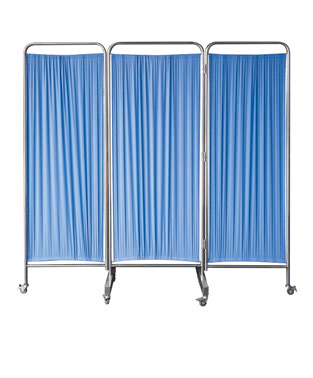
Hospital Privacy Screens
Compare three-panel and four-panel stainless steel hospital screens by layout and stated dimensions.
View product
Ward Furniture
Complete ward furniture options for patient rooms and hospital care areas.
View product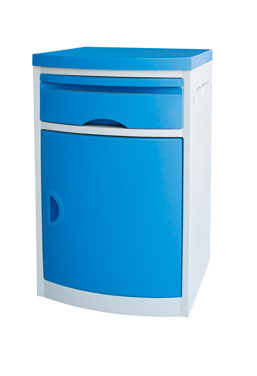
Hospital Bedside Cabinets
This ABS hospital bedside cabinet has a blue top, an upper drawer and a lower door within a light-colored body. Its stated size is 480 × 480 × 760 mm, giving buyers a defined overall footprint for ward furniture planning.
View product