
Struggling to make sense of the many different types of hospital stretchers available? You're tasked with making a major procurement decision, but the lines between transfer, emergency, and procedural models seem blurry. Choosing incorrectly can lead to wasted budget, frustrated clinical staff, and inefficient patient flow. The key is to see past the product names and focus on the specific job each stretcher is designed to do.
The main types of hospital stretchers are defined by their primary function: General Transfer Stretchers for basic patient transport, Emergency (or Trauma) Stretchers for high-acuity situations requiring rapid adjustment and diagnostics, Procedural Stretchers that act as mobile treatment platforms for minor surgeries or imaging, and specialized Ambulance Stretchers designed for pre-hospital care and vehicle transport.
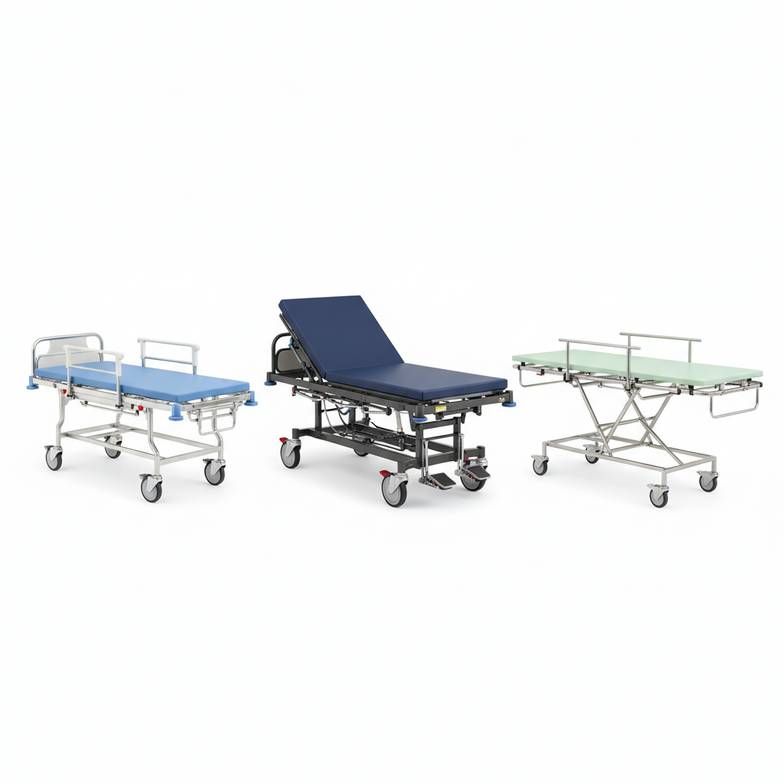
Now that you know the main categories, let's break down what really separates them. The decision isn't just about features or price. It's about matching the equipment to the daily workflow of your departments, from the chaos of the ER to the calm of a general ward.
Is There a Difference Between an Emergency and a Transfer Stretcher?
You're looking at two quotations. One stretcher is labeled "Emergency" and costs twice as much as the one labeled "Patient Transfer." They look similar, so it’s tempting to pick the more budget-friendly option for your ER. Is this a savvy cost-saving move or a critical purchasing error? Let's clarify the non-negotiable differences that make an emergency stretcher essential for critical care.
Yes, there is a fundamental difference. An emergency stretcher is a rapid-response tool built for speed, durability, and diagnostics, featuring hydraulic controls, full X-ray access, and a robust central-locking brake system. A general transfer stretcher is designed for cost-effective, low-acuity transport of stable patients between hospital wards.
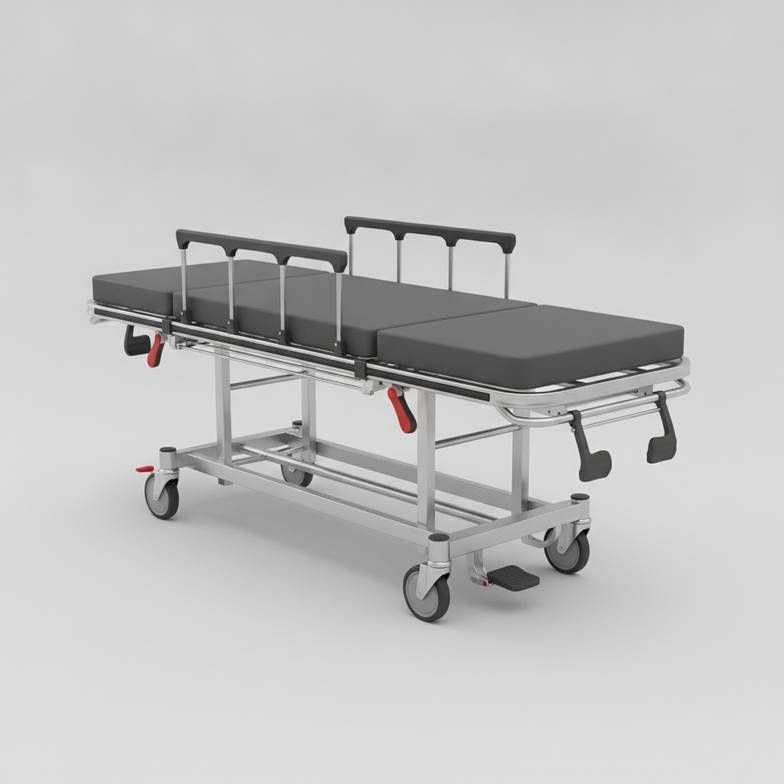
Dive Deeper: The ER Workhorse vs. The Ward Transporter
From my experience advising on hospital projects, the most common and costly mistake I see is procuring a basic transfer stretcher for an Emergency Department. An ER is a high-stress, fast-paced environment, and the equipment must match that intensity.
Why Your Emergency Department Needs a True Emergency Stretcher
Think of an emergency stretcher as a mobile resuscitation bay, not just a bed on wheels. Its features are designed for life-or-death situations.
- Speed and Control: These stretchers use hydraulic foot pedals to control height, backrest angle, and Trendelenburg/Reverse Trendelenburg positions. This allows a nurse or doctor to make rapid, hands-free adjustments while attending to the patient. Trying to use a manual hand crank in a code blue situation is simply too slow and impractical.
- Diagnostics on the Go: A key feature is a full-length radiolucent platform. This means a patient can get an X-ray without being moved off the stretcher, saving critical time and reducing the risk of further injury. Many models also offer C-arm access for fluoroscopy. Basic transfer stretchers usually lack this comprehensive imaging capability.
- Maneuverability and Stability: Emergency stretchers are equipped with large, 200 mm (8-inch) casters and a central-locking brake system. A single pedal press locks all four wheels instantly. They also typically include a fifth-wheel steering system, which allows one person to navigate busy corridors and steer in a straight line with ease, even with a heavy patient.
When a General Transfer Stretcher is the Smart Choice
So, where does the simpler, more affordable transfer stretcher fit in? It's the reliable workhorse for routine, non-critical patient movement.
- Cost-Effective Transport: Its main purpose is to move stable patients from admissions to a ward, or from their room to the physical therapy department. For these tasks, advanced features are unnecessary.
- Simplicity and Reliability: Most use a manual crank system for height adjustment. While slower, these systems are mechanically simple, incredibly durable, and require minimal maintenance, which lowers the total cost of ownership.
- The Right Tool for the Right Job: These stretchers have all the essentials for safe transport—collapsible siderails, an IV pole, and smaller, standard casters. They are perfect for predictable, low-acuity transport, allowing you to allocate your budget for high-spec emergency stretchers where they are truly needed.
Should You Choose a Hydraulic or Manual Hospital Stretcher?
The lift mechanism—effortless hydraulic pedals or a sturdy manual crank—seems like a technical detail. But this choice has a huge impact on your nursing staff's daily work, affecting both efficiency and their physical well-being. How do you decide which is right for your facility? Let's frame this as a workflow decision, not a technology one.
Choose a hydraulic stretcher for departments that demand fast, frequent, and ergonomic height adjustments, such as the Emergency Room, Post-Anesthesia Care Unit (PACU), or Operating Room. Opt for a manual stretcher for general wards or patient transport where adjustments are less frequent and budget optimization is a key priority.
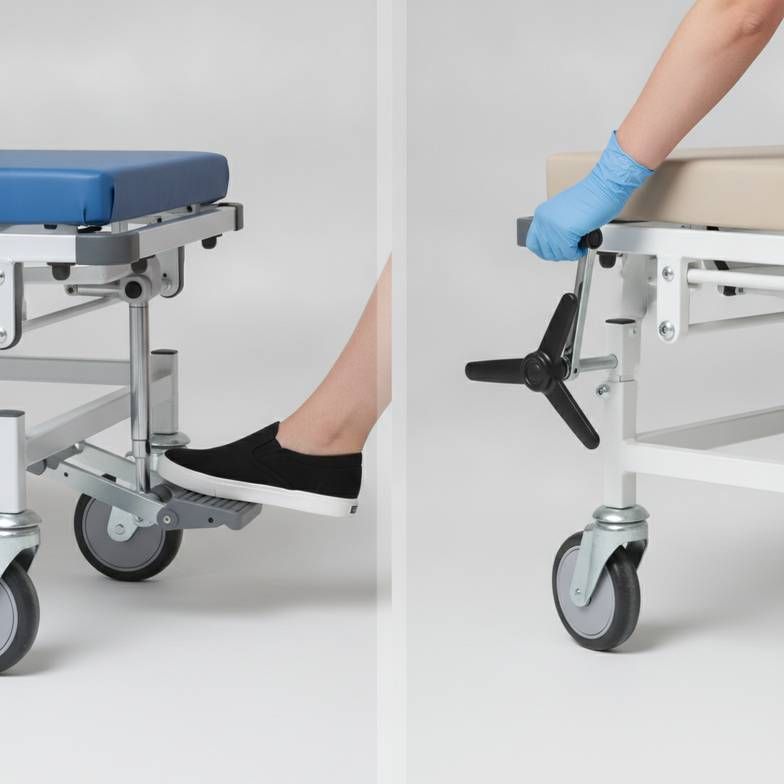
Dive Deeper: Matching the Lift System to Your Workflow
The choice between hydraulic and manual isn't about which is "better" in a vacuum. It’s about which system best supports the tasks performed in a specific clinical area.
The Case for Hydraulic Lift Systems
Hydraulic systems are all about speed, ergonomics, and safety in high-turnover environments.
- Workflow Efficiency: Foot-pedal operation allows caregivers to keep their hands sterile or free to manage IV lines, monitors, and the patient. They can raise or lower the stretcher in seconds, which is crucial when responding to a change in a patient's condition.
- Ergonomics and Staff Safety: Repetitively using a manual crank, especially with heavier patients, can lead to back strain and repetitive stress injuries. A hydraulic system significantly reduces the physical burden on staff, which can be a factor in staff satisfaction and injury prevention programs.
- Essential for Critical Care: In the ER or PACU, the ability to quickly achieve the Trendelenburg position (for treating shock) or adjust the height for a transfer to an OR table is a clinical necessity, not a luxury.
The Practicality of Manual Crank Systems
Manual systems are the embodiment of reliability and cost-effectiveness.
- Lower Initial Cost and Maintenance: Manual stretchers are significantly more affordable. Their simple mechanical design, usually a retractable crank at the foot end, has fewer components that can fail, making them cheaper to buy and maintain over their lifespan.
- Unbeatable Reliability: There are no hydraulic seals to leak or fluid to replace. A manual crank is a time-tested, dependable mechanism that will work for years with minimal service.
- Perfect for General Use: For a general ward where a stretcher might be used a few times a day to move a stable patient to another department, the speed of a hydraulic system is not required. Here, the reliability and low cost of a manual stretcher make it the most logical and economical choice.
| Feature | Hydraulic Stretcher | Manual Stretcher |
|---|---|---|
| Primary Use Case | ER, PACU, OR, High-Acuity Areas | General Wards, Routine Patient Transport |
| Adjustment Speed | Fast (seconds) | Slower (requires physical cranking) |
| Ergonomics | Excellent; reduces staff strain | Fair; requires physical effort |
| Cost | Higher initial investment | Lower initial investment |
| Maintenance | More complex; requires checks on hydraulic system | Simpler; very few failure points |
When Do You Need a Specialized Procedural Stretcher?
You've come across "procedural" or "surgical" stretchers in catalogs, and their price tags are steep. This immediately raises a question for any procurement manager: is this an essential piece of clinical equipment, or is it an expensive and unnecessary upgrade? Let's clarify when this investment is justified.
You need a procedural stretcher when it will be actively used as a surface for performing minor surgeries, examinations, or advanced imaging. Its specialized features, like enhanced C-arm access, integrated scales, or powered articulation, are designed to reduce patient transfers and turn the stretcher into a mobile treatment table.
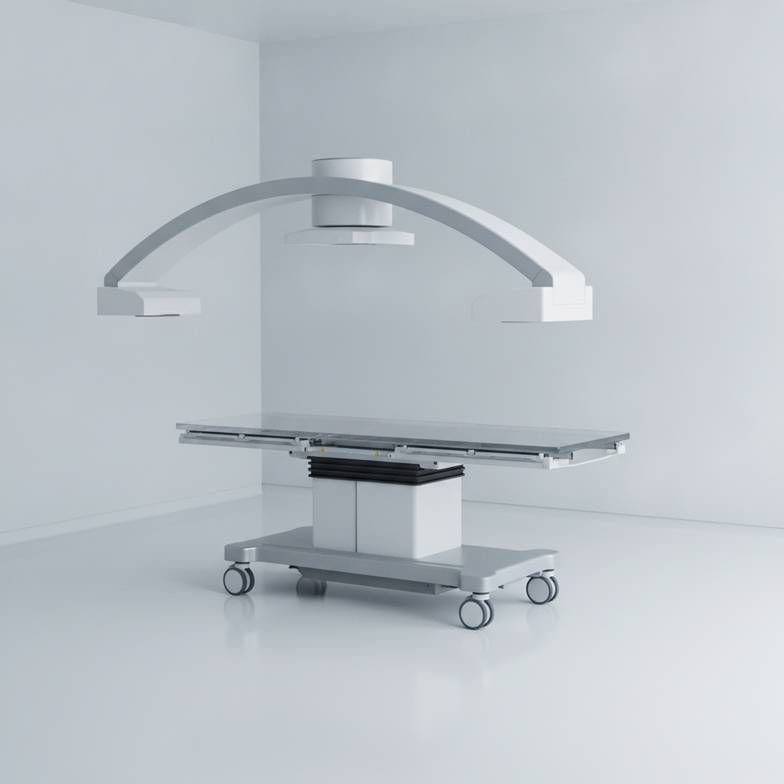
Dive Deeper: More Than Just Transport, It's a Clinical Platform
The core value proposition of a procedural stretcher is reducing patient transfers. Every time a patient is moved—from stretcher to imaging table, then to an operating table, then to a recovery bed—there is a risk of injury (to both patient and staff) and a loss of valuable time. A procedural stretcher aims to eliminate some of these steps.
It's a Mobile Treatment Platform, Not Just a Ride
Instead of just transporting a patient to a procedure room, this stretcher becomes part of the procedure.
- Example Workflows:
- Ophthalmology: A stretcher with an articulating dual-support headpiece provides surgeons with the access and stability needed for delicate eye procedures. The patient can arrive, be treated, and recover on the same surface.
- Endoscopy: Models designed for GI procedures might feature a specific shape and positioning capabilities to facilitate the endoscope's use.
- Radiology/Vascular: These stretchers have a minimal frame and a fully radiolucent platform to allow a C-arm imaging device to move freely around and under the patient for fluoroscopy-guided interventions.
Key Features to Look For (and Justify)
If you are considering a procedural stretcher, your purchasing justification should be tied directly to one or more of these workflow-enhancing features:
- Unobstructed C-arm Access: This is more than just a backrest that's X-ray permeable. The entire stretcher frame is designed to be low-profile and out of the way, giving imaging equipment a clear field of view.
- Integrated Patient Scales: For departments where precise weight is needed for medication dosage (like oncology or dialysis), an integrated scale saves time and improves accuracy. The cost is justified by the clinical need.
- Powered Controls and Articulation: Many procedural stretchers have a powered handset that controls height, backrest, leg sections, and specialty positions like the "cardiac chair." This allows for precise, quiet, and effortless patient positioning during a delicate task.
As a procurement advisor, my advice is simple: only invest in a procedural stretcher if you can point to the exact clinical procedure it will enable or improve. For general transport, even in busy departments, a high-quality emergency stretcher is usually the more appropriate and cost-effective solution.
Can You Use an Ambulance Stretcher Inside the Hospital?
An ambulance arrives, and the paramedics wheel a patient in on their cot. It rolls, it has a mattress, and it carries a patient—it looks like a stretcher. So, can you just keep it for internal transport? Or could your hospital stretchers double as ambulance equipment? This is a common point of confusion that can lead to significant safety and compatibility problems.
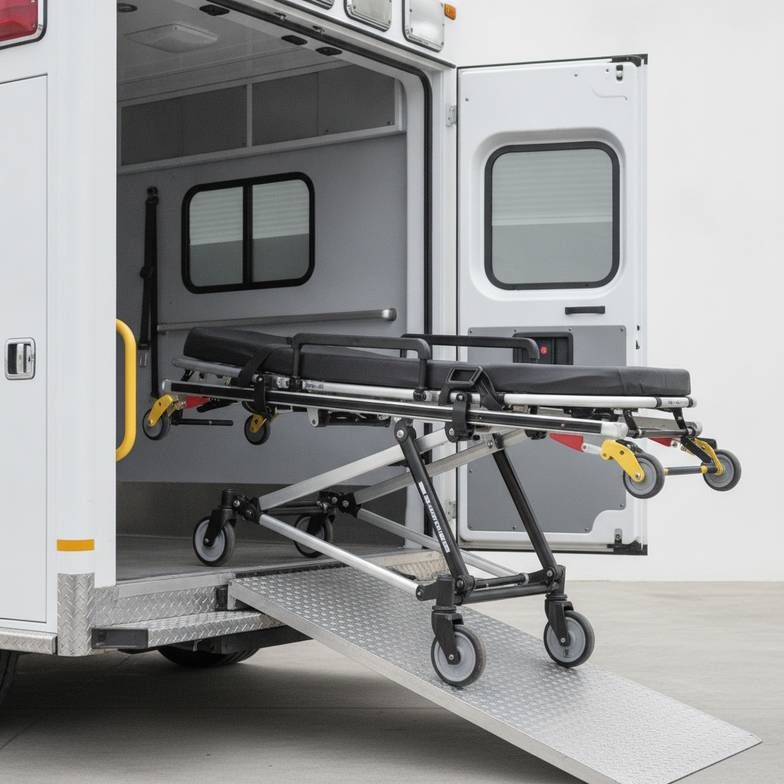
No, you should not use an ambulance stretcher (also known as an ambulance cot) for routine in-hospital transport. It is a specialized piece of pre-hospital equipment designed specifically for vehicle compatibility, collapsibility, and lightweight durability for outdoor terrain. Hospital stretchers are built for a different environment and use case.
Dive Deeper: A Specialized Tool for a Specialized Job
An ambulance stretcher and a hospital stretcher are both used for patient transport, but that's where the similarity ends. They are designed for completely different environments and regulations.
Designed for the Vehicle, Not the Ward
An ambulance cot is engineered first and foremost for pre-hospital care and transport.
- Fastening and Locking Systems: Its most critical feature is the mechanism that allows it to securely lock into the floor of an ambulance. This is a regulated safety feature to prevent movement during transit. Hospital stretchers do not have this.
- Collapsibility and Weight: These cots are designed to be light enough for two people to lift and carry a patient. They have an undercarriage that can be raised to bed height or collapsed to be loaded into the vehicle.
- Outdoor Capability: They often have larger, more rugged wheels designed to roll over pavement, grass, and up ramps—surfaces that would challenge the smaller indoor casters of a hospital stretcher.
Why Hospital Stretchers Stay in the Hospital
Hospital stretchers are optimized for the indoor clinical environment.
- Stability and Patient Safety: They have a wider and heavier base, which provides greater stability when transferring a patient to a bed or when performing a procedure at the bedside.
- Indoor Maneuverability: The caster systems, especially the central-locking and steering-wheel types, are designed for navigating smooth hospital floors, tight corners, and elevator thresholds with precision and ease.
- Integrated Clinical Features: Hospital stretchers are designed with built-in conveniences for caregivers, such as integrated oxygen tank holders, storage baskets for patient belongings, chart holders, and sturdy, easy-to-access IV poles.
For procurement, the takeaway is clear: ambulance stretchers are a separate category of medical equipment, usually purchased by EMS agencies, not hospitals. When you are writing a tender for your hospital, be sure your specifications are for in-hospital patient stretchers to avoid any confusion.
Frequently Asked Questions
How much does a hospital stretcher cost?
The price varies dramatically based on the type. A basic manual transfer stretcher might cost anywhere from $800 to $2,000. A quality hydraulic emergency stretcher typically ranges from $2,500 to $8,000. Highly specialized procedural stretchers with powered features can easily exceed $10,000. The final cost depends entirely on the features and build quality.
What is the weight capacity of a standard hospital stretcher?
Most standard hospital stretchers have a safe working load (SWL) between 225 kg (500 lbs) and 318 kg (700 lbs). For bariatric care, specialized models are available that can support 450 kg (1000 lbs) or more. It is crucial to always verify the manufacturer's specified weight capacity for any model you are considering to ensure patient and staff safety.
What certifications should I look for when buying hospital stretchers?
At a minimum, look for ISO 13485 certification, which demonstrates the manufacturer operates under a quality management system for medical devices. Depending on your market, you must also confirm compliance with regional regulations, such as FDA registration in the United States or a CE mark in Europe. Always ask the supplier for copies of these documents.
How do I choose the right mattress for a hospital stretcher?
The mattress should match the stretcher's use case. For short-term transport in the ER or between wards, a standard 5 cm to 8 cm thick high-density foam mattress with a durable, waterproof, and easy-to-disinfect cover is usually sufficient. For procedural stretchers or situations where a patient may remain on the stretcher for longer periods, consider a pressure-reducing or pressure-relief mattress to improve comfort and help prevent pressure ulcers.
Conclusion
Selecting the right types of hospital stretchers is not about finding a single model that can do everything. It's about building a smart portfolio of equipment where each stretcher is perfectly matched to the department it serves. An emergency stretcher provides the speed and diagnostic capability needed for critical care, while a simple transfer stretcher offers a cost-effective solution for routine transport. Understanding that hydraulic lifts enhance workflow, procedural stretchers are mobile treatment platforms, and ambulance cots are in a class of their own allows you to procure equipment with purpose and confidence. This focused approach ensures you write clear specifications, justify your budget effectively, and provide your clinical teams with the reliable tools they need.
If you are planning a hospital project or sourcing various types of hospital stretchers, our team at CareFurnex is here to help. We specialize in providing the detailed specifications and practical guidance you need to make the best choice. Contact us today for a consultation or a detailed quotation based on your project requirements.
Written by
CareFurnex Team
CareFurnex Team shares practical knowledge about hospital beds, patient room furniture, medical trolleys, clinic furniture, and healthcare facility procurement for international B2B buyers.
Related Products
Hospital Stretchers
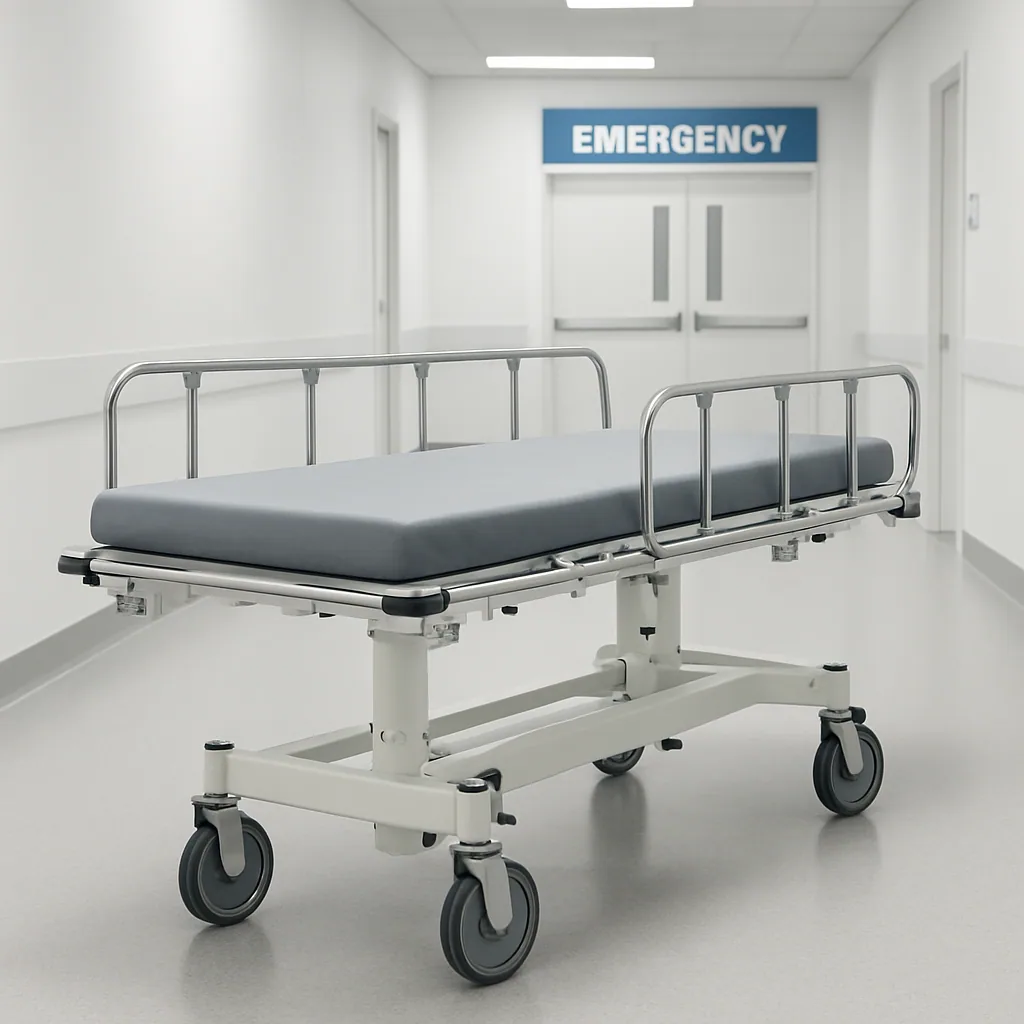
Patient transfer stretchers for emergency rooms, wards, clinics, and healthcare projects.
View product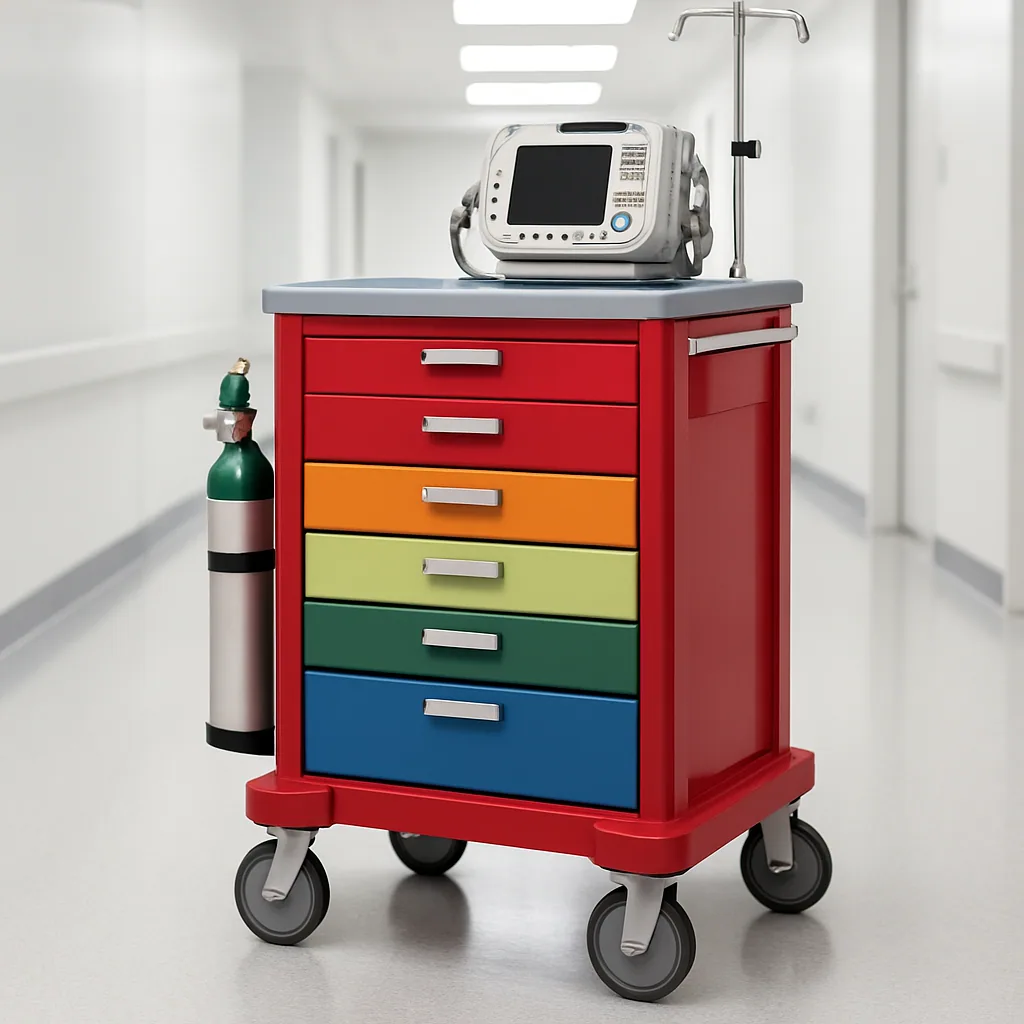
Emergency Carts
Crash carts with organized compartments for emergency rooms and urgent care areas.
View product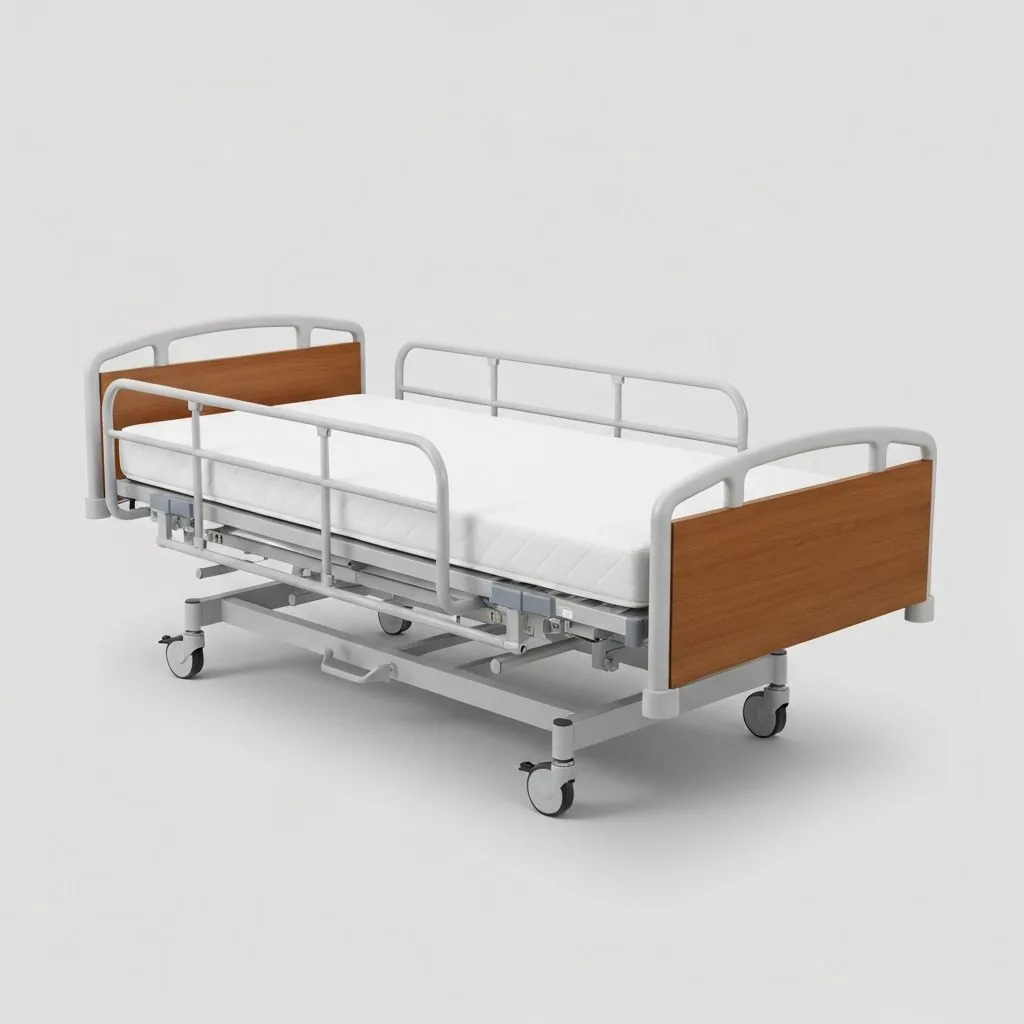
Hospital Beds
General-purpose patient beds for inpatient wards and standard hospital rooms.
View product