
Your project list includes "treatment trolley" and "medication trolley." You check supplier websites, and the product photos look nearly identical, but the prices vary. It's tempting to think they are interchangeable, but in hospital furniture procurement, choosing by name or photo is a common and costly mistake.
Ordering the wrong trolley can result in a product that doesn't fit the hospital's workflow, lacks the required security for medication, or arrives without the accessories your client expected. The risk goes beyond receiving the wrong product; it can cause project delays, budget overruns, and a loss of trust with your end-users.
A treatment trolley is mainly selected to support treatment procedures and nursing work, while a medication trolley is selected for medicine organization, storage, and controlled distribution. The real difference is not the name, but the workflow, drawer layout, lock requirements, and accessories.
Before you compare prices, you must first define the task. This guide, written from a supplier's perspective, explains the practical differences and what you need to confirm before placing an order.

What Is the Real Difference Between a Treatment Trolley and a Medication Trolley?
The primary difference is their function. A treatment trolley is a mobile workstation for clinical procedures, while a medication trolley is a secure, organized cart for dispensing medicine.
Many buyers first ask for a "medical trolley" price without explaining its intended use. From the supplier side, my first question is always: "What task will this trolley support?" The answer determines the entire configuration.
A treatment trolley prioritizes easy access to supplies, a practical work surface, and mounting points for accessories like waste bins or sharps containers. A medication trolley, on the other hand, prioritizes security and organization, with features like lockable drawers and internal dividers for separating patient medications.
Buyer Action: Before looking at a catalog, define the trolley's primary task. Is it for dressing changes in a treatment room or for distributing medication on a hospital ward? This single piece of information guides your entire selection process.
Treatment Trolley vs. Medication Trolley: A Quick Comparison
| Comparison Item | Treatment Trolley | Medication Trolley | What a Buyer Should Confirm |
|---|---|---|---|
| Main Use | Supporting treatment procedures, nursing tasks, clinical work | Organizing, storing, and distributing medicine | The specific task the trolley will perform daily. |
| Main Priority | Workflow efficiency and easy access to supplies | Security, organization, and controlled access | The department's primary need: procedure support or medication management. |
| Drawer Layout | Fewer, deeper drawers for storing supplies and tools | Multiple, often smaller, separated drawers for medicine | The required number, size, and internal organization of drawers. |
| Lock Requirement | Usually not a primary feature; may be optional | A critical feature; often includes central or individual locks | Whether locks are required and for which drawers. |
| Common Accessories | Waste bins, sharps containers, IV poles, trays, baskets | Drawer dividers, label holders, secure side-storage | Which accessories are included vs. optional and must be quoted separately. |
| Common Risk | Lacks security for medication use; inefficient for procedure workflow if poorly configured. | Inefficient for treatment tasks; may have poor organization or weak access control. | Confirm the workflow before ordering to avoid functional mismatches. |
This table shows the decision isn't based on a name, but on the operational needs of the healthcare staff who will use it every day.
Can a Treatment Trolley Be Used as a Medication Trolley, or Do Buyers Need Both?
Usually, a treatment trolley cannot replace a medication trolley, especially where security and organization are critical. Many healthcare projects require both types to serve different departments.
A common mistake is trying to simplify a project order by choosing one "all-purpose" trolley. While this may seem to lower the initial unit cost, it often creates functional problems after delivery. From my experience with hospital projects, a single facility frequently requires different trolleys for different areas. For example, emergency rooms and outpatient clinics may need treatment trolleys, while patient wards and the pharmacy department need medication trolleys.
- A treatment trolley lacks the security for medication. Its typically open design and lack of robust locking mechanisms make it unsuitable for storing controlled substances.
- A medication trolley may hinder treatment workflow. Its focus on small, divided drawers isn't practical for storing larger procedural supplies and may lack specific accessories needed for clinical tasks.
Buyer Action: Plan your trolley procurement department by department. Create a list that specifies the function for each area (e.g., "Ward A: Medication Trolley, 5 units," "Treatment Room 2: Treatment Trolley, 2 units"). The trade-off for not doing this is ordering the wrong mix of products, which can lead to urgent reorders and project delays.
Which Configuration Details Should Buyers Compare Before Choosing One?
Beyond the name, you must compare the drawer layout, lock options, included vs. optional accessories, and caster quality. These details determine the trolley's daily usability and final cost.
I have seen many importers compare two trolleys based on a photo and overall dimensions, only to discover after delivery that the cheaper option was a basic, empty shell. A product photo cannot show you if the drawers lock, if dividers are included, or if the casters are designed for quiet, frequent movement.
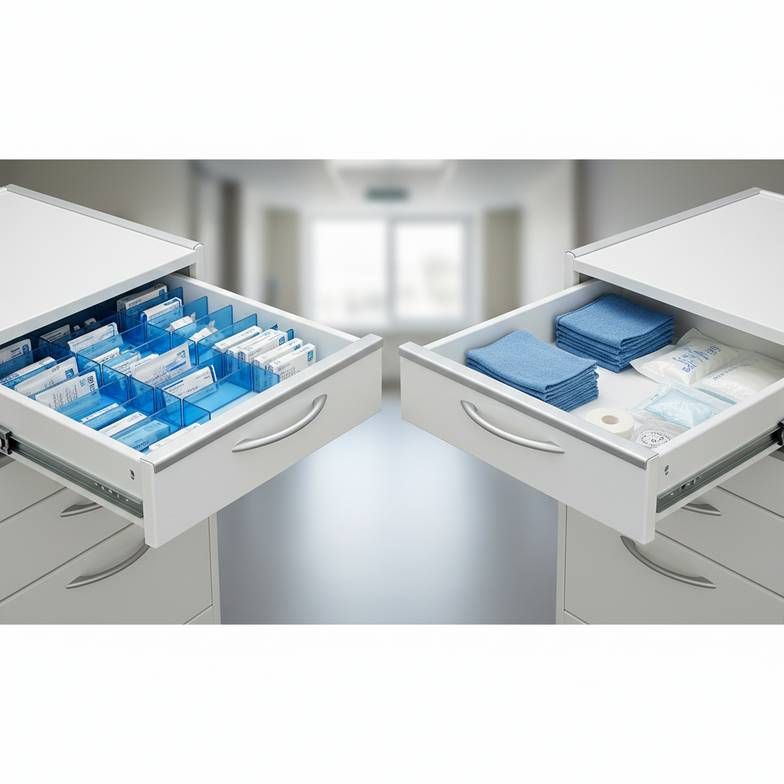
Here are the operational details we confirm with buyers before finalizing a quotation:
- Drawer Layout: How many drawers? Are they deep for supplies or shallow for medicine packs? Are internal dividers included or optional?
- Locking System: Is a lock needed? If so, is it a central lock for all drawers or individual locks? This is a critical point for medication trolleys.
- Accessories: I often remind buyers to ask, "Are the waste bin, sharps container, and side baskets in the photo included in the price?" Never assume. Ask for a clear list of standard vs. optional items.
- Casters and Brakes: A medical trolley is mobile furniture. The quality of its casters (wheels) and brakes affects staff convenience and safety. Confirm if the casters are silent, if they swivel smoothly, and how many have brakes.
- Material and Surface: Is the surface made of ABS plastic, stainless steel, or another material? It must be durable and easy to clean with hospital-grade disinfectants.
Buyer Action: Request a detailed specification sheet from every potential supplier. Do not accept a quote based on a model number or photo alone. The risk of skipping this is receiving a trolley that is technically "correct" by name but functionally useless.
Why Do Similar-Looking Trolleys Have Different Prices?
Similar-looking trolleys have different prices because of hidden differences in configuration, materials, accessories, packing quality, and the supplier's quotation scope.
Choosing the cheapest quotation without a full comparison is one of the biggest risks in B2B procurement. A lower unit price often means something has been excluded.
Here is a simplified example. Suppose you receive two quotes for a "medication trolley":
- Supplier A quotes $200 EXW. Their quote is for a basic trolley body with standard casters and no locks or accessories. The packing is a simple cardboard box.
- Supplier B quotes $280 FOB. Their quote includes a central locking system, drawer dividers, a side-mounted waste bin, silent-running casters, and reinforced export carton packing.
Supplier A looks cheaper, but by the time you add the necessary locks, accessories, and better packing, the final cost could exceed Supplier B's price. Furthermore, the FOB term from Supplier B already includes the cost of getting the goods to the port, a cost you would have to pay separately with an EXW term.
Buyer Action: Use a checklist to compare quotations on an apples-to-apples basis. Ensure you are comparing the same configuration, packing method, and trade term. The decision point is clear: are you comparing the price of a basic product or the price of a complete solution?
Quotation Comparison Checklist for Medical Trolleys
| Item to Check | Supplier A | Supplier B | Confirmed or Unclear? |
|---|---|---|---|
| Stated Trolley Function | |||
| Drawer Quantity & Layout | |||
| Lock System Included? | |||
| List of Included Accessories | |||
| List of Optional Accessories | |||
| Caster & Brake Details | |||
| Packing Method | |||
| Carton Dimensions & CBM | |||
| Trade Term (EXW, FOB, etc.) | |||
| Lead Time |
After filling this out, you will have a much clearer picture of the true value each supplier is offering.
What Packing, Shipping, and Lead Time Details Should Buyers Confirm Before Ordering?
Before confirming an order, you must clarify the packing method, request the total shipping volume (CBM), and understand when the lead time officially begins.
For export orders, the trolley's journey from the factory to your warehouse is part of the product's cost and quality. A trolley has many moving parts—drawers, casters, handles—that can be damaged if not packed correctly. Weak packing can turn a perfect product into a damaged one.
Equally important is the shipping volume. A trolley with a low unit price but inefficient, bulky packing can end up costing more in freight than a slightly more expensive but compactly packed alternative.
Buyer Action: Always request the packing data: carton dimensions, gross weight, net weight, and total CBM (cubic meters). This information is essential for your freight forwarder to calculate an accurate shipping cost.
Finally, confirm the lead time. Does it start from the date of deposit or from the date of final specification approval? In my experience, delays often happen when buyers make changes to the configuration after the initial order, pushing back the entire production schedule.
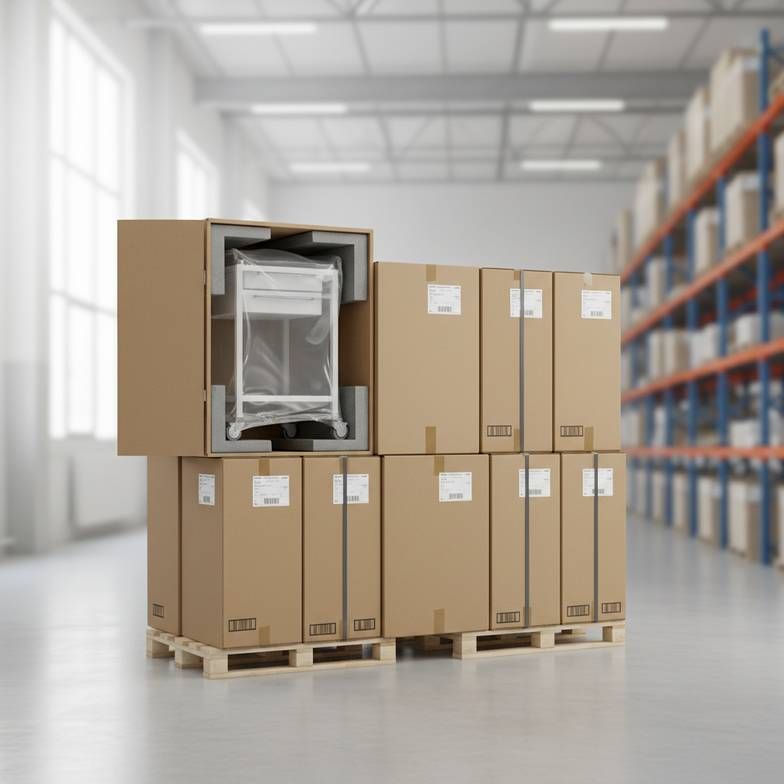
The risk of ignoring these logistical details is significant: you could face unexpected freight charges, receive damaged goods, or miss your project deadlines.
What Should Buyers Tell a Supplier Before Requesting a Quotation?
To get an accurate and useful quotation, provide your supplier with the department, intended task, quantity, and a list of required configuration details like drawer layout, locks, and accessories.
A vague inquiry like "Please quote your medical trolley" will only get you a vague, standard-price answer. A professional supplier cannot recommend the right product without understanding your needs. The quality of the quotation you receive is a direct reflection of the quality of the information you provide.
When a buyer tells me, "I need 20 trolleys for a nursing home's daily medication rounds; they must have locks and dividers for 30 patients," I can immediately recommend a suitable model and provide a precise quotation.
Buyer Action: Before contacting suppliers, prepare a list of your requirements.
Pre-Quotation Checklist for Medical Trolleys
- Function: Is it for treatment or medication?
- Department/Setting: Hospital ward, clinic, nursing home, etc.
- Quantity: How many units are needed?
- Drawer Needs: Desired number and layout of drawers.
- Lock Needs: Are locks required? Central or individual?
- Accessory Needs: List any required accessories (bins, baskets, etc.).
- Mobility Needs: Any special requirements for casters or movement?
- Project Timeline: Your target delivery schedule.
- Destination & Trade Term: Your destination port and preferred trade term (e.g., FOB, CIF) if known.
By providing these details, you shift the conversation from a simple price check to a collaborative effort to find the right solution.
Conclusion: Choose by Workflow, Not Just by Name
Choosing between a treatment trolley and a medication trolley is not about picking from a catalog. It's a procurement decision based on real-world healthcare workflows. A treatment trolley is built for procedural support, while a medication trolley is designed for secure and organized medicine distribution.
The key to a successful purchase is to look beyond the photo and unit price. Confirm the drawer layout, lock system, included accessories, packing data, and quotation scope before you commit. A good supplier will help you walk through these details, ensuring the product you receive perfectly matches the task it's meant for.
At CareFurnex, we help healthcare project buyers, distributors, and importers plan their medical furniture categories. If you are preparing a bulk or project order, providing a clear list of your functional requirements allows us to recommend the right configurations and provide a more accurate quotation basis from the start.
Written by
CareFurnex Team
CareFurnex Team shares practical knowledge about hospital beds, patient room furniture, medical trolleys, clinic furniture, and healthcare facility procurement for international B2B buyers.
Related Products
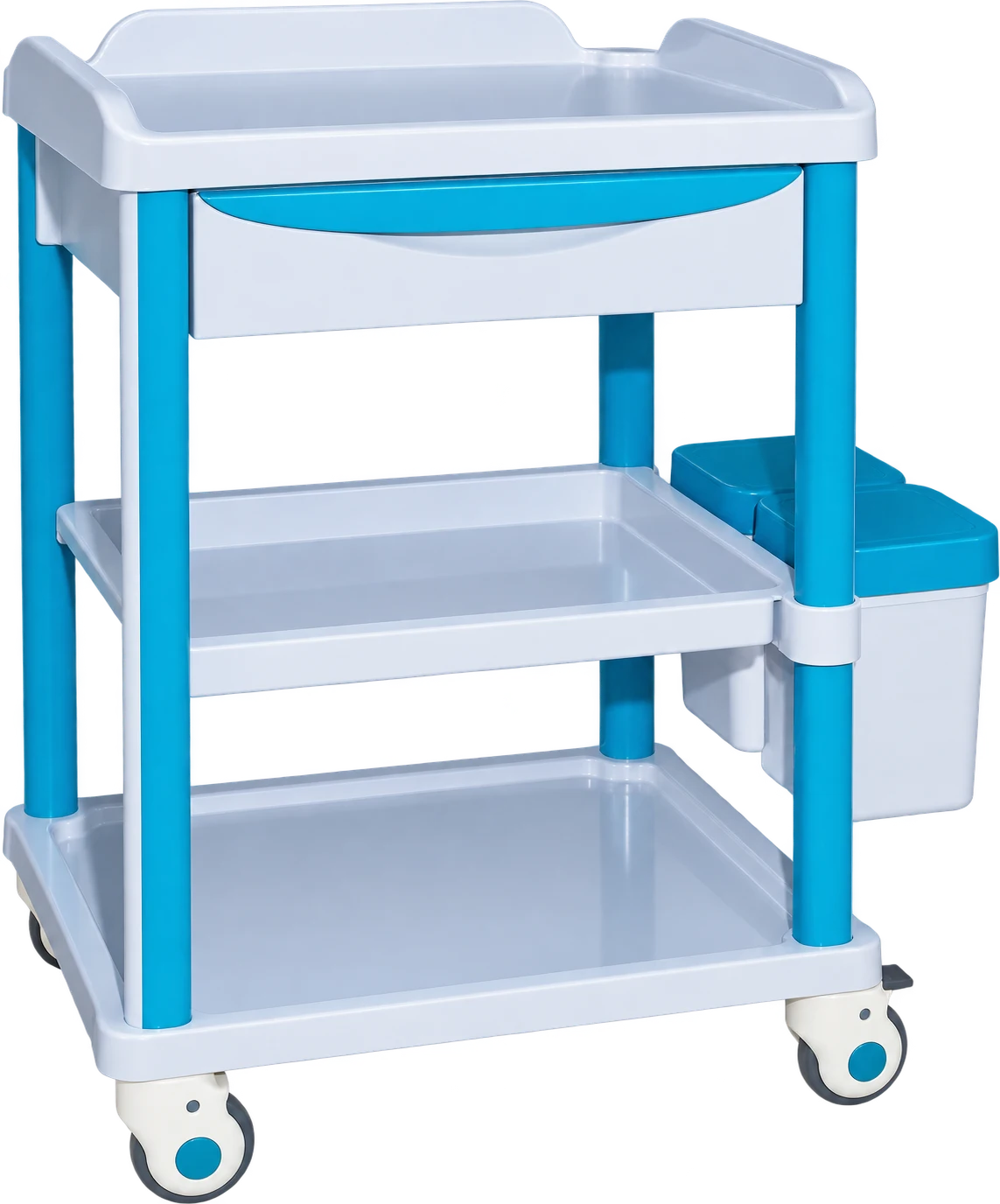
Medical Trolleys
Mobile carts for nursing rounds, treatment supplies, medicines, and clinical tools.
View product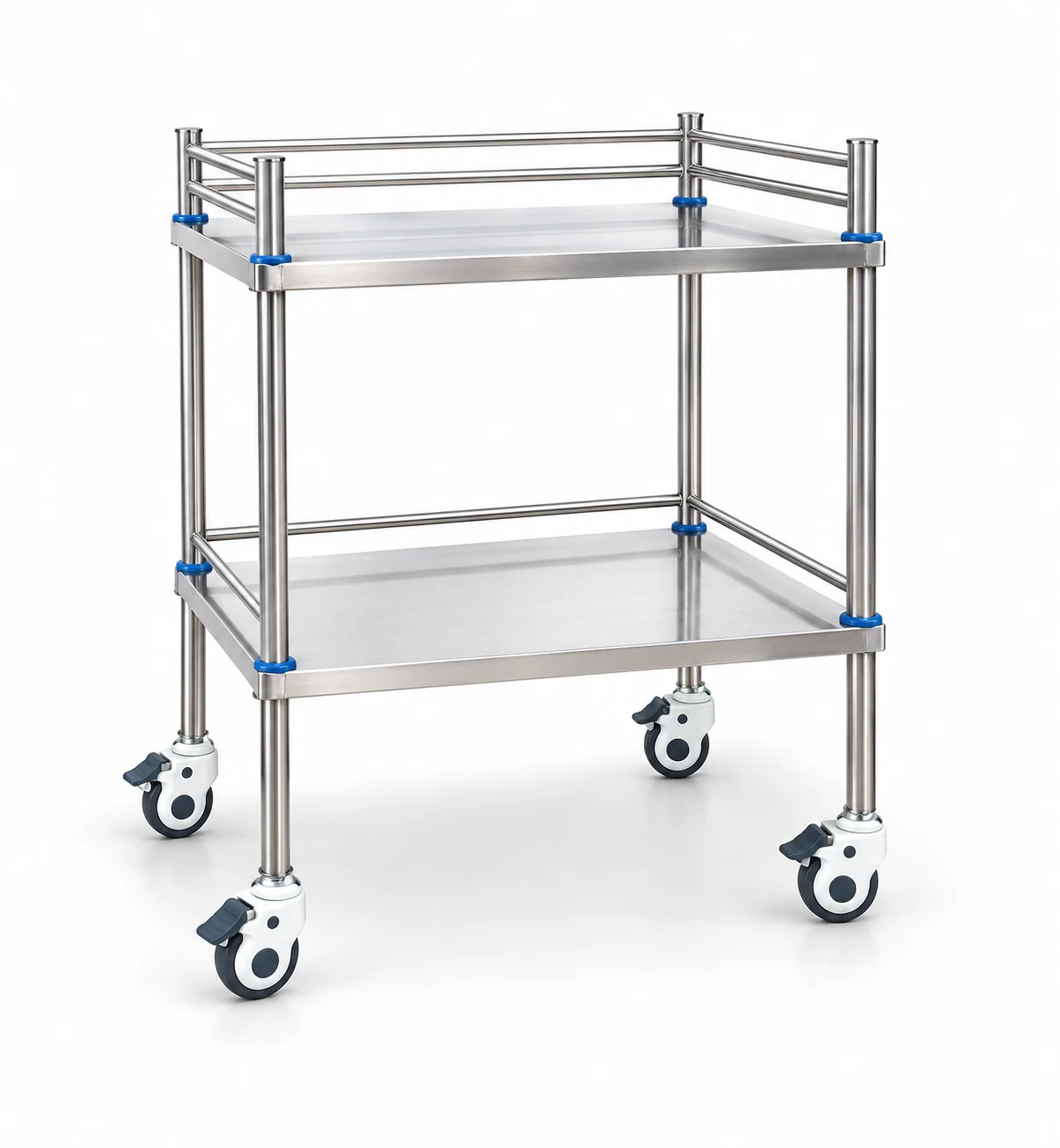
Stainless Steel Trolleys
Compare stainless steel trolleys by model, stated dimensions and configuration.
View product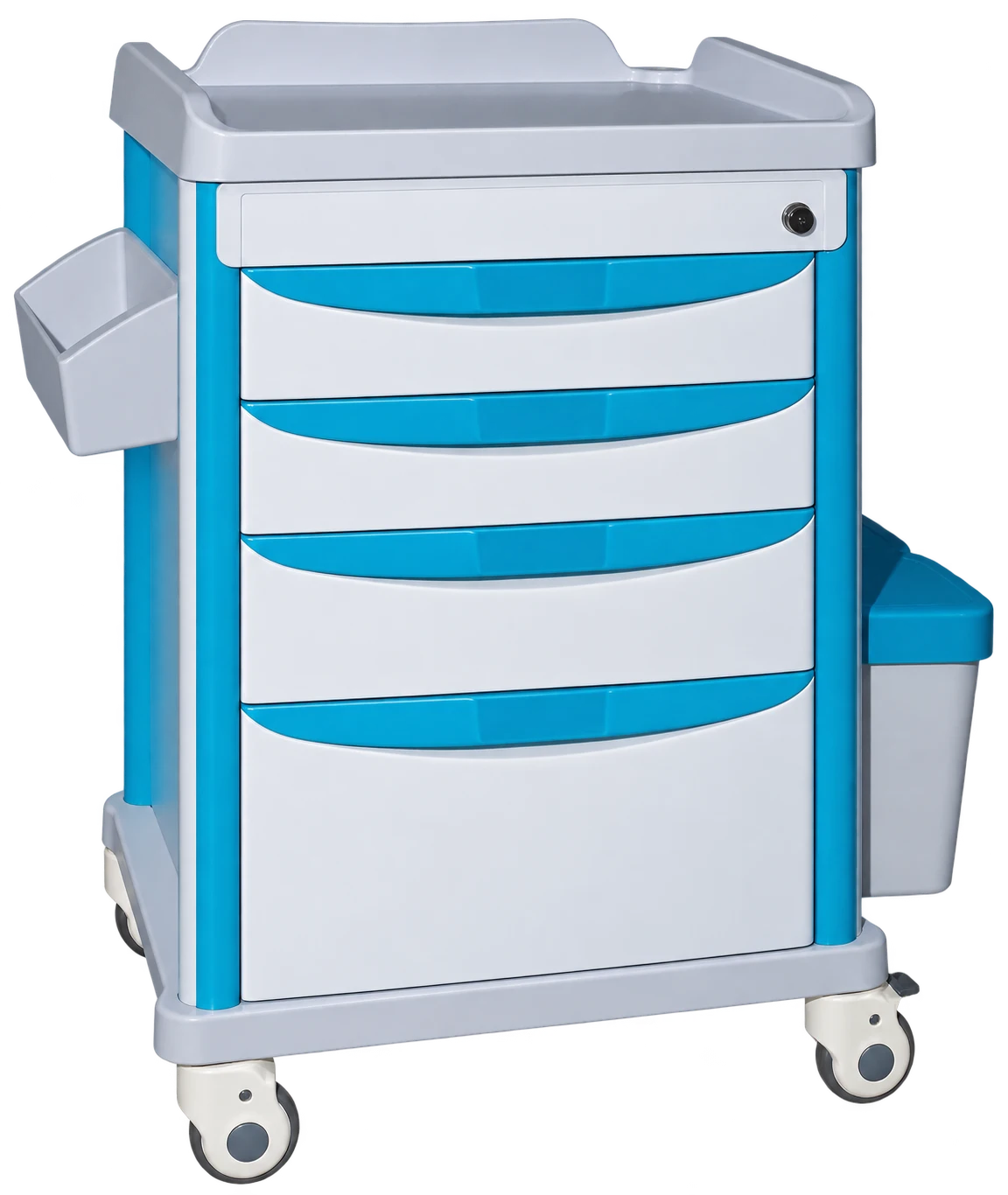
Medicine Carts
Compare medicine carts by model, stated dimensions and configuration.
View product