
Struggling to explain to your clients why a scoop stretcher might be a better option than a seemingly similar spine board? Many medical equipment distributors I speak with face this exact problem. The debate over spine board vs scoop stretcher often creates confusion, leading procurement teams to default to the cheaper option without considering the risks. The truth is, choosing the wrong device can compromise patient safety and staff efficiency, reflecting poorly on the supplier. Understanding the distinct purpose of each tool is your key to moving from a simple quote provider to a trusted procurement advisor.
A spine board is a tool for extrication and immobilization, primarily used in pre-hospital trauma scenes like car accidents. In contrast, a scoop stretcher is a lifting device designed to transfer a patient with minimal movement, making it ideal for suspected spinal or pelvic injuries in more controlled settings like a hospital floor or an ambulance bay.
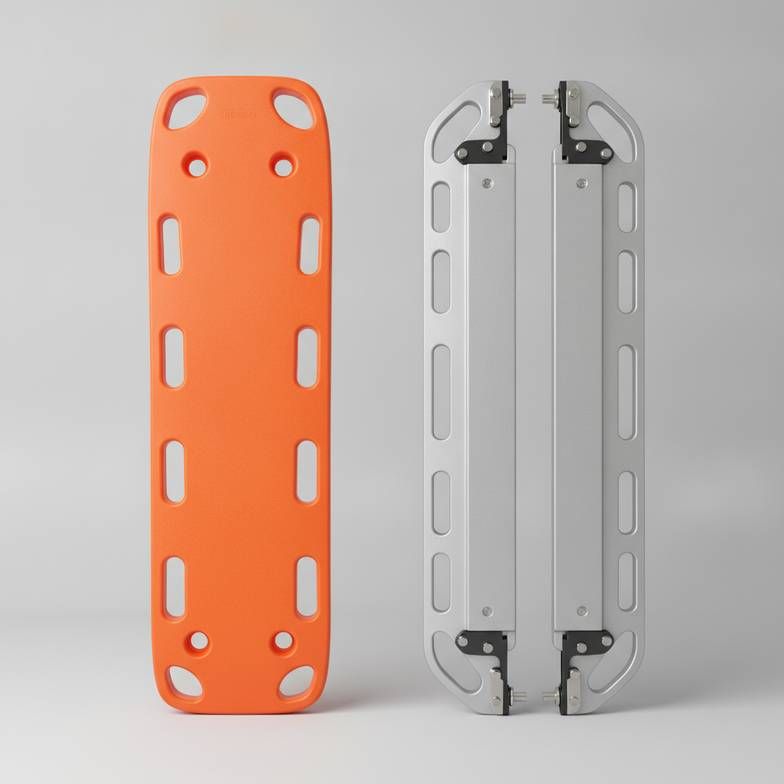
Now that you have the direct answer, let's break down the specific scenarios where each device shines. This deeper understanding will equip you to ask the right questions and guide your clients toward making a safer, more efficient choice, solidifying your role as a knowledgeable partner.
When Should Your Clients Choose a Spine Board?
Your client is an EMS provider needing a tool for rapid patient removal from a chaotic scene. They might assume any rigid board will do, but is that the safest assumption for the patient or the first responders? The spine board's value is in its specific design for these high-stakes situations.
A spine board is the go-to choice for immobilization and extrication, especially in uncontrolled environments like vehicle accidents or building collapses. Its primary purpose is to secure a patient quickly and rigidly when speed is paramount and the extent of injuries is unknown.
Extrication and Immobilization: The Core Functions
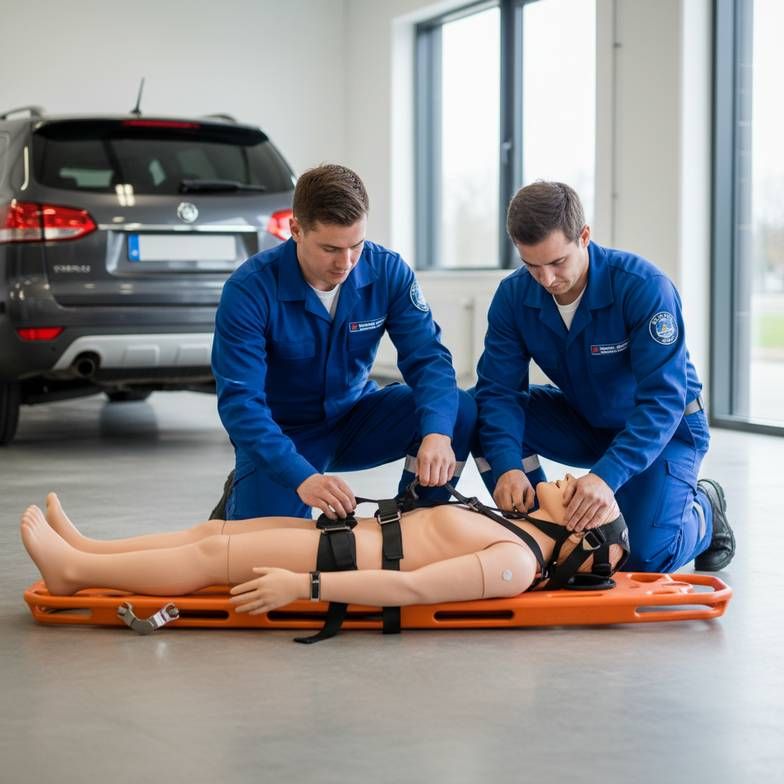
The main job of a spine board, also known as a backboard, is to maintain the spine in a neutral, in-line position during a high-risk move. When first responders arrive at a car crash, for instance, their priority is to get the patient out of a dangerous or unstable environment without causing further harm. The spine board provides a flat, rigid surface that, when used with straps and a cervical collar (C-collar), helps prevent movement of the head, neck, and torso.
This process, called spinal motion restriction (SMR), is critical. The patient is carefully log-rolled onto the board, secured with straps, and then lifted and carried away from the hazard. The board isn't designed for comfort; it's designed for rigidity and security during a very short, very critical window of time. I once worked with a distributor whose EMS clients switched to a more robust spine board model after finding their previous ones would flex too much when lifting heavier patients, compromising the stability they relied on.
The Material and Design Advantage
Spine boards are almost always made from high-density polyethylene (HDPE) or other durable plastics. This is by design.
- Durability: They can be dragged over rough surfaces, handle heavy loads, and withstand the harsh conditions of an emergency scene.
- Easy Decontamination: The non-porous surface is impervious to bodily fluids and can be quickly wiped down and disinfected, which is essential for rapid turnaround between calls.
- Radiolucency: Most spine boards are fully radiolucent, meaning they are transparent to X-rays, CT scans, and MRIs. A patient can be imaged while still on the board, saving time and avoiding a risky transfer in the emergency department.
- Buoyancy: Many are also designed to be buoyant, making them suitable for water rescue scenarios.
These features are not accidental; they are purpose-built for the unpredictable world of pre-hospital emergency care.
Limitations and Modern Guidelines
Here's the most common misunderstanding I encounter: a scoop stretcher is not simply a "modern upgrade" to the spine board. In fact, modern EMS guidelines increasingly recommend limiting the time a patient spends on a spine board. The same rigidity that makes it great for extrication makes it terrible for transport. Prolonged time on a hard, flat board can lead to:
- Pressure Sores: Tissue damage can begin in as little as 30 minutes.
- Respiratory Difficulty: The hard surface can restrict chest expansion.
- Increased Pain: It's incredibly uncomfortable, especially for elderly patients or those with existing conditions.
Therefore, the spine board should be seen as an extrication device, not a transport mattress. Patients should be moved off the board and onto a softer ambulance cot or hospital bed as soon as it is safe to do so.
What Makes a Scoop Stretcher a Better Choice for Patient Transfers?
Imagine this scenario: a patient has fallen in a narrow hospital bathroom and has a suspected pelvic fracture. Lifting them using a traditional log-roll technique could cause immense pain and displace the fracture. How can your clients perform this transfer with minimal patient movement and risk?
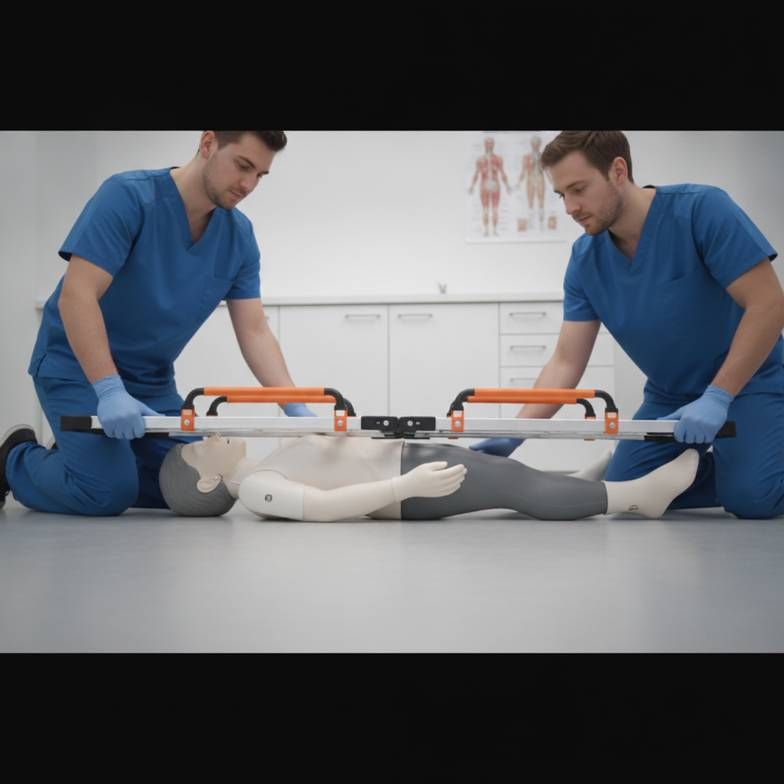
A scoop stretcher excels at lifting patients from flat surfaces with minimal movement. Its two-piece, scissor-like design allows medical staff to gently slide it under the patient from both sides and lock it together, "scooping" them up without the need for log-rolling.
The "Scooping" Mechanism: Minimizing Movement
The genius of the scoop stretcher is its orthopedic design. It unlatches at the top and bottom, splitting into two longitudinal halves. This allows operators to:
- Gently separate the patient's clothing to clear the area.
- Slide one half of the stretcher under the patient from one side.
- Slide the other half under from the opposite side.
- Carefully align and lock the two halves together at the head and foot ends.
The patient is now securely supported on the stretcher with almost no rolling or vertical lifting required. This single difference makes it the superior choice when any movement could exacerbate an injury. For patients with suspected spinal cord injuries, hip fractures, or pelvic fractures, avoiding the log-roll is a major factor in preventing secondary injury.
Designed for Controlled Environments
While a spine board is built for the chaos of a car crash, a scoop stretcher is designed for the more controlled environment of a hospital, clinic, or ambulance interior. Its primary function is not extrication from wreckage but safe lifting and transfer. You'll see it used to move a patient from the floor to a bed, from a bed to an X-ray table, or from an ambulance cot to an ER gurney.
These devices are typically made from lightweight aluminum or high-strength polymer composites. At only 7-9 kg, a scoop stretcher's low weight reduces strain on medical staff, especially during transfers that require careful maneuvering around other equipment. It's a tool that prioritizes precision and patient comfort over the rugged durability of a spine board.
Supporting Patients with Specific Injuries
This is where you can provide real value as a consultant. By understanding which patients benefit most from a scoop, you can help your clients improve their standard of care. Clinical teams often prefer a scoop stretcher in situations involving:
- Suspected Pelvic Fractures: Log-rolling can cause the fractured bones of the pelvis to shift, potentially leading to life-threatening internal bleeding. The scooping motion avoids this rotation.
- Hip Fractures: Common in elderly patients, these injuries are extremely painful. Minimizing movement during a transfer is critical for pain management and preventing further damage.
- Patients in Confined Spaces: If a patient has collapsed in a narrow hallway or bathroom where there isn't enough room to perform a log-roll, a scoop stretcher is often the only safe way to lift them.
By advising a client to stock scoop stretchers for these specific applications, you're not just selling a product; you're providing a solution that directly addresses a major clinical challenge.
How Can You Guide Clients in the Spine Board vs Scoop Stretcher Decision?
You're caught in a price war. A competitor is offering spine boards for a few dollars less, and your client, focused on budget, is tempted. How do you elevate the conversation from a simple cost comparison to a meaningful discussion about value, safety, and operational efficiency?
Guide your clients by asking diagnostic questions focused on their specific use cases. By framing the spine board vs scoop stretcher debate around the transfer task, the patient's condition, and the operating environment, you can reposition the choice as a critical risk-management decision, not a line-item expense.

Key Diagnostic Questions to Ask Your Clients
Instead of leading with product features, start by trying to understand your client's reality. This consultative approach builds trust and uncovers needs they may not have even considered. A common question I get from distributors is how to start this conversation. Here are some effective questions to have ready:
- "What are the most common transfer scenarios your teams face: rapid emergency extrication or planned inter-departmental transfers?"
- "Are your staff frequently moving patients from the floor, particularly in confined spaces like bathrooms or hallways?"
- "What are your current protocols for moving patients with suspected pelvic or hip fractures?"
- "Have your clinical staff expressed concerns about the risks or physical strain associated with log-rolling certain patients?"
- "How long do patients typically remain on an immobilization device before being transferred to a bed?"
The answers to these questions will naturally lead the client to see the functional gap that a scoop stretcher fills, a gap a cheaper spine board cannot address.
Creating a Comparison Table for Your Clients
To make the choice clear, I often provide partners with a simple comparison table they can share with their clients. It visually summarizes the "right tool for the job" argument.
| Feature | Spine Board | Scoop Stretcher |
|---|---|---|
| Primary Use Case | Rapid Extrication & Immobilization | Low-Movement Lifting & Transfer |
| Key Action | Patient is log-rolled onto the board | Stretcher is assembled under the patient |
| Ideal Environment | Uncontrolled, pre-hospital scenes | Controlled, clinical settings |
| Best For... | Trauma victims in accidents | Patients with suspected pelvic/hip injuries |
| Main Benefit | Rigidity, speed, and durability | Minimized patient movement and pain |
This table shifts the focus from price to function. It empowers your client's procurement team to justify their decision to clinical stakeholders using clear, operational logic.
Reframing the Cost Argument
The initial purchase price of a scoop stretcher may be higher than a spine board, but the long-term value is immense. The real cost isn't the unit price; it's the operational cost of using the wrong tool. Frame your argument around total cost of ownership and risk reduction:
- Patient Safety: Preventing a secondary injury, like displacing a pelvic fracture, avoids catastrophic patient outcomes and associated liabilities.
- Staff Safety: Using a lightweight, ergonomic tool designed for lifting reduces the risk of back injuries among medical staff, a leading cause of absenteeism and workers' compensation claims.
- Efficiency: A smooth, quick, and safe transfer saves time and frees up staff for other critical duties.
The right tool for the job is always the most cost-effective solution when you factor in safety and efficiency.
Frequently Asked Questions
Can a scoop stretcher be used for spinal immobilization?
While a scoop stretcher minimizes movement during a lift, it is not typically considered a primary spinal immobilization device by itself. It lacks the full rigidity of a spine board. Patients with suspected spinal injuries are often lifted with a scoop and then placed on a vacuum mattress or another transport surface for full immobilization.
Is a spine board radiolucent for X-rays?
Yes, the vast majority of modern spine boards are made from materials that are fully radiolucent. This allows a patient to undergo X-rays, CT scans, and sometimes MRIs without being moved off the board, saving critical time in the emergency department and reducing the risk of further injury.
Why are spine boards not recommended for long-term transport?
Spine boards are extremely hard and flat. Prolonged use can cause significant pain, lead to the development of pressure sores (bedsores), and may even interfere with breathing. Modern medical guidelines recommend removing patients from spine boards as soon as possible and transferring them to a softer surface like an ambulance cot or hospital bed.
What material is best for a scoop stretcher?
Scoop stretchers are commonly made from either high-strength aluminum alloy or carbon fiber/polymer composites. Aluminum is durable, cost-effective, and easy to clean. Carbon fiber models are more expensive but are even lighter and are fully radiolucent, which can be an advantage in some clinical workflows. The best choice depends on the client's budget and specific imaging requirements.
Do you need special training to use a scoop stretcher?
Yes, all patient handling equipment requires proper training to ensure both patient and operator safety. Staff must be trained on how to properly separate, position, and lock the scoop stretcher, as well as how to coordinate the lift as a team. Using the device incorrectly could negate its benefits and introduce new risks.
Conclusion
The choice in the spine board vs scoop stretcher debate is not about which product is fundamentally superior, but which tool is right for the specific task at hand. Spine boards are indispensable for rapid extrication and immobilization in emergency scenes. Scoop stretchers are purpose-built for lifting and transferring patients with minimal movement, making them the safer choice for suspected pelvic fractures or transfers in controlled environments. As a distributor, your power lies in moving beyond price and helping your clients analyze their own operational needs. By guiding them to the right solution for each scenario, you build lasting trust and establish your firm as an essential partner in improving patient care and staff safety.
If you are a medical equipment distributor, importer, or project contractor looking to source high-quality patient transfer solutions and practical hospital furniture, contact the CareFurnex team today. We provide the clear specifications, project support, and reliable B2B service you need to make confident procurement decisions for your clients.
Written by
CareFurnex Team
CareFurnex Team shares practical knowledge about hospital beds, patient room furniture, medical trolleys, clinic furniture, and healthcare facility procurement for international B2B buyers.
Related Products
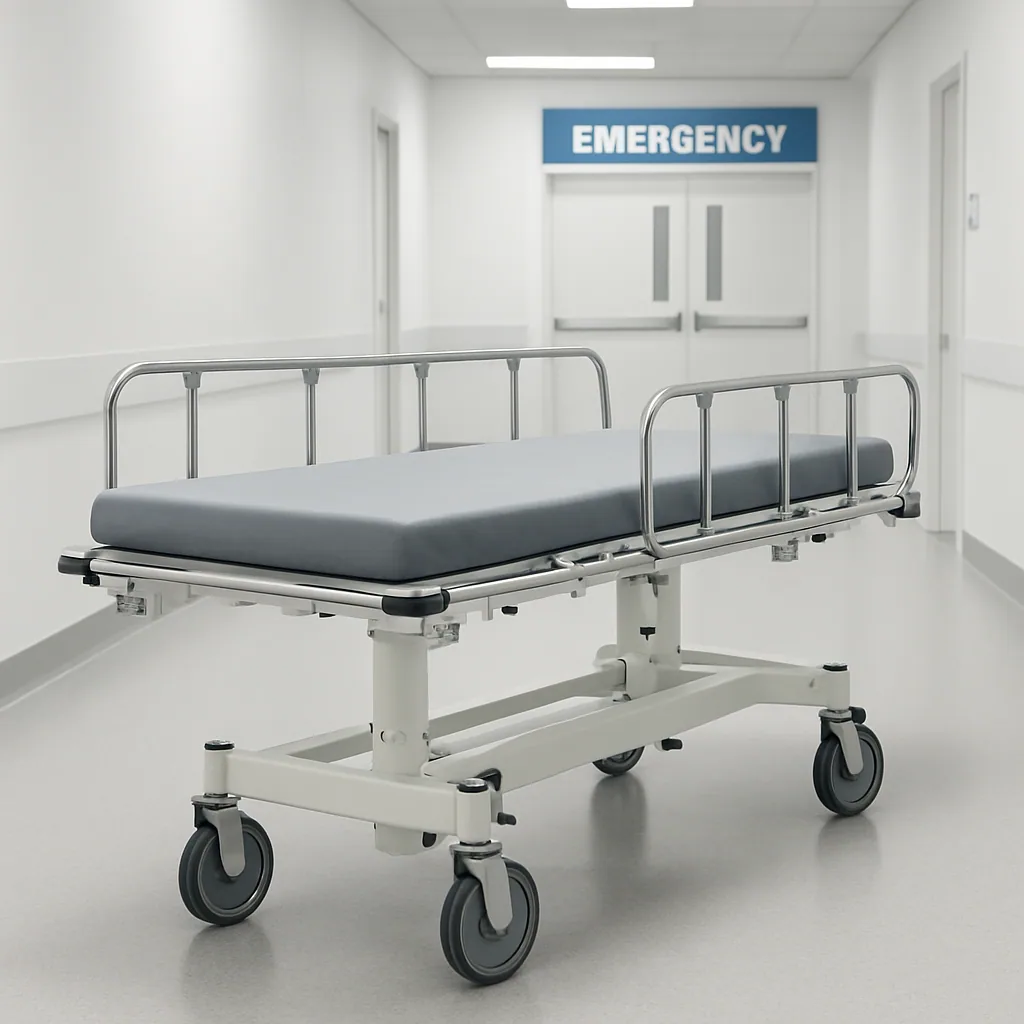
Hospital Stretchers
Patient transfer stretchers for emergency rooms, wards, clinics, and healthcare projects.
View product
Hospital Beds
General-purpose patient beds for inpatient wards and standard hospital rooms.
View product
Ward Furniture
Complete ward furniture options for patient rooms and hospital care areas.
View product