
Planning a new rehab space feels overwhelming. A wrong choice can risk patient safety and your budget. Focusing on workflow, layout, and key product specifications makes the process manageable.
A successful rehabilitation room plan aligns furniture with specific therapeutic workflows, patient mobility levels, and dynamic space needs. It prioritizes durable materials and safety features like stable bases and high load capacities to manage risk and ensure long-term functionality for both patients and staff.
I've seen many project managers start with a simple product checklist. However, a truly effective rehab space is built on a deeper understanding of its purpose. It's not just about buying furniture; it's about creating a safe and efficient environment for therapy. This requires thinking about how patients and staff will actually use the space every single day. We need to move beyond a static list and think about the dynamic reality of a busy rehabilitation center.
How Does the Type of Therapy Change Your Furniture Needs?
You have a list of "rehab furniture," but do you know if it fits your actual therapeutic work? Buying the wrong items wastes money and hinders patient recovery.
The type of therapy dictates everything. Physical therapy needs parallel bars and high-capacity treatment tables. Occupational therapy requires adjustable tables and simulated home environments. Geriatric rehab focuses on stable, easy-to-use chairs and low beds to prevent falls. Each requires a specific plan.
A frequent question we get from project managers is, "What furniture do I need for a rehab room?" My first question is always, "What kind of rehab will you be doing?" There is no one-size-fits-all solution. The needs of an orthopedic recovery unit are very different from a center for neurological patients. For example, orthopedic physical therapy focuses on strength and mobility, so the core items are treatment tables, training stairs, and robust parallel bars. But for occupational therapy, the focus is on daily living activities. Here, you need furniture that simulates a home environment, like height-adjustable tables that can mimic a kitchen counter, and chairs with specific arm heights that help patients practice standing up. The table below shows a basic breakdown.
Therapy Type | Key Furniture Items | Primary Consideration
- Therapy Type: Physical Therapy | Key Furniture Items: Treatment tables, parallel bars, training stairs, mat platforms | Primary Consideration: High load capacity, stability
- Therapy Type: Occupational Therapy | Key Furniture Items: Height-adjustable tables, specialized chairs, practice kitchens/baths | Primary Consideration: Adaptability, real-world simulation
- Therapy Type: Geriatric Rehab | Key Furniture Items: Low-height beds, high-seat chairs with arms, stable walkers | Primary Consideration: Fall prevention, ease of use
Thinking about the specific therapy from the start prevents costly mistakes and ensures the room supports recovery effectively.
What Furniture Specifications Really Matter for Patient Safety and Durability?
It's easy to focus on the price tag when comparing quotes. But choosing cheaper options can lead to equipment failure, potential patient injury, and expensive replacements down the line.
Look beyond the product name. Key specifications include the load capacity of treatment tables, the chemical resistance of upholstery, and the stability of braking systems. These details, not the price, determine real-world safety and long-term value for your facility.
When we help clients compare quotes, we always tell them to look at the small details. These are the points that have the biggest impact on a facility's operational budget and risk management. Based on feedback from facilities we've supplied, a key point of failure is often the upholstery. Hospital-grade cleaning agents are aggressive and can cause standard vinyl to crack and tear quickly, creating an infection control issue. You must specify upholstery that is rated for these specific chemicals.
Another critical point is load capacity, especially for treatment tables. It’s not just about the static weight limit. You need to consider the dynamic load—the force applied when a patient moves or a therapist performs a manipulation. We always ask about the patient population. If the facility serves bariatric patients, standard tables are not just unsuitable; they are dangerous. Similarly, the stability of parallel bars or the reliability of locking casters on a treatment chair are not luxury features. They are fundamental safety requirements that prevent accidents and protect both patients and staff.
Why is Room Layout More Than Just a Floor Plan?
You've arranged the furniture perfectly on a blueprint. But when the room is in use, you find that staff and patients can't move around safely without bumping into things.
A functional layout considers "dynamic clearance"—the space needed for a patient using a walker, a staff member assisting, and a wheelchair to pass. It’s about planning for movement and workflow, not just the static footprint of the furniture.
A floor plan can be deceiving. It shows where things fit, but it doesn't show how things flow. In a rehab setting, flow is everything. We call the necessary space "dynamic clearance." This is the real-world space needed for movement during active therapy. For example, the area around a set of parallel bars isn't just the footprint of the bars themselves. You need enough room for a therapist to walk alongside the patient, perhaps on both sides, while also having space for a wheelchair to be parked nearby without blocking a primary walkway.
This principle applies to every piece of equipment. Is there enough room for a patient to safely transfer from a wheelchair to a treatment table? Can a staff member get around the bed on all sides? We use ADA guidelines as a minimum starting point, but in our experience, active therapy often requires more generous spacing. The layout is also directly tied to furniture specs. A chair with the correct armrest height makes it easier for a patient to stand, reducing the need for assistance and freeing up floor space. Planning for dynamic clearance turns a drawing into a truly functional, safe therapeutic environment.
How Do You Evaluate a Supplier for a Rehab Furniture Project?
You have several quotes in front of you, and the prices are all over the place. Choosing the cheapest one feels risky, but how do you know which supplier offers the best value?
A valuable supplier acts as a project partner. They ask clarifying questions about your patients and therapy goals. They help consolidate products into a cohesive plan and provide detailed specifications to reduce your procurement risk and ensure a successful outcome.
In my role, I see the difference between a simple product seller and a true project partner every day. A seller sends a price list. A partner starts by asking questions. When a supplier asks, "What is the mobility level of your typical patient?" or "What are your specific cleaning protocols?" it shows they are thinking about your long-term success, not just making a sale. They are helping you manage risk before you even place an order.
When buyers compare quotes, they often miss the long-term implications of small differences. A cheaper treatment table might have a lower-grade steel frame or a less reliable lifting mechanism. A good supplier will point these things out and explain the trade-offs. They can help you create a consolidated plan where all the products—from the beds to the treatment tables to the chairs—work together seamlessly. They provide clear technical data, packing information for logistics, and layout suggestions that optimize workflow. This expertise is the real value. It’s what turns a list of products into a successful, functional, and safe rehabilitation facility.
Conclusion
Ultimately, planning a rehab room is a risk management process. It's about aligning therapy needs, patient safety, and durability with the right product specifications and a functional layout.
References
[10] ADA Accessibility Standards - Access-Board.gov - https://www.access-board.gov/ada/
Written by
CareFurnex Team
CareFurnex Team shares practical knowledge about hospital beds, patient room furniture, medical trolleys, clinic furniture, and healthcare facility procurement for international B2B buyers.
Related Products
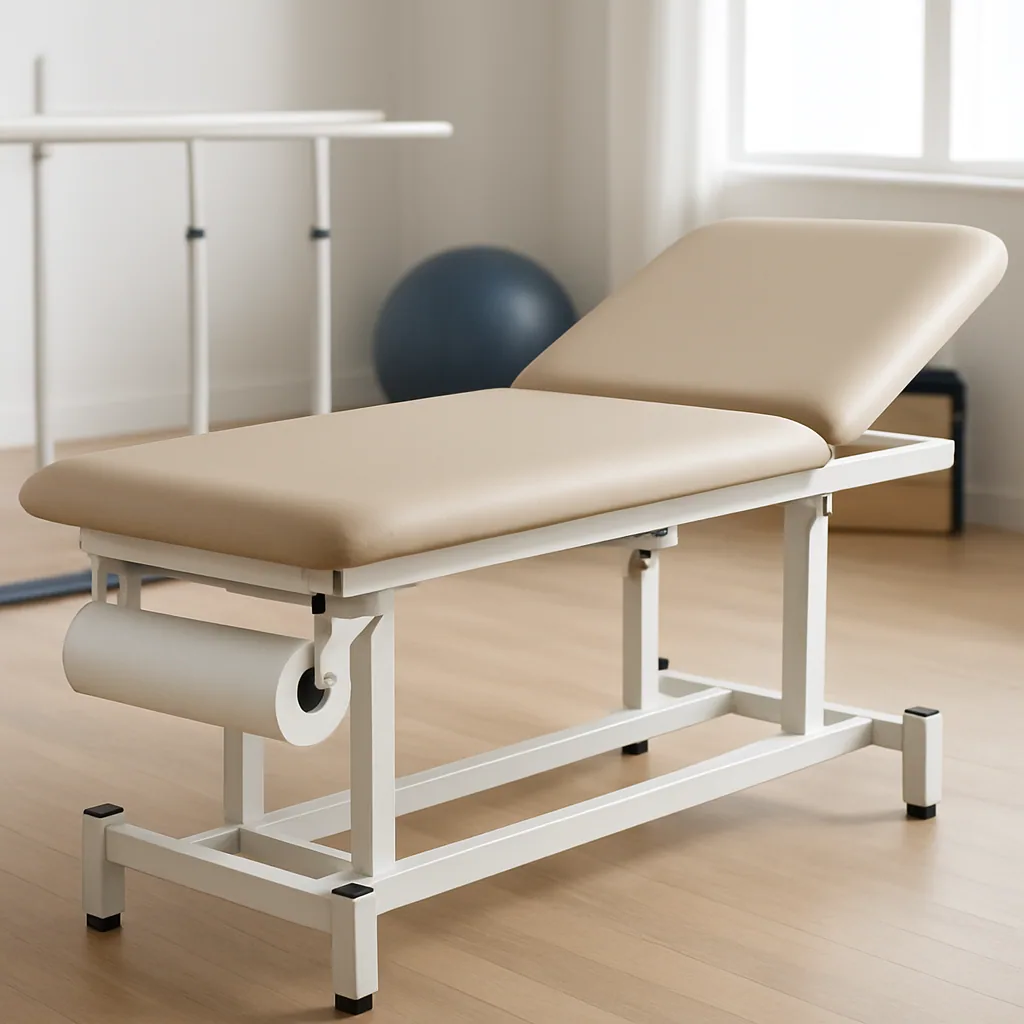
Rehabilitation Furniture
Furniture for rehabilitation rooms, therapy centers, and patient recovery spaces.
View product
Hospital Beds
General-purpose patient beds for inpatient wards and standard hospital rooms.
View product
Ward Furniture
Complete ward furniture options for patient rooms and hospital care areas.
View product