
An inquiry for pediatric beds often starts with a simple request for a price. But a responsible supplier knows an important question comes next: what is the age range of the children? This detail changes which side rail design is appropriate and helps prevent a serious purchasing mistake.
One of the most overlooked safety factors in a pediatric bed isn't part of the bed frame at all-it's the mattress. A mattress that is too thick can reduce the effective height of the side rails, which may increase the risk of a child falling out. Before comparing bed prices, it makes sense to confirm how the bed and mattress must work together as a system.
When considering safety features for pediatric hospital beds, buyers should focus on confirming specific side rail gap measurements to reduce entrapment risk, the type of locking mechanism to prevent accidental release, the bed's lowest height setting for fall management, and how the chosen mattress thickness affects the overall side rail effectiveness.
A supplier's first job is not to provide a price, but to help you clarify your requirements. If a supplier quotes a "pediatric bed" without asking about the intended patient age, the mattress you plan to use, or your clinical team's concerns, you may be getting a price for the wrong product. The following points explain what a supplier should help you confirm before you make a purchasing decision.
Why Is "Pediatric Bed" Not a Specific Enough Term for a Safe Order?
Assuming any bed marketed as "pediatric" is safe for all children is a common and risky mistake. The term "pediatric" covers a wide range of patient sizes, weights, and mobility levels-from a small toddler to a pre-teen. A safety feature that is appropriate for a 10-year-old could be a hazard for a 2-year-old.
For example, the primary risk for a small, less mobile child is entrapment in gaps within or around the bed's side rails. For an older, more active child, the primary risk might be falling while attempting to climb over the rails. The design and dimensions of the side rails, headboard, and footboard should correspond to the specific risks of your primary patient population.
Before you send an inquiry, your first step should be to define the main patient group for the ward where the beds will be used. This allows a supplier to recommend a model with features matched to that group's safety needs.

What Side Rail Measurements and Gaps Affect Child Safety?
A key safety feature of a pediatric bed is not its visual appearance, but its specific, measurable dimensions. Entrapment zones are a serious concern, and safety is determined by millimeters, not just by having "full-length rails."
A supplier should be able to provide a technical specification sheet or drawing that clearly states the measurements for these key areas:
- The gap between individual rails (bars) of the side rail.
- The gap underneath the side rail when it is in the raised position.
- The gap between the end of the side rail and the headboard or footboard.
To reduce entrapment risks for smaller children, you should verify that the gaps are small enough to prevent head or body entrapment. Ask the supplier for a technical drawing with exact measurements. Your clinical team can then approve these specifications based on your facility's safety protocols and any relevant standards. When you receive a quotation, check if these dimensions are specified. If a quote just says "pediatric safety rails" without providing the numbers, you cannot be sure you are comparing products with the same level of safety.
How Does Your Mattress Choice Impact the Bed Frame's Safety?
The bed frame and the mattress form a single safety system. This point is often missed during procurement, where beds and mattresses are sometimes sourced separately.
A mattress that is too thick for the bed frame can reduce the effective height of the side rails. For example, if a side rail is 60cm high from the mattress platform, using a 10cm mattress provides an effective rail height of 50cm. However, using a thicker 20cm mattress on the same bed reduces that effective height to only 40cm. This lower barrier might be insufficient to prevent a child from climbing or falling out.
A responsible supplier should ask about your intended mattress or be able to state the maximum recommended mattress thickness for a specific bed model. I would not confirm an order for pediatric beds without first clarifying and documenting the compatible mattress thickness.
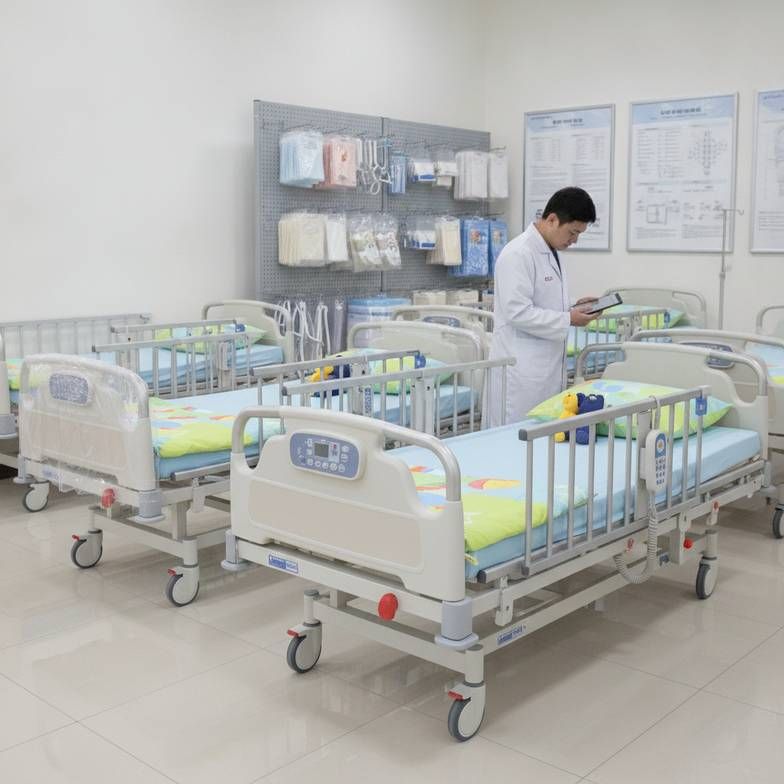
What Should You Check About the Locking System and Bed Stability?
Seeing "locking side rails" and "locking casters" on a specification sheet is a starting point, not a final answer. The type of mechanism used is what affects its effectiveness in a real-world hospital setting.
For side rails, you should ask about the locking mechanism. A simple, single-action latch can sometimes be opened by a curious child, a sibling, or a well-meaning visitor. A dual-action lock, which requires two separate and distinct motions to release (e.g., "push a button and lift"), is often a better choice for pediatric environments.
For bed stability, check the caster and braking system.
- Caster Type: Are they individual casters that must be locked one by one, or is there a central braking system that locks all wheels with a single pedal? A central brake is often faster and more reliable for nursing staff to use.
- Caster Diameter: Larger diameter casters generally make the bed easier to move and steer over small obstacles like door thresholds.
Ask for a clear description or even a short video showing how the lock and brake systems operate. This can tell you more about daily usability than a line on a spec sheet.
How Can You Prepare an Inquiry That Helps You Compare Safety Features Fairly?
A vague inquiry like "quote for 20 pediatric beds" will result in a set of quotations that are difficult or impossible to compare on a like-for-like safety basis. A more detailed inquiry forces all suppliers to price against the same set of safety requirements, giving you control over the procurement process.
The following checklist can help you build a more effective Request for Quotation (RFQ). By providing these details upfront, you help suppliers understand your exact needs and get quotes for truly comparable products.
Pediatric Bed Safety Specification Checklist
| Safety Feature Specification | Why It Affects Safety | What a Buyer Should Ask or Specify |
|---|---|---|
| Intended Patient Group | The patient's size and age determine the specific risks (e.g., entrapment vs. falls). | Define the primary patient profile (e.g., "for toddlers, ages 1-3" or "for children, ages 6-12"). |
| Side Rail Gaps | Gaps that are too large can create head, neck, or body entrapment risks for small children. | "Please provide a technical drawing showing all gap dimensions (between rails, under rails, and between rails and head/footboards)." |
| Side Rail Locking Mechanism | A simple latch can be opened by a child, creating a fall risk. | "What kind of action is needed to release the side rail lock? Is it a single or dual-action mechanism?" |
| Maximum Mattress Thickness | A mattress that is too thick reduces the effective height of the side rail. | "The bed must be compatible with our standard 15cm thick mattresses. Please confirm this compatibility." |
| Lowest Bed Height | A low bed height setting helps reduce the severity of injury if a child falls out of bed. | "What is the minimum height of the bed platform from the floor in its lowest position (in cm/mm)?" |
| Caster & Brake System | An unstable bed can shift during patient care, creating a risk. | "Specify the required braking system (e.g., central brake) and minimum caster diameter." |
Before you request a quotation for pediatric beds, prepare a short specification list. For each model you need, include your intended patient age group, the required side rail locking mechanism, the maximum mattress thickness you will use, and the minimum bed height you need. Sending these details with your inquiry helps a supplier recommend the most appropriate model and makes the quotation you receive clearer and more accurate, built around the safety of your patients.
Written by
CareFurnex Team
CareFurnex Team shares practical knowledge about hospital beds, patient room furniture, medical trolleys, clinic furniture, and healthcare facility procurement for international B2B buyers.
Related Products
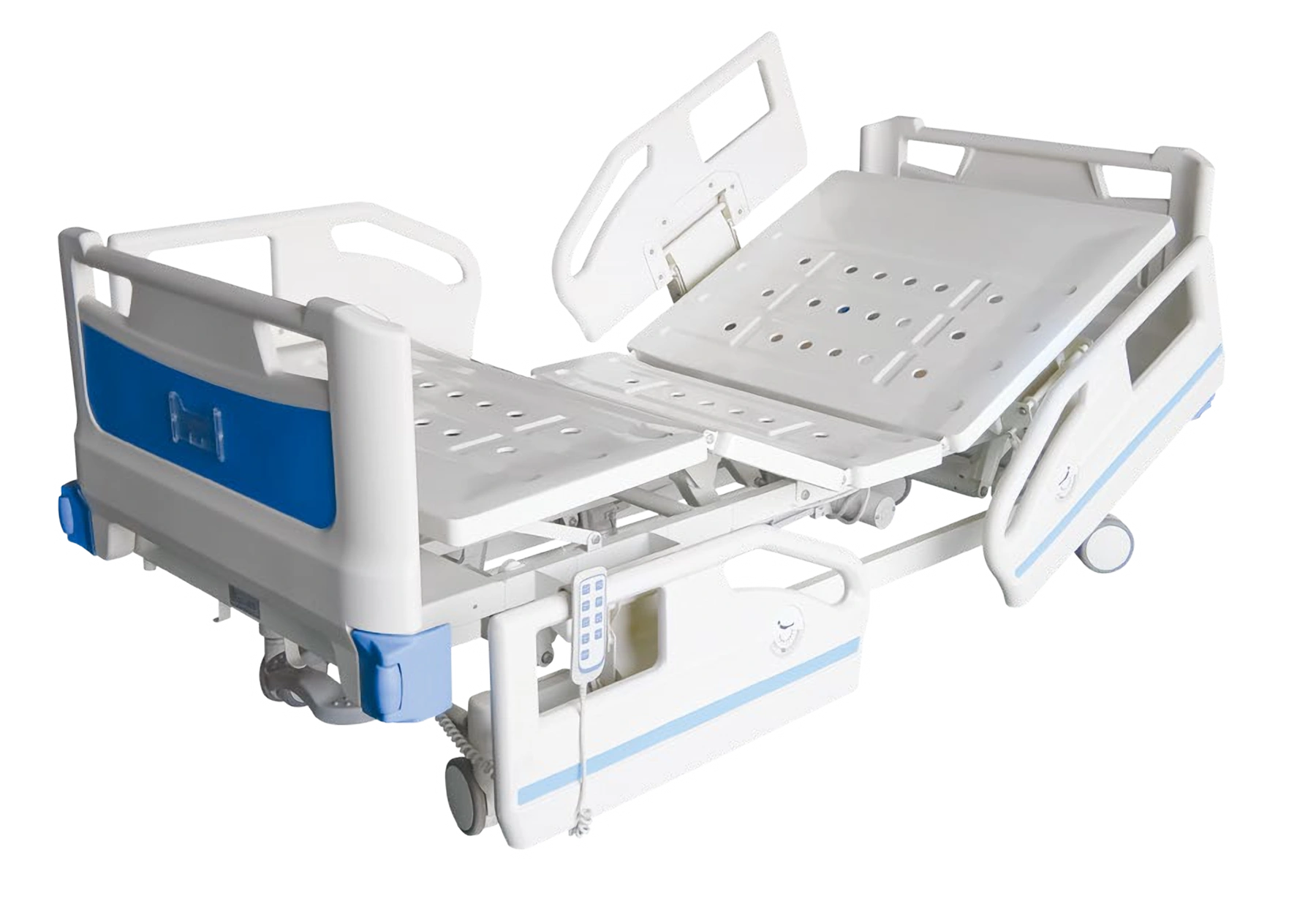
Hospital Beds
General-purpose patient beds for inpatient wards and standard hospital rooms.
View product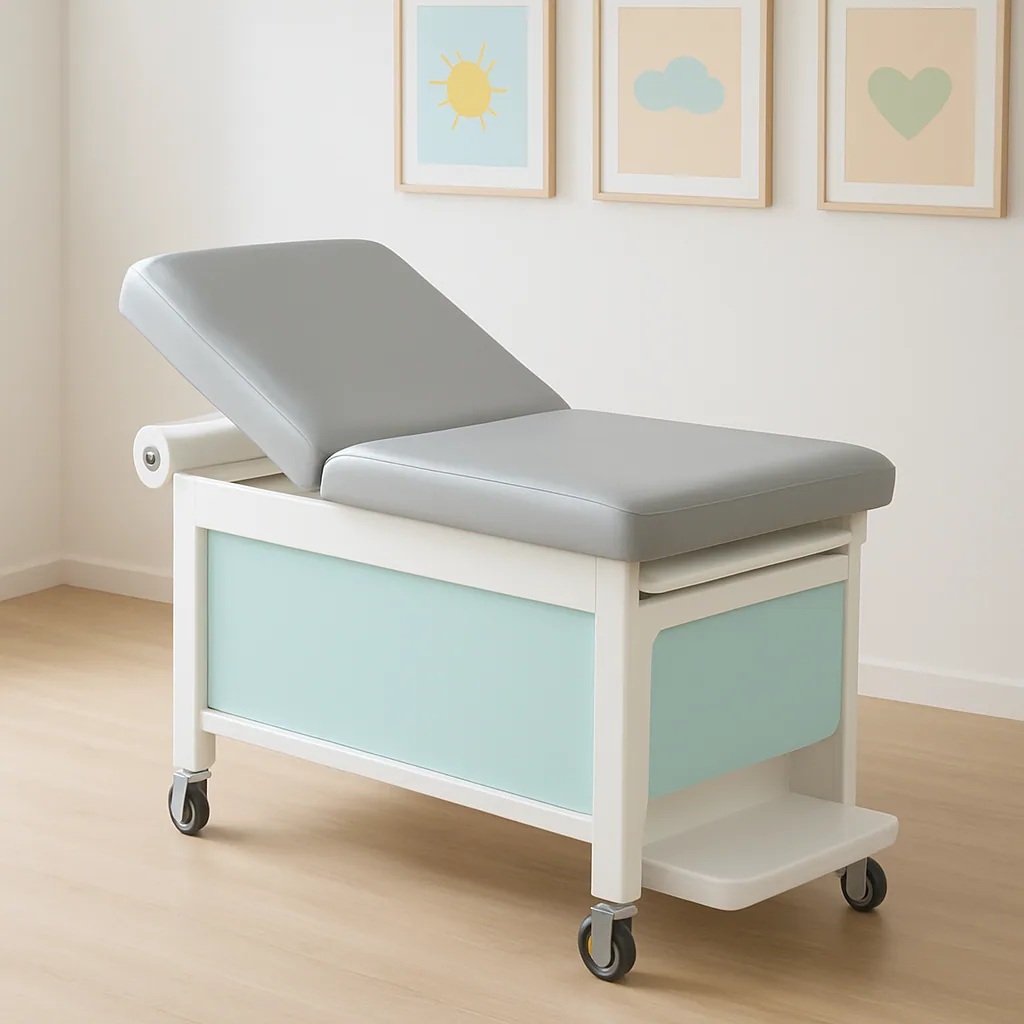
Pediatric Exam Tables
Children's examination tables for pediatric clinics and child-focused healthcare rooms.
View product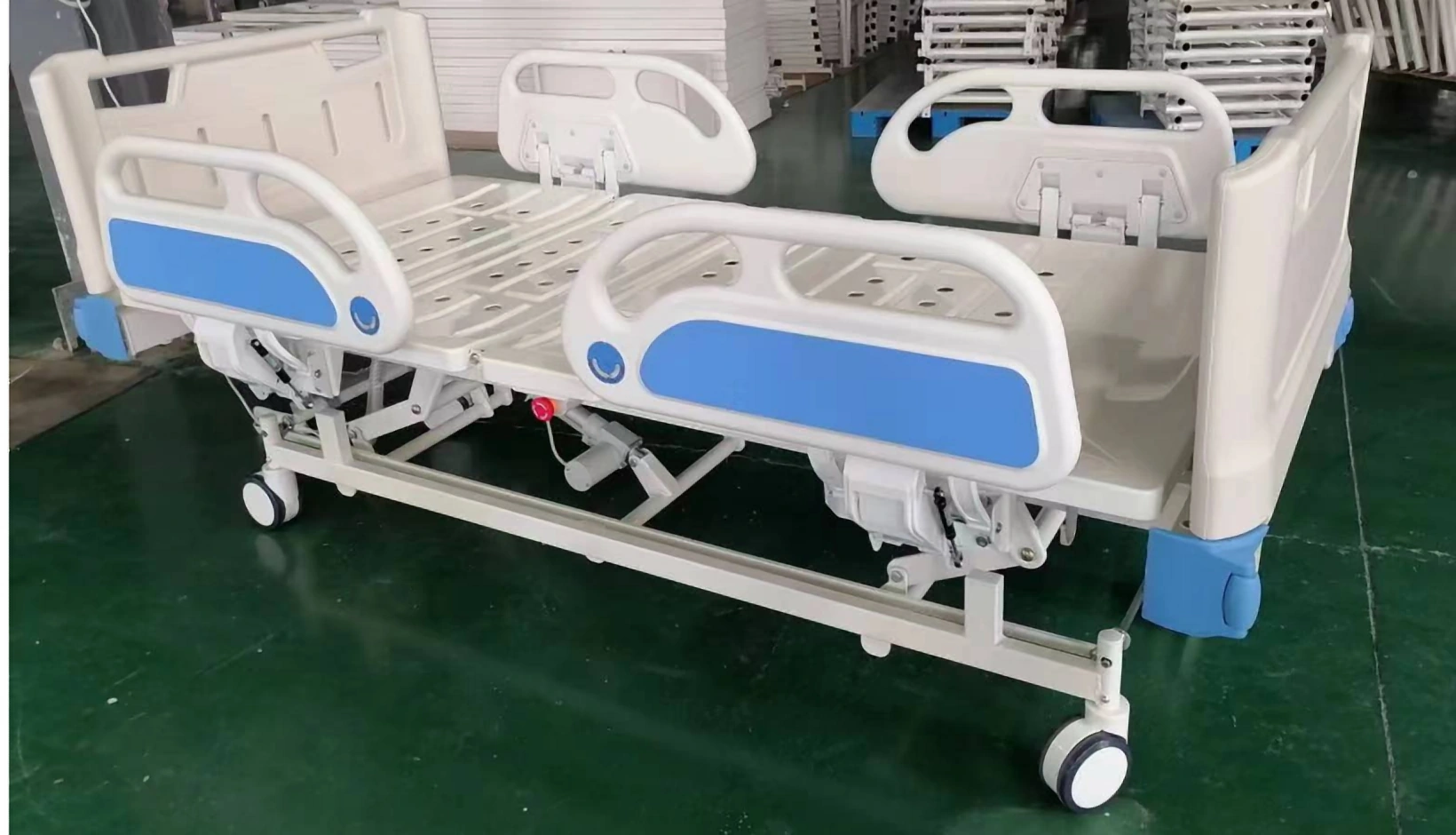
Electric Hospital Beds
Motorized multi-function beds with electric height, backrest, and leg adjustment options.
View product