
Sourcing patient transfer trolleys for a hospital project puts a lot of pressure on you to get it right. The problem is, most tender documents and quotes focus heavily on the main frame, hydraulics, and casters. This overlooks the real-world sources of safety incidents and nurse complaints: flimsy side rails and cheap mattresses. By treating these components as critical safety systems, not just accessories, you can avoid procurement failures and deliver equipment that truly works.
The most critical safety features on patient transfer trolleys are the side rail systems, the medical mattress, and the central braking mechanism. These are not optional extras but integrated systems that directly determine patient safety, infection control, and staff efficiency. A successful procurement evaluates them on specific performance metrics like locking reliability, foam density, and braking response, not just their presence on a feature list.
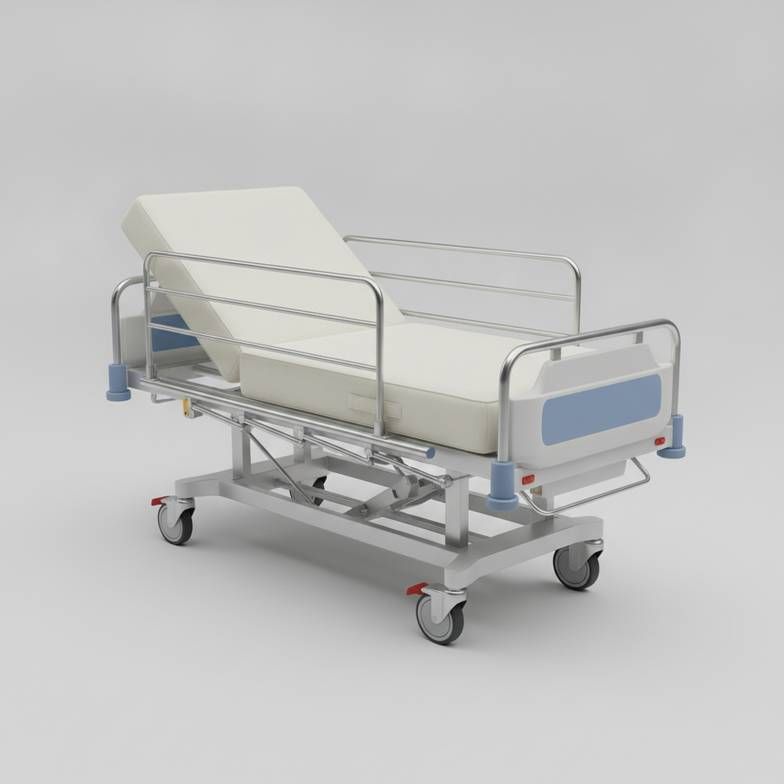
It's one thing to see a feature like "ABS side rails" on a quotation. It's another thing entirely to know if those rails will hold up after a year of intense use in a busy emergency room. So, let's dive deeper into what you, as a procurement professional, should actually be looking for.
Are All Patient Transfer Trolley Side Rails the Same?
Let's be honest, you've probably seen two quotes for a trolley where both list "ABS side rails," but one is significantly cheaper. Is it a great deal or a hidden liability? This is a common trap we see in procurement.
The short answer is no, not all side rails are the same. From my experience analyzing supplier samples and tender specs, the differences in locking mechanisms, material choices, rail height, and gap design have a massive impact on both patient safety and the daily workflow of clinical staff.
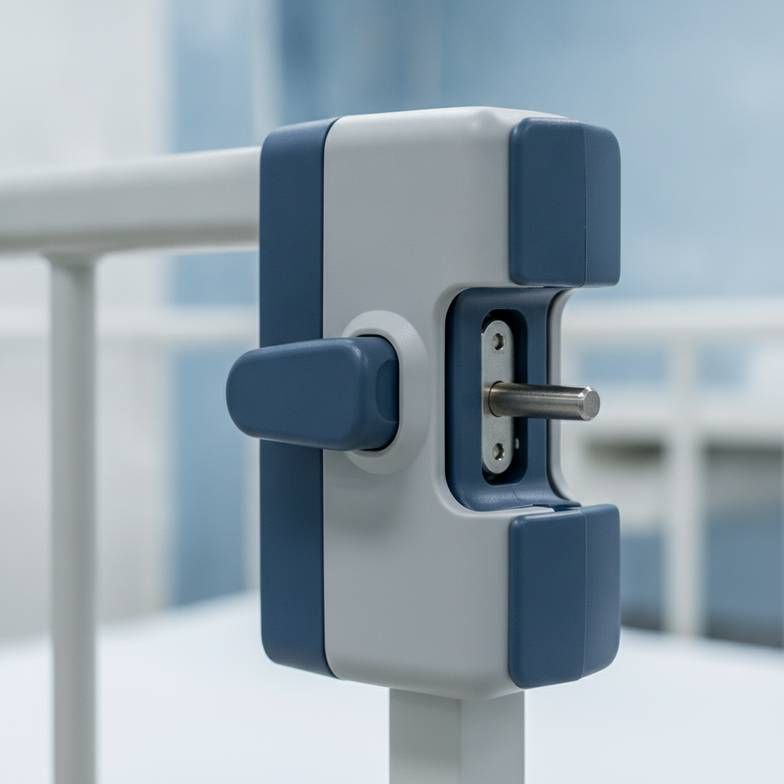
The Locking Mechanism: The First Point of Failure
A side rail is only as good as its lock. When we get after-sales reports, a surprisingly high number are for failing locking mechanisms. A rail that won't stay up is a serious patient fall risk, and one that won't go down smoothly frustrates staff during an emergency.
Here's what to look for:
- Ease of Use: Can a nurse lower the rail with one hand while holding an IV bag or supporting the patient with the other? This is a critical workflow consideration. Ask suppliers for a video demonstrating one-handed operation.
- Locking Reliability: The lock should engage with a clear, audible click and feel secure. Flimsy-feeling plastic levers or complex, multi-step locks are red flags. These are often the first parts to break from repeated use.
- Accidental Release: The release mechanism should be intuitive for staff but difficult for a disoriented patient to operate accidentally.
Material, Height, and Entrapment Risks
The material and design of the rail itself are just as important as the lock.
- Material: The two most common materials are ABS and PP.
- ABS (Acrylonitrile Butadiene Styrene) is generally more rigid, durable, and impact-resistant. It's the preferred choice for high-traffic environments like the ER.
- PP (Polypropylene) is more flexible and can be a cost-effective alternative. However, it can sometimes feel less robust and may be more prone to stress fatigue over time.
- Rail Height: A common mistake in tender specifications is failing to mention rail height. The rail must be high enough to provide adequate containment above the surface of the mattress. A good benchmark is at least 22 cm from the top of the mattress to the top of the rail.
- Entrapment Gaps: International standards like IEC 60601-2-52 exist for a reason. They define the safe dimensions for gaps within the rail and between the rail and the bed frame to prevent a patient's head, neck, or body from becoming trapped. Always ask a supplier to confirm compliance with this standard.
How Do You Specify a Mattress for a Patient Transfer Trolley?
The phrase "includes mattress" on a supplier's quote is one of the biggest red flags in medical furniture procurement. It hides a huge range of potential problems, from poor infection control to patient discomfort and pressure sores.
To properly specify a mattress for patient transfer trolleys, you must look beyond thickness and focus on three procurement-critical details: foam density, cover material specifications, and seam construction. These factors determine its ability to support a patient's weight, resist fluids and contamination, and be properly disinfected between uses.
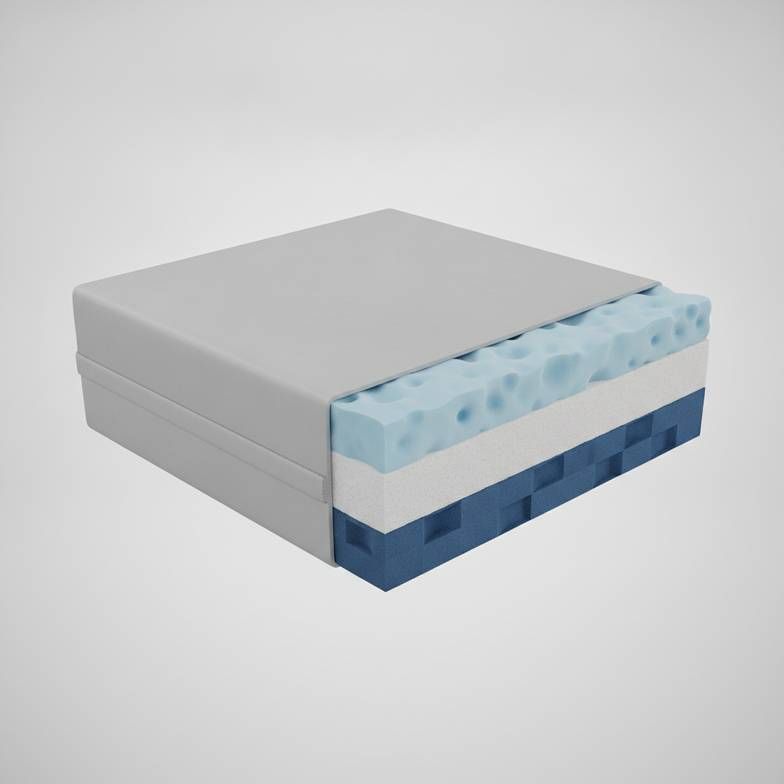
Beyond Thickness: Why Foam Density Matters More
There's a common myth that a thicker mattress is a better mattress. This isn't true. The most important specification is foam density, measured in kilograms per cubic meter (kg/m³).
Density tells you how much support the foam provides. A thick but low-density mattress (e.g., under 25 kg/m³) will feel soft at first but will quickly "bottom out" under a patient's weight, meaning the patient's body effectively sinks through the foam and rests on the hard trolley deck. This is not only uncomfortable but also increases the risk of pressure injuries.
For a general-use patient transfer trolley, I recommend specifying a mattress that is 8-10 cm thick with a foam density of at least 30-35 kg/m³. For heavier patient loads or bariatric use, you should require an even higher density.
The Cover as an Infection Control Barrier
The mattress cover is not just fabric; it's a critical line of defense in infection control. Here’s what to specify:
- Material: The industry standard is a PU (polyurethane) coated, multi-stretch fabric. It should be waterproof, breathable (to help manage microclimate), and biocompatible.
- Seam Construction: This is a detail that is often missed. Stitched seams create thousands of tiny needle holes where bacteria and fluids can penetrate the foam core, making true disinfection impossible. You must insist on covers with welded or high-frequency sealed seams, which create an impermeable barrier.
- Fire Retardancy: For hospital environments, the mattress (both foam and cover) must meet specific fire safety standards. In the UK and many other regions, BS 7177 Crib 5 is the required standard for institutional use. Always ask for certificates to prove compliance.
When you're comparing two seemingly identical patient transfer trolleys, asking for the datasheet on the mattress foam and cover can reveal a world of difference in quality and safety.
Which Other Safety Features Matter for Patient Transfer Trolleys?
So, you've sorted out the rails and the mattress specifications. Excellent. But the trolley's job is to move, and that's where the next set of critical safety features come into play. A strong frame is useless if the brakes are unreliable or if a nurse strains their back trying to steer it down a hallway.
Beyond the patient surface, the most important safety features on patient transfer trolleys are the central braking system, the fifth steering wheel, and the stability of integrated accessories like IV poles and oxygen tank holders. These components directly impact maneuverability, staff safety, and readiness for emergencies.
The Central Braking System and Casters
In a busy hospital, staff don't have time to bend down and lock four individual casters. It’s inefficient and often gets skipped, creating a safety hazard. That's why a modern patient transfer trolley must have a central braking system.
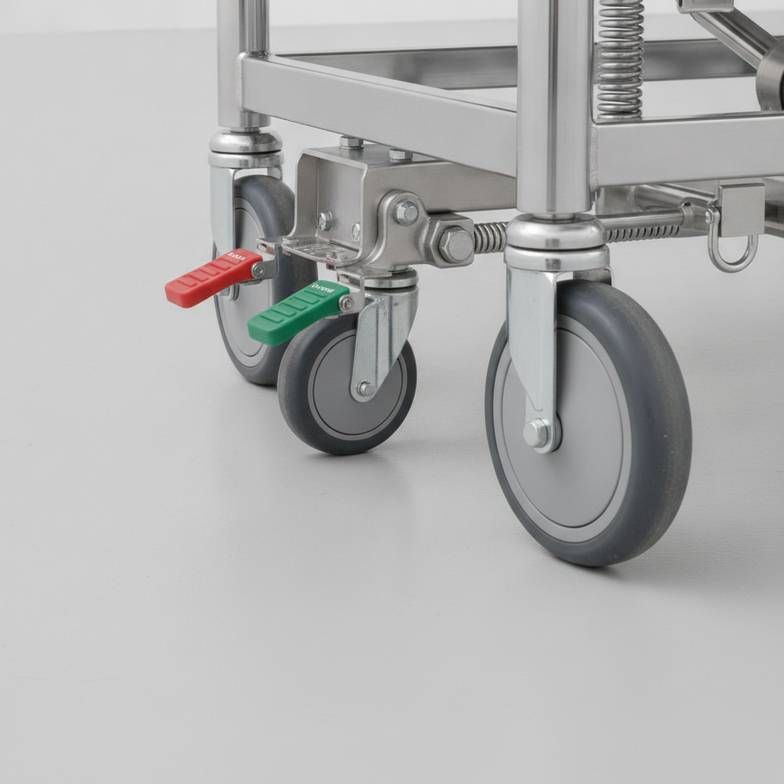
This system is usually operated by a foot pedal at the head or foot end of the trolley. A single press should lock all four wheels simultaneously. A good system has three positions:
- Brake (Red Pedal): All four wheels are locked against both rolling and swiveling. The trolley is completely immobilized.
- Steer (Green Pedal): Three wheels swivel freely, but one (usually a corner wheel) is locked in a straight-ahead position. This is for steering down long corridors.
- Neutral/Swivel: All four wheels swivel and roll freely, allowing for maximum maneuverability in tight spaces.
The casters themselves should be at least 150mm (6 inches) in diameter, and preferably 200mm (8 inches), to roll smoothly over elevator gaps and thresholds.
The Fifth Wheel: The Secret to Easy Steering
The "Steer" function of a central brake helps, but for true point-and-go steering, you need a fifth wheel. This is a smaller, retractable wheel located in the center of the trolley's undercarriage. When deployed, it lifts the trolley slightly, creating a pivot point that makes steering straight down a long hallway effortless. It dramatically reduces the physical strain on staff and prevents the trolley from veering from side to side. From a usability standpoint, it’s one of the best investments you can make.
From Features to Department Fit
The best patient transfer trolleys are the ones whose features match the specific demands of the department. A one-size-fits-all approach often leads to compromises. When we work on project specifications, we help buyers match features to a department's workflow.
Here’s a simplified example of how to think about it:
| Feature | Emergency Room (ER) | General Ward Transfer | ICU / Critical Care |
|---|---|---|---|
| Side Rails | Fast, one-handed operation is a must. | Durable locking, easy to clean. | High, full-length rails for patient containment. |
| Steering | Fifth wheel is essential for rapid movement. | Fifth wheel is highly recommended for staff ergonomics. | Fifth wheel is essential for precise positioning. |
| Braking | Intuitive, fast-acting central lock. | Reliable central lock is standard. | Robust, failsafe central lock. |
| Accessories | Secure O2 tank holder, multiple IV pole mounts. | Standard IV pole, patient belongings basket. | Multiple mounts for pumps, monitors, and IVs. |
By thinking in terms of scenarios rather than just feature lists, you ensure the equipment you procure will actually solve problems, not create new ones.
Frequently Asked Questions
What is the ideal mattress thickness for a patient transfer trolley?
It's less about thickness and more about foam density. A good starting point is a mattress 8-10 cm thick, but you must specify a foam density of at least 30-35 kg/m³. This prevents the mattress from "bottoming out" under the patient's weight, which is critical for both comfort and pressure care.
What's the difference between ABS and PP plastic for side rails?
ABS is a more rigid and impact-resistant plastic, making it a better choice for demanding, high-traffic areas like an emergency room. PP is more flexible and can be a cost-effective choice for general use, but it's important to verify that the locking mechanism and overall construction are still robust and durable.
Do I really need a fifth wheel on my patient transfer trolleys?
For most modern hospital environments with long corridors, yes. A fifth wheel makes steering the trolley in a straight line significantly easier and reduces the physical strain on staff. It's a relatively low-cost feature that provides a huge improvement in usability and safety during transfers.
How do I check for patient entrapment risks?
The simplest way is to require your supplier to certify compliance with the IEC 60601-2-52 standard. This international standard specifically outlines the design requirements to prevent patient entrapment in medical beds and trolleys, including the maximum allowable gaps in and around side rails.
Conclusion
When procuring patient transfer trolleys, the real risk isn't in the steel frame; it's in the details that are often overlooked. By shifting your focus, you can avoid common pitfalls. Treat side rails as patient containment systems that need reliable locks and proper height. Treat mattresses as clinical surfaces that demand specs for foam density and infection-proof covers. And evaluate features like central braking and fifth wheels based on how they will perform in your specific hospital environment. Adopting this mindset transforms a simple purchase into a strategic decision that enhances patient safety and supports your clinical staff for years to come.
At CareFurnex, our role is to support hospital project contractors and procurement teams in creating clear, detailed specifications for patient transfer trolleys and other medical furniture. If you need assistance building a tender document that mitigates risk and ensures you get the quality you need, contact us for a project consultation.
Written by
CareFurnex Team
CareFurnex Team shares practical knowledge about hospital beds, patient room furniture, medical trolleys, clinic furniture, and healthcare facility procurement for international B2B buyers.
Related Products
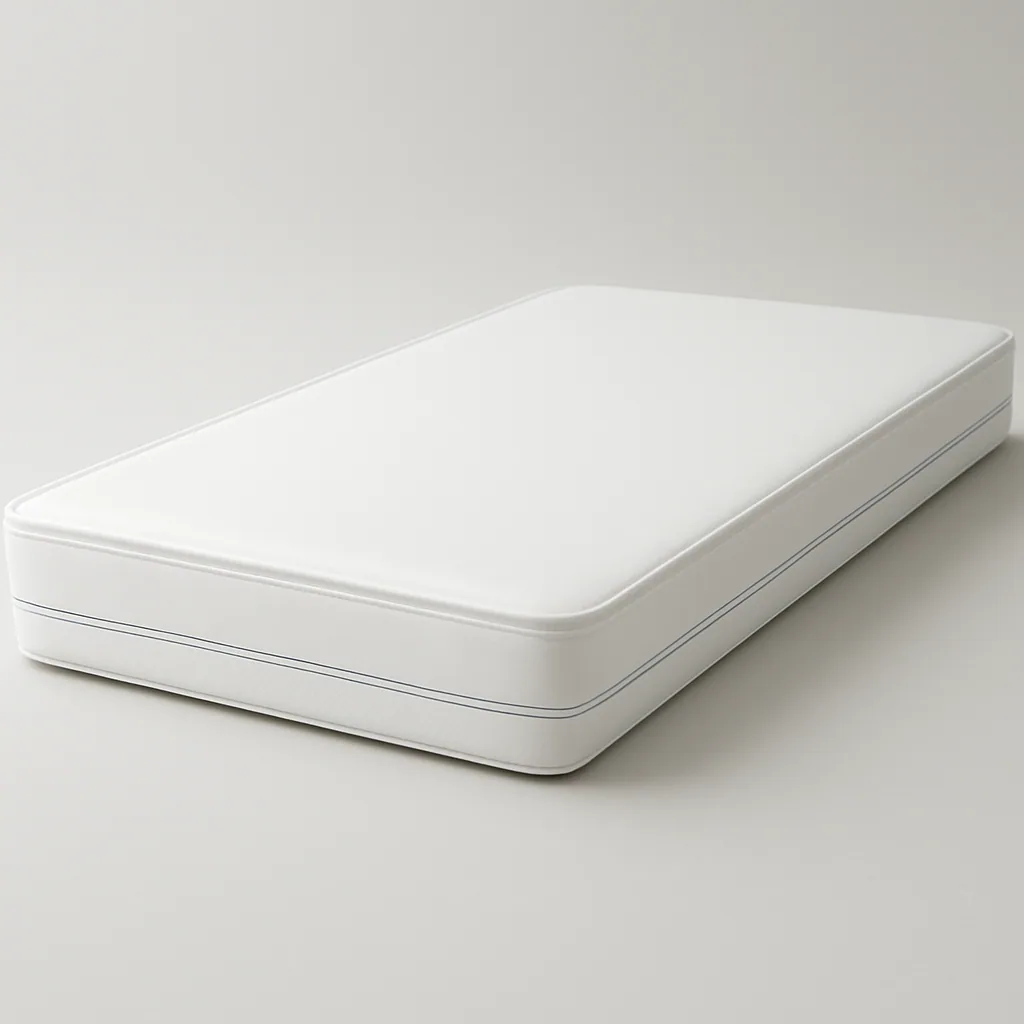
Hospital Mattresses
Medical bed mattresses for hospital beds, nursing beds, and patient room use.
View product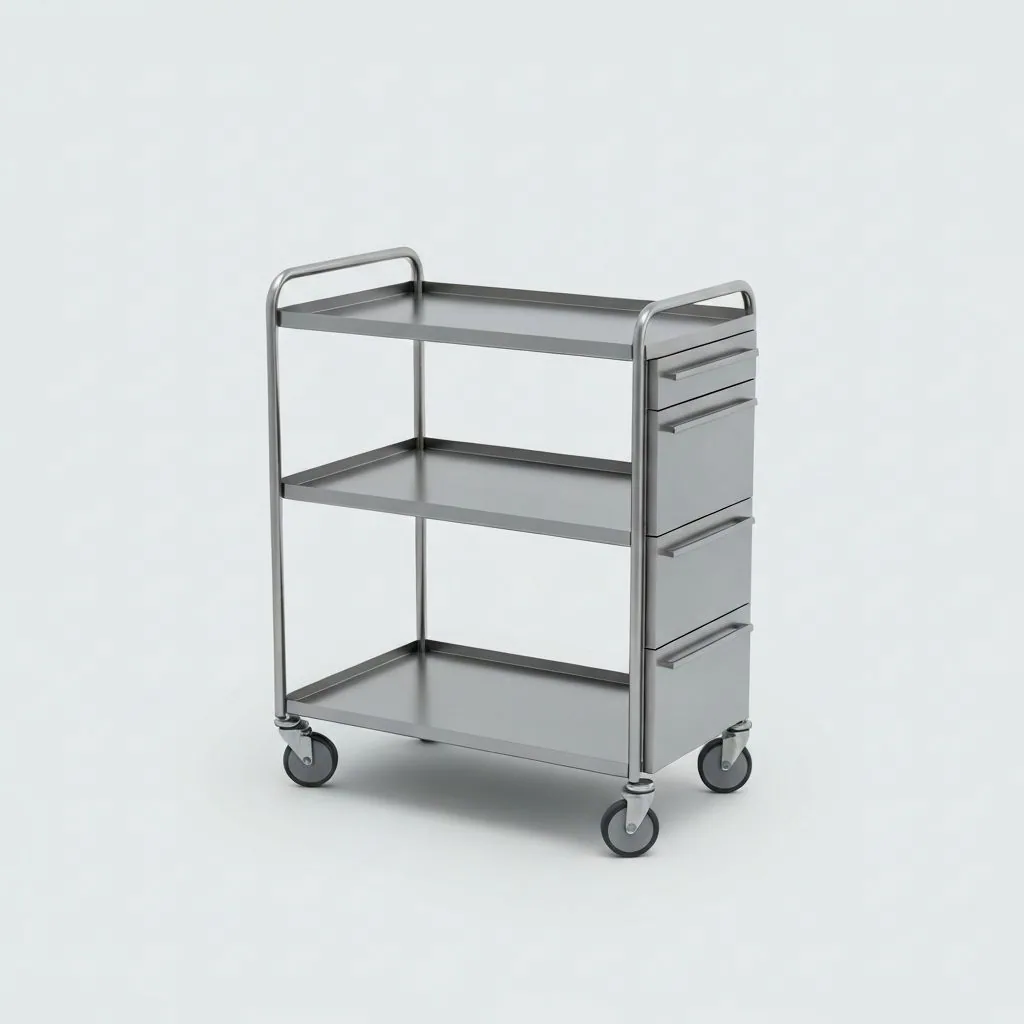
Medical Trolleys
Mobile carts for nursing rounds, treatment supplies, medicines, and clinical tools.
View productInstrument Trolleys
Mobile instrument trolleys for clinics, treatment rooms, wards, and healthcare departments.
View product