
A procurement request arrives with two photos. One chair looks clinical and upright; the other looks more like a comfortable armchair. The question is simple: "What is the price difference?" This is a common starting point for buyers, but it compares two fundamentally different tools based on appearance alone.
This approach can lead to costly mistakes. Placing a companion chair in a clinical role may not meet the stringent requirements for clinical infection control. Using a clinical patient chair in a family lounge can be uncomfortable and unwelcoming. The difference is not in the name or the price tag, but in the engineering you cannot see in a photo.
The main difference is their intended user and purpose. A patient chair is engineered for patient safety, clinical access, and cleanability, often with high, rigid arms for support and medical-grade vinyl. A companion chair is contract furniture built for visitor comfort and durability, often featuring sleeper functions and softer, more relaxed ergonomics.
From a supplier's perspective, the names "patient chair" and "companion chair" are just categories. The real conversation begins when we discuss who will use the chair, where it will be placed, and how it will be cleaned. These details determine the specifications that matter for safety, durability, and function in a healthcare setting.
What Makes a Chair Suitable for Hospital Cleaning Protocols?
Many buyers assume that any smooth, non-fabric surface is fine for a hospital. This is incomplete. The key differences are the material's chemical resistance and the chair's physical construction.
A patient chair is designed for frequent, aggressive cleaning with hospital-grade disinfectants. This requires medical-grade upholstery-typically a high-performance polyurethane (PU) or vinyl-that is specifically formulated to resist cracking and degradation from these chemicals. A standard contract-grade vinyl, while durable for office or hospitality use, may become brittle or discolor when repeatedly exposed to these cleaners.
Beyond the material, look at the construction. Patient chairs often feature:
- Minimal or sealed seams: This helps reduce crevices where debris and contaminants can become trapped and are difficult to clean thoroughly.
- "Clean-out" gaps: An intentional space between the seat and the backrest, or between the seat and the armrests, allowing for easy wipe-downs and preventing debris from getting trapped.
A companion chair, while still needing to be durable and easy to clean, is not always built to the same standard for cleanability. Its seams might be stitched for aesthetic reasons, and it may lack clean-out gaps. When comparing quotations, don't just look for "vinyl." You should ask the supplier to specify the material grade and confirm its suitability for your facility's cleaning protocols.
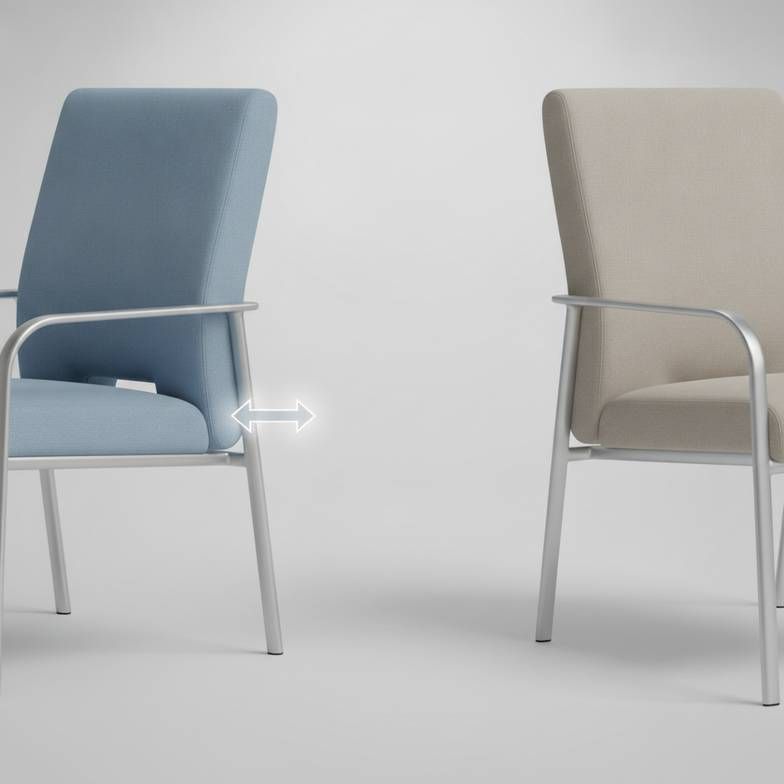
How Do Armrests and Chair Height Affect Patient Safety vs. Visitor Comfort?
The armrest is a perfect example of a feature with two completely different functions. On a patient chair, the armrest is a functional tool. On a companion chair, it is for comfort.
A patient chair, especially one used for geriatrics or post-operative recovery, has armrests designed to help a person with limited strength or mobility stand up. These armrests are typically:
- Higher: Positioned to give the user better leverage.
- More Rigid: Often made of wood, molded polyurethane, or metal to support the user's weight as they push up.
- Flatter on top: Providing a stable surface for hands and forearms.
In contrast, a companion chair's armrests are designed for a visitor who may be sitting for long periods. They are generally lower, softer, and sometimes wider to comfortably support resting arms. The soft, low arms are designed for comfort, not for providing the firm, high leverage a patient may need to stand up. For user transfers, a patient chair's rigid, higher arms are often a more suitable choice.
When reviewing a specification sheet, it is a practical step to check the armrest height and material, as this directly relates to the chair's intended purpose.
Clinical Recliner vs. Companion Sleeper: What's the Real Difference in Mechanism?
Many buyers use the term "recliner" or "sleeper" interchangeably. In a healthcare setting, the mechanisms are engineered for very different purposes.
A clinical recliner is often engineered to the standards of medical equipment. Its recline function is a clinical tool, used for patient positioning, transport, or specific procedures like dialysis or infusions. These mechanisms are robust and may be operated by a caregiver. Some models offer a Trendelenburg position (placing the patient's head down and feet up), a specialized function used for certain clinical protocols. Accessories like IV pole holders or drainage bag hooks are designed to integrate with these chairs.
A companion sleeper is a piece of hospitality furniture. Its purpose is to provide a comfortable place for a family member or visitor to rest or sleep overnight. The mechanism is designed to be simple for a layperson to operate, often converting from a chair to a flat sleeping surface. The focus is on comfort and space efficiency, not clinical positioning.
Confusing the two can lead to ordering a chair that lacks necessary medical functions or, conversely, a complex clinical chair for a simple visitor lounge. Before asking for a "recliner," clarify if its purpose is for patient positioning or visitor accommodation.
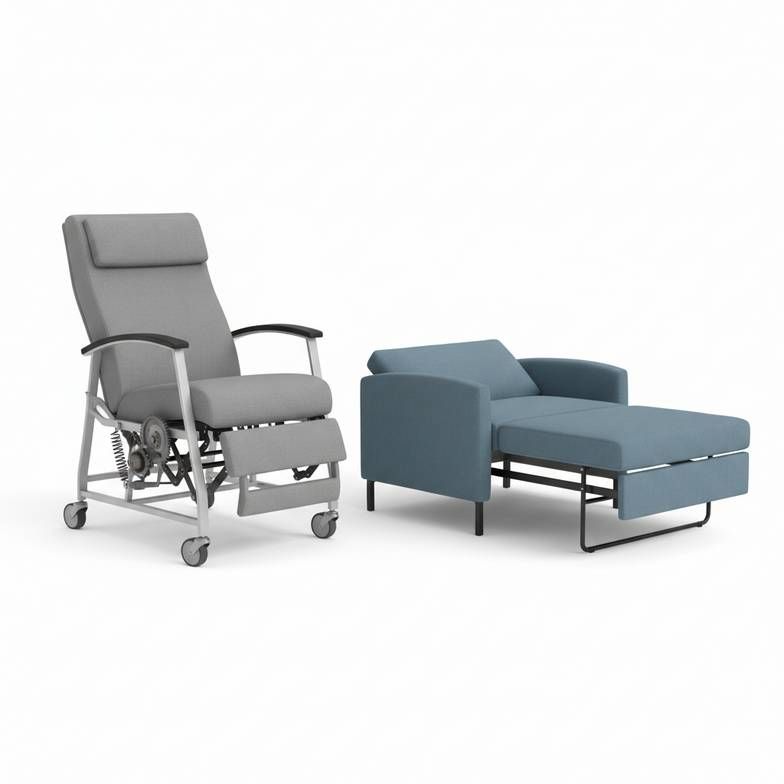
A Practical Checklist for Comparing Patient and Companion Chairs
When you receive quotations, they can be difficult to compare if the specifications are vague. Use this checklist to ask for the right details and compare options more accurately.
| Feature / Specification | Patient Chair (for Clinical Use) | Companion Chair (for Visitor Use) | What to Confirm in a Quote |
|---|---|---|---|
| Primary User | Patient | Visitor, Family Member | Not applicable |
| Main Purpose | Clinical support, safety, mobility aid | Visitor comfort, long-term sitting, sleeping | Not applicable |
| Upholstery | Medical-grade vinyl/PU, selected for resistance to disinfectants. | Durable, easy-clean vinyl or fabric. | Exact material type (e.g., "Medical-Grade PU"). |
| Armrests | High, rigid, flat top for leverage to stand up. | Lower, often padded for comfort. | Armrest height and material. |
| Mechanism | Clinical recline, Trendelenburg position. Often caregiver-operated. | User-operated sleeper or recline for rest. | Mechanism type (e.g., "3-Position Clinical Recliner"). |
| Construction | "Clean-out" gaps and sealed/minimal seams for easier cleaning. | Standard seams, focus on aesthetics. | "Clean-out design" mentioned. |
| Base / Mobility | Medical-grade locking casters for staff use. | Stationary glides or basic wheels. | Caster size/type vs. glides. |
| Common Accessories | IV pole holder, side tray, drainage hook. | USB ports, storage compartments. | Are accessories included or optional? |
How to Prepare Your Inquiry for a Clearer Quotation
An effective way to compare suppliers and get a quotation that meets your needs is to provide clear requirements upfront. Instead of sending a photo and asking for a price, preparing a brief summary of your needs will result in a much more useful and comparable response.
To get a clear and comparable quotation, please prepare the following information for each type of chair you need:
1. Intended Room & User: Is this for a patient in a post-op recovery room, or for a visitor in a pediatric ward? The context helps a supplier narrow down suitable options. 2. Required Functions: Do you need it to recline for patient positioning? Sleep flat for an overnight guest? Be mobile for frequent cleaning? Be stationary for a waiting lounge? 3. Cleaning Protocol: Do you use specific, harsh chemical cleaners? Mentioning this allows the supplier to confirm that the proposed upholstery is compatible, helping to avoid premature wear.
Sending these details with your inquiry helps us recommend the correct product and provide a quotation that is based on your real-world needs, not just a product name.
Written by
CareFurnex Team
CareFurnex Team shares practical knowledge about hospital beds, patient room furniture, medical trolleys, clinic furniture, and healthcare facility procurement for international B2B buyers.
Related Products
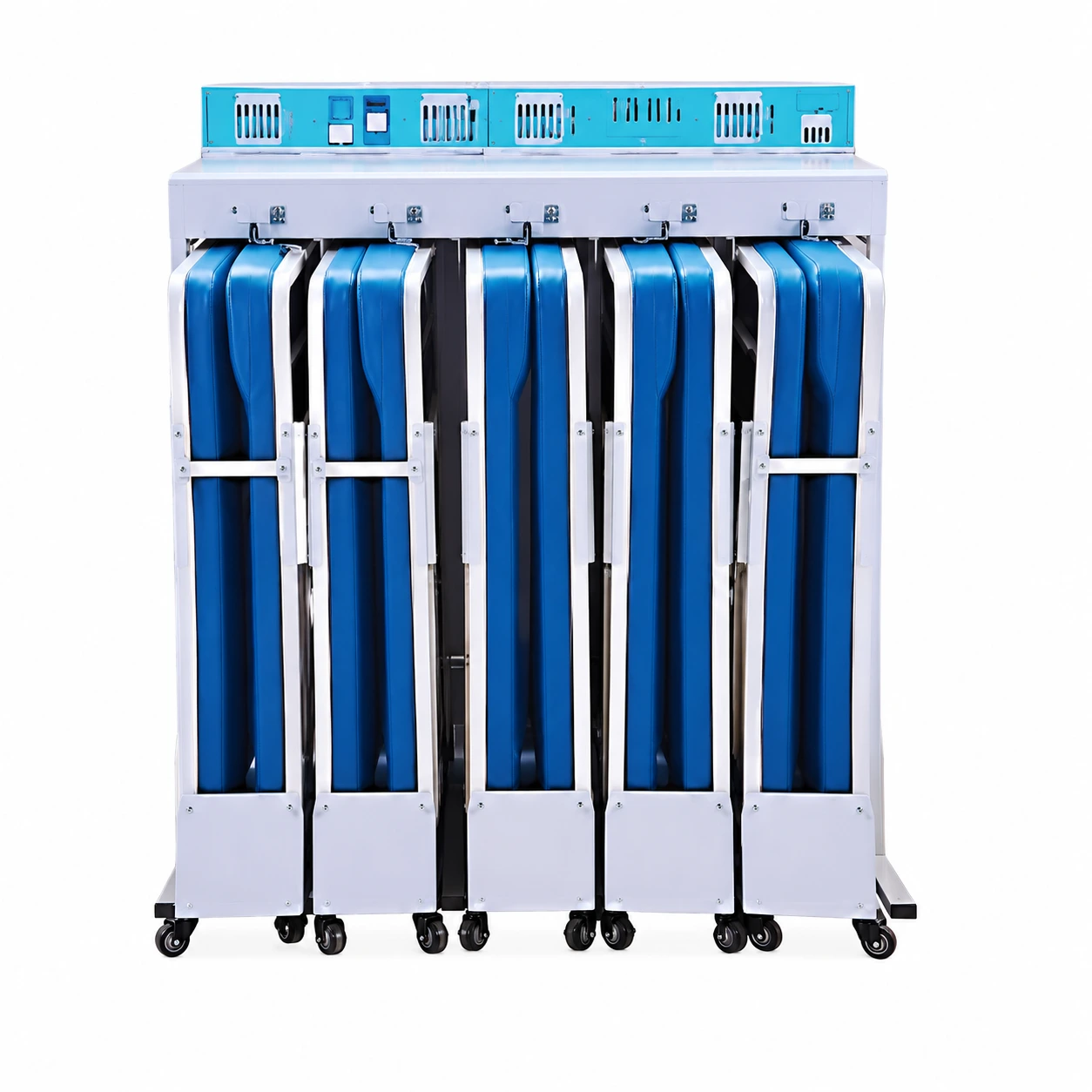
Companion Beds
Foldable accompanying beds or chair-bed options for family members staying near patients.
View product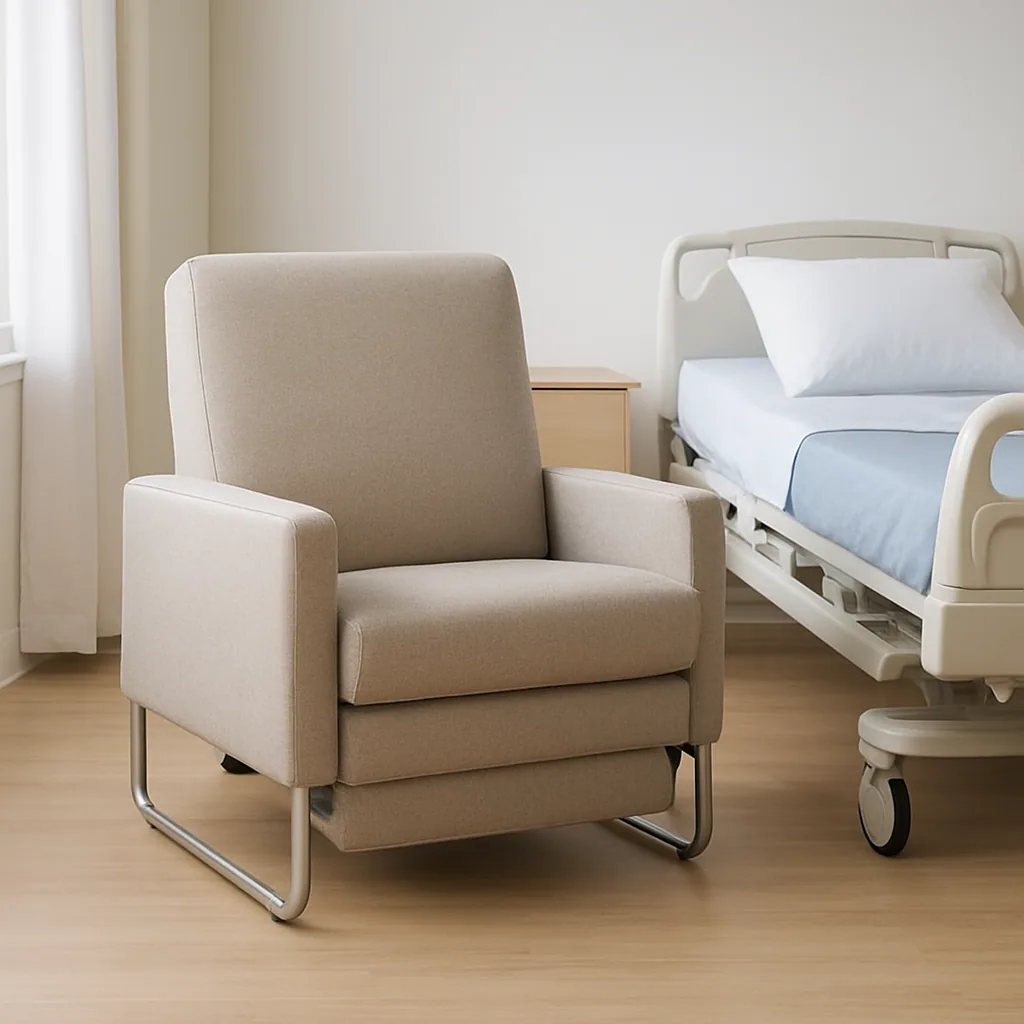
Sleeper Chairs
Chair-to-bed seating for patient rooms, attendants, and companion care areas.
View product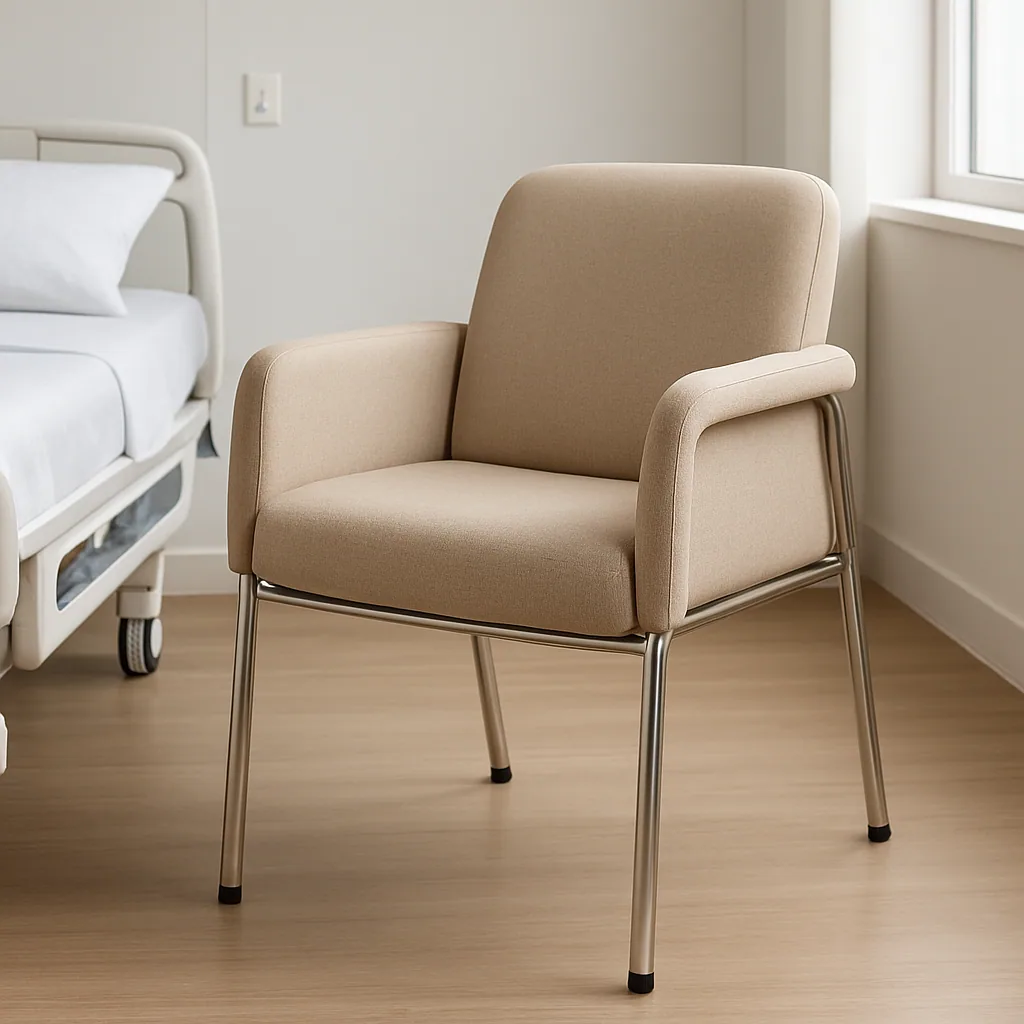
Patient Chairs
Patient seating for ward rooms, recovery areas, waiting areas, and healthcare facilities.
View product