
A procurement manager is preparing a large order for a hospital ward project. They receive two quotations for "overbed tables." The product photos look nearly identical, but one price is 20% lower. Which is the better deal? The answer is often hidden in details the photos don't show: tabletop material, base stability, caster quality, packing method, and the total shipping volume (CBM).
In my experience, this is a common scenario in healthcare furniture procurement. Overbed tables seem like simple items, but they are used daily by patients and staff. A small mistake in specification can lead to repeated complaints, while a misunderstanding in the quotation can erase any perceived cost savings.
The best overbed table for a hospital ward is not simply the cheapest or best-looking model. It is the one that fits the ward layout, hospital bed use, cleaning needs, and stability requirements, with a quotation basis that is clear enough for bulk procurement.
This guide will walk you through the practical details that experienced buyers and suppliers confirm before placing an order for hospital overbed tables. We will cover how to match the table to your ward, what material and functional details to check, and how to compare quotations beyond the unit price.
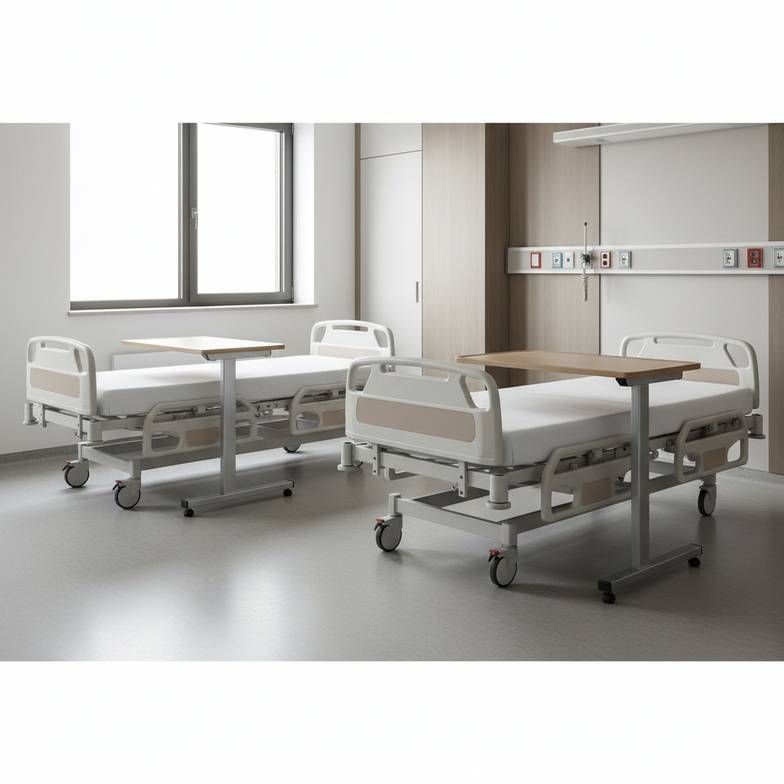
Which Type of Overbed Table Fits Your Ward Use and Bed Layout?
The first step is to match the table type to its intended room function and compatibility with your existing ward furniture, not just its appearance in a catalog. The most common mistake buyers make is choosing a table in isolation, forgetting it must function within a specific room layout alongside beds and cabinets.
From a supplier's perspective, before I can recommend a model, I need to know more than just "overbed table." Is it for a general patient ward, a long-term nursing home, or a fast-paced clinic recovery room? The answer changes the recommendation. A table that’s perfect for occasional meal service may not be stable enough for a patient who leans on it daily.
The key risk is a layout mismatch that repeats across dozens or hundreds of rooms. The table's base might not slide easily under the hospital beds, or its width could interfere with bedside cabinets and caregiver access.
- Practical Buyer Action: Before sending an RFQ, prepare a simple room-by-room or department-based furniture list. Note the type of hospital beds being used and the space available around them.
- Supplier-Side Operational Detail: When we receive a project inquiry, we ask if the overbed tables are part of a larger ward furniture package. This helps us suggest models with compatible base designs and height ranges that work with the beds and cabinets, preventing layout problems before they happen.
- Decision Point: You must decide if a basic table is sufficient or if you need a model with better mobility and adjustment for more active or high-dependency wards. The cost difference is often less than the cost of user complaints.
What Material and Tabletop Details Matter for Hospital Cleaning and Daily Use?
Confirm the tabletop material, surface finish, and edge protection in writing; do not rely on photos. Hospital ward furniture endures a level of wear and cleaning that residential or office furniture never does. A tabletop that looks good in a picture might not withstand frequent disinfection or daily spills.
Buyers sometimes focus on the price difference between materials like MDF, particleboard with laminate, or ABS plastic, but they overlook the finish and edge quality. The edge is a critical failure point. A poorly sealed edge can allow moisture to seep in, causing the material to swell and the surface to peel. This not only looks bad but can also create a hygiene risk.
I have seen cases where a buyer chose a cheaper option, and within a year, the edges were chipped and the surfaces were stained, leading to the hospital client demanding replacements.
- Practical Buyer Action: Ask your supplier for a clear description of the tabletop material, surface finish (e.g., HPL, melamine), and edge construction (e.g., PVC banding, polyurethane molded edge). Request close-up photos of the edge finish.
- Supplier-Side Operational Detail: For our quotations, we specify the material used for the tabletop and frame. A term like "wood-grain finish" isn't enough. We state the core material and the type of laminate or coating so the buyer knows exactly what they are comparing.
- Risk & Trade-Off: A premium tabletop with a seamless, molded edge might cost more upfront, but it reduces the long-term risk of damage from cleaning chemicals and moisture, lowering replacement and maintenance costs.

How Should Buyers Check Stability, Mobility, Casters, and Height Adjustment?
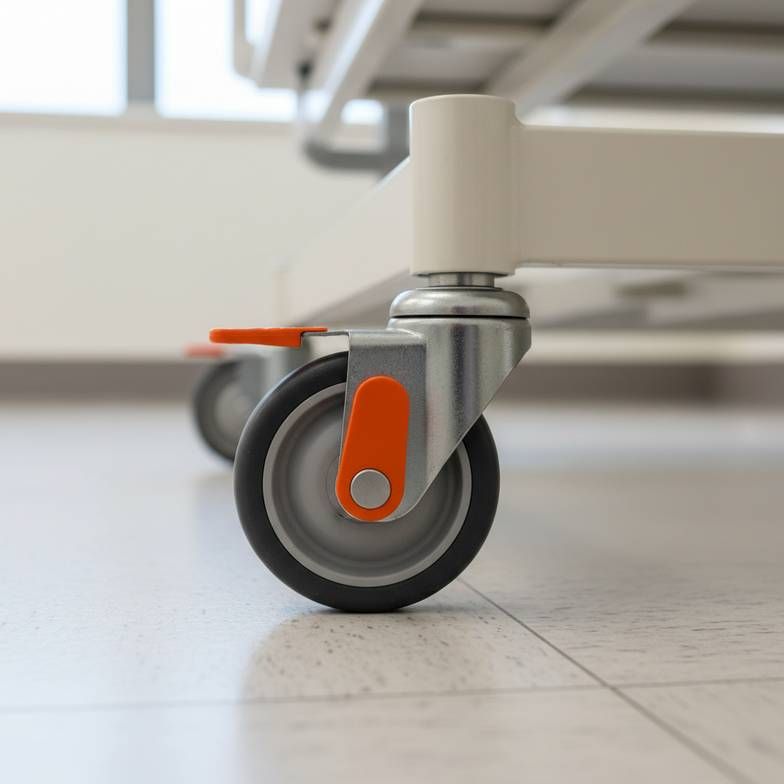
Evaluate an overbed table's function by its components: the base structure, caster quality, and adjustment mechanism. A table that looks sturdy can still feel wobbly in use if the base is poorly balanced or the frame connections are weak. For a product that is moved and adjusted multiple times a day, these functional details are not minor.
Many buyers check if a table has wheels but forget to ask about the quality of the casters or if brakes are included. In a busy ward, noisy or stiff casters are a nuisance, and the absence of locking brakes can be a safety issue. Similarly, a height adjustment mechanism that is clunky or difficult for a patient or nurse to operate defeats its purpose.
From the supplier side, we know that these small mechanical parts are often where manufacturers cut costs. A quotation that doesn't specify caster type or adjustment method is incomplete.
- Practical Buyer Action: Ask your supplier to confirm the base design (e.g., H-base, C-base), caster configuration (e.g., number of casters, material, with or without brakes), and the type of height adjustment mechanism (e.g., spring-assisted, gas lift, manual lock).
- Supplier-Side Operational Detail: When a buyer is considering a large order, we suggest a sample for them to test the actual movement and adjustment function. This is the best way to confirm that the product's daily usability meets the ward's expectations.
- Decision Point: Decide on the required level of mobility and ease of use. For wards with high patient turnover or complex care, investing in smoother casters, brakes, and a gas-spring assisted lift provides a far better user experience and is often worth the extra cost.
Why Can Similar Product Photos and Low Prices Hide Different Configurations?
Compare quotations using a detailed specification matrix, not just by product name and price. A low price is often a signal of a different, more basic configuration. Two tables can look identical in a small photo while having completely different tabletop materials, frame thickness, caster types, and packing methods.
I often have to explain to buyers why our quote might be higher than a competitor's. It's usually not because our margin is higher, but because our standard model includes features like durable PU-molded edges, better-quality casters with brakes, or a more robust frame. These details are not immediately obvious but are critical for long-term use in a hospital. The cheaper quote may be for a basic version with these features as optional, unlisted extras.
To make a true apples-to-apples comparison, you must break down the product into its core components and confirm that both suppliers are quoting for the same level of quality and features.
- Practical Buyer Action: Use a comparison table to list the key specifications for each supplier's offer. This forces clarity and reveals what might be missing from a lower-priced quote.
- Supplier-Side Operational Detail: A professional supplier's quotation should clearly separate included items from optional ones. Before confirming an order, we provide a proforma invoice or order confirmation sheet that lists all agreed-upon specifications, from tabletop material to caster type and packing method.
- Risk & Trade-Off: The risk of choosing the lowest price without matching specifications is that you may end up with a product that doesn't meet your project's requirements, leading to disputes, user complaints, or the need for costly replacements.
Overbed Table Specification Comparison Matrix
Use this matrix to ask for the same information from every potential supplier. This helps you compare offers fairly.
| Comparison Item | Supplier A Quote | Supplier B Quote | Buyer Notes & Requirements |
|---|---|---|---|
| Tabletop Material | e.g., ABS, HPL on MDF | ||
| Tabletop Edge Finish | e.g., PVC band, PU molded | ||
| Frame Material & Finish | e.g., Powder-coated steel | ||
| Base Design | e.g., H-base, C-base | ||
| Caster Configuration | e.g., 4x 2" twin-wheel casters | ||
| Brake Option | e.g., 2 casters with brakes | ||
| Height Adjustment | e.g., Gas spring, manual knob | ||
| Included Hardware | Are all tools/screws included? | ||
| Packing Method | e.g., Disassembled, 1pc/carton | ||
| Carton Size (L×W×H) | Needed for CBM calculation | ||
| Gross Weight per Carton | Needed for freight quote | ||
| Total CBM for Order | Crucial for total landed cost | ||
| Trade Term | e.g., FOB, CIF, DDP | ||
| Lead Time | From order confirmation |
After filling this out, you will have a much clearer picture of what each price truly includes.
What Packing, Carton, CBM, and Shipping Details Should Buyers Confirm Before Ordering?
Always request packing details, carton dimensions, and total CBM before you finalize a supplier comparison. Freight is a major component of the total landed cost for furniture, and it's calculated by volume (CBM) or weight. A product with a low unit price but inefficient, bulky packing can end up being more expensive than a competitor's offer.
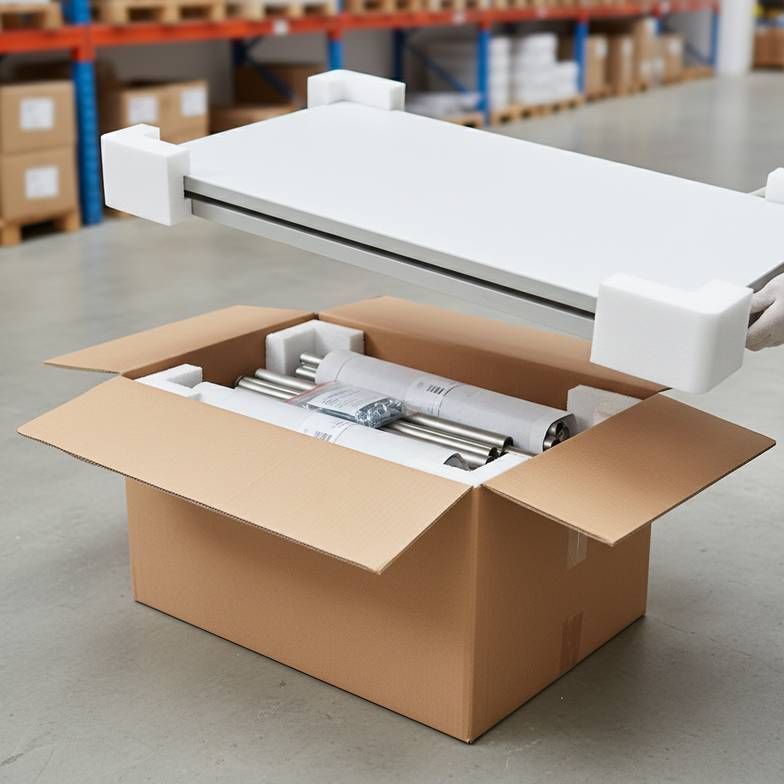
Packing is often the last thing buyers think about, but it's the first line of defense against shipping damage. For overbed tables, the tabletop corners, frame, and casters are all vulnerable. I've seen orders arrive with scratched surfaces and bent frames simply because the supplier used thin cartons with inadequate internal protection.
Confirming whether the product is shipped assembled, semi-assembled, or fully disassembled (knocked-down) is also critical. A disassembled table takes up much less shipping volume, significantly reducing freight costs, but requires assembly on-site.
- Practical Buyer Action: Before confirming an order, ask the supplier for packing photos, carton dimensions (L×W×H), gross weight per carton, and the total CBM for your order quantity.
- Supplier-Side Operational Detail: When we prepare an export quotation, we calculate the CBM based on our standard export packing. This data is included in the quote so the buyer can get an accurate freight estimate from their forwarder. We know that a quotation without CBM data is incomplete for an international buyer.
- Decision Point: Compare the total landed cost (product cost + shipping + duties/taxes), not just the EXW or FOB unit price. A slightly higher FOB price with compact, protective packing may result in a lower final cost.
What Should Buyers Check Before Confirming a Bulk Order or Choosing a Supplier?
Choose a supplier who asks clarifying questions before quoting, not just one who sends a fast price. A reliable project supplier acts more like a consultant. They will want to understand your needs—ward type, bed layout, project timeline—to ensure the product they recommend is the right fit. A supplier who quotes a price based only on a product name and quantity is signaling that they are focused on the transaction, not the solution.
Before you approve bulk production, you should have a comprehensive checklist of all agreed-upon details. This checklist becomes your final confirmation document and the basis for any pre-shipment inspection. For a large project, consistency is key; you need to be sure that the 100th table is identical to the first.
A red flag for me is when a supplier cannot provide a detailed specification sheet or is vague about packing details. This suggests they may not have strong control over their production and export processes.
- Practical Buyer Action: Use a pre-order checklist to consolidate all project, product, quotation, and shipping details. Send this to your supplier for final confirmation before issuing a purchase order or making a payment.
- Supplier-Side Operational Detail: We do not start production until the buyer has approved a detailed proforma invoice or sales contract that lists every key specification, from the Pantone color of the frame to the markings on the shipping cartons. This process prevents misunderstandings.
- Risk & Trade-Off: Taking the time to confirm all details upfront feels slower than just accepting a quick quote. However, it dramatically reduces the risk of receiving the wrong product, dealing with shipping damage, or facing project delays.
Pre-Order Buyer Checklist for Overbed Tables
- Project & Use Information
- [ ] Ward/Department use confirmed (e.g., General Ward, ICU, Nursing Home)
- [ ] Quantity per room/project confirmed
- [ ] Hospital bed type and layout considered
- Product Specification
- [ ] Table model/type confirmed
- [ ] Tabletop material and finish confirmed
- [ ] Tabletop edge protection confirmed
- [ ] Frame material and finish confirmed
- [ ] Base design and dimensions confirmed
- [ ] Caster type and brake option confirmed
- [ ] Height adjustment mechanism confirmed
- [ ] List of all included hardware/accessories confirmed
- Quotation & Packing
- [ ] Unit price and currency confirmed
- [ ] Trade Term (e.g., FOB, CIF) confirmed
- [ ] Packing method (e.g., disassembled, 1pc/carton) confirmed
- [ ] Carton dimensions, Gross Weight, and Total CBM received
- Approval & Production
- [ ] Lead time confirmed
- [ ] Sample (if required) approved
- [ ] Pre-shipment inspection requirements discussed
Conclusion: Look Beyond the Price Tag
Choosing the right overbed tables for a hospital ward is a decision that impacts daily operations, patient satisfaction, and your project's budget. A product photo and a low unit price are only the beginning of the story. The real value is found in matching the product's configuration, materials, and functional design to the specific needs of your healthcare environment.
The most successful procurement outcomes I've seen happen when buyers act like project partners. They don't just ask "how much?"; they ask "what is included?" and "how does this fit our ward?"
Before you confirm your next order, use the checklists and comparison tools in this guide. Confirm the ward use, bed layout, material, stability, casters, height adjustment, included items, packing, CBM, and trade terms. A good supplier will be able to provide these details clearly and confidently. This level of diligence ensures that the product you receive is the product your project truly needs.
At CareFurnex, we specialize in supporting healthcare project buyers. If you are planning a ward furniture project, you can send us your room list, quantity needs, and functional requirements. We can help you review product categories and configurations to ensure your procurement is built on a solid, practical foundation.
Written by
CareFurnex Team
CareFurnex Team shares practical knowledge about hospital beds, patient room furniture, medical trolleys, clinic furniture, and healthcare facility procurement for international B2B buyers.
Related Products
Hospital Beds
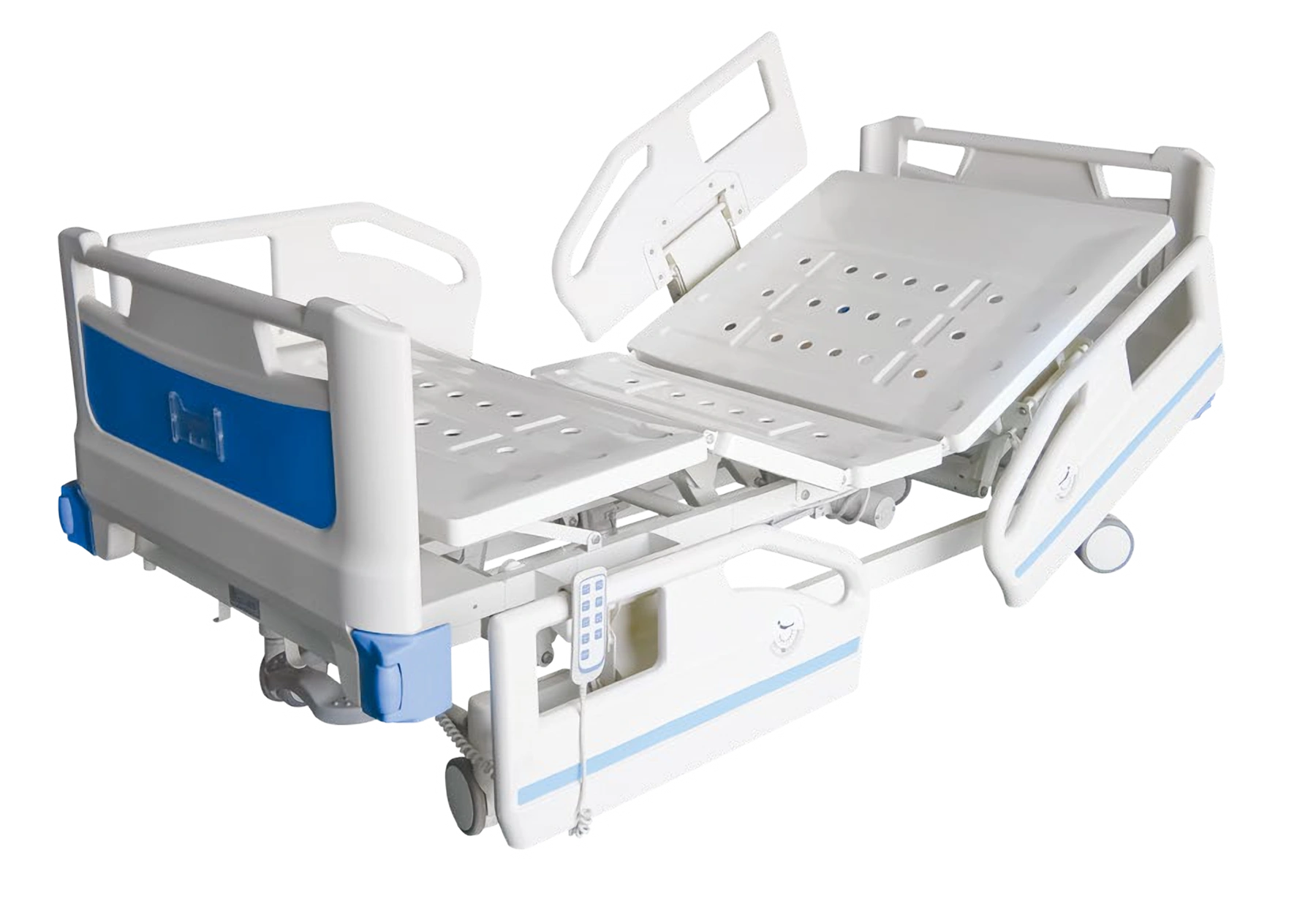
General-purpose patient beds for inpatient wards and standard hospital rooms.
View product
Electric Hospital Beds
Motorized multi-function beds with electric height, backrest, and leg adjustment options.
View product
Ward Furniture
Complete ward furniture options for patient rooms and hospital care areas.
View product