
When sourcing patient transport equipment, the discussion of a folding stretcher vs transfer stretcher often creates confusion for procurement managers. You are faced with two products that sound similar, but choosing the wrong one can lead to significant budget waste, operational inefficiencies, and even serious safety risks for patients and staff. The solution is to understand that these two items are designed for fundamentally different jobs, making a direct feature-for-feature comparison a critical mistake.
The primary difference is their intended use: a folding stretcher is a lightweight, portable first-aid tool for emergency evacuation, while a transfer stretcher is a robust piece of medical equipment for transporting, treating, and managing patients within a hospital. One is for temporary emergency use; the other is for daily, integrated clinical workflow.
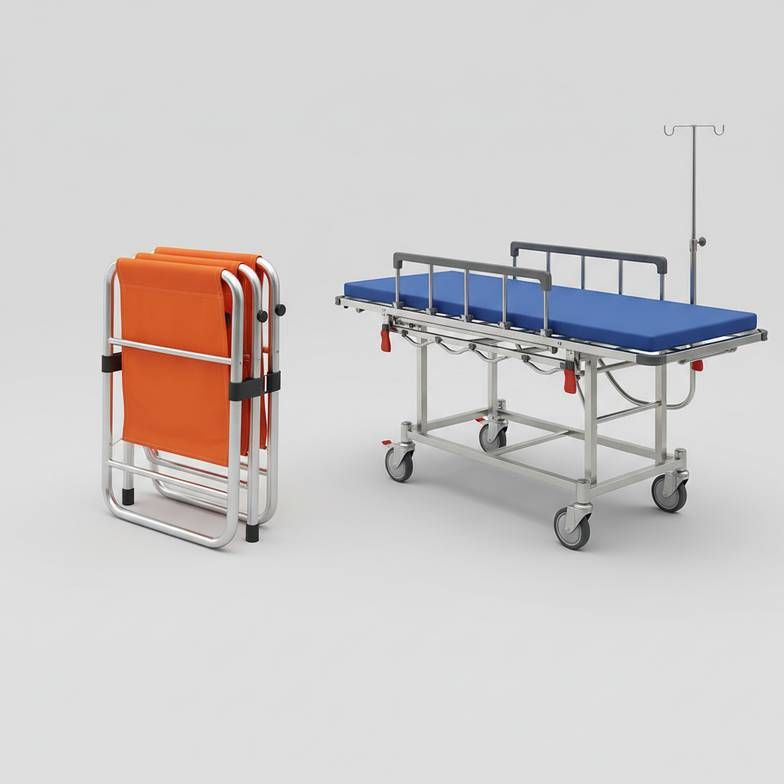
Now that you have the direct answer, let's explore why this distinction is so critical for any hospital project contractor, distributor, or procurement team. Instead of just listing specs, we will focus on the "job-to-be-done" for each and the procurement risks you need to manage. This will help you choose the right equipment with confidence.
What Is a Folding Stretcher Actually For?
It’s easy to see a low price for a folding stretcher and consider it a bargain for your new hospital ward or clinic. However, putting this simple device into a demanding, high-traffic hospital environment for daily patient transport would be a costly error, likely resulting in staff strain and patient dissatisfaction. The key is to recognize its true purpose: emergency response and temporary first aid.
A folding stretcher is a basic, lightweight, and highly portable device engineered for one primary task: evacuating an injured person from an incident location to a point of primary medical care. Its design prioritizes portability, compact storage, and low cost over long-term patient comfort and caregiver ergonomics.
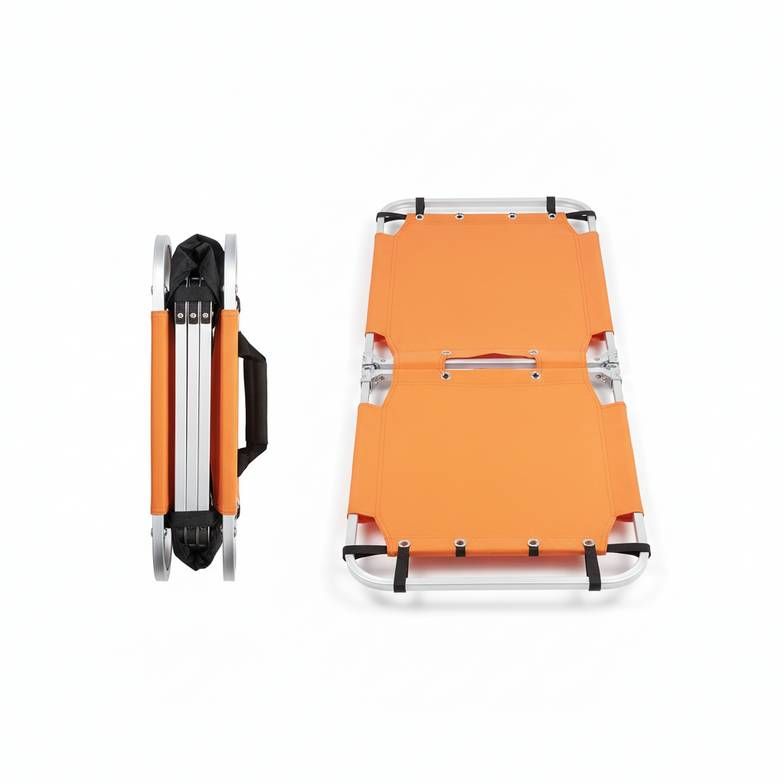
The Job-to-be-Done: Rapid, Portable Evacuation
Think of a folding stretcher not as hospital furniture, but as a core component of a first-aid or emergency response kit. Its typical environments are not hospital hallways, but rather ambulances, sports stadiums, industrial sites, schools, and public buildings where it is kept on standby for unforeseen emergencies.
Based on my experience supplying these for large-scale public facilities, their value is in their simplicity. They are designed to be grabbed, unfolded, and used by two or more people in seconds. The core function is to carry a person from Point A (the site of an injury) to Point B (an ambulance or a first-aid station). It is a single-use-per-event tool.
The design features directly support this job:
- Lightweight Frame: Usually made from aluminum alloy to be easily carried by rescuers.
- Durable Fabric: The patient surface is typically a high-strength oxford fabric or vinyl that is easy to clean but offers minimal cushioning.
- Foldable Design: Most models fold in half or even into fourths, allowing them to be stored compactly in a vehicle or a small closet.
Key Procurement Criteria for a Folding Stretcher
When sourcing folding stretchers, the technical requirements are straightforward. Unlike complex medical devices, the decision-making process is simple and low-risk. A common request I receive from distributors is for a "basic, durable ambulance stretcher," and these are the points we focus on:
- Weight & Folded Dimensions: How much does it weigh, and how small does it get when folded? For emergency teams, portability is paramount. A stretcher under 10 kg (22 lbs) is ideal.
- Load Capacity: A standard capacity is around 159 kg (350 lbs). You must ensure it meets the minimum standard, but it is rarely a complex specification.
- Material Quality: The frame should be a sturdy aluminum alloy, and the fabric should be tear-resistant and waterproof.
- Simplicity: It should have few or no moving parts beyond the folding mechanism and maybe simple patient straps. Complexity is a liability in an emergency.
The procurement risk here is low. If you choose a poor-quality folding stretcher, it might fail prematurely. However, because it is not integrated into daily clinical workflows, the consequence of failure is limited to the cost of the unit itself.
Why is a Transfer Stretcher a Critical Piece of Medical Equipment?
When a hospital tender document specifies a "patient stretcher," it is tempting to find the most affordable product that carries that name. This is where the most significant procurement mistakes are made. Opting for an under-specced transfer stretcher can introduce enormous risks to patient safety, cause long-term ergonomic injuries to nursing staff, and disrupt hospital workflows. Understanding the transfer stretcher's role as a mobile care platform—not just a transport trolley—is essential for making a wise investment.
A transfer stretcher, also correctly called a patient trolley or transport stretcher, is a multi-functional, wheeled medical device used for transporting, examining, treating, and holding patients within a hospital. Its design is entirely focused on ensuring patient safety, promoting caregiver ergonomic health, and integrating seamlessly into the complex hospital environment.
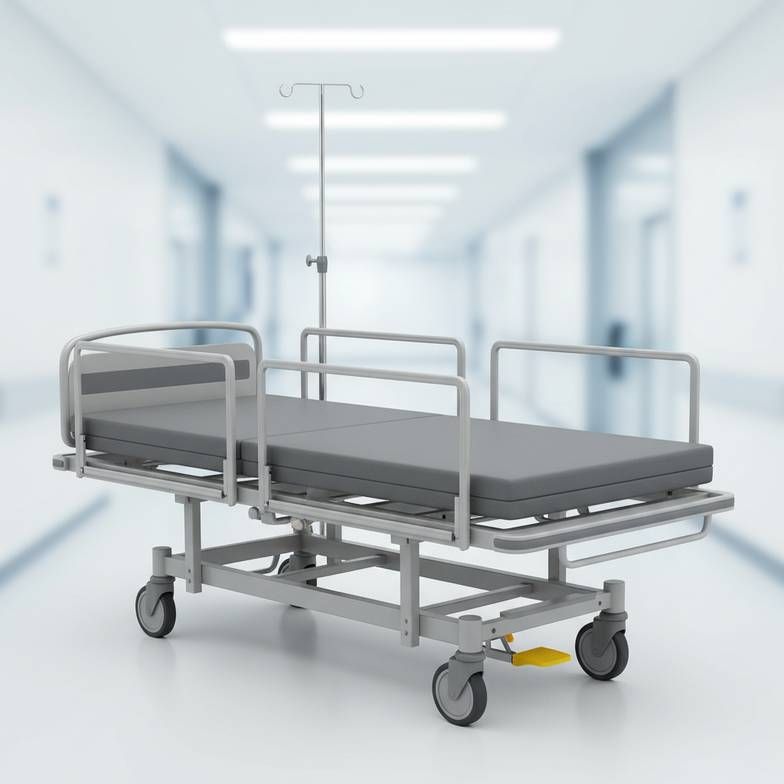
The Job-to-be-Done: Safe and Efficient In-Hospital Logistics
The transfer stretcher is the backbone of patient logistics inside the hospital. Its job is to move patients safely and comfortably between critical departments, such as from the Emergency Room to Radiology, from the Operating Room to the recovery area, or from a ward to the ICU.
However, its function extends far beyond simple transport. It acts as a temporary bed and a mobile clinical workspace. On this platform, nurses will:
- Monitor vital signs.
- Administer IV medication.
- Perform minor procedures.
- Ensure the patient is secure and comfortable, sometimes for extended periods in a busy ER.
This is the central point in the folding stretcher vs transfer stretcher debate. The transfer stretcher is used repeatedly every day, by numerous staff members, with vulnerable patients. Its design must account for this heavy, critical usage.
Key Procurement Criteria for a Transfer Stretcher
When I work with hospital project contractors, I always emphasize that selecting a transfer stretcher is a risk-mitigation exercise. The initial cost is secondary to long-term safety and functionality. A cheap transfer stretcher is one of the most expensive mistakes a hospital can make.
Here are the non-negotiable features to specify in your tender or purchase order:
| Feature | Importance & Practical Benefit |
|---|---|
| Height Adjustment | Critical. Hydraulic or electric systems allow a single nurse to adjust the stretcher height to match a bed or examination table. This enables a safe, level patient transfer and eliminates manual lifting, the leading cause of back injuries among nursing staff. |
| Full-Length Side Rails | Non-negotiable for safety. Sturdy, lockable side rails are the primary defense against patient falls during transport. They must be easy for staff to operate but impossible for a disoriented patient to lower accidentally. |
| High-Quality Casters | Essential for maneuverability. Look for large-diameter (150mm+) casters with a central braking system. This allows staff to lock all four wheels with a single pedal press. An optional fifth-wheel steering system dramatically improves control in long corridors. |
| Thick Mattress | Key for patient comfort and care. The mattress should be at least 7-10 cm thick, made of high-density foam, and covered with a waterproof, medical-grade material. This provides pressure relief for patients who may be on the stretcher for hours. |
| Accessory Integration | Defines it as a clinical tool. The ability to mount an IV pole, an oxygen tank holder, and a monitor shelf transforms the stretcher from a simple trolley into a mobile care station. |
The procurement risk for a transfer stretcher is extremely high. A failure in the side rails can lead to a patient fall and a lawsuit. A failed hydraulic system can cause staff injuries. Poor-quality casters can lead to a collision or make the trolley impossible to steer efficiently, causing daily frustration and delays.
Folding Stretcher vs Transfer Stretcher: A Direct Comparison for Procurement?
You have two quotations on your desk: one for a folding stretcher at $100 and another for a hydraulic transfer stretcher at $1,500. Without a clear framework, justifying the 15x price difference to a finance department can be difficult. The reality is, a direct comparison is misleading; you are evaluating two entirely different categories of equipment.
Comparing a folding stretcher vs transfer stretcher is like comparing a handheld fire extinguisher to a building-wide sprinkler system. Both address fire safety, but they have completely different applications, capabilities, and associated risks. Let's use a procurement-focused table to make the distinction clear.
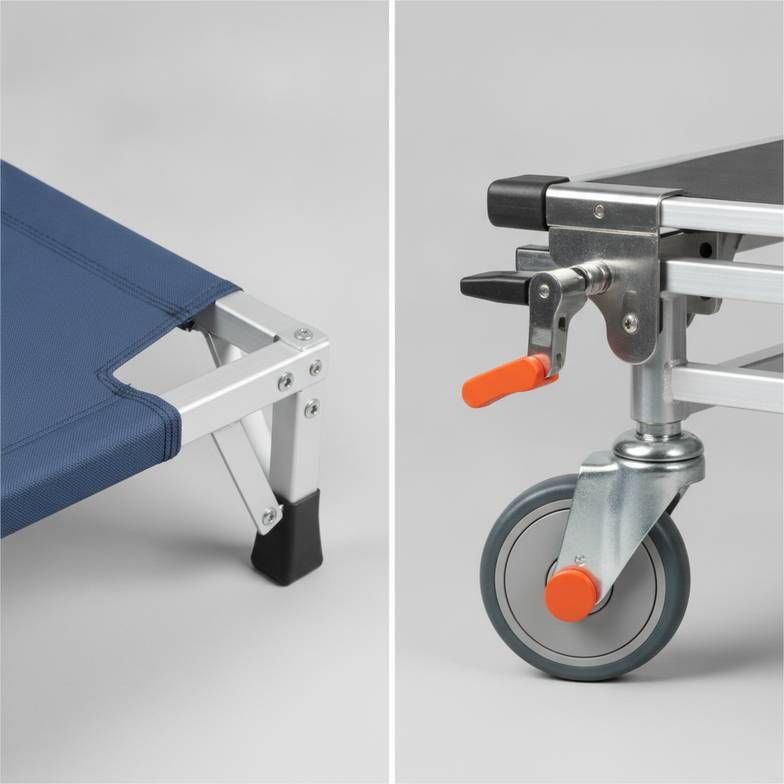
Head-to-Head Comparison Table
| Feature | Folding Stretcher | Transfer Stretcher (Patient Trolley) |
|---|---|---|
| Primary Use Case | Emergency evacuation, field first aid | In-hospital patient transport & treatment |
| Environment | Outside hospital, ambulance, standby emergency | Hospital (ER, OR, Radiology, Wards) |
| Structure | Simple, lightweight, foldable frame | Robust, heavy-duty wheeled chassis |
| Height Adjustment | None (fixed low height, requires lifting) | Hydraulic or Electric lift system |
| Patient Surface | Thin canvas or vinyl sheet | Thick, high-density foam mattress |
| Safety Features | Minimal (optional patient straps) | Lockable full-length side rails, central braking system |
| Maneuverability | Carried by 2-4 people | Pushed by one person; advanced caster & steering systems |
| Accessories | Typically none | Integrated IV pole, oxygen tank holder, monitor shelf |
| Procurement Risk | Low (risk of product failure) | High (risk of patient injury, staff injury, workflow disruption) |
| Typical Cost | Low ($) | High ($$$$) |
The Cost vs. Risk Calculation
The most important takeaway from this comparison is the relationship between cost and risk.
- Folding Stretcher: The total cost of ownership is essentially its low purchase price. The risk is functional—it might not last as long as a better-made model.
- Transfer Stretcher: The purchase price is only one part of the total cost calculation. The true cost must account for the risks of failure. A cheap stretcher that leads to a single patient fall or staff back injury will cost the hospital exponentially more than the initial savings.
When I consult with clients preparing tenders, I always advise them to build their specifications around risk mitigation. Mandating features like a reliable hydraulic system, robust side rails, and a central braking system protects the hospital, its staff, and its patients. It's the definition of a smart, long-term investment.
Frequently Asked Questions
Can a folding stretcher be used in a hospital?
Yes, but only for its designed purpose: as standby equipment for mass casualty events or emergency building evacuations. It should never be used for the routine, daily transport of patients between departments, as it lacks the necessary safety and ergonomic features.
What is the main safety feature to look for in a transfer stretcher?
The two most critical safety features are lockable, full-length side rails to prevent patient falls during transport and a reliable central braking system to secure the stretcher firmly during patient transfers from a bed or table. Never compromise on these two features.
Is a hydraulic or electric transfer stretcher better?
Both are vastly superior to manual or screw-lift stretchers because they eliminate staff strain. Hydraulic systems are extremely reliable, cost-effective, and require no external power. Electric systems offer a smoother, quieter, push-button adjustment, which can be a premium feature for certain care environments. The choice often comes down to budget and workflow preference.
How do I choose the right casters for a transfer stretcher?
Look for large-diameter casters, ideally 150mm (6 inches) or 200mm (8 inches), as they roll more easily over elevators and floor thresholds. A central braking system that locks all four wheels with one pedal is a must. For enhanced control, a model with a steering lock or a fifth-wheel system will significantly improve maneuverability in long hospital corridors.
Conclusion
Ultimately, the choice in the folding stretcher vs transfer stretcher debate is not a choice at all—it's a classification of need. The first question you must ask is not "Which stretcher is better?" but "What is the job this equipment must perform?" If the job is emergency evacuation, a folding stretcher is the correct tool. If the job is safe, efficient, and routine patient transport within a hospital, then a high-quality transfer stretcher is the only responsible option. Making the right decision is a crucial exercise in managing procurement risk, ensuring long-term value, and prioritizing the safety of both patients and the healthcare staff who care for them.
If you are sourcing patient transport solutions for a hospital project or preparing a tender, getting the specifications right from the start is the most important step. At CareFurnex, we specialize in helping procurement managers, distributors, and project contractors select practical hospital furniture that meets international standards. Contact us with your project requirements, and we can provide the technical details and comparative data you need to make a safe and informed decision.
Written by
CareFurnex Team
CareFurnex Team shares practical knowledge about hospital beds, patient room furniture, medical trolleys, clinic furniture, and healthcare facility procurement for international B2B buyers.
Related Products
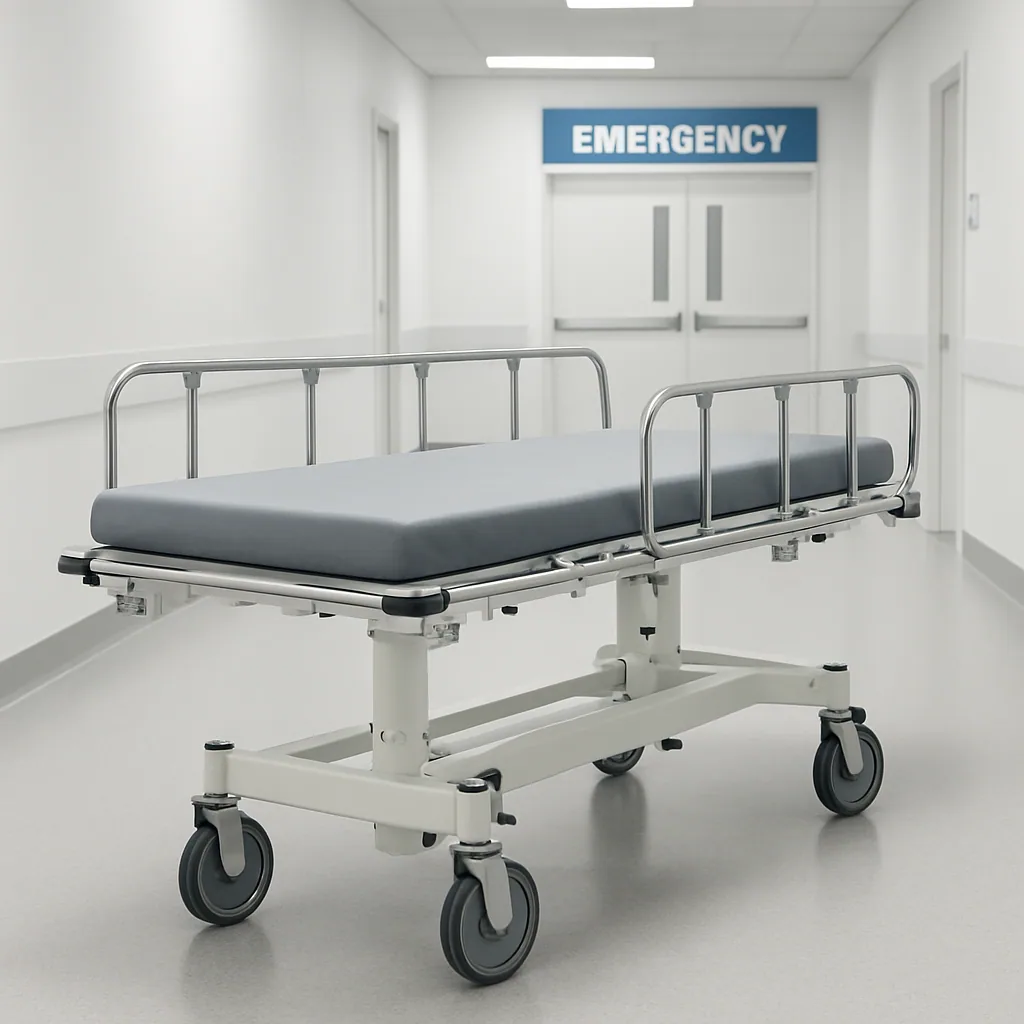
Hospital Stretchers
Patient transfer stretchers for emergency rooms, wards, clinics, and healthcare projects.
View product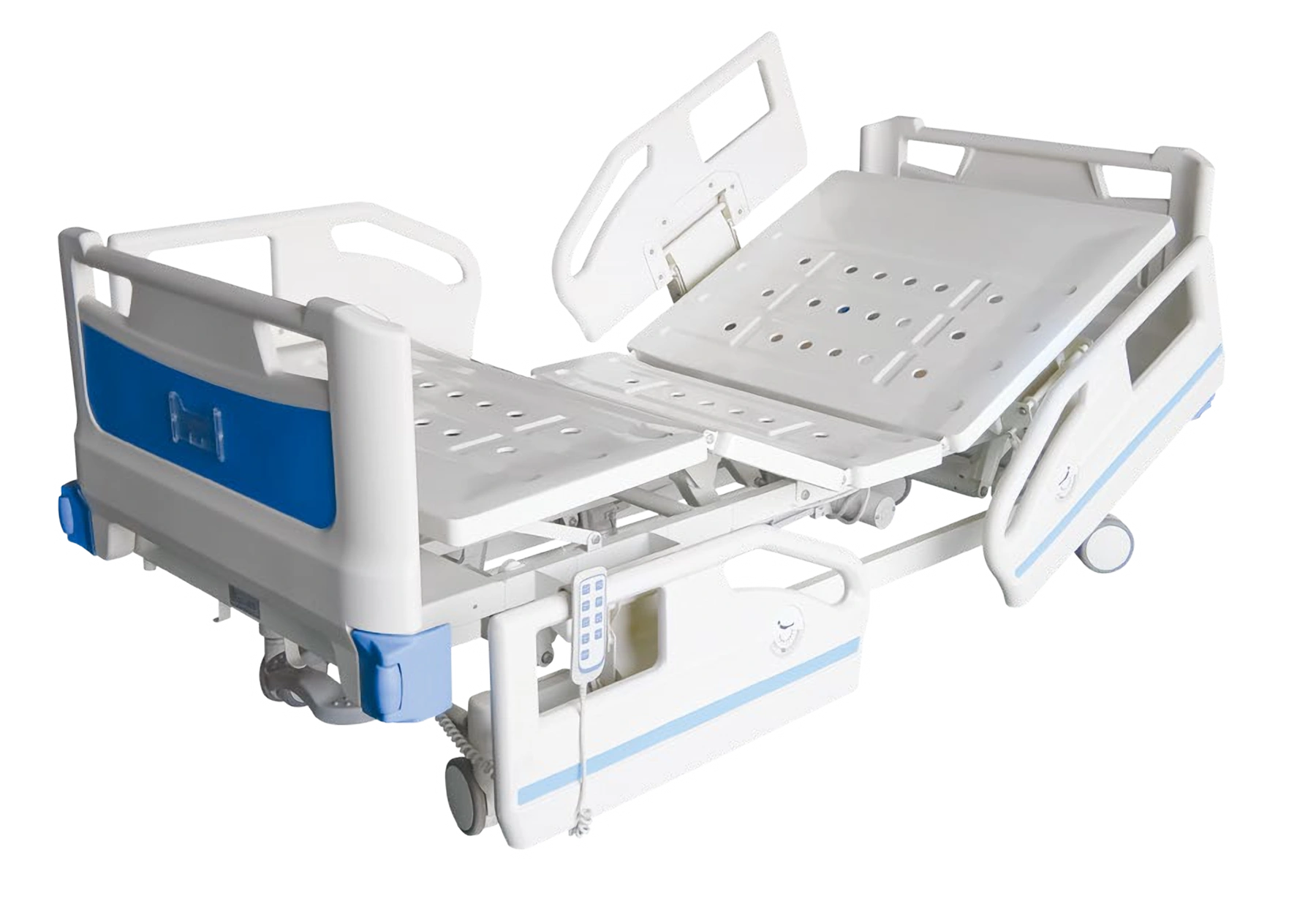
Hospital Beds
General-purpose patient beds for inpatient wards and standard hospital rooms.
View product
Ward Furniture
Complete ward furniture options for patient rooms and hospital care areas.
View product