
A buyer might compare two medical trolley quotations and see "locking casters" listed on both. The trolley that is $50 cheaper seems like the logical choice. But six months after delivery, the maintenance department starts getting calls about wheels that are noisy in the corridors, brakes that don't hold securely, or casters that have jammed after routine cleaning.
These issues rarely come from a faulty product. They come from a specification mismatch. The term "medical-grade caster" can be interpreted differently by suppliers and doesn't always refer to a single, official standard. It can hide significant differences in material, durability, and safety features. The first complaints from clinical staff are almost never about the drawers-they are about the daily frustrations of a trolley that is hard to move or won't stay put.
When selecting medical trolley wheels and brakes, the goal is to match the components to the specific department's environment and tasks. For a reliable choice, check the wheel material (e.g., TPR for quiet wards, PU for durability), confirm the brake is a total-lock mechanism for stability, and verify the wheel diameter is suitable for the travel routes in your facility.
From our side as a supplier, we see this is where a small detail in the quotation can lead to a large problem after delivery. A good procurement process for trolleys involves looking past the cabinet and drawers to the mobility system underneath. Clarifying the wheel and brake specification before you order is one of the most practical ways to reduce future complaints and replacement costs.
Why Doesn't One Trolley Wheel Work for Every Hospital Department?
The assumption that one "good" wheel works everywhere is a common mistake. A hospital is not a single environment; it's a collection of highly specialized zones with conflicting needs.
A wheel that is perfect for one area can be a problem in another:
- Patient Wards: The priority is reducing noise. Harder wheels that clatter on tile floors can disturb resting patients. Here, a softer material like Thermoplastic Rubber (TPR) is often a better fit.
- Transport & Logistics: For trolleys moving heavy supplies down long corridors, durability and ease of rolling are key. A harder, more durable Polyurethane (PU) wheel might be more appropriate.
- CSSD & Cleaning Areas: These trolleys are constantly exposed to water and harsh cleaning chemicals. The primary concern is hygiene and longevity. The wheel material must resist degradation, and the caster bearings should be sealed to prevent contamination.
A single, generic "medical-grade" specification on a bulk order of trolleys is a red flag. It suggests the supplier hasn't considered how the trolleys will be used in different parts of your facility.
How Do Wheel Material and Diameter Affect Daily Use?
Two of the most important details on a caster specification sheet are the wheel material and its diameter. These are not minor technical points; they directly impact staff effort and patient experience.
Wheel Material: The most common options are TPR (Thermoplastic Rubber) and PU (Polyurethane).
- TPR Wheels: These are softer and offer quieter operation, making them ideal for patient-facing areas. They also tend to be non-marking on most hospital flooring.
- PU Wheels: These are harder and more durable, offering a higher load capacity and better resistance to wear over long distances. They are a good choice for transport, laundry, or general supply trolleys.
Wheel Diameter: Common sizes are 100mm (approx. 4 inches) and 125mm (approx. 5 inches). While a small difference, it has a large practical effect. A 125mm wheel makes it much easier for staff to push a fully loaded trolley over an elevator gap, a door threshold, or uneven flooring. The smaller 100mm wheel may be adequate for trolleys that stay within a single room, but can become a point of frustration for staff moving equipment between departments.
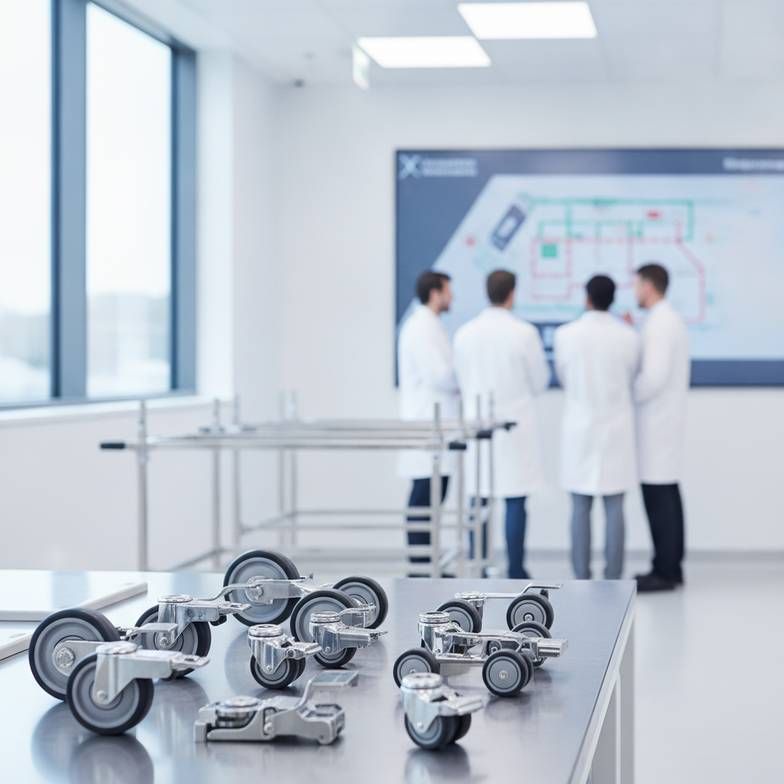
What's the Real Difference Between a Standard Brake and a Total-Lock Brake?
This is a key safety detail buyers often miss. A quotation that just says "locking casters" is incomplete. You need to know what it locks.
- Standard Wheel Brake: This type of brake simply stops the wheel from rotating. However, the caster housing can still swivel freely. A trolley with only wheel brakes can pivot or shift unexpectedly, even when "locked."
- Total-Lock Brake: This mechanism locks both the wheel rotation and the swivel action of the caster housing. When engaged, the trolley becomes a stable, immobile platform.
I would always ask which type is included. For any trolley that will be used as a work surface-for preparing medications, holding instruments, or supporting equipment-a total-lock brake is considered best practice for creating a stable work surface. A simple wheel brake is only suitable for "parking" a trolley that is not in active use.
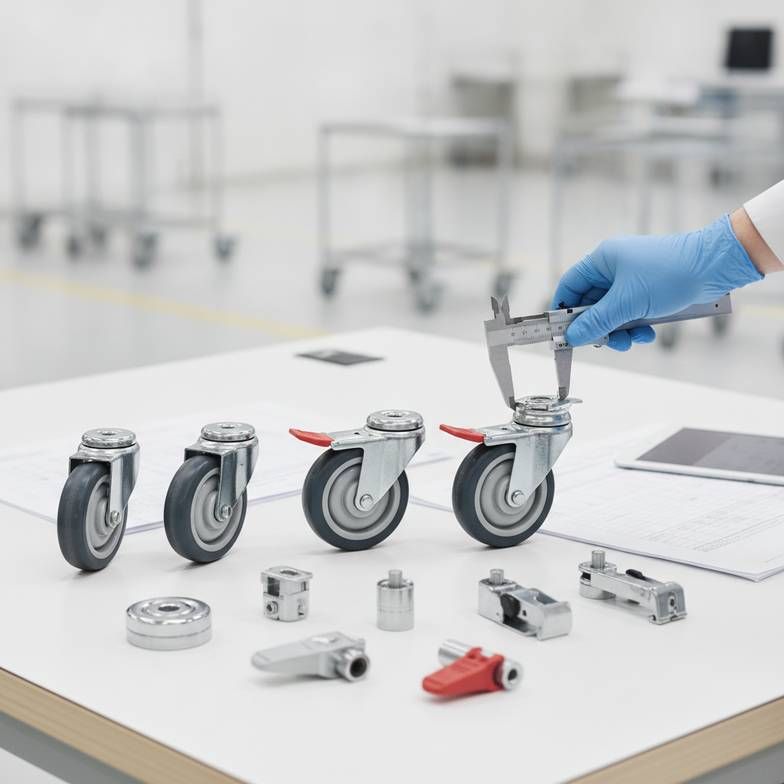
What Key Features Should I Check for Specialized Areas?
Beyond the basics, certain hospital environments have requirements that affect the caster specification.
For CSSD, Labs, and High-Hygiene Zones: The main concern is contamination and long-term function. Ask if the casters have sealed bearings. Unsealed bearings have small gaps where hair, dust, and liquids can enter, eventually causing the wheel to jam. Sealed bearings are protected, making them more durable under frequent, intensive cleaning and reducing crevices where dirt and debris can accumulate.
For Operating Rooms, ICUs, and Areas with Sensitive Electronics: For these areas, you should confirm if the trolleys are fitted with anti-static or conductive casters. Standard casters can build up static electricity as they roll. These specialized casters are designed to mitigate the risk of electrostatic discharge (ESD), which is a concern around sensitive electronic equipment. This is not a standard feature and usually needs to be specified in your inquiry.
A Practical Checklist for Comparing Trolley Quotations
When you have multiple quotations, use this checklist to compare them on a true like-for-like basis. Ask your potential suppliers to fill in these details if they are missing. This helps you move the conversation from a simple price comparison to a value comparison.
| Specification to Check | What to Confirm with Supplier | Why It Matters for Hospital Use |
|---|---|---|
| Wheel Material | "Is this wheel made from TPR for quietness, or PU for higher durability?" | Affects noise in patient wards, potential for floor marking, and resistance to cleaning chemicals. |
| Brake Type | "Does this trolley have a 'total-lock' brake that secures both the wheel and the swivel?" | A total-lock brake helps prevent the trolley from pivoting, making it a more stable work surface for staff. |
| Bearing Type | "Are the caster bearings sealed?" | Sealed bearings help prevent hair and dust from jamming the wheel, improving long-term smooth operation. |
| Wheel Diameter | "What is the diameter (e.g., 100mm, 125mm)? Is it suitable for our facility's thresholds?" | A larger diameter makes the trolley easier to push over long distances and navigate common obstacles. |
| Anti-Static Property | "For trolleys in our OR/ICU, are these casters specified as anti-static?" | Helps mitigate static discharge, a concern around sensitive medical equipment. |
Preparing Your Inquiry for Medical Trolleys
Sending a vague inquiry like "quote for 50 medical trolleys" will likely result in a generic, and possibly unsuitable, quotation. To help us, and any other supplier, provide you with a truly useful proposal, it helps to prepare a few key details first.
Before you request a price, try to gather the following information:
- Quantity per Department: How many trolleys are for the ER, for patient wards, for the OR, etc.?
- Primary Use: Will the trolley be used for general transport, bedside procedures, instrument storage, or as a mobile computer station?
- Environment Details: Note the flooring type (e.g., vinyl, tile) and any concerns about noise levels.
- Known Obstacles: Mention if trolleys will need to frequently cross high door thresholds or long distances between buildings.
Providing this context allows a supplier to recommend a configuration that will perform well in your specific environment, rather than just quoting the cheapest standard model. This simple preparation step makes the entire procurement process more efficient and reduces the chance of sourcing a product that doesn't meet your staff's needs.
Written by
CareFurnex Team
CareFurnex Team shares practical knowledge about hospital beds, patient room furniture, medical trolleys, clinic furniture, and healthcare facility procurement for international B2B buyers.
Related Products
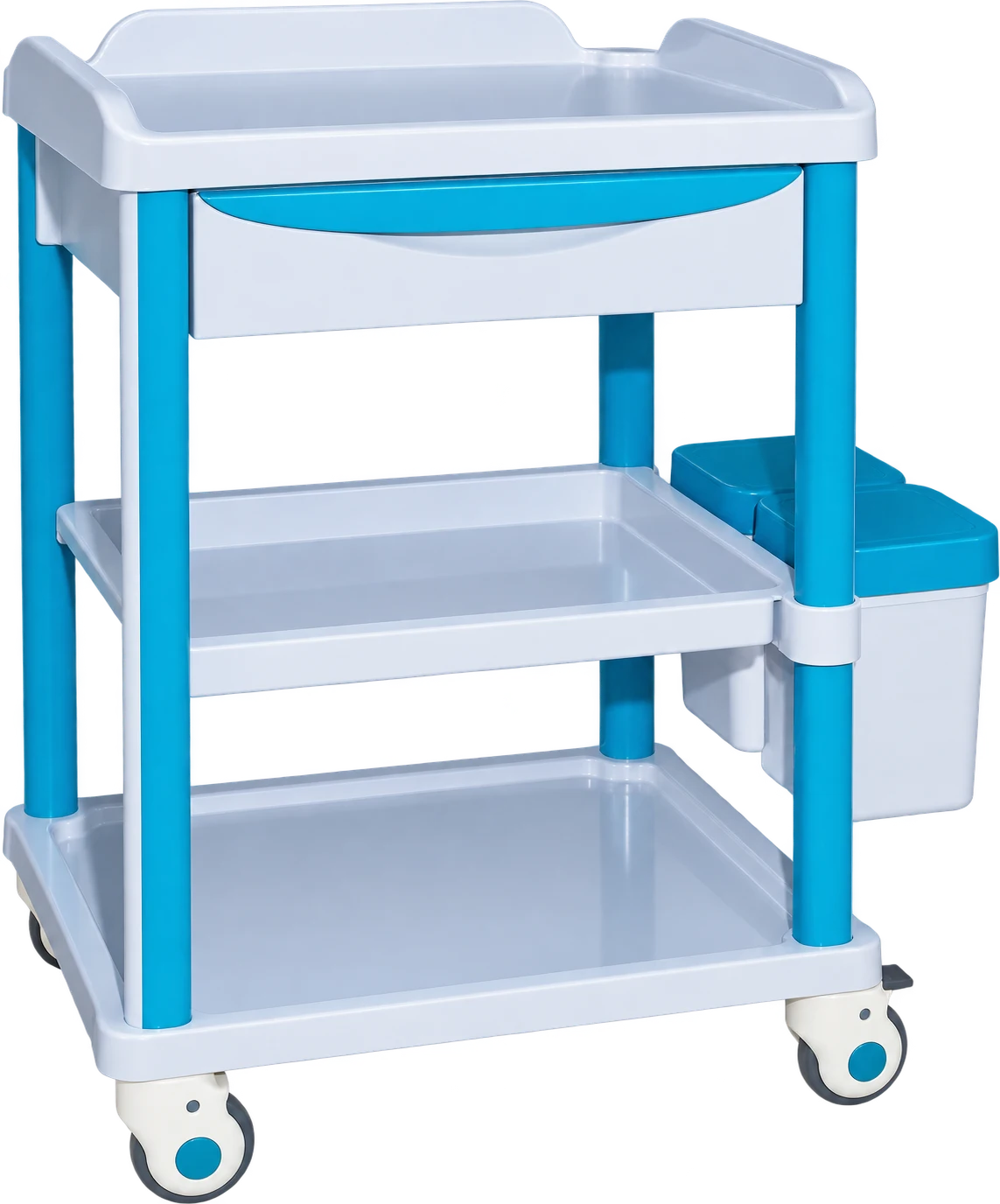
Medical Trolleys
Mobile carts for nursing rounds, treatment supplies, medicines, and clinical tools.
View product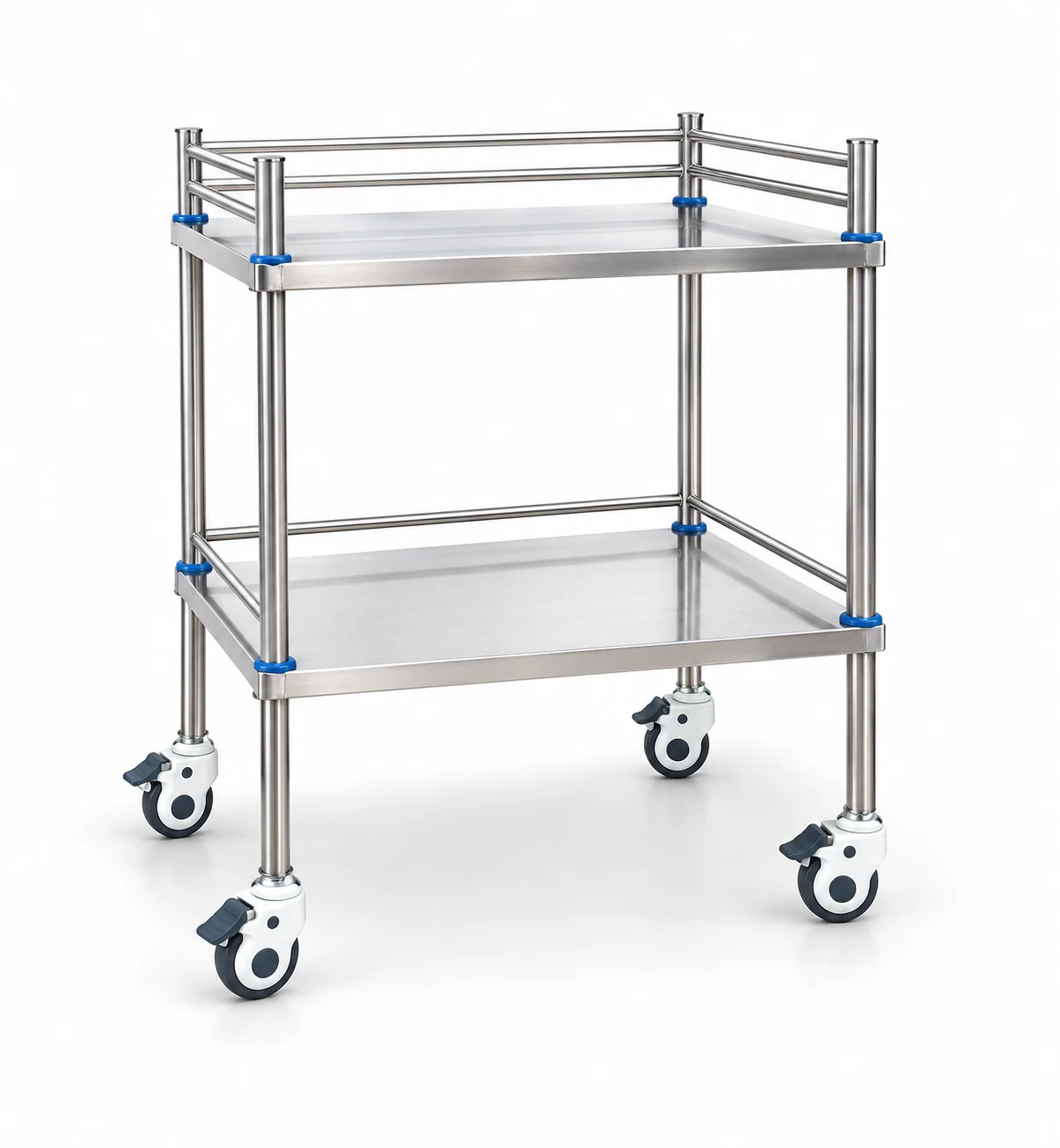
Stainless Steel Trolleys
Compare stainless steel trolleys by model, stated dimensions and configuration.
View product
Hospital Beds
General-purpose patient beds for inpatient wards and standard hospital rooms.
View product