
You've ordered medical trolleys, but a faulty lock could create a safety incident. A simple "lock test" check on a QC report doesn't tell you if it's truly reliable.
The most practical pre-shipment quality control points for a medical trolley lock are checking the engagement feel, testing its holding power, and inspecting the pedal mechanism. These checks ensure the lock is easy for staff to use, holds the trolley securely, and will withstand daily clinical demands.
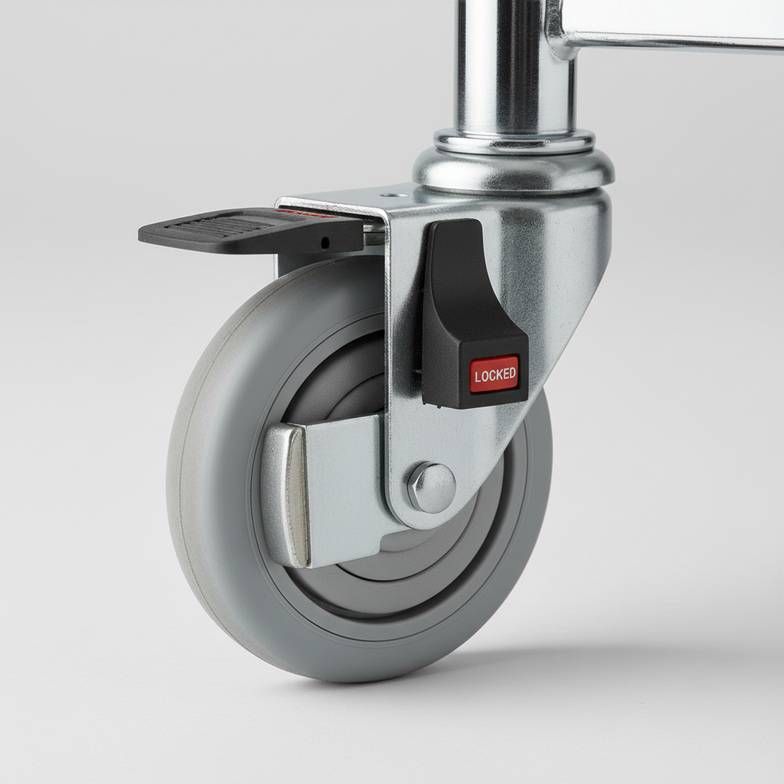
So, you see a "pass" on the lock test in the QC report. That's a good start. But does "pass" mean the lock is right for a busy ICU, or just that it functions on a factory floor? A lock that works isn't the same as a lock that is effective, safe, and easy for your nursing staff to use hundreds of times a week. The real details that determine reliability are often missed in a generic check. Let's explore the specific questions you should be asking to make sure your trolleys are safe and dependable from day one.
Why is a "one-size-fits-all" lock test a risky approach for medical trolleys?
Your supplier says the casters passed their lock test. But the test for a light-duty linen cart's lock shouldn't be the same as for a heavy, fully-loaded anesthesia cart.
A single, generic lock test is risky because it ignores the trolley's specific job. A lock for an ICU emergency cart needs much higher durability and holding power than one for a ward's meal trolley. Matching the lock's function to its daily workflow is key to preventing failures.
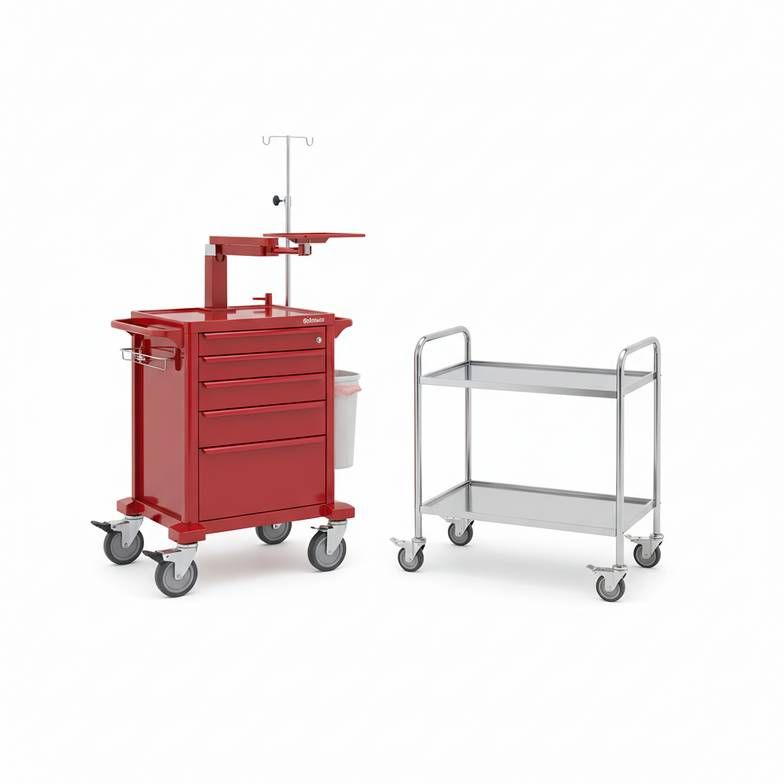
In my experience talking with hospital procurement managers, a common point of confusion is assuming all casters are created equal. We've seen issues arise when a facility orders trolleys for multiple departments using one generic specification. The reality is that the function of the trolley dramatically changes the risk profile of its components, especially the locks. A failure is not just a failure; its consequence depends entirely on the context.
High-Stakes vs. Low-Stakes Environments
Think about an emergency cart. During a code blue, that cart is moved quickly and then needs to be rock-solid stationary. A lock failure here could mean the cart drifts, making it harder for staff to access critical supplies. Now, compare that to a linen cart. If its lock is a bit weak, the cart might slowly drift in a hallway. It's an inconvenience, but not a direct threat to patient safety during a procedure. The QC test must account for this difference in risk.
The Impact of Load and Frequency
The weight and use frequency also matter. A fully-stocked anesthesia cart can be very heavy. Its locks must hold that weight without slipping. A treatment trolley might be lighter but is used constantly, meaning its lock mechanism is engaged and disengaged dozens of times a day. For this trolley, the durability of the pedal mechanism is just as important as its holding power.
| Trolley Type | Primary Risk of Lock Failure | Key QC Focus |
|---|---|---|
| Emergency Cart | Drifting during a critical event, compromising access. | Absolute holding power, fast engagement. |
| Anesthesia Cart | Unwanted movement during a procedure. | Holding power under heavy load. |
| Medication Cart | Unsecured cart in a busy ward. | Ease of use to ensure staff compliance. |
| Linen/Utility Cart | General inconvenience, hallway obstruction. | Basic function and long-term durability. |
How do you connect different lock types to real-world hospital risks?
You see terms like "total-lock" or "central-locking" on quotes. But choosing the wrong one can lead to a trolley drifting during a procedure or being hard for nurses to maneuver.
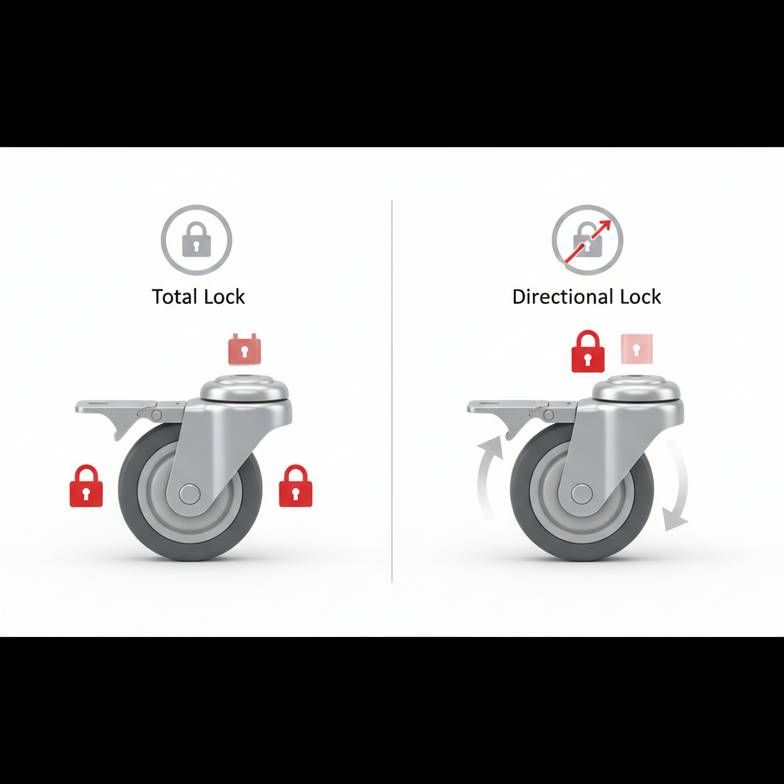
Connect lock types to risks by understanding their function. A total-lock caster stops both rolling and swiveling, ensuring stability. A directional-lock only stops swiveling, aiding straight-line travel. A central-locking system provides fast, one-pedal security for critical-care carts, reducing user error.
A procurement request I often see just says "trolley with locking casters." This is too vague and leaves the decision up to the supplier, who may not fully understand your department's workflow. To reduce risk, you need to be more specific. Understanding the basic types of locking mechanisms allows you to specify a solution that directly addresses the challenges your staff faces every day.
Understanding the Main Lock Mechanisms
Most medical trolley locks fall into a few categories. A total-lock caster is the most common for general use. When you press the pedal, it locks both the wheel from rolling and the swivel mechanism from turning. This provides solid stability. A directional-lock caster is different; it only locks the swivel. This is useful when you need to push a long trolley down a corridor, as it keeps the wheels aligned and prevents the cart from veering sideways. Finally, a central-locking system connects all the caster locks to a single pedal. This is common on high-end emergency and anesthesia carts, allowing a nurse to secure the entire trolley with one easy foot action.
Matching the Lock to the Workflow
By specifying the lock type, you are actively managing risk. For a cart that needs to remain completely stationary next to a patient bed, a total-lock is non-negotiable. For transporting items long distances, adding one or two directional-lock casters improves maneuverability and staff efficiency. For a critical care cart where speed and ease of use are paramount, a central-locking system minimizes the chance of a tired or rushed staff member failing to lock all four wheels individually.
| Lock Type | How It Works | Best For... | Risk It Mitigates |
|---|---|---|---|
| Total-Lock | Locks wheel rotation and swivel. | Carts needing to be stationary (e.g., treatment, medication). | Drifting and unwanted movement during use. |
| Directional-Lock | Locks swivel only. | Long carts needing straight-line movement (e.g., case carts). | Difficulty steering and maneuvering in hallways. |
| Central-Locking | One pedal locks all casters at once. | Critical care carts (e.g., emergency, anesthesia). | Human error; ensures all wheels are locked quickly. |
What tangible QC checks should you request from your supplier before shipment?
You want to ensure the trolley locks are reliable. But just asking to "check the lock" is too vague for a QC inspector and leaves you vulnerable to getting a product that's hard to use.
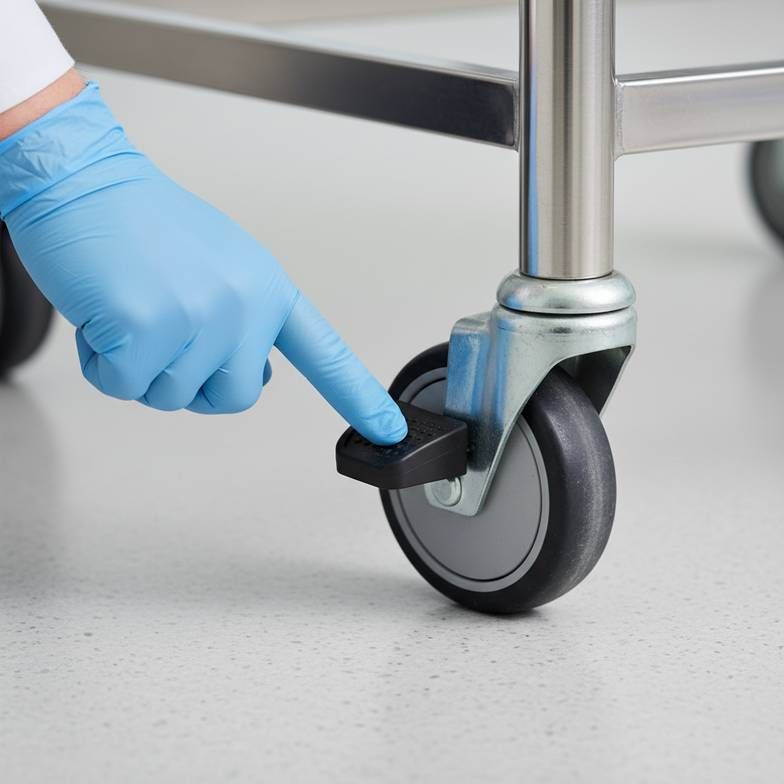
Request tangible checks like: confirming a clear "click" when the lock engages and disengages, verifying it can be operated by foot without extreme force, and testing that it holds the trolley stationary on a smooth floor. These specifics ensure real-world usability, not just a lab pass.
After helping many clients finalize their orders, I've learned that clarity is the best way to reduce risk. Instead of assuming your supplier knows what a "good lock" means to you, provide them with a simple checklist of practical tests. These are not complex engineering tests; they are simple, observable actions that mimic how your staff will actually use the equipment. You can even ask for photos or a short video of these checks being performed.
The "Feel and Sound" Test
This is about user experience. A good lock mechanism should be easy to use.
- Check for a clear "click" sound: The lock should make an audible and tactile click when it engages and disengages. A silent or "mushy" feel suggests a weak mechanism that might not be fully locked.
- Check the pedal force: Ask the inspector to engage the lock by foot. It should not require excessive force or awkward positioning. If a lock is hard to use, busy nurses simply won't use it.
The Practical Holding Test
This test checks the lock's primary function.
- Test on a smooth surface: The test should be done on a surface similar to a hospital's linoleum floor, not rough concrete.
- Apply moderate force: Once locked, the inspector should try to push the trolley from the side. It should not roll or swivel. You don't need a machine for this; a firm push by hand is a realistic test.
Material and Assembly Inspection
This looks for potential points of failure.
- Inspect the pedal material: Is the brake pedal made of flimsy plastic or durable steel/reinforced nylon? A plastic pedal on a heavy-duty cart is a common failure point we've seen from post-sale feedback.
- Check for tightness: Ensure all bolts and nuts connecting the caster to the trolley frame are tight. A loose caster will wobble and put extra stress on the locking mechanism.
Conclusion
A detailed medical trolley lock test isn't about perfection. It's about matching the lock's function to its environment, reducing operational risks, and ensuring long-term safety and usability for your staff.
Written by
CareFurnex Team
CareFurnex Team shares practical knowledge about hospital beds, patient room furniture, medical trolleys, clinic furniture, and healthcare facility procurement for international B2B buyers.
Related Products
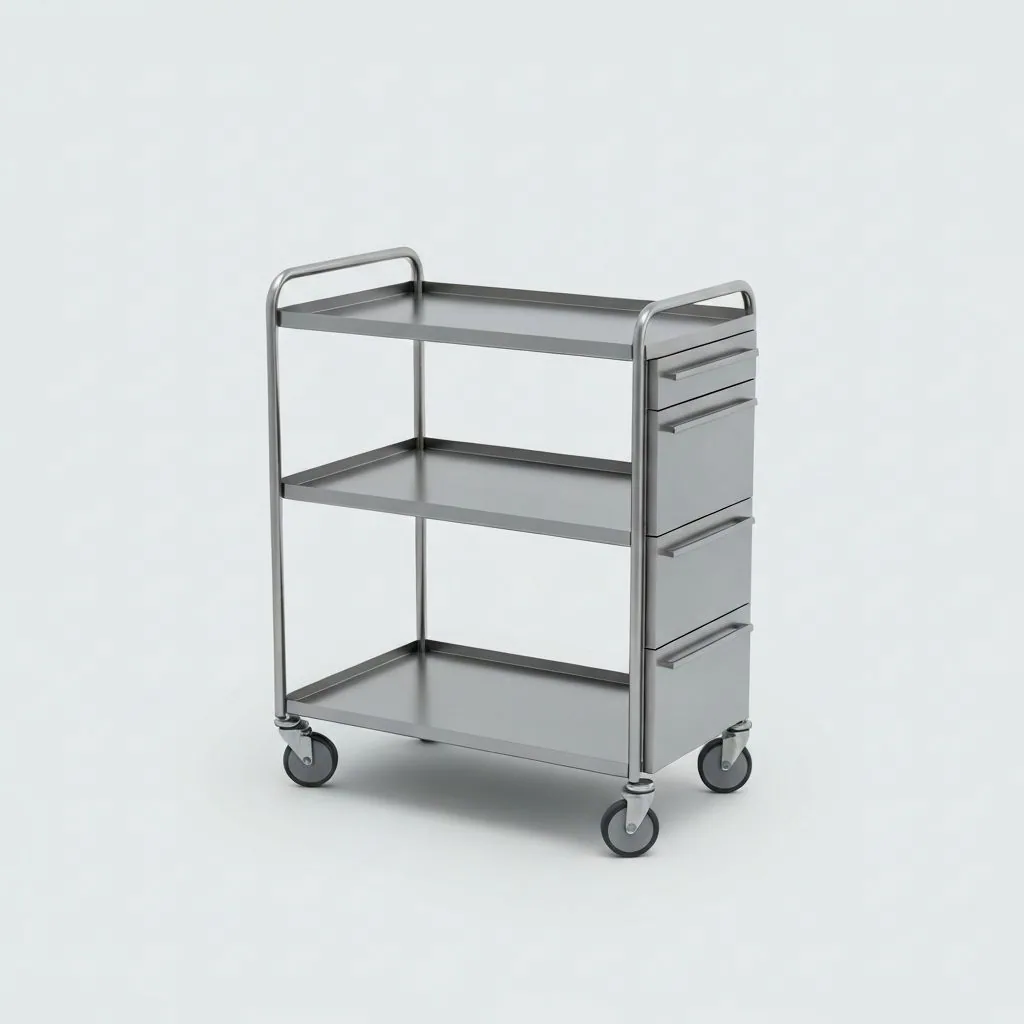
Medical Trolleys
Mobile carts for nursing rounds, treatment supplies, medicines, and clinical tools.
View productInstrument Trolleys
Mobile instrument trolleys for clinics, treatment rooms, wards, and healthcare departments.
View product
Hospital Beds
General-purpose patient beds for inpatient wards and standard hospital rooms.
View product