
Choosing the wrong medical stretcher can create workflow bottlenecks and patient safety risks. This guide simplifies the process by focusing on the questions that truly matter for your procurement.
The best way to choose a medical stretcher is to match it to its primary function within your facility. Instead of focusing on generic types, first define the specific transfer scenario: department, distance, patient condition, and staff workflow. This ensures your final choice directly supports your operational needs.
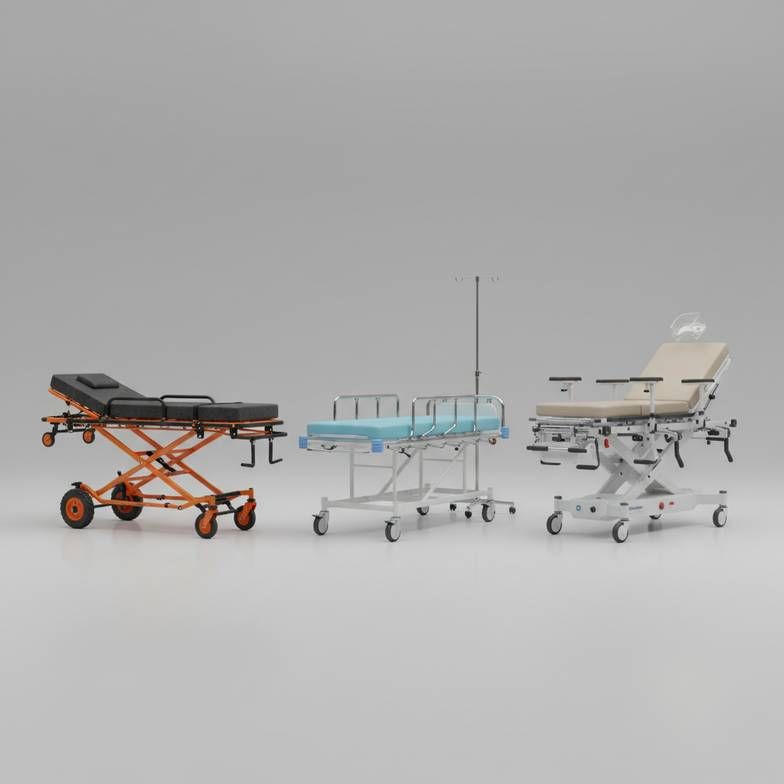
I've handled hundreds of inquiries for medical stretchers. The first question I usually get is, "What types do you have?" or "Which stretcher is the best?" While I appreciate the directness, I've learned that this approach often leads to a poor purchasing decision. The real conversation shouldn't start with the stretcher; it should start with the problem you're trying to solve.
Thinking about the stretcher's daily journey—from the ambulance bay to the ER, or from a ward to radiology—is the only way to ensure the specifications you choose will actually work in practice. Let's break down how to do that, moving from general categories to the specific details that make all the difference.
What’s the Difference Between an Emergency Stretcher and a Transport Stretcher?
You see these terms used all the time, often interchangeably. This causes confusion, and buying the wrong one creates daily friction for your staff or means you've overpaid for features you don't need.
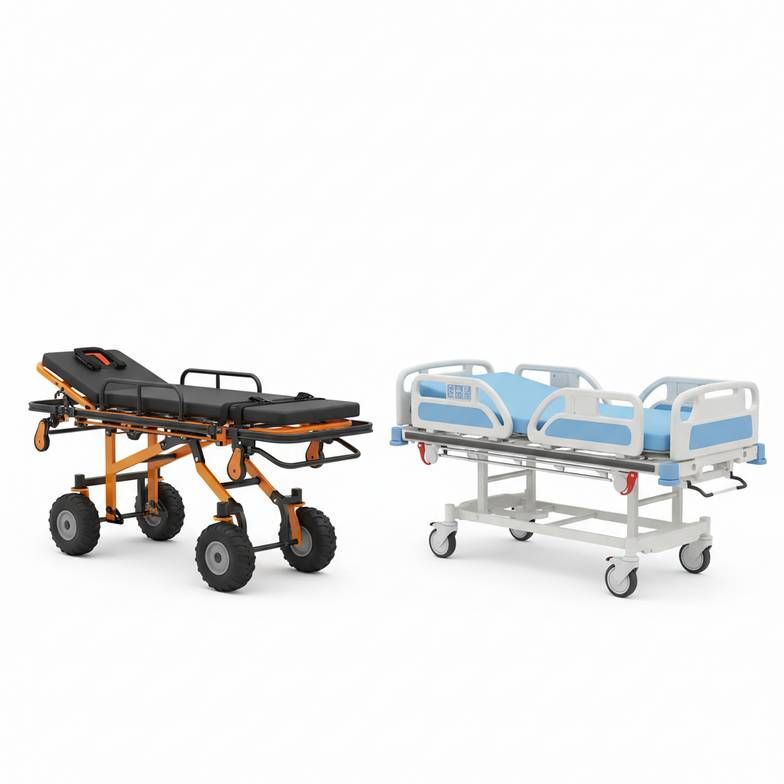
When procurement teams ask me for an "emergency stretcher," my first question is always, "Will it be used in an ambulance or just in the Emergency Department?" The answer changes everything. An ambulance stretcher needs to be lightweight but incredibly strong, often with features for navigating rough terrain and locking securely into a vehicle. The focus is on speed and durability above all else. In contrast, an intra-hospital transport stretcher prioritizes staff ergonomics and patient comfort for movement along smooth corridors. It may have simpler controls but a thicker mattress and more accessible side rails for easy transfers. Confusing the two can be a costly mistake. For example, using a heavy, feature-rich emergency stretcher for simple ward-to-ward transport can tire out staff unnecessarily over hundreds of transfers.
| Feature | Emergency Stretcher (e.g., Ambulance, ER) | Transport Stretcher (e.g., Ward, Clinic) |
|---|---|---|
| Primary Use | Rapid, high-risk patient movement | Routine, planned patient movement |
| Chassis | Lightweight but highly durable frame | Sturdy, but optimized for indoor surfaces |
| Wheels | Larger diameter, often with shock absorption | Standard casters for smooth floors |
| Mattress | Thinner, waterproof, easy to clean quickly | Thicker, more comfortable for longer waits |
How Do Procedural and Imaging Stretchers Differ from Standard Models?
Using a standard transport stretcher in a specialized department is a common problem. It can obstruct C-arms or other equipment, forcing staff to make risky patient transfers during a procedure.
Procedural stretchers offer enhanced stability and positioning for clinical interventions. Imaging stretchers have a radiolucent top, allowing X-rays to be taken without moving the patient, which is vital for safety and accuracy.
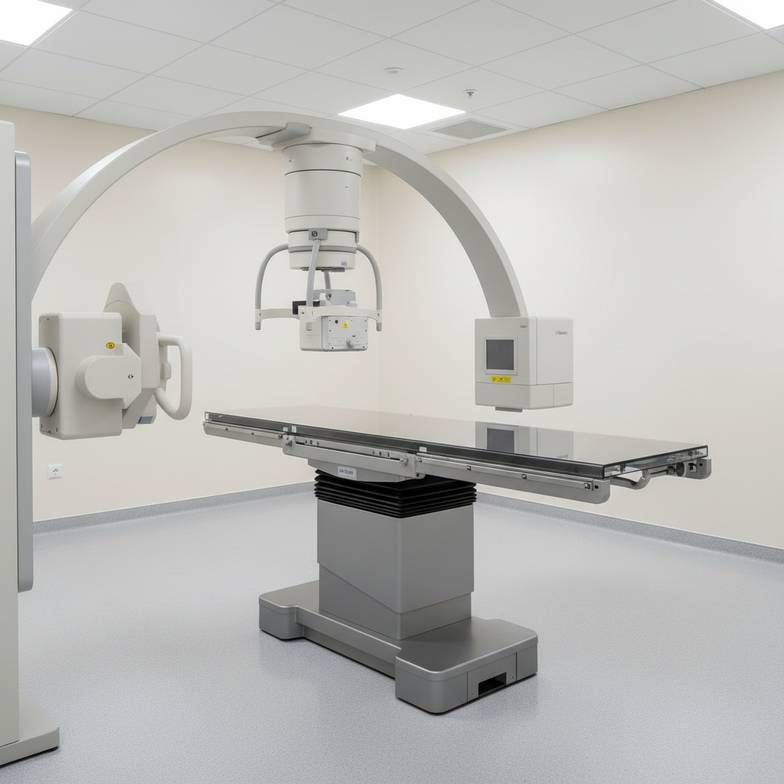
These aren't just "stretchers with extra features"; they are purpose-built tools designed to solve specific clinical challenges. For example, in a PACU (Post-Anesthesia Care Unit) or endoscopy suite, a procedural stretcher is essential. Its ability to achieve precise height adjustments, along with Trendelenburg and Reverse Trendelenburg positions, gives clinicians the access and stability they need. The side rails are also designed to drop down completely, making it easier to move a sedated patient. Trying to do this with a basic transport stretcher is inefficient and unsafe.
Similarly, an imaging stretcher is non-negotiable for any department that uses a C-arm. The radiolucent backboard allows for a clear X-ray field. A supplier I know once delivered standard stretchers for a radiology department project by mistake. It caused a huge delay because performing scans required moving every patient from the stretcher to the imaging table, completely defeating the purpose of a mobile workflow.
What Key Components Should I Scrutinize Before Buying a Medical Stretcher?
On paper, many stretchers from different suppliers look almost identical. But we often see that cheaper models fail quickly, leading to high maintenance costs, downtime, and serious safety hazards for staff and patients.
Focus on the high-stress components: the casters for maneuverability, the central braking system for reliability, the side rail locking mechanism for patient security, and the mattress material for infection control and comfort.
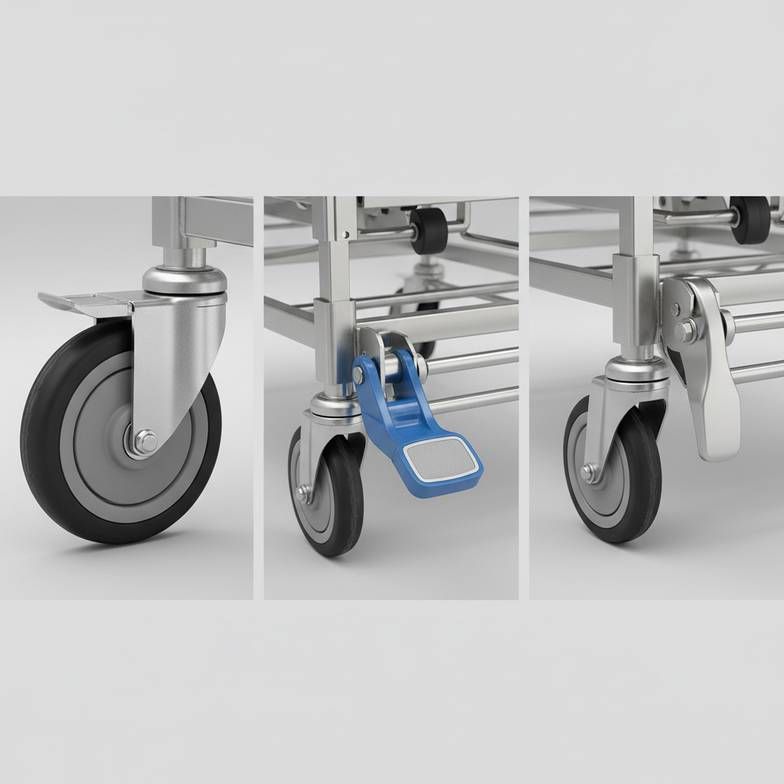
Based on feedback from our project deliveries and after-sales support, these are the parts that make or break a stretcher's performance and longevity. A low-quality quote often hides compromises here. For instance, small, hard plastic casters might save a few dollars, but they will struggle over elevator gaps and require much more effort to push, leading to staff fatigue and back injuries. A robust central braking system that locks all four wheels with a single pedal press is a non-negotiable safety feature. I have seen systems that fail to lock securely, creating a huge risk during patient transfers. The side rail mechanism is another critical point. A lock that feels flimsy or has play in it is a major red flag.
Here's what I tell buyers to look for:
| Component | Look for This (Good Quality) | Avoid This (Poor Quality) |
|---|---|---|
| Casters | Large diameter (150mm+), durable material (e.g., TPU) | Small diameter (<125mm), hard plastic |
| Braking System | Central pedal, locks all 4 wheels firmly | Individual wheel locks, flimsy pedal |
| Side Rails | Secure locking mechanism with no wobble | Loose-fitting locks, thin metal or plastic |
| Mattress | High-density foam, welded seam cover | Low-density foam, stitched seams |
How Does a Supplier's Project Support Impact Your Stretcher Purchase?
You've finally selected the perfect stretcher model for your needs. But the order is for 50 units for a new hospital wing. Now, inconsistent quality or poor logistics can derail the entire project.
A good supplier's project support is as vital as the product itself. They must provide clear packing data for logistics, guarantee spare parts, demonstrate consistent quality across a bulk order, and offer a transparent warranty.
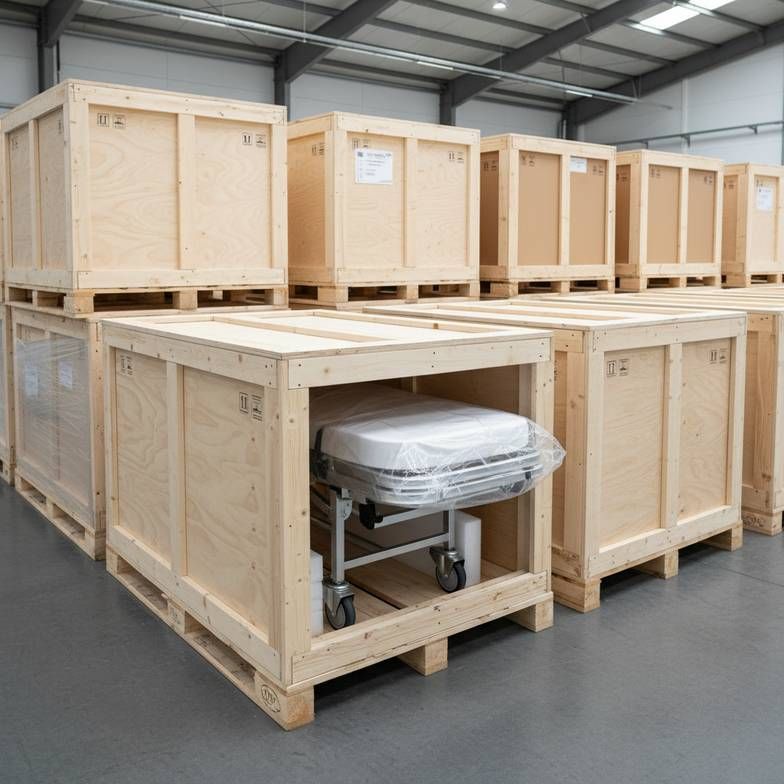
For hospital project contractors and distributors, the "product" is the entire delivered solution, not just the physical stretcher. Your reputation depends on it. When I work with a project contractor, the conversation quickly moves beyond the stretcher's features. They need to know the exact crate dimensions, gross weight, and CBM to plan container loading and storage. They need assurance that the 1st and 50th stretcher will have the exact same build quality. They need a supplier who can provide documentation for tenders and who has a clear process for supplying spare parts like casters or hydraulic pumps years down the line. A supplier who can't provide this information is a significant risk. Ask potential suppliers these questions: Can you provide a detailed packing list? What is your quality control process for bulk orders? What is your warranty, and how do you handle claims for spare parts? Their answers will tell you a lot about their reliability as a long-term partner.
Conclusion
Choosing the right stretcher is about matching features to your workflow and vetting the supplier's support. This approach ensures safety, efficiency, and real long-term value for your hospital or project.
Written by
CareFurnex Team
CareFurnex Team shares practical knowledge about hospital beds, patient room furniture, medical trolleys, clinic furniture, and healthcare facility procurement for international B2B buyers.
Related Products

Hospital Stretchers
Patient transfer stretchers for emergency rooms, wards, clinics, and healthcare projects.
View product
Hospital Beds
General-purpose patient beds for inpatient wards and standard hospital rooms.
View product
Ward Furniture
Complete ward furniture options for patient rooms and hospital care areas.
View product