
You have three quotations for a "medical trolley." One is for stainless steel, another for ABS plastic, and a third for powder-coated steel. The prices are all different. While the product photos look similar, you're not sure which material is the right choice for your hospital project, clinic, or distribution business.
This is a common procurement problem. In my experience, many buyers don't start with the wrong material; they start with an incomplete question. They ask for a "medical trolley" price before confirming the department use, drawer layout, locks, casters, accessories, and packing method. This makes comparing quotations nearly impossible and increases the risk of buying a product that doesn't meet end-user expectations.
The best medical trolley material is not the most expensive or the cheapest one. It is the material that matches the department use, cleaning requirements, configuration, packing method, and total landed cost.
This article compares stainless steel, ABS, and powder-coated steel from a B2B procurement perspective. We will explain how to choose the right material by focusing on department suitability, configuration details, and hidden costs that affect your bottom line.
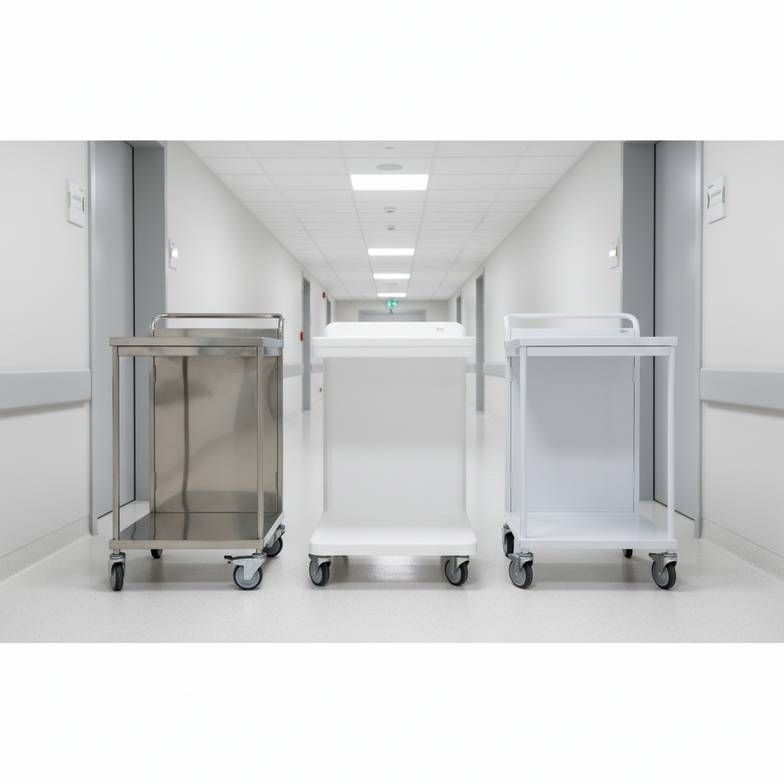
Which Medical Trolley Material Is Best for Each Department or Use Scenario?
The best material depends on the trolley's specific job. A common mistake is to treat stainless steel, ABS, and powder-coated steel as simple "good, better, best" options. A more practical approach is to match the material to the department's working environment and cleaning protocols.
From a supplier's perspective, I usually suggest buyers map out their trolley needs by department before choosing a material. A trolley for a high-moisture, heavy-cleaning area like a Central Sterile Services Department (CSSD) has different requirements than one used for general storage in a dry ward.
- Stainless Steel: Often preferred for environments with high cleaning frequency, moisture exposure, or where a sterile appearance is critical. Think of CSSD, operating rooms, or certain treatment areas. However, it's not automatically necessary for every trolley in a facility. Over-specifying it can unnecessarily increase project costs.
- ABS (Acrylonitrile Butadiene Styrene): These trolleys often have a modern, clean look with integrated drawers and accessories. They are practical for many uses like medicine distribution, general treatment, and emergency carts, offering a good balance of durability and design flexibility. The key is to confirm the quality of the ABS structure, casters, and included components.
- Powder-Coated Steel: This is a cost-effective and practical choice for many general-use areas where the environment is controlled and cleaning methods are standard. This includes general wards, clinics, and storage rooms. The main risk is the quality of the coating; if it gets deeply scratched, the exposed steel can rust.
Practical Buyer Action: Before requesting quotes, create a list of trolleys needed for each department. Note the cleaning requirements, frequency of movement, and primary function (e.g., medicine, emergency, storage). This allows you to source strategically, not just by price.
Medical Trolley Material Comparison Table
| Material | Suitable Use Scenarios | Buyer Advantages | Main Risks to Check | What to Ask the Supplier |
|---|---|---|---|---|
| Stainless Steel | Demanding or cleaning-sensitive areas (e.g., CSSD, OR), high-moisture environments. | High perceived durability and cleanability. | Higher upfront cost; can be over-specified for general use; surface can still scratch or dent if poorly packed. | "Is this material necessary for this specific department?" "How is the surface protected for shipping?" |
| ABS | General treatment, medicine distribution, emergency carts, areas wanting a modern look. | Modern design; often has integrated layouts and good handling. | Assuming photo equals full configuration; missing accessories; impact damage if poorly packed. | "Are all drawers, bins, and accessories in the photo included?" "What are the caster and lock options for this model?" |
| Powder-Coated Steel | General wards, clinics, storage rooms, dry environments with standard cleaning. | Cost-effective for many general applications. | Surface scratches during transport or use; not ideal for high-moisture areas unless specified. | "Is this recommended for the intended area?" "How is the coating protected inside the carton?" |
Why Do Similar Medical Trolley Photos Have Very Different Prices?
Because a product photo is not a specification. One of the biggest mistakes buyers make is comparing one supplier’s basic trolley with another’s full-configuration trolley. The price difference looks large, but the products are not the same.
The material is just one factor. Two trolleys that look alike in a catalog can differ in every other important detail:
- Drawer & Lock Configuration: One quote might be for a simple 2-drawer trolley with no lock, while another is for a 5-drawer trolley with a central locking system.
- Casters and Brakes: A cheaper trolley may have basic, smaller casters with only one or two brakes. A higher-priced model might feature larger, silent-running casters with brakes on all four wheels for better stability.
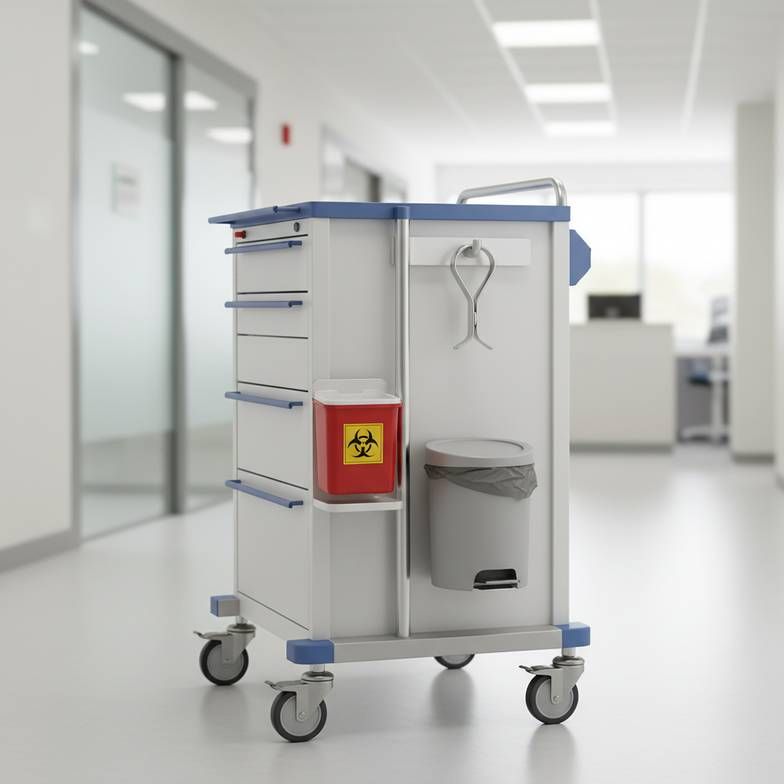
- Included Accessories: One photo might show a trolley with an IV pole, a sharps container holder, and a waste bin. The price, however, may only be for the bare trolley. These accessories are often optional.
- Structural Quality: The thickness of the steel, the quality of the welding, or the structural design of the ABS frame are invisible in photos but significantly impact durability and cost.
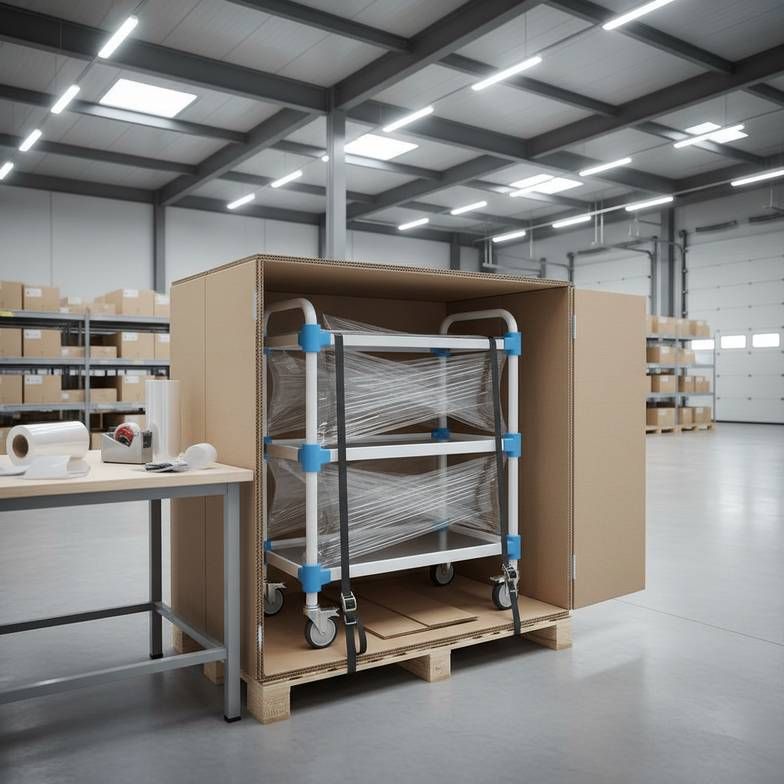
- Packing Method: A cheaper price might be based on simple carton packing, while a higher price includes reinforced export-grade packing to prevent damage.
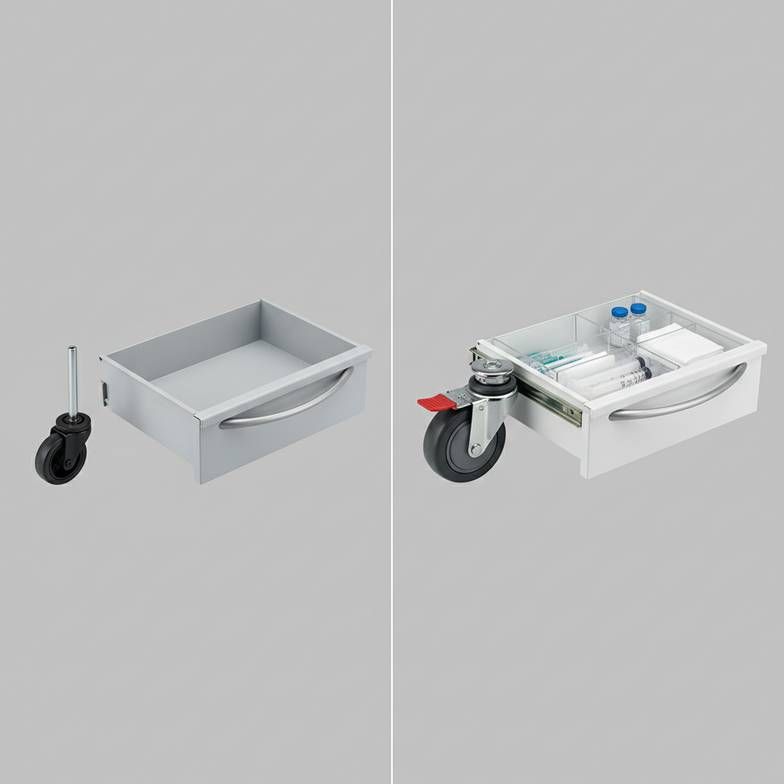
Practical Buyer Action: Request a detailed specification sheet for every quotation. Don't rely on the product name or photo. Use a matrix to identify where quotations are unclear or incomplete.
Same Product Name, Different Quotation Comparison Matrix
| Comparison Item | Supplier A Quote | Supplier B Quote | What Buyer Should Confirm |
|---|---|---|---|
| Material | Powder-Coated Steel | ABS | Match material to department use. |
| Drawer Layout | Unclear, states "3 drawers" | 5 drawers, 2 with dividers | Does the layout fit the workflow? |
| Lock Option | Not stated | Central lock included | Is security a requirement? |
| Casters | 4" casters, 2 with brakes | 5" silent casters, 4 with brakes | Is stability or quiet movement needed? |
| Accessories | Photo shows accessories, but quote is unclear | IV pole, waste bin are optional add-ons | Are accessories in the photo included in the price? |
| Packing Method | Standard carton | Export carton with corner protection | Is packing strong enough for the journey? |
| Carton CBM | Not provided | 0.45 CBM / unit | How much will shipping cost? |
| Trade Term | EXW (Ex Works) | FOB (Free on Board) | Are you comparing the same delivery terms? |
This matrix makes it clear you are not comparing the same product. Before choosing the "cheaper" option, you must standardize the specifications.
How Do Stainless Steel, ABS, and Powder-Coated Steel Affect Cleaning, Durability, and User Complaints?
The material directly impacts the trolley's life in the hospital and the feedback you'll get. A trolley that is hard to clean, scratches easily, or looks worn out quickly will generate complaints from staff, regardless of its initial cost.
- Stainless Steel: It's generally easy to clean and disinfect. However, I often remind buyers that even stainless steel needs proper packing. Scratches and dents from shipping can ruin its clean appearance and create crevices where contaminants could gather.
- ABS: The smooth, molded surfaces are also designed for easy cleaning. The risk with ABS is less about corrosion and more about physical damage. A low-quality ABS structure can crack from impact, and its color can sometimes fade or yellow over time depending on UV exposure and the cleaning agents used.
- Powder-Coated Steel: This material's durability depends entirely on the quality of the powder coating. A well-applied coating is durable and easy to clean for general purposes. But if it gets deeply scratched, the exposed steel underneath can rust, especially in humid or frequently washed areas. This is a common source of user complaints.
Practical Buyer Action: Discuss the intended cleaning protocol (e.g., wipes, chemical solutions, frequency) with your supplier. Ask them to confirm if the chosen material and finish are suitable for those conditions. The risk isn't just about the material failing; it's about it failing to meet user expectations.
What Configuration Details Should Buyers Confirm Besides the Trolley Material?
In my experience, most after-sales problems with trolleys come from functional components, not just the body material. Hospital staff use these components every day, and their failure causes immediate frustration.
Before you sign a purchase order, you must have clear answers on these key points:
- Drawer Layout: Is it just a set of empty drawers, or are dividers and organizers included? For a medicine trolley, this is a critical detail for workflow and safety.
- Locking System: Is a lock needed? If so, is it a single-key lock for one drawer, or a central lock for all drawers? An emergency cart might need a simple breakaway seal, while a narcotics trolley requires a secure key lock.
- Casters and Brakes: Medical trolleys are moved constantly. The quality of the casters determines how easily it rolls and how quiet it is. Confirm the caster diameter, material (e.g., TPR for silent running), and how many have brakes. For a heavy trolley, brakes on all four wheels might be necessary.
- Handles and Ergonomics: Are the handles integrated or bolted on? Are they at a comfortable height for staff to push without stooping? Poor ergonomics can make even the most durable trolley unpopular.
- Accessories: I often remind buyers to ask: "Are all the accessories shown in the photo included in this price?" This simple question avoids many misunderstandings. Get a clear list of what's standard and what's optional.
Practical Buyer Action: Create a simple configuration checklist for your trolley order. Do not assume these details are "standard." Confirm each one with your supplier and get it in writing.
How Can Packing, CBM, and Trade Terms Change the Real Cost of a Medical Trolley Order?
For any import or bulk order, the "real cost" is the landed cost, not the unit price. A low unit price can be very misleading if it leads to high shipping costs or damaged goods.
Here’s what experienced buyers check before confirming an order:
- Packing: Is the trolley shipped fully assembled or flat-packed (knock-down)? Assembled trolleys take up much more space, increasing freight costs. Flat-packing saves on shipping but requires assembly. I always suggest confirming how surfaces, corners, and casters are protected inside the carton. Ask for packing photos.
- CBM (Cubic Meters): This is the measure of volume that freight forwarders use to calculate shipping costs. A supplier who can't provide the carton dimensions and total CBM for your order is giving you an incomplete quote. A low unit price can be erased if the CBM is so large that freight costs are higher than expected.
- Trade Terms (Incoterms): Are you comparing an EXW (Ex Works) price to an FOB (Free on Board) price? An EXW price doesn't include the cost of getting the goods to the port, while an FOB price does. Always confirm you are comparing quotes using the same trade term.
Practical Buyer Action: Before you finalize a supplier, request this data: carton dimensions (L x W x H), gross weight, net weight, and total CBM for the entire order. Use this to get a real shipping quote.
Simplified Example: The numbers below are for comparison logic, not fixed pricing.
Imagine Supplier A quotes a trolley at $150/unit with a CBM of 0.5. Supplier B quotes a similar trolley at $160/unit with a CBM of 0.35. If your sea freight cost is $200 per CBM, the shipping cost per unit is $100 for Supplier A's trolley but only $70 for Supplier B's.
- Supplier A Landed Cost (simplified): $150 (unit) + $100 (freight) = $250
- Supplier B Landed Cost (simplified): $160 (unit) + $70 (freight) = $230
In this case, the trolley with the higher unit price actually has a lower landed cost due to more efficient packing.
What Should Buyers Ask a Supplier Before Confirming a Bulk Medical Trolley Order?
A good supplier should ask you questions before they give you a final price. They should want to know where the trolley will be used and what your expectations are. A red flag is a supplier who gives you a price instantly without clarifying any details.
Before you commit to a bulk order, use this final checklist to protect your investment and ensure you receive exactly what you need.
Practical Buyer Action: Review this checklist. If you don't have clear answers, send these points to your supplier for confirmation before issuing the purchase order.
Bulk Medical Trolley Order Confirmation Checklist
Use & Quantity
- [ ] Department and room function confirmed (e.g., ward, OR, clinic)
- [ ] Trolley function confirmed (e.g., medicine, treatment, emergency)
- [ ] Quantity per type confirmed
Material & Configuration
- [ ] Material confirmed (Stainless Steel / ABS / Powder-Coated Steel)
- [ ] Dimensions confirmed (L x W x H)
- [ ] Drawer layout and internal dividers confirmed
- [ ] Lock option and keying requirements confirmed
- [ ] Caster type, size, and number of brakes confirmed
- [ ] List of included accessories confirmed
- [ ] List of optional accessories and prices confirmed
Packing & Shipping
- [ ] Packing method confirmed (Assembled / Knock-Down)
- [ ] Packing photos requested/reviewed
- [ ] Carton dimensions (L x W x H) confirmed
- [ ] Gross Weight and Net Weight confirmed
- [ ] Total CBM for the order confirmed
- [ ] Trade term confirmed (e.g., FOB, EXW, CIF)
Lead Time & Inspection
- [ ] Production lead time confirmed
- [ ] Basis of lead time start confirmed (e.g., after deposit, after spec approval)
- [ ] Pre-shipment inspection plan confirmed
Conclusion: Choose by Suitability, Not Just by Name
Choosing the right medical trolley material isn't about picking the most expensive or modern-looking option. It's about a series of practical procurement decisions. The "best" material is the one that fits the department's function, meets cleaning and durability needs, and arrives within budget and without damage.
Don't start by asking, "Which material is best?" Instead, start by defining your needs:
1. Define the use: Where will this trolley work every day? 2. Define the configuration: What drawers, locks, and accessories does it need to do its job? 3. Define the logistics: How does it need to be packed to arrive safely and economically?
By asking these questions, you move from being a price-taker to a strategic buyer. You'll be able to compare suppliers fairly, reduce your risk of after-sales problems, and source a product that truly serves its purpose in a healthcare environment.
At CareFurnex, we help healthcare project buyers, distributors, and importers with this process. If you are planning a medical trolley order, send us your requirements—including department use, quantity, configuration needs, and packing expectations. We can help you review the options and prepare a practical, complete quotation.
Written by
CareFurnex Team
CareFurnex Team shares practical knowledge about hospital beds, patient room furniture, medical trolleys, clinic furniture, and healthcare facility procurement for international B2B buyers.
Related Products
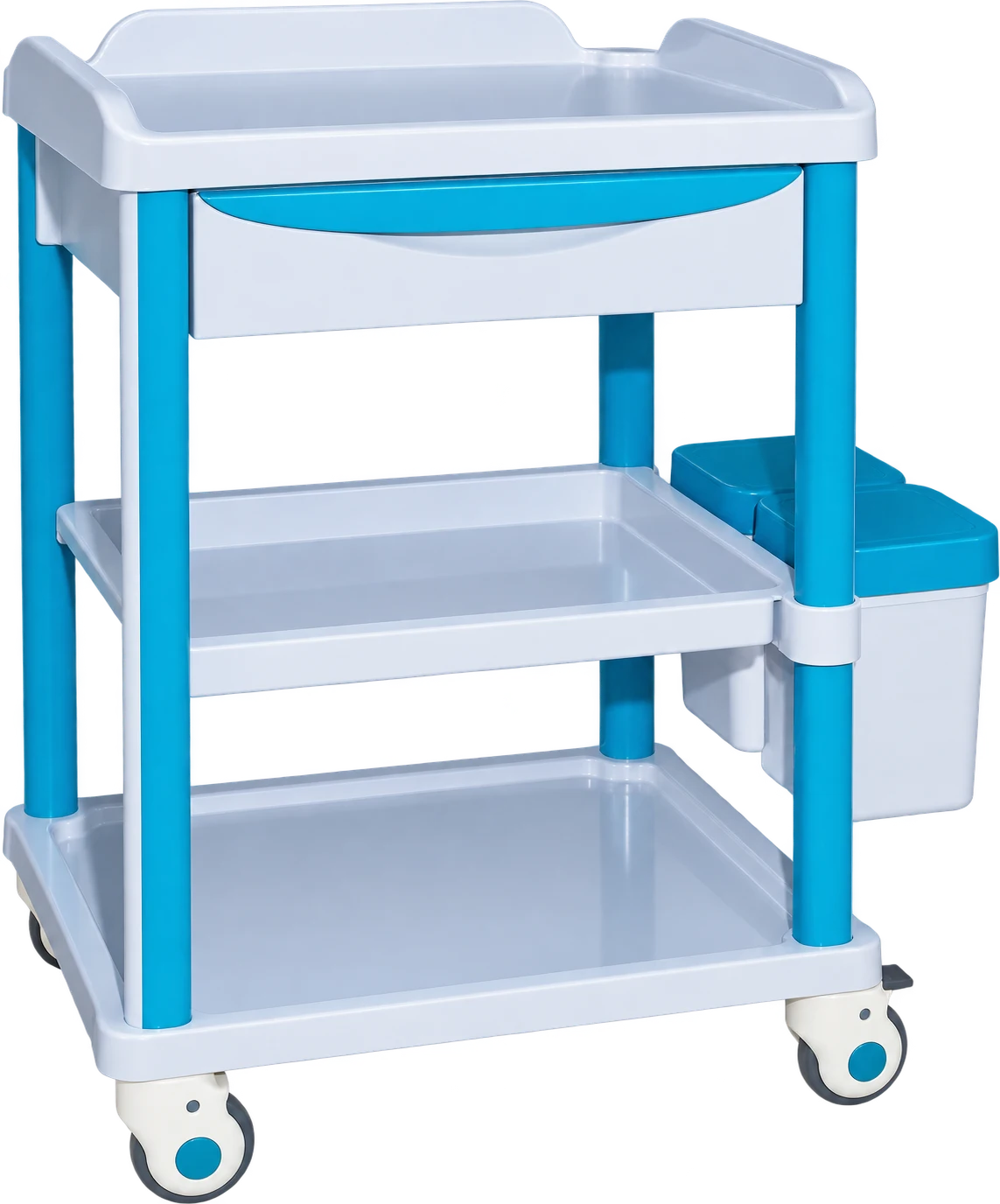
Medical Trolleys
Mobile carts for nursing rounds, treatment supplies, medicines, and clinical tools.
View product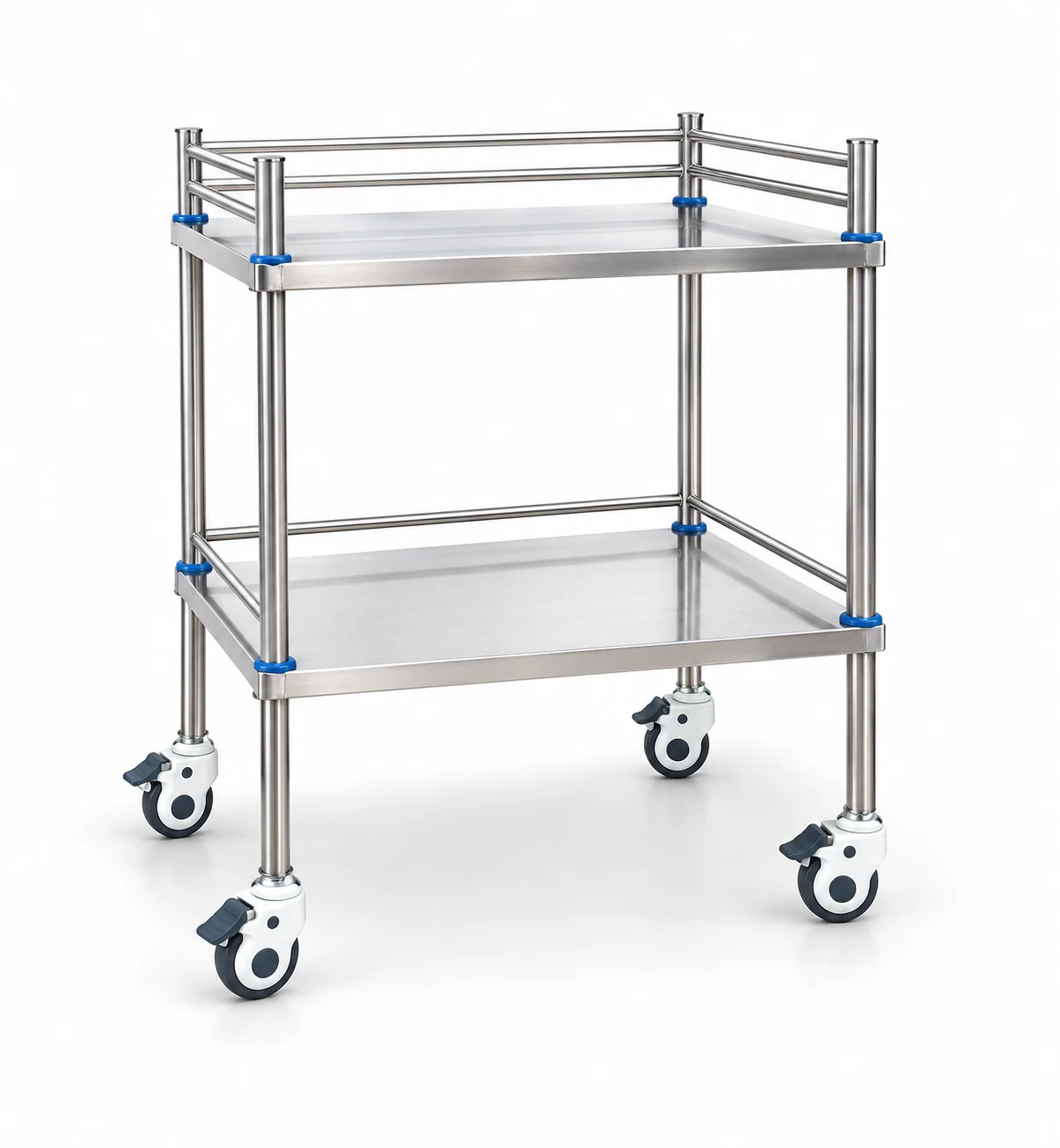
Stainless Steel Trolleys
Compare stainless steel trolleys by model, stated dimensions and configuration.
View productStainless Steel Medical Furniture
Durable stainless-steel carts, tables, instrument stands, and storage units for clinical spaces.
View product