
Picking out a new medical trolley involves a lot of big decisions. You probably spend hours comparing drawer configurations, caster quality, and locking systems. But what about that small piece of plastic on the front of each drawer? It seems like a tiny detail. The problem is, when that "tiny detail"—the label holder—cracks, falls off, or doesn't fit your labels, it creates big problems for your clinical staff. By asking a few simple questions about your medical trolley label holders before you buy, you can avoid these costly and frustrating issues down the line.
The key specifications for medical trolley label holders that buyers must confirm are the material's chemical and impact resistance, the attachment method (adhesive, clip, or integrated), and the exact internal dimensions to ensure they fit your facility's existing label cards. Getting these details right prevents operational friction, reduces long-term replacement costs, and ensures the trolley is ready for clinical use upon arrival.
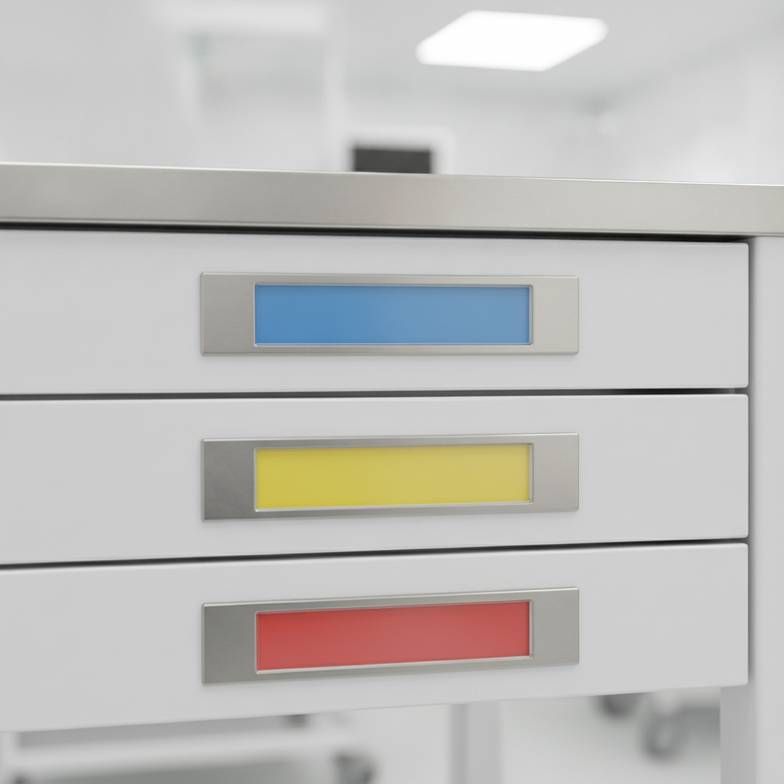
That simple, bolded paragraph is the core of it. But overlooking these points is one of the most common mistakes I see buyers make. They spend so much time on the main trolley that they accept whatever default label holder the supplier offers. Let's break down why that's a risk and explore the specific questions you should be asking to make sure you get it right.
What Material Should Your Medical Trolley Label Holders Be Made Of?
It’s easy to assume that one piece of plastic is just like any other. But in a busy hospital environment, the wrong material choice can lead to a cascade of problems. You might find your brand-new trolley's label holders becoming brittle, yellowing, or cracking within months.
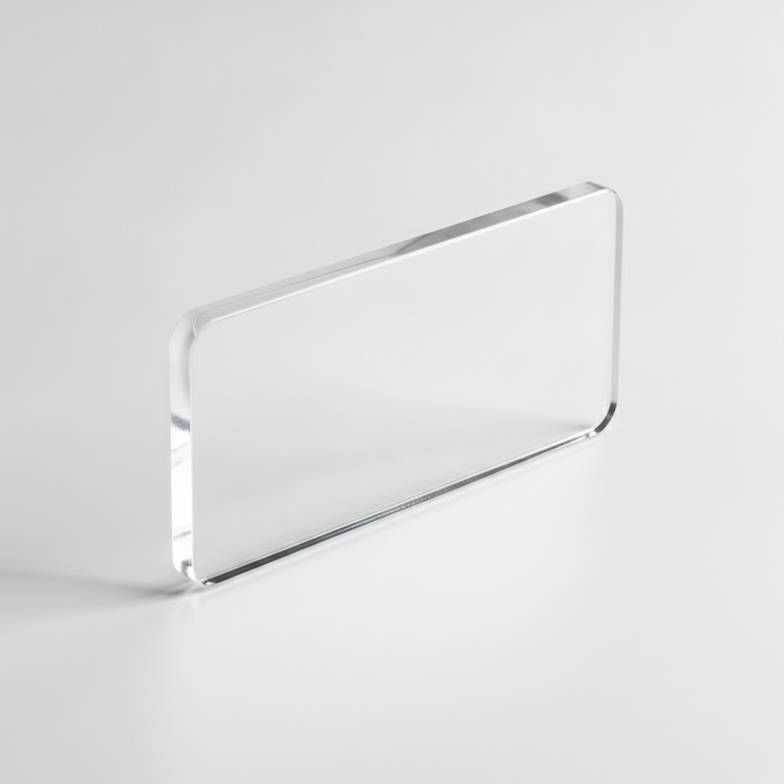
The best material for medical trolley label holders depends less on the plastic's name (like ABS or PC) and more on its proven resistance to your facility's specific cleaning chemicals and its ability to withstand daily impacts. You need a material that can handle your real-world environment.
Beyond "ABS Plastic": Asking About Chemical Resistance
A common issue we see in post-delivery feedback is that label holders have started cracking. When I dig into this with the customer, the cause is often a mismatch between the plastic and the hospital's disinfectant wipes. Some aggressive cleaning agents can degrade certain plastics over time.
So, instead of just asking, "Is it ABS plastic?", try asking these questions:
- What is the label holder's resistance to common hospital disinfectants? (e.g., alcohol-based, chlorine-based, hydrogen peroxide)
- Can you provide any data or documentation on chemical compatibility?
- Have you supplied trolleys with these holders to facilities that use [Your Specific Cleaner]?
A good supplier should be able to discuss this with you. While they may not have a lab report for every chemical, their experience should guide them. For example, Polycarbonate (PC) is generally more resistant to chemical stress than standard Acrylonitrile Butadiene Styrene (ABS), but it can still be vulnerable to certain agents. The goal is to start a conversation and make an informed choice rather than discovering the incompatibility after a hundred cleaning cycles.
Impact Durability in the Real World
The second key factor is impact durability. Your medical trolleys are constantly on the move, and they will inevitably get bumped into walls, doorways, and bed frames. These small but repeated impacts are exactly what break flimsy label holders).
Here's what to consider:
- Material Flexibility: A slightly more flexible plastic might absorb an impact, while a very rigid, brittle one will crack or shatter.
- Holder Design: Does the holder stick out far from the drawer front? Protruding designs are more likely to get snagged and snap off. A lower-profile, integrated design is often more durable.
Here is a simple table comparing the two most common materials. Remember, these are generalizations, and the specific grade of the material matters.
| Feature | Acrylonitrile Butadiene Styrene (ABS) | Polycarbonate (PC) |
|---|---|---|
| General Cost | Lower | Higher |
| Impact Resistance | Good, but can be brittle at low temps | Excellent, very high impact strength |
| Chemical Resistance | Fair; vulnerable to some solvents | Good; generally more robust than ABS |
| Appearance | Opaque, easily colored | Transparent, high clarity |
| Common Use | General-purpose trolleys, cost-sensitive projects | Emergency carts, ICU trolleys, high-use areas |
Your choice depends on the application. For a high-traffic emergency cart, investing in PC holders makes sense. For a linen trolley in a lower-traffic area, ABS might be perfectly adequate.
How Should Medical Trolley Label Holders Attach to the Cart?
You’ve picked a durable material. Now, how does it stick to the trolley? This seems simple, but the attachment method is another frequent point of failure. An adhesive holder might seem convenient until it peels off, leaving sticky, hard-to-clean residue.
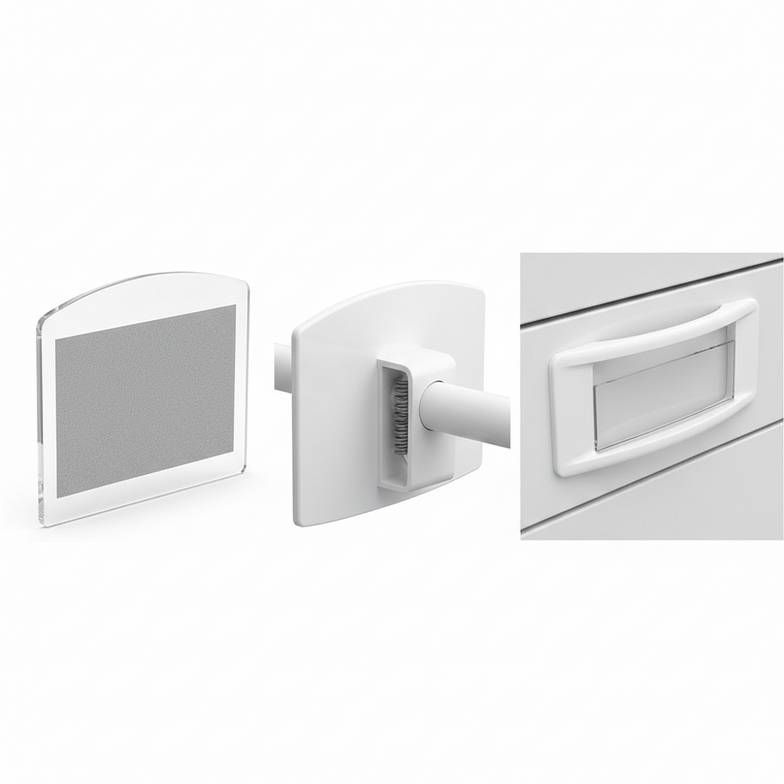
The right attachment method—be it a high-strength adhesive, a mechanical clip, or a slot integrated into the drawer itself—is the one that best suits the trolley’s design and your facility's workflow.
The Pros and Cons of Adhesive Mounts
Adhesive is the most common method, but not all adhesives are created equal. I’ve seen buyers get frustrated when holders start falling off after six months. This is usually because the supplier used a cheap, generic double-sided foam tape.
If you are considering an adhesive mount, you must ask about the type of adhesive.
- Is it a high-bond industrial tape like 3M VHB? This type of tape creates a virtually permanent, sealed bond that resists moisture, cleaners, and temperature changes.
- Is the surface of the trolley properly prepared before application? Even the best tape will fail if it's applied to a dusty, oily, or uneven surface.
The downside of a good adhesive is its permanence. If a holder does get damaged and needs to be replaced, removing it can be difficult and may damage the trolley's finish. This method is best for "fit and forget" applications where you don't expect to ever move the holder itself.
Mechanical Fastenings: Clips and Integrated Slots
Mechanical solutions avoid the mess and uncertainty of adhesives.
- Clip-On Holders: These holders are designed to snap onto a rail or the edge of a drawer. Their main advantage is that they are incredibly easy to replace if one breaks. The disadvantage is that the clip itself can be a weak point. If it gets snagged on a glove or gown, it can snap off.
- Integrated Slots: This is often the most durable and streamlined solution. Here, the "holder" is actually a channel or slot built directly into the drawer handle or front panel. You simply slide the paper or card label into the slot, often behind a clear protective cover. There's nothing to snap off or unstick.
From my perspective as a supplier, I often recommend integrated slots for high-use carts like medication or anesthesia trolleys. They offer the best long-term reliability. For modular storage systems or carts where configurations might change, clip-on holders offer more flexibility.
What Are the Critical Dimensions for Medical Trolley Label Holders?
Imagine this scenario: your new, custom-ordered medical trolleys finally arrive. They look perfect. But when your staff tries to insert the pre-printed, color-coded labels your hospital has used for years, they don’t fit. The holders are 5mm too short.
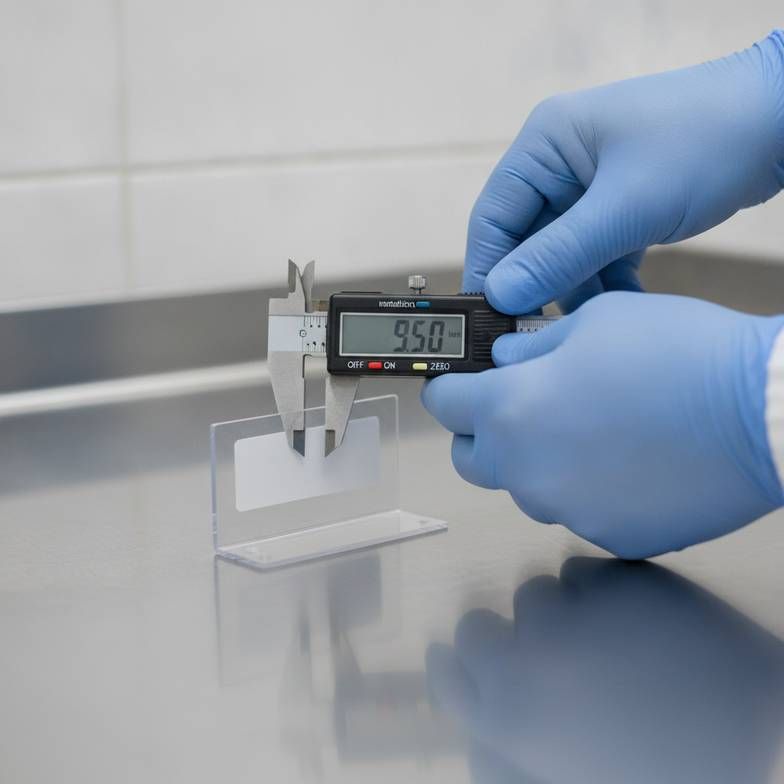
This is a real problem I’ve helped clients avoid, and it’s why confirming dimensions is absolutely critical. You must confirm the internal dimensions to fit your labels and the external dimensions to ensure the holder functions well on the trolley.
Matching the Label Insert Size
The single most important dimension is the size of the slot for the paper label. Hospitals often have standardized label systems, sometimes printed on special card stock. Having to re-format and re-print thousands of labels because a new trolley has the wrong-sized holder is a massive and unnecessary expense and workflow disruption.
Before you finalize your order, you should:
- Measure your current labels precisely. Get the height and width in millimeters.
- Send these dimensions to your supplier. Ask them to confirm, in writing, that the internal dimensions of the medical trolley label holders they are providing will fit your labels.
- For large orders, request a physical sample. There is no substitute for holding the product in your hand and testing it with your actual labels.
This small step of verification can save you a huge headache. A few years ago, I worked with a hospital group that was standardizing their medication carts across three facilities. They had an elaborate color-coded card system. Catching the fact that the default holder was just slightly too narrow before the order went into production saved them from a project-delaying crisis.
The Protective Cover and External Footprint
Beyond the insert size, consider the other physical aspects:
- The Protective Cover: Most holders come with a clear plastic slip to protect the paper label from spills and wear. Is this cover easy to remove for changing the label? Is it a flimsy piece of plastic that will get lost, or is it hinged or designed to slide securely in and out? Ask about its material—will it yellow or become cloudy over time?
- External Dimensions: How far does the label holder protrude from the drawer? A bulky design can get in the way, snag on clothing, or prevent a cart from fitting into a tight alcove. A well-designed holder should have a minimal profile while still being easy to read and use.
Treating the label holder as an integral part of the trolley's specification, rather than an accessory, is the key to getting a product that works seamlessly in your environment.
Frequently Asked Questions
Can I get replacement medical trolley label holders?
Yes, you can usually order replacements. However, it's much more efficient to get the right ones from the start. To get a matching replacement, you'll need to know the trolley's model number, the original holder's dimensions, and its attachment method. This is why confirming these specs during the initial purchase is so important.
What's the real difference between an ABS and a PC label holder?
In simple terms, ABS is a cost-effective, general-purpose plastic that works well in many situations. PC is a step up in performance—it's tougher, more resistant to impact, and handles heat and some chemicals better. The "best" choice isn't about which is technically superior, but which one matches your budget and your facility's specific cleaning protocols and physical environment.
How should I specify label holders in my tender document?
Be as specific as possible to avoid ambiguity. Instead of writing "with label holders," write something like: "Each drawer to be fitted with an integrated label holder, constructed from chemical-resistant Polycarbonate (PC). Internal dimensions must accommodate a 75mm x 25mm card insert. A clear, removable protective cover must be included." This level of detail ensures all bidders are quoting for the same quality and functionality.
Should the label holder be included in the trolley price?
Absolutely. The label holder is a functional part of the trolley system. You should treat it as part of the core product specification and have it included in the main unit price. If a supplier lists it as a free accessory, you lose control over its quality and specifications. Insist that it is part of the formal quotation so you can define what you are getting.
Conclusion
It’s easy to focus on the big-ticket items when sourcing hospital furniture, but the small details often determine whether a product is a success or a source of constant frustration. Medical trolley label holders are a perfect example. They are a small component with a big impact on workflow efficiency, long-term maintenance costs, and staff satisfaction. By moving beyond vague terms like "durable" and instead confirming the specific material, attachment method, and dimensions, you transform a potential problem area into a verifiable specification. This ensures the trolleys you procure are truly ready to meet the demanding pace of your healthcare environment.
When preparing your next medical trolley inquiry, don't leave the label holder to chance. At CareFurnex, we believe in getting these details right from the beginning. Contact us to review your specifications, and let's work together to ensure every component of your medical furniture meets your operational needs.
Written by
CareFurnex Team
CareFurnex Team shares practical knowledge about hospital beds, patient room furniture, medical trolleys, clinic furniture, and healthcare facility procurement for international B2B buyers.
Related Products
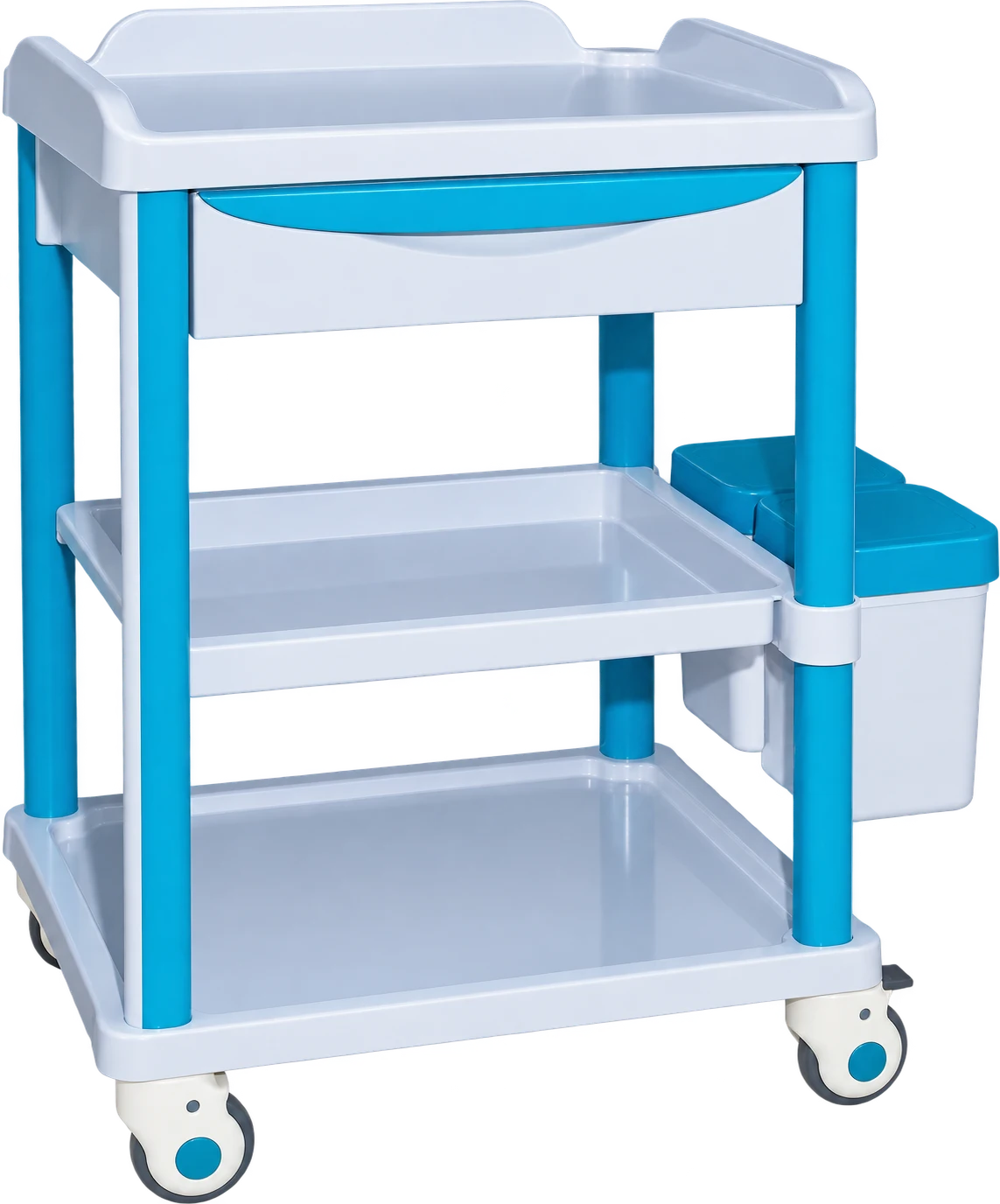
Medical Trolleys
Mobile carts for nursing rounds, treatment supplies, medicines, and clinical tools.
View product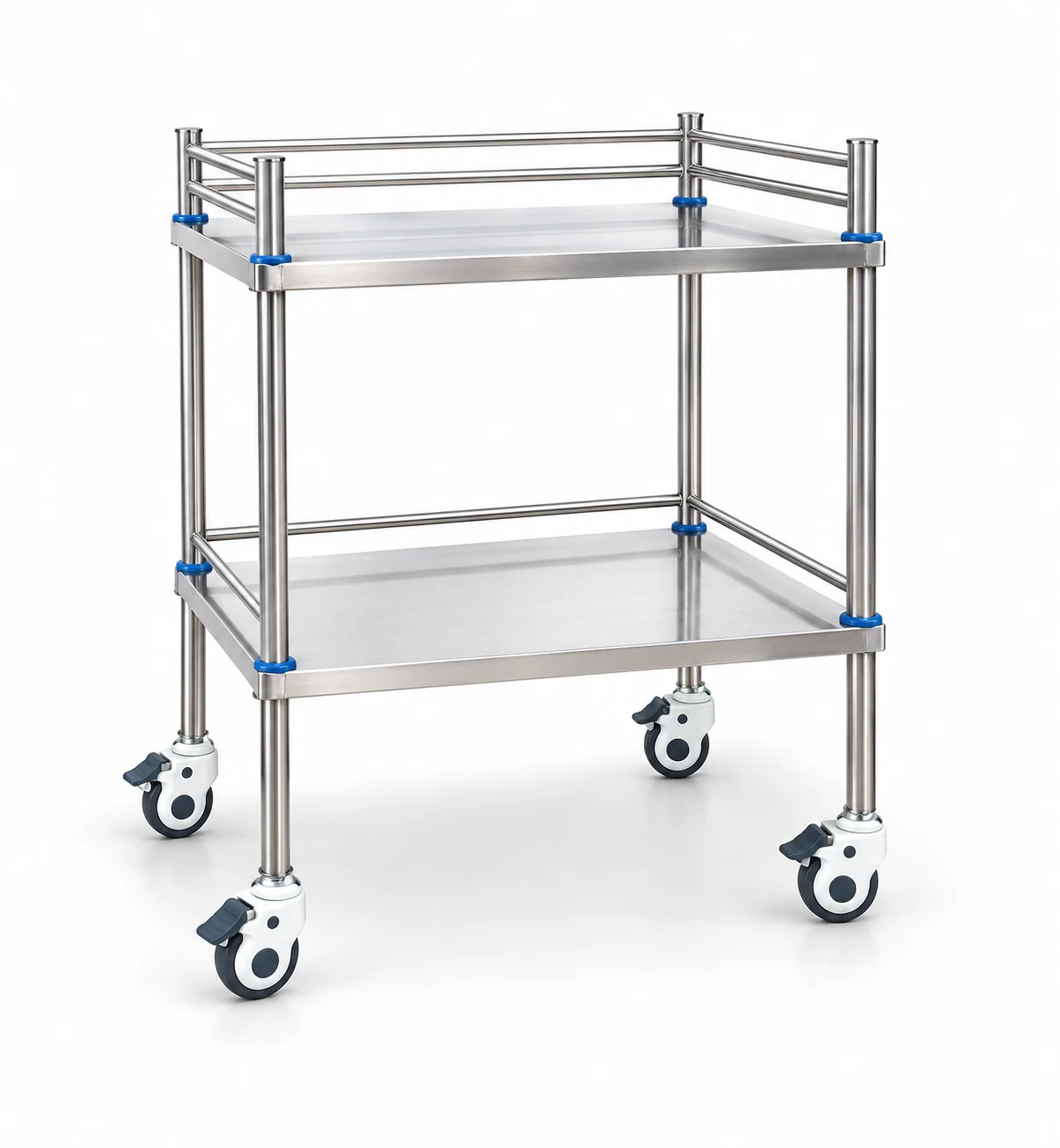
Stainless Steel Trolleys
Compare stainless steel trolleys by model, stated dimensions and configuration.
View product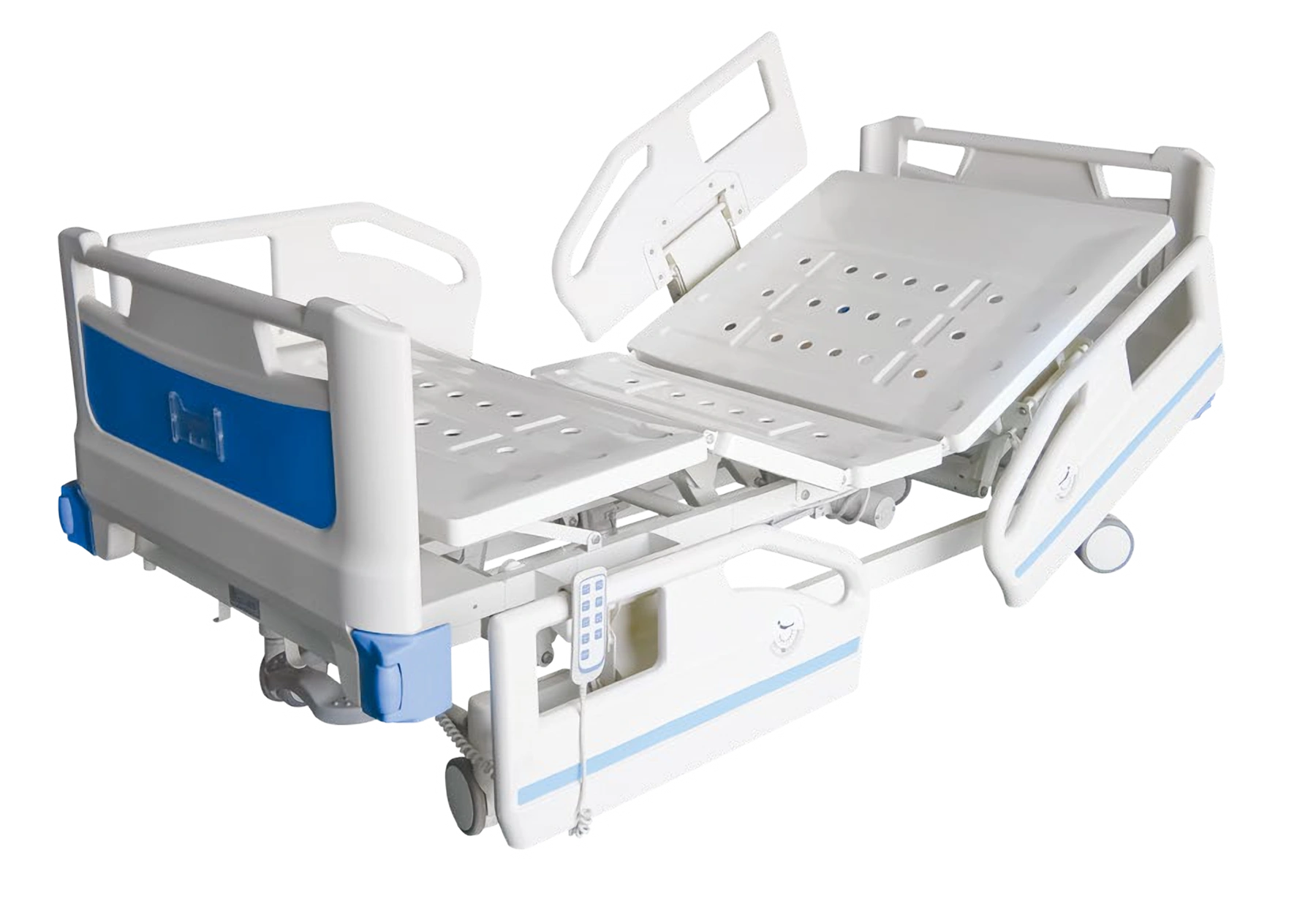
Hospital Beds
General-purpose patient beds for inpatient wards and standard hospital rooms.
View product