
Feeling the pressure to cut costs on your next furniture order? You might see a medical trolley with an attractive price tag and think you've found a great deal. But when the drawers start sticking, rattling, or failing just a year into service, the complaints from nursing staff start rolling in, and the true cost becomes painfully clear. Choosing the right medical trolley drawer runners is about more than just the initial price; it’s about ensuring long-term reliability and avoiding operational headaches.
The best medical trolley drawer runners are defined not by a high static load capacity number or how smooth they feel on day one, but by their dynamic durability, resistance to corrosion, and a long, tested service life. This means prioritizing runners made from high-quality steel with appropriate protective coatings, engineered to withstand tens of thousands of real-world open-close cycles in a demanding hospital environment.
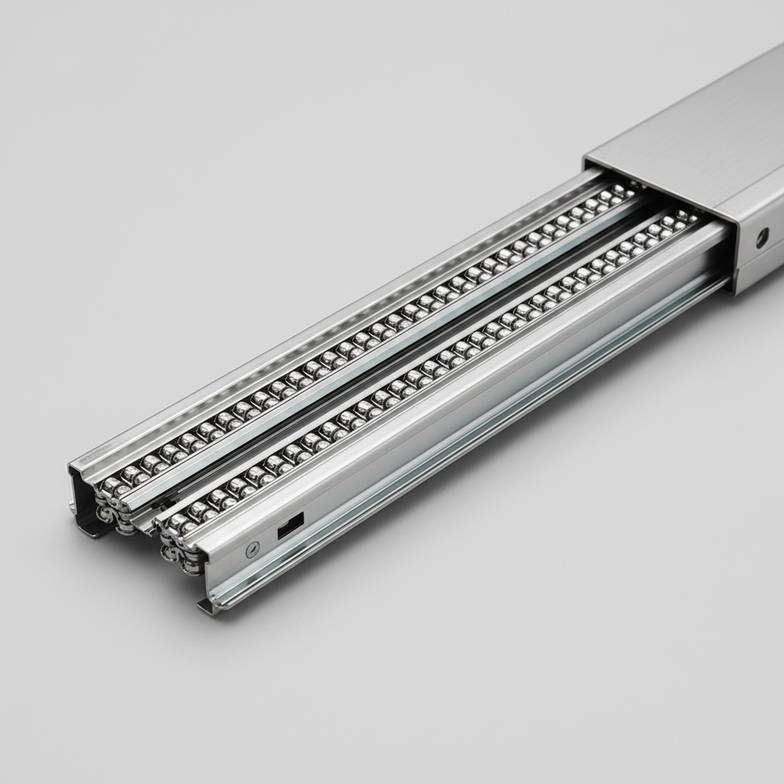
If the numbers on a spec sheet don't tell the whole story, how can you spot a durable, reliable component before you commit to a bulk order? It comes down to asking better questions and knowing what to look for beyond the surface. Let's dive into the critical factors that separate a good investment from a future maintenance problem.
Why Is Static Load Capacity a Misleading Metric for Medical Trolley Drawer Runners?
You're reviewing quotes, and one supplier highlights a "45 kg load capacity" for their drawers. That sounds impressive and more than enough for medical supplies, right? The problem is, this number often refers to static load, which is a poor measure of performance for a piece of equipment that's constantly in use.
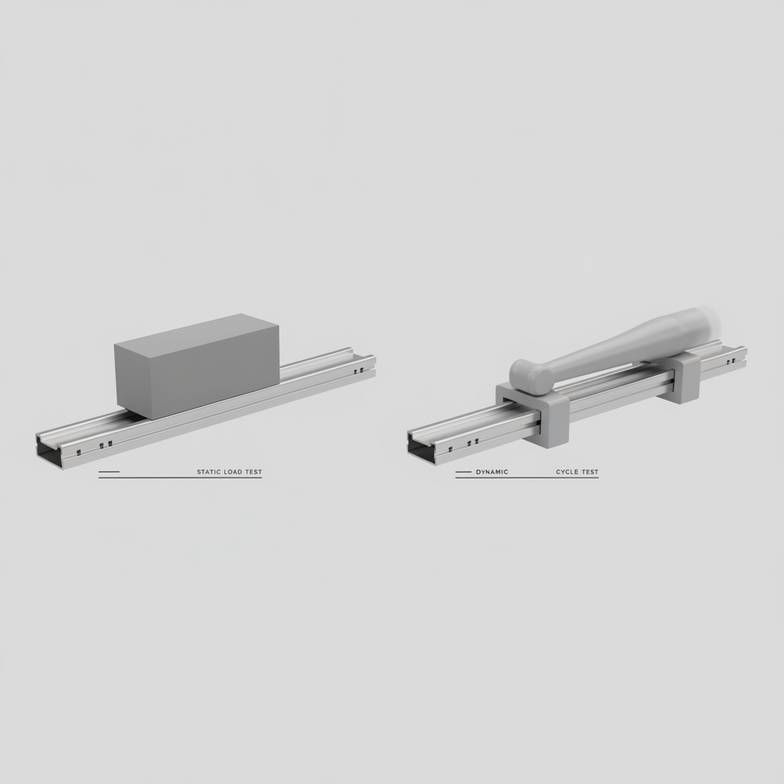
Static load capacity simply tells you how much weight a drawer can hold without collapsing when it's sitting still. It’s like a bookshelf. But a medical trolley drawer is not a bookshelf; it's a dynamic tool. The real test is its ability to handle that weight while being opened and closed hundreds of times a week.
Dive Deeper: The Difference Between Holding Weight and Handling Work
The most critical factor for medical trolley drawer runners is their dynamic durability, often measured in cycle life. A cheap runner might hold 40 kg when stationary but can quickly deform, jam, or fail after just a few thousand cycles under a much lighter 15 kg load.
I saw this firsthand with a hospital I consulted for. They procured 50 new treatment trolleys, swayed by a low price and that impressive "40 kg capacity" claim. Within 18 months, I was involved in handling the after-sales complaints. Over half of the trolleys had drawers that were either badly sticking or had failed completely. Nurses explained the danger—during a code blue, they couldn't access critical supplies from a jammed drawer. The initial savings were completely erased by maintenance costs, workflow disruptions, and a serious patient safety risk.
What goes wrong?
- Material Fatigue: The thin, low-grade steel used in cheap runners can't withstand the repeated stress. The metal essentially gets tired and stiffens, a process known as work hardening, making the drawer difficult to pull.
- Bearing Failure: Low-quality ball bearings wear down, flatten, or fall out. Instead of gliding smoothly, the drawer starts to grind and catch.
- Construction Flaws: Poorly assembled components can bend or shift under dynamic loads, causing the drawer to become misaligned and jam in its housing.
How to Ask Suppliers About Real-World Durability
To avoid this trap, you need to shift the conversation from static capacity to dynamic performance. Here are the questions you should be asking potential suppliers:
- "What is the tested cycle life of these drawer runners, and at what load?" A reputable manufacturer will have data. Look for ratings of 50,000 cycles or more, which better reflects years of hospital use.
- "What is the gauge or thickness of the steel used in the runner components?" Thicker steel generally offers better rigidity and a longer lifespan.
- "Can you provide any third-party test reports or certifications for the drawer runners you use?" This forces the supplier to back up their claims with evidence, not just marketing language.
Does an Initially Smooth Drawer Guarantee a Long Service Life?
When you’re testing a sample trolley in a showroom, it’s easy to be impressed by a drawer that glides open and shut with whisper-quiet ease. But this initial smoothness is often a poor predictor of long-term service life. It can be a temporary effect that masks underlying quality issues.
No, initial smoothness is not a reliable guarantee of a long service life. This "new car feel" is often just the result of a thick layer of factory grease on brand-new parts. True, lasting smoothness comes from superior engineering: precision ball bearings, high-quality materials, and finishes designed to resist the harsh realities of the hospital environment.
Dive Deeper: The Hidden Threat of Hospital Cleaning Protocols
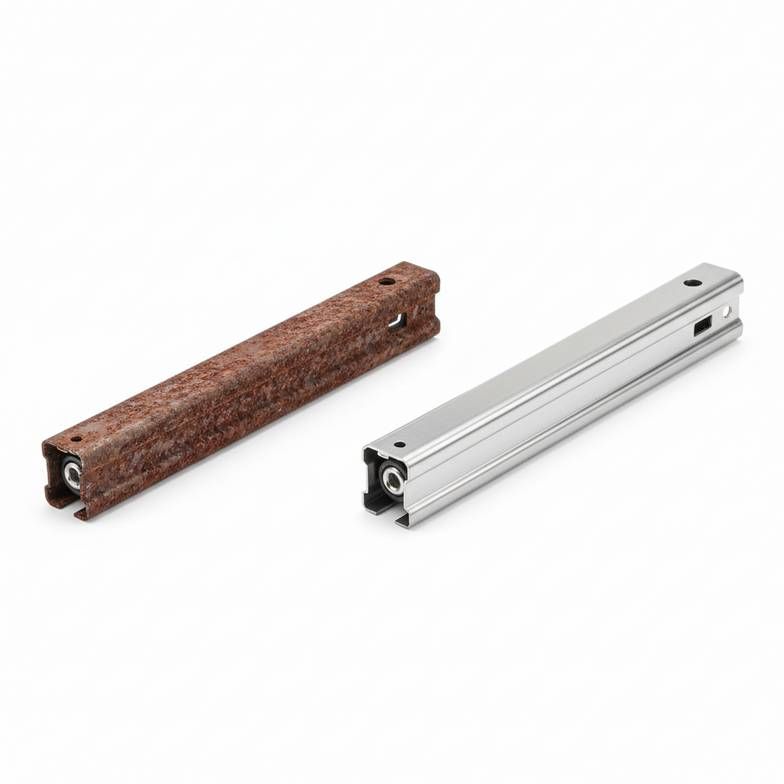
A drawer runner's biggest enemy in a healthcare setting isn't just weight; it's the cleaning cart. The aggressive disinfectants and chemical agents used to maintain hygiene are highly corrosive. Standard zinc-plated steel, the kind you’d find on office furniture, simply can't hold up.
The protective coating on a cheap runner is quickly stripped away by alcohol-based solutions and other sanitizers. Once the bare steel is exposed, rust begins to form. The smooth glide turns into a gritty, grinding struggle. The ball bearings get gummed up with a mixture of old grease and rust particles, eventually seizing completely.
A well-specified medical trolley drawer runner is designed for this reality. It uses higher-grade steel with an advanced coating (like enhanced electroplating) or is made from stainless steel to resist chemical corrosion. The ball bearings are often sealed to protect them from moisture and contamination.
Comparing Standard vs. Healthcare-Grade Drawer Runners
When you're evaluating options, think about these hidden differences. The price gap between a standard and a healthcare-grade runner reflects a significant difference in material science and engineering.
| Feature | Standard (Cheap) Runner | Healthcare-Grade Runner |
|---|---|---|
| Material | Thin, low-grade carbon steel | Thicker, high-quality cold-rolled steel |
| Coating | Basic zinc plating | Enhanced electroplating or stainless steel |
| Bearings | Low-quality, unsealed steel balls | Precision, sealed stainless steel ball bearings |
| Cycle Life | Not specified, or rated <10,000 | Tested for 50,000+ cycles under load |
| Corrosion Resistance | Low; rusts after repeated cleaning | High; designed to withstand hospital disinfectants |
| Long-Term Feel | Becomes stiff, gritty, and eventually jams | Remains smooth and reliable for years |
Don't be fooled by the initial feel. The real test is how it feels after 10,000 cycles and 100 wipe-downs.
How Do Failing Medical Trolley Drawer Runners Impact Your Hospital's Total Cost of Ownership?
It’s tempting to focus on the upfront purchase price to meet budget targets. Saving a few hundred dollars per trolley on the purchase order feels like a win. But this narrow focus on initial cost ignores the much larger picture of Total Cost of Ownership (TCO).
Failing medical trolley drawer runners dramatically increase TCO by creating a cascade of hidden expenses. These include the direct costs of maintenance labor and replacement parts, the indirect costs of disrupted clinical workflows and frustrated staff, and the potential safety risks that arise when equipment fails during patient care.

Dive Deeper: Calculating the Real Cost of a "Cheap" Trolley
As a procurement manager, your responsibility is to acquire assets that provide long-term value and support the hospital's core mission. A trolley with failing drawers works directly against that mission. Let's break down the true costs:
- Direct Costs: This is the easiest part to calculate.
- Replacement Parts: The cost of new, higher-quality drawer runners.
- Maintenance Labor: The time your facilities team spends responding to calls, removing the faulty drawer, replacing the runners, and testing it. If a single repair takes an hour, and you have dozens of failing trolleys, these labor costs add up fast.
- Indirect Costs: This is where the financial impact gets much larger.
- Wasted Nursing Time: Every minute a nurse spends fighting with a stuck drawer is a minute not spent on patient care. This is a direct hit to operational efficiency.
- Workflow Disruption: In departments like the ER, OR, or ICU, speed and access are critical. A drawer that won't open can delay a procedure or response.
- Staff Morale: Constant equipment problems are a major source of frustration for clinical staff. It makes them feel unsupported and can contribute to burnout.
- Safety & Compliance Costs: This is the most serious risk. Imagine an anesthesia cart or a code blue emergency trolley where a drawer containing life-saving medication is jammed shut. This isn't just an inconvenience; it's a critical patient safety incident.
The procurement manager at the hospital I mentioned earlier learned this the hard way. He had to go back to the board three years later to request funding to replace all 50 trolleys. The second time around, his team made medical trolley drawer runner durability and cycle-life testing one of their top three evaluation criteria. The initial "savings" turned into a much larger, and entirely avoidable, expense.
Frequently Asked Questions
What is the standard load capacity for medical trolley drawers?
While there is no universal standard, a good quality medical trolley drawer should have a dynamic load capacity of at least 20-30 kg (45-65 lbs). However, it's more important to ask for the cycle life rating at that load (e.g., 50,000 cycles at 25 kg) than to focus on a high static capacity number.
Are stainless steel drawer runners always better?
For applications with high exposure to moisture and corrosive cleaning agents, like in CSSD or operating rooms, stainless steel runners offer superior corrosion resistance and longevity. For general ward or clinic use, a high-quality, cold-rolled steel runner with a robust, multi-layer electroplated finish can also provide excellent, long-lasting performance.
How can I test the quality of a drawer runner on a sample trolley?
Pull the drawer all the way out and gently try to move it side-to-side and up-and-down. High-quality runners will have very little "play" or wobble. Also, feel how the drawer operates when closing; a good runner will have a smooth, consistent feel without any grinding or catching, even when you push it from one side.
What's the difference between a soft-close and a standard drawer runner?
Soft-close runners have a built-in hydraulic or spring-loaded mechanism that automatically pulls the drawer shut quietly and smoothly in the last few inches of travel. This prevents slamming, reduces noise, and minimizes jarring to sensitive contents. Standard runners lack this feature and rely on the user to close them completely.
How often should medical trolley drawer runners be replaced?
High-quality, properly specified medical trolley drawer runners should last the entire service life of the trolley itself, typically 7-10 years or more, with minimal maintenance. If you are finding that runners need to be replaced every 1-2 years, it's a clear sign that the original components were not suited for a hospital environment.
Conclusion
When sourcing medical trolleys, it's crucial to look beyond the initial purchase price and evaluate the components that determine long-term performance. The quality of the medical trolley drawer runners is a perfect example. A decision based on a misleading static load capacity or a deceptively smooth feel on a new sample can lead to years of maintenance costs, operational friction, and staff frustration. By focusing on dynamic durability, material quality, corrosion resistance, and total cost of ownership, you can make a procurement decision that delivers real, lasting value. This approach not only saves money in the long run but also provides your clinical staff with the reliable tools they need to deliver excellent patient care.
If you are preparing a tender or evaluating suppliers for your next hospital furniture project, let's talk. At CareFurnex, we help procurement teams and project contractors specify practical, durable furniture that lowers your total cost of ownership. Contact us for a professional consultation on your project requirements.
Written by
CareFurnex Team
CareFurnex Team shares practical knowledge about hospital beds, patient room furniture, medical trolleys, clinic furniture, and healthcare facility procurement for international B2B buyers.
Related Products
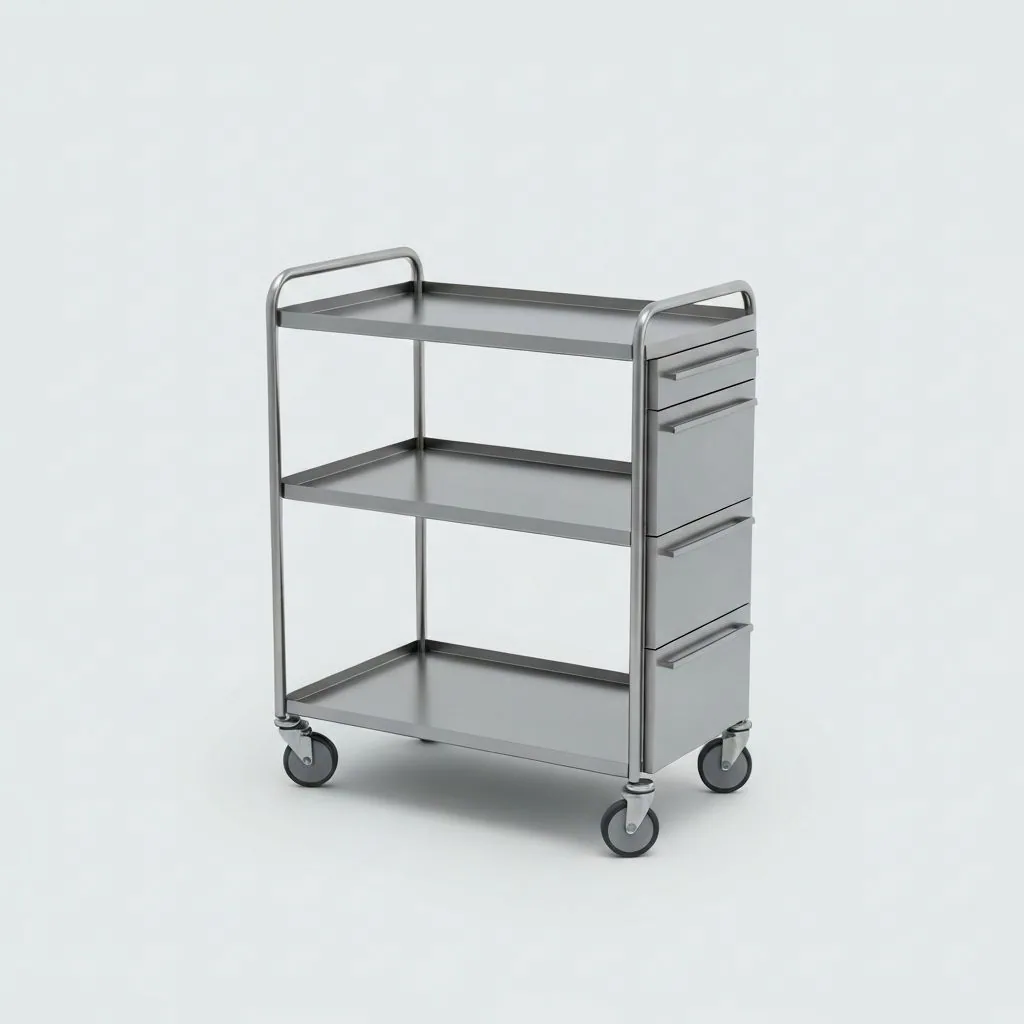
Medical Trolleys
Mobile carts for nursing rounds, treatment supplies, medicines, and clinical tools.
View productInstrument Trolleys
Mobile instrument trolleys for clinics, treatment rooms, wards, and healthcare departments.
View product
Hospital Beds
General-purpose patient beds for inpatient wards and standard hospital rooms.
View product