
You're sourcing patient transport equipment and see "gurney" and "stretcher" used interchangeably. This confusion can lead to workflow disruptions and hidden costs if you choose the wrong one.
A medical gurney is a robust, wheeled trolley with adjustable features designed for frequent in-hospital transport, patient assessment, and treatment, common in the ER. A stretcher is a broader term that can also refer to simpler devices, like folding stretchers for basic transfers. The key is matching the features to the specific department's workflow.
The confusion between these terms is very common. I see it in inquiries from hospital procurement managers and project contractors all the time. But once we look past the names, the choice becomes much clearer. It’s not about vocabulary; it’s about understanding the job the equipment needs to do every single day. Let's break down the practical differences so you can select the right tool for your project and avoid common purchasing mistakes.
Is a Gurney Just a More Advanced Type of Stretcher?
The interchangeable terms make it hard to compare quotes from different suppliers. You might worry about overpaying for features you don't need, or worse, buying a device that fails quickly. Clarifying the core functional difference is the first step.
Essentially, yes. You can think of "stretcher" as the broad category for any device used to move a patient. A "gurney" is a specific and more advanced type of stretcher—one on a wheeled trolley base with features built for hospital workflows. Simpler stretchers might just be foldable frames.
In my experience handling project inquiries, a request for a "stretcher" can mean anything from a simple folding model for emergency kits to a fully-featured hydraulic gurney for a trauma center. The term "stretcher" is an umbrella that covers many products. For example, it can refer to a basic pole stretcher or a scoop stretcher used by paramedics for patient extraction. These are designed to be carried.
In a hospital setting, however, staff need to move patients efficiently over longer distances, often by themselves. This is where the gurney, or what we often call a patient trolley, comes in. It's a stretcher permanently mounted on a wheeled base with features that support nursing workflow and patient safety. The real task for a buyer is to look past the name on the quotation and check the specifications against your needs.
Stretcher vs. Gurney: A Functional Comparison
| Feature | Simple Stretcher | Hospital Gurney (Patient Trolley) |
|---|---|---|
| Primary Use | Emergency extraction, basic short transport | In-hospital transport, temporary patient holding, assessment |
| Mobility | Carried by 2+ people or has very simple wheels | Large, medical-grade caster wheels for one-person pushing |
| Adjustability | Minimal to none (e.g., just foldable) | Height, backrest, and Trendelenburg adjustments |
| Patient Safety | Basic straps | Full-length side rails, robust central braking system |
| Workflow Role | Device for transfer to a bed or gurney | Functions as a temporary bed for examination and care |
How Do Departmental Workflows Determine the Right Choice?
Every hospital department has unique patient transport routines and challenges. Using a one-size-fits-all purchasing strategy often leads to equipment that is overkill for one area and dangerously inadequate for another. Matching the equipment to the specific workflow prevents these issues.
An Emergency Department (ED) needs a robust gurney that acts as a mobile treatment platform with hydraulic adjustment and accessory mounts. In contrast, a simpler, lighter transport stretcher is often sufficient and more cost-effective for moving stable patients from a general ward to the radiology department.
The most successful procurement projects I've worked on always start with a departmental needs analysis. When a buyer can tell me, "I need ten units for the ED and five for general patient transport," I can immediately recommend the correct models and explain the cost-benefit of each. Let's look at a few common hospital scenarios to see how the needs change.
Emergency Department (ED) & Trauma Centers
Here, the equipment must handle high-stress situations. Patients arrive in critical condition and often need immediate assessment and treatment directly on the transport device.
- Workflow Needs: Rapid transport from an ambulance, patient assessment, and minor procedures.
- Required Gurney Features: Fast hydraulic or electric height adjustment for level transfers, an X-ray translucent backrest, an integrated IV pole, an oxygen tank holder, and a strong central braking system. The gurney becomes a clinical tool, not just a transport device.
General Wards & Inter-departmental Transport
This involves moving stable patients between their room and other departments like imaging or physical therapy. The primary need is safe and efficient movement, not clinical intervention.
- Workflow Needs: Simple, reliable transport for stable patients.
- Required Stretcher Features: A lighter frame for easier pushing, manual height adjustment (or even a fixed height), collapsible side rails that are easy to operate, and durable wheels. A basic, well-built "transport stretcher" is perfect here.
Post-Anesthesia Care Unit (PACU)
In the PACU, patients are recovering from surgery and need close monitoring. Staff need excellent access to the patient.
- Workflow Needs: Patient monitoring, quick response to complications, and safety for groggy patients.
- Required Gurney Features: Smooth Trendelenburg and Reverse Trendelenburg positioning, a thick comfort mattress to reduce pressure points, zero-gap side rails to prevent falls, and superior maneuverability.
Discussing the intended department with your supplier is the most important step you can take. It helps us provide an accurate quotation for the right product.
What Hidden Costs Should Buyers Consider Beyond the Initial Price Tag?
A low initial price on a patient stretcher can be very tempting, especially for budget-conscious buyers. But this decision often leads to higher long-term costs from frequent repairs, staff complaints, and low efficiency. Looking at the total cost of ownership reveals the true value.
A cheaper stretcher often uses lower-grade materials, meaning wheels that wear out fast, weak braking systems, and frames that bend. These hidden costs include frequent maintenance, replacement parts, and decreased staff productivity. A durable gurney, though more expensive upfront, often costs less over its lifespan.
I frequently receive inquiries from buyers who are comparing two quotes, where one is significantly cheaper than the other. My first piece of advice is always to question what was compromised to achieve that lower price. These compromises directly impact your hospital's daily operations and long-term budget. A gurney isn't a disposable item; it's a piece of capital equipment that your staff and patients rely on for years. Investing in quality upfront is almost always the more economical choice.
Let's break down where these hidden costs come from.
Key Components and Their Long-Term Cost Impact
| Component | Low-Cost Stretcher Risk | High-Quality Gurney Benefit |
|---|---|---|
| Caster Wheels | Small diameter, plastic components, and poor bearings cause difficult steering and wear out quickly, requiring frequent replacement. | Large, medical-grade casters with sealed bearings ensure smooth, quiet pushing and have a much longer service life. |
| Braking System | Individual wheel locks are slow, unreliable, and a common point of failure. This is a major safety and efficiency issue. | A central braking system that locks all wheels with a single pedal press is faster, safer, and far more durable. |
| Frame & Welding | Thinner steel tubes and inconsistent manual welds can lead to a bent frame, reducing load capacity and posing a serious safety risk. | A robust frame made from thicker-gauge steel with clean, robotic welding provides a higher weight capacity and structural integrity for years. |
| Mattress | A thin foam pad with a cheap vinyl cover will tear easily, is hard to disinfect properly, and is uncomfortable for patients. | A high-density foam mattress with a waterproof, anti-bacterial, and durable welded-seam cover improves comfort and infection control. |
| Side Rails | Flimsy locking mechanisms and large gaps can be a safety hazard, leading to patient falls or entrapment. | Robust, easy-to-use side rails with a secure lock and minimal gaps provide superior patient safety and staff confidence. |
A gurney that costs 20% more but lasts twice as long is the smarter financial decision. This is the kind of analysis we help our project partners with before they confirm an order.
Conclusion
Choosing between a gurney and a stretcher is not about terminology. It is a strategic procurement decision based on departmental workflow, patient safety requirements, and the total cost of ownership.
Written by
CareFurnex Team
CareFurnex Team shares practical knowledge about hospital beds, patient room furniture, medical trolleys, clinic furniture, and healthcare facility procurement for international B2B buyers.
Related Products
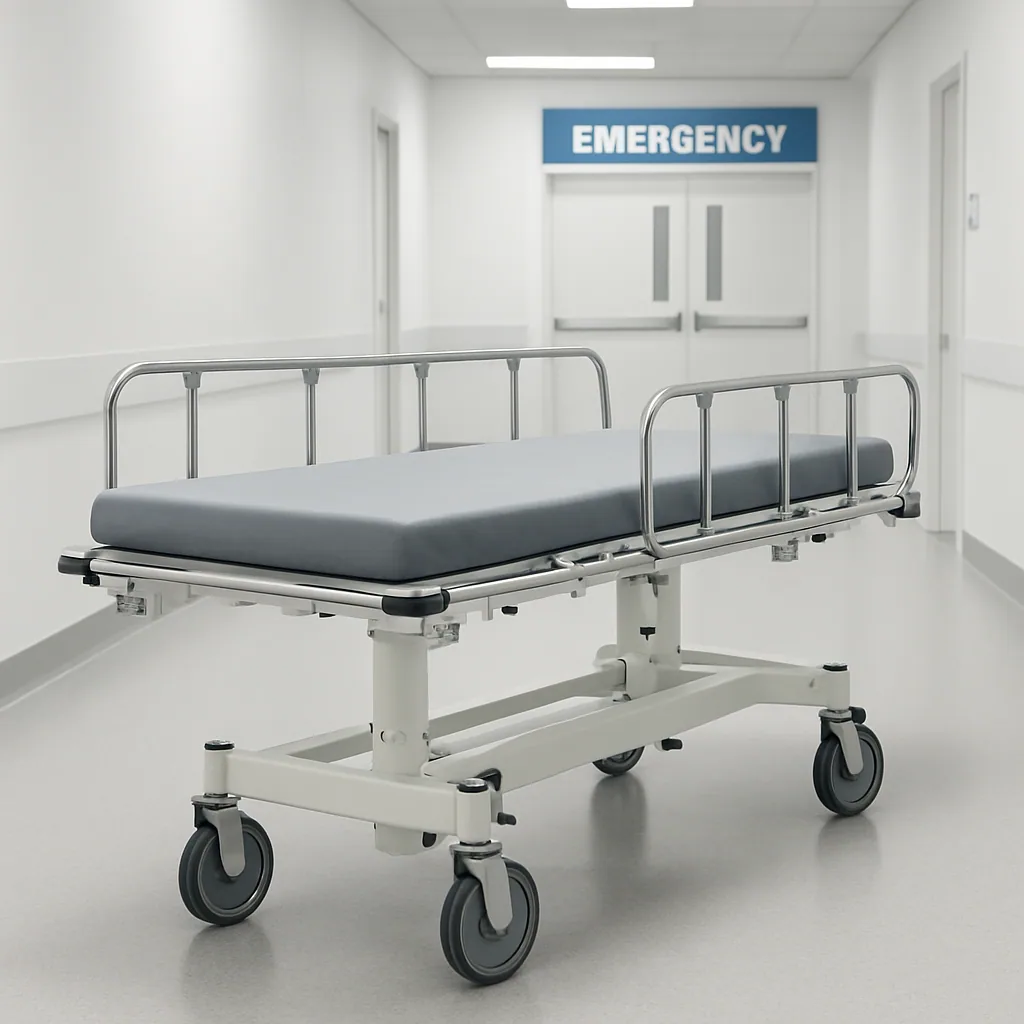
Hospital Stretchers
Patient transfer stretchers for emergency rooms, wards, clinics, and healthcare projects.
View product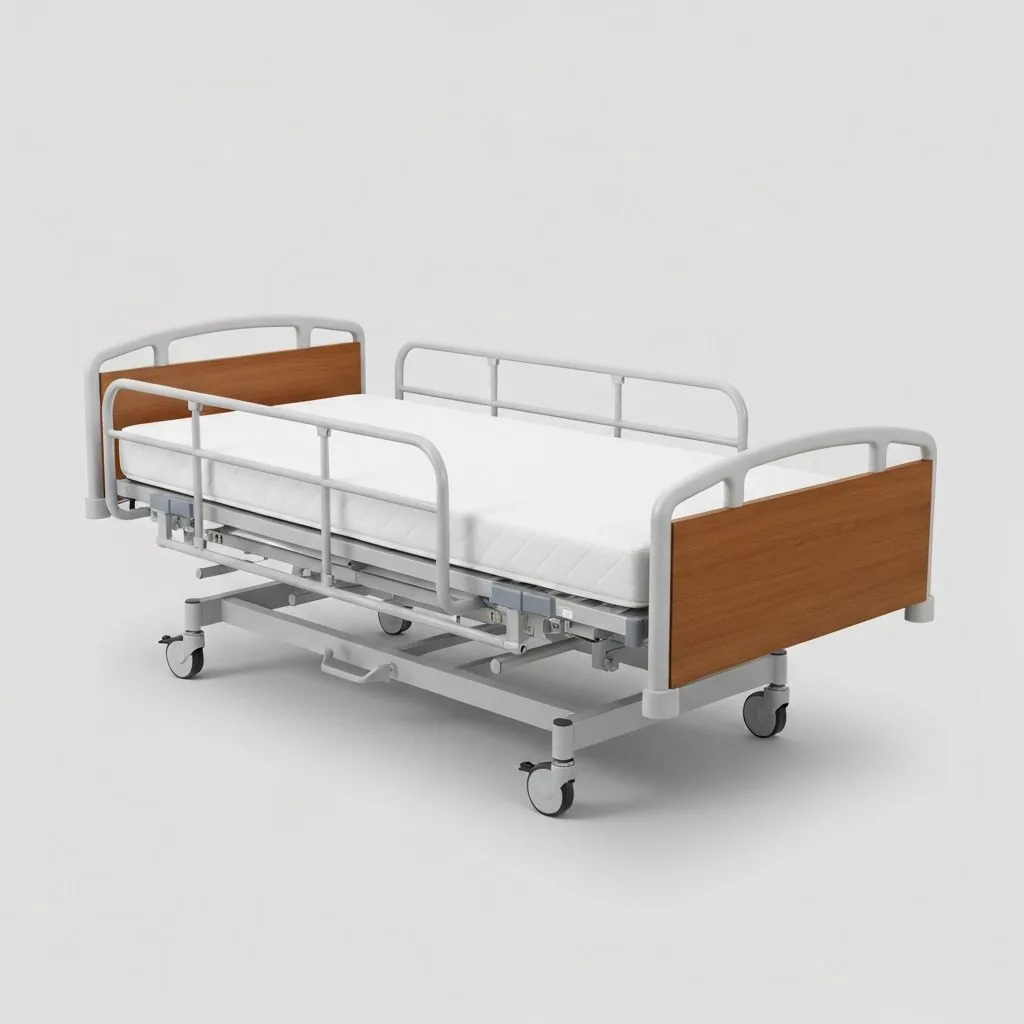
Hospital Beds
General-purpose patient beds for inpatient wards and standard hospital rooms.
View product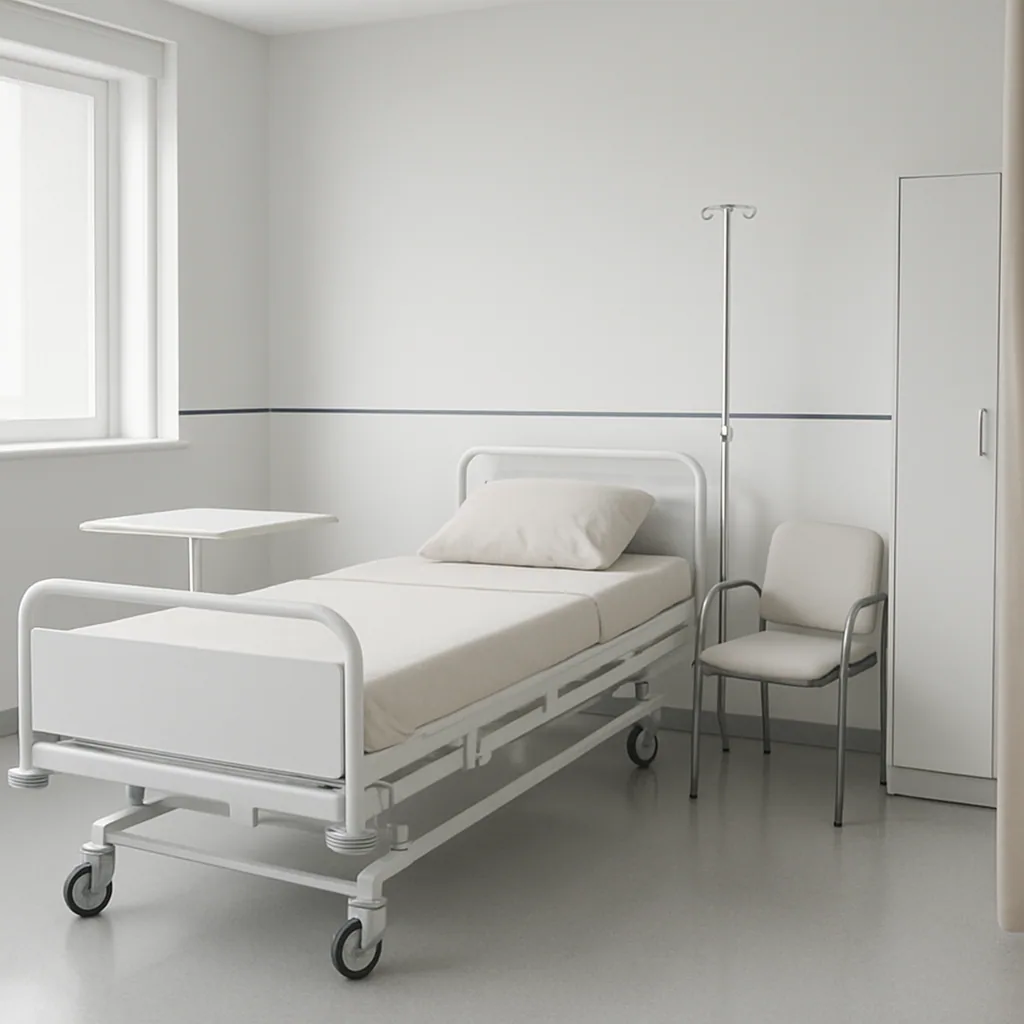
Ward Furniture
Complete ward furniture options for patient rooms and hospital care areas.
View product