
Choosing an ambulance stretcher feels overwhelming. A wrong choice risks patient safety and budget. You need a reliable, durable stretcher that fits your operational needs without overspending.
To choose the right ambulance stretcher, focus on four key areas: the frame's certified load capacity, a loading system matching your team's training, a mattress designed for infection control, and robust safety locks. These factors ensure operational safety and long-term value over simple feature comparisons.
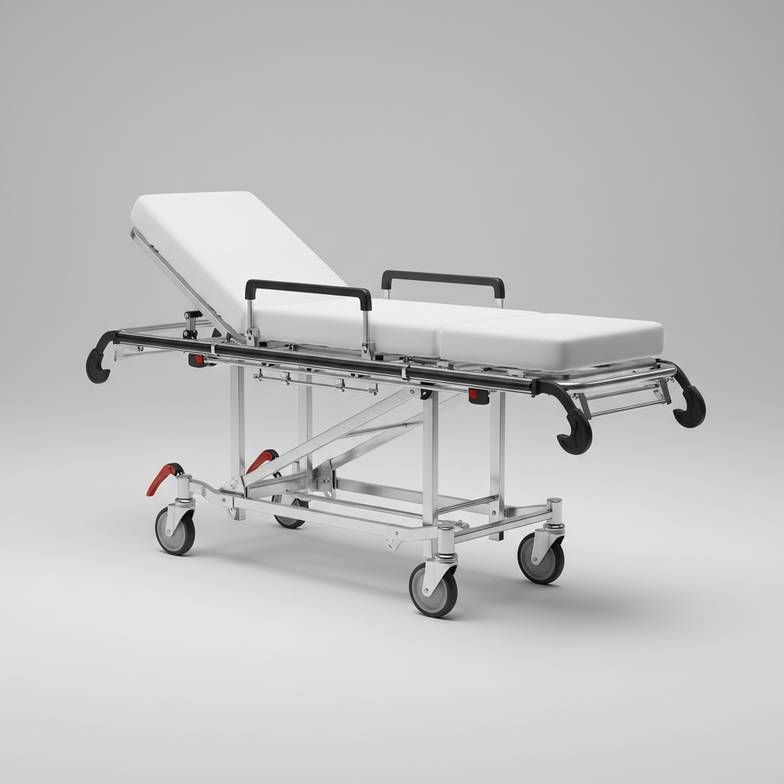
In my experience helping procurement teams source medical equipment, I've seen many buyers get stuck comparing long lists of technical features. They focus on small details but miss the bigger picture. The most important thing is to understand how a stretcher's core components impact safety, daily use, and long-term costs. Let's break down what really matters.
Is a "Heavy-Duty" Aluminum Frame Enough to Guarantee Stretcher Safety?
Suppliers all claim their frames are "high-strength." But these vague terms don't guarantee performance. A frame failure during a call is a catastrophic event you can't afford.
No, a "heavy-duty" label isn't enough. True safety comes from the stretcher's certified load capacity (like EN 1865), structural design, and welding quality. These verifiable details, not marketing terms, determine if the frame can handle real-world stress and ensure long-term durability and safety.
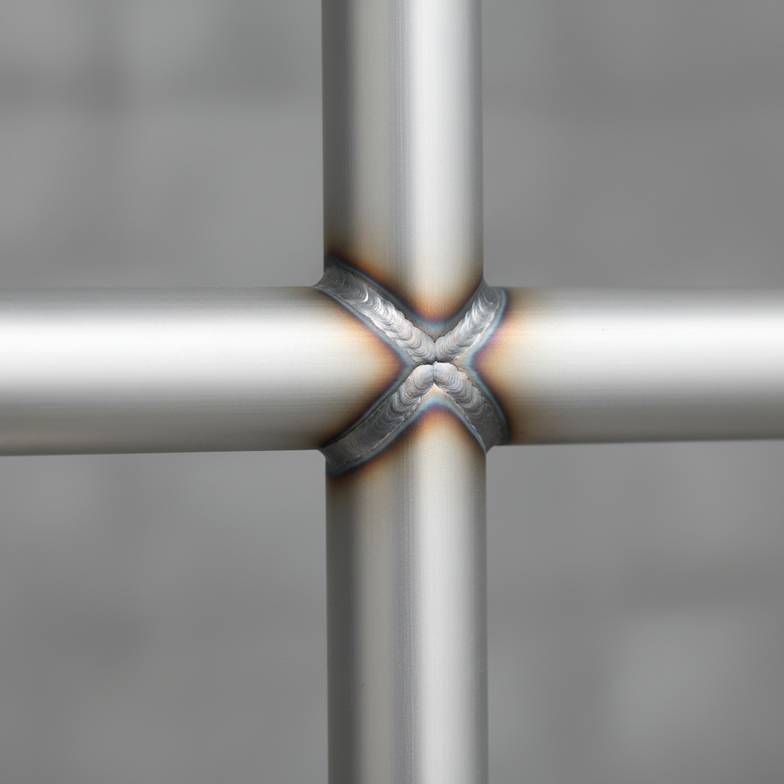
I often get questions about the specific type of aluminum alloy used in a stretcher frame. While that matters, it's only one part of the story. A more critical question is how that material is used. Two stretchers can use the same alloy, but one can fail under pressure while the other performs flawlessly. The difference lies in the engineering and verification.
Key Frame Factors to Verify
You should ask suppliers for specific proof points beyond just the material type. Instead of asking "Is it heavy-duty?", ask "Can you provide the test report for its load capacity?". This approach shifts the conversation from subjective claims to objective evidence of safety and durability.
| Factor to Check | What to Ask for | Why It Matters |
|---|---|---|
| Certified Load Capacity | A copy of the EN 1865 or equivalent test report. | This international standard verifies the stretcher's static and dynamic load-bearing capabilities, proving it can safely handle the stated weight. |
| Structural Design | Detailed diagrams or photos of joint construction and support braces. | Good design distributes weight evenly and reinforces weak points. Poor design creates stress points that can lead to fractures over time. |
| Welding Quality | Close-up images of the welding seams. | Look for clean, consistent welds. Inconsistent or sloppy welding is a major red flag for structural integrity and a common point of failure. |
Should You Choose a Manual, Semi-Automatic, or Fully Automatic Loading System?
Automatic systems seem advanced, but they come with higher costs and maintenance needs. Manual systems are cheaper but physically demanding. Choosing the wrong one can lead to crew injury or operational delays.
The best choice depends on your specific needs. Manual systems are cost-effective and simple but require more training and physical effort. Automatic systems reduce strain but cost more upfront and need regular maintenance. A semi-automatic system offers a balance between the two, often being a practical compromise.
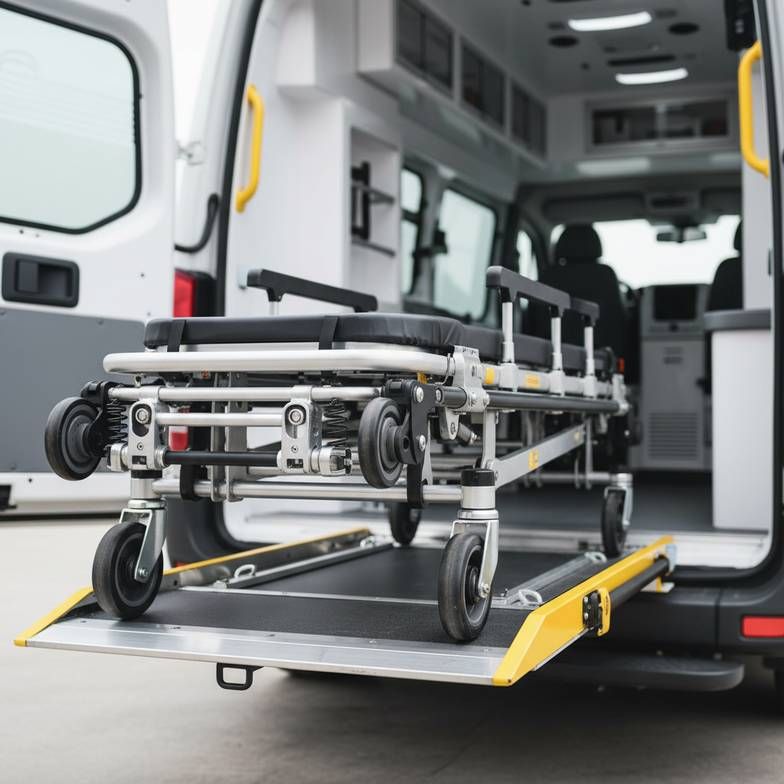
A common point of confusion for buyers is whether to invest in an automatic loading system. The marketing often presents it as the superior choice, but "best" is always relative to your situation. This decision is a trade-off between budget, crew training, and operational context.
Making the Right Trade-Off
Instead of asking which system is better, we advise clients to consider their operational realities. A busy urban emergency service with high call volumes might justify the cost of an automatic system to reduce crew fatigue and injury risk. On the other hand, a service in a rural area with lower call frequency and a tight budget might find a manual system perfectly adequate, provided their crew is well-trained in proper lifting techniques. Your decision should be based on a clear-eyed assessment of your budget for both purchase and long-term maintenance versus the physical demands on your team.
| System Type | Best For | Key Considerations |
|---|---|---|
| Manual | Budget-conscious buyers; crews with strong physical training. | Lowest upfront cost; simple mechanics; higher risk of back injury if not used correctly. |
| Semi-Automatic | Buyers looking for a balance of cost and usability. | Moderate cost; often uses hydraulic or gas spring assistance to ease lifting; a good all-around option. |
| Fully Automatic | High-volume services; organizations prioritizing crew ergonomic safety. | Highest upfront cost; minimizes physical strain; requires battery power and more complex maintenance. |
Are the Mattress and Safety Locks Just Minor Accessories?
It's easy to focus on the stretcher's big features and overlook the mattress and locks. But a low-quality mattress can spread infection, and a faulty lock can lead to a catastrophic failure.
Absolutely not. The mattress is critical for patient comfort and infection control, requiring a waterproof, easy-to-clean cover and high-density foam. Safety locks and restraint straps are non-negotiable safety components. Their reliability directly prevents patient falls and movement during transit, making them vital for operational safety.
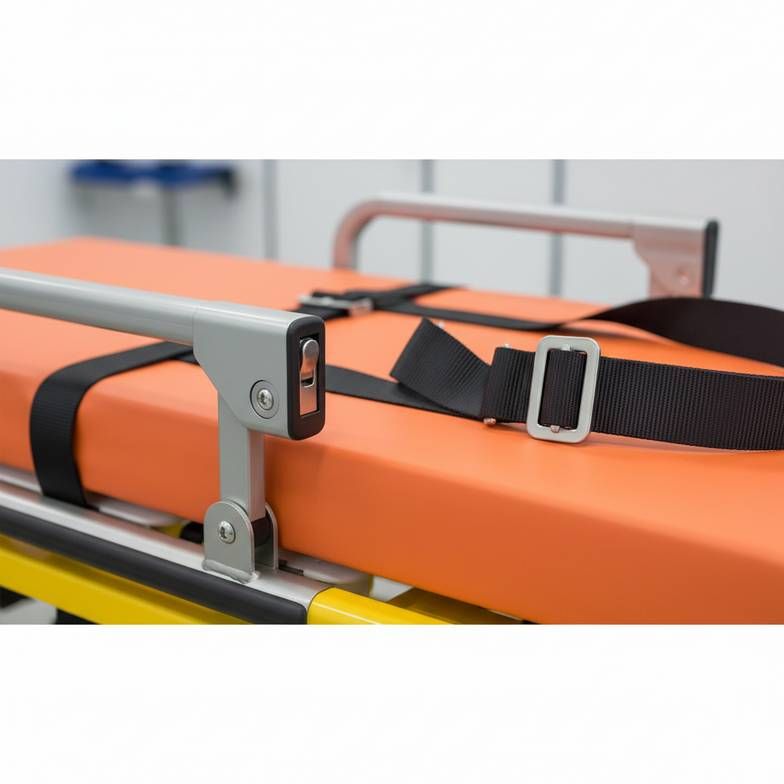
In our experience, the components most often overlooked during procurement are the mattress and the locking systems. These are frequently treated as afterthoughts, but they have a direct and significant impact on both patient safety and operational efficiency. A poor choice here can undermine the quality of an otherwise excellent stretcher frame.
Critical Safety Components, Not Accessories
When we prepare quotes, we always encourage buyers to ask for specific details on these two items. Vague descriptions like "comfortable mattress" or "secure locks" are not sufficient. These are not areas to cut costs. A failure in either of these components poses an immediate and severe risk to the patient.
The Mattress: Infection Control and Comfort
A medical-grade mattress isn't just about cushioning. It's a key tool in infection prevention.
- Cover Material: Ask if the cover is made of a non-porous, waterproof, and flame-retardant material (like medical-grade PVC or PU). It must be welded or seamlessly sealed to prevent fluids from seeping into the foam.
- Foam Density: Inquire about the foam density. High-density foam provides better support for patients and resists bottoming out, which is crucial for comfort during long transports and for preventing pressure sores.
Safety Locks and Restraints: The Last Line of Defense
The mechanisms that lock the stretcher's legs, side rails, and the entire unit into the ambulance are your most important safety features.
- Locking Mechanism: Request diagrams or videos showing how the locks engage. They should be simple to operate but provide a clear, positive lock that you can see and feel.
- Restraint Straps: Check the quality of the buckles and webbing. They should meet automotive or medical device standards for strength and durability.
Conclusion
In summary, choosing the right ambulance stretcher means verifying frame capacity, matching the loading system to your needs, and demanding high-quality mattresses and locks for ultimate safety and value.
Written by
CareFurnex Team
CareFurnex Team shares practical knowledge about hospital beds, patient room furniture, medical trolleys, clinic furniture, and healthcare facility procurement for international B2B buyers.
Related Products
Hospital Mattresses
Medical bed mattresses for hospital beds, nursing beds, and patient room use.
View product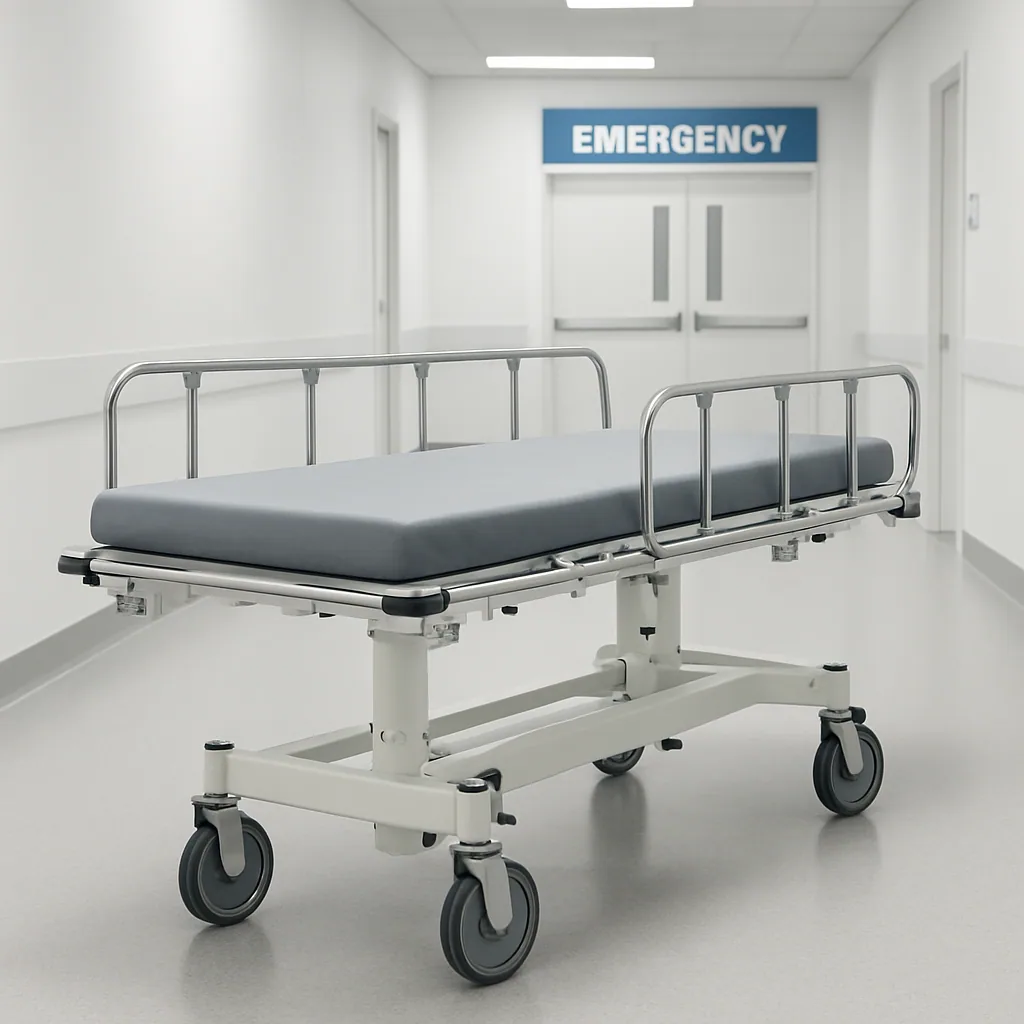
Hospital Stretchers
Patient transfer stretchers for emergency rooms, wards, clinics, and healthcare projects.
View product
Hospital Beds
General-purpose patient beds for inpatient wards and standard hospital rooms.
View product