
A buyer often asks, "Which is the best lock for a medical trolley?" This question seems straightforward, but a simple answer is often incomplete. The locking system that is right for a rapid-access emergency cart is frequently the wrong choice for a pharmacy trolley that requires a strict audit trail.
Choosing a lock based on its initial price or technology alone can create unexpected problems in a clinical setting. A "simple" key lock can lead to complex key management issues during shift changes, while a "modern" digital lock can become a barrier if its battery fails at an important moment.
The decision is not just about securing contents; it is about matching the lock's function to the department's daily reality.
The most suitable locking system for a medical trolley depends on balancing the required access speed, the level of security and staff accountability needed, and your facility's plan for managing keys or codes. A lock for an emergency cart should prioritize speed, while a lock for a pharmacy trolley should prioritize accountability.
From a supplier's perspective, we often see procurement discussions start with a price comparison between lock types. A more practical starting point is to define the trolley's job. Before we can recommend a lock, we need to understand where and how the trolley will be used. This context is what separates a suitable specification from one that creates daily friction for your staff.
How Do You Match a Lock to a Hospital Department's Workflow?
The right lock supports the workflow of the department it serves. Instead of thinking in terms of "good, better, best," it is more useful to think in terms of "best fit for the task."
For example, a key lock is a simple and cost-effective option for a trolley in a low-risk area or one assigned to a single user, like a treatment room supply cart. However, for a trolley shared by a full nursing shift, managing and tracking individual keys can become a significant operational burden.
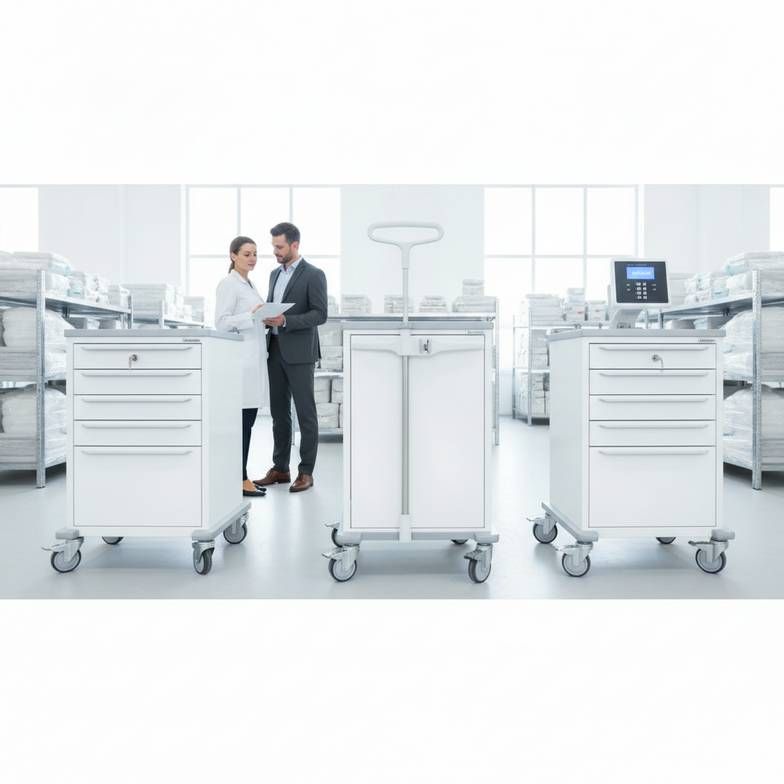
A standard central lock, which secures all drawers with a single turn of a key, is built for workflow efficiency. It is a good fit for general ward medication trolleys used during nursing rounds, as it allows staff to quickly secure the cart between patient rooms.
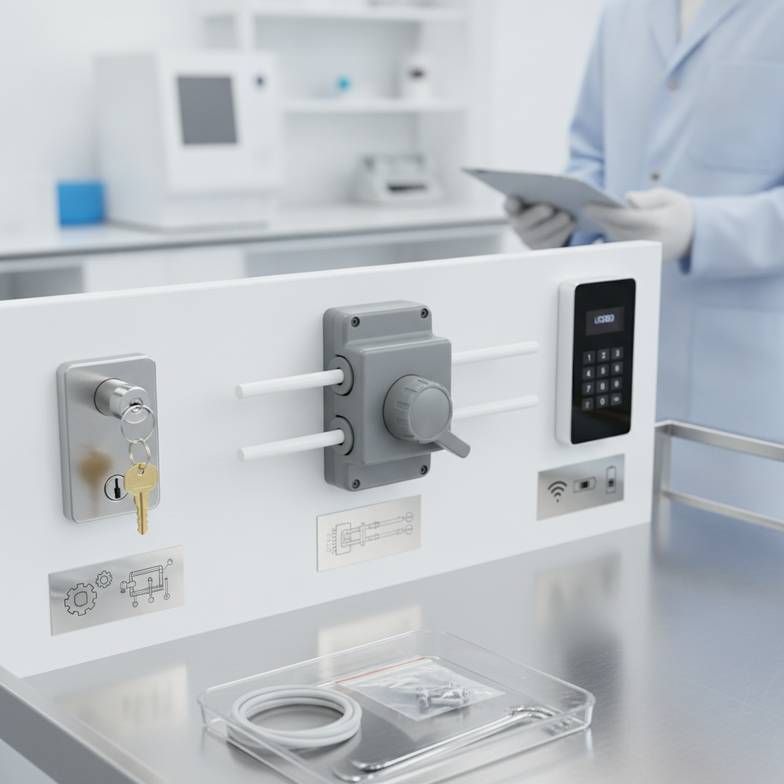
A digital lock is designed for situations that call for high security and accountability. It is often recommended for anesthesia or pharmacy trolleys holding controlled substances, as it can provide a record of who accessed the cart and when. The trade-off is the need for battery management and code administration.
Here is a practical way to map lock types to their most common applications.
| Lock Type | Best Fit Application | Key Question for Supplier |
|---|---|---|
| Key Lock | Low-risk supply trolleys assigned to a specific user or in a secure area. | "Do you offer master keying options, and what is the process for ordering replacement keys?" |
| Central Lock (Breakaway) | Emergency carts (e.g., crash carts, code carts) where rapid, keyless access is the top priority. | "Can you confirm this is a 'breakaway' style lock with a tamper-evident seal for emergency use?" |
| Central Lock (Standard) | General ward or medication trolleys used for nursing rounds where securing all drawers at once improves workflow. | "Is this a turn-key lock that secures all drawers simultaneously?" |
| Digital Lock | Anesthesia, pharmacy, or controlled substance trolleys where an audit trail and user-specific access are needed. | "What is the battery life, and does it include a mechanical key override for emergencies?" |
What's the Difference Between a Standard and a Breakaway Central Lock?
This is a detail buyers often miss. The term "central lock" can describe two functionally different systems, and choosing the wrong one can lead to access delays or security gaps.
A standard central lock is a convenience feature. You turn a key, and a bar moves to lock all drawers at once. Its purpose is to efficiently secure a trolley during routine tasks, like medication rounds. It is not designed for rapid, forceful entry.
A breakaway central lock is a functional feature designed for emergency carts (crash carts, code carts). It uses a single-use plastic seal that keeps the trolley secured and tamper-evident. In an emergency, staff do not need a key; they simply apply force to break the seal and gain access to the contents. The broken seal then serves as a clear visual indicator that the cart has been used and needs to be restocked.
If you are ordering an emergency cart, you should confirm with the supplier that the specification includes a "breakaway" lock, not just a "central" lock.
What Lock Details Should You Confirm Before Finalizing an Order?
The lock type is the first decision, but the secondary operational details are just as important. Overlooking them can lead to future access problems. I would always clarify these "what if" scenarios before confirming an order.
For Key Locks, the main concern is key management. If you are ordering dozens of trolleys, ask the supplier:
- Can the locks be master keyed so a supervisor can open any trolley?
- What is the procedure and cost for ordering replacement keys?
For Digital Locks, the primary concerns are power failure and forgotten codes. Before you buy, confirm:
- Does the lock include a mechanical key override? This is a practical backup. Without it, a dead battery or forgotten code can render a trolley useless until it can be forcibly opened.
- What is the expected battery life, and what kind of batteries does it use?
- Is there a low-battery indicator to give staff advance warning?
Clarifying these points before production is much better than discovering a problem after the trolleys are delivered.
How to Prepare Your Inquiry for an Accurate Trolley Quote
A vague request like "quote for 10 trolleys with locks" makes it hard for any supplier to provide a useful quotation. The price and suitability depend on the details.
To get a quotation that is accurate and easy to compare, prepare the following information before you contact a supplier. For each type of trolley you need, try to specify:
1. The intended department: e.g., Emergency Department, General Ward, Pharmacy, Anesthesiology. 2. The primary function: e.g., Crash Cart, Medication Rounds, Supply Storage. 3. Your preferred lock type: Based on your workflow (e.g., Key Lock, Breakaway Central Lock, Digital Lock). 4. Any specific management requirements: Such as the need for master keys for a batch of key-lock trolleys or confirmation of a mechanical override on all digital locks.
Providing these details helps us, or any supplier, understand your operational needs. It allows us to recommend the most practical and correctly configured trolley, and helps the quotation you receive to better reflect the product you need.
Written by
CareFurnex Team
CareFurnex Team shares practical knowledge about hospital beds, patient room furniture, medical trolleys, clinic furniture, and healthcare facility procurement for international B2B buyers.
Related Products
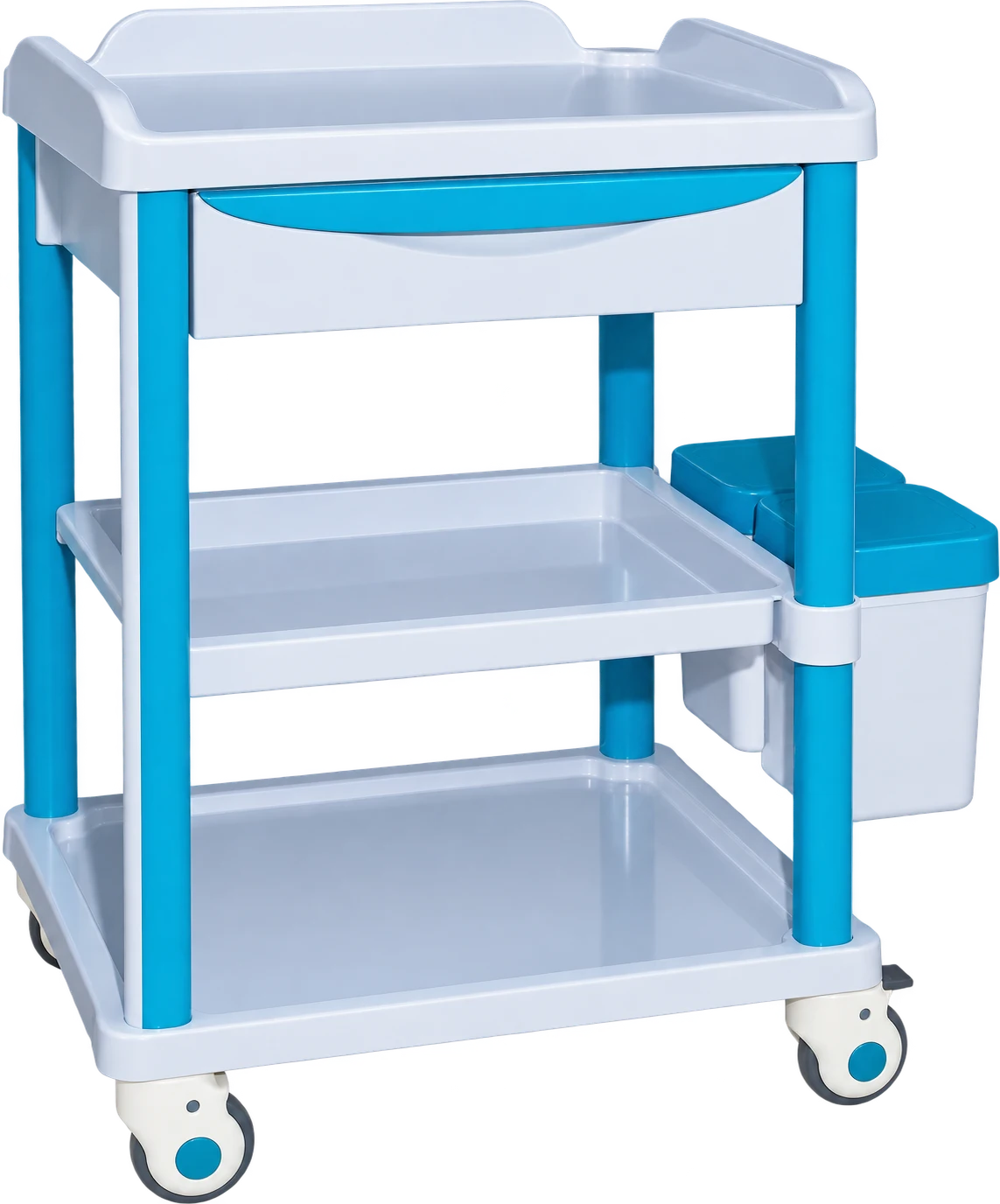
Medical Trolleys
Mobile carts for nursing rounds, treatment supplies, medicines, and clinical tools.
View product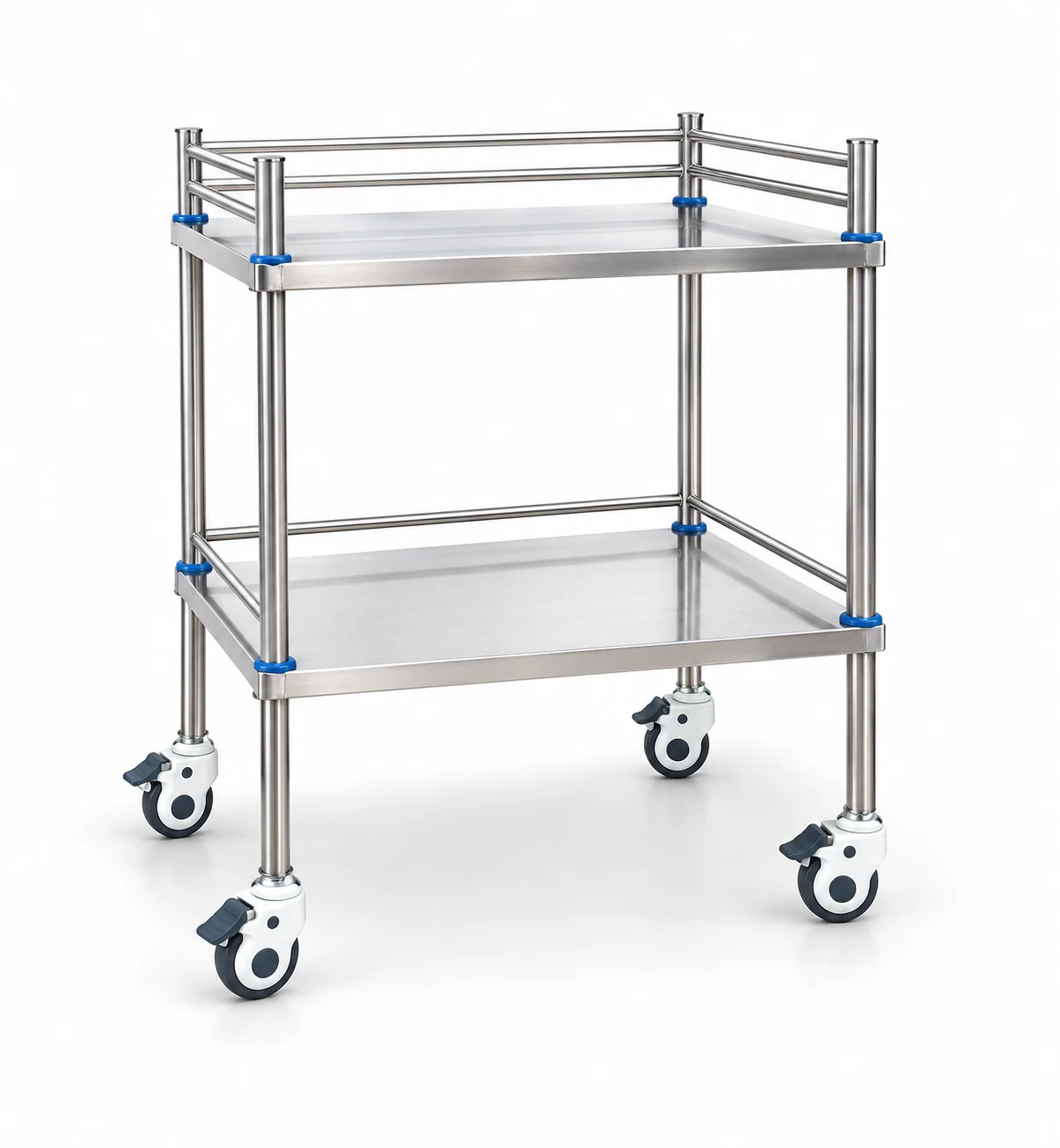
Stainless Steel Trolleys
Compare stainless steel trolleys by model, stated dimensions and configuration.
View product
Hospital Beds
General-purpose patient beds for inpatient wards and standard hospital rooms.
View product