
When sourcing IV stands for a hospital project, many buyers start by comparing two options: stainless steel and powder-coated steel. The first quotation for a powder-coated stand often looks cheaper, which can be attractive for budget-sensitive projects. But from a supplier's perspective, choosing an IV stand based on material name and unit price alone can lead to problems after delivery.
A clean product photo doesn't show surface durability, base stability, caster quality, or how well the stand will hold up to daily cleaning and movement in a busy hospital. A lower price might hide weaker packing, which can lead to scratches and damage before the product is even used. For cleaning-related specifications, buyers can also review the CDC environmental cleaning guidance.
The best choice is not simply stainless steel or powder-coated. It's the IV stand with the right combination of material, base, casters, hooks, and packing that matches the hospital's real use environment, cleaning protocols, and your project's total landed cost.
This guide explains the practical differences from our experience as a supplier. We'll cover what to check beyond the material so you can make a safer procurement decision for your hospital, clinic, or distribution inventory.
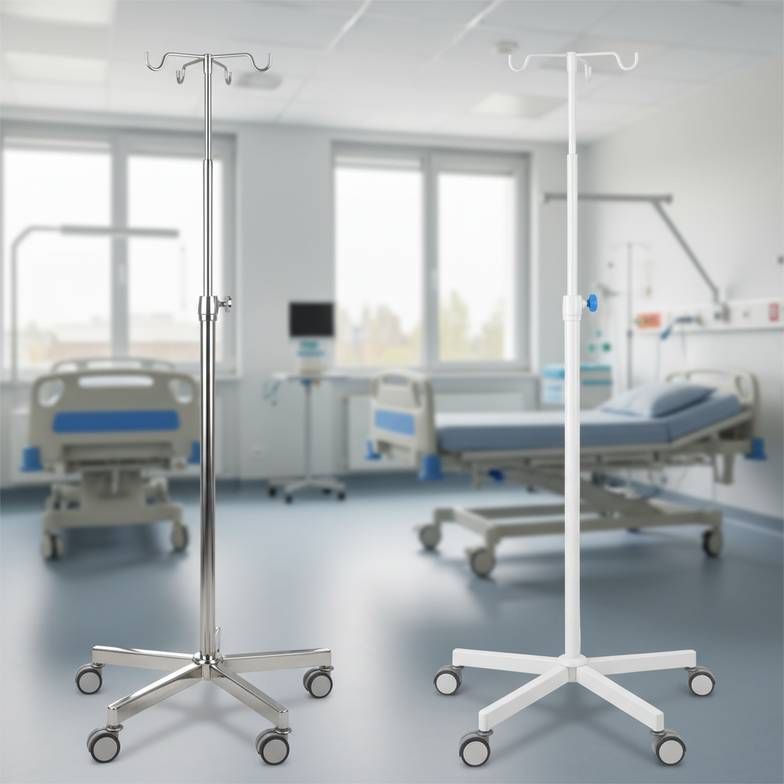
Which Is Better for Hospital Use: Stainless Steel or Powder-Coated IV Stands?
When a buyer asks me whether stainless steel or powder-coated is "better," my first question is always: "Where and how will it be used?" These two options are not just different price points; they represent two different profiles for cleaning tolerance, appearance durability, and after-sales risk.
- Stainless Steel IV Stands: These are generally the preferred choice for environments where frequent cleaning, durability, and long-term appearance are critical. Hospitals often perceive stainless steel as more hygienic and professional. It resists rust and corrosion well, which is a significant advantage in areas with high humidity or frequent contact with liquids and cleaning agents.
- Powder-Coated IV Stands: These can be a practical option for cost-sensitive projects or moderate-use environments like clinics or general wards where cleaning is less aggressive. The powder coating provides a durable finish, but it's not immune to deep scratches or chips, which could expose the underlying steel to moisture and lead to complaints.
The decision shouldn't be based on a simple "good vs. cheap" mindset. A well-made powder-coated stand can outperform a poorly constructed stainless steel one with an unstable base or weak casters. The key is to match the material to the environment and confirm the entire product specification.
Stainless Steel vs. Powder-Coated IV Stand Comparison
This table helps you look beyond the initial price and consider the practical trade-offs.
| Comparison Factor | Stainless Steel IV Stand | Powder-Coated IV Stand | Buyer Decision Note |
|---|---|---|---|
| Initial Unit Price | Usually higher | Usually lower | Price is only one factor. Compare total landed cost and long-term value. |
| Cleaning Suitability | High resistance to a wide range of cleaning agents. | Good; but harsh chemicals or abrasive cleaning may damage the finish over time. | Confirm the hospital's cleaning protocols. Stainless steel is often better suited for aggressive cleaning. |
| Surface Durability | High resistance to rust and corrosion. Scratches are often less visible. | The finish can be chipped or deeply scratched, potentially exposing the steel underneath. | Consider the intensity of use and risk of impact from beds, carts, or equipment. |
| Appearance Over Time | Maintains a professional, clinical look. Can be polished to restore appearance. | Prone to showing scratches and chips, which can make it look worn more quickly. | For high-visibility areas, stainless steel often offers better long-term appearance. |
| Suitable Use Scenario | Operating rooms, emergency departments, ICUs, high-traffic wards. | General patient rooms, clinics, nursing homes, cost-sensitive projects. | Match the material to the department's specific demands and budget. |
| Packing Sensitivity | Needs protection from dents and deep scratches to maintain a perfect finish. | High sensitivity. Requires careful packing to prevent scratches and chips to the coating. | A low price with weak packing is a significant risk. Always confirm packing details. |
From our side, we always recommend that if the hospital's specification is unclear, you should request quotes for both options—but only if the quotes are for the exact same base, caster, and hook configuration.
When Does a Lower Powder-Coated IV Stand Price Become More Expensive?
A lower unit price on a quotation is tempting, but it can be misleading. I've seen many cases where a "cheaper" powder-coated IV stand ended up costing more in the long run due to hidden factors.
The real cost of a product isn't just the factory price; it's the total landed cost per usable, complaint-free unit. Here’s where a low initial price can become expensive:
1. Shipping Damage: Powder-coated surfaces are more vulnerable to scratches during transit. If the supplier cuts costs on packing, you might receive units with chipped or scratched paint. These are often rejected by hospitals, forcing you to arrange replacements or offer discounts. 2. Incomplete Configuration: A low price might be for a basic model with fewer hooks, standard-duty casters without brakes, or a lighter, less stable base. Upgrading to the configuration you actually need can eliminate the initial savings. 3. Higher Freight Costs: Sometimes, inefficient packing with bulky, non-stackable cartons can increase the total CBM (cubic meters) of your shipment. This drives up freight costs and can erase any per-unit savings. 4. After-Sales Complaints: If the coating peels or scratches easily in a busy ward, you'll be the one fielding complaints from the hospital. The time and resources spent managing these issues have a real cost.
Before choosing the cheaper option, calculate the potential total cost. Ask your supplier for the packing method, carton dimensions, and total CBM to compare the full cost, not just the price on a sheet.
What Specification Details Should Buyers Confirm Besides Material?
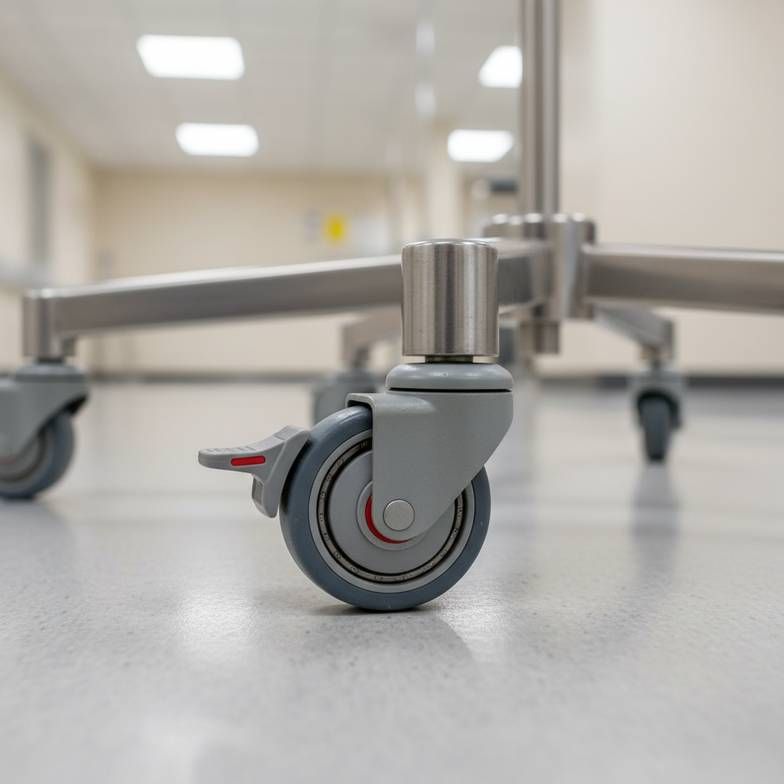
Treating "stainless steel IV stand" as a complete specification is a common mistake. The material is just the starting point. Two stands made from the same material can have vastly different performance and cost if their other components are not equal.
Before you confirm an order, I recommend getting written confirmation on these details:
- Base Type and Stability: Is it a 4-leg or 5-leg base? Is it weighted for stability? A heavy, wide base improves stability and reduces the risk of tipping—an important safety consideration in any healthcare setting.
- Pole Structure and Height Adjustment: How does the height adjust? A smooth, secure locking mechanism is essential for ease of use by nursing staff.
- Hook Quantity and Design: How many hooks are included (e.g., 2-hook, 4-hook)? Are they simple J-hooks or a ram's horn design? The number and type of hooks should match the clinical need.
- Caster Type and Brakes: What kind of casters are used? Low-quality casters can be noisy and difficult to move. Ask if at least two of the casters have brakes, and confirm if brakes are standard or an optional extra.
- Included vs. Optional Items: Are accessories like a pump holder, basket, or handle included in the price, or are they optional add-ons? A good supplier will list these clearly on the quotation.
I often remind buyers: don't approve an order based on a photo. A photo doesn't show you the weight of the base or the quality of the casters. Always ask for a detailed specification sheet.
How Should Buyers Match IV Stand Material to Different Hospital Departments or Projects?
A hospital is not one single environment. The right IV stand for a general ward may not be suitable for an intensive care unit. For large projects, I suggest buyers prepare a department-based list before requesting quotations.
Here’s a simple way to think about it:
- High-Demand Areas (e.g., ICU, Emergency, Operating Rooms): These areas see heavy use, frequent movement, and aggressive cleaning. Durability and hygiene are top priorities. Stainless steel is almost always the more appropriate choice here.
- General Wards and Patient Rooms: Use is moderate. Both stainless steel and high-quality powder-coated stands can work, depending on the hospital's budget and long-term expectations. If choosing powder-coated, confirm the hospital accepts the surface specifications.
- Clinics and Nursing Homes: These environments often have tighter budgets and may have less intensive use than a major hospital. A well-made powder-coated IV stand is often a very reasonable and cost-effective solution here.
For a project buyer, deciding this upfront prevents problems later. If you plan to use both types in one project, make sure your order and delivery plan clearly specify which type goes to which department to avoid installation errors.

What Packing and Shipping Details Should Buyers Check Before Bulk Ordering IV Stands?
IV stands seem simple, but they consist of long poles, heavy bases, and small parts like hooks and casters. From a supplier's perspective, packing is part of the product's quality. Weak packing is a major red flag.
Here's what can go wrong:
- Scratched Surfaces: Poles rubbing against each other or the carton can cause scratches. This is especially damaging for powder-coated finishes.
- Bent Hooks: If not properly secured, hooks can bend or break during transit.
- Missing Parts: Casters, screws, and other small components can get lost if not packed securely in a separate, clearly labeled bag or box.
Before confirming a bulk order, ask your supplier these packing questions:
- How are the poles, base, and hooks protected inside the carton?
- Are small parts packed together and clearly labeled?
- What are the final carton dimensions (L x W x H)?
- What is the gross weight and net weight per carton?
- What is the total CBM for the entire order?
Getting this data allows you to accurately calculate shipping costs and assess the risk of damage. A supplier who can provide clear, detailed packing information is usually more reliable.
How Can Buyers Compare Stainless Steel and Powder-Coated IV Stand Quotations Fairly?
Comparing two quotations based on the final price alone is one of the biggest risks in procurement. You might be comparing two completely different products.
To compare fairly, you need to ensure you're comparing on the same basis. We recommend creating a simple matrix to check if each supplier has quoted the same specification. If a supplier's quote is missing a detail, ask them to clarify it before you make a decision.
IV Stand Quotation Comparison Matrix
| Quotation Item | Supplier A (Example) | Supplier B (Example) | Same Basis? | Buyer Action Needed |
|---|---|---|---|---|
| Material | Stainless Steel | Powder-Coated | No | Decide on material or ask for new quotes on the same basis. |
| Base Type | 5-leg, weighted | 4-leg, standard | No | Ask for weight/stability details. Confirm which base you need. |
| Hook Quantity | 4 hooks | 2 hooks | No | Specify the required number of hooks for a revised quote. |
| Caster Type | 2" Twin-wheel | 2" Single-wheel | No | Ask for caster specifications. Twin-wheel is often more stable. |
| Brake Option | 2 casters with brakes | Brakes optional (extra cost) | No | Clarify if brakes are included in the base price. |
| Packing Method | Each part wrapped, export carton | Standard carton, no inner wrap | No | Request details on packing protection to assess damage risk. |
| Total CBM | 15 CBM for 200 units | 18 CBM for 200 units | No | The "cheaper" unit price from Supplier B may have higher freight costs. |
| Trade Term | FOB Shanghai | EXW | No | FOB includes local port charges; EXW does not. Compare landed cost. |
| Unit Price | $28.00 | $22.00 | - | The price difference reflects a completely different product. |
This matrix shows that Supplier B's lower price comes with a different material, fewer hooks, a potentially less stable base, and higher shipping volume. Without this breakdown, you might have chosen the "cheaper" quote and received a product that didn't meet your needs.
Bulk IV Stand Pre-Order Checklist
Before you sign a purchase order, run through this final checklist. It helps ensure you and your supplier are aligned on every important detail.
- [ ] Department or room function confirmed
- [ ] Quantity confirmed by department
- [ ] Material (stainless steel or powder-coated) confirmed
- [ ] Base structure and stability confirmed
- [ ] Height adjustment mechanism confirmed
- [ ] Hook quantity and design confirmed
- [ ] Caster type and quality confirmed
- [ ] Brake requirement (included or optional) confirmed
- [ ] All included and optional items are clearly listed
- [ ] Packing method and inner protection confirmed
- [ ] Carton dimensions requested
- [ ] Gross weight, net weight, and total CBM requested
- [ ] Trade term (e.g., FOB, EXW, CIF) confirmed
- [ ] Lead time is based on final specification approval
The Right Choice Comes from Clear Specifications
Choosing between a stainless steel and a powder-coated IV stand is more than a material decision—it's a risk management decision. Stainless steel is often the safer choice for demanding hospital environments, but a well-specified powder-coated stand can be a smart choice for moderate-use areas and cost-sensitive projects.
The key is to move beyond the product name and unit price. The most successful projects happen when buyers confirm the full configuration, packing details, and use environment with their supplier before the order is placed.
If you are planning a hospital project or sourcing medical furniture, preparing a clear list of your requirements is the best first step. At CareFurnex, we help buyers review product specifications and plan their procurement categories to avoid common sourcing mistakes. A clear request helps us provide a more accurate and reliable quotation.
Written by
CareFurnex Team
CareFurnex Team shares practical knowledge about hospital beds, patient room furniture, medical trolleys, clinic furniture, and healthcare facility procurement for international B2B buyers.
Related Products
IV Poles
Review a wheeled IV stand and a separate pole by pictured layout and configuration requirements.
View product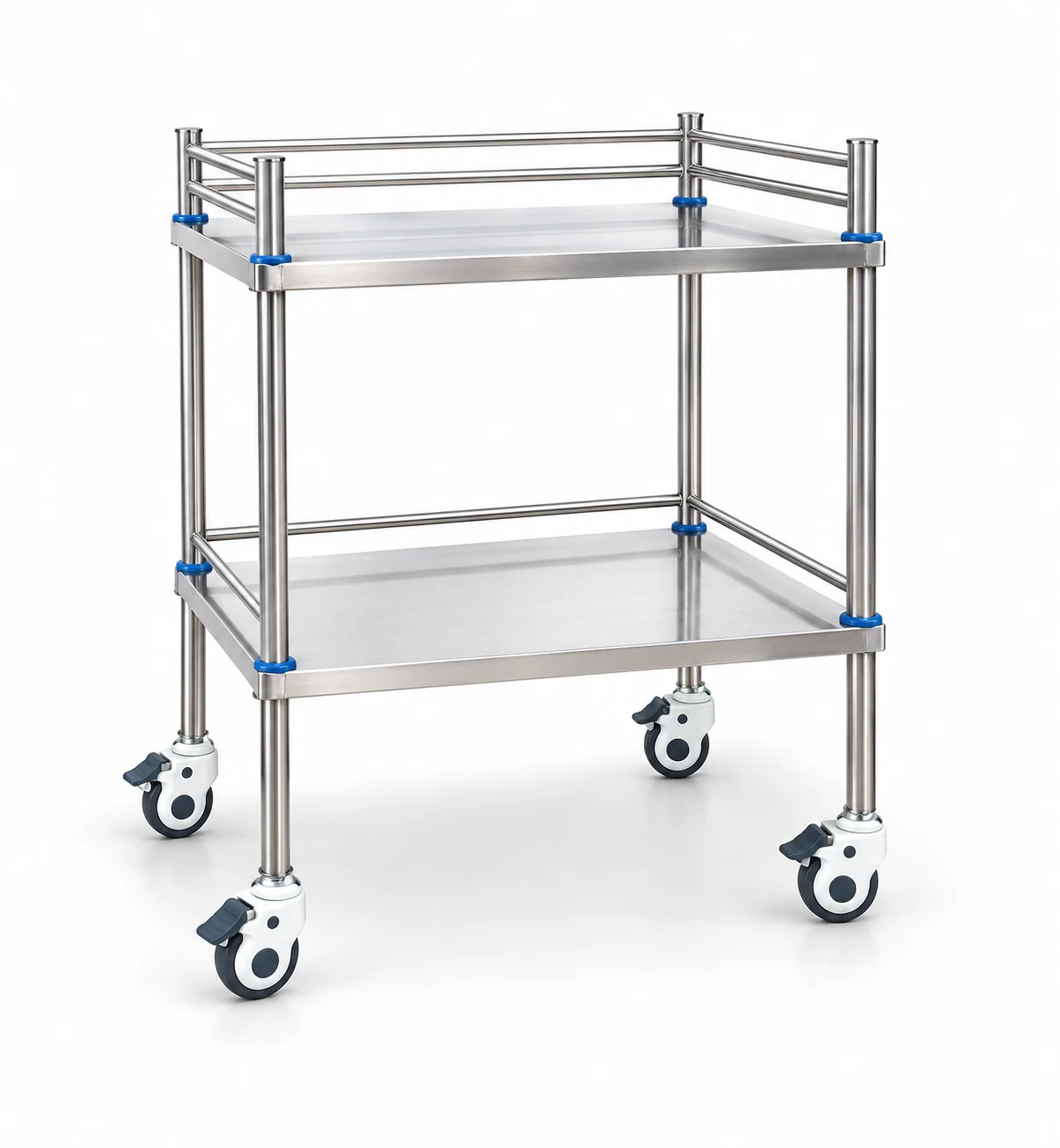
Stainless Steel Medical Furniture
Durable stainless-steel carts, tables, instrument stands, and storage units for clinical spaces.
View product
Hospital Beds
General-purpose patient beds for inpatient wards and standard hospital rooms.
View product