
Seeing "SS 304 Stainless Steel" on a quotation for an instrument trolley feels reassuring. For most applications, it's a solid specification. But for an operating room, that material grade is only the beginning of the story. The real test of a trolley's suitability is found in construction details that are rarely listed on a standard quote.
An instrument trolley that looks clean can still be a risk. If the frame has tiny, hard-to-reach crevices in its joints, unsealed tube ends, or sharp internal corners, it can create challenges for effective cleaning and may be flagged during hygiene reviews. The source of this problem often starts with an incomplete specification during purchase.
For an operating room instrument trolley, the key factors are a design that supports effective cleaning and the right material. This means checking for a crevice-free construction with fully welded and polished joints, a smooth surface finish, and confirmation of SS 304 grade material for its resistance to common cleaning chemicals.
From a supplier's perspective, the product name "instrument trolley" is not enough information to provide a quote for a sterile environment. Before we can recommend a product, we need to understand how it will be cleaned and the standards it must meet. A trolley for a general ward has different design requirements than one used in an OR or CSSD. Clarifying this upfront helps you avoid buying a trolley that creates cleaning challenges for your staff.
Why Isn't 'Stainless Steel' a Complete Specification for an OR Trolley?
Assuming any product labeled "stainless steel" is suitable for a sterile environment is a common mistake. While the material family is correct, the assembly and finishing methods are what separate a general-purpose trolley from an OR-ready one.
The difference is "design for cleanability." An operating room trolley is constantly exposed to moisture and harsh disinfectants. The design goal is to minimize any area where contaminants could collect. This includes not just the flat surfaces of the shelves but every joint, corner, and edge of the entire structure.
A standard commercial trolley might be assembled with bolts or spot welds, which are acceptable for dry storage. In an OR, these assembly methods create gaps and crevices that are difficult to decontaminate effectively. Therefore, specifying the construction quality is an important consideration, similar to the material itself.
What Construction Details Affect How Easily a Trolley Can Be Cleaned?
When evaluating a trolley for an OR, look past the overall shape and focus on the small construction details. These are the features that determine how quickly and effectively your staff can clean the equipment between procedures.
- Welding Method: The joints are a common area of concern. A trolley for an OR should have a fully welded frame, not one that is spot-welded or bolted together. Specifically, look for continuous TIG (Tungsten Inert Gas) welds that are ground and polished smooth. This creates a seamless, non-porous transition between parts, reducing gaps where contaminants could collect. Spot welds, by contrast, leave small, unsealed spaces between the joined metal.
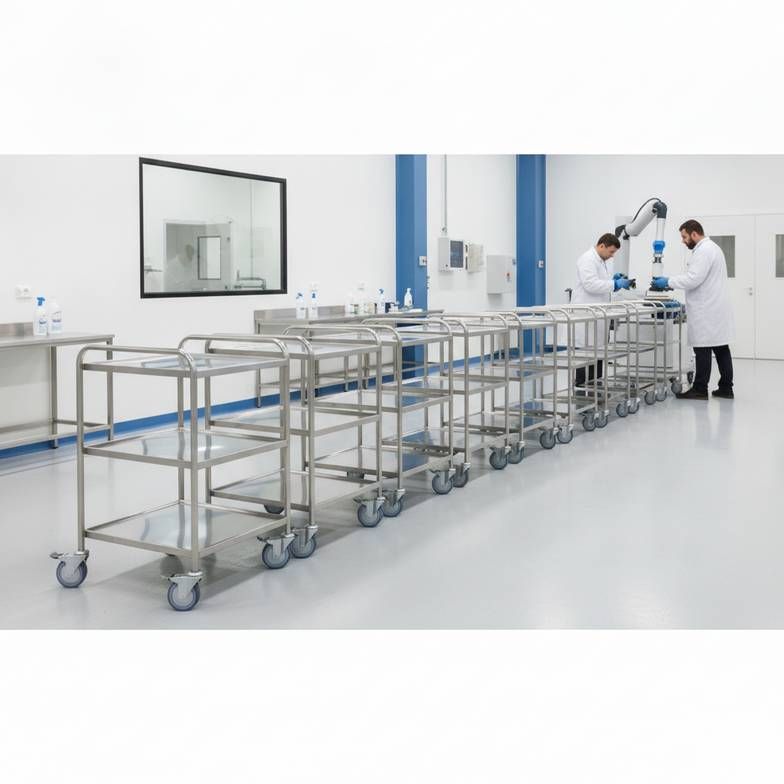
- Corner Design: Sharp 90-degree internal corners on shelves are "dirt traps." It is difficult for a cleaning wipe to make full contact in a sharp corner. Look for shelves with coved or rounded internal corners. This small design change allows for a single, smooth wiping motion, making cleaning faster and more reliable.
- Surface Finish: A standard brushed stainless steel finish has microscopic grooves that can, in theory, make it harder to remove microbes. For sterile applications, a smoother, polished finish is preferable as it presents a less textured surface, making decontamination more straightforward.
- Frame Ends: If the trolley has a tubular frame, check if the ends of the tubes are sealed. Open tube ends can allow moisture and debris to enter the frame, creating an internal space that cannot be easily cleaned. The ends should be fully welded shut or sealed with a tight-fitting, non-removable cap.
How Does Steel Grade (304 vs. 201) Affect a Trolley's Lifespan with OR Disinfectants?
Not all stainless steel is the same. The grade of the steel determines its resistance to corrosion, which is a practical concern in an environment with constant chemical cleaning.
For many operating rooms, SS 304 is a widely accepted material choice. It contains higher levels of chromium and nickel, which give it good resistance to corrosion from a wide range of chemicals, including chlorides found in many hospital disinfectants.
A lower-cost alternative, SS 201, may look identical when new. However, it has less nickel and is more susceptible to staining and pitting corrosion when repeatedly exposed to harsh cleaning agents. While it might be structurally sound, the appearance of rust spots is often a concern in a sterile environment and may require the equipment to be reviewed or replaced. Confirming SS 304 on the quotation is a practical step that helps support the trolley's long-term use.
What Should I Check in a Quotation Beyond Price and Dimensions?
When comparing quotations for OR instrument trolleys, looking at price and overall dimensions is not enough. You should audit the quotation for specific construction details. A vague quote is a red flag, as it may hide lower-cost construction methods unsuitable for your needs.
A quotation for an OR-ready trolley should be specific. Use the following checklist to compare offers and to ask suppliers for clarification.
Trolley Specification Checklist: From Generic to OR-Ready
| Specification Item | Vague or Generic Description | OR-Specific Confirmation (What to Ask) |
|---|---|---|
| Material | "Stainless Steel" | Is it Grade SS 304? Please confirm it is not a lower grade like SS 201. |
| Welding | "Welded Frame" | Are all joints fully TIG-welded (not spot-welded)? Are the welds ground and polished smooth? |
| Corners | "Shelves with raised edges" | Are the internal corners of the shelves coved/rounded, or are they sharp 90-degree angles? |
| Surface Finish | "Standard Finish" | What is the surface finish? Is it a smooth, polished finish or a standard brushed texture? |
| Frame Ends | "Tubular Frame" | Are the ends of all tubular components fully sealed to prevent internal contamination? |
If a supplier's quote is vague on these points, ask them to update it with specific confirmations. A supplier familiar with healthcare requirements should be able to provide this information easily. This process helps you compare like-for-like and reduces the risk of receiving a product that doesn't meet your facility's standards.

Preparing Your Inquiry for an OR-Ready Trolley
The quality of a supplier's response depends on the quality of your inquiry. Instead of asking for a price on a "stainless steel trolley," you can prepare a more qualified request that leads to a clearer, more comparable quotation.
Before contacting suppliers, consider including these points in your inquiry:
- Application: Clearly state the trolley is for an operating room or CSSD environment.
- Quantity: Provide the number of units required.
- Key Specifications: List your required construction details. You can use the checklist from this article as a guide. For example:
- Material: SS 304 required.
- Construction: Fully TIG-welded frame, all welds ground and polished smooth.
- Shelves: Coved/rounded internal corners.
- Frame: All tubular ends must be sealed.
- Dimensions: Provide your required length, width, and height, and the number of shelves.
Sending a detailed request like this signals to the supplier that you are a serious buyer who understands the specific requirements of your environment. It makes the quotation process more efficient and helps you make a better-informed purchasing decision.
Written by
CareFurnex Team
CareFurnex Team shares practical knowledge about hospital beds, patient room furniture, medical trolleys, clinic furniture, and healthcare facility procurement for international B2B buyers.
Related Products
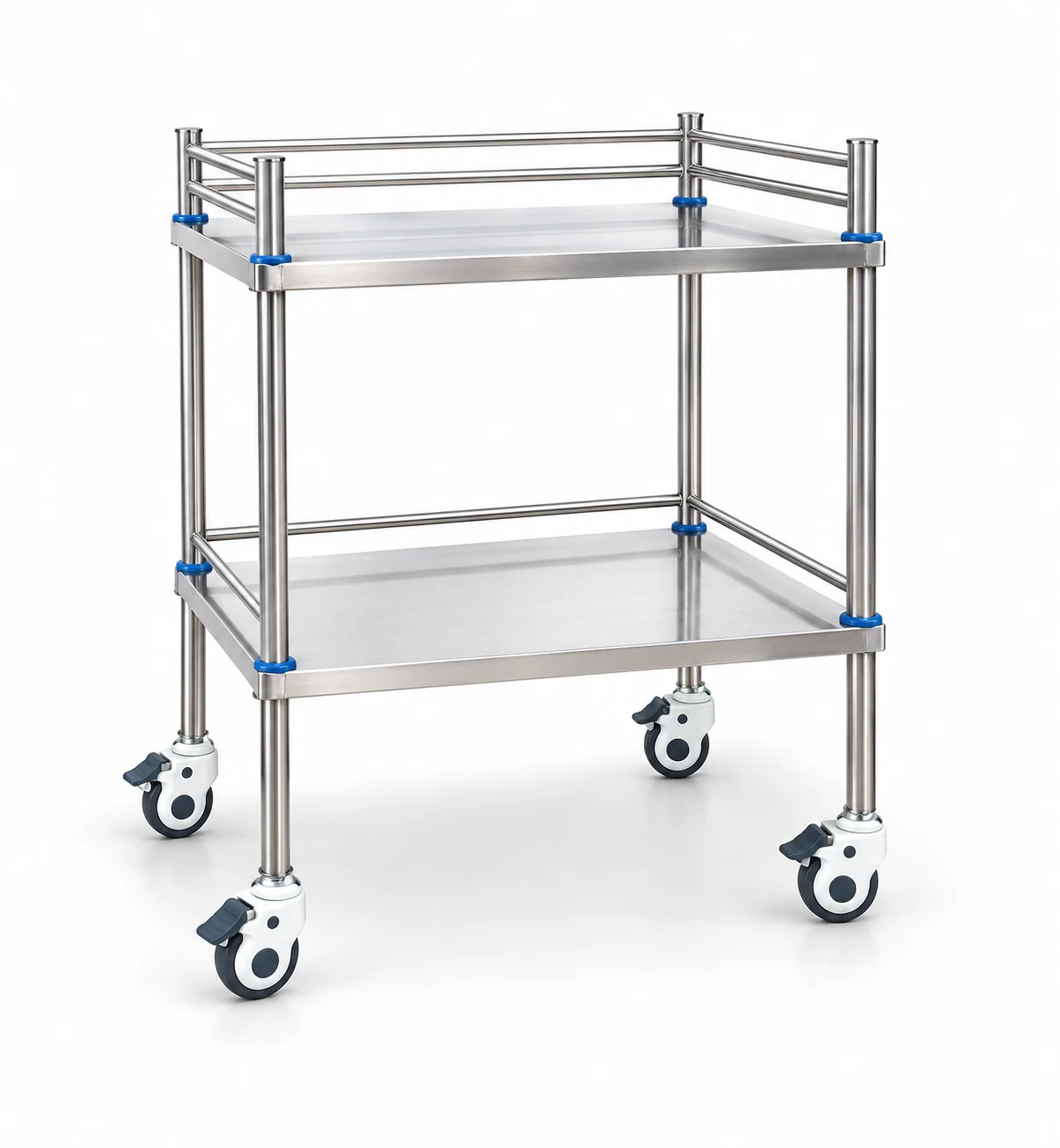
Stainless Steel Trolleys
Compare stainless steel trolleys by model, stated dimensions and configuration.
View product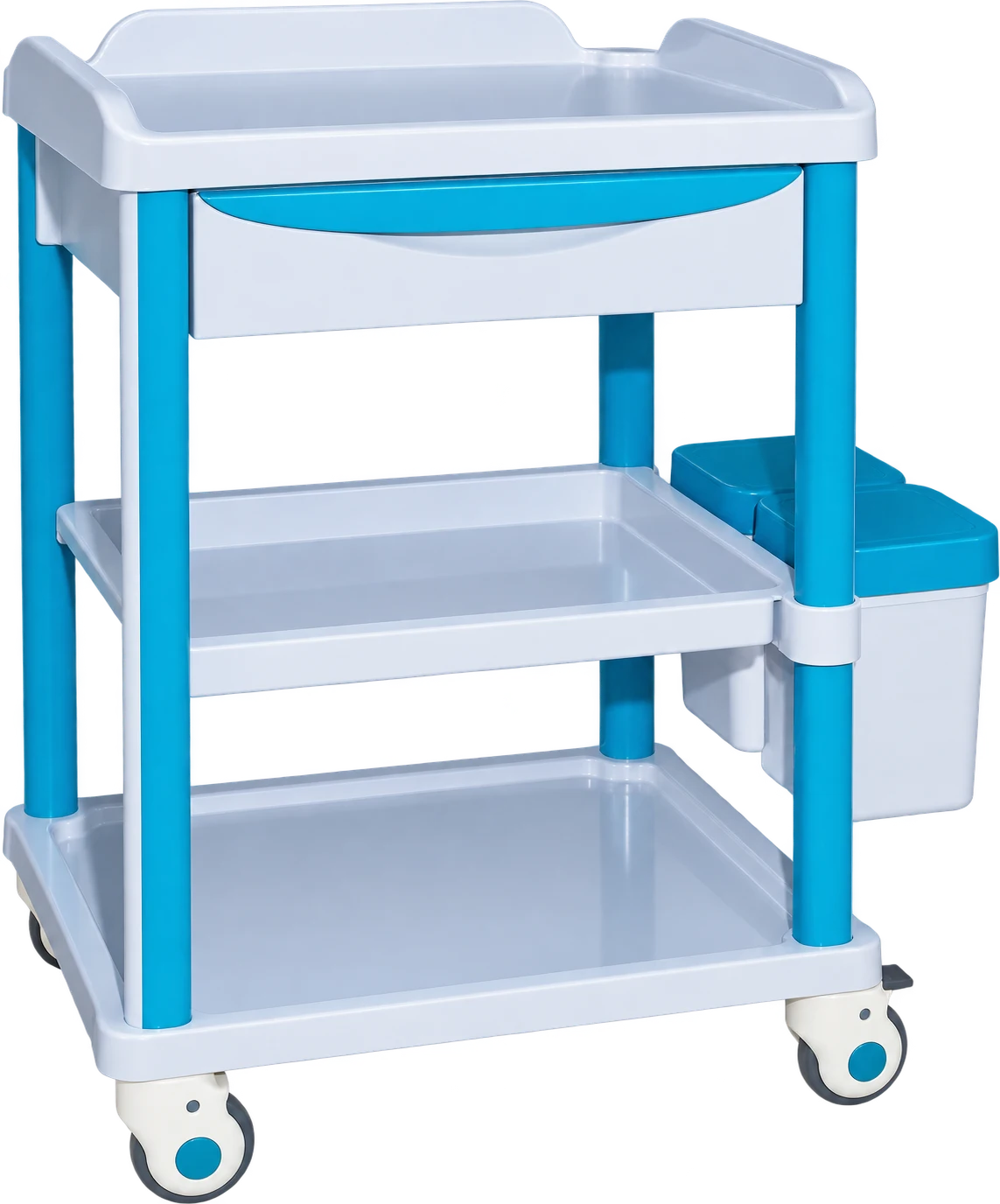
Medical Trolleys
Mobile carts for nursing rounds, treatment supplies, medicines, and clinical tools.
View product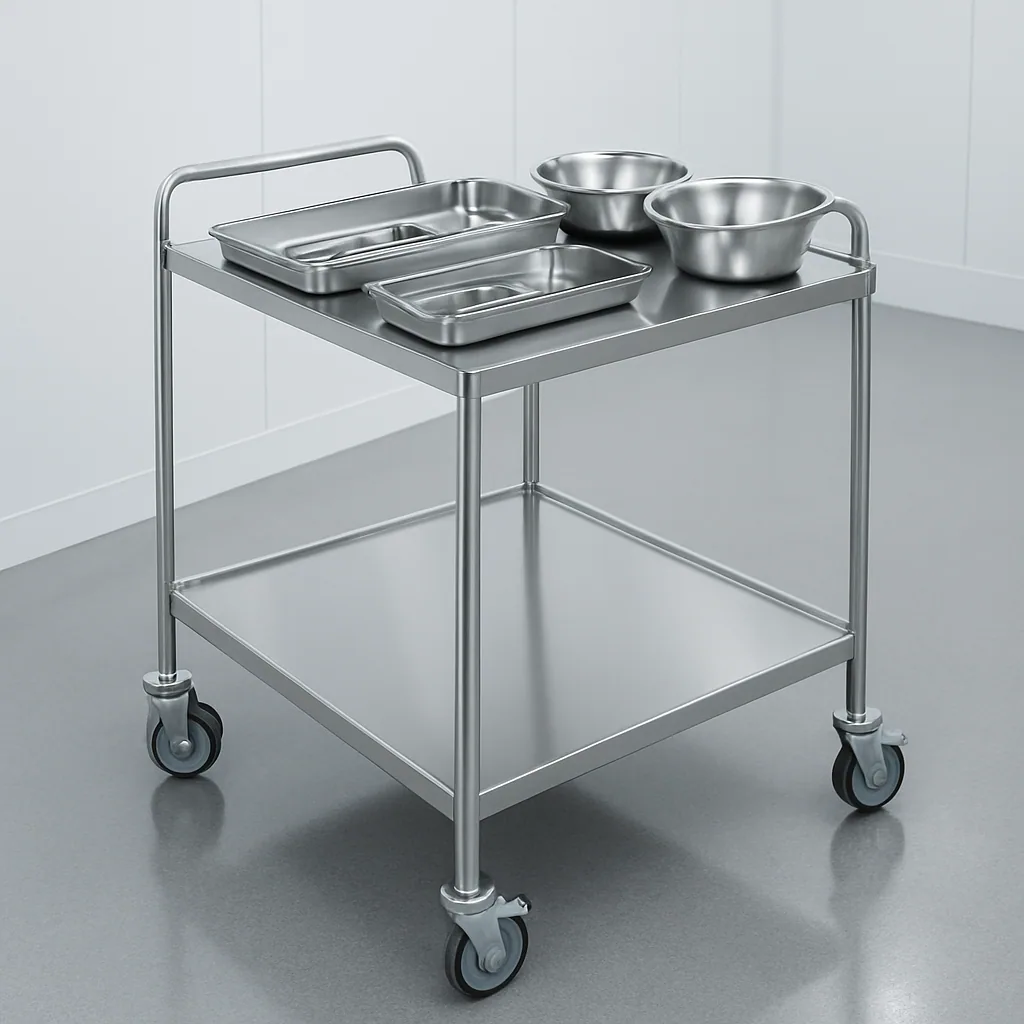
Mayo Trolleys
Adjustable tray trolleys for treatment rooms, clinics, and clinical work areas.
View product