
Comparing two instrument trolley quotations that look almost the same, but one price is lower? Before choosing the cheaper option, pause. The real risk in buying medical trolleys is not the unit price; it is choosing a configuration that does not match the department’s workflow, receiving a product with missing accessories, or facing unexpected costs from poor packing and high shipping volume.
The safest way to buy instrument trolleys for clinics or operating rooms is to compare them based on a confirmed specification, not a product photo. Two quotations are not comparable until both suppliers confirm the same department use, configuration, included accessories, mobility parts, material, packing method, and trade term.
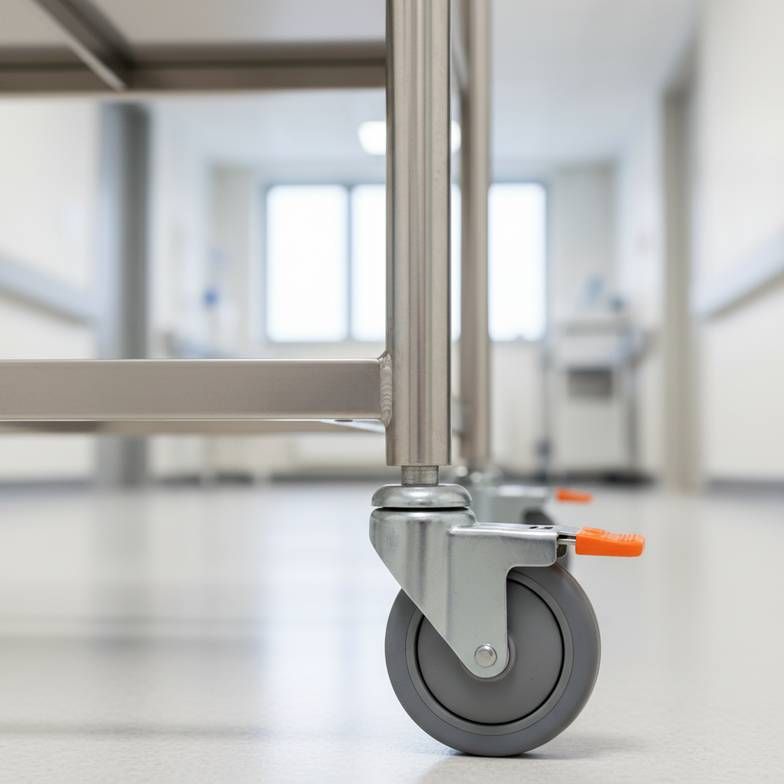
How Should Buyers Choose an Instrument Trolley Based on Clinic or Operating Room Use?
Do not assume one standard trolley model fits all departments. The first step is to define where and how each trolley will be used. A trolley for a general clinic room has different daily demands than one used in a busy procedure area or operating room.
A common mistake is ordering a single trolley model for an entire facility without considering the different workflows. A trolley that is perfect for a storage area might be inconvenient in a treatment room. Requirements for stability, storage access, cleaning frequency, and mobility change from one healthcare space to another.
For example, a general clinic area may prioritize simple storage and easy movement. A procedure room or operating-related area will place more emphasis on stability during use, brakes that lock securely, and surfaces that are easy to clean thoroughly. Before requesting a final quotation, prepare a department-by-department or room-by-room requirement list.
This table shows how decision points can change based on the use area.
Clinic vs. Operating Room Instrument Trolley Requirement Comparison
| Use Area | Common Workflow Need | Configuration Points to Check | Buyer Risk If Ignored |
|---|---|---|---|
| Clinic Treatment Room | General instrument or supply access | Size, shelves, drawers, mobility, cleaning surface | Trolley may lack storage or be inconvenient for daily use. |
| Procedure Room | Organized access and stable positioning | Brakes, drawers, rails, easy-clean finish | Staff may complain about unstable movement or poor storage layout. |
| Operating Room | Efficient access, cleaning, and stability | Material, finish, brakes, storage layout, smooth movement | Wrong trolley may not match workflow or cleaning expectations. |
| Storage/Preparation Area | Supply organization and movement | Open shelves, baskets, labels if needed, caster quality | Items may be disorganized or difficult to move between areas. |
This table provides general guidance. Your facility’s specific protocols should always guide the final decision.
Which Configuration Details Should Buyers Confirm Before Comparing Instrument Trolley Quotations?
A quotation for an "instrument trolley" is not complete. Before comparing prices, make sure both suppliers are quoting the exact same configuration, including size, material, drawers, locks, rails, accessories, casters, and packing.
A product photo is not a specification sheet. Two trolleys can look identical in a picture but differ in every functional detail. One supplier might quote a basic, open-shelf model, while another quotes a fully-accessorized version with lockable drawers and heavy-duty casters. The lower price may simply be for a different, less complete product.
Do not assume that accessories shown in a marketing photo—like baskets, trays, or IV poles—are included in the standard price. Always ask the supplier to provide a written list separating standard included items from optional accessories. This detail often creates trouble and disputes after delivery.
This checklist covers the essential details to confirm before you can accurately compare two quotations.
Instrument Trolley Configuration Checklist
| Item to Confirm | Why It Matters | Buyer Notes / Decision |
|---|---|---|
| Department/Room Use | Determines the required layout, size, and features. | |
| Product Size (LxWxH) | Ensures the trolley fits the intended space and workflow. | |
| Material & Finish | Affects durability, cleaning convenience, and cost. | |
| Shelf Quantity | Defines the basic storage capacity. | |
| Drawer Quantity/Layout | Critical for organized storage of smaller items. | |
| Lock Option | Necessary for securing supplies or controlled items. | |
| Handle Design | Affects how easily the trolley is pushed and maneuvered. | |
| Guardrail/Side Rail | Prevents items from falling off during movement. | |
| Baskets/Trays | Provides additional, often optional, storage. | |
| Caster Type | Influences movement, noise, and stability. | |
| Brake Requirement | Essential for keeping the trolley fixed during procedures. | |
| Included Items | What is standard in the quoted price. | |
| Optional Items | What costs extra. | |
| Packing Method | Affects product protection and damage risk. | |
| Carton Size & CBM | Determines shipping cost and landed cost. | |
| Gross/Net Weight | Needed for freight calculation and handling. | |
| Trade Term (e.g., FOB, CIF) | Defines cost and logistics responsibilities. |
Confirming these points first ensures you are comparing the same product basis, which makes the price comparison meaningful.
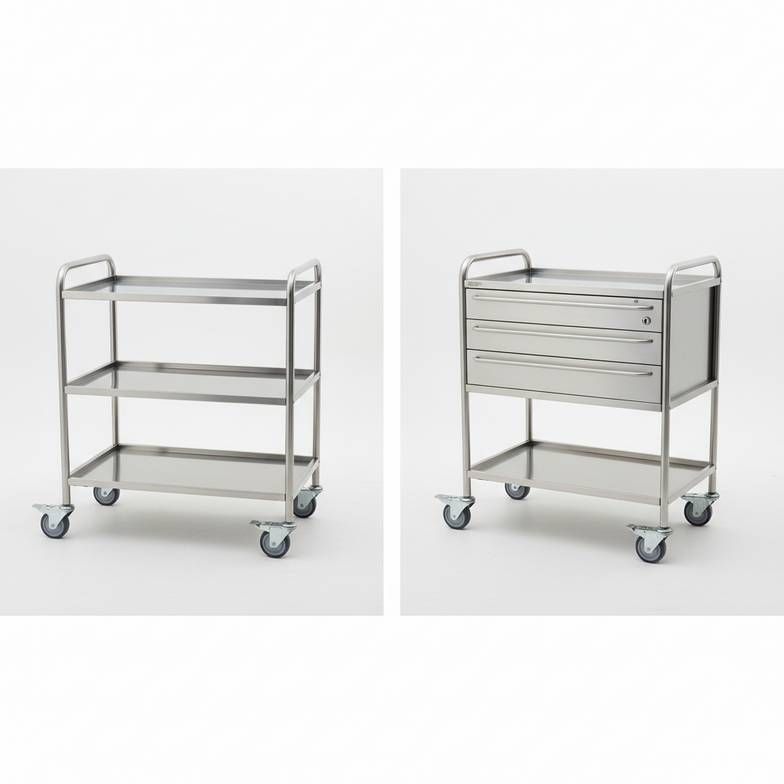
Why Do Casters, Brakes, Drawers, and Locks Affect Daily Use More Than Buyers Expect?
Because instrument trolleys are mobile work tools, not static furniture. Users interact with casters, brakes, and drawers every single day. A small saving on these parts during procurement can create significant user complaints and after-sales problems.
It is a common mistake to focus on the trolley's frame and shelves while treating mobility and storage parts as minor details. In a busy clinical environment, a trolley with noisy casters, a weak brake, or poorly designed drawers is immediately noticeable. These are not just accessories; they are core functional components.
Before approving a model, align the configuration with real-world use by asking:
- How often will this trolley move each day?
- Does it need to remain securely fixed during procedures? (Brakes are critical here.)
- Are open shelves sufficient, or do staff need drawers for organized storage?
- Do any items require secure, lockable storage?
- Are rails or baskets needed to keep items from falling during movement?
A trolley that is difficult to move or doesn't store items properly isn't a good value, no matter the initial price.
How Do Material, Finish, and Cleaning Requirements Change the Right Trolley Choice?
Do not choose a trolley based on appearance alone. The right material and finish depend on your facility’s cleaning protocols and the environment where the trolley will be used. A surface that looks smooth in a photo may have design flaws that make it difficult to clean.
In clinics and operating-related areas, furniture must withstand regular cleaning. The convenience of this task is affected by design details like corners, welding quality, drawer gaps, handle attachments, and rail designs. A trolley with hard-to-reach areas can become a point of frustration for staff and a potential hygiene concern. For cleaning-related requirements, buyers can review relevant CDC environmental cleaning guidance and then confirm the supplier’s material, surface, and cleaning documentation before purchase.
Before finalizing a material like stainless steel or a specific surface finish, discuss your department's cleaning routine with the supplier. Confirming these details in writing is safer than assuming a product is suitable based on its looks.
Ask these cleaning-related questions before you buy:
- What cleaning agents and methods will be used on this trolley?
- Are the shelves, corners, handles, and drawer gaps practical to wipe down?
- Does the material and finish match the expectations for a procedure room versus a general ward?
Why Can a Low Instrument Trolley Price Become More Expensive After Packing and Shipping?
A low unit price is not the same as a low landed cost. A cheaper trolley can become more expensive if its packing is weak, its shipping volume (CBM) is high, or the trade terms shift hidden costs to you.
Packing is not a detail to check after you place the order. For any B2B or export order, packing directly impacts two things: product protection and freight cost. A trolley with weak packing is at high risk of arriving with scratches, bent rails, or damaged casters. The cost of claims and repairs can quickly erase any initial savings.
Furthermore, the carton dimensions and total CBM determine your shipping cost. A quotation is not complete until the supplier provides the carton size, gross weight, and total CBM. A trolley with a lower unit price but inefficient, bulky packing might cost you more in the end.
This table outlines common risks and what you should confirm to avoid them.
Procurement Risk vs. Consequence for Bulk Orders
| Procurement Risk | Possible Consequence | What Buyer Should Ask or Confirm |
|---|---|---|
| Comparing photos only | Receiving the wrong configuration after delivery. | Request a full specification sheet and a list of included items. |
| Missing accessory confirmation | Trolley arrives without expected rails, baskets, or locks. | Ask the supplier to separate standard and optional items in writing. |
| Ignoring casters and brakes | User complaints about poor movement, noise, or stability. | Confirm caster type, brake quantity, and movement needs. |
| Not checking packing method | Goods arrive damaged, scratched, or with loose parts. | Ask for the packing method, packing photos, and protection details. |
| No CBM data before order | Freight cost is much higher than expected, reducing profit. | Request carton dimensions, gross weight, and total CBM with the quote. |
| Comparing different trade terms | The total landed cost is unclear, with unexpected charges. | Compare all quotations under the same trade term (e.g., FOB, CIF). |

What Should Buyers Check Before Confirming a Bulk Order or Project Order?
For any bulk or project order, a verbal agreement or a simple price approval is not enough. The final step before production should be a complete written confirmation of every detail, from drawer layout to the pre-shipment inspection plan.
The lead time for a project order doesn't just start with production; it starts when all specifications are confirmed. Delays often happen because details like accessory choices or packing requirements were left unresolved. A professional supplier should help you lock down these points before the order is processed.
Before any funds are transferred or production begins, ensure a final document (like a Proforma Invoice or Purchase Order) includes and confirms all the points from your configuration checklist. For larger orders, pre-shipment checking is a critical step to catch any discrepancies before the goods leave the factory.
Pre-Shipment Inspection Checklist
Use this list to verify your order is correct before it ships.
- [ ] Quantity matches the purchase order.
- [ ] Product model and size match the confirmed specification.
- [ ] Drawer quantity and layout are correct.
- [ ] Locks are included and functional (if required).
- [ ] Casters and brakes are installed correctly.
- [ ] All confirmed rails, baskets, and accessories are included.
- [ ] Surface finish is free from major visible defects.
- [ ] Structure feels stable and secure.
- [ ] Hardware and spare parts are packed and labeled.
- [ ] Packing method matches the confirmation.
- [ ] Carton labels and packing list are correct.
- [ ] Supplier has shared final product and packing photos (if requested).

A clear order confirmation process protects both the buyer and the supplier and is the foundation of a successful B2B partnership.
The most effective way to buy instrument trolleys is to move from a vague request to a specific one. Instead of asking for a price on a "trolley," prepare a clear requirement list. Define the department, quantity, configuration, packing needs, and trade term.
A detailed request helps a supplier provide a serious, practical quotation instead of guessing from a photo. At CareFurnex, when a buyer sends a project list, we review the use scenario, configuration, and packing basis first. This ensures the quotation you receive is for the right product, configured for your needs, and ready for a safe and cost-effective delivery.
Written by
CareFurnex Team
CareFurnex Team shares practical knowledge about hospital beds, patient room furniture, medical trolleys, clinic furniture, and healthcare facility procurement for international B2B buyers.
Related Products
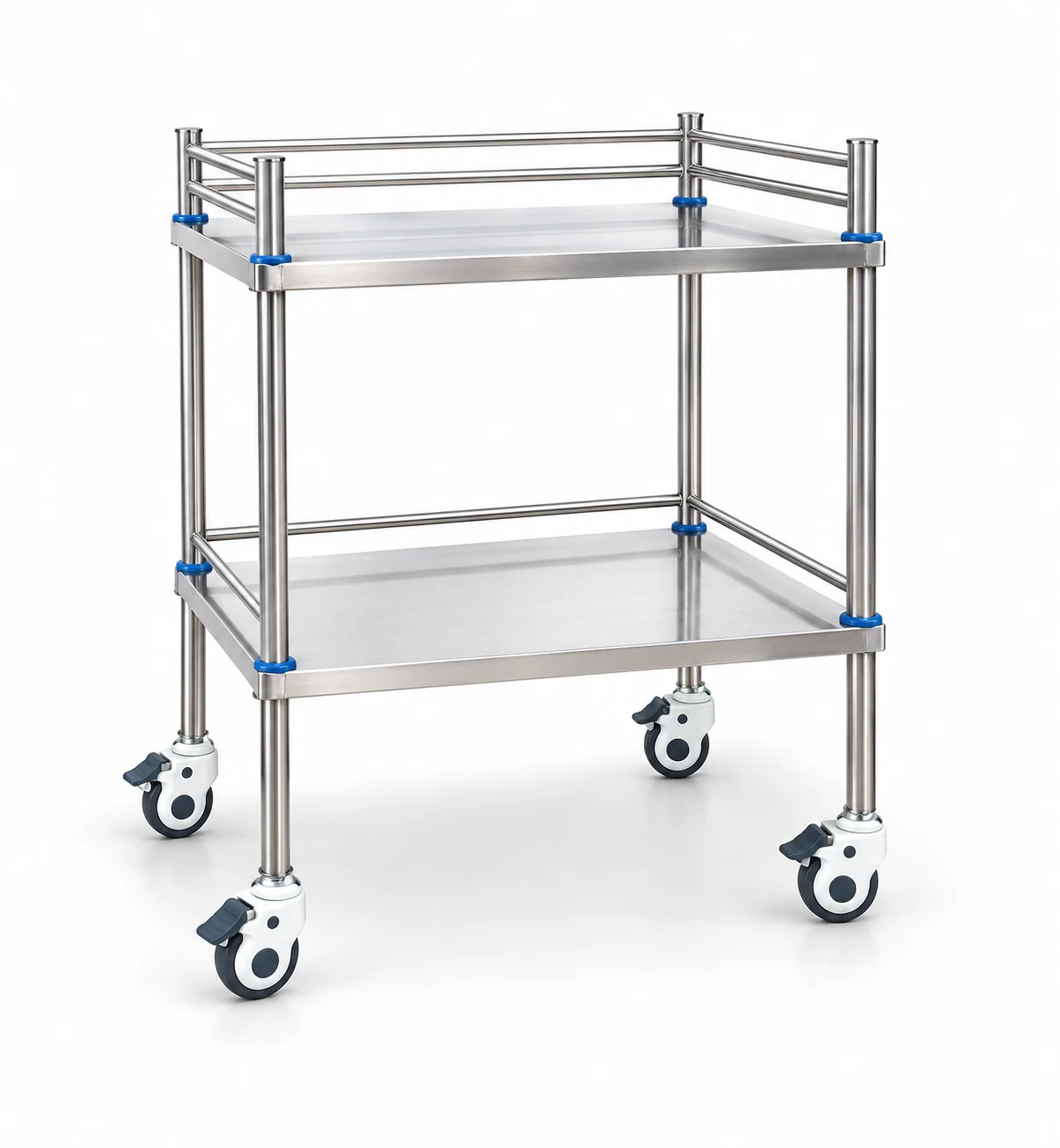
Stainless Steel Trolleys
Compare stainless steel trolleys by model, stated dimensions and configuration.
View product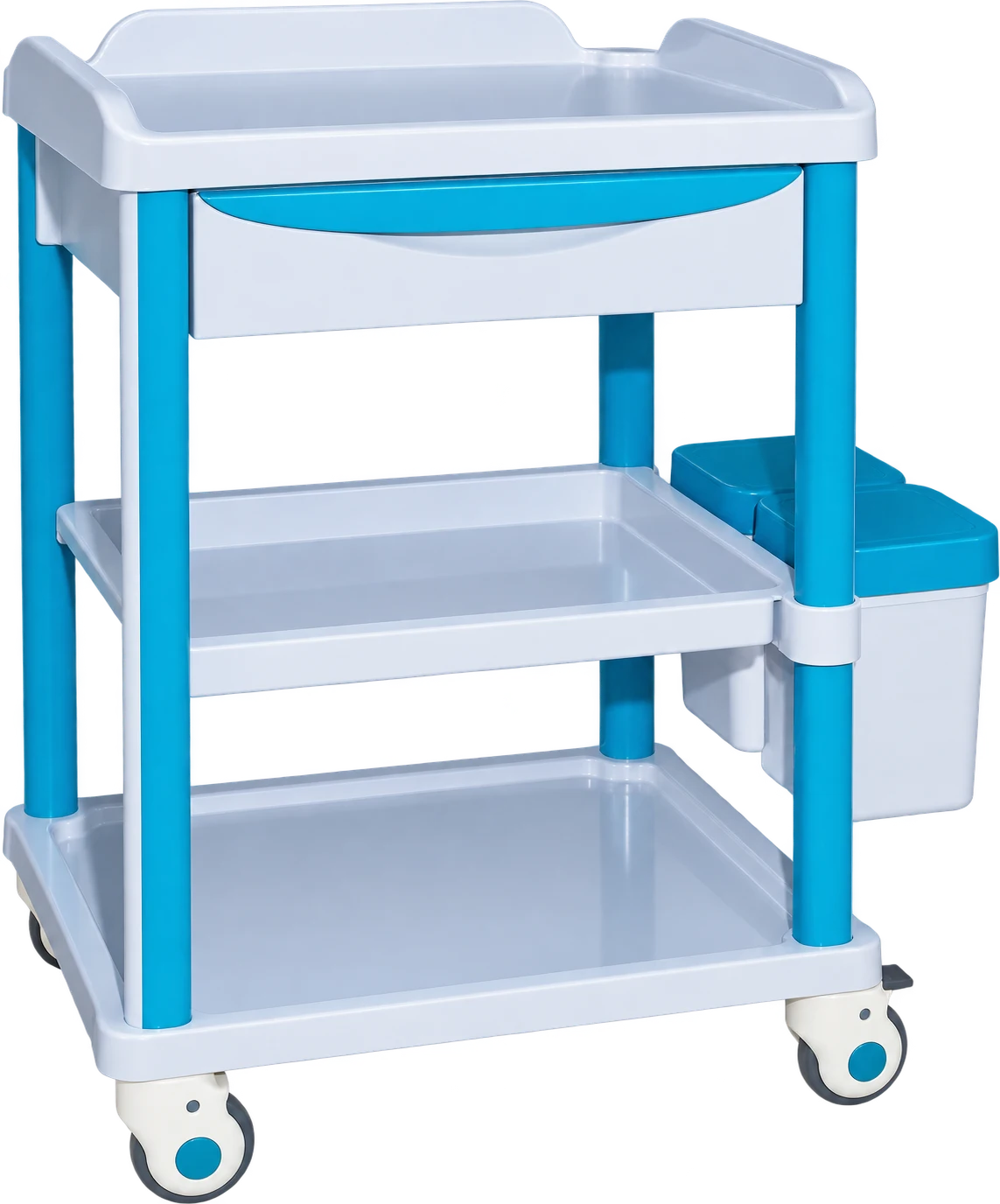
Medical Trolleys
Mobile carts for nursing rounds, treatment supplies, medicines, and clinical tools.
View product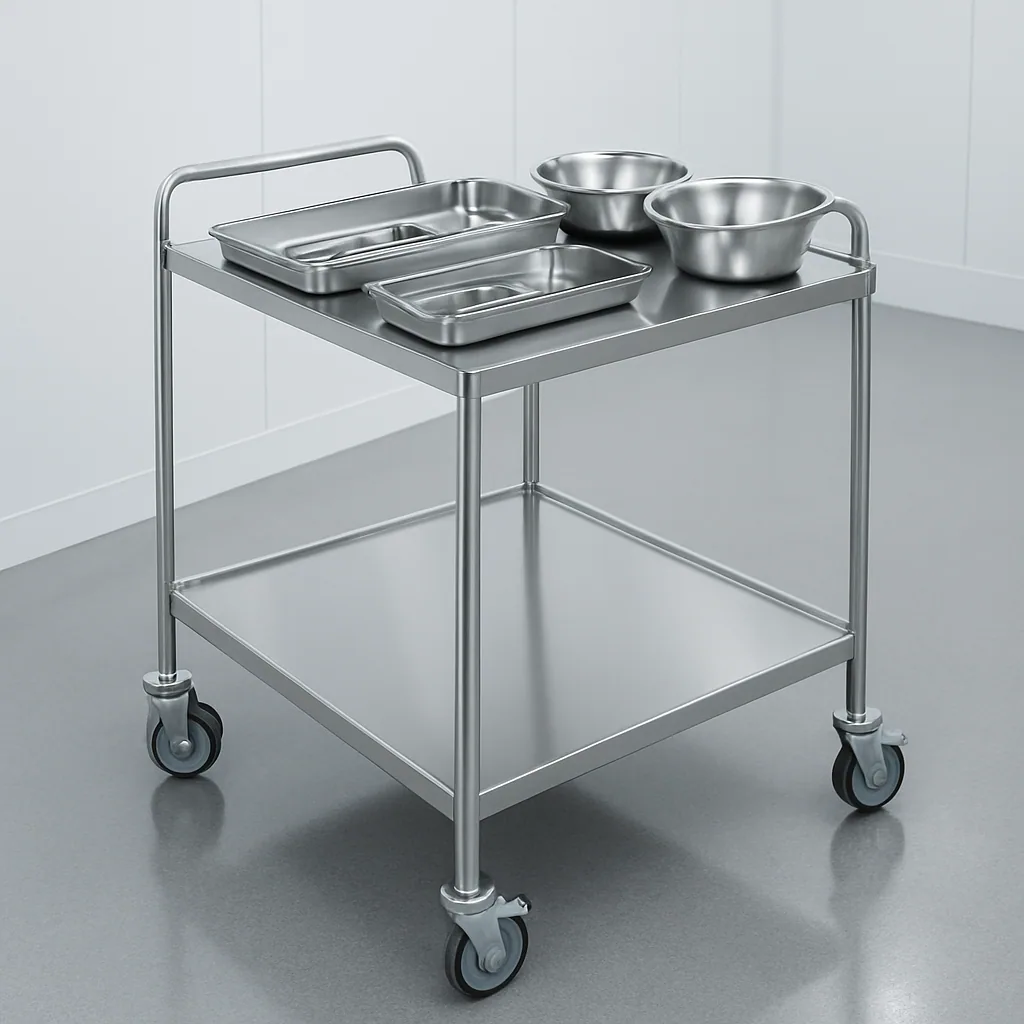
Mayo Trolleys
Adjustable tray trolleys for treatment rooms, clinics, and clinical work areas.
View product