
You’re tasked with outfitting hospital patient rooms, and your first step is creating a furniture list. It seems straightforward, but a simple list of product names can be misleading. A quotation based on a generic list often hides missing items, unclear configurations, and unexpected shipping costs that can delay your project and increase your budget.
The real challenge isn't just knowing what furniture is needed, but how to define it in a way that allows for fair supplier comparison and avoids costly procurement mistakes.
A standard hospital patient room usually needs a hospital bed, bedside cabinet, overbed table, seating, storage furniture, and related accessories where required — but the final list should be confirmed by room function, bed quantity, configuration, included items, packing method, and project schedule.
This article will guide you through building a practical, quote-ready hospital ward furniture list. We'll show you how to move from a basic checklist to a detailed procurement document that helps you avoid missing items, unfair quotations, and project delivery risks.

What Furniture Products Are Usually Needed in a Hospital Patient Room?
A complete patient room package typically includes a hospital bed, bedside cabinet, overbed table, wardrobe or storage, and a patient or visitor chair. A common mistake is to focus only on the hospital bed, which can lead to an incomplete room setup and an underestimated project budget.
In my experience as a supplier, many buyers start by asking for the hospital bed price, but a bed alone does not make a patient room ready for use. Supporting furniture for the patient, caregiver, and storage is essential for a functional ward. Forgetting these items can lead to urgent, last-minute orders, extra freight costs, and delays in room handover.
Your starting point should be a complete room package. The buyer's action is to list these items and then classify them as essential, commonly needed, or project-dependent based on your facility's specific needs. The main risk here is under-budgeting. A quotation for beds alone will always look cheaper, but it doesn't reflect the true cost of outfitting a functional patient room.
Here is a practical planning table to help you start building your list.
Hospital Patient Room Furniture Planning Table
| Furniture Item | Main Function in Patient Room | Status | Key Specification to Confirm | Common Quotation Risk |
|---|---|---|---|---|
| Hospital Bed | Patient care and rest | Essential | Manual/electric function, side rails, casters, mattress compatibility | Quoted price may exclude mattress or essential accessories. |
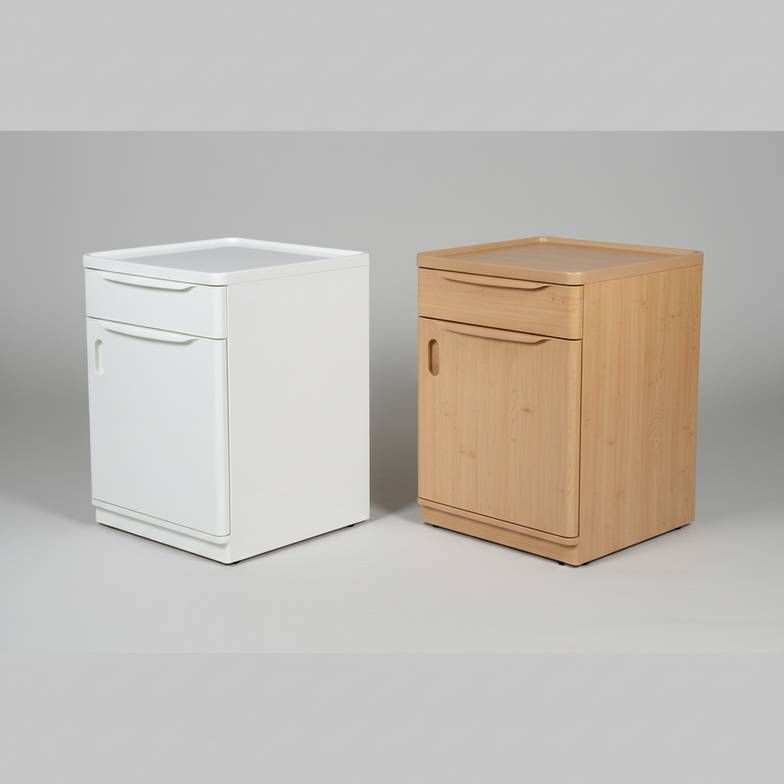
| Bedside Cabinet | Patient's personal storage | Usually Essential | Material, drawer layout, lock option, cleaning-friendly surface | Similar photos can hide different materials or storage designs. |
| Overbed Table | Patient dining or daily use | Commonly Needed | Size, height adjustment mechanism, caster quality | Often not included in the bed quotation; must be specified. |
| Wardrobe/Storage Cabinet | Patient clothing or room storage | Project-Dependent | Size, internal shelves/hangers, lock, material | Quantity per room or ward is often underestimated. |
| Chair | Patient, visitor, or caregiver seating | Commonly Needed | User scenario (patient vs. visitor), material, cleaning ease, stability | The wrong chair type may be selected for the actual use case. |
| Supporting Storage | Additional department or room storage | Project-Dependent | Storage volume, material, lock, layout | Easily forgotten during early budgeting stages. |
How Does Room Function Change the Hospital Ward Furniture List?
The specific furniture list must be adapted to the room's function, as a general ward, private room, and elderly care room do not share the same requirements. A single, fixed furniture list used for all room types is a common cause of procurement mismatches.
For example, a private room may require a more comfortable visitor's chair or additional storage, while a multi-bed general ward needs furniture that maximizes space and efficiency. An elderly care or nursing home room requires special attention to furniture stability, ease of use for patients with limited mobility, and durable, easy-to-clean surfaces.
From the supplier side, it's much easier to spot missing items and recommend appropriate configurations when the buyer provides a room-by-room breakdown. Your action should be to prepare the furniture list based on room type, number of beds per room, and patient use case. The trade-off is between standardization and suitability. Using one list is simpler, but it risks delivering furniture that is impractical for certain rooms.
Here is a simplified way to structure your list for a supplier:
- Room Type: General Ward (4 Beds)
- Hospital Bed: 4 units
- Bedside Cabinet: 4 units
- Overbed Table: 2-4 units (confirm need)
- Wardrobe: 1-2 large units or 4 small lockers
- Visitor Chairs: 2-4 units
- Room Type: Private Room (1 Bed)
- Hospital Bed: 1 unit
- Bedside Cabinet: 1 unit
- Overbed Table: 1 unit
- Wardrobe: 1 unit
- Patient Chair: 1 unit
- Visitor Sofa/Chair: 1 unit
Which Specifications Should Buyers Confirm for Each Ward Furniture Item?
You must confirm written specifications for function, material, size, and accessories, as similar product photos do not guarantee equivalent products. Relying on images alone is a major risk in B2B furniture procurement.
Two suppliers might quote a "bedside cabinet," but one could be made of ABS plastic while another is powder-coated steel. A "hospital bed" could be a 2-function manual bed or a 5-function electric bed. These differences fundamentally change the cost, durability, and usability.
When we prepare project quotations, we always ask for these details. Photos are a good starting point, but they don't show the material grade, drawer mechanism, caster quality, or packing details. Your action is to request a detailed specification sheet for every key item and use it to compare offers. The decision point is clear: a lower price might simply reflect a lower-spec product.
Ward Furniture Specification Checklist
Before comparing prices, ask your supplier to confirm these points for each item:
- Hospital Beds: Is it manual or electric? How many functions (e.g., back, leg, height adjustment)? What is the side rail type (e.g., aluminum, ABS)? What are the caster size and brake system? Is the mattress included or quoted separately?
- Bedside Cabinets & Wardrobes: What is the primary material (e.g., ABS, steel, HPL)? What is the drawer and shelf layout? Is a lock included or optional?
- Overbed Tables: What is the height adjustment mechanism (e.g., gas spring, manual)? What is the tabletop material and caster quality?
- Chairs: What is the frame material? Is the upholstery suitable for healthcare cleaning protocols? What is the weight capacity?
What Items Are Often Missing From Hospital Ward Furniture Quotations?
Mattresses, IV poles, spare parts, and even locks are frequently treated as optional items and may be excluded from a base quotation unless you explicitly confirm them. Assuming these items are included is a common mistake that leads to budget gaps and incomplete room setups.
In many quotations I've reviewed for buyers, accessories shown in a product photo are not part of the standard price. For instance, a hospital bed might be pictured with a mattress and an IV pole, but the price only covers the bed frame itself.
From the supplier side, unclear optional items create many disputes later. The best buyer action is to ask direct questions before confirming an order:
- What exactly is included in this price?
- Which items shown in the photo are optional or quoted separately?
- Is a mattress included, and if not, can you quote a compatible one?
- Are spare parts for casters or handles included?
The risk of not clarifying this is that your "complete" furniture order arrives, but the rooms cannot be made ready for patients because essential components are missing. This forces urgent, expensive follow-up orders.
Why Can a Lower Unit Price Become More Expensive After Packing and Shipping?
A low unit price can become more expensive because it may exclude the cost of robust export packing and ignore the impact of high shipping volume (CBM). For bulky items like hospital furniture, the total landed cost is what matters, not just the factory price.
I often remind buyers that hospital furniture is bulky, so carton size and total CBM can change the real project cost quickly. A supplier might offer a 5% lower unit price but use inefficient packing that increases your total CBM by 15%, making the final landed cost higher. Furthermore, weak packing might look cheaper on the invoice, but it significantly increases the risk of scratches, dents, and broken parts during transit.
Your action is to request packing details and shipping data before you finalize a supplier. The trade-off is between a low initial quote and a predictable, safe delivery. A slightly higher unit price that includes strong packing and clear CBM data is often the lower-risk, lower-cost option in the long run.

Supplier Quotation Comparison Matrix
Use this matrix to check if you are comparing offers on an equal basis. A quote missing these details may hide risks.
| Comparison Point | Supplier A | Supplier B | What to Check |
|---|---|---|---|
| Configuration Confirmed? | Yes / No / Unclear | Yes / No / Unclear | Does the quote include a detailed spec sheet? |
| Material Confirmed? | Yes / No / Unclear | Yes / No / Unclear | Is the material (e.g., steel, ABS) specified? |
| Accessories Included? | Yes / No / Unclear | Yes / No / Unclear | Is there a clear list of what's included? |
| Optional Items Quoted Separately? | Yes / No / Unclear | Yes / No / Unclear | Are extra-cost items clearly marked? |
| Packing Method Stated? | Yes / No / Unclear | Yes / No / Unclear | Is the packing type (e.g., export carton) described? |
| Total CBM Provided? | Yes / No / Unclear | Yes / No / Unclear | Is this data available to estimate freight? |
| Trade Term Confirmed? | Yes / No / Unclear | Yes / No / Unclear | Is it clear who pays for shipping (e.g., FOB, CIF)? |
| Lead Time Confirmed? | Yes / No / Unclear | Yes / No / Unclear | Is the production and shipping time clear? |
How Should Buyers Prepare a Quote-Ready Hospital Ward Furniture List for Suppliers?
To get an accurate and comparable quotation, provide suppliers with a detailed list organized by room type, including quantities, configuration needs, and any specific packing or project schedule requirements. Sending only product names or photos will result in vague quotes that are difficult to compare.
A good supplier should ask you about your project details before preparing a price. However, you can speed up the process and get better results by providing clear information upfront. I usually suggest buyers prepare their list room by room; it's the most effective way for us as suppliers to check for missing items and understand the full project scope.
Your action is to compile a document that goes beyond a simple shopping list. The risk of providing vague information is a long, confusing quotation process with multiple revisions, wasting time for both you and your potential suppliers. A clear request gets a clear answer.

Pre-Order Ward Furniture Buyer Checklist
Use this checklist before you send your request for quotation (RFQ) or confirm a purchase order.
| Check Item | Done? | Notes |
|---|---|---|
| 1. Room & Quantity Planning | ||
| Room-by-room product list prepared | ☐ | |
| Number of rooms and beds per room confirmed | ☐ | |
| Essential and optional furniture separated | ☐ | |
| 2. Product Configuration | ||
| Specifications confirmed for each key item | ☐ | e.g., bed functions, cabinet material |
| Included and optional accessories separated | ☐ | |
| 3. Packing & Shipping Data | ||
| Packing requirements stated (e.g., for export) | ☐ | |
| Request for carton dimensions and total CBM included | ☐ | |
| Trade term confirmed (e.g., FOB, CIF) | ☐ | |
| 4. Lead Time & Coordination | ||
| Project schedule or delivery deadline shared | ☐ | |
| Lead time checked for the full order | ☐ | |
| 5. Supplier Communication | ||
| Supplier asked practical project questions | ☐ | A good sign of experience |
Your Ward Furniture List is a Project Tool, Not Just a Shopping List
Building a hospital ward furniture list is a critical procurement task. A simple checklist of product names is not enough. The most successful projects are built on a clear, detailed plan that is shared with the supplier.
By organizing your list by room function, confirming specifications for every item, clarifying all included accessories, and requesting packing and shipping data upfront, you transform your list from a vague request into a powerful procurement tool. This approach helps you compare suppliers fairly, control your total landed cost, and ensure your patient rooms are complete, functional, and ready on schedule.
If you are preparing a hospital furniture project, we recommend using this framework to build your list. At CareFurnex, we specialize in supporting B2B buyers with category-based project planning. Send us your room list, quantities, and configuration needs, and our team can help you review the details before you commit to an order.
Written by
CareFurnex Team
CareFurnex Team shares practical knowledge about hospital beds, patient room furniture, medical trolleys, clinic furniture, and healthcare facility procurement for international B2B buyers.
Related Products

Ward Furniture
Complete ward furniture options for patient rooms and hospital care areas.
View product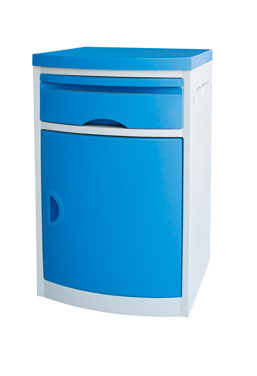
Hospital Bedside Cabinets
This ABS hospital bedside cabinet has a blue top, an upper drawer and a lower door within a light-colored body. Its stated size is 480 × 480 × 760 mm, giving buyers a defined overall footprint for ward furniture planning.
View product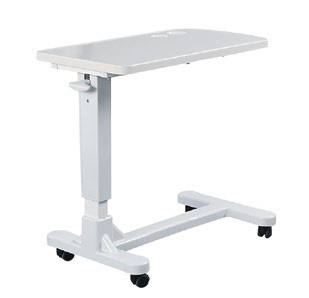
Overbed Tables
A mobile bedside dining table with a rectangular light-colored top, an offset upright and a low wheeled base. Review the visible layout, then confirm table dimensions, working height and bed clearance for your room plan.
View product