
You have a specific need for your hospital project that standard catalog furniture just can't meet. Perhaps a trolley needs to fit a unique workflow, a cabinet must fit into a non-standard alcove, or you need furniture that matches your facility's brand identity. You know "customization" is the answer, but you're wary of the unknown costs, timelines, and risks.
The most common mistake is focusing only on the final design—the "what"—without understanding the manufacturing process—the "how." Successful customization isn't about just submitting a drawing; it's about managing a process.
The good news is that customization is not an all-or-nothing choice. It exists on a practical spectrum, from simple aesthetic changes like adding a logo to full OEM development of a new product. The key is to match the level of customization to the problem you are trying to solve.

Is Customization Just About Logos, or Can We Change Dimensions and Functions?
Do not assume customization is only about colors and logos. True customization for hospital furniture is a spectrum that includes changing aesthetics, modifying functions, adjusting dimensions, and even creating entirely new products (Full OEM). The first step is to correctly identify which level of modification your project actually needs.
Many procurement managers think they have only two options: buy a standard catalog item or commission a completely new product from scratch. This is a misunderstanding that can lead to missed opportunities or unnecessary costs. By breaking down your requirement into the correct category, you can have a much more efficient and targeted conversation with suppliers.
Here are the four practical levels of customization:
| Level of Customization | What It Means | Common Examples | Impact on Cost | Impact on MOQ | Impact on Lead Time |
|---|---|---|---|---|---|
| Aesthetic | Changing appearance without affecting function. | Custom RAL color, adding a hospital logo to a headboard. | Low | Low | Minimal |
| Functional | Modifying or adding features to a standard design. | Changing drawer configuration on a trolley, adding accessory rails. | Medium | Medium | Moderate |
| Dimensional | Altering the height, width, or depth of a product. | Making an overbed table taller, a cabinet narrower to fit a space. | Medium-High | Medium | Moderate |
| Full OEM | Creating a new product design from a concept. | Designing a new type of bariatric bed with unique features. | High (plus NRE fees) | High | Significant |
Before approaching a supplier, I would first use this table to clarify the project's core need. Are you solving an aesthetic problem (branding), a functional problem (workflow), a dimensional problem (space), or do you need a completely new solution? Knowing this helps manage expectations on cost and timeline from the very beginning.
Why Does a 'Small' Change to a Standard Product Sometimes Cost So Much?
Do not assume a physically small modification will have a small price tag. The cost of customization is driven by changes to the manufacturing process—engineering time, re-tooling, material waste, and lost efficiency—not just the amount of material added or removed.
A common point of confusion happens when a buyer requests what seems like a simple change—for example, "make this standard cabinet 5cm narrower"—and receives a quote that is significantly higher than the standard model price. This isn't arbitrary. From a manufacturing standpoint, there are no "small changes."
That 5cm adjustment can disrupt the entire production flow:
- Engineering Time: An engineer must create and revise technical drawings to ensure the new dimensions don't compromise the product's stability or function.
- Re-Tooling: The factory may need to adjust or create new welding jigs or cutting guides. This setup time has a cost.
- Material Waste: Cutting non-standard sizes from standard sheets of steel or board can create more scrap material, which you still pay for.
- Lost Economies of Scale: A small custom run of 20 units requires stopping a production line that is optimized to make 200 standard units. This loss of efficiency has a direct cost.
The most productive approach is to explain the problem to your supplier, not just prescribe the solution. Instead of saying, "Make the table 10cm taller," try explaining, "Our staff are experiencing back strain because the working height of the current model is too low." An experienced supplier can then review their product lines and manufacturing capabilities to propose the most cost-effective solution, which might be a different model or a more efficient modification.
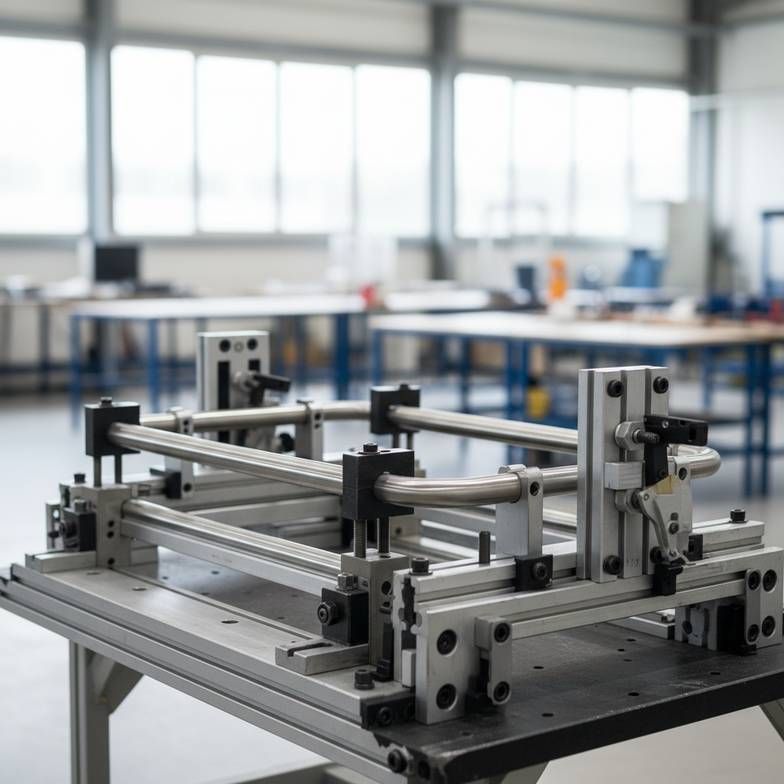
What Does the Customization Process Look Like, and How Does It Affect My Project Timeline?
*A custom order lead time is not the standard production time plus a few extra days. You must account for the "hidden timeline" of pre-production—design, drawing revisions, and sample approval—which can take weeks or months before mass production even begins.*
One of the biggest risks in any project with custom components is timeline slippage. This almost always happens because the buyer only planned for the mass production lead time they saw on the quotation.
A professional customization project is managed in two distinct phases, and the clock for Phase 2 only starts after Phase 1 is formally completed.
Phase 1: Pre-Production (The Hidden Timeline) 1. Inquiry & Problem Definition: You explain your requirements. 2. Drawing Creation: The supplier's engineers create technical drawings for your review. 3. Revision & Approval: You review the drawings and request changes. This back-and-forth can take several rounds. 4. Sample Production: Once drawings are approved, a pre-production sample is made. 5. Sample Approval: You receive and sign off on the physical sample.
Phase 2: Mass Production This phase only begins after you have given final, written approval of the pre-production sample. The 30- or 45-day lead time quoted by the factory applies to this phase.
If your project deadline is tight, the pre-production phase is where you must be most vigilant. A one-week delay in approving a drawing can easily cause a two-week delay in the final delivery date, as the supplier may need to re-schedule your order on the production line. I would always ask for a milestone-based timeline that clearly separates these two phases.
What Hidden Costs or MOQs Should I Ask About Before Confirming a Custom Order?
A per-unit price on a preliminary quotation for a custom product is not the total project cost. Before committing, you must ask specific questions to uncover potential one-time fees, component minimums, and design ownership terms that can significantly impact your budget and risk.
A professional supplier will welcome these questions because they lead to a more transparent and successful project. Believing the unit price is the only number that matters is how budgets get blown and projects fail.
Here are the critical details to clarify before you issue a purchase order.
- Non-Recurring Engineering (NRE) / Tooling Fees: This is a one-time charge for creating new molds (e.g., for a custom plastic drawer) or tooling (e.g., a stamping die for a metal part). These fees can range from hundreds to tens of thousands of dollars and are often not included in a preliminary unit price.
- Component MOQs: Your supplier may have an MOQ of 50 units for the final product, but their sub-supplier for a custom-colored plastic part might have an MOQ of 5,000 pieces. This can make a small custom run unfeasible or unexpectedly expensive.
- Sample Costs: Pre-production samples are not always free, especially if they require custom tooling to create. Clarify the cost and lead time for samples upfront.
- Design Ownership & Exclusivity: If you pay a $10,000 tooling fee, who owns the tool? And who owns the design? Without a clear agreement, the supplier might be free to sell your unique product to your competitors.
To avoid surprises, use this checklist to prepare your inquiry and qualify your suppliers.
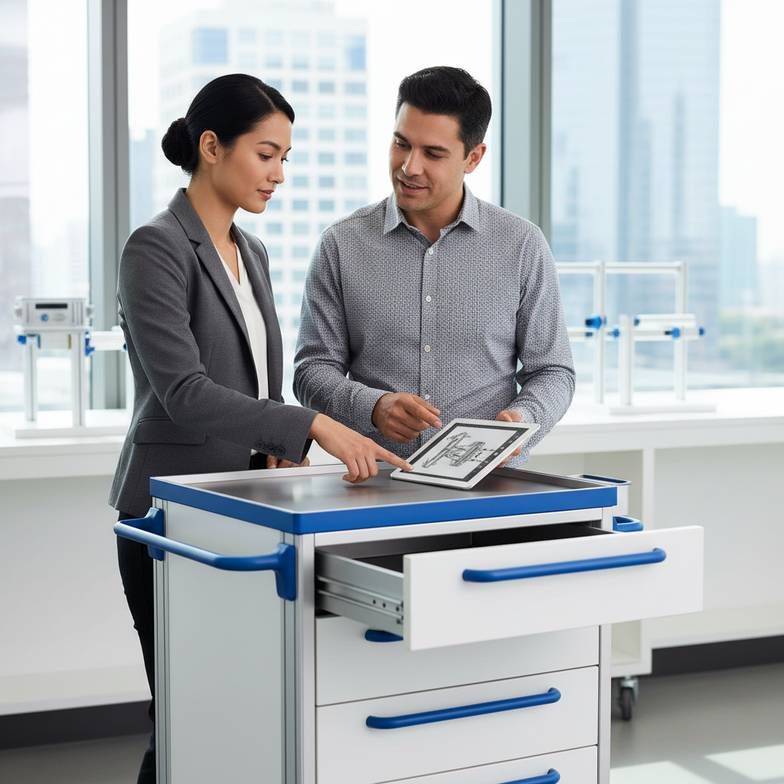
Custom Order Pre-Inquiry Checklist
Part 1: Defining My Need (Internal Preparation)
- [ ] The Problem: What specific operational problem does this custom product solve?
- [ ] The Use-Case: In which department and workflow will it be used? (e.g., CSSD, MRI room, general ward)
- [ ] Key Requirements: What are the must-have functional, dimensional, or material specifications?
- [ ] Project Constraints: What is the required quantity and absolute latest delivery date?
Part 2: Qualifying The Supplier (Questions to Ask)
- [ ] Process & Timeline: What is your step-by-step process and milestone-based timeline for custom orders?
- [ ] Tooling Costs (NRE): Are there any one-time tooling or mold fees? What is the cost?
- [ ] Component MOQ: Do any custom components have high MOQs from your sub-suppliers?
- [ ] Sample Policy: What is the cost and lead time for a pre-production sample?
- [ ] Design Ownership: If we pay for tooling, who owns the design? Can we sign an exclusivity agreement?
The key to successful hospital furniture customization is to shift your mindset from being an order-placer to a process manager. By understanding the different levels of customization, anticipating the real cost drivers, and managing the timeline proactively, you can mitigate risks and ensure the final product meets your project's precise needs.
Preparing a detailed inquiry using the checklist above is the best first step. For complex projects, it is wise to partner with a supplier who can help you define requirements and manage the process from start to finish. At CareFurnex, we often assist buyers with this type of project consultation to ensure a predictable and successful outcome.
Written by
CareFurnex Team
CareFurnex Team shares practical knowledge about hospital beds, patient room furniture, medical trolleys, clinic furniture, and healthcare facility procurement for international B2B buyers.
Related Products
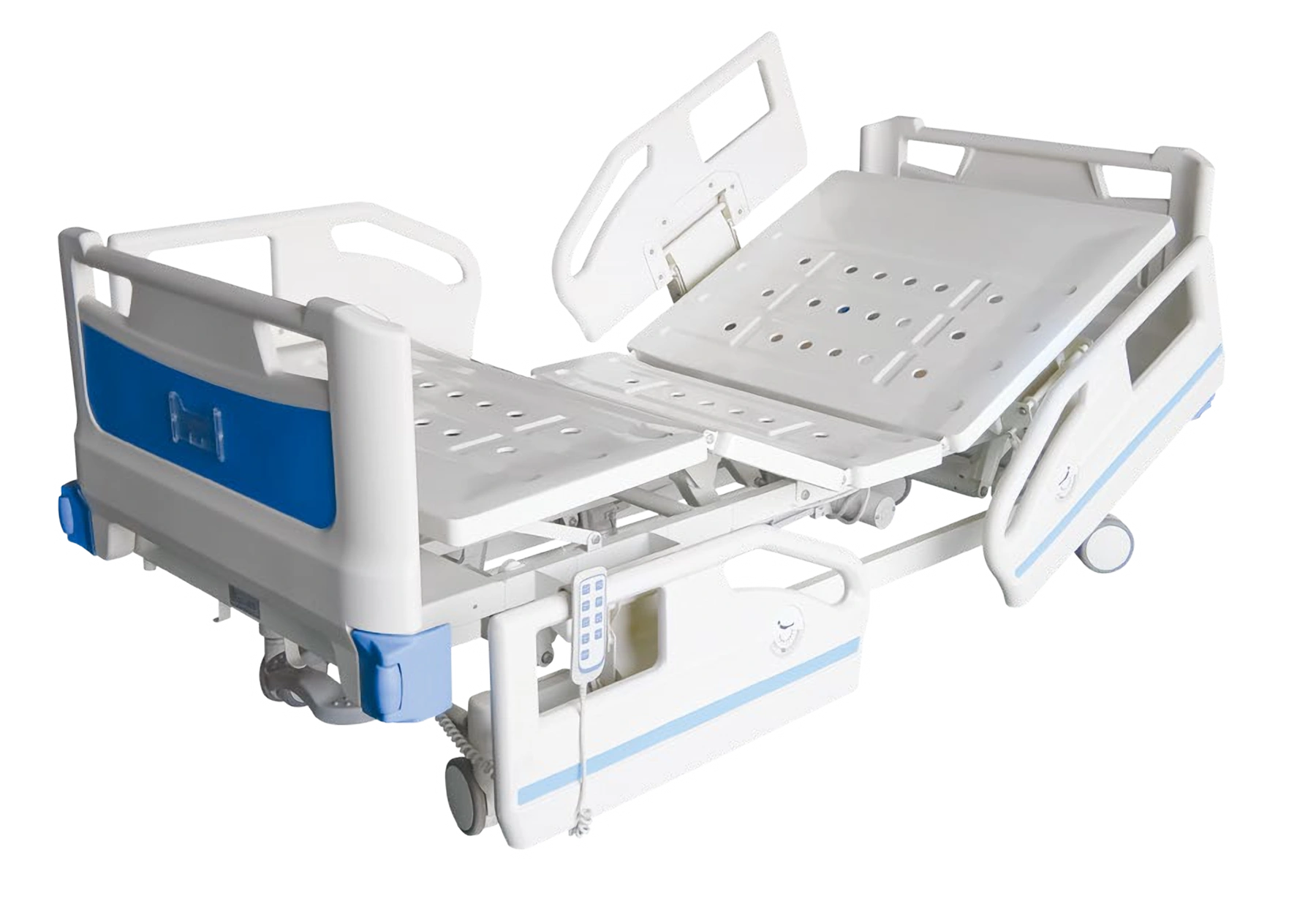
Hospital Beds
General-purpose patient beds for inpatient wards and standard hospital rooms.
View product
Ward Furniture
Complete ward furniture options for patient rooms and hospital care areas.
View product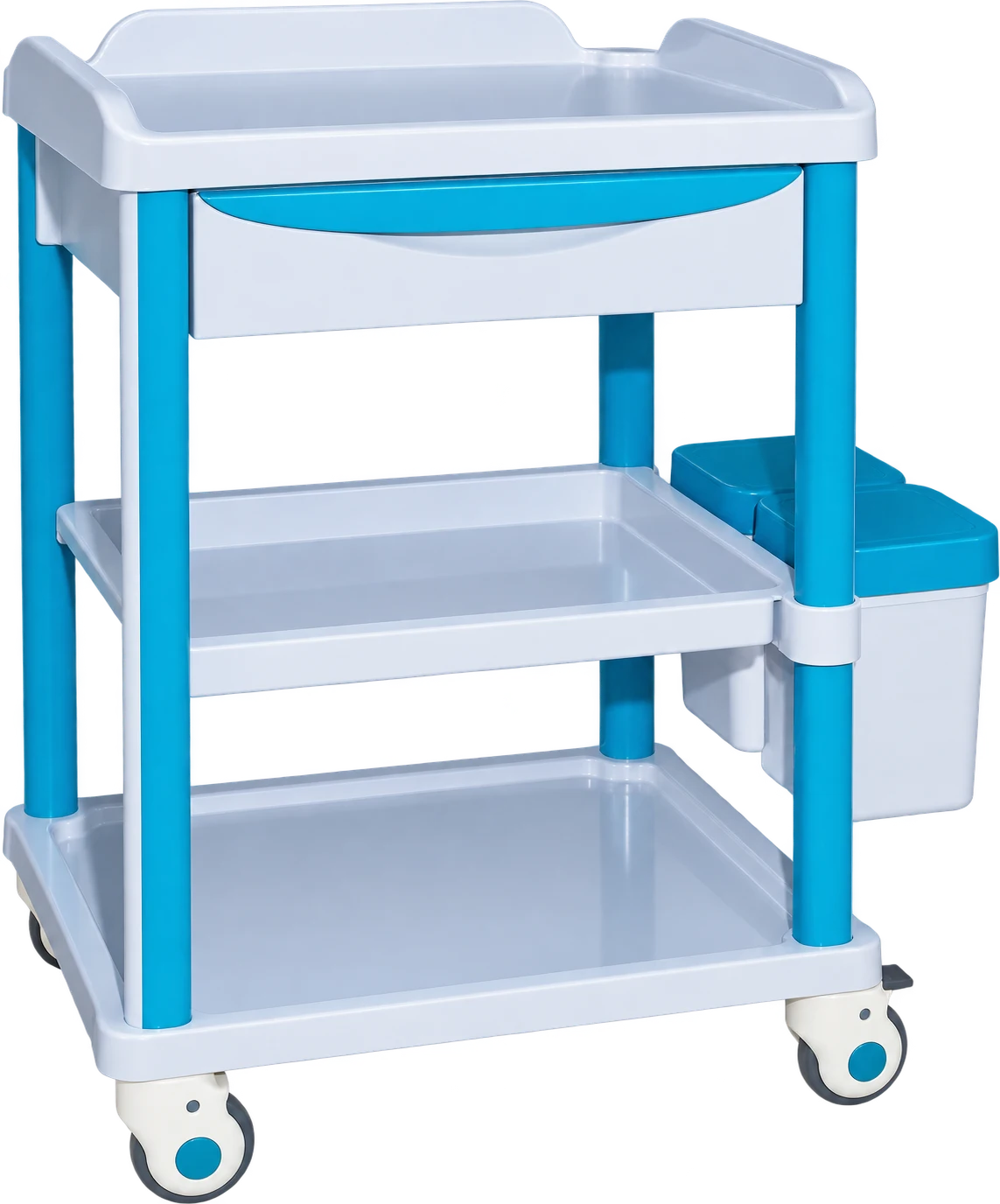
Medical Trolleys
Mobile carts for nursing rounds, treatment supplies, medicines, and clinical tools.
View product