
Struggling to choose the right material for your hospital bedside cabinets? It’s a common problem. You're faced with options like ABS, steel, and wood-look, and making the wrong call can be costly. This leads to cracked plastic, peeling surfaces, and wobbly drawers that create hygiene risks and drive up replacement budgets. The solution is to look past the material name and focus on the construction quality that truly fits your hospital's daily demands.
The best hospital bedside cabinet depends on your specific needs. For high-traffic, general wards demanding maximum durability, a well-made powder-coated steel cabinet is often the workhorse. For a balance of modern features, ease of cleaning, and cost-effectiveness, a high-quality, thick-walled ABS plastic cabinet is an excellent choice. For private rooms or senior care facilities where aesthetics are key, a "wood-look" cabinet made with High-Pressure Laminate (HPL) offers a warm look without sacrificing chemical resistance.
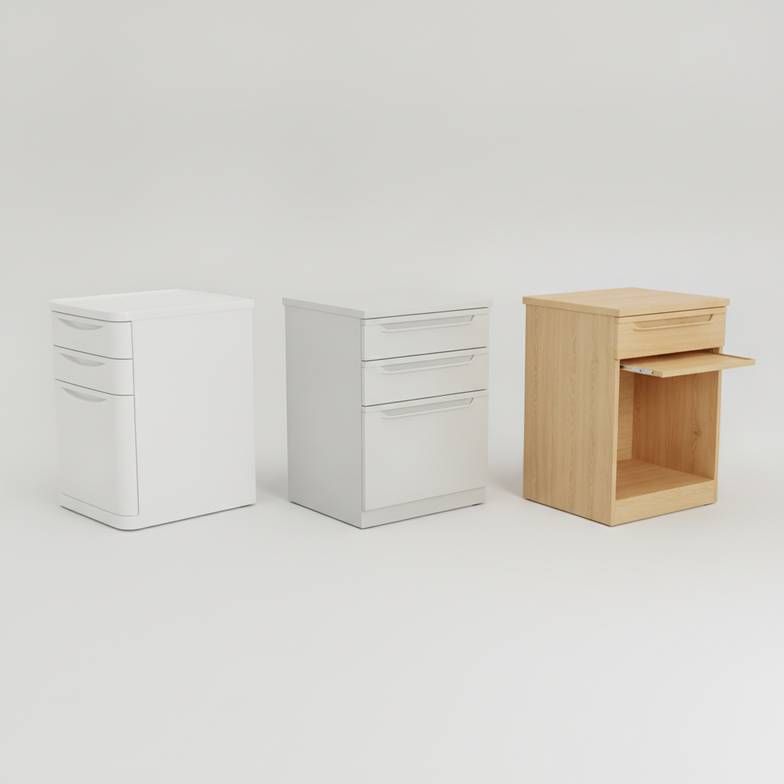
Now that you have the quick answer, let's dive deeper. As someone who helps hospital project contractors source furniture every day, I can tell you the material label is only a small part of the story. The real difference is in the construction details that suppliers rarely talk about.
What Should You Look for in an ABS Hospital Bedside Cabinet?
You see ABS plastic listed on a quote and think it's a modern, straightforward choice. But you’ve also probably seen cheap plastic cabinets that crack or turn yellow after just a year of use. How do you find one that will actually last?
The key is to look beyond the "ABS" material name. The most important factors are the molding technique (is it one solid piece?), the wall thickness, and whether it has internal structural support. These details separate a durable asset from a future problem.
Dive Deeper: The "All ABS is the Same" Fallacy
A frequent mistake I see buyers make is assuming all ABS (Acrylonitrile Butadiene Styrene) is created equal. It's not. The difference between a low-cost and a hospital-grade ABS cabinet comes down to manufacturing quality, which directly impacts safety and infection control.
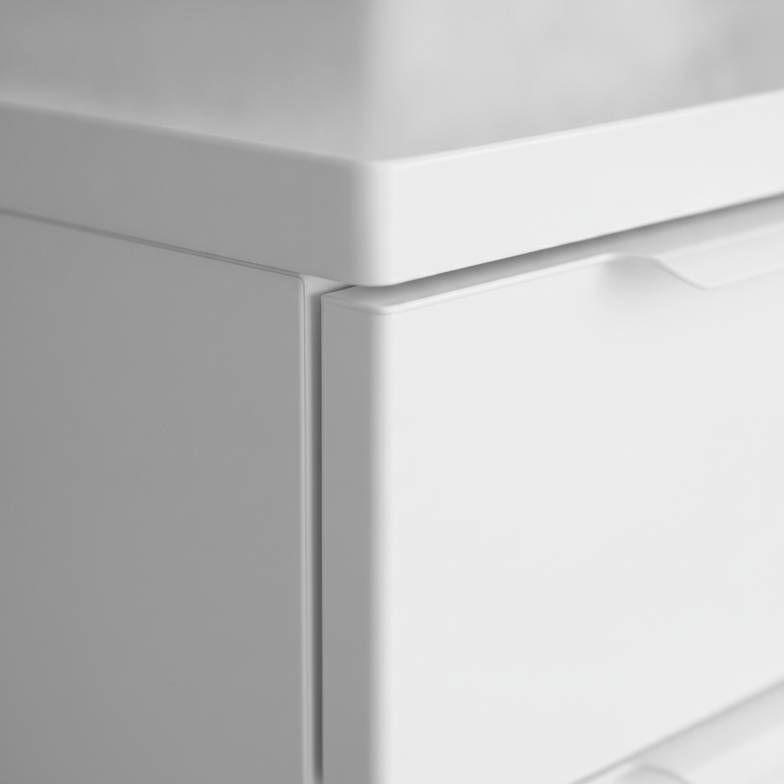
- Molding Technique: The best ABS hospital bedside cabinets are made using a "single-piece" or "one-shot" injection molding process. This creates a seamless body with no joints, crevices, or sharp corners where bacteria can hide. It’s also incredibly strong. Lower-cost alternatives are often assembled from multiple thin panels, creating weak points and gaps that are impossible to clean properly.
- Wall Thickness: This is a critical detail that’s often missing from spec sheets. A cheap cabinet might have walls less than 2mm thick, which can easily crack from an accidental impact with a hospital bed or cleaning cart. A quality cabinet will have walls that are 3-4mm thick or more, especially at the corners and top surface, providing far superior impact resistance. When a cabinet cracks, it creates a sharp edge that can injure staff or patients.
- Internal Reinforcement: Just like the bones in a body, a good ABS cabinet has internal structural ribs. You can't see them from the outside, but these reinforcements prevent the top from sagging and keep the cabinet from twisting or warping over time. From our experience, this is a major differentiator. We once had a client compare two seemingly identical ABS cabinets; the cheaper one flexed visibly when we pushed down on the top, while the quality one was rock-solid. The difference was the internal structure.
When you're evaluating an ABS cabinet, don't just ask if it's ABS. Ask if it's single-piece molded and what the wall thickness is. These questions help you identify a product built for a real hospital environment.
Is a Steel Hospital Bedside Cabinet the Most Durable Choice?
You need a cabinet that can withstand the chaos of a busy ward—something that won't break when it's bumped, pushed, and constantly cleaned with harsh chemicals. Steel sounds like the toughest option, but you're rightfully worried about rust, chipped paint, and a cold, institutional look.
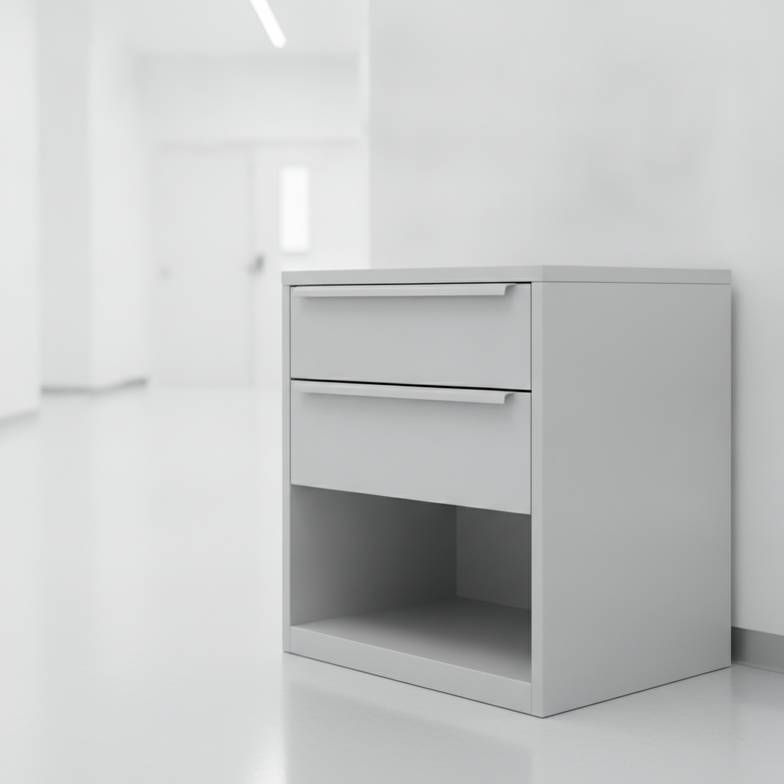
A well-made powder-coated steel hospital bedside cabinet is an absolute workhorse and often the most durable choice for high-abuse areas. However, its longevity has less to do with the steel itself and everything to do with the quality of the powder coating, the pre-treatment process, and the welding.
Dive Deeper: It's Not Just Steel, It's the System
When we review a tender that specifies a "steel cabinet," the first thing we check isn't the steel gauge. It's the finishing process. The steel is just the skeleton; the powder coating is the skin that protects it.
Here’s what makes a truly durable steel cabinet:
- Chemical Pre-Treatment: Before any paint is applied, the raw steel must be thoroughly cleaned and treated. A quality process involves acid pickling and phosphating. This step microscopically etches the surface of the steel, creating a foundation that the powder coating can grip onto tightly. Skipping this step is a common way for low-cost factories to save money, but it guarantees the paint will chip and peel later.
- Electrostatic Powder Coating: Unlike simple spray paint, powder coating involves electrostatically charging fine polymer powder and spraying it onto the grounded steel part. This ensures a thick, even coat that wraps around edges and corners. The part is then baked in an oven, melting the powder into a smooth, hard, and non-porous finish that's highly resistant to scratches, chemicals, and impact.
- Welding Quality: Look at the joints. Are they fully welded and ground smooth, or are they just "spot-welded" in a few places? Fully welded seams provide immense structural strength and eliminate crevices where rust can start and bacteria can colonize. Poorly welded joints are a major red flag for overall build quality.
A common question from clients is the difference between powder-coated steel and stainless steel. For a standard hospital bedside cabinet in a patient room, powder-coated steel is more than sufficient and cost-effective. Stainless steel is typically reserved for sterile environments like operating rooms, CSSD, or laboratories where extreme corrosion resistance is non-negotiable.
When is a Wood-Look Hospital Bedside Cabinet the Right Fit?
You want to create a warm, comfortable, and healing environment for patients, especially in private rooms or senior care facilities. The institutional feel of plastic or steel just won't do. But you're worried that a "wood" cabinet can't possibly withstand the daily regimen of hospital-grade disinfectants.
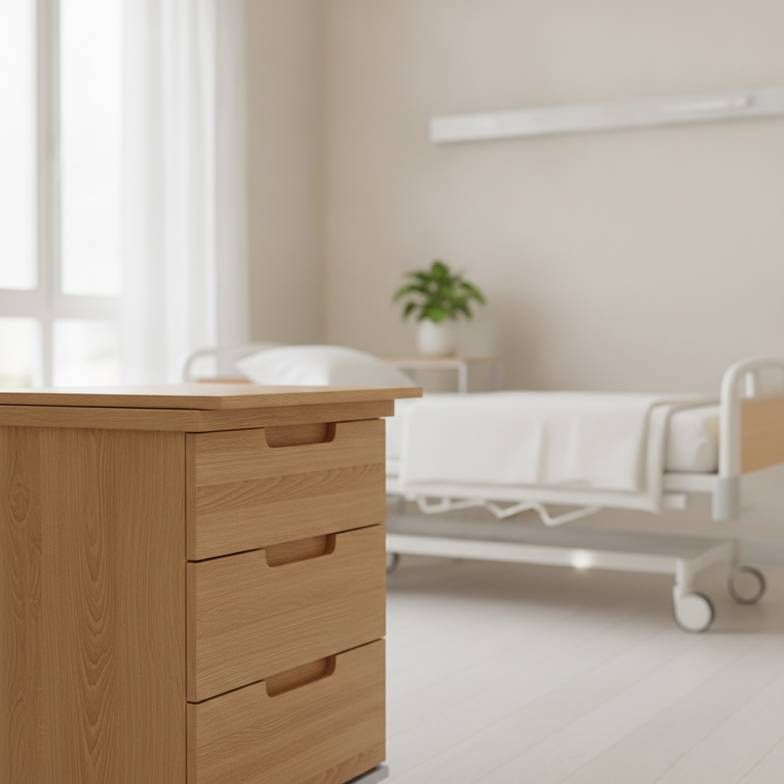
This is a common misconception. Modern "wood-look" hospital bedside cabinets are not made of traditional wood. They are engineered using a material called High-Pressure Laminate (HPL) bonded to a stable core, offering the best of both worlds: a welcoming aesthetic and robust, hygienic performance.
Dive Deeper: Debunking the "Wood" Misconception
When a procurement manager asks me for a "wood" cabinet, I always clarify what they're really getting. HPL is a composite material made by fusing multiple layers of kraft paper saturated with resin under intense heat and pressure. The top layer is a decorative print (the "wood-grain") protected by a clear, tough melamine overlay.
Here’s why HPL is a great fit for certain healthcare settings:
- Chemical Resistance: The surface of HPL is non-porous and highly resistant to the harsh chemicals found in hospital disinfectants, including alcohol and bleach-based solutions. Unlike real wood or cheap thermofoil, it won't stain, fade, or degrade.
- Durability and Aesthetics: HPL provides a tough, scratch-resistant surface that looks and feels much warmer than plastic or steel. This is perfect for facilities looking to improve the patient experience, such as private hospitals, maternity wards, or long-term care homes. The goal is to make the room feel less clinical and more like home.
- The Critical Role of Edge Banding: The weak point of any HPL product is the edge. This is where moisture can penetrate and cause the panel to swell or the laminate to peel. Low-cost cabinets use standard EVA glue for edge banding, which can fail over time. High-quality hospital bedside cabinets use PUR (polyurethane) hot-melt adhesive or laser edging, which creates a permanent, waterproof seal. This is a detail you absolutely must ask your supplier about.
A well-constructed HPL cabinet, often built on a sturdy steel frame, is an excellent investment for patient-facing areas where perception and comfort are just as important as durability.
Why Do Accessories and Construction Matter More Than Material?
You’ve carefully selected a material you think is perfect. But a year later, the maintenance team is calling you about a cabinet with a wobbly caster, a stuck drawer, and a broken handle. What went wrong?
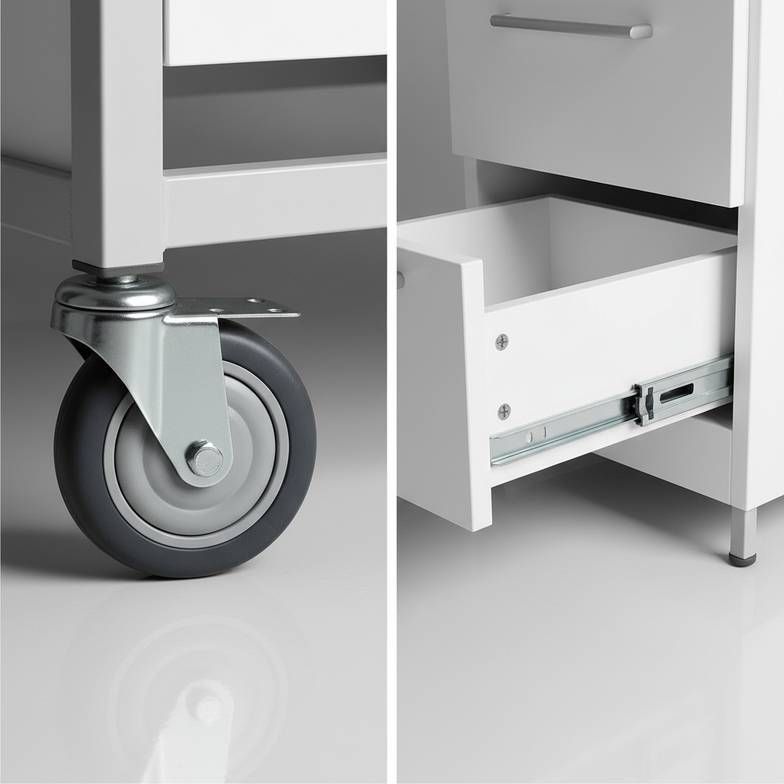
The truth is, the most common points of failure on hospital bedside cabinets have nothing to do with the main body material. The real stress is on the moving parts: the casters, drawer runners, and hinges. This is where low-cost suppliers cut corners, and it’s where a smart buyer should focus their attention.
Dive Deeper: The Real Points of Failure
Based on feedback from nursing teams and maintenance crews, the cabinet body rarely fails first. It's the accessories that cause the most headaches and impact daily workflow. A great cabinet is a system of quality components.
Here’s a breakdown of what to inspect:
- Casters (Wheels): Cheap cabinets use small, noisy plastic casters that get stuck on door thresholds and leave marks on the floor. Look for "silent medical casters" with a diameter of at least 75mm (3 inches). They roll smoothly and quietly. Also, check the brakes. A good cabinet will have at least two locking casters for stability.
- Drawer Runners: There is a huge difference between a simple plastic groove and full-extension, ball-bearing slides. Ball-bearing runners allow the drawer to open smoothly and fully, giving nurses easy access to the contents without a struggle. Stuck drawers are a major source of frustration in a fast-paced environment.
- Handles and Hinges: Look for recessed or integrated handles that don't snag on clothing and are easy to wipe clean. Strong, adjustable hinges will prevent the door from sagging over time, ensuring it closes properly and maintains a clean look.
To put it simply, a cabinet with a premium ABS body but cheap casters is a bad cabinet. When comparing quotes, look past the primary material and create a checklist for the accessories.
Quality Comparison: Where Costs are Cut
| Feature | Low-Cost Cabinet | High-Quality Cabinet | The Real-World Impact |
|---|---|---|---|
| Casters | 50mm noisy plastic, no brakes | 75mm+ silent medical casters, 2 with brakes | Easy and quiet movement, improved staff workflow. |
| Drawer Runners | Plastic grooves or flimsy metal slides | Ball-bearing, full-extension slides | Smooth, reliable access to contents; no sticking. |
| Edge Banding (HPL) | Standard EVA hot-melt glue | PUR adhesive or laser edging | Prevents peeling, stops moisture damage, better hygiene. |
| Assembly | Screwed-together panels | Single-piece molding (ABS) or fully welded (Steel) | Superior strength, no crevices for bacteria. |
Frequently Asked Questions
How do I properly clean these different types of hospital bedside cabinets?
For ABS and HPL cabinets, their non-porous surfaces are highly resistant to most hospital-grade disinfectants. For powder-coated steel, use approved cleaners and avoid abrasive tools that could scratch the coating. Always check the manufacturer's cleaning guidelines and verify them with your infection control team.
What is the average lifespan of a hospital bedside cabinet?
This depends entirely on the construction quality, not just the material. A low-cost, poorly made cabinet might only last 1-3 years in a busy environment. A high-quality, well-constructed cabinet from a reputable supplier should last 7-10 years or even longer, offering a much lower total cost of ownership.
Can I get replacement parts like casters or drawers for these cabinets?
This is a critical question to ask your supplier before you purchase. A good B2B partner should be able to provide spare parts like casters, locks, and runners to extend the life of your investment. At CareFurnex, we ensure parts support is part of our project planning.
Are these cabinets delivered assembled or flat-packed?
While flat-packing can reduce shipping costs, most high-quality hospital bedside cabinets are delivered fully assembled and welded. This ensures maximum structural integrity and strength from day one. Assembled delivery is generally a sign of a more robust, long-lasting product.
Conclusion
Ultimately, the debate over ABS, steel, or HPL is the wrong conversation. The right question is, "Which construction quality is best for my specific use case, cleaning protocol, and long-term budget?" A powder-coated steel cabinet offers unmatched durability for high-traffic wards. A well-molded ABS cabinet provides a fantastic balance of features, hygiene, and cost. An HPL cabinet delivers a warm, premium aesthetic without compromising on clinical requirements. By focusing on the quality of the entire system—from the welds and wall thickness to the casters and drawer runners—you can make a smarter procurement decision. Choosing the right hospital bedside cabinets is an investment in your facility's efficiency, safety, and patient satisfaction.
If you are sourcing furniture for a hospital or clinic project and need help comparing technical specifications, let's talk. We at CareFurnex can help you evaluate your options and select practical solutions that fit your budget and are built to last.
Written by
CareFurnex Team
CareFurnex Team shares practical knowledge about hospital beds, patient room furniture, medical trolleys, clinic furniture, and healthcare facility procurement for international B2B buyers.
Related Products
Hospital Bedside Cabinets
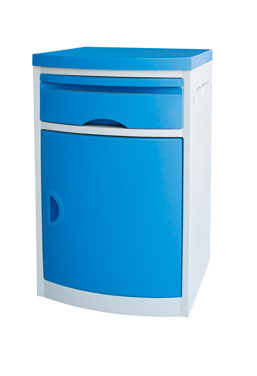
This ABS hospital bedside cabinet has a blue top, an upper drawer and a lower door within a light-colored body. Its stated size is 480 × 480 × 760 mm, giving buyers a defined overall footprint for ward furniture planning.
View product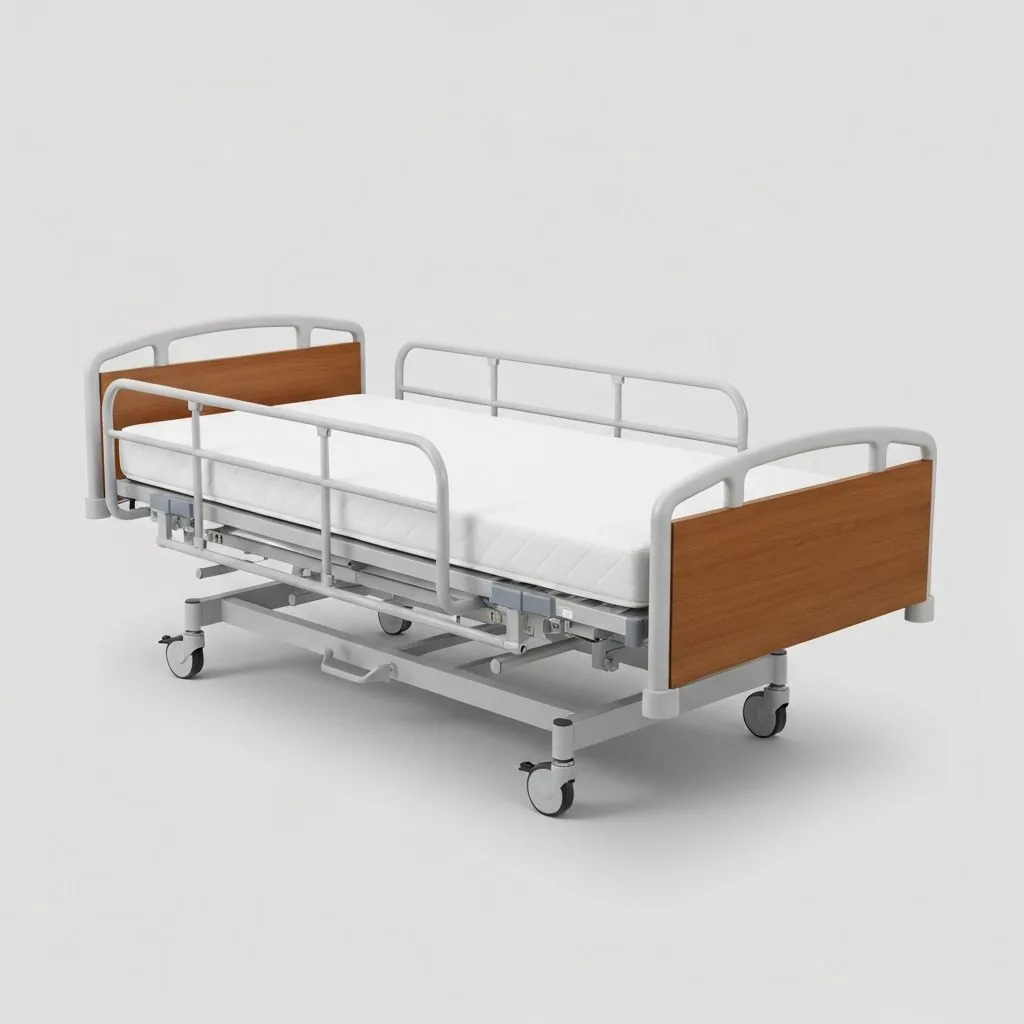
Hospital Beds
General-purpose patient beds for inpatient wards and standard hospital rooms.
View productElectric Hospital Beds
Motorized multi-function beds with electric height, backrest, and leg adjustment options.
View product