
Struggling to define a clear budget for new hospital beds because you can't get a straight answer on how long they last? You're worried that a low upfront cost today will lead to expensive repairs and downtime tomorrow. The key to a predictable and cost-effective hospital bed replacement cycle isn't about finding a universal expiration date; it's about asking the right questions about maintenance and component quality before you make a purchase.
The hospital bed replacement cycle is not a fixed number of years but a risk management variable. While a general range is 7 to 15 years, the true lifespan depends on usage intensity, the quality of your maintenance program, and, most importantly, the durability and serviceability of critical components like actuators and casters. Focusing on the Total Cost of Ownership (TCO) instead of just the initial price is the most effective way to plan.
Now that we've shifted the focus from a simple timeline to a strategic assessment, you can make a much more informed decision. Let's break down the specific factors you need to analyze to forecast your own replacement needs and ensure you're investing in long-term value, not just a short-term solution.
How Does Usage Intensity Affect the Hospital Bed Replacement Cycle?
You might assume all beds in your facility endure similar wear and tear. But the reality is that a bed in the Intensive Care Unit (ICU) is subjected to far more stress than one in a general medical-surgical ward. This difference in usage intensity is a primary driver of the replacement timeline and must be factored into your procurement strategy.
A high-use ICU bed, with its frequent electronic adjustments and high patient turnover, may have a functional lifespan closer to 7-10 years. In contrast, a bed in a general ward with less frequent adjustments might perform reliably for 10-15 years or more. Therefore, planning your hospital bed replacement cycle effectively requires segmenting your inventory by department and intended use.

Dive Deeper: Departmental Use and Its Impact on Lifespan
From our experience supporting hospital projects, we see a clear correlation between a bed's departmental home and its maintenance needs. A procurement plan that treats all beds equally is destined to face unexpected budget shortfalls.
ICU vs. General Ward: A Tale of Two Lifespans
The operational demands on an ICU bed are immense. These beds are often in use 24/7, undergoing dozens of position changes per day to facilitate patient care, procedures, and comfort. This includes adjustments to height, backrest angle, leg position, and Trendelenburg/Reverse Trendelenburg tilts. Each adjustment puts a cycle on the electric actuators. Furthermore, ICU beds often carry additional weight from monitors, pumps, and other life-support equipment, placing continuous strain on the frame and casters.
In contrast, a general ward bed may only be adjusted a few times a day. While still critical for patient care, the mechanical and electrical components experience significantly less stress over the same period. This fundamental difference in operational tempo is why a one-size-fits-all replacement schedule is impractical.
Usage Factors Across Different Hospital Departments
To help you visualize this, here is a simple breakdown of how usage varies by department and its likely effect on a bed's service life.
| Department | Key Usage Factors | Estimated Impact on Lifespan |
|---|---|---|
| Intensive Care Unit (ICU) | Constant electronic adjustments, 24/7 operation, heavy accessory loads | Shorter (e.g., 7–10 years) |
| General Medical/Surgical | Moderate daily adjustments, standard patient load | Standard (e.g., 10–15 years) |
| Long-Term Care / Nursing | Fewer daily adjustments, but constant occupancy and patient transfers | Potentially Longer (e.g., 12–18 years) |
| Bariatric Ward | Extreme mechanical stress on frame, actuators, and casters | Shorter if not specifically designed for high loads |
| Maternity / L&D | Specialized functions, frequent cleaning, and rapid turnover | Varies based on LDR bed design complexity |
When preparing a tender or purchase request, specifying the intended department for each group of beds allows a knowledgeable supplier to recommend models with appropriate durability features, helping you align cost with real-world requirements.
Which Components Determine the Real Hospital Bed Replacement Cycle?
It’s easy to be impressed by a thick steel frame, but a bed's structural integrity is rarely the reason it's taken out of service. What if a small, inexpensive plastic part on a side rail breaks and a replacement isn't available? Suddenly, a perfectly good bed becomes a safety risk. The true lifespan of a modern hospital bed is determined by its weakest, most maintenance-prone components.
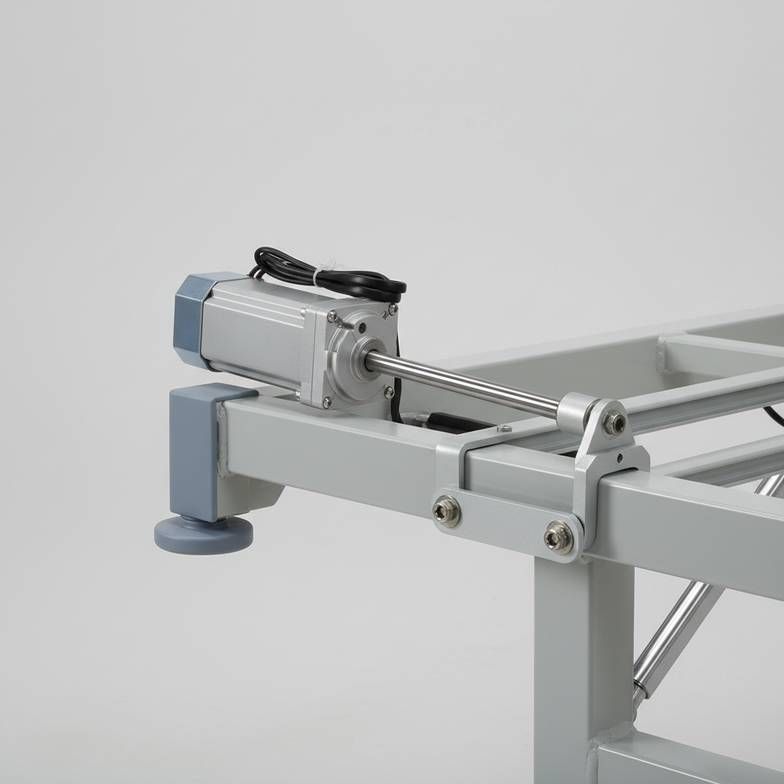
The most critical parts influencing the hospital bed replacement cycle are the electric actuators (motors), casters (wheels), control systems (handsets and panels), and side rail mechanisms. The quality, reliability, and, most importantly, the future availability of spare parts for these components should be a primary focus of your evaluation.
Dive Deeper: A Buyer's Guide to Critical Bed Components
During procurement, your technical questions should go beyond the frame and mattress platform. A frequent question we get from experienced procurement teams is about the brands and specifications of the moving parts. This is because they know these components dictate long-term reliability.
Electric Actuators: The Heart of the Bed
The motors that control height, back, and leg adjustments are the workhorses of any electric bed. Low-quality actuators are a common failure point in budget-priced beds.
- What to ask: "What brand of actuators do you use (e.g., Linak, Timotion, Dewert)?" "What is their IP rating for dust and fluid protection (e.g., IPX4, IPX6)?" and "What is their tested load capacity and duty cycle?"
- Why it matters: A reputable actuator brand signifies reliability and a lower likelihood of premature failure. A higher IP rating (like IPX6) means the electronics are better protected during cleaning, a major cause of electrical faults. In my experience, actuator failure is the most expensive and disruptive repair a hospital can face.
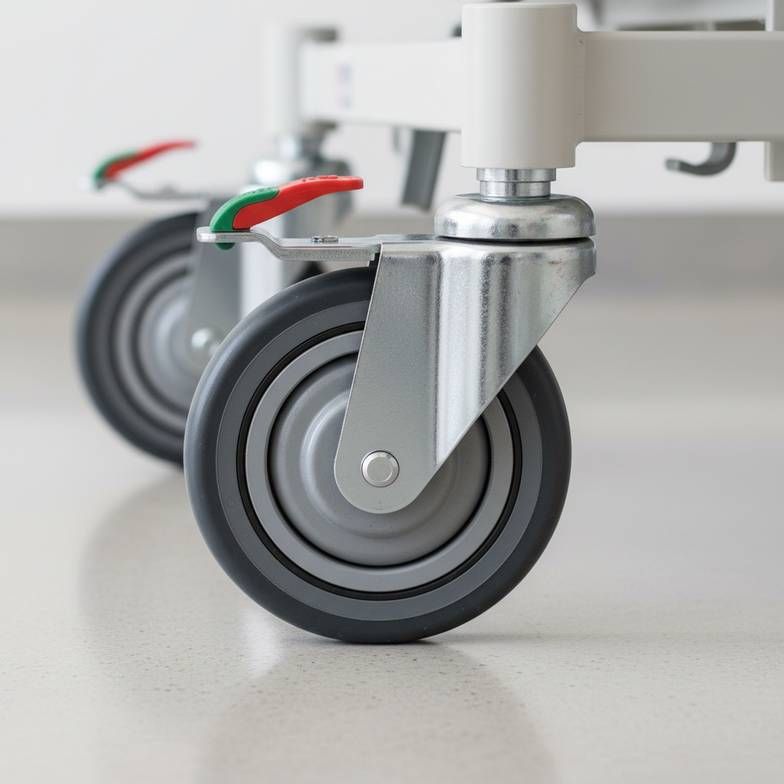
Casters and Braking Systems: The Foundation of Mobility
A bed that can't be moved or secured safely is a liability. Casters and brakes are under constant stress from rolling over uneven surfaces, impacts with walls, and the high forces of braking.
- What to ask: "What is the caster diameter and material?" "Is it a central braking system or individual brakes?" "Are the brake pedals made of steel or plastic?"
- Why it matters: Larger diameter casters roll more easily and handle thresholds better. A robust central braking system, which locks multiple wheels with a single pedal, is more efficient and reliable for nursing staff than individual plastic brakes on each wheel. A broken brake can immediately remove a bed from service until repaired.
Control Systems and Electronics: The Brains of the Operation
From patient handsets to integrated nurse control panels, the electronics are vital for both patient comfort and clinical workflow. Spilled liquids, dropped handsets, and cable damage are common issues.
- What to ask: "Is the handset design user-friendly and durable?" "Are the electronic components modular and easy to replace?" "Can we order replacement handsets and control boxes separately?"
- Why it matters: A modular design allows your maintenance team to quickly swap a faulty handset or control box without needing a specialized technician. If the electronics are integrated and difficult to access, a simple failure can lead to extended downtime and a costly service call. We always recommend that buyers confirm the availability and cost of replacement handsets upfront.
How Can Procurement Planning Reduce Your Total Cost of Ownership?
You've received a quote that's 20% lower than the competition, which seems like a huge win for your budget. But a low initial price can be a Trojan horse, hiding future expenses in frequent repairs, costly spare parts, and operational downtime that ultimately make the "cheaper" bed far more expensive over its life.
Effective procurement shifts the focus from the initial purchase price to the Total Cost of Ownership (TCO). This strategic approach involves asking suppliers detailed questions about spare parts, component-specific warranties, and design-for-maintenance before you sign the contract. This proactive planning is the best way to manage a realistic hospital bed replacement cycle.

Dive Deeper: Moving from Price Tag to Long-Term Value
The Total Cost of Ownership formula is simple in concept: TCO = Initial Purchase Price + Lifetime Maintenance & Repair Costs + Downtime Costs - Salvage Value
The goal of a smart procurement manager is to minimize the second and third variables in that equation. I once worked with a clinic that chose a bed supplier based on a 15% lower initial cost. Within two years, they discovered that replacement side rail latches were unavailable, and faulty handsets had a four-month lead time. The cost of downtime and technician visits quickly erased their initial savings.
The Critical Questions to Ask Your Supplier Before Ordering
To avoid this trap, integrate the following questions into your procurement process. A transparent and reliable supplier will be able to answer them clearly.
- Spare Parts Plan: "Can you provide a recommended spare parts list for 2, 5, and 7 years of operation, including prices and lead times?"
- Component Warranty: "What are the specific warranty terms for the frame, actuators, electronics, and casters? Please provide this in writing."
- Serviceability: "Are the key electronic and mechanical components (e.g., control box, actuators, handset) modular? Can our in-house technicians replace them, or is a specialized technician required?"
- Long-Term Availability: "For how many years do you guarantee the availability of spare parts after the bed model is discontinued?"
- Standards Compliance: "How does this bed's compliance with standards like IEC 60601-2-52 contribute to its durability and safety?" A good supplier can explain this practically—for example, how the standard mandates stability tests that ensure the bed won't tip or mechanical strength tests that validate the frame's load-bearing capacity.
Decoding the Warranty Fine Print
Be wary of vague promises. A "10-year warranty" often applies only to the steel frame against welding defects. The parts that actually fail—electronics and motors—are typically covered for a much shorter period, often just 1 or 2 years. Asking for a component-specific warranty breakdown protects you from surprises and provides a clearer picture of the supplier's confidence in their own product.
Frequently Asked Questions
What is the average lifespan of a hospital bed?
While there's no universal answer, a well-maintained, quality hospital bed can be expected to last between 7 and 15 years. However, this range is heavily influenced by factors like usage intensity (ICU vs. general ward), the quality of the hospital's maintenance program, and the durability of its core components like motors and electronics.
Is it better to repair or replace an old hospital bed?
This depends on the problem and the Total Cost of Ownership. If a simple, available component like a handset or caster fails, a repair is cost-effective. However, if the bed has major frame damage, rust, requires frequent repairs, or its replacement parts are obsolete, investing in a new bed with modern safety features and a clear maintenance plan is the better long-term financial decision.
How does the IEC 60601-2-52 standard affect a hospital bed's lifespan?
The IEC 60601-2-52 standard does not dictate a specific lifespan. Instead, it sets minimum requirements for the basic safety and essential performance of medical beds. Compliance means the bed has passed rigorous tests for mechanical strength, stability, and entrapment prevention. A compliant bed is built to a higher baseline quality, which indirectly contributes to a more durable and reliable product.
What are the signs that a hospital bed needs to be replaced?
Key signs include frequent and recurring breakdowns, especially of major components like actuators. Other red flags are the unavailability or high cost of spare parts, visible structural damage like cracks or significant rust, the bed's failure to meet current safety and hygiene standards, and a maintenance cost that is becoming prohibitively high.
Conclusion
Ultimately, managing the hospital bed replacement cycle is an exercise in strategic procurement and risk management, not a guessing game. By shifting your focus from the initial price tag to the Total Cost of Ownership, you can protect your budget and ensure operational continuity. The most reliable path to long-term value lies in analyzing a bed's departmental use, scrutinizing the quality of its critical components, and demanding transparency from your supplier on maintenance, warranties, and spare parts availability. This proactive approach turns a major capital expenditure into a predictable, manageable investment.
At CareFurnex, we believe that an informed buyer is our best partner. If you are preparing for a hospital bed procurement project, contact us. We can provide a detailed specification review, transparent answers to your maintenance questions, and practical support to help you plan for the entire lifecycle of your healthcare furniture.
Written by
CareFurnex Team
CareFurnex Team shares practical knowledge about hospital beds, patient room furniture, medical trolleys, clinic furniture, and healthcare facility procurement for international B2B buyers.
Related Products
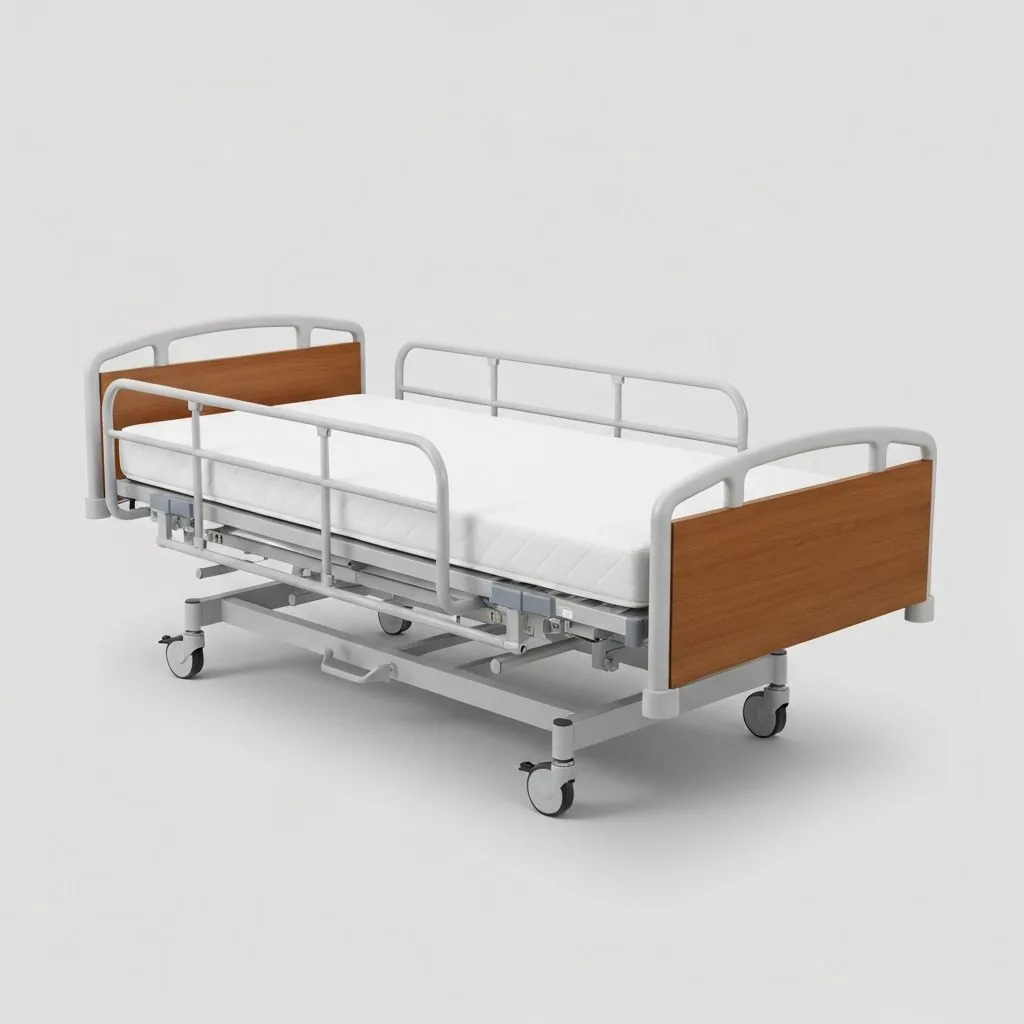
Hospital Beds
General-purpose patient beds for inpatient wards and standard hospital rooms.
View productElectric Hospital Beds
Motorized multi-function beds with electric height, backrest, and leg adjustment options.
View product
Ward Furniture
Complete ward furniture options for patient rooms and hospital care areas.
View product