
Choosing the right hospital bed feels overwhelming. A mistake in selecting parts can lead to maintenance headaches, staff frustration, and wasted funds. Understanding the trade-offs is key.
The best hospital bed parts are not the most expensive ones, but the ones that best fit your hospital's workflow, maintenance capacity, and budget. This means evaluating rails for workflow, wheels for maintenance risk, and motors for your specific infrastructure and operational reality.
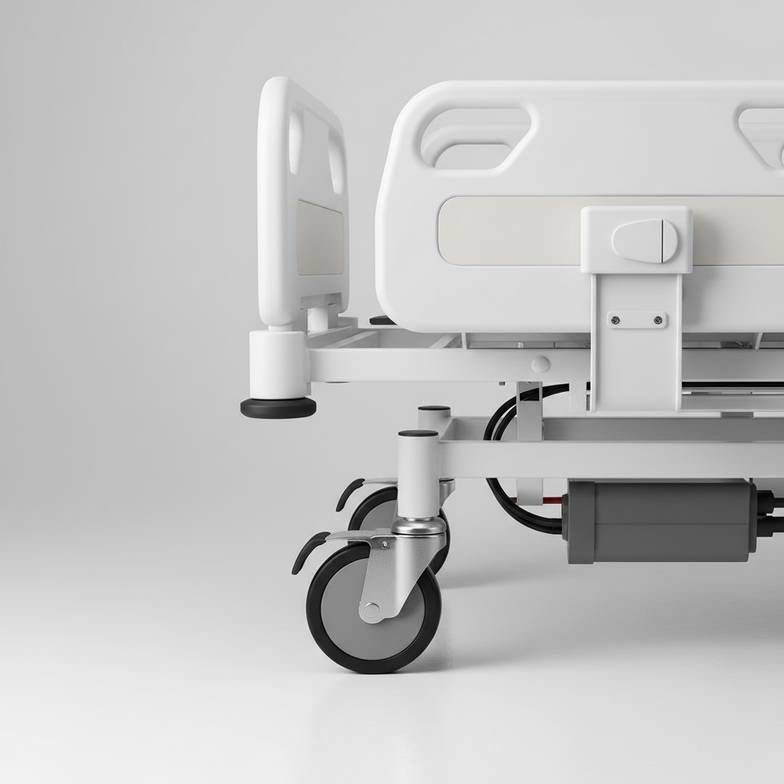
As a B2B healthcare furniture specialist, I talk to procurement managers every day. They come to me with spec sheets and lists of features. But the most successful purchases I've seen happen when the conversation shifts. Instead of just listing features, we talk about the real-world impact of each component. This article will walk you through that same process. We'll look at the most common hospital bed parts not as a checklist, but as a series of important operational decisions. Let's break down how to de-risk your next hospital bed purchase.
Should You Choose Split Rails or Full-Length Rails for Your Hospital Beds?
You need to guarantee patient safety with bed rails. But you also have to consider your nursing staff's workflow. Choosing the wrong rail type can undermine one for the other.
Split rails are designed to assist with patient mobility and make it easier for patients to get in and out of bed. Full-length rails offer maximum fall prevention but can be considered a restraint. The right choice depends on your hospital's specific patient handling protocols.
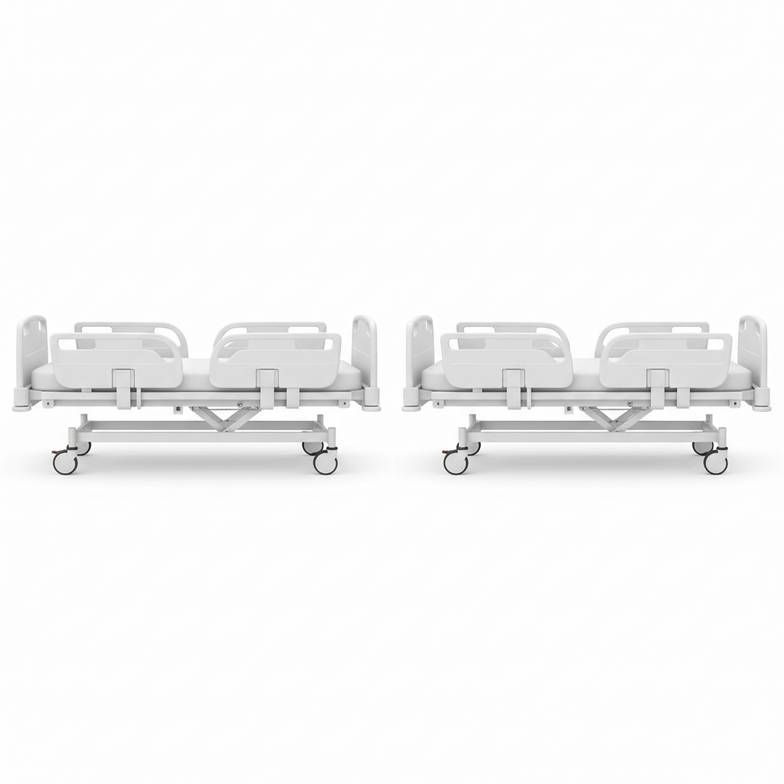
From my experience helping distributors and project contractors, the debate between split and full-length rails isn't just about meeting a safety standard. It's a fundamental choice about how your beds will function within your clinical environment. Instead of asking "which is safer?", a better question is "which one supports our workflow and patient population best?".
Split rails, typically a set of four smaller rails, offer greater flexibility. Nurses can lower just the head-end rails for patient access while keeping the foot-end rails up for safety. For the patient, the upper rail can act as a support handle to help them sit up or reposition themselves, promoting independence.
On the other hand, full-length rails provide a continuous barrier, which is often preferred for high-risk, sedated, or disoriented patients where maximum fall prevention is the absolute priority. However, for a more mobile patient, a full-length rail can become an obstacle, making it harder for them to get out of bed without assistance and potentially increasing their risk of falls if they try to climb over it.
Here’s a breakdown to help your decision:
| Feature | Split Rails | Full-Length Rails |
|---|---|---|
| Patient Mobility | Promotes independence; acts as a support handle. | Can act as a barrier, limiting egress. |
| Nurse Workflow | Flexible access; easier patient interaction. | Less flexible; requires lowering the whole rail. |
| Fall Prevention | Effective, but depends on correct use. | Offers maximum barrier coverage. |
| Best Use Case | General wards, step-down units, mobile patients. | ICUs, high-risk patients, post-op recovery. |
A common question from procurement managers is about compliance. Both types can be compliant, but the choice impacts your hospital's protocols for patient handling and restraint policies. Thinking through these operational impacts is more critical than just ticking a box on a tender document.
Central Locking or Individual Casters: Which Is the Right Choice for Your Hospital Bed Wheels?
Moving and securing hospital beds is a daily task. But a broken locking system can take an entire bed out of service. How do you balance day-to-day efficiency with long-term reliability?
A central locking system is faster for staff but introduces a single point of failure that is complex to repair. Individual locking casters are more robust and easier to maintain but require more effort from staff during daily use. Your choice defines the bed's long-term maintenance cost.
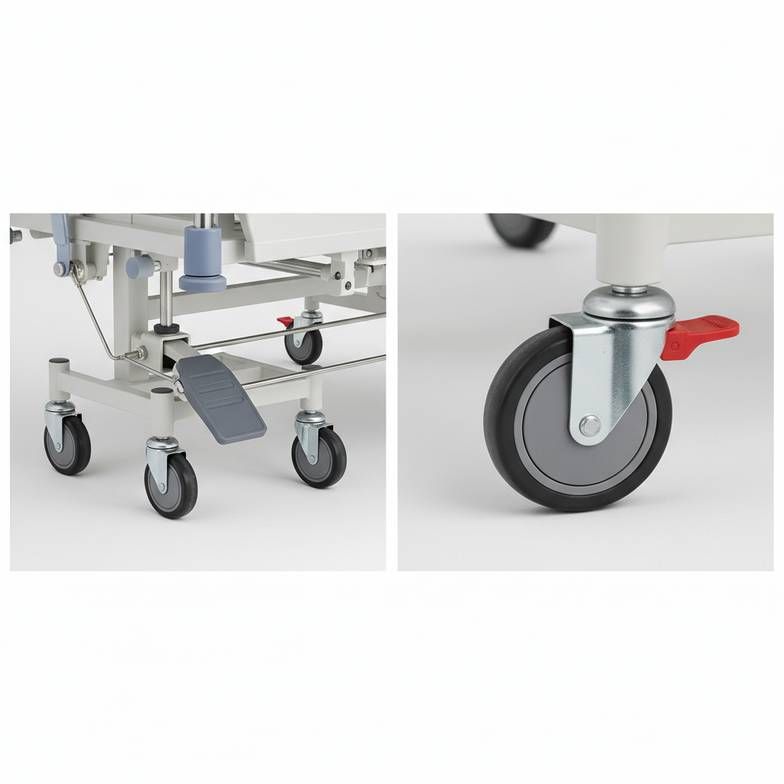
When I review specifications for a hospital project, the casters are one of the most important details. A buyer might ask for a 125mm caster, but the more important question is about the locking system. This choice directly impacts your maintenance team's workload and your hospital's operational downtime.
A central locking system is very efficient. The nurse steps on a single pedal or bar, and all four wheels lock or unlock simultaneously. This is fantastic for speed, especially in an emergency or when beds need to be moved frequently. However, the mechanism that connects all four wheels is complex. If a single cable or rod in that system fails, the entire locking function is compromised. Repairing it often requires a specialized technician and specific parts, taking the bed out of commission.
Individual locking casters are the opposite. Each wheel has its own brake pedal. To secure the bed, a nurse has to walk around and lock at least two casters, which takes more time and effort. But the advantage is redundancy. If one brake fails, the other three are unaffected. A single caster is simple, cheap, and easy for any maintenance person to replace, minimizing downtime.
Here is a comparison from a procurement perspective:
| Factor | Central Locking System | Individual Locking Casters |
|---|---|---|
| Staff Efficiency | High (one-step process) | Low (multi-step process) |
| Maintenance Risk | High (single point of failure) | Low (redundant system) |
| Repair Cost | High (complex mechanism, specialized parts) | Low (simple, standard part replacement) |
| Bed Downtime | Potentially long if system fails | Minimal, quick to fix a single caster |
What we've learned from project feedback is that facilities with strong, dedicated maintenance teams may prefer central locking for its efficiency. However, for facilities in remote areas or those with limited technical staff, the simplicity and reliability of individual casters often present a lower total cost of ownership.
Electric Motors or Manual Cranks: Which System Powers Your Hospital's Reality?
Electric beds seem modern and efficient. But what about power outages, staff training, and long-term maintenance costs? Is the higher upfront investment in electric motors always the best choice?
Electric motors offer superior patient comfort and reduce staff workload, but they rely on stable electricity and access to technicians. Manual cranks are incredibly reliable and infrastructure-independent but increase the physical strain on nursing staff. The right choice depends on your operational reality.
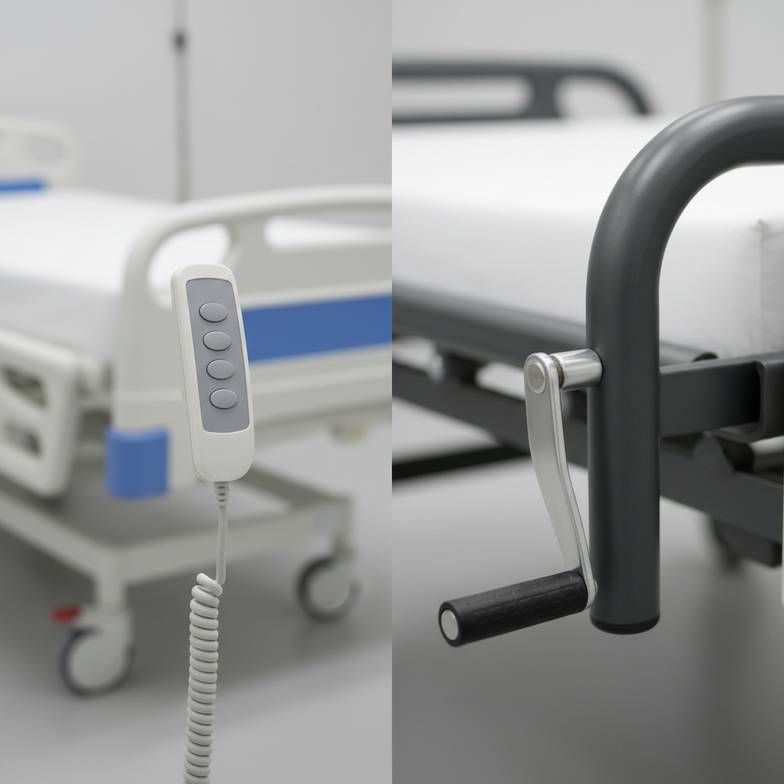
This is a classic capital expense (CAPEX) versus operating expense (OPEX) decision. Many buyers I speak with initially default to wanting fully electric beds. They look better on paper and seem more advanced. However, the best choice is one that matches the hospital's infrastructure and long-term budget.
A fully electric bed, with motors for height, backrest, and leg rest adjustment, has a high upfront cost (CAPEX). It also introduces ongoing operational needs (OPEX). It requires a stable power supply. I've worked with clients in regions with frequent power outages who found their fleet of electric beds turned into heavy, immovable objects during an outage. They also require staff training to use all functions correctly and access to technicians who can diagnose and repair a faulty motor or control box.
Manual beds, which use hand cranks to make adjustments, have a much lower upfront cost. They are mechanically simple and incredibly robust. They will work anywhere, anytime, regardless of power supply. The trade-off is a significant increase in physical workload for the nursing staff. This can lead to slower patient repositioning and a higher risk of repetitive strain injuries for staff, which is a hidden operational cost.
Here's how they stack up in a real-world purchasing decision:
| Consideration | Electric Bed | Manual Bed |
|---|---|---|
| Upfront Cost (CAPEX) | High | Low |
| Operational Needs | Stable power, technician access | None (works anywhere) |
| Staff Workload | Low (push-button operation) | High (physical effort required) |
| Patient Comfort | High (smooth, easy adjustments) | Lower (slower, jerkier adjustments) |
| Infrastructure-Dependence | High | None |
A practical middle ground we often suggest is a semi-electric bed, which typically uses motors for the back and leg rests but a manual crank for height adjustment. This provides the most-used comfort features electrically while keeping the less-frequently used height adjustment manual, balancing cost, reliability, and function.
Are Integrated IV Poles and Accessories a Convenience or a Hidden Cost?
Getting a bed with a built-in IV pole or oxygen tank holder seems efficient. But what happens when that small, integrated part breaks? Suddenly, a minor issue can compromise the entire bed.
Integrated accessories offer a clean look and convenience, but they can lock you into a single supplier for proprietary replacement parts. Standard, detachable accessories are easier and cheaper to replace from multiple sources, reducing long-term serviceability risks and lowering the total cost of ownership.
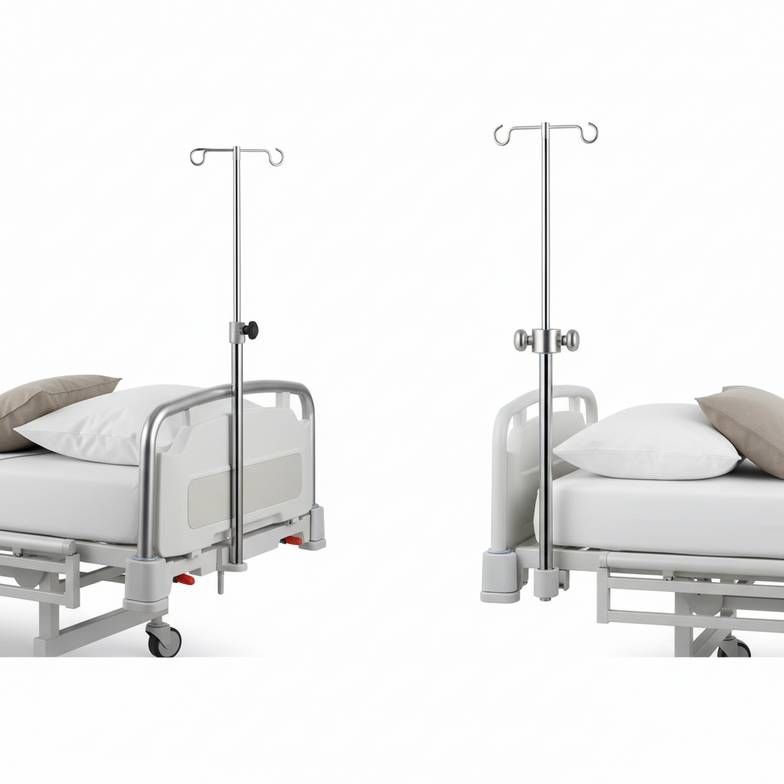
As a supplier, I often see tender documents that specify "bed with IV pole." This is where I encourage buyers to dig deeper. The real question isn't whether it has an IV pole, but how that pole is attached and if it can be easily replaced. This seemingly small detail has a big impact on the bed's serviceability and long-term cost.
An integrated accessory is designed as part of the bed itself. It looks sleek and there are no clamps to lose. The convenience is high. The problem arises when it breaks. The part is often proprietary to that specific bed model from that specific manufacturer. Years down the line, finding that exact replacement part can be difficult and expensive. If it's unavailable, you might be left with a bed that has a broken, unusable feature.
A standard, removable accessory, like a clamp-on IV pole, offers universal compatibility. It may not look as streamlined, but its value is in its serviceability. If it breaks, you can replace it with a generic, off-the-shelf IV pole from any number of suppliers. The replacement is fast, cheap, and doesn't depend on the original bed manufacturer. This drastically reduces the risk of a bed being taken out of service for a minor failure.
Consider these factors when evaluating accessories:
| Factor | Integrated Accessories | Standard/Removable Accessories |
|---|---|---|
| Initial Appearance | Sleek, clean, and streamlined. | Can look bulky or like an add-on. |
| Replacement Cost | High (proprietary part). | Low (generic part). |
| Part Availability | Limited to the original manufacturer. | Widely available from many suppliers. |
| Long-Term Risk | High. Part obsolescence is a real concern. | Low. Easy to find a functional replacement. |
Instead of asking for the 'best' accessory, a better question for your supplier is, "What is the replacement procedure for this IV pole, and is it a standard part?" This shifts the focus from initial features to long-term ownership, which is the key to a smart procurement decision.
Conclusion
Choosing the right hospital bed parts is about matching components to your real-world operational needs, not just chasing the highest technical specifications. This ensures a truly cost-effective and durable investment.
Written by
CareFurnex Team
CareFurnex Team shares practical knowledge about hospital beds, patient room furniture, medical trolleys, clinic furniture, and healthcare facility procurement for international B2B buyers.
Related Products
Hospital Beds
General-purpose patient beds for inpatient wards and standard hospital rooms.
View productElectric Hospital Beds
Motorized multi-function beds with electric height, backrest, and leg adjustment options.
View product
IV Poles
Infusion pole stands for hospital beds, wards, clinics, and infusion rooms.
View product