
You need to quote hospital beds for a project, but the prices vary wildly. Choosing the wrong one could mean costly failures, jeopardizing your reputation and budget.
The final price of a hospital bed is a direct result of its intended clinical function, component quality, and operational features. Key cost drivers include motor brand, steel thickness, caster type, and advanced functions like integrated scales, which create trade-offs between upfront investment and long-term value.
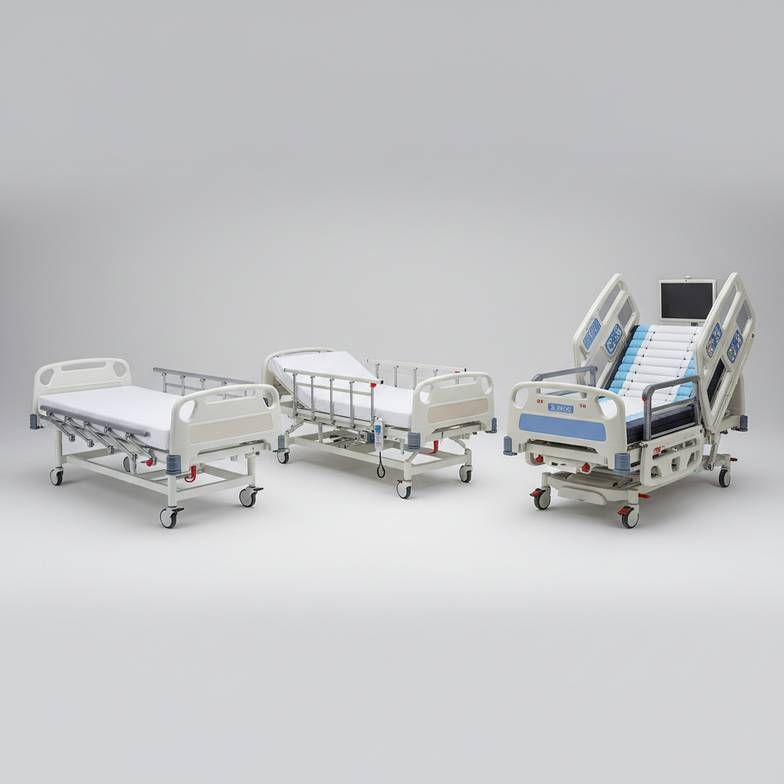
I see it all the time. A project contractor gets two quotes for a hospital bed. One is significantly lower, and it's very tempting to choose it. But as a B2B support professional, my first question is always: "What are you giving up for that lower price?" The final number on a quotation is not just a price; it's the result of many small decisions about materials, functions, and long-term reliability. Understanding these decisions is the key to making a smart procurement choice that protects your client and your business. Let's break down exactly what changes the price so you can compare quotes with confidence.
Are Cheaper Components Secretly Inflating Your Total Cost of Ownership?
You found a cheap hospital bed quote that fits your budget perfectly. But you worry about the quality issues that might appear later. This decision could damage your reputation.
Yes, cheaper components almost always lead to higher long-term costs. A low initial price often hides thinner steel, lower-grade motors, or basic casters. These compromises shorten the bed's lifespan and increase maintenance needs, turning a "deal" into a recurring expense for the end-user.
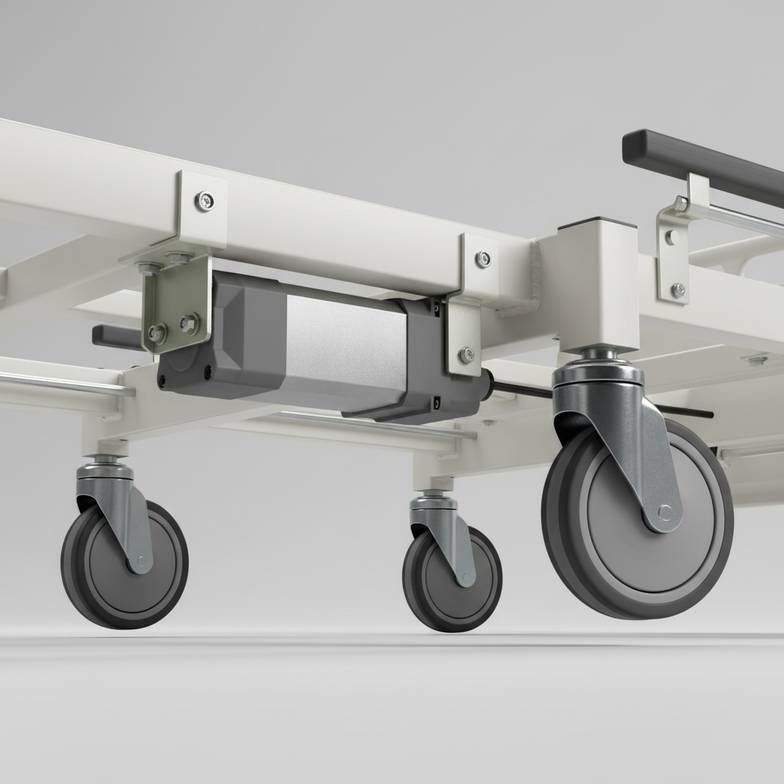
From post-delivery feedback, I've learned that the biggest points of failure often trace back to a few core components that were downgraded to meet a price point. It's a classic case of short-term savings leading to long-term pain. When we prepare a quote, we're not just listing parts; we're outlining a performance promise. Buyers who focus only on the unit price miss the bigger picture: the total cost of ownership. This includes the initial purchase, maintenance, repairs, and eventual replacement. A slightly more expensive bed with better components often has a much lower total cost over its five-to-ten-year lifespan.
The Frame: Steel Thickness Matters
The foundation of any hospital bed is its steel frame. A cheaper bed might use 1.2mm thick steel, while a more durable one uses 1.5mm or even 2.0mm thick steel. This small difference has a huge impact on the bed's load capacity and resistance to bending or damage over time. Thinner steel is more likely to deform, leading to an unstable surface and potential safety risks.
The Actuators: Not All Motors Are Equal
Electric beds rely on motors, or actuators, to adjust the height, backrest, and leg rest. A common question we get from distributors is about motor brands. A bed with a generic, unknown motor will always be cheaper than one with a certified motor from a reputable brand like Linak, Dewert, or Timotion. These brand-name motors are tested for thousands of cycles, offer smoother and quieter operation, and have better safety features. A cheap motor is often the first thing to fail, leaving the bed stuck in one position and unusable until a replacement can be found.
The Casters: The Foundation of Mobility and Safety
Casters seem like a small detail, but they are critical. Cheaper beds use simple, individual-locking casters. They can be noisy and difficult to secure. Higher-quality beds feature a central locking system, allowing a nurse to lock all four wheels with a single pedal press. This is faster, more secure, and reduces the risk of the bed moving unexpectedly. The material of the wheel itself also matters for smooth rolling and floor protection.
| Component | Lower Price Option | Higher Price (Better Value) Option | Impact on Total Cost |
|---|---|---|---|
| Frame Steel | 1.2mm thickness | 1.5mm - 2.0mm thickness | Higher risk of damage, shorter lifespan |
| Motors | Generic, unbranded | Linak, Dewert, Timotion | Higher failure rate, more maintenance calls |
| Casters | Individual brake | Central locking system | Slower workflow, potential safety issues |
Why Does an ICU Bed Cost So Much More Than a General Ward Bed?
Your client needs a price for an ICU bed, and it's much higher than a general ward bed. You struggle to explain the huge difference. This can stall project discussions.
An ICU bed's higher cost is driven by specialized clinical functions, not just quality. It includes integrated weighing scales, CPR release, X-ray translucent backrests, and backup batteries. These features are essential for critical care workflows and patient safety, justifying the investment.
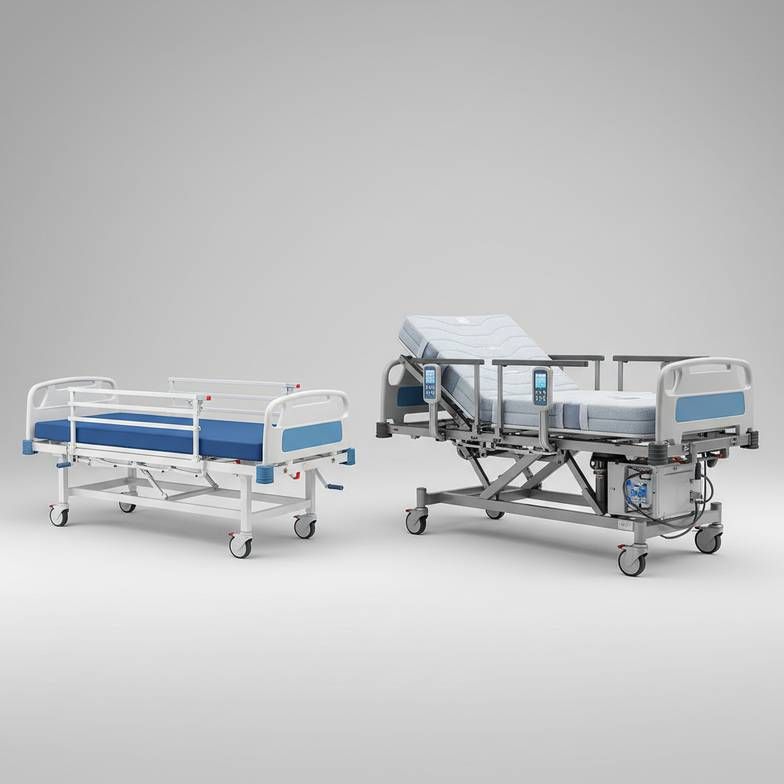
One of the most common points of confusion for buyers is the price gap between different types of hospital beds. It's not just a matter of "good" versus "better." It's about matching the right tool to a very specific job. A general ward bed is a workhorse. It needs to be durable, easy to clean, and simple for patients and staff to operate for basic recovery. An ICU bed, however, is a sophisticated medical device. It's part of the life-support and monitoring system for a critically ill patient. The extra cost comes from features that solve critical problems for the clinical team in a high-stakes environment. Explaining this shift in purpose is key to helping your client understand the value they are getting.
Integrated Functions for Critical Care
The functions built into an ICU bed are there to save time and improve patient outcomes.
- Integrated Weighing Scale: Allows nurses to monitor a patient's weight accurately without moving them, which is crucial for tracking fluid balance.
- CPR Release: A one-touch handle that instantly flattens the bed for emergency resuscitation.
- X-ray Backrest: Lets technicians take chest X-rays without having to move the patient out of bed, reducing risk and discomfort.
- Backup Battery: Ensures the bed's functions continue to work during a power outage or while the patient is being transported.
Durability for Different Environments
While both beds must be durable, an ICU bed is designed for a more intense environment. It has more electronic components that need to be sealed and protected against fluid ingress. The frame and mattress platform are also engineered to support additional equipment and accommodate specific medical procedures. A general ward bed is built for high patient turnover and frequent, aggressive cleaning. Its design prioritizes simplicity and robustness to withstand constant use and movement between rooms.
Safety and Certification Standards
All medical beds must meet certain safety standards, but ICU beds often require a higher level of certification (like IEC 60601-2-52). This involves more rigorous testing for electrical safety, mechanical stability, and material biocompatibility. These certification processes add to the manufacturing cost but provide an essential guarantee of safety for the most vulnerable patients.
| Feature Type | General Ward Bed | ICU Bed | Clinical Purpose |
|---|---|---|---|
| Core Function | Basic adjustments (height, back, legs) | Advanced adjustments, Trendelenburg | Patient comfort vs. Clinical intervention |
| Emergency | Manual adjustments | CPR release, backup battery | Routine use vs. Emergency readiness |
| Monitoring | None | Integrated scales, bed exit alarm | Basic care vs. Continuous monitoring |
| Diagnostics | Requires patient transfer | X-ray compatible backrest | Facilitates in-bed procedures |
What Hidden Procurement Costs Are Missing from Your Hospital Bed Quote?
You have a low unit price quote, and it looks great on paper. But you suspect something is missing. Overlooking these details can lead to project delays and big extra costs.
A simple unit price often hides the costs of project management. This includes providing compliance certificates, coordinating complex mixed-container shipments, and guaranteeing long-term spare parts. A reliable supplier's price reflects this crucial support, which a low quote often omits.

Project contractors often overlook the costs that happen outside the factory. A low price on a piece of paper is not the same as a successfully delivered and installed project. The final unit price is only one part of the equation. As a supplier supporting B2B buyers, I know that our role doesn't end when the product is built. It extends to making sure the entire procurement process is smooth, compliant, and predictable. When you see a quote that seems too good to be true, ask what it doesn't include. Often, you'll find it lacks the essential support that prevents expensive problems down the line.
The Cost of Missing Paperwork
For any public tender or hospital import, you need documents. This includes things like an ISO 13485 certificate for the manufacturer, and sometimes specific product test reports. A supplier who can't provide these documents on time can get your shipment stuck in customs or disqualify your tender bid entirely. A professional supplier has this documentation ready, and the cost of maintaining these certifications is factored into their pricing structure. It's a fee for peace of mind.
The Logistics Puzzle
Most hospital projects require more than just beds. You might need bedside cabinets, overbed tables, and IV stands. Trying to source each item from a different supplier is a logistical nightmare. A good partner like CareFurnex can supply a full package and manage the mixed-container loading plan. This saves you huge amounts of time and reduces shipping costs. A supplier who only offers a low price on one item can't provide this project-level value. They put the burden of coordination entirely on you.
The After-Sales Support Guarantee
What happens if a motor fails or a side rail breaks two years after installation? A cheap supplier might be gone, or they may not have a system for providing spare parts. A reliable partner's price includes a warranty and a commitment to providing spare parts for years. This is a critical part of the total cost of ownership. The ability to quickly repair a bed instead of replacing it saves the hospital a significant amount of money over the product's life.
How Do Volume and Customization Affect Your Final Hospital Bed Price?
You need to place an order, but your requirements are very specific. You worry a small custom order will be too expensive, or that your large order isn't getting the best deal.
Volume and customization are the biggest levers on your final price. Large, standard orders get the best pricing from production efficiency. Custom OEM orders cost more per unit due to unique tooling, material sourcing, and design work, reflecting a trade-off between scale and specificity.
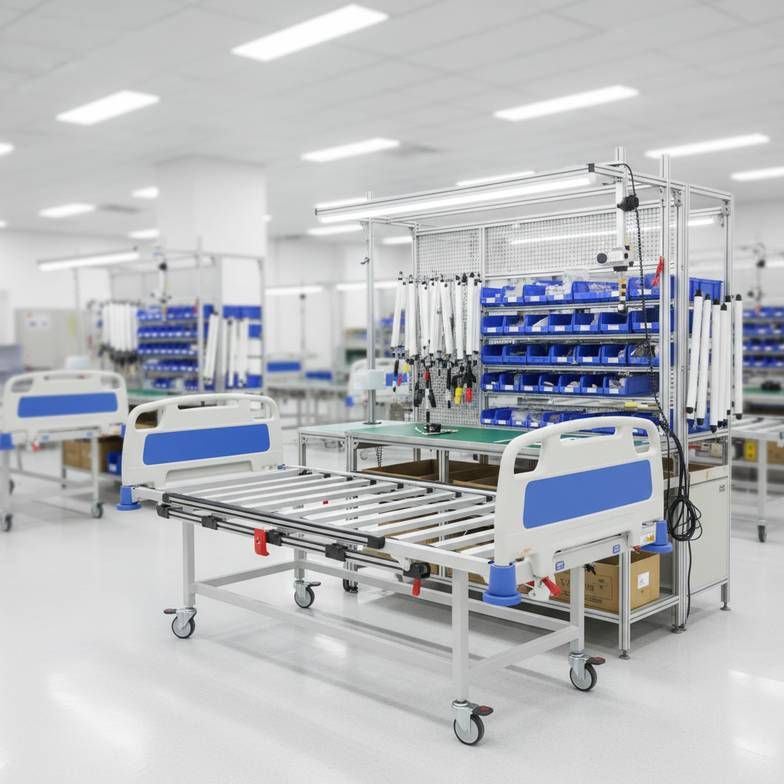
A price list is just a starting point. The final quote I prepare for a distributor or project contractor is always tailored to their specific situation. The two most important factors that change the numbers are how many units you need and how much you need to change our standard product. Understanding how these two factors work can help you structure your request to get the best possible value. It's a conversation. We need to understand your project's goals, and you need to understand our production realities. When we align those two things, we can arrive at a price that works for everyone.
The Power of Volume Orders
This is simple economics. Setting up a production line has fixed costs. The more units we produce in a single run, the lower the cost per unit. When a distributor places a stock order for 50 or 100 standard beds, they get our best price because it allows our factory to operate at maximum efficiency. We can order raw materials in bulk and streamline the assembly process. This is why it's often smart to consolidate orders for a region or for a full year to achieve a higher volume and unlock better pricing.
The Price of Uniqueness: OEM and Customization
Sometimes, a project has very specific needs. A tender might require a certain side rail design, a specific mattress foam density, or a different color for the headboard. We handle these OEM and customization requests all the time. However, they do increase the per-unit cost. A custom request might require new molds, sourcing special components, or interrupting the standard production flow. This adds engineering time and manufacturing costs. For a small order of 10-20 custom beds, these setup costs are spread over fewer units, making the per-unit price noticeably higher than a standard model.
How to Negotiate a Better Quote
To get the best price, be clear and strategic.
- Bundle Your Needs: Instead of asking for a price for 10 beds this month and 10 next month, ask for the price for a 20-bed order.
- Be Specific About What's Essential: If you need a custom feature, explain why. Sometimes we can suggest a standard alternative that meets the need without the custom cost.
- Ask for Options: Ask for a quote on our standard model and an optional quote for your customization. This allows you to clearly see the cost of your specific request and make an informed decision.
Conclusion
The right hospital bed price isn't the lowest number. It's the price that balances function, quality, and long-term risk to perfectly match your project's needs.
References
[11] Mass customization - Wikipedia - https://en.wikipedia.org/wiki/Mass_customization
[12] Economies of scale - Wikipedia - https://en.wikipedia.org/wiki/Economies_of_scale
Written by
CareFurnex Team
CareFurnex Team shares practical knowledge about hospital beds, patient room furniture, medical trolleys, clinic furniture, and healthcare facility procurement for international B2B buyers.
Related Products
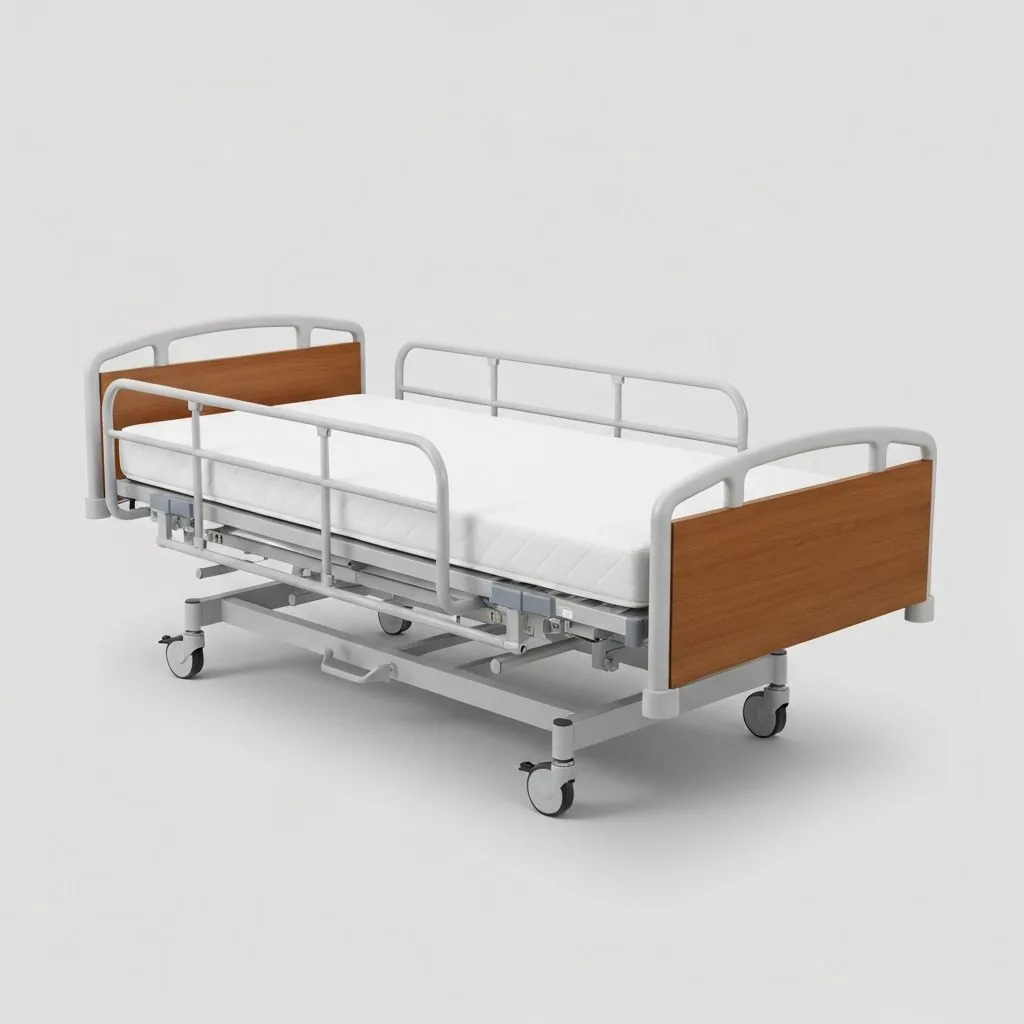
Hospital Beds
General-purpose patient beds for inpatient wards and standard hospital rooms.
View productElectric Hospital Beds
Motorized multi-function beds with electric height, backrest, and leg adjustment options.
View product
Ward Furniture
Complete ward furniture options for patient rooms and hospital care areas.
View product