
Scratched walls, dented door frames, and damaged medical equipment are a constant, costly problem in any busy healthcare facility. These repair bills add up, silently eroding your maintenance budget, all because hospital beds are moved frequently without adequate protection. Understanding the key specifications of a hospital bed bumper wheel is the first step toward protecting your facility and controlling these hidden costs.
When procuring hospital beds, buyers should confirm the bumper wheel's diameter, material composition (e.g., TPR over just ABS), structural design (internal reinforcement), and mounting mechanism. These details determine its ability to absorb impact, protect walls, and remain stable on the bed frame, directly impacting long-term facility maintenance costs.
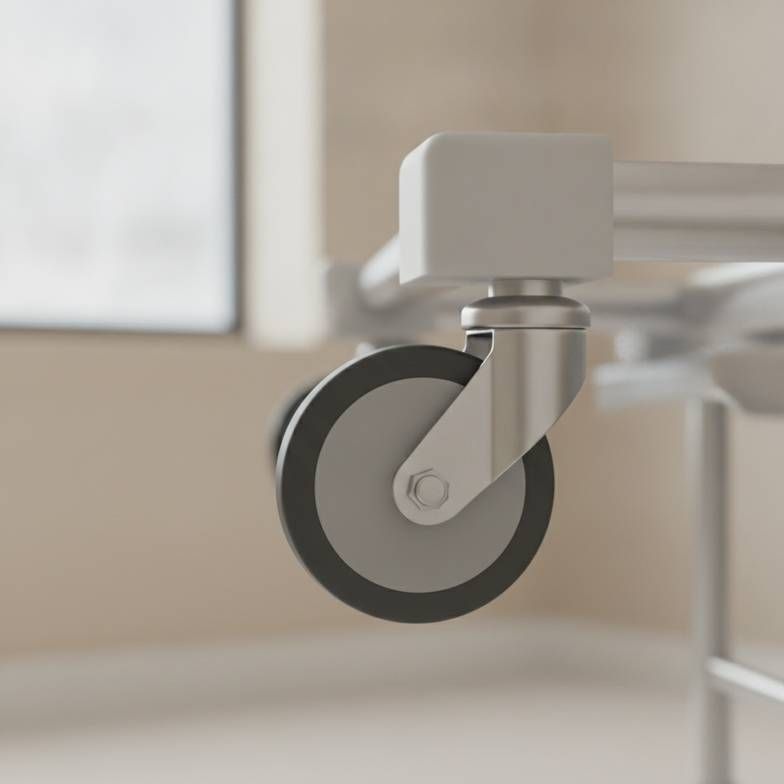
Now that we've identified the core specifications, let's explore why the most obvious detail—the material—can be misleading if viewed in isolation. The real story is in the component's design and how it handles the dynamic, real-world impacts of a busy hospital environment.
What’s More Important for a Hospital Bed Bumper Wheel: Material or Design?
You're reviewing a quote and the supplier highlights that their bumper wheel is made of "durable ABS plastic." Yet, in my experience, I've seen facilities where these same parts crack and fail, leading to the very wall damage they were meant to prevent. It’s frustrating when promised quality doesn't hold up in a busy ward.
The structural design, including internal reinforcement and mold quality, is far more critical than the raw material type alone. A well-designed bumper wheel made of a softer, shock-absorbing material can easily outperform a poorly designed one made from a hard, brittle plastic.
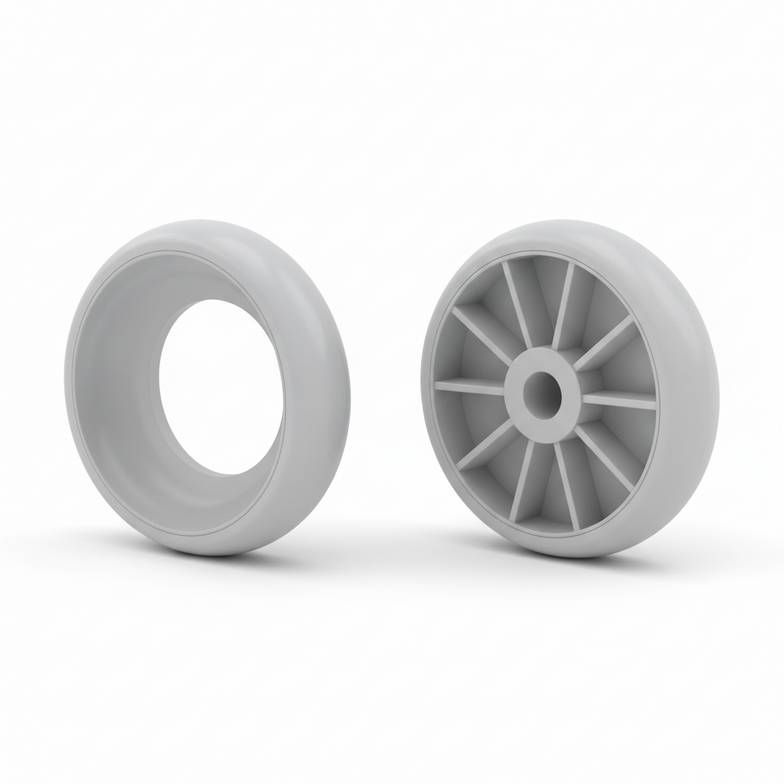
The Problem with a "Material-Only" Focus
Many suppliers emphasize material type because it's an easy specification to list. Terms like ABS (Acrylonitrile Butadiene Styrene) sound impressive, and it is indeed a hard, rigid plastic. However, in the context of impact, hardness can be a liability. When a hard, poorly designed plastic bumper strikes a wall, it transfers the shock directly rather than absorbing it. Worse, it can become brittle and shatter.
A superior approach involves composite materials. For example, a robust design might feature a strong ABS core for structural integrity but have an outer wheel or tire made from TPR (Thermoplastic Rubber). TPR is softer and has excellent shock-absorbing properties, dissipating the force of an impact and protecting both the wall and the bed frame.
Why Structural Integrity Matters More
The true test of a bumper wheel is its ability to withstand repeated, off-angle impacts. This is where internal design becomes paramount.
I recently consulted with a hospital client who was facing unexpected repair costs. Their new beds, purchased from another source, were constantly scratching walls. Upon inspection, we found the bumper wheels were made of thick ABS, but they were essentially hollow shells. The first hard knock against a steel door frame shattered a bumper because the impact force had nowhere to go.
A well-engineered hospital bed bumper wheel features:
- Internal Reinforcement: Look for designs with internal ribbing or a solid core. This structure helps distribute impact forces across the entire component, preventing catastrophic failure at a single point.
- High-Quality Molds: The precision of the manufacturing mold affects the final part's density and uniformity. Low-quality molds can create weak spots that are invisible to the naked eye but will fail under stress.
- Thoughtful Material Combination: As mentioned, using a combination of materials like an ABS frame with a TPR wheel provides the best of both worlds: rigidity and shock absorption.
When evaluating a supplier, shift the conversation from "What plastic do you use?" to "Can you explain the internal design of this bumper wheel?" Their answer will reveal whether they are simply selling a part or providing an engineered solution for asset protection.
| Feature | Poor Design (Low-Cost) | Robust Design (Asset Protection) |
|---|---|---|
| Material | Single, hard plastic (e.g., brittle ABS) | Composite (e.g., ABS core, TPR outer) |
| Structure | Hollow or thin-walled, prone to cracking | Internally reinforced, often with a solid core |
| Impact Response | Transfers force, shatters, or cracks | Absorbs and dissipates impact energy |
| Long-Term Result | Facility damage, frequent part replacements | Wall and equipment protection, longer component life |
How Do Diameter and Mounting Affect a Hospital Bed Bumper Wheel's Performance?
Choosing a bumper wheel seems simple, until the shipment of beds arrives and you discover the bumpers are too small to offer real protection or, even worse, they don't mount securely to the frame. This kind of sourcing error can halt an entire bed deployment and lead to costly delays or modifications.
The diameter of the wheel determines the contact surface area for impact distribution, with larger diameters offering better protection. Equally important, the mounting mechanism ensures the bumper stays firmly attached to the bed frame, preventing it from breaking off and becoming a useless, or even hazardous, piece of plastic.
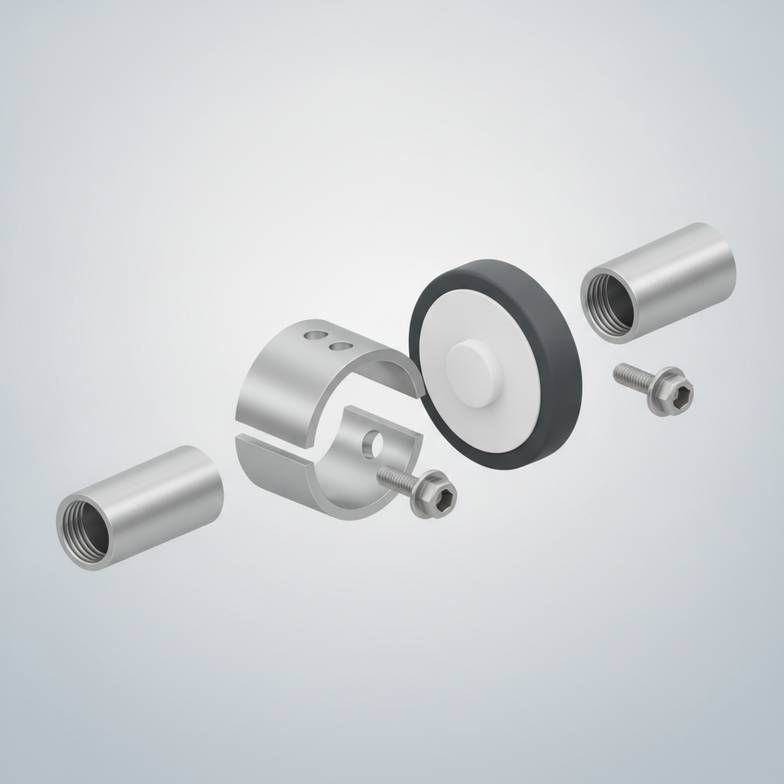
The "Bigger is Better" Rule (with a Caveat)
When it comes to bumper wheel diameter, size does matter. A larger diameter (e.g., 120mm or 125mm) creates a wider standoff between the bed and the wall. This increased clearance is often the difference between the bumper wheel doing its job and the bed's metal frame causing a deep gouge in a wall or damaging an expensive piece of mobile medical equipment. A smaller bumper (e.g., 80mm or 90mm) may be cheaper, but it offers a much smaller zone of protection.
However, there is a critical caveat: facility compatibility. Before specifying the largest possible bumper, you must consider the physical constraints of your environment. An oversized bumper on a bed could make it difficult to navigate narrow corridors, tight corners, or standard doorways. The right choice is the largest diameter that still allows for safe and efficient maneuverability throughout the hospital.
Securing the Investment: Mounting Stability
A bumper wheel is useless if it falls off. The mounting mechanism is just as important as the bumper itself. I once worked with a hospital project contractor who had to replace 200 bumper wheels across their facility. The original bumpers used a simple single-screw mount that allowed them to spin on impact, completely exposing the bed's sharp metal corner. The "savings" from the simpler mount were wiped out by the labor and replacement costs.
Here are the common mounting systems, from least to most secure:
- Friction Fit: These are simply pushed onto the bed frame. They are prone to loosening over time from vibrations and impacts and should generally be avoided for professional healthcare environments.
- Single-Screw Fastening: This is a common and acceptable method, but as the story above illustrates, it can allow the bumper to pivot or rotate. The quality of the screw and the design of the housing are critical.
- Multi-Point Fastening or Integrated Clamps: This is the gold standard for high-use environments. Using two or more screws or a robust clamping mechanism ensures the hospital bed bumper wheel is locked in place and acts as a solid, integrated part of the bed frame.
For any procurement, ask the supplier these critical questions:
- What is the outer diameter of the wheel?
- What is the exact mounting mechanism (friction, single screw, clamp)?
- Is the mounting hardware included, and what is it made of (e.g., stainless steel to resist corrosion)?
- What bed frame tube shapes and sizes is this bumper compatible with (e.g., round ø38mm, square 25x50mm)?
- Can you provide an installation diagram to confirm compatibility?
Is There a "One-Size-Fits-All" Hospital Bed Bumper Wheel for Every Department?
You're trying to standardize procurement across your facility, so the idea of specifying one bumper wheel for the whole hospital is appealing. The reality, however, is that the operational demands of an ICU are vastly different from those of a long-term care ward. A single choice that is cost-effective for one environment may fail completely in another.
No, the ideal hospital bed bumper wheel is context-dependent. High-traffic, high-acuity areas like Emergency Rooms and ICUs require larger, more robust designs for dynamic impact resistance, while general wards may allow for a more balanced approach to protection and cost-effectiveness.

High-Intensity Environments: ICU & Emergency Rooms
In these departments, beds are moved frequently, often quickly, and in crowded spaces. The corridors are filled with expensive, life-sustaining mobile equipment like ventilators, monitoring stations, and infusion pumps. Here, a bumper wheel is not just protecting the walls—it's acting as an insurance policy against damaging a $50,000 medical device.
- Environmental Risk: High speed, frequent movement, crowded with critical equipment.
- Recommendation: Prioritize maximum performance. This means specifying the largest practical diameter, a composite material design (ABS/TPR), and a secure multi-point or clamp-style mounting system. The slightly higher upfront cost is negligible compared to the cost of a single serious collision.
General Wards & Patient Rooms
In general medical or surgical wards, beds are moved less frequently—typically for patient transfers, room changes, or deep cleaning. The primary risk is repetitive, low-to-moderate impact damage to walls, door frames, and other patient room furniture.
- Environmental Risk: Moderate frequency of movement, predictable pathways.
- Recommendation: A balanced approach is effective here. A mid-range diameter (e.g., 90mm-100mm) with a solid structural design and a secure single-screw mount often provides the best trade-off between cost and reliable protection. Durability is still key.
Long-Term Care & Nursing Homes
In these environments, patient beds are moved infrequently. The focus is often on patient comfort, safety, and creating a less clinical, more residential atmosphere. While asset protection is still a concern, the risk of high-speed impacts is significantly lower.
- Environmental Risk: Low frequency of movement, focus on patient safety and aesthetics.
- Recommendation: Smaller, more discreet bumpers may be acceptable. However, they must be securely mounted to ensure they do not detach and become a tripping hazard for residents or staff. Easy-to-clean materials are also a high priority.
Smart procurement isn't about finding one part to fit all needs; it's about matching the specification to the specific financial and operational risks of each environment.
Frequently Asked Questions
What's the ideal diameter for a hospital bed bumper wheel?
There's no single ideal size. For high-traffic areas like ICUs, larger diameters (120mm+) offer more protection against collisions with expensive equipment. For general wards, 90mm to 100mm is often a good balance. Always measure your facility's corridor and doorway widths to ensure any choice allows for safe maneuverability.
Is an ABS plastic bumper wheel good enough?
While ABS is a strong material, its performance depends entirely on the bumper's structural design. A well-designed bumper with a shock-absorbing TPR outer layer will almost always outperform a poorly designed, hollow bumper made only of brittle ABS plastic. Ask about the internal structure, not just the material name.
How can I ensure a bumper wheel is compatible with my existing hospital beds?
Confirm the compatible bed frame tube shapes (e.g., square, round) and their exact dimensions with the supplier. Always request a detailed diagram or photo of the mounting mechanism. For large orders, it's wise to ask for a physical sample to test fit on your specific bed model before committing.
Why do some bumper wheels crack while others don't?
Cracking is usually a sign of poor structural design or the wrong material choice for the application. Hollow, thin-walled bumpers or those made from a single type of hard, brittle plastic cannot dissipate impact energy effectively. Robust designs use internal reinforcement and shock-absorbing materials to withstand collisions without failing.
Conclusion
Choosing the right hospital bed bumper wheel is not a minor detail—it is a crucial investment in facility asset protection. By moving your focus from the upfront price tag to the total cost of ownership, you can make a smarter procurement decision. Prioritizing specifications like structural design, appropriate composite materials, a secure mounting system, and a diameter matched to the department's specific risks will prevent costly, repetitive damage to your walls, doors, and critical medical equipment. This shift in perspective is the hallmark of strategic, risk-aware sourcing.
If you are sourcing hospital furniture and need to ensure every component is specified correctly for your environment and budget, contact CareFurnex. We help hospital project contractors and medical furniture distributors prepare clear specifications and technical comparisons to reduce procurement risks and protect your investment.
Written by
CareFurnex Team
CareFurnex Team shares practical knowledge about hospital beds, patient room furniture, medical trolleys, clinic furniture, and healthcare facility procurement for international B2B buyers.
Related Products
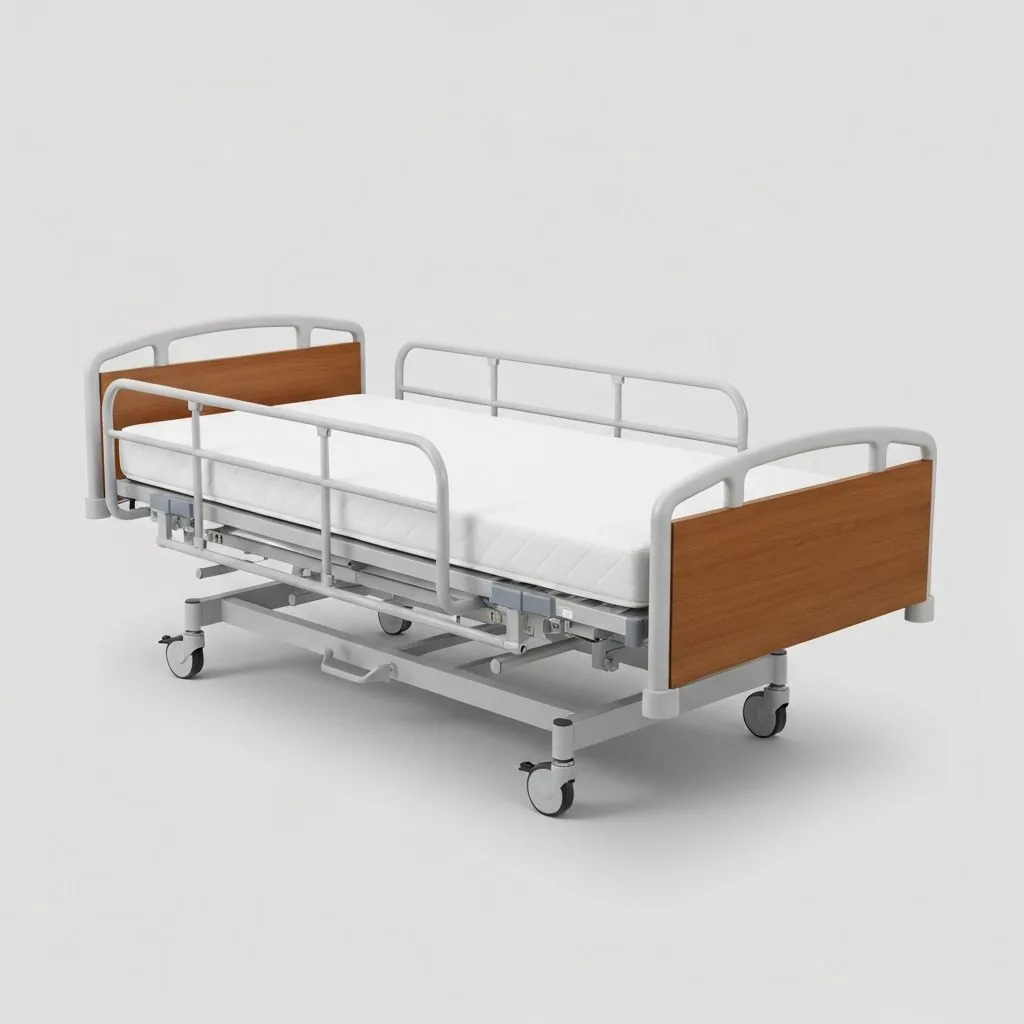
Hospital Beds
General-purpose patient beds for inpatient wards and standard hospital rooms.
View productElectric Hospital Beds
Motorized multi-function beds with electric height, backrest, and leg adjustment options.
View product
Ward Furniture
Complete ward furniture options for patient rooms and hospital care areas.
View product