
An inspector's report showing a photo of a packed carton tells you the quantity is likely correct. It does not tell you if the bed inside will survive a month at sea, if the caster brakes lock securely, or if the side rails match the final specification you approved. The most common inspection mistakes happen before the inspector even arrives at the factory, starting with vague checklists and rushed schedules.
A request to inspect beds on the same day as container loading is a sign of a process that is already at risk. This leaves no time to perform thorough functional tests, and no buffer to correct minor issues. If a problem is found, the shipment is delayed, and extra costs mount. A well-planned inspection is not a last-minute check; it is a planned verification step.
A reliable pre-shipment inspection for hospital beds involves verifying the physical products against the final approved specification sheet. Key steps include performing specific functional tests on a sample of beds, checking the structural integrity and finish, confirming the packaging is suitable for export, and cross-referencing quantities and shipping marks against the packing list.
This process is not about finding every possible flaw. It is about confirming that the overall production batch meets the agreed-upon quality standard, giving you the confidence to approve the shipment.
What a Hospital Bed Inspection Checklist Should Cover
A simple instruction to "check for defects" is too vague to be useful. An inspector needs clear, objective criteria. A structured inspection plan separates concerns into four distinct areas, helping to make sure that key functions are not overlooked in favor of minor cosmetic issues.
Your checklist should be built on these four pillars: 1. Structural & Cosmetic: The physical build and finish of the bed. 2. Functional Testing: The operational performance of all moving parts. 3. Packaging & Labeling: The bed's protection for transit and receiving. 4. Documentation: Cross-referencing the physical goods with the order paperwork.
The following table breaks down what to look for in each area. Before you hire an inspector or visit the factory, this should be the basis for your discussion with the supplier.
Hospital Bed Pre-Shipment Inspection Checklist
| Inspection Category | What to Check | Why It Matters |
|---|---|---|
| Structural & Cosmetic | Frame welds, paint finish, absence of sharp edges, side rail stability and locking mechanism. | These points relate to long-term durability and how the bed will perform in a healthcare environment. |
| Functional Testing | Height adjustment (up/down), backrest and leg rest articulation, Trendelenburg position (if applicable), caster locks/brakes. | Verifies that the bed's core functions operate as designed, which is a key part of assessing performance. |
| Accessories & Components | IV pole, mattress platform, hand controller, casters, and any other specified accessories are present and correct as per the order. | Prevents missing parts upon arrival, which can delay assembly and deployment of the beds. |
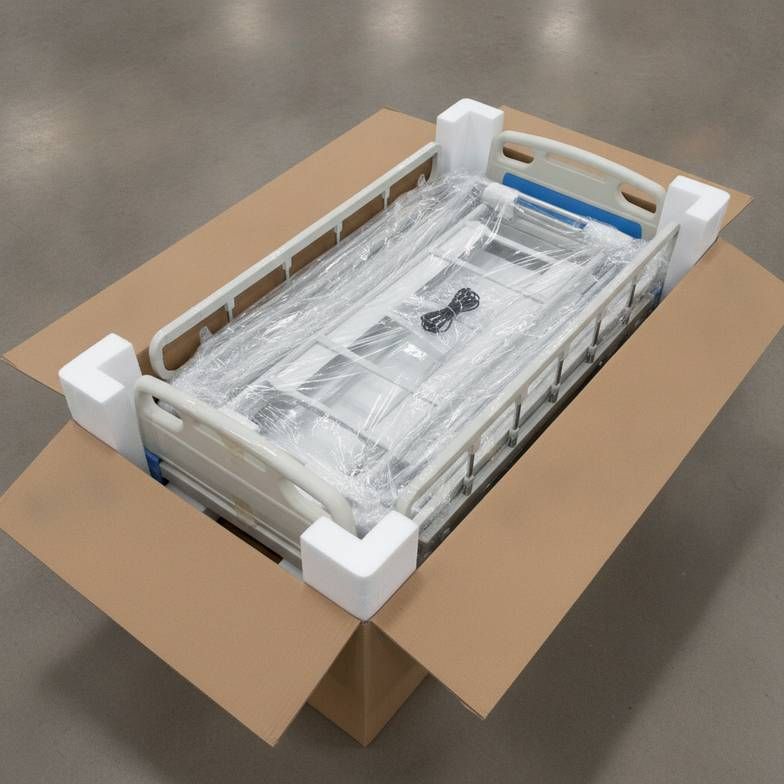
| Packaging & Labeling | Carton integrity, internal protective materials (foam, corner guards), correct shipping marks, quantity per carton, and gross/net weight labels. | Reduces the risk of transit damage and helps with accurate receiving and inventory management at the destination. |
| Documentation Cross-Check | Match the product's specifications, labels, and quantities with the Purchase Order (PO), Final Specification Sheet, and Packing List. | Helps confirm the goods being shipped are exactly what was ordered and agreed upon, avoiding contractual misunderstandings. |
How to Test a Hospital Bed's Functions During Inspection
The "functional testing" part of the inspection is often the most revealing. A report note saying "functions checked" is not enough. The inspector must perform specific actions to simulate real-world use.
For an electric bed, the question is not only whether the motor runs. The harder part is checking if it runs smoothly and quietly under a simulated load, because jerky movements or loud noises suggest problems that will appear in daily use.
A thorough functional test on a sample of beds should include:
- Motor Operation: Run the height, backrest, and leg rest functions through their full range of motion. Listen for unusual grinding or straining noises. The movement should be smooth, not jerky.
- Stability Test: Raise the bed to its maximum height and check for stability. Gently push on the corners to check for excessive wobble.
- Side Rail Lock: Operate each side rail lock several times. It should engage securely without excessive force and release smoothly. A stiff or loose lock can be a daily frustration for staff and may pose a safety risk.
- Caster Brakes: On a hard, flat surface, lock all caster brakes. Try to push the bed. It should not move. A bed that drifts can be a significant safety hazard. Release the brakes and confirm the wheels swivel and roll freely.
- Manual Cranks (if applicable): For manual beds, turn each crank to operate the functions. The mechanism should be easy to turn without requiring extreme force.

Why Inspecting Packaging Is as Important as Inspecting the Bed
The bed can be perfect when it leaves the factory, but it is useless if it arrives damaged. The outer carton is only the first line of defense. The real protection comes from the internal packaging.
An intact shipping carton is a good sign, but it does not tell the whole story. The inspector should open a few random cartons to check:
- Internal Protection: Are there foam blocks, corner guards, and other materials holding the bed securely in place? Are accessories like IV poles and remote controls wrapped and secured to prevent them from scratching the bed frame during transit?
- Carton Strength: Is the carton made of a durable, multi-layer corrugated board suitable for export? Weak cartons can be crushed when stacked in a container.
- Shipping Marks: Do the markings on the outside of the carton (model number, quantity, destination, gross/net weight) exactly match the packing list? Mismatched marks lead to major problems in customs and at your receiving warehouse.
Ignoring the packaging inspection means you are taking a gamble on the condition of your beds upon arrival.
How to Set Up the Inspection to Avoid Delays and Disputes
A supplier who insists on a detailed inspection checklist before production is not trying to make the process more complicated. They are trying to prevent disputes later. The most common arguments during an inspection happen when the definition of "acceptable quality" was never agreed upon.
To set up a smooth inspection process: 1. Use the Final Spec Sheet: The inspector must use the final approved specification sheet as their primary reference, not the initial purchase order. Specifications often change during development, and the factory builds to the final document. 2. Agree on a Sampling Plan: For a large order, inspecting every bed is impractical. Agree on a reasonable sampling plan (e.g., checking a percentage of units from the beginning, middle, and end of the production run) to get a representative view of batch quality. 3. Define Defect Severity: Before the inspection, agree on what constitutes a "critical," "major," or "minor" defect. A faulty brake is critical and a reason to stop the shipment. A small paint scuff on the underframe is minor. This clarity prevents subjective arguments. 4. Schedule with a Buffer: Schedule the inspection at least three to five working days before the planned container loading date. This provides a buffer to correct any minor issues found without delaying your shipment.
If you cannot send your own inspector, ask the supplier for a detailed video inspection that follows your specific checklist. The video should show close-ups of welds, the full range of functional tests, and the internal packing of a randomly selected unit.
Preparing Your Inquiry and Inspection Standard
Before you finalize your next hospital bed order, use the checklist in this article to prepare your own Inspection Standard.
Your standard should define:
- The specific functional tests you require.
- Your sampling plan and how many units to check.
- Your definition of critical, major, and minor defects.
- Your requirements for packaging and labeling.
Send this document to your potential supplier. Asking how their internal quality process aligns with your standard is a practical way to gauge their professionalism and reduce surprises before shipment. This moves the conversation from a simple price request to a serious discussion about quality alignment.
Written by
CareFurnex Team
CareFurnex Team shares practical knowledge about hospital beds, patient room furniture, medical trolleys, clinic furniture, and healthcare facility procurement for international B2B buyers.
Related Products

Hospital Beds
General-purpose patient beds for inpatient wards and standard hospital rooms.
View productElectric Hospital Beds
Motorized multi-function beds with electric height, backrest, and leg adjustment options.
View product
Ward Furniture
Complete ward furniture options for patient rooms and hospital care areas.
View product