
You're sourcing emergency trolleys for a hospital project or distributor stock. You receive two quotations with similar photos of a red or blue crash cart, but Supplier A's price is 20% lower than Supplier B's. The cheaper option seems obvious. But is it? In medical furniture procurement, a low unit price often hides risks that appear later as missing accessories, shipping damage, or user complaints.
The problem is that an "emergency trolley" is not a standard commodity. A product photo cannot show you the internal drawer layout, the quality of the casters, the specific locking mechanism, or whether the accessories you see are actually included. Choosing the wrong configuration can lead to project delays, higher landed costs, and a final product that is impractical for a fast-paced hospital environment.
The safest way to buy an emergency trolley is to confirm department use, drawer layout, lock system, included accessories, caster and brake configuration, material, packing method, CBM, trade term, and lead time basis before comparing supplier prices.
This guide walks you through the critical details an experienced supplier checks. It will help you write a clear specification, compare quotations fairly, and avoid common procurement mistakes.
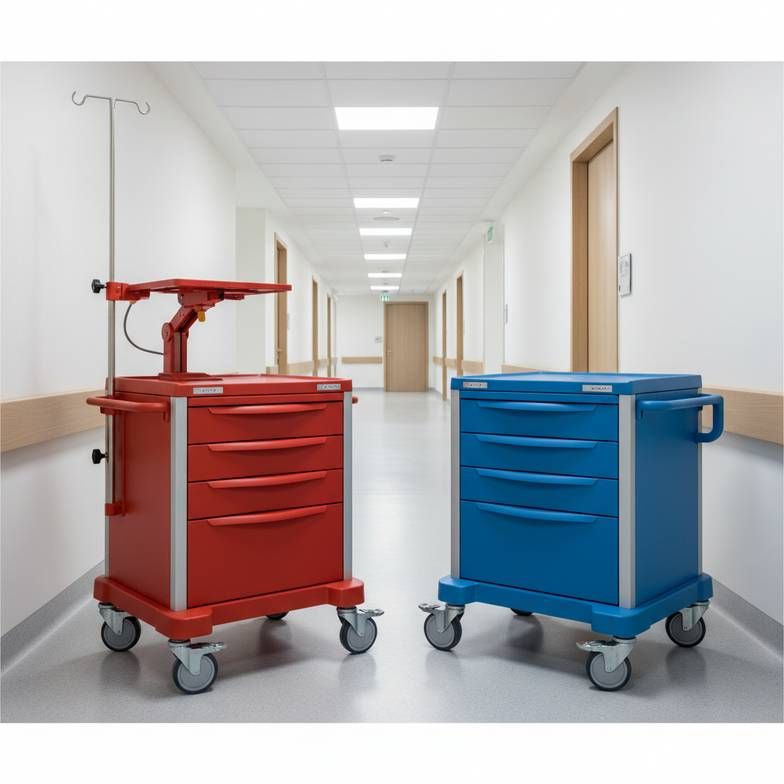
Why Choose by Department Use, Not Just by Photo?
Your first decision point should be the trolley's intended use, not its appearance. An emergency trolley for an ICU has different requirements than one for a general ward. Choosing by photo or a generic product name like "crash cart" is a common mistake that can result in a trolley that looks right but fails to function correctly in its specific environment.
In my experience, many buyers first ask for an "emergency trolley price" without confirming which department will use it. This is risky because similar-looking trolleys can have significant differences in:
- Drawer layout and internal organization
- Locking systems for controlled substances
- Accessory needs (e.g., IV pole, defibrillator shelf, oxygen tank holder)
- Mobility requirements (frequent movement vs. stationary)
From the supplier side, a vague inquiry for a "crash cart" will likely result in a vague quotation based on a standard, and possibly very basic, model. A more experienced supplier will first ask about the application to recommend a suitable configuration.
Practical Buyer Action: Before requesting quotations, create a simple needs profile for each set of trolleys. List the department (e.g., Emergency Room, ICU, Pediatrics), the primary function, and the key items it needs to hold. This simple step transforms you from a price-checker to a specification-driven buyer.
Risk & Decision Point: The risk of skipping this step is ordering a "one-size-fits-all" trolley that fits no single department's workflow. The decision is whether to spend time upfront defining the use case or risk dealing with user complaints and potential replacement costs after delivery.
What Drawer Layout, Lock Options, and Accessories Should You Confirm?
You must get a detailed, written list of what is included versus what is optional. A common pitfall for buyers is assuming that a fully equipped product photo represents a fully included quotation. In most cases, it doesn't. Drawer dividers, baskets, and specific holders are often the first things removed from a base price to appear more competitive.
Here’s what to confirm in writing:
- Drawer Layout: Don't just count the drawers. Ask for the height and arrangement of each. A trolley with five shallow drawers is very different from one with two shallow, two medium, and one deep drawer. The layout must match the supplies it will store.
- Locking System: "With lock" is not a sufficient specification. You need to know if it's a central lock for all drawers, a disposable plastic seal lock for single-use security, or a key lock for specific compartments. An undefined lock requirement can lead to a system that doesn't meet your hospital's access control policies.
- Accessories: This is the biggest area for misunderstanding. I have seen many importers approve an order, only to find the delivered trolleys are missing the IV pole, waste bin, or sharps container holder shown in the catalog.
Practical Buyer Action: Request a written specification sheet from every potential supplier that clearly lists all included components. Create a checklist of your required accessories and ask the supplier to confirm, line by line, what is included in their price and what is an optional extra. Record the final agreed-upon configuration in your purchase order.
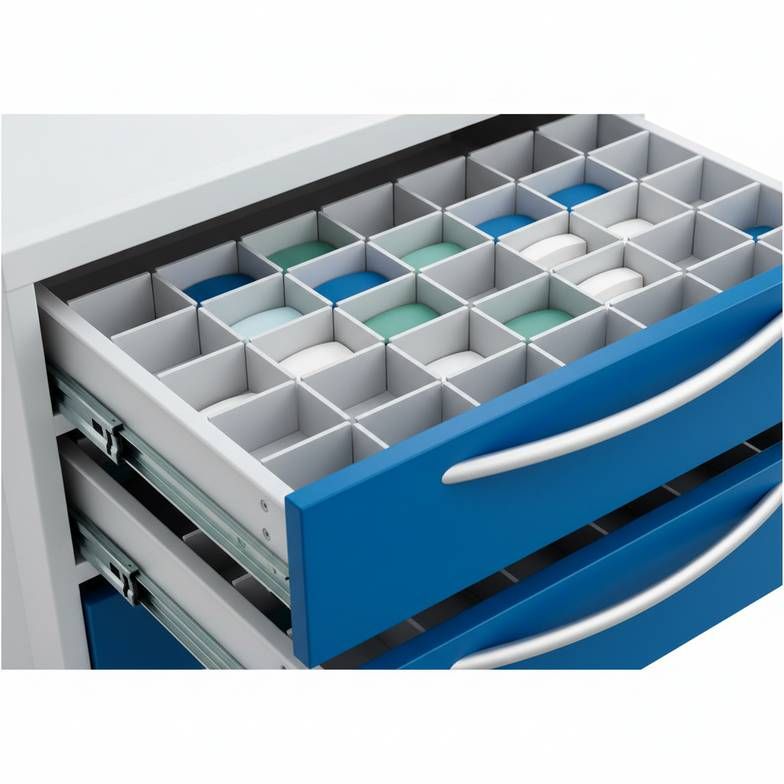
Risk & Decision Point: The risk is receiving a "bare-bones" trolley that requires expensive add-ons later. The decision is clear: do not approve a quotation until you have a written list of all included parts. The small effort of confirming this list prevents major budget overruns.
Why Are Casters, Brakes, and Materials Critical for Procurement?
These "minor" details often cause the most significant user complaints after delivery. An emergency trolley is mobile medical furniture. If it's difficult to move, hard to park securely, or a chore to clean, clinical staff will view it as a poor-quality product, regardless of how good the drawers are.
In my experience, caster and brake complaints can create more after-sales trouble than buyers expect. A trolley that rattles, veers to one side, or has a weak brake feels unreliable in an emergency.
Here's what to focus on:
- Casters and Brakes: Confirm the caster diameter, material (e.g., silent, non-marking), and whether they have ball bearings for smooth rolling. Check the brake system—are there two braking casters or four? Is the brake easy to engage and disengage with a foot?
- Material and Finish: The body is often steel or ABS plastic. Both can be suitable, but the finish matters. Is it a powder coating that resists chipping and scratching? Are the surfaces smooth and free of crevices where dirt and pathogens can accumulate?
- Cleaning: Look at the design from a maintenance perspective. Are the corners rounded? Are handles and accessories designed to be easily wiped down? A trolley that is difficult to clean will not meet modern hospital hygiene standards.
Practical Buyer Action: Ask the supplier to specify the caster type, brake configuration, and body materials in the quotation. If possible, request close-up photos or videos showing the casters and surface finish. Compare these details just as you would compare the price.
Risk & Decision Point: The risk is procuring a trolley that looks good on paper but fails in daily use, leading to staff frustration and potential safety issues. The decision is whether to treat mobility and maintenance features as core specifications or to leave them to chance.
How a Low Unit Price Can Become More Expensive
A low unit price is not the same as a low landed cost. This is the single most important lesson in international B2B procurement. The final cost to get one sellable, undamaged emergency trolley to your destination depends on much more than the factory price.
I often remind buyers that the cheapest quotation is often not the cheapest final order. Here’s why: 1. Excluded Accessories: The low price may be for a basic trolley body. Adding the necessary accessories later can erase any initial savings. 2. Weak Packing: To save a few dollars, a supplier might use thin cardboard or minimal internal protection. This dramatically increases the risk of scratches, dents, and broken components during transit. The cost of one damaged unit can wipe out the savings on an entire shipment. 3. High CBM (Cubic Meter): A trolley with inefficient packing (e.g., a large, non-stackable box) takes up more space in a shipping container. Since ocean freight is billed by volume (CBM), a higher CBM means a higher shipping cost per unit. 4. Different Trade Terms: If Supplier A quotes EXW (Ex Works) and Supplier B quotes FOB (Free on Board), their prices are not directly comparable. The FOB price includes local transport to the port, which the EXW price does not.
Practical Buyer Action: Use a comparison matrix to evaluate suppliers on an "apples-to-apples" basis. Do not just list the price. Fill in all the critical details to reveal the true cost and risk profile of each offer.
Supplier Quotation Comparison Matrix
The numbers below are for a simplified example, not fixed pricing.
| Comparison Item | Supplier A | Supplier B | Buyer Notes / Risk |
|---|---|---|---|
| Unit Price | $280 | $330 | Do not compare price alone. |
| Drawer Layout | 5 drawers, same size | 5 drawers, mixed sizes | Confirm if layout matches storage needs. |
| Lock System | Key lock, single | Central seal lock | Central lock is better for emergency access control. |
| Included Accessories | None | IV Pole, Waste Bin | Supplier A's price is for a basic trolley. |
| Caster/Brake Config. | Standard casters, 2 brakes | Silent casters, 4 brakes | Better mobility from Supplier B may justify the cost. |
| Packing Method | Standard carton | Reinforced export carton | Higher damage risk with Supplier A. |
| Carton Dimensions / CBM | 0.45 CBM | 0.38 CBM | Supplier B is cheaper to ship per unit. |
| Trade Term | EXW | FOB | Supplier A's price excludes local transport costs. |
| Quotation Clarity | Vague, needs questions | All details provided | Supplier B's clarity reduces order risk. |
This example shows that Supplier A's "cheaper" trolley could easily become the more expensive and problematic option once accessories, shipping, and risk are factored in.
What Packing, Inspection, and Lead Time Details to Confirm
Order confirmation is the beginning, not the end, of the procurement process. The details you confirm before shipment are what protect your investment and ensure your project timeline stays on track.
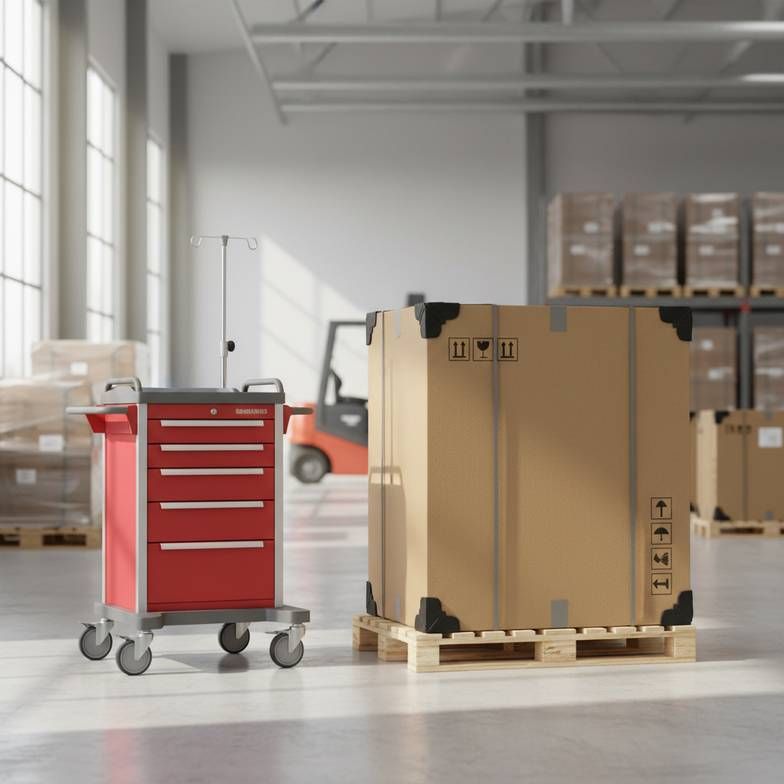
From the supplier side, packing is often discussed too late. For a product like an emergency trolley, packing must protect vulnerable areas like drawer fronts, corners, casters, and protruding accessories.
Here’s your pre-shipment checklist:
- Packing Confirmation: Request the final packing method (e.g., assembled or knock-down), carton dimensions, gross weight, net weight, and total CBM for your order. Ask for photos of the packed product. Ensure accessories are packed securely and labeled to prevent them from being lost.
- Pre-Shipment Inspection: Before the final payment or loading, arrange for an inspection. This can be done by your team, a third party, or by requesting detailed photos and videos from the supplier. It is much cheaper to fix a problem at the factory than in your own warehouse. Check for correct configuration, accessories, locks, and quantity.
- Lead Time Basis: When does the "30-day lead time" actually start? Is it from the date of the deposit? Or from the date you confirm all specifications? Unclear lead time definitions are a common source of project delays.
Practical Buyer Action: Create a simple shipment confirmation checklist. Do not authorize shipment until your supplier has provided all necessary packing data and you have verified the order through photos, videos, or an inspection report.

Which Supplier Details Should You Compare Before Ordering?
A good supplier doesn't just give you a low price; they help you avoid mistakes. The quality of a supplier's communication is often a direct indicator of the quality of their operation.
When you evaluate suppliers, look beyond the price and assess their professionalism. A reliable partner for medical furniture will:
- Ask Questions: A good supplier will ask about department use, quantity, and accessory needs before giving you a final recommendation. They work to understand your needs, not just to sell a standard product.
- Provide Clear Specifications: They will provide a detailed quotation and specification sheet that lists all components, materials, and dimensions, clearly separating included and optional items.
- Explain Packing and Logistics: They will proactively provide packing details and CBM data to help you calculate your landed cost. They understand that for export orders, the product is only as good as its packaging.
- Communicate Clearly: They respond to your technical questions with accurate information, not vague sales promises.
Practical Buyer Action: When you send an inquiry, note how suppliers respond. Do they just send a price? Or do they engage with you to clarify your requirements? Prefer the supplier who acts like a partner in your procurement process.
Risk & Decision Point: The risk of choosing a supplier based on a fast, low quote is that their lack of attention to detail will reappear as production or shipping problems. The decision is to evaluate suppliers on their communication quality and technical clarity, not just their price.
Conclusion: How to Procure the Right Emergency Trolley
Choosing an emergency trolley is a more complex decision than it first appears. A product photo and a unit price are only the beginning of the story. The real procurement work lies in the details.
A successful purchase is not about finding the lowest price, but about ensuring the highest value and lowest risk. This means:
- Starting with the department use case, not a catalog photo.
- Confirming every detail of the configuration, especially drawer layout, locks, and accessories.
- Verifying "minor" but critical parts like casters, brakes, and materials.
- Calculating the true landed cost, including packing, CBM, and trade terms.
- Choosing a supplier partner who communicates clearly and helps you specify correctly.
At CareFurnex, we specialize in supplying medical furniture for B2B projects, distributors, and hospitals. We understand that a successful order depends on clear specifications and reliable project coordination.
If you are preparing to source emergency trolleys or other medical furniture, we encourage you to come prepared. Send us your department list, quantity needs, desired configurations, and project schedule. We can help you review the details, plan your categories, and build a quotation based on a complete and practical specification.
Written by
CareFurnex Team
CareFurnex Team shares practical knowledge about hospital beds, patient room furniture, medical trolleys, clinic furniture, and healthcare facility procurement for international B2B buyers.
Related Products
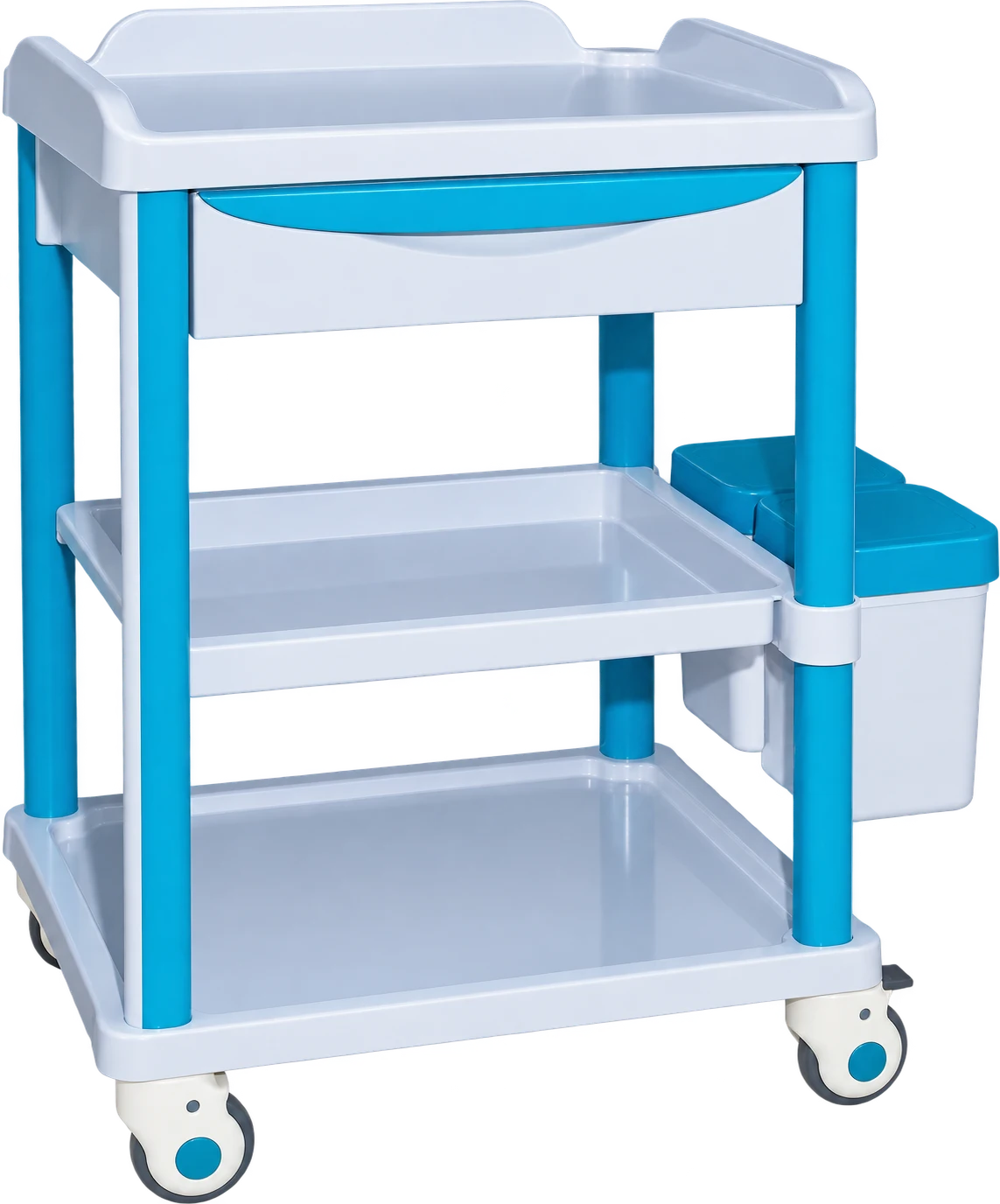
Medical Trolleys
Mobile carts for nursing rounds, treatment supplies, medicines, and clinical tools.
View product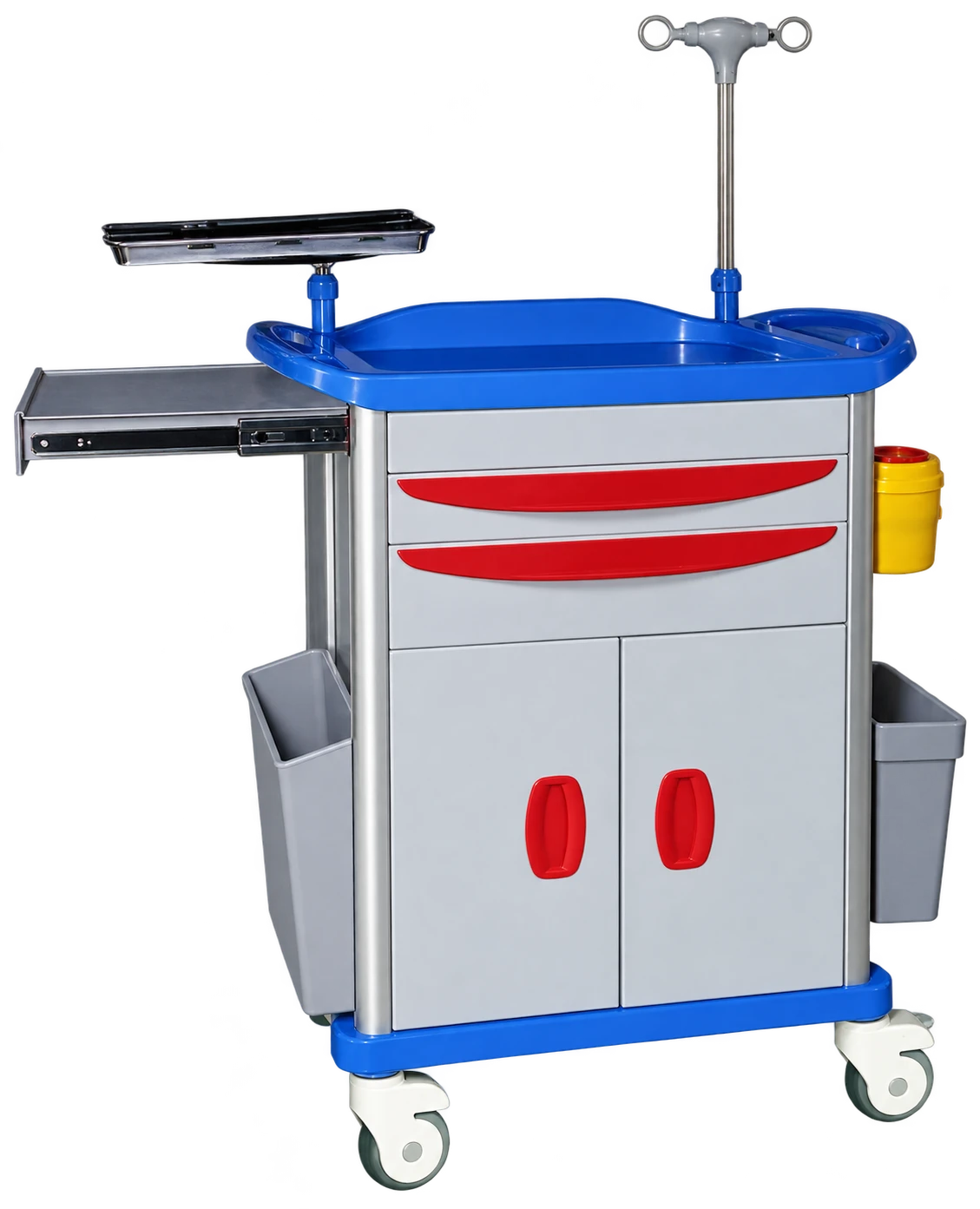
Emergency Carts
Crash carts with organized compartments for emergency rooms and urgent care areas.
View product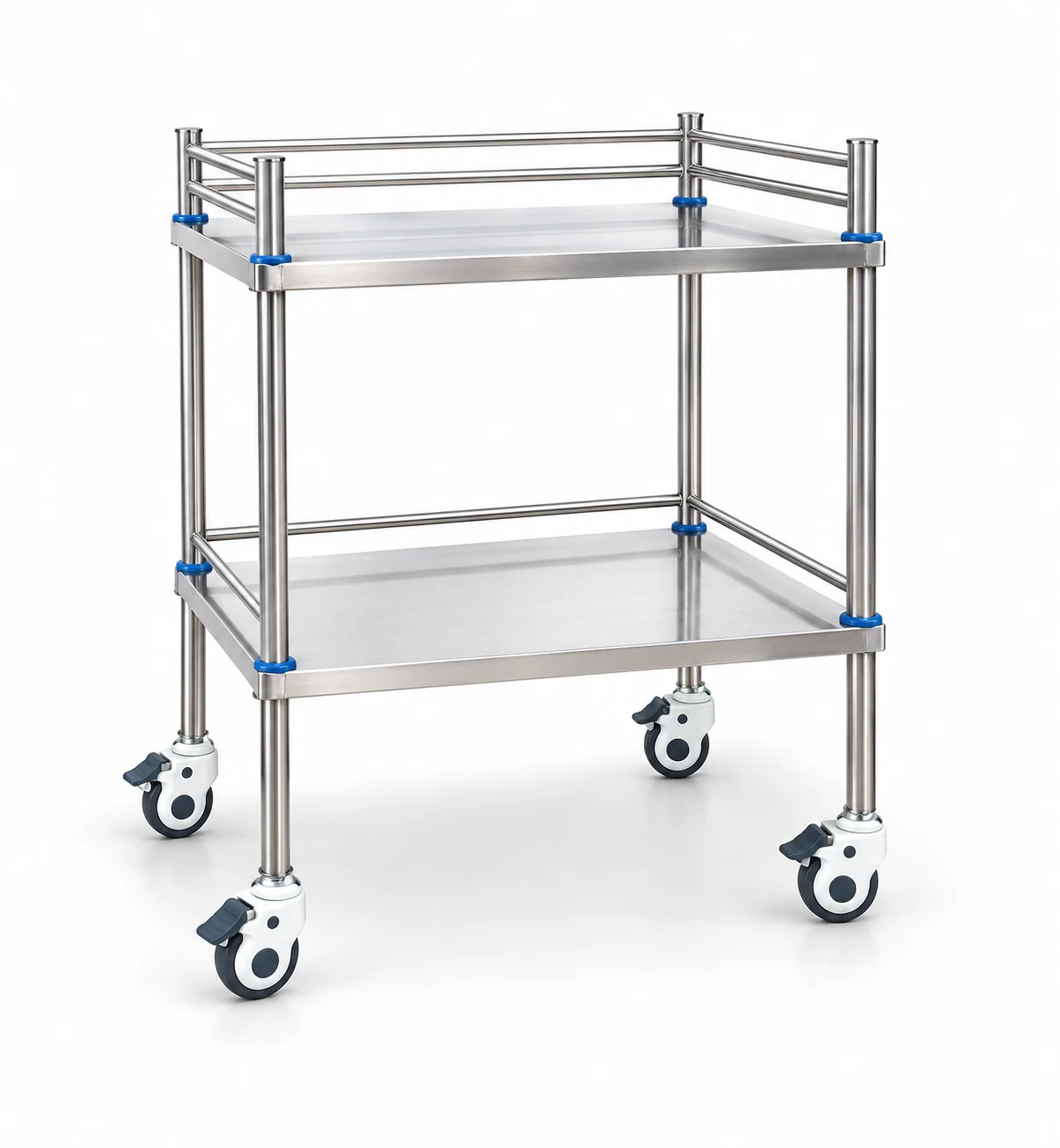
Stainless Steel Trolleys
Compare stainless steel trolleys by model, stated dimensions and configuration.
View product