
Your clinical team hands you a list of supplies for a new emergency cart. Your job is to buy the cart. The most common procurement mistake is focusing only on that supply list and then comparing cart prices, without defining the physical features needed to access those supplies quickly and safely.
When you compare two emergency carts online, the photos can look nearly identical, but the prices can be very different. That difference is rarely about basic quality alone. It is usually hidden in the drawer layout, the type of lock, and which accessories are actually included in the quoted price.
A complete emergency cart checklist for procurement goes beyond medical supplies and should define the cart's physical configuration. Key factors to specify include the drawer layout to match your supply sizes, the locking system that fits your hospital's access protocol, and the essential accessories like a defibrillator shelf and IV pole.
As a supplier, an inquiry for a "crash cart" without these details is incomplete. Before we can provide a serious quotation, we need to understand how your team will use the cart in the first 30 seconds of an emergency. That answer determines the entire configuration and helps you avoid buying a cart that looks right but functions poorly.
How Does My Clinical Checklist Affect the Cart's Drawer Configuration?
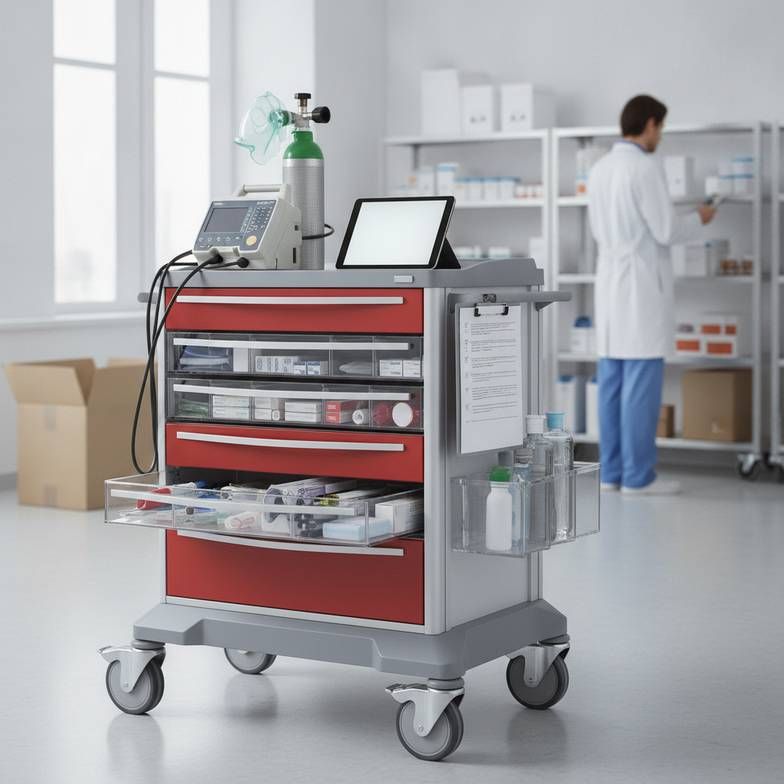
The number of drawers is not the most important factor; the mix of drawer depths is. Your clinical checklist contains items of vastly different sizes-from small medication vials and syringes to bulky Ambu bags and intubation kits. A cart with five identical, shallow drawers will create clutter and slow down access.
A better approach is to use your supply list to plan the drawer layout.
- Shallow Drawers: Ideal for organizing medications, needles, and small supplies. Requesting adjustable dividers for these drawers is a practical step. Without them, hundreds of small items will slide around, making them hard to find under pressure.
- Deep Drawers: You need at least one or two deep drawers to hold bulky items like masks, fluid bags, or pediatric resuscitators. A common issue is ordering a cart that looks good but cannot fit the team's standard Ambu bag.
Before you ask for a price, review your clinical list and identify the bulkiest items. Confirming their dimensions helps you specify the minimum deep-drawer height you require. This simple check helps prevent ordering a cart that forces your clinical team to store essential items improperly.
What Locking Systems Are Available and How Do They Impact Access?
Asking for a "central lock" is not specific enough. The choice of lock involves a direct trade-off between security and speed of access, and the right choice depends entirely on your hospital's internal protocols.
There are two main types of locking systems for emergency carts: 1. Breakaway Locks / Seals: These are single-use plastic locks that secure the cart. During an emergency, staff can break the seal with a firm twist or pull-no key or code needed. This offers the fastest possible access. After use, the cart is restocked and a new seal is applied. This is a very common system for general-use crash carts where speed is a high priority. 2. Keyed or Keypad Locks: These systems offer higher security, a factor to consider if the cart will store controlled substances, subject to your facility's protocols. However, they require a key or code, which can slow down access. If multiple people need access, key management can become a logistical issue.
A supplier photo will not show you this difference. I would not approve a cart without first confirming which system aligns with your hospital's emergency response and medication security policies. Clarifying this upfront prevents you from receiving a cart that your clinical team cannot use as intended.
Which Emergency Cart Accessories Are Essential and Which Are Optional?
A low base price on an emergency cart quote is often a sign that essential accessories are not included. Treating these items as an afterthought can lead to surprise costs and a cart that isn't ready for use upon arrival.
Here are common accessories that you should clarify as either "included" or "optional" in any quotation:
- Defibrillator Shelf/Platform: A stable, rotating platform is needed to hold the defibrillator. This is almost always a required item but is frequently quoted as an optional extra.
- IV Pole: An integrated, telescopic IV pole is necessary for administering fluids during patient transport.
- Oxygen Tank Holder: A secure bracket for an oxygen cylinder is needed for respiratory support.
- Cardiac Board: Stored on the back of the cart, this provides a firm surface for CPR.
- Waste & Sharps Bins: Holders for these containers help maintain a safer and cleaner workspace during a chaotic event.
Before comparing prices, create a definitive list of the accessories your clinical team requires. Ask suppliers to itemize each one in the quotation. This is the only way to compare offers on a like-for-like basis.
What Should I Confirm to Compare Emergency Cart Quotes Accurately?
Comparing total prices from different suppliers without checking the underlying specifications is a frequent source of procurement errors. A lower price might reflect a less durable material, smaller casters that are hard to move, or missing accessories.
Use this checklist to line up quotations side-by-side and spot the differences before you make a decision.
| Feature to Confirm | Why It Matters for Emergency Use | Supplier A Quote | Supplier B Quote |
|---|---|---|---|
| Drawer Layout | Affects if you can store both small vials and bulky items without clutter. | e.g., 2 shallow, 3 deep | e.g., 5 shallow |
| Drawer Dividers | Determines if the cart is ready for organizing supplies upon arrival. | Included / Optional | Included / Optional |
| Locking System | Balances security with immediate access during a code. | e.g., Breakaway Seal | e.g., Key Lock |
| Defibrillator Shelf | A common platform that is often an optional extra. | Included / Optional | Included / Optional |
| IV Pole | Needed for infusions during transport; often optional. | Included / Optional | Included / Optional |
| O2 Tank Holder | Needed for patient transport; often optional. | Included / Optional | Included / Optional |
| Caster Diameter | A larger caster, such as 125mm, typically provides smoother movement over floor thresholds compared to a 100mm caster. | e.g., 100mm | e.g., 125mm |
| Primary Material | Impacts durability, weight, and compatibility with hospital cleaning agents. | e.g., ABS Plastic | e.g., Powder-Coated Steel |
This check helps you understand what you are actually paying for. A slightly higher price for a cart with larger casters, included dividers, and a confirmed accessory package is often a better long-term decision.
Preparing Your Emergency Cart Inquiry
Sending a vague request like "quote for 5 emergency carts" will result in vague, incomparable answers from suppliers. To get a useful quotation that allows for a confident decision, it is better to prepare your requirements first.
Before you contact a supplier, have the following information ready:
- Intended Department: (e.g., Adult ICU, Pediatrics, General Ward) as this affects size and accessory needs.
- Required Drawer Layout: Your preferred mix of shallow and deep drawers.
- Required Lock Type: The specific system that matches your hospital's protocol (e.g., breakaway seal).
- A Complete List of Accessories: Every item you need, from the IV pole to the waste bin.
- Quantity: The number of carts needed with this exact configuration.
Sending these details with your inquiry helps you receive clear, actionable quotes. It signals to the supplier that you are a serious buyer and allows them to provide a solution that truly fits your team's needs, rather than just a price for a generic box on wheels.
Written by
CareFurnex Team
CareFurnex Team shares practical knowledge about hospital beds, patient room furniture, medical trolleys, clinic furniture, and healthcare facility procurement for international B2B buyers.
Related Products
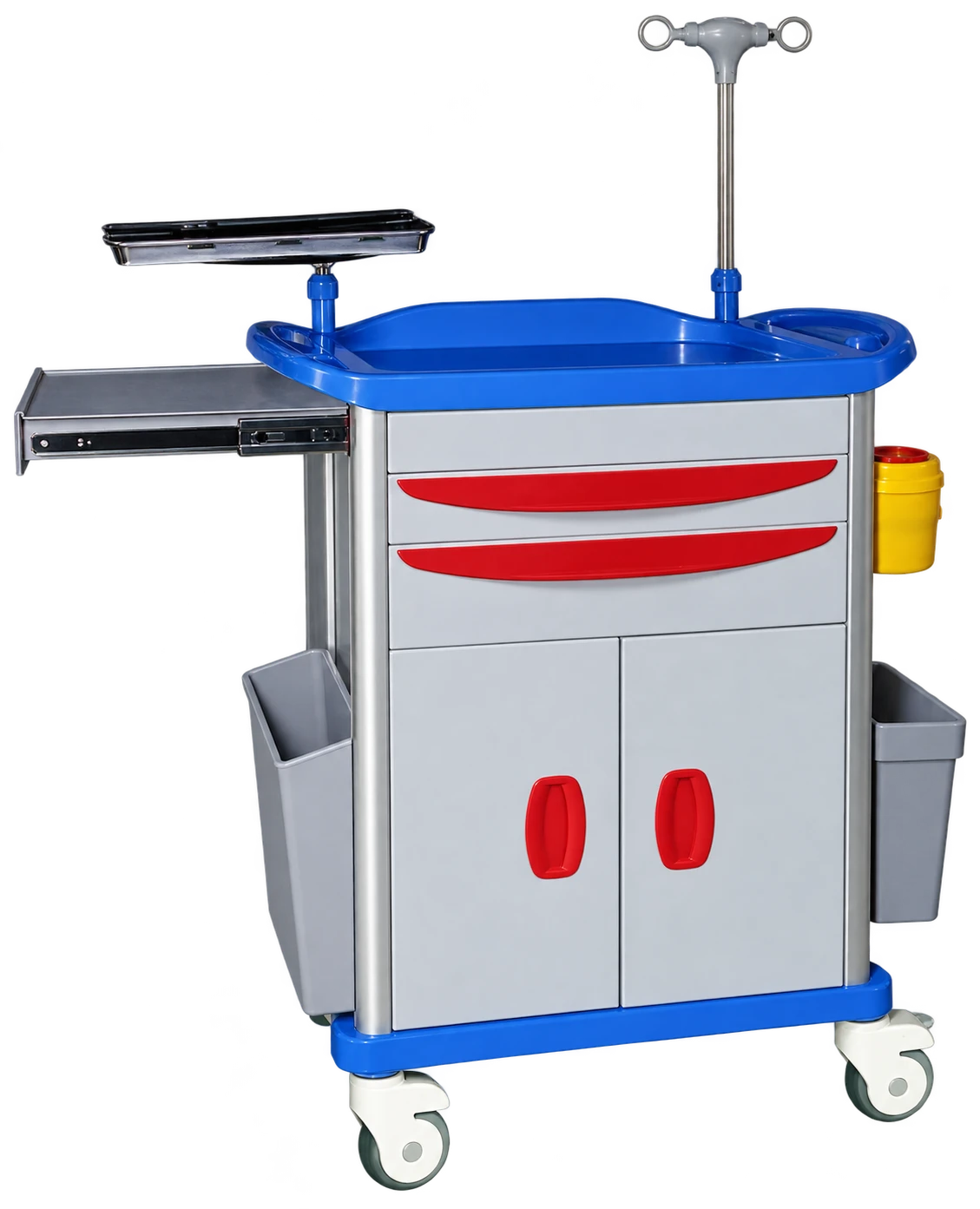
Emergency Carts
Crash carts with organized compartments for emergency rooms and urgent care areas.
View product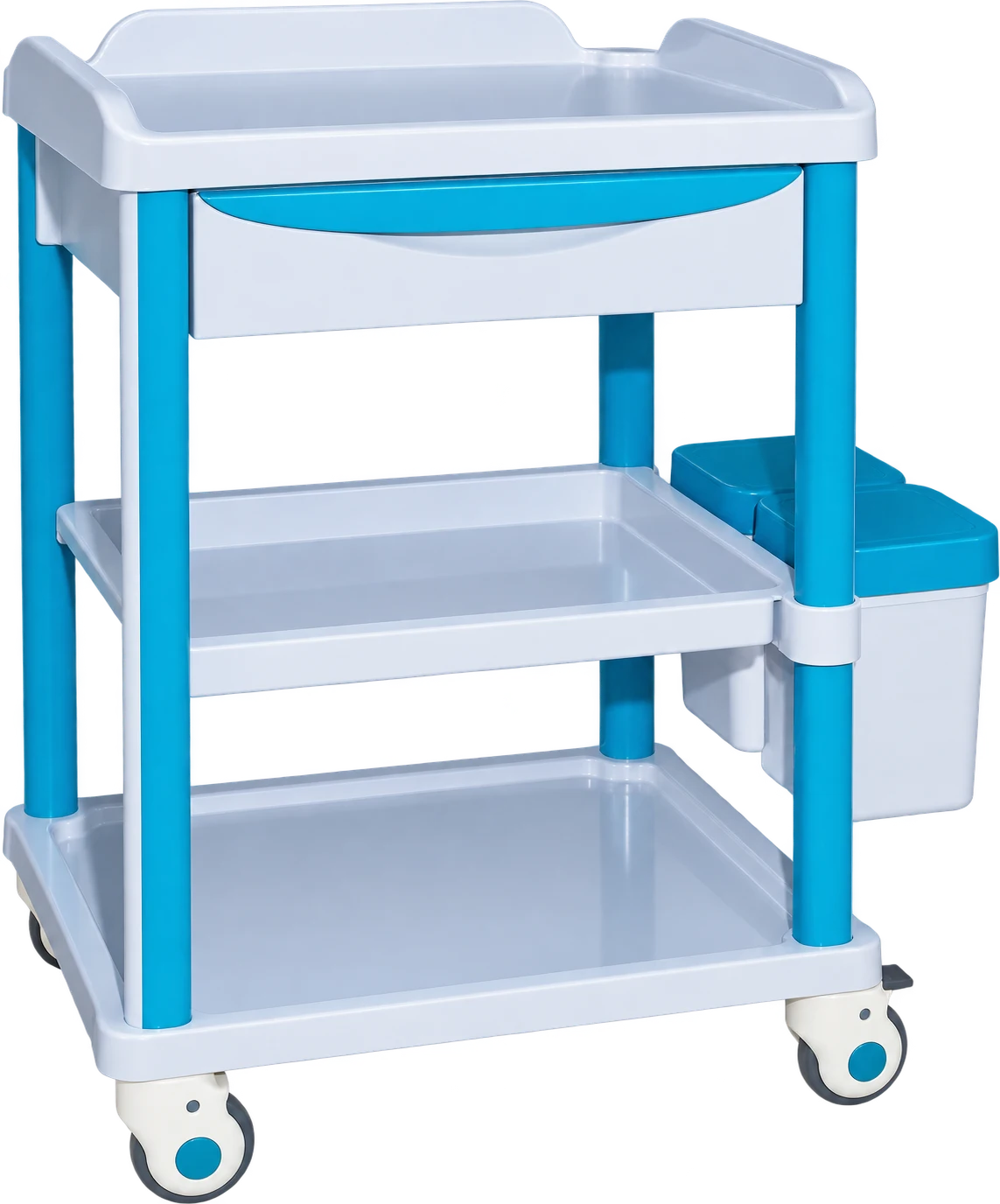
Medical Trolleys
Mobile carts for nursing rounds, treatment supplies, medicines, and clinical tools.
View productTreatment Carts
Compare treatment carts by model, stated dimensions and configuration.
View product