
You're preparing a bulk order for a hospital project, nursing home, or distributor inventory. You have two main options on the table: electric hospital beds and manual hospital beds. The price difference is significant, and the pressure is on. Choose the wrong bed, and you could face budget overruns, user complaints from care staff, or hidden costs in accessories and shipping that erode your profit margin.
Making this decision based only on the unit price or a product photo is one of the most common and costly mistakes in healthcare furniture procurement.
Buyers should choose electric hospital beds where frequent adjustment, patient comfort, and caregiver convenience justify the higher cost. Manual hospital beds are practical for basic-care or cost-sensitive rooms when the configuration is properly confirmed. For many healthcare projects, the safest choice is a department-based plan that may combine both bed types.
This guide will walk you through the key procurement decisions, configuration details, and hidden risks to help you compare electric and manual hospital beds like an experienced B2B buyer. We will cover the practical differences in department use, total cost, configuration, and shipping that determine the real value of your purchase.

Should Buyers Choose Electric or Manual Hospital Beds Based on Department Use?
The right choice starts with the care environment and adjustment frequency, not the product category. A hospital project does not always need one single bed model for every room. In my experience, buyers get better results when they start with room function first, not bed type first.
Electric beds are often more suitable for rooms where frequent repositioning is necessary for patient comfort or treatment, such as in intensive care, post-operative recovery, or high-dependency units. The motorized adjustments reduce the physical strain on nurses and caregivers who might otherwise have to manually crank the bed multiple times per shift.
Manual beds, on the other hand, can be a practical and cost-effective choice for general wards, temporary care facilities, or rooms with lower-acuity patients where bed adjustments are less frequent. The key is ensuring the manual bed's configuration still meets the basic needs of the care environment.
One mistake I have seen procurement teams make is choosing all manual beds to save budget, only to receive complaints from care staff in rooms where frequent adjustment is needed. A mixed plan, where you allocate bed types based on the specific needs of each department, often provides the best balance of function, budget control, and user satisfaction.
Practical Buyer Action: Before requesting quotations, create a list of all rooms or departments and categorize them by expected adjustment frequency and patient care level. This allows a supplier to recommend a more appropriate and cost-effective mix of electric and manual beds.
Electric vs. Manual Hospital Bed Decision Comparison
| Comparison Point | Electric Hospital Bed | Manual Hospital Bed | Buyer Decision Tip |
|---|---|---|---|
| Best-Fit Use Scenario | High-adjustment rooms, higher care needs, caregiver convenience | Basic wards, cost-sensitive rooms, simpler care needs | Match by department and patient care level. |
| Adjustment Method | Motor/control-based functions | Hand crank/manual adjustment | Confirm which specific functions are included. |
| Initial Purchase Cost | Usually higher | Usually lower | Do not compare price without full configuration. |
| Caregiver Workload | May reduce manual adjustment effort | Requires manual adjustment | Consider the daily adjustment frequency. |
| Maintenance & After-Sales | Focus on motors, controls, electrical parts, spare parts | Focus on cranks, moving parts, hardware, side rails, casters | Both types need inspection and spare parts planning. |
| Quotation Risk | Electrical functions and accessories may vary | Crank functions and frame structure may vary | Request a detailed specification sheet for each model. |
| Packing Concern | Electrical parts need extra protection | Cranks, hardware, and moving parts need protection | Ask for packing details and photos if available. |
| Suitable Buying Approach | Use where function justifies the cost | Use where basic function is sufficient | For projects, consider a mixed-bed plan. |
This table shows that the decision is a trade-off. The "best" bed is the one that fits the specific room's operational needs and the project's overall budget.
Is the Higher Price of Electric Hospital Beds Worth It for Your Project?
The higher price of an electric bed is only worth it if the functions are needed, the configuration is clear, and the after-sales support is confirmed. The cost difference isn't just about motors; it's tied to a more complex system of controls, electrical components, and potentially different accessories that must be clearly specified.
When is it justified? For rooms housing patients with limited mobility, chronic conditions, or those requiring frequent repositioning to prevent pressure sores, the convenience of push-button adjustment is a critical factor in both patient comfort and caregiver efficiency.
However, from the supplier side, electric beds require more careful confirmation because motor-related and control-related components affect after-sales responsibility. I often remind buyers to confirm which functions are electric before comparing quotations. A "3-function electric bed" from one supplier might have a different combination of electric and manual adjustments than a similarly named bed from another.
Practical Buyer Action: When evaluating electric beds, ask your supplier these specific questions to avoid ambiguity:
- Which bed functions are electric (e.g., backrest, leg rest, height adjustment)?
- What type of control system is used (e.g., handset, integrated rail controls)?
- Are spare parts for motors and control units included or available for future purchase?
- How are the electrical components protected during packing and shipping?
- What function checks are performed during pre-shipment inspection?
Ignoring these details is a risk. A lower price might mean fewer electric functions, unclear spare parts availability, or weaker protection during transit, leading to problems after delivery.

When Are Manual Hospital Beds the More Practical Choice?
Manual beds are a practical choice for basic-care environments and cost-sensitive projects, but only when their configuration is properly confirmed. They are not just the "cheap" option; they are a simpler solution that can be highly effective when matched to the right use case.
These beds are often suitable for general wards, outpatient clinics, or facilities where patient turnover is high but the need for constant bed adjustment is low. Their simpler mechanics, involving hand cranks to adjust position, mean fewer components to manage from a maintenance perspective.
However, a common mistake is assuming a manual bed has no after-sales risk because it has no motor. I often remind buyers that manual does not mean specification-free. The crank system, moving parts, side rails, casters, and brakes still need to be reliable and durable for daily use. A poorly made crank can be difficult to turn, and weak casters can compromise patient safety.
Practical Buyer Action: Before confirming a manual bed order, get written confirmation on the following details:
- Number of crank functions and which positions they adjust.
- Inclusion and design of the crank handles and hardware.
- Operation of the side rails (e.g., collapsible, sliding).
- Caster movement and brake function reliability.
- Mattress compatibility and dimensions.
- How hardware and accessories are packed to prevent loss.
A well-specified manual bed from a reliable supplier can be a better investment than a low-end electric bed with unclear component origins and no after-sales support.
What Configuration Details Should Buyers Compare Before Choosing a Supplier?
You must compare quotations on the same basis, because a product name like "electric hospital bed" is not a complete specification. Similar photos can hide very different configurations, and choosing a supplier based on the lowest price without checking what's included is a major procurement risk.
I have seen many importers choose a lower quotation before checking whether the mattress, IV pole, side rails, or even a full set of casters were included. These "optional" items then add up, turning the cheapest quote into a more expensive and delayed order.
A clear quotation from an experienced supplier should separate included items from optional ones. Your job as a buyer is to ensure every supplier is quoting for the exact same package.
Practical Buyer Action: Use this checklist for each supplier to create a direct, side-by-side comparison. Do not proceed to price negotiation until you have confirmation on every item.
Hospital Bed Quotation Comparison Checklist
| Item to Confirm | Supplier A | Supplier B | Notes for Buyer |
|---|---|---|---|
| Bed Type & Model | Confirm exact model name/number. | ||
| Number of Functions | Don't rely on the product name alone. | ||
| Electric vs. Manual Functions | Which specific adjustments are motorized? | ||
| Side Rails | Confirm type, material, and if included. | ||
| Head & Foot Boards | Check if material and design match the photo. | ||
| Casters & Brakes | Confirm size, material, and locking system. | ||
| Mattress | Confirm: Included / Optional / Not Offered. | ||
| IV Pole | Confirm: Included / Optional. | ||
| Spare Parts | Ask if included or available for future purchase. | ||
| Packing Method | Carton, crate? How are parts protected? | ||
| Package Dimensions (per unit) | Needed for freight calculation. | ||
| Gross / Net Weight (per unit) | Needed for logistics comparison. | ||
| CBM (per unit) | Critical for calculating landed cost. | ||
| Trade Term (e.g., FOB, EXW) | Ensure quotes use the same Incoterm. | ||
| Lead Time | Confirm production and shipment prep time. | ||
| Pre-Shipment Inspection | Define function/accessory checks before order. |
If a supplier's quote has empty cells in this checklist, it's not a complete offer—it's a risk.
How Do Packing, CBM, and Shipping Change the Real Cost of Hospital Beds?
For large items like hospital beds, the lowest unit price often loses to the most efficient packing volume. Buyers who treat packing and shipping as a later problem often face unexpected freight costs that ruin their budget.
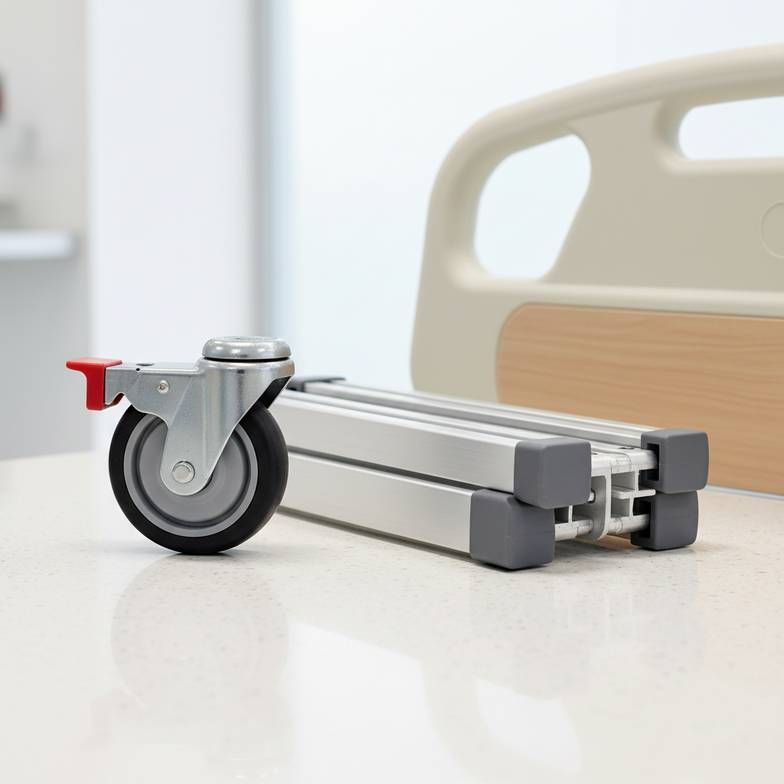
Hospital beds are bulky. Their final shipping cost is determined by volumetric weight (CBM), not just actual weight. A bed that is packed inefficiently can take up more container space, dramatically increasing the per-unit shipping cost. I often remind buyers to request carton dimensions, gross weight, and total CBM before making a final supplier comparison.
Furthermore, weak packing creates damage risk. Side rails, boards, casters, and especially electrical components can be easily scratched, bent, or broken during transit. The cost of a damaged bed—including claims, repairs, and project delays—is always higher than the cost of better packing.
Practical Buyer Action: Before finalizing your supplier, request the following packing and shipping data. Use this information to calculate an estimated landed cost (Unit Price + Pro-rated Shipping + Customs/Duties) for each option.
- Packing Method: Are beds packed in cartons or wooden cases? Are they assembled or knock-down?
- Package Dimensions (L x W x H): To calculate CBM.
- Gross Weight and Net Weight: For shipping documents.
- Total CBM for your order quantity: To get an accurate freight quote.
- Protection: How are delicate parts like boards, rails, and controls protected?
A supplier who can't provide this data isn't ready for export. A supplier who provides it clearly understands the realities of B2B logistics.

What Should Buyers Confirm Before Placing a Bulk Hospital Bed Order?
A bulk order is ready for confirmation only when all specifications, costs, and logistics are in writing, not just the price. Before you sign a purchase order or arrange a deposit, a final, comprehensive check is needed to prevent disputes and delays.
This means confirming the entire project plan, not just the bed model. From the supplier side, we know that a smooth order depends on a clear, mutual understanding of every detail. In my experience, inspection points should be agreed upon before shipment, not discovered after the goods arrive.
Whether you've chosen electric beds, manual beds, or a mixed plan, the final confirmation should cover product, packing, shipping, and timing. A good supplier should be able to provide this information clearly. The fastest quote is not always the clearest quote, and in bulk procurement, clarity is safety.
Practical Buyer Action: Send your chosen supplier a final confirmation request that summarizes the complete order. This should include:
- Final Product List: Department, bed type (electric/manual), quantity, and all confirmed configurations (functions, side rails, casters, etc.).
- Accessory List: A line-by-line confirmation of all included items (mattress, IV pole, spare parts).
- Packing Confirmation: Re-state the agreed packing method, CBM, and weight.
- Trade Terms & Lead Time: Confirm the Incoterm (e.g., FOB Shanghai) and the production-to-shipment timeline.
- Inspection Plan: List the key checks you expect to be done before shipment (e.g., function test, accessory count, packing check).
This step transforms your verbal agreements and email chains into a single, clear document of record that protects both you and the supplier.
Your Final Decision: Matching the Bed to the Reality
Choosing between electric and manual hospital beds is not a simple question of "which is better." It's a complex procurement decision that balances patient care, caregiver workload, project budget, and logistics reality.
Electric beds offer clear advantages in high-use environments where convenience and frequent adjustment are priorities. Manual beds provide a reliable, cost-effective solution for basic-care scenarios. For many large-scale projects, a strategic mix of both is often the most intelligent and economical approach.
The safest purchasing decision comes from looking beyond the unit price. By confirming department use, comparing full configurations, demanding clear packing data, and defining inspection points, you move from buying a product to sourcing a solution.
If you are preparing a bulk order for a healthcare project, clinic, or distribution, start by defining your needs by room and function. Send your supplier a detailed list including the department, quantity, required functions, accessory needs, and project schedule. This allows them to provide not just a price, but a practical, well-costed plan. At CareFurnex, we help buyers review these details to ensure your final choice meets the real-world needs of your facility and the financial realities of your project.
Written by
CareFurnex Team
CareFurnex Team shares practical knowledge about hospital beds, patient room furniture, medical trolleys, clinic furniture, and healthcare facility procurement for international B2B buyers.
Related Products
Electric Hospital Beds
Motorized hospital beds with electric backrest, leg, and height adjustment options for wards, nursing homes, and healthcare projects.
View product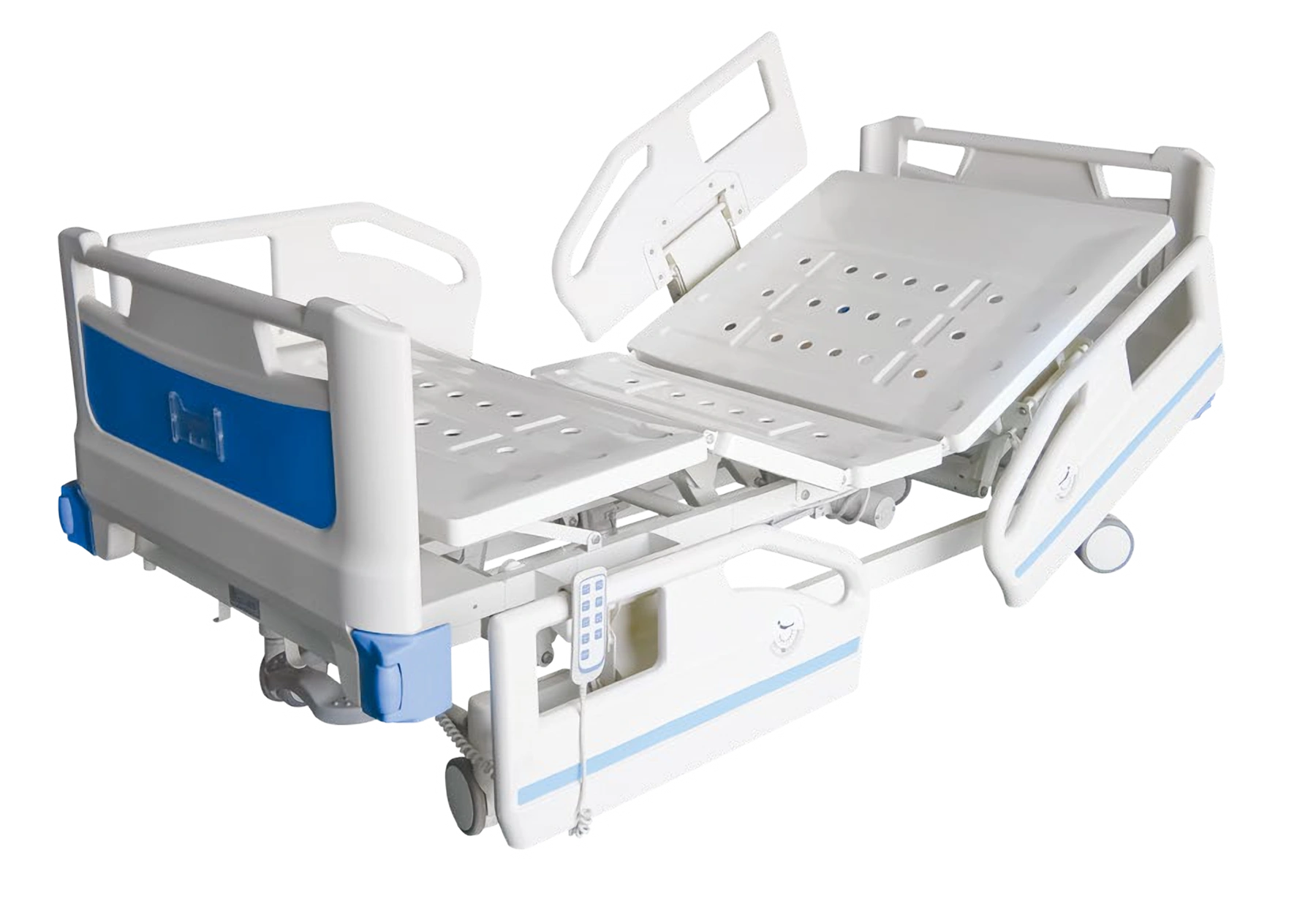
Hospital Beds
General-purpose patient beds for inpatient wards and standard hospital rooms.
View product
Ward Furniture
Complete ward furniture options for patient rooms and hospital care areas.
View product