
When we work with buyers on large healthcare projects, one of the first things we discuss is the hospital bed specification. Often, a procurement list will just say "5-function electric bed," assuming more is always better. But the first question I ask isn't about the number of functions. It's about the department where the bed will be used. A bed for an ICU has different critical needs than one for a general ward or an elderly care home.
Electric hospital bed functions are the core motorized movements that adapt the bed for patient care and safety. The primary functions are Backrest for upper body elevation, Legrest for lower limb support, Hi-Lo for vertical height adjustment, and Trendelenburg for tilting the entire bed frame. Understanding the practical application of each function is essential for specifying a bed that meets departmental needs without overpaying for unnecessary features.
Getting this right from the start prevents costly procurement mistakes. Let’s break down what each function actually does and what you should verify before confirming an order.
The Backrest Adjustment Function
The backrest function controls the angle of the upper part of the bed, allowing a patient to be moved from a flat-lying position to a seated or semi-seated position. This is probably the most frequently used electric function on any hospital bed. Its primary purpose is for patient comfort, but it's also critical for clinical care—assisting with breathing, feeding, and interacting with visitors or staff.
A common mistake is to assume all backrest adjustments are equal. A buyer might see "electric backrest" on two different quotes and assume they offer the same utility. But the key details are the maximum angle and the smoothness of the movement. A bed that can’t achieve a sufficiently upright position can make tasks like eating difficult, while a jerky or noisy motor can be distressing for the patient and is often an early sign of a lower-grade actuator system.
Before we finalize a specification, we always confirm the required range of motion. For general use, a certain angle might be fine, but for specific respiratory or cardiac care, a higher angle might be non-negotiable. I always pay attention to the motor's sound and speed during a sample inspection; a quiet, steady movement indicates a more reliable mechanical system that is less likely to cause issues down the line.
The Legrest Adjustment Function
The legrest function, sometimes called the knee-break or leg elevation, adjusts the section of the bed that supports the patient's legs and knees. It's intended to help with patient positioning for comfort, reduce pressure on certain areas like the lower back and heels, and prevent patients from sliding down the bed when the backrest is raised.
Buyers often overlook how the legrest operates in relation to the backrest. Some beds have an independent legrest control, while others have a synchronized function where the legrest rises automatically as the backrest is elevated. Simply asking for a "legrest function" without clarifying this can lead to ordering a bed that doesn't match your facility's care protocols. For example, independent control offers more flexibility for positioning, but synchronized movement can be simpler for standard comfort adjustments.
We make it a point to clarify this with buyers before quoting. Does your nursing staff prefer independent control for post-surgical recovery, or is a synchronized auto-contour function better for general ward use? This isn't a minor detail; it affects daily workflow and patient comfort. Proper patient positioning is a key factor in care, making the bed's adjustment capabilities an important consideration.

The Hi-Lo (Height Adjustment) Function
The Hi-Lo function is the vertical height adjustment of the entire bed frame. In my view, this is the single most important function for both patient and caregiver needs. The ability to lower the bed allows patients, especially the elderly or those with mobility issues, to get in and out of bed more easily, which helps reduce the risk of falls. The ability to raise the bed to a comfortable working height helps reduce the ergonomic strain for caregivers during patient handling, cleaning, and procedures.
A frequent procurement error is focusing only on the maximum height for caregiver ergonomics while ignoring the minimum height. When we receive an inquiry for beds for a long-term care or geriatric facility, the first thing we discuss about the Hi-Lo function is how low it can go. A bed that can lower close to the floor is a critical consideration for fall prevention strategies.
The full height range is one of the most important specifications we verify on any bed. A bed with an inadequate Hi-Lo range can introduce real, daily challenges into a care environment. We refuse to treat this as just another number on a spec sheet. We need to know the use case—is it for an active surgical ward where caregiver access is paramount, or a dementia care unit where patient safety at night is the top priority? The answer determines the right Hi-Lo specification.
The Trendelenburg and Reverse Trendelenburg Functions
These are advanced functions that tilt the entire bed frame, not just the back or leg sections.
- Trendelenburg: Tilts the bed so the patient's head is down and their feet are raised.
- Reverse Trendelenburg: Tilts the bed so the patient's head is up and their feet are down.
This is where the biggest and most expensive misunderstandings happen. Buyers sometimes see "Trendelenburg" and assume it's just another comfort feature. It is not. These are clinical positioning tools, often used by medical staff to assist with specific procedures or care protocols.
We always ask what department the bed is for before recommending a model with Trendelenburg. For a general ward or a nursing home, these functions are often unnecessary, and including them significantly increases the bed's cost and complexity. However, for an Intensive Care Unit (ICU), operating room, or post-anesthesia care unit (PACU), they are often considered essential equipment.
Confirming the need for Trendelenburg is a key part of our project planning process. It's a simple question that can save a buyer a substantial amount on their budget. If you specify a 5-function bed for 100 rooms when only 10 ICU rooms truly need it, the unnecessary cost adds up quickly. A responsible supplier should help you identify where this function is critical and where it's an expensive extra.

What's the Real Difference: 3-Function vs. 5-Function Beds?
Now that we've covered the individual movements, the terms "3-function" and "5-function" should be much clearer.
- A 3-Function Electric Bed typically includes the three core movements:
1. Backrest Adjustment 2. Legrest Adjustment 3. Hi-Lo Height Adjustment
- A 5-Function Electric Bed includes the core three, plus the two clinical tilt functions:
4. Trendelenburg 5. Reverse Trendelenburg
The mistake is creating a project list that specifies "5-function beds" for every single room by default. The right approach is to plan room by room. A general ward might be perfectly served by a 3-function bed, which meets all the essential needs for comfort and safety. The more expensive 5-function beds can then be allocated specifically to the high-acuity departments like the ICU or emergency room where clinical tilting is required. This kind of practical, needs-based planning ensures you get the right equipment in the right place without wasting your budget.
A Final Check: Look Beyond the Function Name
Understanding the functions is the first step. The final step is to verify the quality of the components that drive them. A function is only as reliable as the motor that powers it, the controller that operates it, and the power system that supports it.
When you receive a quotation, don't just stop at the function list. A low price on a "5-function bed" might be tempting, but it could be hiding lower-grade motors, a confusing controller, or the absence of a crucial battery backup. If the power goes out, a bed without a battery backup could become unadjustable, which may compromise patient positioning.
Before you confirm an order for electric beds, use this as a final verification checklist with your supplier. The answers will tell you a lot about the true quality and reliability of the product you are buying.
Electric Bed Function Specification Checklist
- Backrest Maximum Angle: Is the angle specified?
- Legrest Maximum Angle: Is the angle specified?
- Hi-Lo Height Range: Is the full minimum-to-maximum range clearly stated?
- Trendelenburg/Reverse Tilt Angle: Is the maximum tilt angle specified?
- Motor System: Can the supplier name the motor brand or provide reliability data?
- Handset Controller: Have you seen a clear image of the patient handset and nurse control panel? Is there a function lock-out feature?
- Battery Backup: Is it included as standard, or is it an optional extra? What is its capacity?
- Accessory Compatibility: Has the supplier confirmed that all functions operate through their full range without interference from the side rails?
By asking these questions, you move from simply buying a product to making a sound investment in your facility's safety and efficiency. If you're planning a project, send us your room-by-room list, and we can help you review the right function set for each area.
Written by
CareFurnex Team
CareFurnex Team shares practical knowledge about hospital beds, patient room furniture, medical trolleys, clinic furniture, and healthcare facility procurement for international B2B buyers.
Related Products
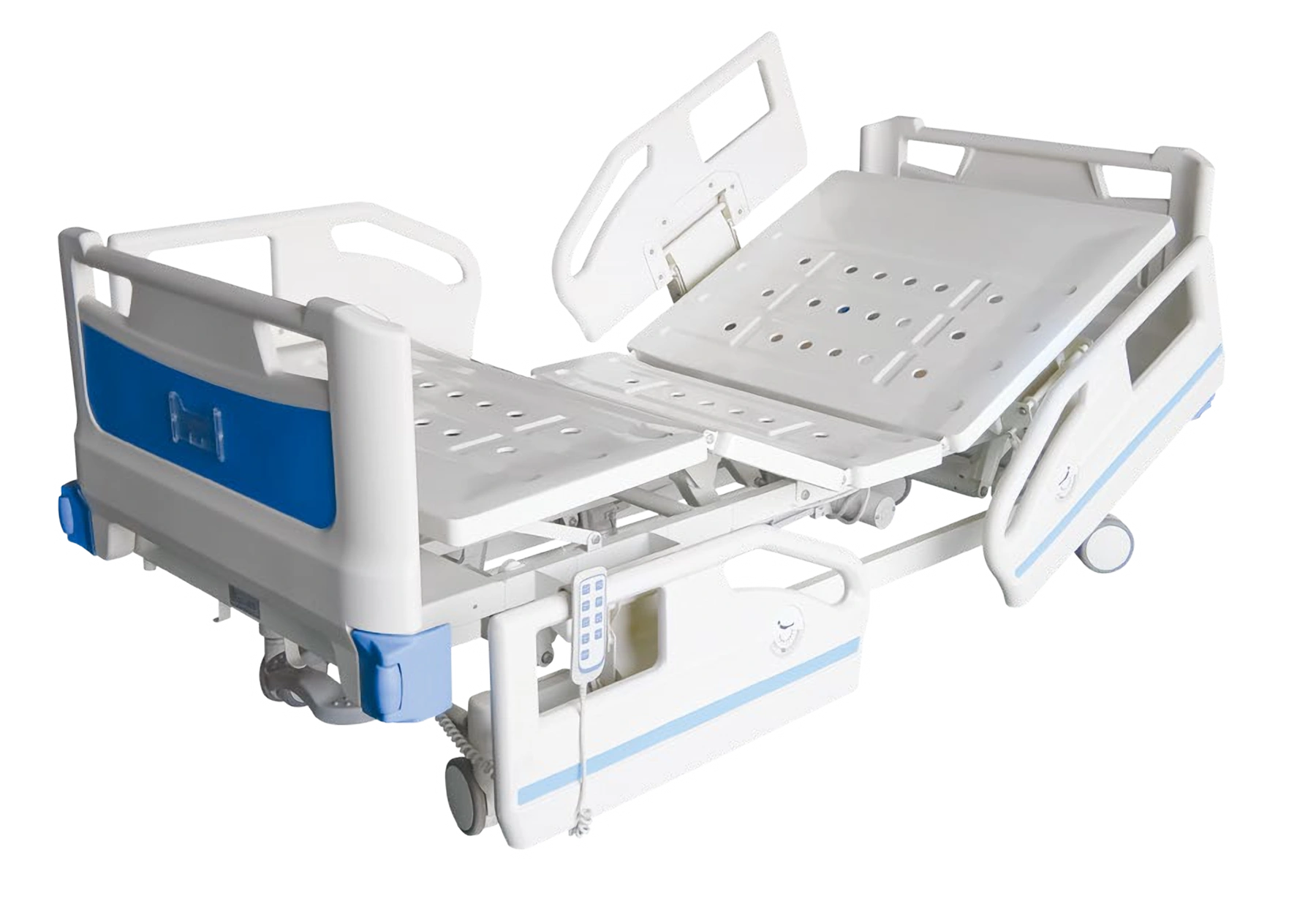
Hospital Beds
General-purpose patient beds for inpatient wards and standard hospital rooms.
View product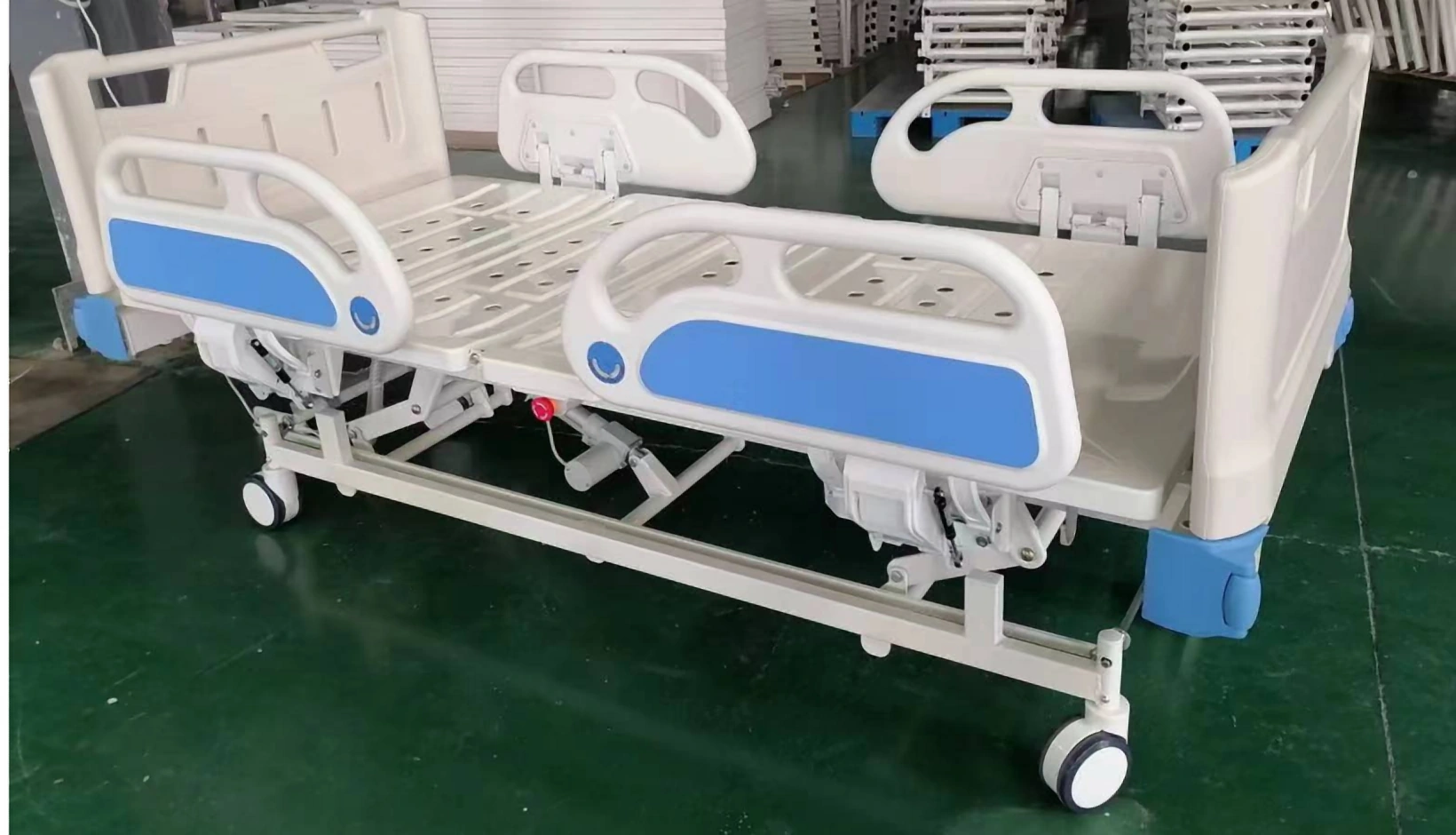
Electric Hospital Beds
Motorized multi-function beds with electric height, backrest, and leg adjustment options.
View product
Ward Furniture
Complete ward furniture options for patient rooms and hospital care areas.
View product