
Planning a new dialysis center is overwhelming. Choosing the wrong furniture can lead to safety risks and operational issues, wasting your budget. Proper planning prevents these costly mistakes.
To properly plan furniture for a dialysis center, you must start with the workflow, not a product list. Prioritize dialysis-specific furniture with chemical-resistant materials, plan a layout that ensures nurse visibility and emergency access, and write detailed specifications to get accurate quotes from suppliers.
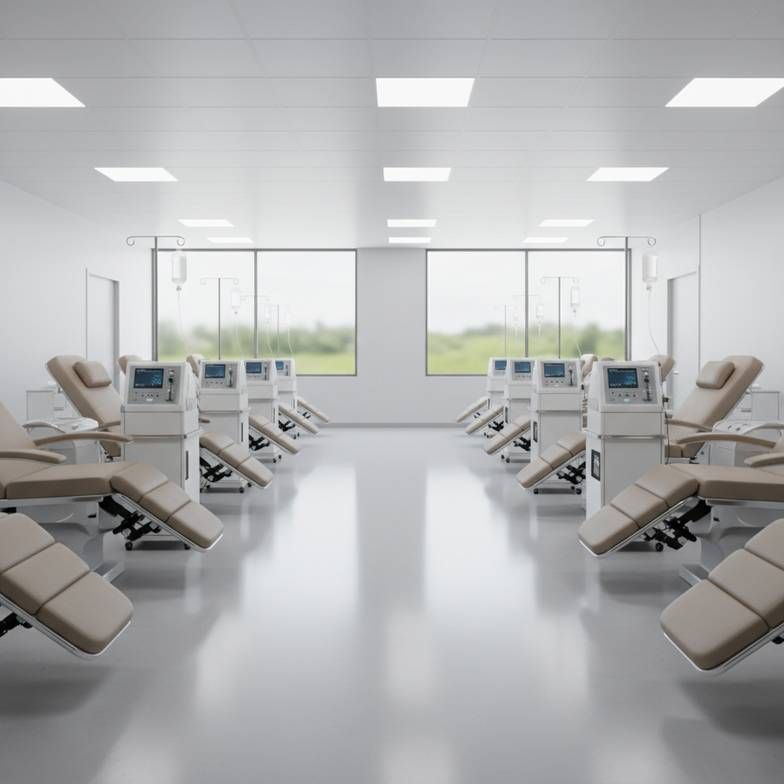
This process seems complicated, but it's really about managing risk. Too often, I see project teams focus only on the upfront cost of a dialysis chair or a medical cart. They treat it like buying office furniture. This is a fundamental mistake. A dialysis unit is a high-stress, high-traffic clinical environment unlike any other. The right furniture isn't just an asset; it's a critical part of your patient safety and infection control strategy. Breaking down the planning into clear steps focused on workflow and materials will help you avoid common pitfalls and build a facility that is safe, efficient, and durable for years to come. Let's walk through how to do this.
Why Should Your Plan Start with Workflow, Not a Product List?
You have a floor plan and a budget. The natural first step seems to be finding products that fit. This approach is risky and often leads to long-term problems.
Start with workflow because a dialysis center's unique demands—long patient sessions, harsh cleaning, and emergency needs—define your true furniture requirements. A product-first approach misses these critical operational risks and total cost of ownership.
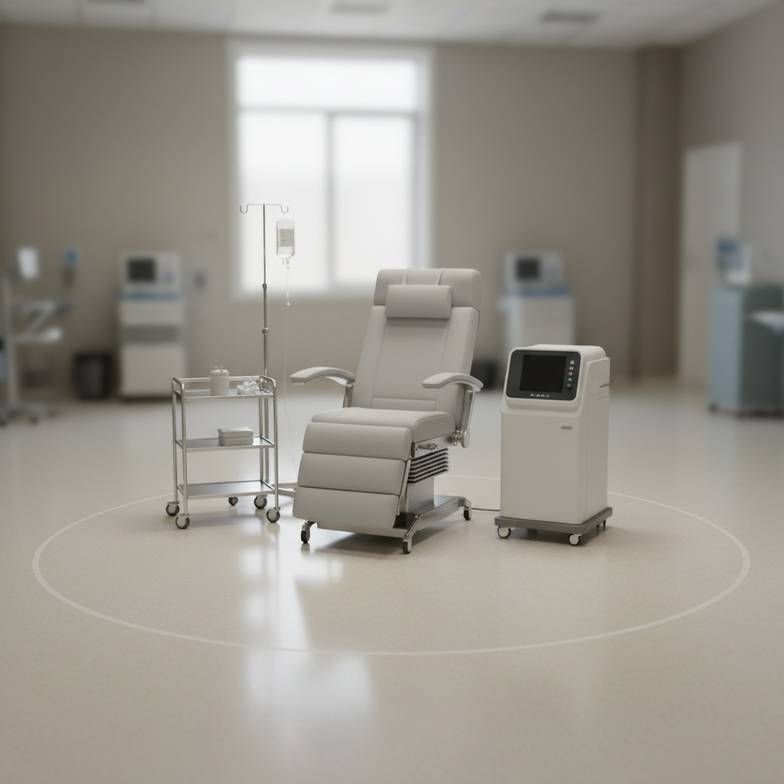
When helping a client with a new project, the first question I ask isn't about their product list. It's "Can you walk me through your daily workflow?" A dialysis patient sits for three to five hours, multiple times a week. The furniture must be comfortable enough for this duration. After each patient, staff must clean every surface with harsh, hospital-grade disinfectants. The furniture's materials must withstand this daily chemical exposure without cracking or degrading. Nurses need to move quickly between patients, pushing supply carts and responding to alarms. Pathways must be clear. In an emergency, a team needs immediate, unobstructed access to the patient. Your furniture layout and product choices directly impact every one of these scenarios. By focusing on workflow first, you move from simply buying "things" to investing in solutions that support your staff, protect your patients, and reduce operational risk.
What Makes Furniture 'Dialysis-Ready'?
You see the term "medical-grade" and assume it's good enough. But general clinic furniture fails quickly in a dialysis unit, compromising patient safety and destroying your budget with replacement costs.
Dialysis-ready furniture uses specific materials like chemical-resistant, seamless upholstery, high-density foam for long-term comfort, and robust, often bariatric-rated frames. These features are built to survive the harsh cleaning and extended use unique to dialysis.

The difference between standard medical furniture and dialysis-ready furniture is in the hidden specifications. A common question we get from project contractors is why one dialysis chair costs significantly more than another that looks similar. The answer is always in the materials and construction, which directly affect durability and infection control. Standard vinyl will crack and peel when repeatedly cleaned with bleach-based solutions. Low-density foam collapses over time, creating an uncomfortable experience for patients during long sessions. A bolted frame can loosen with constant use, becoming a safety hazard. Dialysis-ready furniture is engineered to prevent these problems. It's a key area where investing more upfront saves you much more in the long run on replacements, repairs, and risk mitigation.
Key Specification Differences
To make this clear, here is a breakdown of what to look for.
Feature | General Clinic Furniture | Dialysis-Specific Furniture
- Feature: Upholstery | General Clinic Furniture: Standard vinyl, may have many seams. | Dialysis-Specific Furniture: Chemical-resistant vinyl (rated for disinfectants), seamless or minimal-seam design.
- Feature: Foam | General Clinic Furniture: Standard density, suitable for short sits. | Dialysis-Specific Furniture: High-density foam (e.g., >2.5 lbs/ft³) for long-term pressure distribution and comfort.
- Feature: Frame | General Clinic Furniture: May be bolted, standard weight capacity. | Dialysis-Specific Furniture: Fully welded steel frame, bariatric capacity often standard (e.g., >350 lbs) for durability.
- Feature: Mechanisms | General Clinic Furniture: Basic manual or electric recline. | Dialysis-Specific Furniture: Smooth, reliable recline mechanisms (electric often preferred) with Trendelenburg position for emergencies.
How Does Furniture Layout Impact Dialysis Center Efficiency and Safety?
You've managed to fit the maximum number of chairs into your available space. But now, staff are struggling to move, and their view of patients is blocked. This layout creates daily inefficiency and serious risk.
A proper layout provides clear lines of sight from the nurse's station to every patient. It also ensures adequate space around each chair for the dialysis machine, staff movement, and emergency team access, directly boosting efficiency and safety.
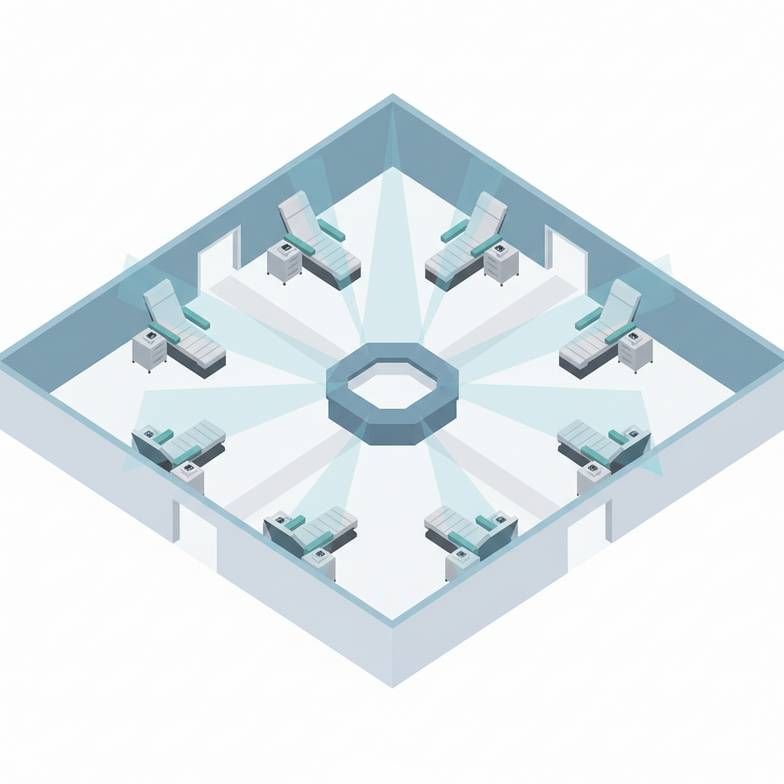
When we review floor plans, we don't just check dimensions. We simulate movement. The "footprint" of a dialysis station is not just the chair; it's the chair, the dialysis machine, the IV pole, the waste bin, and the space a nurse needs to work comfortably on all sides. Forgetting this is a frequent source of problems. A crowded layout forces staff to take longer routes, slows down the delivery of supplies, and makes routine tasks more difficult. More critically, it can compromise safety.
The Three Pillars of a Safe Layout
- Nurse's Line of Sight: Can a nurse sitting at the central station visually monitor every single patient? A patient can feel unwell suddenly, and early visual cues are vital. The layout should have no blind spots. Low-profile ward screens or strategic chair placement can help achieve this.
- The Patient Station Halo: We recommend a "halo" of at least 3 feet (about 1 meter) of clear space around the patient chair. This gives a nurse room to maneuver the dialysis machine, assist the patient, and allows a crash cart or emergency team to get to the patient without moving other furniture.
- Clear, Wide Pathways: Main corridors for staff and carts should be wide enough for two people to pass each other easily. This prevents bottlenecks, especially during busy shift changes or emergencies.
Thinking about layout in terms of movement and visibility, rather than just capacity, transforms the space from a room full of chairs into a functional, safe, and efficient clinical environment.
How Can You Create Specifications That Prevent Low-Quality Bids?
You sent out a request for "dialysis chairs" and received three quotes with wildly different prices. You suspect some suppliers are cutting corners, but you have no way to prove it.
Create "supplier-proof" specifications by defining the critical technical details, not just the product name. Specify the upholstery's abrasion rating, foam density, frame welding type, and caster system to force an accurate, apples-to-apples comparison between vendors.

This is where you take control of the procurement process. Vague requests invite vague—and often misleading—quotes. A supplier can easily substitute lower-grade materials to win a bid on price, leaving you with a product that fails prematurely. When I help a client evaluate bids, we look for these specific details. If they aren't in the quote, it's a major red flag. By including them in your initial request, you force every supplier to compete on the same quality standard. This protects your investment and ensures you get what you paid for. You are no longer comparing prices; you are comparing value and long-term performance.
From Vague Request to "Supplier-Proof" Specification
Here's a practical example of how to write a specification that protects you.
Vague Request | "Supplier-Proof" Specification | Why It Matters
- Vague Request: Product | "Supplier-Proof" Specification: Dialysis Patient Chair | Why It Matters: Defines the product category.
- Vague Request: Frame | "Supplier-Proof" Specification: Steel Frame | Why It Matters: Fully welded steel frame, powder-coated finish. Minimum static load capacity of 500 lbs (227 kg). | Column 4: Prevents suppliers from offering weaker, bolted frames that can loosen over time.
- Vague Request: Upholstery | "Supplier-Proof" Specification: Medical-grade vinyl | Why It Matters: Healthcare-grade vinyl, seamless design on seat surface, resistant to bleach/peroxide disinfectants. Abrasion rating of 500,000+ Wyzenbeek double rubs. | Column 4: Ensures the cover withstands harsh cleaning protocols without cracking and is easy to disinfect.
- Vague Request: Foam | "Supplier-Proof" Specification: Comfortable foam | Why It Matters: Multi-density foam construction. High-density base foam of 2.8 lbs/ft³ with a softer top layer for patient comfort. | Column 4: Guarantees long-lasting support and comfort for patients during 4+ hour sessions. Prevents "bottoming out."
- Vague Request: Casters | "Supplier-Proof" Specification: Locking wheels | Why It Matters: Four 5-inch (125mm) medical-grade casters. Central locking system with a single foot pedal to lock/steer all four wheels. | Column 4: Provides superior mobility and stability. A central lock is far more efficient and safer for staff than individual locks.
By providing this level of detail, you make it impossible for a supplier to silently downgrade the quality. You get better quotes and a better product.
Conclusion
Successful dialysis center planning prioritizes workflow over products. Focus on dialysis-specific materials, functional layouts, and detailed specifications to ensure the safety, efficiency, and long-term value of your project.
References
[10] Wyzenbeek Abrasion Tester - YouTube - https://www.youtube.com/watch?v=4djmNEzu98I
Written by
CareFurnex Team
CareFurnex Team shares practical knowledge about hospital beds, patient room furniture, medical trolleys, clinic furniture, and healthcare facility procurement for international B2B buyers.
Related Products
Hospital Beds
General-purpose patient beds for inpatient wards and standard hospital rooms.
View product
Ward Furniture
Complete ward furniture options for patient rooms and hospital care areas.
View product
Medical Trolleys
Mobile carts for nursing rounds, treatment supplies, medicines, and clinical tools.
View product