
A request for "a price on a stainless steel case cart" seems straightforward. But for a supplier, it immediately raises a practical question: will this cart spend its life in the high-heat, chemical-heavy environment of a Central Sterile Services Department (CSSD), or does it need to be quiet and agile for an Operating Room (OR)?
These two workflows place completely different demands on the equipment. Choosing a cart based on a photo and a price tag, without matching the specifications to the daily journey, often leads to premature failure. A cart that looks perfect on day one can have seized wheels, developing rust spots, or loose joints within a few months. The better question isn't just about price, but about fitness for purpose.
To select a case cart for a CSSD or operating room, buyers should check the stainless steel grade (e.g., 304 for resistance to cleaning chemicals), the frame construction (fully welded for hygiene and durability), the caster specifications (high-temperature rating for autoclaves and non-marking material for OR floors), and the shelf design (perforated for sterilization drainage or solid for transport).
These are practical equipment selection principles based on common workflows. They are not a substitute for your facility's specific infection control protocols or local regulatory requirements. Buyers should always confirm final material and design requirements with their facility's infection control or clinical engineering team before ordering.
Why a "Standard" Case Cart Is a Risky Assumption
Some buyers believe standardizing on a single case cart model for the entire facility is the most efficient approach. However, this "one-size-fits-all" strategy can be less efficient and riskier, as it forces a compromise that serves neither the CSSD nor the OR well.
A cart's daily journey determines the specifications it needs to survive.
- In the CSSD: A case cart is a workhorse. It goes through washer-disinfectors, is loaded into high-temperature steam autoclaves (often at 134°C / 273°F), and is constantly exposed to harsh cleaning chemicals. The key stresses are heat, moisture, and corrosion.
- In the OR: The same cart becomes a mobile workstation. It needs to move quietly and smoothly, maneuver easily in tight spaces, and remain stable when parked. The key stresses are mobility, noise control, and impact with walls or other equipment.
A cart specified for general transport will quickly fail in a CSSD sterilization loop. The wheels may deform in the autoclave, and the frame may begin to corrode. This is why a supplier who doesn't ask about your workflow before quoting is not providing a serious, comparable offer.
Frame and Material: What's the Difference Between Hygienic and Just "Shiny"?
When comparing two carts with a significant price difference, the deciding factor is rarely what you can see in a photo. It's the material and construction quality.
Stainless Steel Grade (304 vs. 201) A cart made from 201-grade stainless steel can look just as shiny as a 304-grade cart and will cost less. However, 304-grade steel contains more nickel and chromium, giving it better resistance to corrosion from the chlorides and chemicals used in many hospital-grade disinfectants. For a cart used in a CSSD, checking for 304 grade is a practical step to reduce the risk of long-term rusting.
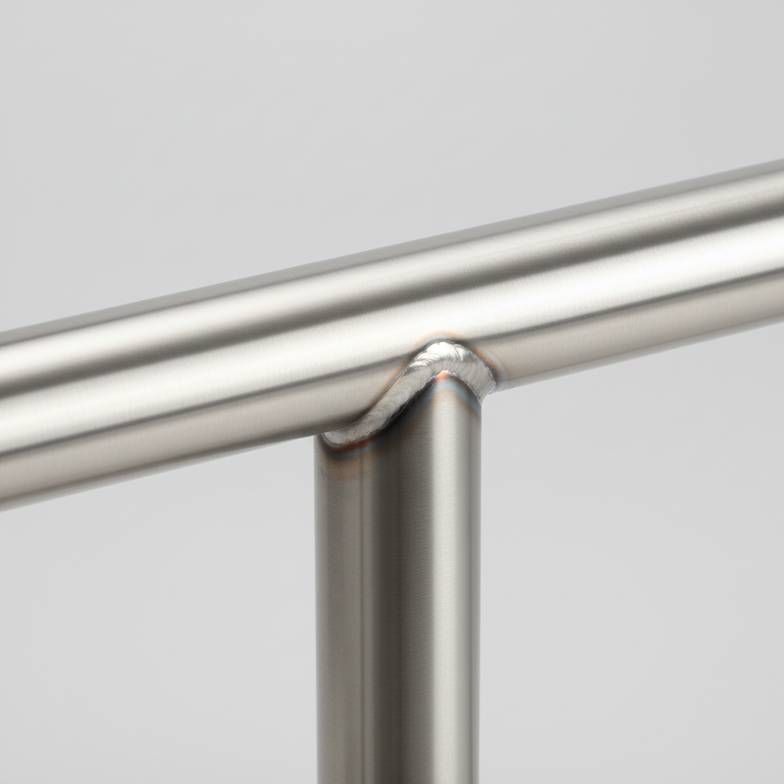
Frame Construction (Welded vs. Bolted) A bolt-together cart is often cheaper and ships in a smaller box. The trade-off is that the bolted joints can loosen over time and create crevices that are nearly impossible to clean effectively, posing a potential hygiene risk. A fully TIG-welded frame is a single, solid piece. It's more durable and avoids these hidden areas where contaminants can accumulate, making it a more suitable choice for sterile environments where thorough cleaning is a priority. If a quote doesn't specify "fully welded," it's wise to assume it's a bolted frame.
Casters and Shelves: Matching Components to Your Workflow
The components are often the first point of failure on a poorly specified cart. Matching them to the primary workflow can improve long-term reliability.
Casters: The Most Common Failure Point The first question we typically ask is about the cart's daily journey, because this directly impacts the casters.
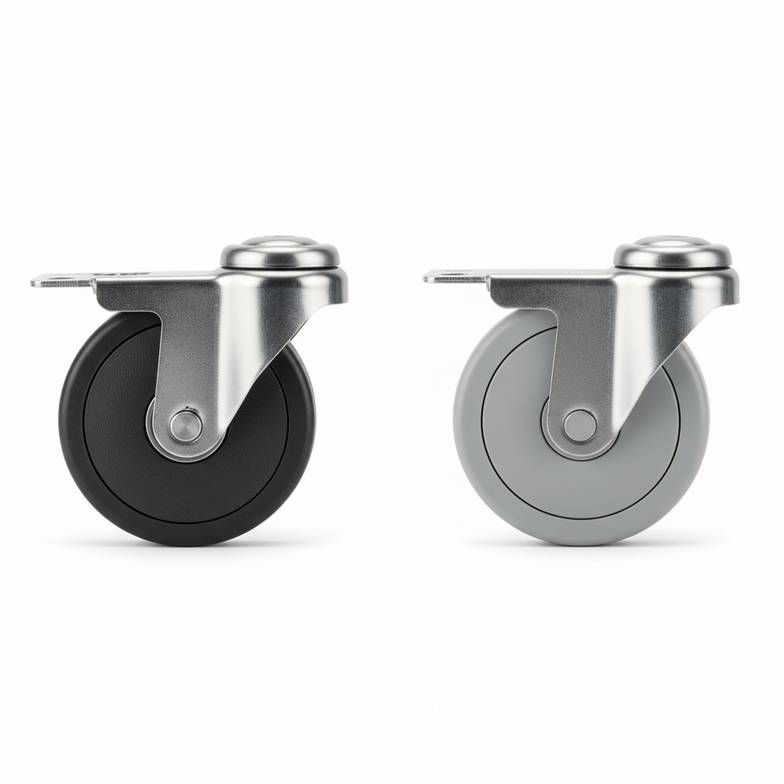
- For CSSD: The casters should have a high-temperature rating to withstand autoclave cycles without deforming, cracking, or seizing. If a quote doesn't explicitly state the casters are "autoclavable," they are likely not suitable for this use.
- For OR: The casters should be made of a quiet-rolling, non-marking material to protect OR floors and reduce noise during procedures. At least two of the casters should have reliable locking mechanisms to keep the cart stable.
Shelves: Perforated for Drainage, Solid for Containment The choice between shelf types is not about preference; it's about function.
- Perforated shelves are designed for CSSD use. The holes allow steam to penetrate instrument trays during sterilization and allow water to drain completely during washing cycles, preventing pooling.
- Solid shelves are better suited for transporting items in the OR or clean storage areas, as they help contain any potential spills from supplies or liquids.
Case Cart Specification Checklist for CSSD & OR
To make sure you are comparing quotes on an "apples-to-apples" basis, use this checklist to confirm key details with every potential supplier. A vague quotation is a reason to slow down and ask for clarification.
| Specification Area | What to Confirm with Supplier | Why It Matters for CSSD / OR |
|---|---|---|
| Material Grade | Is it 304-grade stainless steel? | Offers better resistance to corrosion from cleaning agents common in CSSD. |
| Frame Construction | Is the main frame fully welded or bolted together? | Fully welded frames avoid crevices found in bolted designs, which can harbor bacteria, and are more durable. |
| Weld Finishing | Are the welds ground smooth and polished? | Rough welds can trap contaminants, making the cart difficult to clean effectively. |
| Caster Type | Are the casters rated for high temperatures (e.g., 134°C)? | Standard casters are likely to fail, deform, or seize up inside an autoclave. |
| Caster Material | Are the wheels made of a non-marking material? | Helps prevent scuff marks on operating room flooring. |
| Shelf Design | Are the shelves perforated or solid? | Perforated shelves allow for drainage and steam penetration in sterilizers. Solid shelves contain spills during transport. |
| Bumpers | Does the cart include protective bumpers? | Helps protect walls and other equipment from damage in busy corridors. |
How to Prepare Your Inquiry for a Fit-for-Purpose Case Cart
To get a clear, comparable quotation for a case cart that fits your needs, prepare the following details before contacting a supplier:
1. Primary Department: Will the cart be used mainly in the CSSD (including autoclave cycles) or the Operating Room? 2. Required Specifications: Based on the primary use, specify your requirements for:
- Frame Construction (e.g., Fully welded)
- Stainless Steel Grade (e.g., 304)
- Caster Type (e.g., High-temperature, autoclavable)
- Shelf Design (e.g., Perforated)
3. Quantity: The number of carts you require.
Sending this information helps you receive a quote for a product that is designed for your workflow, allowing you to make a true, value-based comparison.
Written by
CareFurnex Team
CareFurnex Team shares practical knowledge about hospital beds, patient room furniture, medical trolleys, clinic furniture, and healthcare facility procurement for international B2B buyers.
Related Products
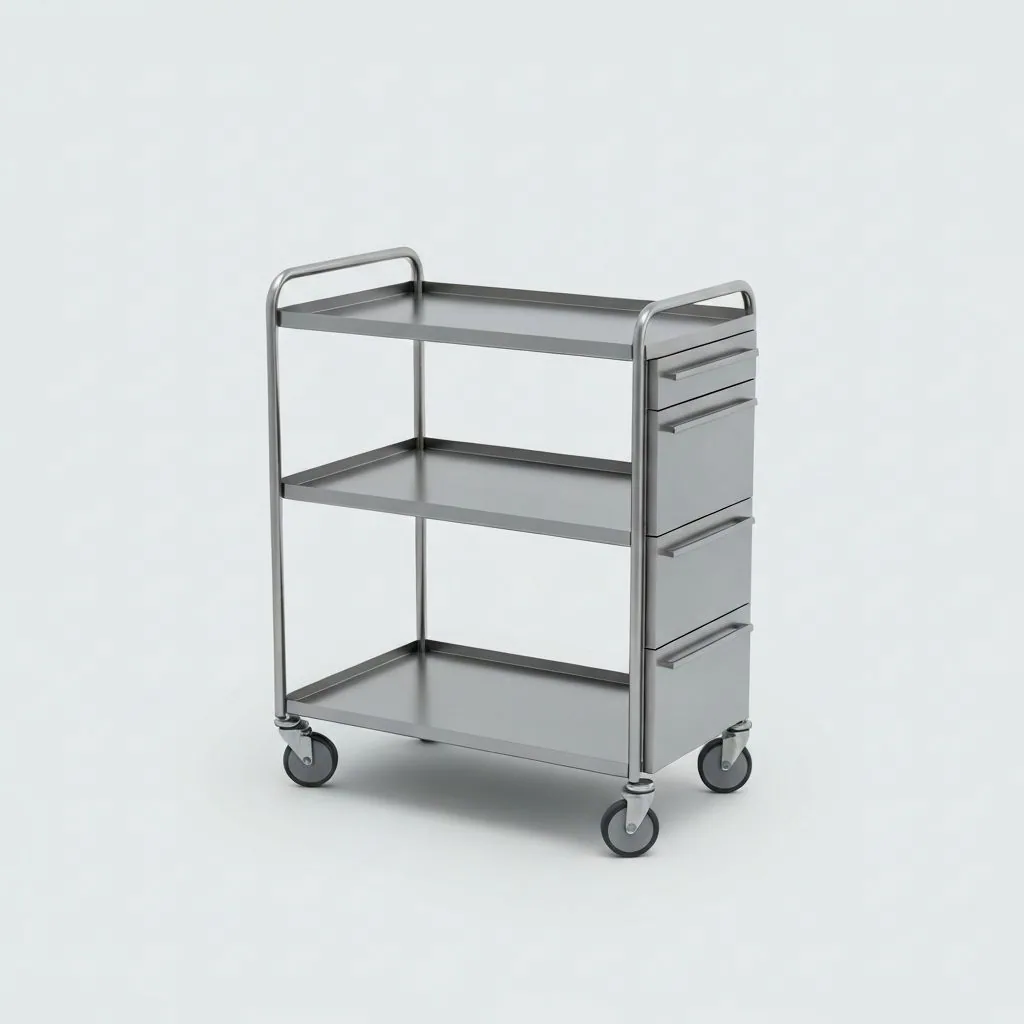
Medical Trolleys
Mobile carts for nursing rounds, treatment supplies, medicines, and clinical tools.
View product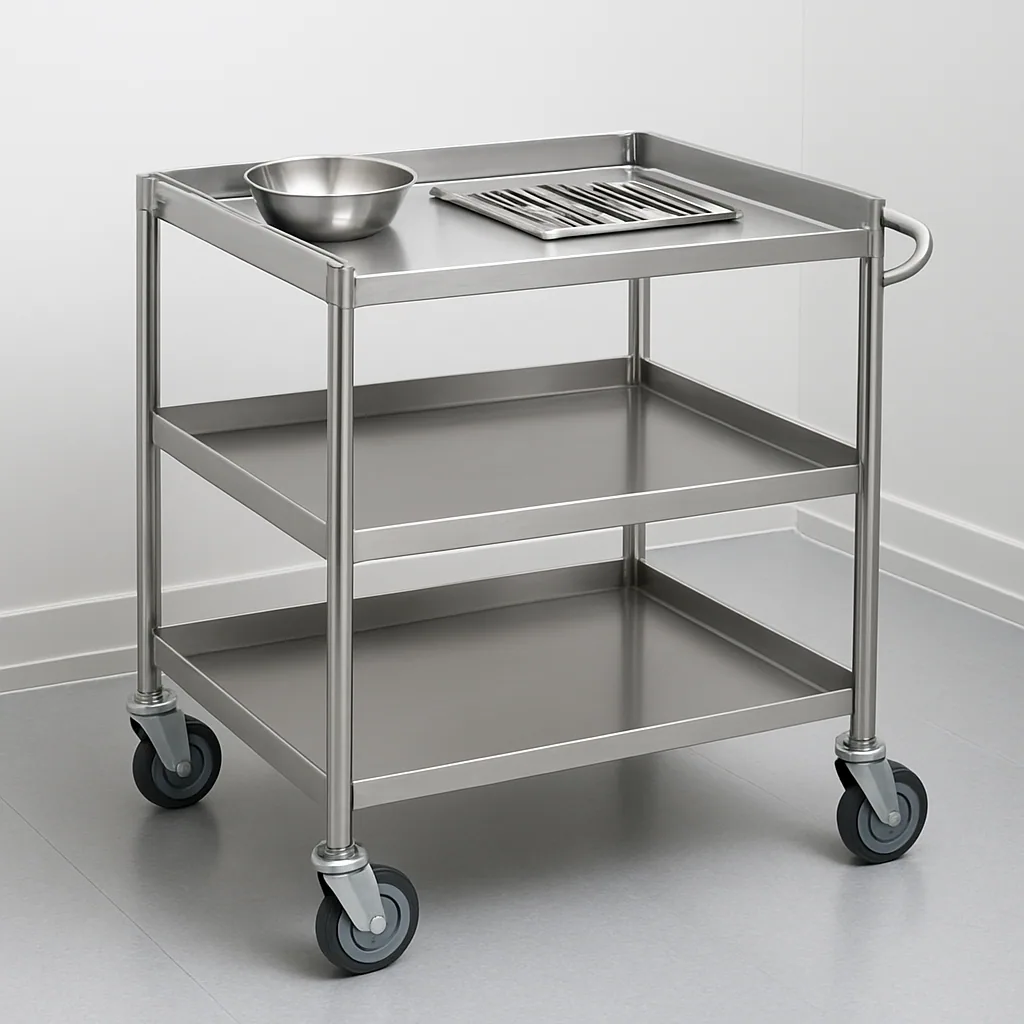
Treatment Carts
Practical treatment carts with drawers, storage space, and smooth mobility for clinical use.
View product
Hospital Beds
General-purpose patient beds for inpatient wards and standard hospital rooms.
View product