
Comparing two anesthesia trolley quotations that look almost the same but have different prices? Do not rush to choose the lower price. A trolley can match the catalog photo and still fail to meet your department's needs if the configuration was never properly confirmed.
An anesthesia trolley quotation should not be treated as complete until the department use, drawer and lock configuration, included accessories, caster and brake quality, material, packing method, and total CBM are confirmed in writing. A lower price often hides an incomplete or different specification.
The problem usually starts before production, when a buyer compares only the product photo and unit price. This can lead to end-user complaints, missing accessories, higher landed costs, and project delays. A serious B2B order requires more detail than a product name.
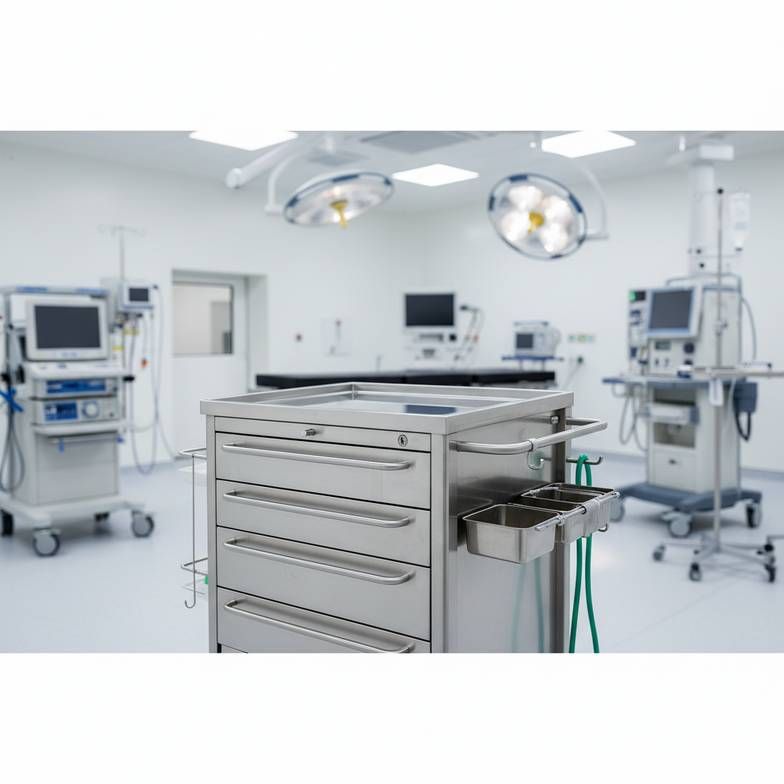
Why Should Buyers Confirm Department Use Before Choosing an Anesthesia Trolley?
Confirm where and how the trolley will be used before comparing any models or prices. "Anesthesia trolley" is a functional category, not a complete specification. The right drawer layout, lock system, and accessories all depend on the department's daily workflow.
A trolley suitable for one operating room might not be ideal for another. Suppliers may offer different configurations under the same product name, and a general-purpose medical trolley may not have the specific storage organization needed for anesthesia-related tasks. A fast quote without clarifying the use scenario can easily lead to a product mismatch.
For hospital project buyers, planning should be done by department or room, not just by product category. This ensures the final product fits the real-world working environment. Before requesting a price, it helps to have a clear idea of the intended use. This allows the supplier to recommend a suitable configuration instead of guessing from a product name.
Before you send an inquiry, try to gather this information:
- Department or room where the trolley will be used
- Required quantity
- Expected drawer layout or storage needs
- Lock requirements
- Necessary accessories
- Material or cleaning preferences
- Packing requirements for export
- Destination or trade term
- Project schedule, if applicable
What Drawer Layout and Lock Details Should Be Confirmed Before Ordering?
Do not assume the drawer count is enough detail or that "with lock" means the same thing to all suppliers. The exact drawer layout and lock type are core functional details that must be written into the specification sheet before you approve an order.
The number of drawers is just a starting point. The arrangement of different drawer sizes affects how staff organize and access supplies. A trolley with an inconvenient layout can disrupt workflow, creating user complaints that are not simple product defects.
Similarly, the term "with lock" is too vague for a serious quotation. Lock systems can vary:
- Central Lock: One key locks all drawers simultaneously.
- Individual Lock: Each drawer has its own lock.
- Partial Lock: Only specific drawers are lockable.
If the lock function doesn't match department expectations, the trolley may be rejected. A purchase order should not be approved until the lock type and which drawers are covered are clearly stated. These are details to verify during pre-shipment inspection. For cleaning-related specifications, buyers can also review the CDC environmental cleaning guidance.
Which Accessories Are Included, Optional, or Only Shown in the Photo?
Never assume accessories shown in a product photo are included in the quoted price. Ask the supplier to provide a clear list that separates standard included items from optional add-ons. A product image is for illustration, not a binding agreement.
This is one of the most common areas for disputes in medical trolley orders. Photos often feature a fully-equipped model to showcase its potential, but the base price may only cover the trolley itself. Accessories like IV poles, waste bins, sharps container holders, baskets, and side trays can significantly impact both usability and cost.
Discovering that accessories were optional after delivery can delay a project handover and create friction with the end-user. For distributors, it can lead to customer complaints and damage your reputation. A professional quotation should leave no room for interpretation. Before comparing two prices, make sure you are comparing the same complete package.
The safest way is to use a simple table to confirm what is and isn't included.
| Accessory / Part | Included | Optional | Not Included | Notes |
|---|---|---|---|---|
| Example: IV Pole | ||||
| Example: Waste Bin | ||||
| Example: Sharps Holder | ||||
| Example: Side Basket |
This simple check helps ensure the trolley you order is the trolley you receive.
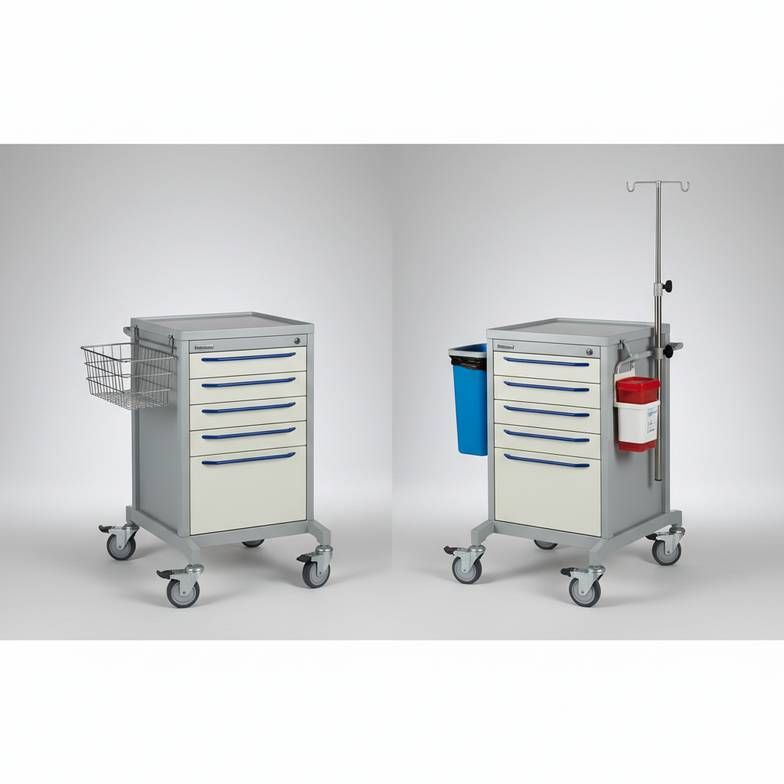
How Do Casters, Brakes, Material, and Cleaning Needs Affect Real Use?
Casters, brakes, and materials are critical functional specifications, not minor components. An anesthesia trolley is mobile medical furniture, and its daily performance depends on smooth movement, stable parking, and easy cleaning.
Buyers sometimes focus on the cabinet body and drawer count while overlooking the parts that handle mobility and maintenance. This can be a mistake.
- Casters and Brakes: Poor-quality casters can be noisy, get stuck, or make the trolley difficult to maneuver. The number of braking casters (usually two or four) affects how securely it can be parked. For a trolley that is moved frequently, these details are essential for user satisfaction and safety.
- Material and Surface Finish: The trolley’s material and finish impact durability and cleaning convenience. In a clinical environment, surfaces must withstand regular cleaning without degrading. You should confirm that the materials used for the body and worktop meet your facility’s hygiene standards and durability expectations.
Before approving a quotation, confirm the caster type, the number of brakes, and the primary materials. These details should be part of the pre-shipment inspection.
What Packing, CBM, and Shipping Details Should Buyers Check Before Comparing Prices?
A quotation is not complete for an export order until it includes packing details, carton dimensions, gross weight, and total CBM (cubic meters). A low unit price can become expensive if weak packing leads to damage or if large carton volume inflates freight costs.
Packing is not a detail to check after the order is placed. For medical trolleys, it is a critical part of product quality. Drawers, casters, locks, handles, and accessories all need protection to prevent scratches, dents, or breakage during transit.
Furthermore, the total shipping volume directly impacts your landed cost. A supplier offering a seemingly cheaper trolley might be using bulkier packaging that costs you more in freight. To compare two offers fairly, you must compare them on the same trade term (e.g., FOB, CIF) and with complete shipping data.
This table can help you see the hidden risks in a vague quotation.
| Missed Detail | Possible Consequence | What to Ask Before Ordering |
|---|---|---|
| Drawer layout not confirmed | Trolley is unsuitable for department workflow. | "What is the exact drawer arrangement?" |
| Lock type is unclear | User rejection due to wrong lock function. | "Is it a central or individual lock? Which drawers?" |
| Accessories assumed from photo | Missing items and extra costs after delivery. | "Please list all included and optional accessories." |
| Packing method not checked | Product arrives damaged. | "How is the trolley protected for export?" |
| Carton data and CBM missing | Higher freight costs than expected. | "What are the carton dimensions, weight, and total CBM?" |
What Should Buyers Ask the Supplier Before Confirming a Bulk Order?
Before confirming a bulk or project order, use a final checklist to get all key specifications confirmed in writing. A clear purchase order based on a detailed specification is the best way to protect your investment and ensure a smooth delivery.
Approving an order based on a price and a photo is risky. A reliable supplier should be able to provide clear answers to your configuration, packing, and scheduling questions. The production lead time, for example, usually starts after all these details are finalized, not from the date of your first inquiry. Late changes can delay the entire project.
To help you compare suppliers and finalize your order, use a matrix like this.
| Comparison Item | Supplier A | Supplier B | Buyer Notes |
|---|---|---|---|
| Configuration | |||
| Drawer Layout | |||
| Lock Type & Coverage | |||
| Included Accessories | |||
| Caster & Brake Type | |||
| Material & Finish | |||
| Quotation & Logistics | |||
| Unit Price | |||
| Packing Method | |||
| Carton Dimensions (L×W×H) | |||
| Gross Weight (kg) | |||
| Total CBM | |||
| Trade Term (e.g., FOB) | |||
| Lead Time After Confirmation |
This process helps you see whether a lower price from one supplier is due to a less complete offer.
A Final Confirmation Checklist
Before you sign the purchase order, run through these points one last time:
- [ ] Department Use: Is the configuration suitable for the intended room?
- [ ] Drawer Layout: Is the arrangement confirmed in writing?
- [ ] Lock System: Is the lock type and coverage clearly defined?
- [ ] Accessories: Is there a final list of included vs. optional items?
- [ ] Mobility: Are the caster and brake specifications acceptable?
- [ ] Materials: Are the material and finish stated?
- [ ] Packing: Is the packing method clear and suitable for export?
- [ ] Shipping Data: Do you have the final carton dimensions, weight, and CBM?
- [ ] Trade Term & Lead Time: Are the delivery terms and schedule agreed upon?
- [ ] Inspection: Have you defined the key points to check before shipment?
Taking the time to confirm these details upfront is far more efficient than solving problems after the goods arrive.

Making a Clearer Procurement Decision
Ultimately, ordering an anesthesia trolley should not be a guessing game. The goal is to move from comparing photos to comparing fully-defined products. A quotation that looks attractive at first glance is only useful if it is complete, accurate, and reflects the product your department actually needs.
By confirming the drawer layout, lock system, accessories, materials, and packing data before you commit, you reduce the risk of receiving an unsuitable product. A clear specification sheet is your best tool for ensuring the supplier understands your requirements and for holding them accountable for the final delivery.
At CareFurnex, we help B2B buyers and healthcare project teams review these details before an order is placed. Preparing a clear project list with department needs, configurations, and packing requirements helps us provide a more practical and reliable quotation from the start.
Written by
CareFurnex Team
CareFurnex Team shares practical knowledge about hospital beds, patient room furniture, medical trolleys, clinic furniture, and healthcare facility procurement for international B2B buyers.
Related Products
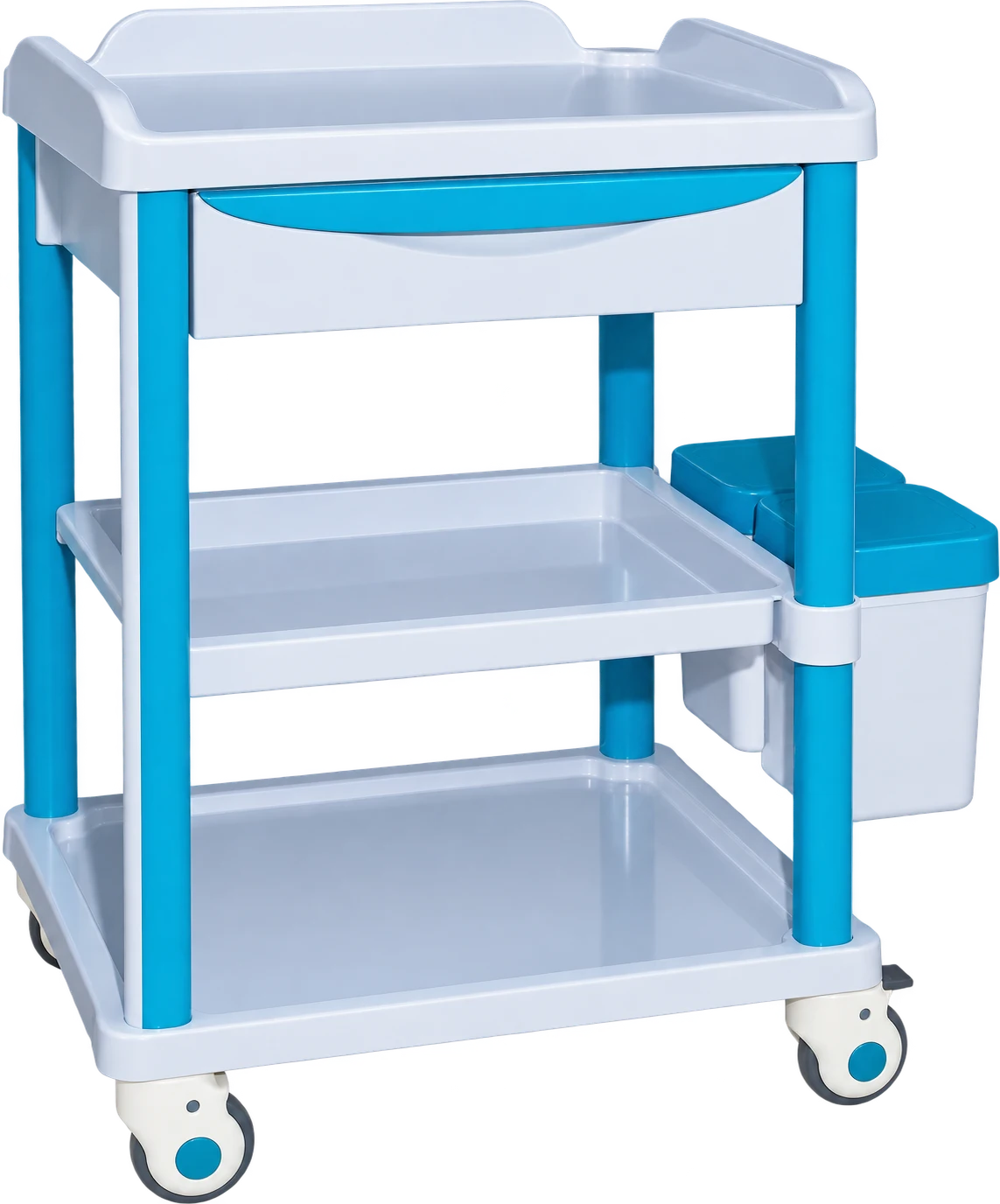
Medical Trolleys
Mobile carts for nursing rounds, treatment supplies, medicines, and clinical tools.
View product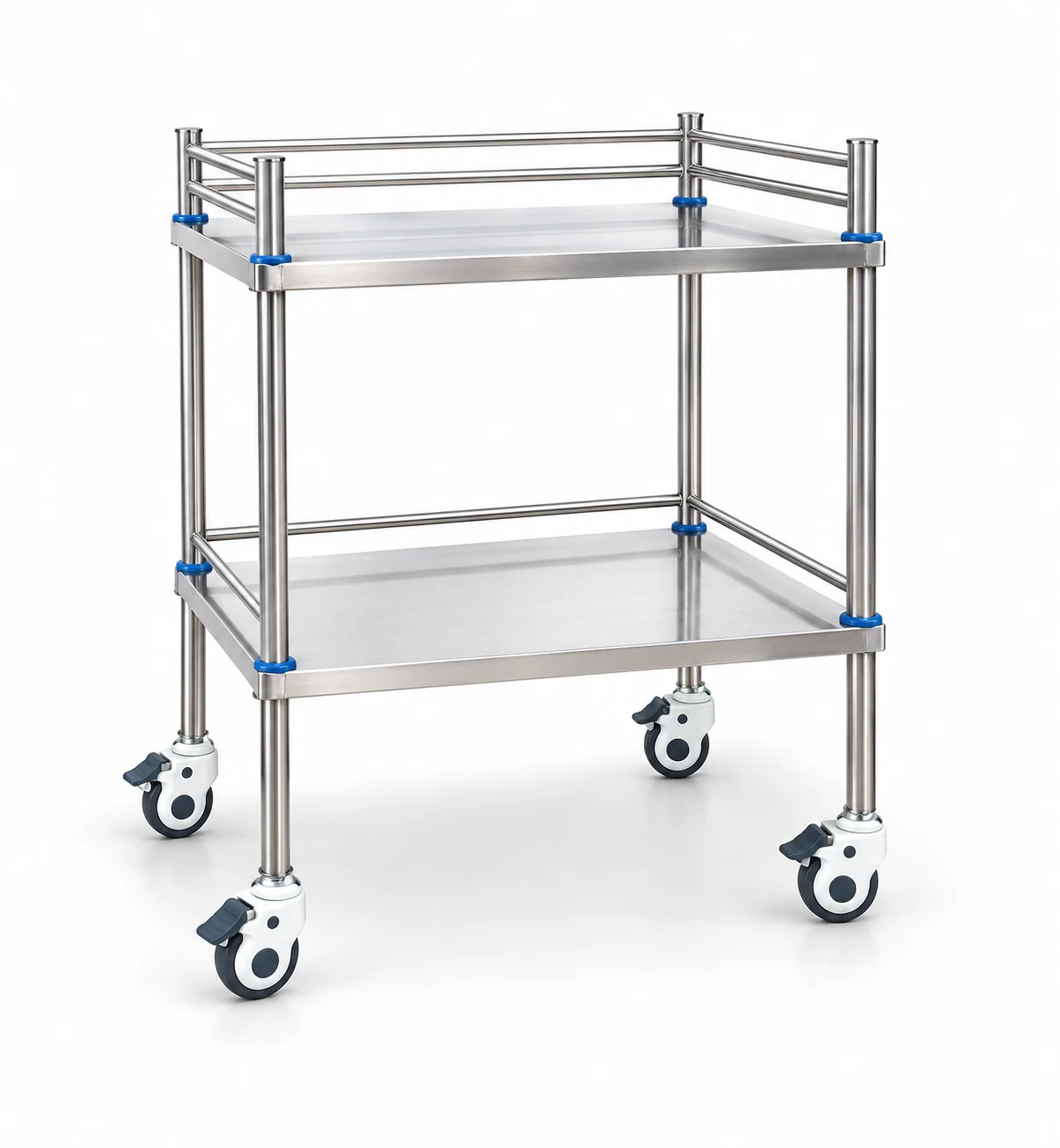
Stainless Steel Trolleys
Compare stainless steel trolleys by model, stated dimensions and configuration.
View product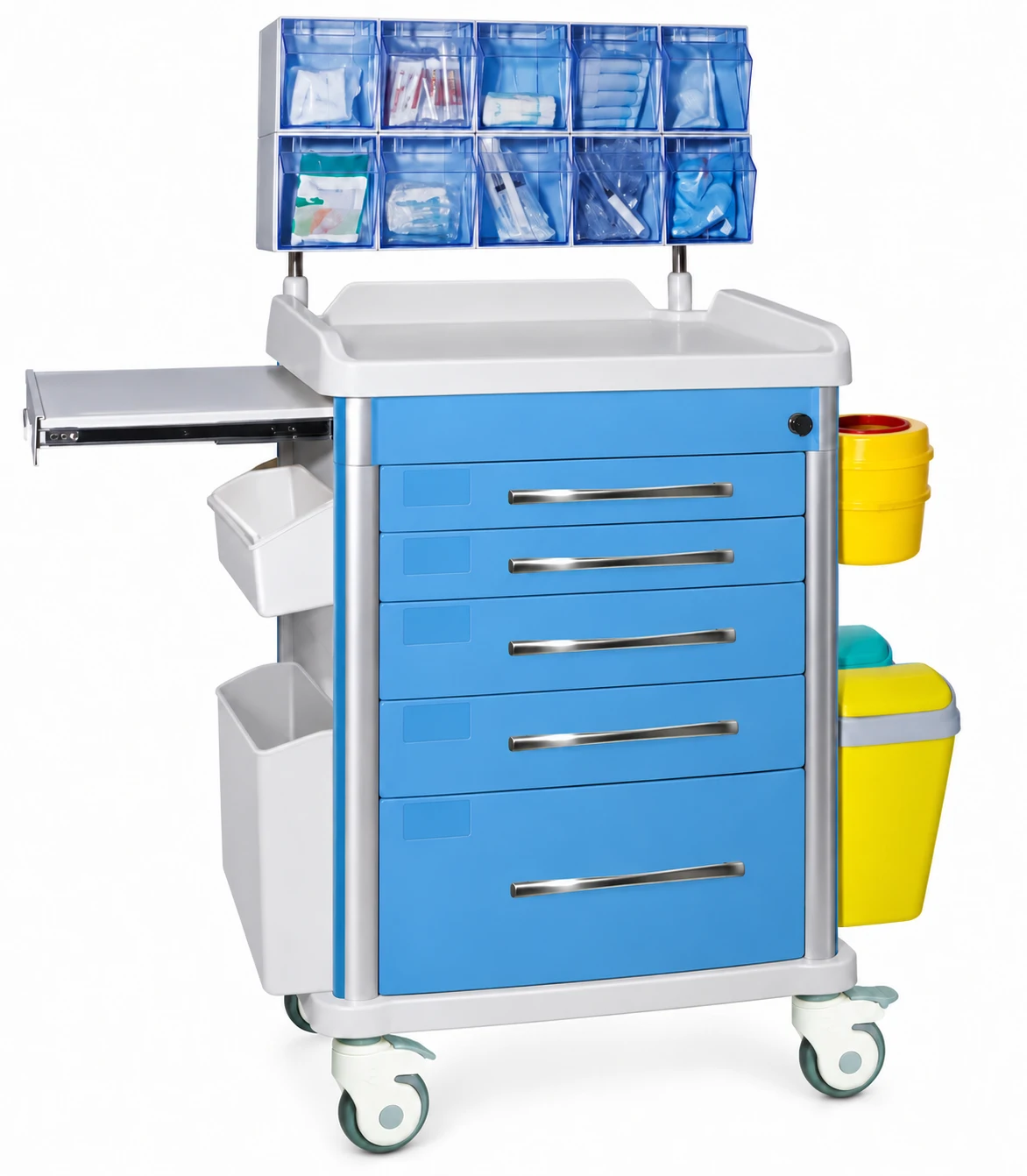
Anesthesia Carts
Compare anesthesia carts by model, stated dimensions and configuration.
View product